TL;DR
- For a hard-working kitchen, buy a penetrating (impregnating) sealer with silane-siloxane or fluoropolymer chemistry.
- It soaks into the pores, repels water and oil, and has nothing on top to peel.
- Topical coatings look great for a month, then chip and haze.
- Expect to pay $15 to $80 per bottle and reapply every 1 to 5 years depending on stone and product.
Why does a high-traffic kitchen need a different sealer than a low-use one?
A kitchen island that sees three meals a day, homework spread across it, and weekend cooking marathons takes a beating: acid from citrus and wine, grease, pots dragged across the surface, constant moisture. That environment chews through a mediocre sealer in months, not years.
The core problem is porosity. Most natural stones (marble, limestone, travertine, and lower-density granites) drink liquid. A spill sits on the surface for a second, then wicks down into the pores. Once cooking oil or red wine gets below the surface, it stains for good or takes professional grinding to remove.
Heavy use also means more scrubbing with alkaline or acidic cleaners, and those degrade some sealer chemistries faster than plain water does. A sealer that holds up five years in a guest bathroom might tap out at 18 months on a family kitchen island.
Here's the good news. Picking the right chemistry matters far more than picking the priciest bottle. Spending $25 on the right type beats spending $80 on the wrong one.
What are the two main types of countertop sealer, and which is better for kitchens?
Every countertop sealer sold falls into one of two camps: penetrating (also called impregnating) sealers, or topical (surface) sealers. The difference isn't small.
Penetrating sealers carry active molecules (usually silane, siloxane, or fluoropolymer compounds) down into the pores of the stone. Once the carrier evaporates, those molecules bond to the pore walls and repel liquid. The surface itself doesn't change. The sealer is invisible and adds no sheen. Because nothing sits on top, nothing can peel, chip, or haze.
Topical sealers sit on the surface. Wax polishes, acrylic coatings, and epoxy-style topcoats all live here. They can throw off a beautiful wet look or high gloss, but in a working kitchen they wear unevenly, show every scratch, and peel at the edges. Reapplying means stripping the old coat first. More work, worse result.
For a high-traffic kitchen, penetrating sealers win. Full stop. The one exception is butcher block, which is wood and gets food-safe oil or wax instead of a stone impregnator. Butcher block countertops run on their own sealing logic entirely.
Inside the penetrating category, you then pick water-based or solvent-based. Water-based versions smell less and go on easier, but they may need resealing sooner. Solvent-based versions push deeper and tend to last longer, especially on dense stones like granite, though you need ventilation while you work.
Which sealer chemistry is actually the strongest: silane, siloxane, or fluoropolymer?
The ingredient list on the bottle tells you most of what you need. Here's how the three main chemistries stack up for kitchen duty.
Silane molecules are tiny and push deep into dense stone. They work well on granite and quartzite but struggle to fill the larger pores of limestone or travertine. Solid entry-level choice.
Siloxane molecules are bigger and often blended with silane for dual-depth protection. Silane-siloxane blends are the most common professional pick for natural stone kitchens, and that's what's inside widely used products like StoneTech BulletProof and Miracle Sealants 511 Impregnator.
Fluoropolymer sealers (sometimes labeled fluorocarbon, and yes, PFAS-free formulas now exist) repel both water and oil. Oil repellency is the part that matters in a kitchen. Olive oil and bacon grease are the real enemies, and a silane-only sealer won't stop them the way a fluoropolymer will. You pay for it: figure $45 to $80 for a quart versus $15 to $40 for silane-siloxane.
| Chemistry | Water repellency | Oil repellency | Typical reapplication | Typical price (qt) |
|---|---|---|---|---|
| Silane | High | Low | 1 to 3 years | $15, $30 |
| Silane-siloxane blend | High | Moderate | 2 to 5 years | $20, $45 |
| Fluoropolymer | High | High | 3 to 10 years [1] | $45, $80 |
For a busy kitchen, the fluoropolymer upgrade pays off on marble, limestone, or porous granite. On very dense granite or quartzite, a good silane-siloxane product gets you 90% of the way there at half the price. The next section sorts out which stones need sealing at all.
Which countertop materials actually need sealing, and which don't?
Not everything needs a sealer. Sealing quartz or porcelain is money and time thrown away.
Engineered quartz (Cambria, Silestone, Caesarstone) is non-porous by design. The resin binder fills the gaps between quartz particles, so no sealer penetrates and none is needed. If you're looking at Cambria countertops, skip the sealer.
Porcelain and ceramic tile: the tile needs nothing, but the grout does. Seal the grout lines only.
Laminate, Formica, and solid surface like Corian are non-porous polymers. Formica countertops and Corian countertops get no benefit from stone sealers.
Soapstone is naturally non-porous. It scratches, and people rub it with mineral oil to even out the color, but that's cosmetic conditioning, not sealing. How to clean soapstone countertops walks through why.
Stainless steel, concrete, and glass have no use for a stone impregnator either.
Now the stones that do need it.
Marble absorbs staining liquids within minutes when unsealed. A high-traffic marble kitchen should use a fluoropolymer sealer and still accept that daily etching (acid damage) is a separate problem no sealer touches. Marble countertops are gorgeous and high-maintenance in a kitchen.
Granite needs sealing only if it's porous. Run the water test: drop a tablespoon on the surface, wait 15 minutes. If the stone darkens, it's drinking water and needs sealer. Dense black granites like Absolute Black often don't absorb a drop. Lighter granites usually do.
Quartzite (not the same as engineered quartz) is a natural metamorphic rock with variable porosity. Most of it should be sealed. How to clean quartzite countertops covers care schedules.
Limestone and travertine are very porous and almost always want a quality impregnator.
Butcher block gets oil (mineral oil, food-safe finishing oil) or wax, not a stone sealer.
| Material | Needs sealing? | Recommended type |
|---|---|---|
| Marble | Yes, urgently | Fluoropolymer impregnator |
| Granite (porous) | Yes | Silane-siloxane or fluoropolymer |
| Granite (dense) | Maybe | Test first |
| Quartzite | Yes | Fluoropolymer impregnator |
| Limestone/travertine | Yes | Fluoropolymer impregnator |
| Engineered quartz | No | None |
| Porcelain | No (grout yes) | Grout sealer only |
| Soapstone | No | Mineral oil for color |
| Butcher block | No (condition it) | Food-safe oil/wax |
| Laminate/Corian | No | None |
How do you apply a penetrating sealer correctly, and how often should you reapply?
Application is simple, but people blow it two ways: they use too much product, and they wipe too soon (or too late). Get those right and the rest is easy.
Clean first with a pH-neutral stone cleaner. Acidic cleaners like vinegar and alkaline degreasers leave residue that blocks the sealer from bonding. Let the surface dry fully, overnight if you can.
Apply generously but don't let it pool. Most fabricators work the sealer in with a lint-free cloth or foam applicator, a 2 to 3 square foot section at a time. The stone should look wet.
Wait out the penetration period. Most products call for 5 to 20 minutes. That's the window where the molecules migrate into the pores. Don't let the sealer dry on the surface before you wipe, because dried residue leaves a white haze.
Wipe every bit of excess with a clean dry cloth before it dries, then buff lightly. Some products want a second coat after the first cures for an hour.
Give it full cure time before heavy use. Most penetrating sealers cure in 24 hours for light use and 48 to 72 hours for full effect. Grease, oil, or an acidic spill in the first day can wreck the bond.
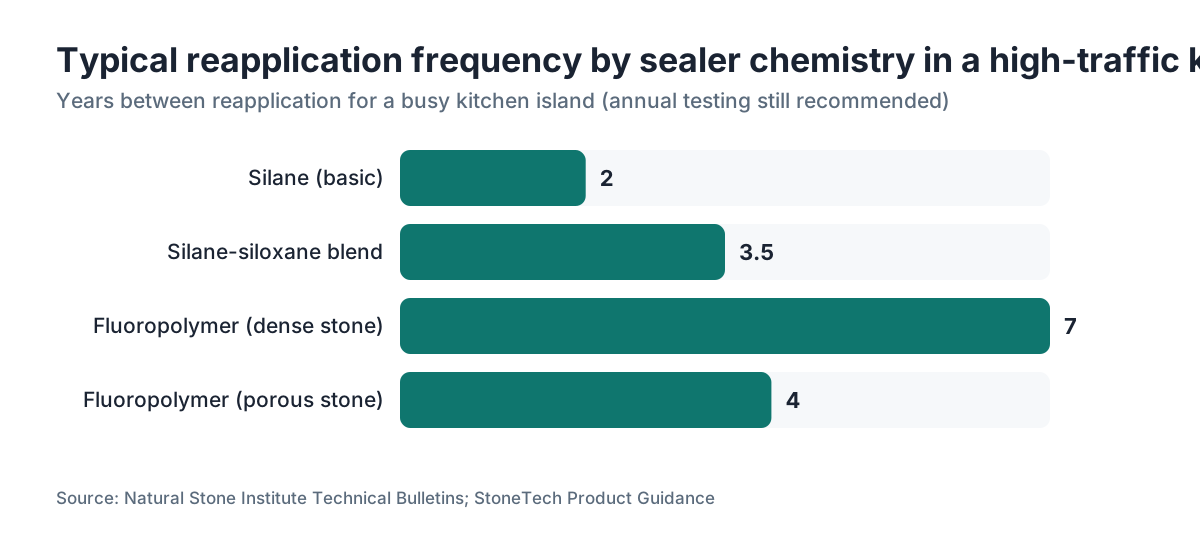
For reapplication timing, the water drop test is your judge. [1] StoneTech, the commercial sealer brand tied to DuPont's former construction products group, recommends annual testing on high-traffic surfaces even when the label promises multi-year protection. A busy island may genuinely need resealing every 12 to 18 months with a standard silane-siloxane sealer, while the same product lasts 3 to 5 years on a bathroom vanity. Fluoropolymer products can honestly stretch to 5 to 10 years on dense stone.
Temperature matters too. Apply most sealers between 50°F and 85°F (10°C, 29°C). Cold stone straight from an air-conditioned kitchen can block proper penetration.
What are the best-reviewed penetrating sealers for kitchen countertops right now?
No blind endorsements here. These are the products fabricators and stone restoration pros actually reach for, based on trade publications and what shows up on job sites.
StoneTech BulletProof Sealer: a silane-siloxane formula with a long track record in residential and commercial kitchens. Easy to find at tile and stone supply houses. One quart covers roughly 75 to 125 square feet depending on porosity. Around $30, $40 per quart. [2]
Miracle Sealants 511 Impregnator: one of the most widely distributed professional impregnators in North America. Same silane-siloxane chemistry. Stocked at home improvement stores. Roughly $20, $30 per quart. Good value for granite in a busy kitchen.
Aqua Mix Sealer's Choice Gold: water-based, low odor, food-safe after cure. The one to pick if solvent smell bothers you or your kitchen has poor ventilation. Around $30, $45 per quart.
Tilelab SurfaceGard: budget option at roughly $15, $25 for a larger container. Widely available. Fine for less-porous granite, but it needs resealing sooner on marble or travertine.
For fluoropolymer options, products under the DryTreat and Fila brands hold a strong reputation among installers. DryTreat STAIN-PROOF Original is a fluoropolymer sealer with independent testing behind a 15-year durability claim (though real kitchen life over that full stretch depends heavily on traffic and cleaning habits). These run $60, $100 for smaller bottles but cover similar square footage.
One honest caveat: formulas change and pro favorites shift. The best current read on what's working is a local fabricator or a tile and stone supply house. They watch products fail and succeed every week. Ask them what they're using, not what they're selling.
Can a sealer stop etching on marble, and is marble even practical in a high-traffic kitchen?
Etching and staining are two different problems. Sealers handle staining. Nothing handles etching. Get that straight before you spend a dime.
Etching is a chemical reaction. Acids (lemon, vinegar, wine, tomato, some cleaners) dissolve the calcium carbonate in marble, limestone, and travertine. You get a dull, slightly rough patch that looks like a water spot. That's physical surface damage, not a stain. No sealer stops it, because the acid attacks the stone itself, not the pore openings the sealer protects.
Staining is absorption. Liquid soaks into the pores and drops pigment or grease. A good fluoropolymer sealer slows this way down by making liquids bead up, buying you time to wipe before it penetrates.
So for marble in a busy kitchen, a proper sealer is still worth doing. It handles staining and blocks absorbed moisture. Just go in knowing that etching from cooking and cleaning will build up over time. Light etching polishes out. Deep or widespread etching needs a stone restoration pro with diamond honing pads.
One practical trick: most marble kitchen counters get a honed (matte) finish rather than polished, precisely because honed marble hides etching far better. If someone swears a certain sealer makes marble maintenance-free in a kitchen, they're overpromising. How to clean stone countertops covers the daily-care half of this.
How much does sealing a kitchen countertop cost, DIY vs. professional?
DIY sealing is a reasonable move for most homeowners. The materials are easy to buy and the technique isn't hard.
Material cost: for a typical kitchen with 40 to 60 square feet of surface, one quart of quality silane-siloxane sealer ($20, $45) does the job with product left over. A premium fluoropolymer might run $60, $80 for a quart. Add $5, $10 for applicator cloths.
Time: plan on 1 to 3 hours for prep, application, and cleanup, plus 24 to 48 hours of gentle-treatment cure time.
Professional sealing: stone restoration companies and many fabricators offer sealing as a standalone service. Pricing usually runs $75, $200 for a kitchen, depending on square footage and region. [3] Fabricators who supply and install your stone often throw in one free sealing at install, and that's worth confirming before you sign. Countertop installation covers what's typically included.
If your stone is already stained or etched and needs honing or polishing before sealing, professional restoration runs $200, $600 or more for a kitchen, because that work means wet grinding and specialized gear.
The math favors DIY for ongoing upkeep. Let your fabricator handle the first seal at install. Every reapplication after that, every 1 to 5 years, is easy DIY work. SlabWise's instant quote tool gives you the full picture of a countertop project, installation included, before you commit.
For fabricators: if you're not building sealer cost and application into your install packages, take a look. Customer satisfaction on stone jobs tracks closely with proper sealing at handoff, and a $15, $30 product cost heads off a pile of post-install warranty calls.
Are countertop sealers food-safe after curing?
Fair question, and a common one. Short answer: nearly all penetrating stone sealers are food-safe once fully cured. The carrier solvents and reactive molecules off-gas during curing, and once that's done the cured chemistry is inert.
The EPA and FDA don't run a specific countertop sealer certification, but most major manufacturers submit their cured sealers for independent testing and make food-safe claims for the post-cure surface. [4] The key word is cured. Don't prep food on freshly sealed stone for at least 24 hours, and follow the product's own instructions.
Water-based sealers (like Aqua Mix Sealer's Choice Gold) have lower VOC profiles during application and get the nod in kitchens with weak ventilation. Solvent-based sealers want 20 to 30 minutes of open-window airflow during and after you apply.
The exception is butcher block used as a cutting surface. Knife cuts open the wood, bacteria can settle in those cuts, and the FDA Food Code directs food-contact wood surfaces to be treated with food-safe finishes. [5] Mineral oil and beeswax/mineral oil blends are the standard answer. Stone sealers on butcher block do nothing useful, and some solvent-based ones don't belong near food at all.
For granite, quartz, and other stone, the risk from a cured sealer is very low. The cured surface chemistry is close to silicone, which is food-contact safe across countless products.
What common mistakes ruin a sealer application, and how do you avoid them?
The number one failure is haze. That white, blotchy film after sealing is dried sealer residue, left when excess product isn't wiped before it dries. A dedicated residue remover takes it off, but it's a hassle. Set a timer during application: if the product says 10-minute penetration, wipe at 9.
Sealing a wet or freshly cleaned surface is the second most common miss. Water sitting in the pores competes with sealer molecules for entry. The stone needs to be genuinely dry, more than dry to the eye.
Using the wrong cleaner beforehand gets overlooked constantly. Vinegar and citrus cleaners are popular and acidic, and they can hurt sealer adhesion on calcium-based stones. Use a pH-neutral stone cleaner before you seal.
Sealing over an existing topical coating gives you garbage results. If someone waxed or coated the counters before, that coating has to come off first. Test with a drop of water: if it beads on a stone that should be porous, an old coating is in the way.
Skipping the test for whether the stone needs sealing at all is another one. Dense granites and quartzites with tight crystal structure sometimes won't absorb sealer, period. If the water drop test shows no absorption after 15 to 20 minutes, sealing that stone is cosmetically pointless. Save the product.
Over-sealing is less harmful than under-sealing but still wasteful. Piling on 3 or 4 coats to compensate for a cheap product doesn't beat one coat of the right product. The pores hold what they hold.
How do different granite types affect which sealer you should choose?
Granite isn't one thing. Porosity swings hard from slab to slab, and that decides your sealer. A dense black like Absolute Black or Zimbabwe Black may score near zero on the water absorption test, while a light granite like Santa Cecilia or Giallo Ornamental darkens noticeably in under 10 minutes. [6]
For dense, tight granites, a standard silane-siloxane impregnator is plenty, and it might even be optional if absorption testing confirms the stone barely drinks. Buying premium fluoropolymer for Absolute Black is a waste.
For medium-porosity granites (most light and medium-toned stones), a quality silane-siloxane sealer applied once and retested annually holds up fine in a busy kitchen. Plan on resealing every 2 to 3 years.
For high-porosity granites and light stones that soak water in under 5 minutes, the fluoropolymer upgrade earns its price, because those pores are large enough that the oil-repellency component actually protects against cooking oil and grease.
Finish matters too. Polished granite has a compressed, partly sealed surface. Honed granite is more porous because polishing removes that top layer. Leathered and brushed finishes are the most porous of the bunch. If you chose leathered for the look (and it's a great look), budget for a better sealer and more frequent resealing.
Granite countertops covers the full range and real-world performance. Still picking a material? Kitchen countertops puts all the major options side by side.
What does the ANSI or any industry standard say about countertop sealer performance?
This is a corner of the trade that's less formalized than most people assume. No agency stamps a countertop sealer as "kitchen-grade." The standards that exist govern the stone, not the sealer.
ANSI (the American National Standards Institute) publishes standards for tile and dimensional stone (ANSI A137.1 and A137.2) that cover physical properties like absorption, flexural strength, and slip resistance. [7] They don't rate sealer performance directly, but they do sort stones by absorption coefficient, which gives you a grounded way to understand how porous your specific stone is.
ASTM C97 covers water absorption and bulk specific gravity testing for dimension stone, and its published absorption values explain why marble and limestone need heavy-duty sealers while dense quartzite may not. [8]
For sealers themselves, manufacturers publish their own testing. The closest thing to independent validation comes from the Natural Stone Institute (NSI), which puts out technical bulletins and care guidelines built on industry consensus rather than a formal product certification. [9] Their recommendations match what fabricators see in the field: penetrating sealers for porous natural stone, nothing for engineered quartz or other non-porous surfaces.
The Marble Institute of America, now folded into the NSI, historically recommended that "all natural stone used in food preparation areas should be sealed with a penetrating impregnator," with stone type and porosity guiding the specific product. [10]
For fabricators running quoting and project software like SlabWise, sealer recommendations can live right in the install documentation and the post-install care sheet you hand the customer at job close.
Frequently asked questions
How do I know if my granite countertop needs to be resealed?
Do the water drop test. Pour a tablespoon of water on the surface and wait 15 minutes. If the stone darkens where the water sat, the sealer has degraded and the stone is absorbing again. That's your signal to reseal. If water still beads up completely after 15 to 20 minutes, the sealer is still working. Run this test annually on high-traffic kitchen areas.
Can I use the same sealer on granite and marble, or do I need different products?
Most quality penetrating impregnators work on both. The chemistry is compatible with all calcium- and silica-based natural stones. The difference is frequency and tier: marble in a kitchen benefits more from fluoropolymer chemistry for oil repellency, while dense granite gets by on a silane-siloxane blend. Read the label for your stone type, but one good fluoropolymer product handles both surfaces.
Does sealing a countertop change how it looks?
Penetrating impregnators are built to be invisible. A quality product leaves no sheen, no color shift, and no residue when applied and wiped correctly. Some sealers marketed as "color enhancing" or "wet look" deepen the stone's color on purpose, which some people want. If you want protection with zero visual change, look for products labeled natural finish or invisible finish. Topical sealers and waxes do add gloss.
Is there a food-safe countertop sealer I can use the same day as application?
No credible product is fully food-safe within hours of application. Most penetrating sealers need at least 24 hours before the surface is safe for food contact, and some solvent-based versions want 48 to 72 hours. Water-based sealers off-gas faster but still need a minimum cure period. Follow the product's curing instructions. Applying at night before a non-cooking day is the practical play for most households.
How long does a countertop sealer last in a kitchen that cooks every day?
Realistic numbers: a standard silane-siloxane sealer lasts 1 to 3 years on a heavily used island, 3 to 5 years on less-exposed perimeter counters. A fluoropolymer sealer on granite or quartzite can honestly last 5 to 10 years on less-porous stone but should be tested annually. Marble in a cooking kitchen needs checking every 12 months. Alkaline or acidic cleaners speed up degradation a lot.
What's the difference between a countertop sealer and a countertop polish or wax?
A sealer (penetrating impregnator) goes into the pores and blocks liquid absorption. It's invisible and doesn't change feel or gloss. A polish or wax sits on top and changes appearance. Polishes restore surface shine. Waxes add a topical layer that protects against minor abrasion and water but wears off fast under kitchen traffic and needs frequent reapplication. For a busy kitchen, sealer is necessary; polish is optional.
Can you over-seal a countertop, and is that harmful?
Over-sealing causes haze, not harm. Apply more than the pores can absorb and the excess dries on the surface as a white residue. It won't damage the stone, but it looks awful. A sealer residue stripper removes it. To avoid it: apply enough to wet the surface, let it penetrate for the stated time, then wipe every bit of excess before it dries. One well-done coat beats three careless ones.
What's the best countertop sealer for a kitchen with kids and heavy daily use?
A fluoropolymer-based penetrating impregnator gives you maximum protection in a family kitchen. The oil repellency matters, because kids mean more food contact, more grease, and less careful spill management. Use it on marble, limestone, travertine, or porous granite. For quartzite, a quality silane-siloxane blend works well. Engineered quartz and porcelain need no sealer. Retest annually and reseal when the water drop test shows absorption.
Can sealing fix a stained countertop, or does it have to go on before staining occurs?
Sealer prevents future stains; it doesn't remove existing ones. If your countertop is already stained, you need a poultice first (a paste of absorbent material plus a solvent or cleaning agent, left on the stain to draw it out), then professional restoration if the stain runs deep. Once the stain is dealt with, apply sealer to protect going forward. Sealing over an existing stain just locks it in.
Do I need to seal the underside and edges of my countertop, or just the top?
Edges take real traffic in a kitchen and catch spills running off the top, so seal every exposed edge the same way you seal the surface. The underside is rarely necessary unless the counter is open on both sides (like an island overhang people lean against with wet clothes). Fabricators usually seal the top and exposed edges before installation. Ask specifically about edge treatment when you discuss install.
Will a sealer protect against heat damage from hot pots and pans?
No. Penetrating stone sealers offer zero heat protection. Thermal shock, the rapid temperature swing when a hot pan hits cool stone, can crack granite and marble whether or not the stone is sealed. Sealing addresses liquid infiltration only. Always use trivets or heat pads under hot cookware on any stone countertop, sealed or not. This is a use-and-design issue, not a sealer chemistry problem.
Is it worth hiring a professional to seal countertops, or is DIY good enough?
DIY sealing with a quality product produces results nearly identical to professional work for routine maintenance. The product is the same and the technique is simple. Professional sealing earns its cost when it's bundled into a restoration or install service, or when the counters have lots of seams and cutouts where beginners leave residue in the joints. For straightforward kitchen counters, buy a good product and do it yourself.
How do I remove sealer residue (white haze) from my stone countertop?
Dried sealer residue needs a dedicated stripper or residue remover, not water or standard cleaners. Products like StoneTech KlenzAll or Aqua Mix Sealer and Coating Remover are made for this. Apply per directions, let it dwell, then scrub and rinse. For light haze that's still tacky, mineral spirits on a cloth sometimes works. If the haze baked on after days of delay, a stone restoration technician with proper strippers may be needed.
Does the type of stone finish (polished vs. honed vs. leathered) affect how often I need to seal?
Yes, a lot. Polished stone has a compressed surface layer that resists penetration somewhat, so sealer lasts longer. Honed (matte) finishes are more porous and need resealing sooner, sometimes every 1 to 2 years in kitchens. Leathered and brushed finishes have the most open, textured surface and are the most porous of the three. Budget for a premium sealer and annual testing if you chose leathered for your kitchen.
Sources
- StoneTech Professional, Sealer Application and Testing Guide: Annual testing recommended for high-traffic stone surfaces even with multi-year rated products; penetrating sealers with fluoropolymer chemistry rated for 3 to 10 year protection intervals
- StoneTech Professional, Product Information: BulletProof Sealer: StoneTech BulletProof Sealer covers approximately 75 to 125 square feet per quart depending on stone porosity; silane-siloxane chemistry
- HomeAdvisor / Angi, Stone Countertop Sealing Cost Guide: Professional stone sealing services for kitchen countertops typically run $75, $200 depending on square footage and region
- U.S. Environmental Protection Agency, Volatile Organic Compounds' Impact on Indoor Air Quality: Solvent-based sealers off-gas VOCs during and after application; ventilation guidance for interior application of solvent-based coatings
- U.S. Food and Drug Administration, Food Code (Materials for Food Contact Surfaces): FDA Food Code specifies food-safe materials for food-contact surfaces; wood surfaces used for food contact must be treated with food-safe finishes
- Natural Stone Institute, Technical Bulletin: Absorption and Porosity in Natural Stone: Water absorption rates vary significantly by granite type; dense black granites can have near-zero absorption while lighter granites absorb measurably within minutes
- American National Standards Institute, ANSI A137.1 and A137.2 Tile and Stone Standards: ANSI A137.1 and A137.2 govern physical properties of tile including absorption coefficients and dimensional standards
- ASTM International, ASTM C97 Standard Test Methods for Absorption and Bulk Specific Gravity of Dimension Stone: ASTM C97 provides standardized water absorption testing methodology for dimension stone, forming the technical basis for porosity classification
- Natural Stone Institute, Care and Cleaning for Natural Stone Surfaces: NSI guidance states that all natural stone used in food preparation areas should be sealed with a penetrating impregnator; specific product selection should be guided by stone type and porosity
- Marble Institute of America (now Natural Stone Institute), Technical Bulletin on Sealers for Natural Stone: Industry consensus supports penetrating impregnators over topical coatings for kitchen stone; topical coatings more prone to failure under daily-use conditions
- U.S. Environmental Protection Agency, Safer Choice Program: EPA Safer Choice program provides criteria for evaluating chemical ingredients in cleaning and maintenance products, including surfactant and solvent safety classifications relevant to sealer formulations
Last updated 2026-07-10