TL;DR
- Kitchen countertops run about $10 per square foot installed for laminate to $200+ for premium marble or quartzite.
- Quartz and granite dominate the market for good reason.
- Both hold up to daily cooking, and either one adds resale value.
- The right pick depends on your budget, how you actually cook, and whether you want to seal stone every year.
What are the most popular kitchen countertop materials?
A handful of materials own the countertop market, and each earns its place with real strengths rather than marketing talk. Quartz (engineered stone) is the top seller in the U.S. right now. Granite has been a favorite for two decades. Laminate is the most-installed material by raw volume once you count entry-level and rental construction. After those three, you get into marble, quartzite, soapstone, solid surface (like Corian), concrete, and butcher block.
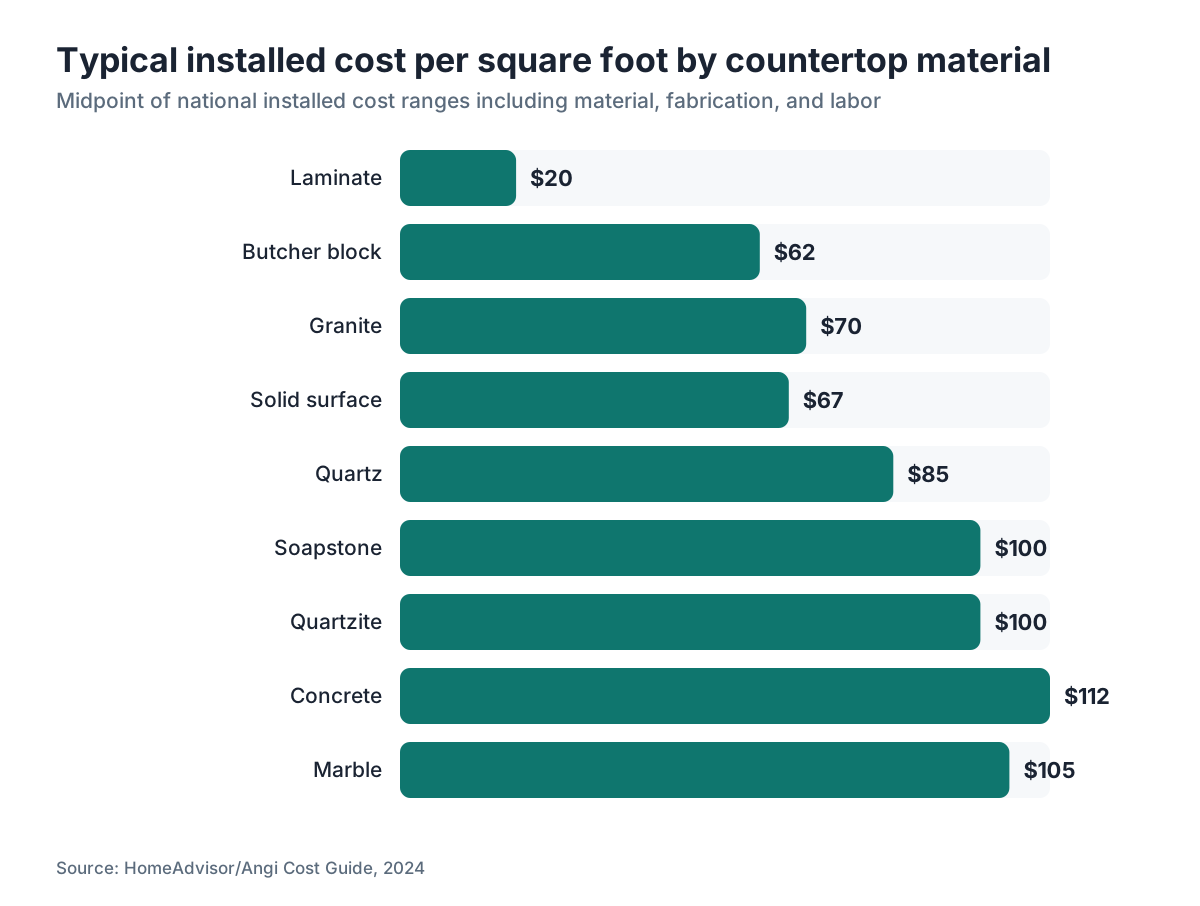
Here is a straight comparison of the main options based on typical installed costs, durability, and maintenance:
| Material | Installed cost (per sq ft) | Sealing required | Heat resistance | Scratch resistance |
|---|---|---|---|---|
| Laminate | $10, $30 | No | Low | Low |
| Tile | $20, $40 | Grout only | High | High |
| Granite | $40, $100 | Yes, 1x/year | High | High |
| Quartz | $50, $120 | No | Moderate | High |
| Solid surface (Corian) | $45, $90 | No | Low | Moderate |
| Marble | $60, $150 | Yes, 2x/year | High | Low |
| Quartzite | $60, $140 | Yes, 1x/year | High | High |
| Soapstone | $70, $130 | Oil only | High | Low |
| Concrete | $75, $150 | Yes | High | Moderate |
| Butcher block | $35, $90 | Oil/wax | Low | Low |
Cost ranges come from contractor and fabricator surveys. Regional labor rates shift these numbers hard, with coastal metro areas running 20 to 30% above the midpoint [1].
The big picture: quartz countertops and granite countertops together account for roughly 60% of residential countertop sales in the U.S. [2] Everything else splits the rest.
How much do kitchen countertops cost?
The honest answer has three parts: material cost, fabrication cost, and installation cost. Homeowners usually see a single per-square-foot quote that bundles all three, which is the right way to shop. It also hides where the money actually goes.
Material alone is typically 30 to 50% of a finished installed price. Fabrication (cutting, edging, polishing) runs 20 to 35%. Labor and installation fills the rest. That ratio matters because a high-end material doubles your slab cost but does not double your labor cost, so the percentage shift is smaller than you'd expect.
A standard kitchen has 30 to 40 square feet of countertop surface. Here is what that translates to in real dollars:
- Laminate kitchen: $300, $1,200 total
- Granite kitchen: $1,200, $4,000 total
- Quartz kitchen: $1,500, $4,800 total
- Marble kitchen: $1,800, $6,000 total
- Quartzite kitchen: $1,800, $5,600 total
Those are rough national medians. The National Kitchen and Bath Association's 2023 cost study reported median countertop spend of $3,100 for a mid-range kitchen remodel [3]. That is the actual check most homeowners write, not a dramatic outlier.
Things that push your number up: waterfall edges, thick slabs (3 cm vs 2 cm), mitered edges, unusual sink cutouts, multiple seams that need color matching, and any material with a long lead time that requires expedited shipping from a quarry.
Things that pull your number down: remnant slabs for smaller kitchens, a full-bullnose edge instead of a mitered waterfall, undermount sinks you source yourself, and a local fabricator rather than a big-box store contractor network. Big-box markup is real, often 15 to 25% above a direct fab quote.
Which countertop material lasts the longest?
Granite, quartzite, soapstone, and slate are essentially permanent if you do not crack them. These are natural stones formed under geological pressure. A properly installed granite countertop will outlast your house's plumbing, its roof, and probably the house itself. The failure mode for stone is almost always impact cracking near the edge or sink cutout, not wear.
Quartz engineered stone matches natural stone against scratches and stains, but it has one real weakness. UV exposure yellows the resin binders over time, and extreme heat (a hot pan set directly on the surface) can cause permanent discoloration or cracking. Keep a trivet near the stove. That is not optional advice with quartz.
Laminate, solid surface, and butcher block are the least durable in absolute terms, but that framing is a little unfair. Laminate countertops installed in the 1980s are still working in kitchens today. They scratch and chip rather than crack catastrophically, and the failed spots are obvious rather than structural. Butcher block can be sanded and re-oiled many times over decades, which gives it a kind of renewable longevity granite can't match.
Concrete has the most variable durability of anything here. A well-sealed, properly mixed concrete countertop is very hard. A porous or thin one cracks under thermal cycling or heavy impact. The skill of the contractor matters more with concrete than with any other material on this list.
If longevity is your top concern and budget is flexible: granite or quartzite. If you want maximum longevity in a tight budget: laminate lasts longer than people expect, and you can replace it in 10 years for a fraction of what stone costs.
What is the best countertop material for a busy cooking kitchen?
High-use kitchens need surfaces that take heat, cutting, oil, and water daily without asking for much maintenance in return. That narrows the list fast.
Granite is the professional-cook choice, and it has held up for decades. It handles hot pans, it does not scratch from normal chopping (though cutting directly on it dulls your knives fast), and a well-sealed slab resists stains. The trade-off is that you seal it once a year, and if you let oil or red wine sit for several hours on an unsealed or worn surface, you can get a stain.
Quartz holds up extremely well to the chemical abuse of cooking: acids, oils, sauces. It does not need sealing. The heat restriction is the real issue for serious cooks. If your habit is to pull a 500-degree cast iron skillet straight from the oven and set it on the counter, quartz is going to give you trouble eventually.
Soapstone is the sleeper pick here. It shows up in chemistry lab countertops for exactly the reason you want it in a cooking kitchen: it is nearly impervious to acids, heat, and staining. It scratches and develops a patina, which some people love and others find distressing. You can sand out scratches. How to clean soapstone countertops is straightforward: soap and water, re-oil a few times a year.
Stainless steel does not appear in the table above because it is a commercial product rather than a typical residential choice, but it is the material of actual restaurant kitchens for a reason. It is maintenance-free, heat-proof, and completely non-porous. It scratches visibly, it shows fingerprints constantly, and most homeowners find it clinical-looking. If you cook like a chef, know that it is available for residential use.
For most active home cooks, the practical winner is granite kitchen countertops. Enough heat resistance for real cooking, durable enough to last decades, widely available, and maintained with a quick annual sealing that takes about 20 minutes.
How do you match countertops to kitchen cabinets and backsplash?
This is where homeowners lose the most sleep and spend the most time at the tile store. The short answer: contrast beats close-match coordination, and the countertop should be your anchor material, not the backsplash.
Start with the countertop. It is the largest horizontal surface in the room and the most expensive to change. Choose it first. Then pull a backsplash that picks up one secondary color in the stone rather than chasing the dominant color. A white quartz with grey veining pairs beautifully with a backsplash that reads grey or warm white, not one that tries to copy the exact white of the surface.
For pairing a backsplash with natural stone (granite, marble, quartzite), the most reliable approach is to bring a cut sample of the actual slab to the tile showroom, not a photo, and hold it against tile candidates in real light. Natural stone has color variation that photographs compress or distort. A tile that looks perfect on a screen can clash in person.
With white or cream cabinets, you have the most flexibility. Nearly any countertop color works. With dark or colored cabinets, stick to light or neutral countertops so the room doesn't read as a cave. With wood cabinets (especially warm oak or walnut tones), warmer-toned stones like Santa Cecilia granite or cream quartzite read better than cooler grey or blue-grey options.
A few specific pairings that hold up:
- White shaker cabinets + Calacatta quartz + white subway tile with grey grout: never goes wrong.
- Dark navy or green cabinets + white or light veined marble + unlacquered brass hardware + off-white subway: very current, likely to age well.
- Natural wood cabinets + leathered black granite + matte white elongated tile: the leathered finish ties the warmth of the wood to the coolness of the stone.
The one pairing that consistently fails: matching the dominant color of a busy stone to a busy backsplash tile pattern. Two busy things compete. One of them has to be calm.
What countertops add the most resale value to a kitchen?
Remodeling Magazine's annual Cost vs. Value report is the most widely cited source on this, and the data is consistent: a mid-range kitchen remodel (which includes countertop replacement among other work) recouped about 85.7% of its cost nationally in 2024 [4]. That is not a countertop-only figure, but countertops are one of the top five ROI drivers buyers cite when they size up a kitchen [12].
Stone surfaces, specifically granite and quartz, are what buyers in the $300,000-and-up home market expect to see. Below that price point, laminate or solid surface does not hurt resale much. Above it, dated laminate in an otherwise updated kitchen can be the reason a buyer makes a lower offer.
The ROI case for granite vs. quartz vs. quartzite is nearly indistinguishable to a buyer. They see stone. They feel the quality. A $4,000 granite installation and a $5,500 quartz installation both read as premium to a prospective buyer. Spending the extra $1,500 probably does not recover at resale.
Marble is the exception. Buyers who want marble will pay for it. Buyers who do not want the maintenance often see it as a negative. Marble's resale impact depends heavily on your local market and buyer demographic.
The honest advice: if you are renovating to sell in under two years, mid-grade quartz or granite gets you the most return per dollar. If you are living in the house for a decade, buy what you actually want to cook on.
How does the countertop fabrication process work?
Most homeowners treat the fabricator as a commodity and pour all their attention into the slab selection. That is backwards. The fabricator's skill decides whether that beautiful slab ends up fitting perfectly with a nearly invisible seam, or whether you spend six months staring at a seam that does not quite line up.
Here is what the process actually looks like:
-
Templating: After cabinets are installed, a fabricator measures the kitchen. Modern shops use digital templating tools (laser or structured-light scanners) that capture precise dimensions. Some smaller shops still use manual wood or cardboard templates. Digital is more accurate for complex layouts.
-
Slab selection: You or your fabricator visits a stone yard and picks the actual slabs. This is not optional for natural stone. The photos on a fabricator's website show a material category, not your slab. Two pieces of the same granite variety from the same quarry can look dramatically different.
-
Nesting and cutting: The fabricator lays your kitchen template over the selected slabs digitally to cut waste and position patterns well. Software like SlabWise gets used here to optimize how the template pieces nest inside the slab and to generate accurate quotes with real material costs, which is why your quote from a modern shop is more precise than one from a shop still doing this by hand.
-
Fabrication: Cutting is done with CNC machinery and water-cooled diamond blades. Edge profiles are shaped and polished. Sink and faucet cutouts are made.
-
Installation: The fabricator installs using epoxy adhesive and silicone caulk at walls. Seams (required on most L-shaped or larger kitchens) are filled with color-matched epoxy and polished until they nearly disappear.
Total timeline from template to install is typically 7 to 14 days for stocked materials, 3 to 6 weeks if your slab needs to be ordered from a distributor or quarry [5].
For how to clean stone countertops once they are installed, the short answer: pH-neutral cleaner, no bleach, no abrasive pads.
What is the difference between quartz and quartzite countertops?
This is the single most common confusion in countertop shopping, and it matters because the two materials behave very differently.
Quartz (sold under brands like Silestone, Cambria, Caesarstone) is engineered: about 90 to 94% crushed quartz mineral bound with polymer resin and pigment [6]. It is manufactured in uniform slabs. It never needs sealing. It comes in consistent, repeatable colors and patterns. The resin binders make it less heat-tolerant than natural stone.
Quartzite is a natural stone. It starts as sandstone and gets metamorphosed by heat and pressure into a very hard, crystalline rock that is sometimes mistaken for marble because the most popular varieties (Super White, Sea Pearl, Taj Mahal) have soft, veined looks. Unlike marble, quartzite is very hard and acid-resistant. Unlike quartz, it needs sealing once a year and has natural variation between slabs. How to clean quartzite countertops matters because the wrong cleaner can break down the sealer.
One warning: the stone industry has a labeling problem. Some slabs sold as quartzite are actually dolomitic marble, which is softer and more acid-sensitive. Before buying anything labeled quartzite, ask your supplier for a scratch test or a Mohs hardness reading. Genuine quartzite rates around 7 on the Mohs scale. Dolomite marble rates around 3 to 4 [7].
If you want the look of soft, veined stone without the maintenance of true marble or the quarry lottery of natural quartzite, engineered quartz in a marble-lookalike pattern is the practical choice. If you want real natural stone with better durability than marble, genuine quartzite is excellent.
Are cheap countertop options worth it?
Yes, depending on what you are optimizing for. The framing of cheap versus premium misses what actually matters: cost per year of satisfactory use.
Laminate installed for $1,000 total and replaced every 15 to 20 years costs about $50 to $67 per year. Granite installed for $3,500 and lasting 40+ years costs about $87 per year. Those numbers are closer than people expect, and laminate's annual cost drops further if you keep it longer.
The modern generation of laminate countertops and Formica countertops looks dramatically better than what most people picture. Photographic-print laminate can replicate stone convincingly, especially in kitchens with limited natural light where natural stone's depth is harder to appreciate anyway.
Solid surface like Corian sits between laminate and stone in both cost and performance. It is repairable (scratches and minor burns sand right out), and the sink can be molded integral with the counter so there is no rim to trap crumbs. It comes in dozens of colors. For a bathroom or a utility kitchen, it is often the right call.
Where cheap countertops genuinely cost you money: high-traffic rental properties where you want zero maintenance calls, kitchens where you are trying to sell in a competitive premium-home market, and households that cook heavily and need heat and scratch resistance.
If your kitchen already has dated cabinets or old appliances, spending $5,000 on quartz while everything around it is from 1998 is not money well spent. Match the investment level to the overall kitchen.
How do you maintain and clean kitchen countertops?
Maintenance varies enough between materials that this is worth breaking down by surface.
Natural stone (granite, marble, quartzite, soapstone): The biggest mistake is using citrus-based cleaners, vinegar, or bleach. Acids etch marble and, over time, break down sealers on all stone. Use a pH-neutral dish soap or a stone-specific cleaner. Dry the surface after wet work. For granite and quartzite, apply an impregnating sealer once a year (more often for marble or porous granite). The water-bead test tells you when: if water no longer beads on the surface within 30 seconds, reseal.
Engineered quartz: No sealer needed. Wipe with mild soap and water. The one thing to avoid is leaving strongly pigmented liquids (red wine, beet juice) sitting for hours, though the non-porous surface makes this more forgiving than stone. Skip abrasive scrubbers.
Laminate: Wipe immediately after any liquid spill because the failure mode is water getting into seams and swelling the substrate underneath. Mild cleaner, no abrasive, and protect edges from impact that can chip the decorative layer.
Butcher block: The most maintenance-hungry common option. Butcher block countertops need oiling every 4 to 6 weeks when new, tapering to a few times a year once the wood is well-saturated. Food-grade mineral oil is the standard product [10]. Keep standing water off the surface. Sand and re-oil to fix scratches or staining.
Concrete: Sealed concrete needs re-sealing every 1 to 3 years depending on sealer type and use. Unsealed or worn concrete stains from almost anything. Some people apply beeswax as a periodic topcoat. Concrete countertops reward homeowners who enjoy the maintenance ritual and punish those who ignore it.
The EPA notes that fragrance-free, pH-neutral cleaners cut down on volatile organic compounds in enclosed kitchen spaces, which matters more than people think in a small room you spend hours in [11].
How do you get an accurate countertop quote?
Getting a countertop quote that actually reflects your final cost means giving the fabricator complete, accurate information upfront. Vague requests produce vague numbers, and those numbers almost always climb during the project.
What a fabricator needs to quote precisely:
- Accurate linear footage or square footage of your countertop run (measure twice)
- Exact cabinet layout (L-shape, U-shape, island, peninsula)
- Sink type (undermount, drop-in, farmhouse) and approximate size
- Desired edge profile (pencil, beveled, bullnose, ogee, mitered waterfall)
- Slab material and specific color/variant
- Number of seams (driven by layout and slab size)
- Whether backsplash material is included
Fabricators typically work from a template they take after cabinet installation, so the initial quote is an estimate. A reputable shop holds close to that estimate barring genuine surprises (a discovered structural issue, a change to the material selection).
Big-box stores quote from their templating measurements and then add charges for any work outside their package. Direct fabricator quotes tend to be more transparent because you can ask questions and the person quoting knows the shop's actual costs. Shops using modern quoting software (which calculates slab utilization, waste factor, and material cost from real inventory rather than memory) produce more accurate first quotes.
Get at least three quotes for any project over $2,000. The spread between highest and lowest quote from reputable shops tells you a lot: a 10 to 15% spread is normal. A 40% spread means somebody is cutting a corner or misreading the scope.
If a fabricator quote comes in dramatically lower than two others, ask specifically what slab they are pricing. Entry-level pricing sometimes includes material at a different quality tier than what you saw on a showroom floor.
What are the best countertop options for specific kitchen situations?
No single material wins every kitchen. Here are honest recommendations by situation:
Kitchen with young kids and frequent messes: Quartz. Non-porous, no sealing, handles juice and marker with a wipe. The heat restriction is manageable if you keep trivets around.
Kitchen remodel on a tight budget (under $2,000 total): Laminate or ceramic tile. Modern laminate looks much better than its reputation. Tile is harder to keep clean at the grout lines but is essentially permanent and can be done with careful DIY work.
Open-plan kitchen visible from the living area, design matters a lot: Natural stone (granite, marble, quartzite) or a high-end quartz. The visual depth of natural stone reads differently than engineered material at a distance.
Outdoor kitchen or bar: Granite is the standard recommendation because it is UV-stable and heat-tolerant. Quartzite also works. Avoid quartz outdoors entirely because the resin binders degrade with sustained UV exposure, and engineered quartz is typically not warranted for exterior applications.
Home bar or butler's pantry: Marble countertops or soapstone. These areas see less heavy daily cooking, so the maintenance trade-off is more acceptable, and the aesthetic payoff is high.
Baker's kitchen (needs a cool, hard surface): Marble is the traditional choice for pastry work. Genuine quartzite also stays cool and hard. Both give you a naturally cool surface that helps with butter-based pastry.
Rental property: Laminate or solid surface. Easy to clean, cheap to replace if a tenant damages it, and no sealing schedule to worry about between tenants.
Frequently asked questions
How much does it cost to replace kitchen countertops?
Replacing kitchen countertops costs $300 to $6,000 or more depending on material and kitchen size. A typical kitchen with 30 to 40 square feet of countertop surface runs $1,200 to $4,000 for granite or quartz installed. Laminate is the low end at $10 to $30 per square foot installed. The NKBA's 2023 survey put median countertop spend at $3,100 for a mid-range kitchen remodel.
What is the most durable kitchen countertop material?
Granite, quartzite, and soapstone are the most durable natural stone options; properly installed granite can last the lifetime of the house. Quartz engineered stone is nearly as durable for scratches and stains but is vulnerable to heat damage from hot pans. Laminate and butcher block are least durable in absolute terms but can last 20-plus years with reasonable care.
Is quartz or granite better for kitchen countertops?
It depends on your priorities. Quartz requires no sealing and is more uniform in appearance. Granite handles heat better, has natural depth that engineered stone cannot quite replicate, and costs a bit less per square foot on average. Both are excellent. Serious cooks who set hot pans directly on the counter should lean toward granite. Households that want zero maintenance should lean toward quartz.
How often do kitchen countertops need to be sealed?
Granite needs sealing roughly once a year. Marble twice a year or more. Quartzite once a year. The easy test: drip water on the surface. If it beads up within 30 seconds, the sealer is still working. If it soaks in, reseal. Quartz, laminate, solid surface, and stainless steel never need sealing. Butcher block gets food-grade mineral oil every 4 to 6 weeks when new.
What is the cheapest kitchen countertop option?
Laminate is the least expensive, ranging from $10 to $30 per square foot installed. Ceramic tile can be similarly affordable if you do the installation yourself. Modern laminate looks much better than its old reputation suggests and can last 15 to 20 years. For a tight budget, laminate is not a compromise you will regret the way you might expect.
Can you put hot pans on quartz countertops?
You should not. Quartz uses polymer resin binders that can discolor or crack under sustained heat above roughly 300 degrees Fahrenheit. The damage is typically permanent and not covered by warranty. Always use a trivet or hot pad with quartz. Granite, quartzite, and soapstone handle direct heat much better and are the right choice if you cook without thinking about where you set hot pans.
What kitchen countertop color is most popular?
White and light grey countertops have dominated residential sales for over a decade. White quartz with soft grey or gold veining (mimicking Calacatta marble) is the single most installed color in the U.S. market right now. Warmer tones including cream, beige, and warm white have been gaining ground since roughly 2022 as pure bright white cabinets and countertops peak in popularity.
How do you clean granite countertops without damaging them?
Use a pH-neutral cleaner or mild dish soap and water. Wipe spills promptly. Avoid vinegar, lemon juice, bleach, and any cleaner labeled as acidic. These break down the sealer and can etch the stone surface over time. For daily cleaning, a damp microfiber cloth and a drop of dish soap is all you need. Re-seal once a year with an impregnating stone sealer.
Do kitchen countertops increase home value?
Stone countertops do increase perceived value and can support higher offers in the $300,000-and-up market. Remodeling Magazine's 2024 Cost vs. Value report found mid-range kitchen remodels (which include countertops) recouped about 85.7% of cost nationally. However, countertop ROI alone is hard to isolate. In move-up markets, dated laminate can justify a lower offer; stone reads as a quality signal to buyers.
How long does countertop installation take?
Template to installation typically takes 7 to 14 days when the slab is in stock at a local distributor. If the slab must be ordered or imported, expect 3 to 6 weeks. The installation day itself takes 2 to 6 hours for a standard kitchen. You will need to keep the sink disconnected until the silicone cures, usually 24 hours. Plan to be without a functional sink for at least one day.
What edge profile should I choose for kitchen countertops?
Pencil edge and beveled edge are the most popular choices because they are clean, affordable, and age well. Ogee and dupont edges are more ornate and suit traditional kitchen styles. Mitered waterfall edges (where the stone wraps down the cabinet side) cost significantly more because of extra material and fabrication labor but are very popular in contemporary design. Avoid overly decorative edges if you plan to sell within five years.
Can you DIY kitchen countertop installation?
Laminate and tile are reasonable DIY projects with the right tools and patience. Natural stone and quartz are not practical DIY jobs for most homeowners. Stone slabs are extremely heavy (a 2 cm granite slab weighs roughly 18 to 20 pounds per square foot), require specialized cutting equipment, and mistakes during installation are expensive to fix. Most fabricators also void material warranties for self-installed slabs.
What is the difference between marble and quartzite countertops?
Marble is a metamorphic limestone, relatively soft (Mohs 3 to 4), and acid-sensitive. It etches from lemon juice, wine, and even some cleaning products. Quartzite is metamorphosed sandstone, much harder (Mohs 7), and significantly more acid-resistant. Both look similar in popular white-veined varieties. Quartzite is nearly always the better choice for a kitchen. Marble belongs in low-traffic areas like bathroom vanities or butler's pantries.
How do I choose a kitchen countertop that works with my backsplash?
Select the countertop first; it is the larger and more expensive investment. Then pull the backsplash to complement one secondary color in the stone rather than matching the dominant color. Bring an actual sample of the slab to the tile showroom and view it in real light. Close-match coordination rarely works; contrast or complement does. One surface should be busy, the other calm.
Sources
- HomeAdvisor (Angi), Countertop Installation Cost Guide: Coastal metro areas run 20 to 30% above national midpoint installed countertop costs
- Statista, U.S. Kitchen Countertop Material Market Share: Quartz and granite together account for roughly 60% of residential countertop sales in the U.S.
- National Kitchen and Bath Association, Kitchen and Bath Market Index 2023: Median countertop spend of $3,100 for a mid-range kitchen remodel in 2023
- Remodeling Magazine, Cost vs. Value Report 2024: Mid-range kitchen remodel recouped about 85.7% of cost nationally in 2024
- Marble Institute of America, Fabrication and Installation Standards: Total timeline from template to install is typically 7 to 14 days for stocked materials, 3 to 6 weeks for ordered slabs
- NSF International, Engineered Stone Surface Composition Standards: Engineered quartz surfaces contain approximately 90 to 94% crushed quartz mineral bound with polymer resin
- U.S. Geological Survey, Mohs Hardness Scale reference: Genuine quartzite rates around 7 on the Mohs scale; dolomite marble rates around 3 to 4
- U.S. Consumer Product Safety Commission, Household Chemicals and Indoor Air Quality: Some older countertop surface cleaning products contain formaldehyde-releasing preservatives
- National Institute of Standards and Technology, Stone Testing and Material Properties: Granite and natural quartzite physical durability benchmarks for surface applications
- University of Minnesota Extension, Wood Surface Finishing and Food Safety: Butcher block countertops should be oiled with food-grade mineral oil; oiling schedule for new installations
- EPA, Indoor Air Quality: Volatile Organic Compounds: pH-neutral, fragrance-free cleaners reduce VOC exposure in enclosed kitchen spaces
- Remodeling Magazine, Cost vs. Value Report 2024: Countertops among the top five ROI drivers buyers cite when evaluating kitchens in home sales
Last updated 2026-07-09