TL;DR
- Warm water and one drop of dish soap on a soft cloth handles daily cleaning on most natural stone.
- Skip anything acidic (vinegar, citrus), bleach, and abrasive pads.
- Granite and quartzite need resealing every 1-3 years; marble and limestone every 6-12 months.
- A pH-neutral stone cleaner is safe on every stone type when soap and water aren't enough.
What actually happens when you use the wrong cleaner on stone?
The wrong cleaner damages stone two ways: it eats the surface (etching) or it soaks into the pores (staining). Acid causes etching. Marble, limestone, travertine, and some granites contain calcite, and calcite dissolves in acid. A splash of vinegar, lemon juice, or a popular "all-natural" spray leaves dull, rough patches that look like water spots but are actually microscopic pits in the stone.
Etching is not staining. A stain sits in the pores. An etch is physical damage to the surface. You can sometimes polish a shallow etch out with a marble polishing powder. A deep etch needs professional resurfacing.
Quartz (engineered stone) breaks the rules. Its resin binder shrugs off acid, but the same resin is vulnerable to strong alkalis, high-pH cleaners, and solvents. Concentrated bleach can discolor the resin over time, and most quartz makers including Silestone and Caesarstone warn against it directly [1].
Know your stone before you reach for a bottle. The rules for marble countertops are not the rules for quartz countertops, and neither one matches soapstone or granite kitchen countertops.
What do you need to clean stone countertops?
Almost nothing. Here's the kit that actually works.
Daily cleaning kit:
- Warm water
- A small amount of plain dish soap (unscented Dawn original is fine)
- Two soft microfiber cloths, one to wash and one to dry
For a deeper clean:
- A pH-neutral stone cleaner (aim for a pH between 7 and 9; brands like Stonetech, Lithofin, and Miracle Sealants publish pH on their SDS sheets)
- Isopropyl alcohol at 70% for disinfecting without acid or bleach
Avoid these, always:
- Vinegar, lemon juice, or any citrus spray
- Bleach (especially on marble, travertine, and grout next to the stone)
- Windex and most glass cleaners (they contain ammonia)
- Abrasive scouring pads or powders
- "Grout cleaners" and "bathroom tile cleaners" not labeled safe for natural stone
The Marble Institute of America, now the Natural Stone Institute, recommends mild, non-abrasive cleaners and warns against lemon, vinegar, or any other acid [2]. That guidance has held for decades because it's right.
Fabricators see one mistake constantly. Homeowners reach for Method All-Purpose or Seventh Generation multi-surface spray because they read as gentle. Both carry acids or chelating agents that slowly dull marble and limestone. "Natural" on the label tells you nothing about whether it's safe for stone.
How do you clean granite countertops step by step?
Granite is the most forgiving natural stone in a kitchen. It's harder than marble, it shrugs off mild acids, and its silicate structure doesn't etch dramatically. It still has pores. It still needs sealing. It still stains.
Step 1: Clear the surface. Move everything off the counter. You can't clean what you can't reach.
Step 2: Dampen your cloth. Warm water, a small squeeze of dish soap. Wring it out so it's damp, not dripping.
Step 3: Wipe in sections. Work end to end in overlapping passes. Don't scrub a stain in circles or you'll drive it deeper. Blot first, then wipe.
Step 4: Rinse. Use the second cloth with clean water to lift all the soap. Soap film left to dry grabs dirt and dulls the finish.
Step 5: Dry immediately. Hard water leaves mineral deposits. Where water hardness runs above 200 ppm, common across the Southwest and parts of the Midwest, air-drying granite leaves hazy white spots within weeks [3]. Dry it with a clean cloth every time.
For dried-on food: Lay a warm damp cloth over the spot for a minute to soften it, then scrape gently with a plastic scraper held at a shallow angle. Never drag a metal knife or razor blade across polished granite.
For granite-specific care, see our full guide to granite countertops.
How do you clean marble countertops without etching them?
Marble is the high-maintenance one. Beautiful, and reactive. A drip of coffee left 30 minutes on unprotected marble can leave a ring.
The cardinal rule: Nothing acidic, ever. No vinegar, no lemon, no "stone-safe" spray you haven't confirmed is pH-neutral.
Daily routine: Warm water and one drop of dish soap. Wipe, rinse, dry. Do this consistently and you'll rarely need anything else.
Disinfecting marble: The CDC recommends 70% isopropyl alcohol for non-porous surfaces [4]. It's safe on sealed marble and won't etch. Mix 70% isopropyl with 30% water in a spray bottle, spray, let it sit 30 seconds, wipe, and dry. Skip this on unsealed marble, where alcohol can penetrate and raise the grain temporarily.
When you already have an etch: A marble polishing powder (Tenax Ager, HMK P324, or similar) plus a felt buffing pad removes light etches. Apply the powder dry, buff in small circles, wipe clean. That's resurfacing, not cleaning, but it's within reach for shallow spots.
Sealing matters more on marble than on any other common countertop stone. A fresh penetrating sealer (impregnator) fills the pores and slows acid, which buys you a few extra seconds to blot a spill. It does not make marble acid-proof. Nothing does.
For the full treatment, see our guide on marble countertops.
How do you clean quartzite countertops (and how is that different from quartz)?
Quartzite and quartz get confused constantly, and the difference decides how you clean. Quartzite is a natural metamorphic stone, mostly silicon dioxide, quarried in slabs like granite. Quartz is engineered: ground stone in a resin binder.
True high-silica quartzite (Super White, Sea Pearl, many Brazilian stones) resists acid and cleans almost as casually as granite. But some slabs sold as quartzite are really dolomitic marble or a mixed stone, and those etch badly. The only honest test is a drop test: put a small drop of lemon juice in a hidden spot for 5 minutes, wipe, and look for a dull ring. If it's there, treat the stone like marble.
Engineered quartz (Silestone, Caesarstone, Cambria) wants a damp cloth and mild dish soap, nothing more. The makers warn against bleach, oven cleaners, and solvents [1]. Here's the part that surprises people: a hot pan set straight on quartz can crack or discolor the resin, so trivets matter as much as cleaning.
For quartzite in depth, how to clean quartzite countertops covers the dolomite question and the lemon test.
On the engineered side, see quartz countertops.
How often should you seal stone countertops, and does cleaning affect that?
Sealing is the task most homeowners either skip completely or do far too often. Neither works.
A penetrating sealer (impregnator) fills the microscopic pores of natural stone with a silicone or fluoropolymer compound and slows liquid absorption. It doesn't coat the top. It doesn't last forever. How long depends on stone porosity, kitchen traffic, and the cleaners you use.
Here's the connection most people miss. Alkaline degreasers, heavy-handed dish soap, and anything with solvents pull the sealer back out of the pores. Use a commercial kitchen degreaser on your granite daily and you're resealing every few months whether you notice or not.
The water drop test: Put a tablespoon of water on the surface. If it beads and holds after 5 minutes, the sealer is intact. If it darkens the stone within 1-2 minutes, reseal. This test from the Natural Stone Institute is the most practical field check available [2].
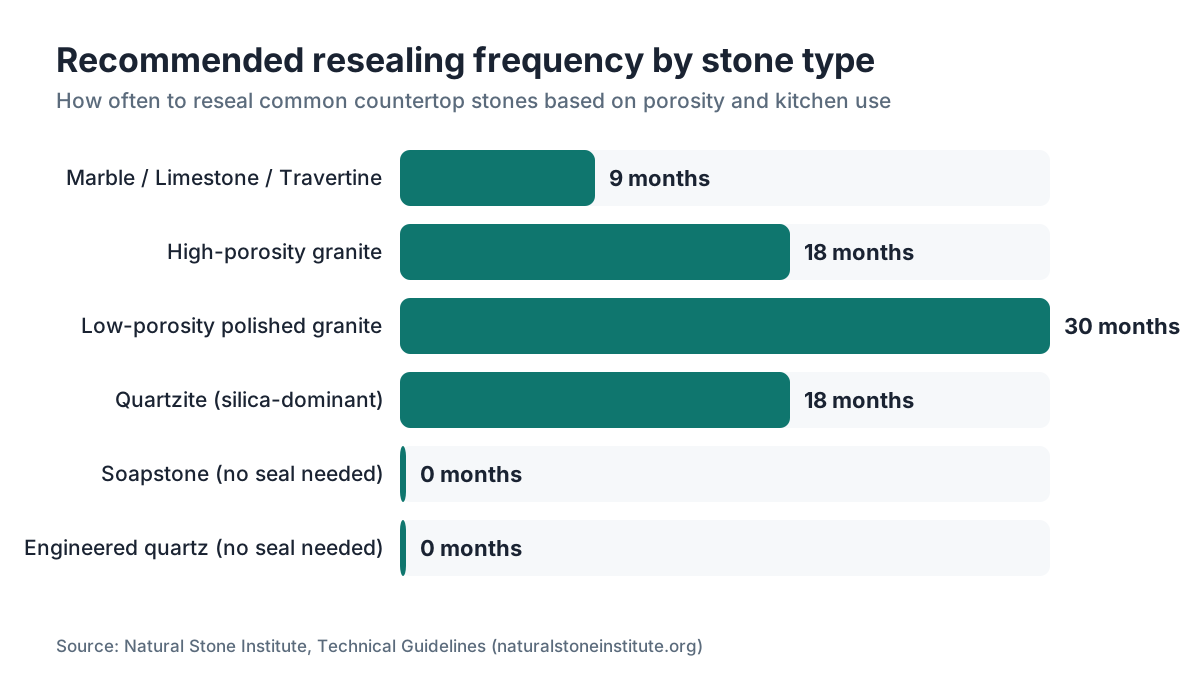
Typical resealing schedules by stone type:
| Stone Type | Typical Resealing Interval |
|---|---|
| Polished granite (low porosity) | Every 2-3 years |
| Granite (high porosity, darker stones) | Every 1-2 years |
| Marble, limestone, travertine | Every 6-12 months |
| Quartzite (silica-dominant) | Every 1-2 years |
| Soapstone | Never (mineral oil only) |
| Engineered quartz | Never (resin binder, not porous) |
These ranges come from fabricator guidance and the Natural Stone Institute [2]. Actual intervals move with the stone and how hard you use it. Trust the water drop test over the calendar.
How do you remove stains from stone countertops?
Stain removal on natural stone almost always means a poultice: a thick paste you spread over the stain, let dry, and remove. As it dries it draws the staining material back out of the pores. It's simpler than it sounds.
Oil-based stains (cooking oil, butter, grease): Mix baking soda with a little dish soap and enough water for a thick paste. Spread it a quarter inch thick over the stain, cover with plastic wrap, tape the edges, and wait 24-48 hours. The paste has to dry slowly to pull the oil up. Remove it, wipe clean, reseal.
Organic stains (coffee, tea, wine, fruit juice): Same method, but use baking soda mixed with 3% hydrogen peroxide from the drugstore. At 3%, peroxide is mild enough not to hurt sealed marble in short contact, but don't repeat it on unsealed stone or leave it longer than 48 hours.
Ink or dye: Isopropyl alcohol on a cotton ball, blotted, not rubbed.
Rust stains: These are the hard ones. Rust comes from metal left wet on the surface or from iron inside the stone itself. Stone-specific rust removers exist (Iron Out gets used, but it can etch acid-sensitive stones, so test first). For anything widespread, a stone restoration pro is usually the right call.
The EPA's Safer Choice guidance notes that many commercial stain removers contain chemicals harsh enough to need ventilation [5]. Open a window and wear gloves no matter which method you pick.
One more thing. A stain that's been sitting for months rarely lifts in one pass. Expect two or three applications.
Can you use vinegar, bleach, or hydrogen peroxide on stone countertops?
This is the question that starts the loudest arguments online, so let's get specific.
Vinegar: No, on any calcite-containing stone. On high-silica granite and quartzite, one small contact probably won't leave visible damage, but there's no reason to use it. Vinegar sits around pH 2.5. Polished marble etches within seconds of contact [2]. Skip it.
Bleach: Complicated. Dilute bleach (sodium hypochlorite at 0.5-1%) sanitizes stone without instant damage, and some pros use it on grout lines. But repeated use on polished stone degrades the finish and strips any sealer from the pores. Silestone and Caesarstone both tell you in writing to avoid bleach [1]. If you need to disinfect, 70% isopropyl is safer and works as well.
Hydrogen peroxide (3%): Fine for occasional stain removal on granite and some marble. It can lighten very dark stones with repeated use, so test first. At 3% it's close enough to neutral that short contact on sealed marble is unlikely to etch, but it isn't a daily cleaner.
The short version: soap and water daily, 70% isopropyl to disinfect, nothing acidic on any stone ever.
What's the best daily cleaning routine for stone countertops?
Consistency beats products. Fabricators with 20 years in the trade all say the same thing: the counters they reseal most often live in houses where people grab whatever spray is under the sink.
The daily routine that actually works:
- After cooking or eating, clear the surface and wipe with a damp microfiber cloth. No soap needed unless it's greasy.
- For grease or stuck food, add one drop of dish soap to the cloth. One drop.
- Wipe the whole surface with a clean damp cloth to rinse the soap off.
- Dry with a dry cloth. Every time.
That's it. About 90 seconds.
Want a spray for convenience? Buy a pH-neutral stone cleaner and park it by the sink. Stonetech Daily Cleaner, Weiman Granite Cleaner, and similar products run about $8-12 a bottle. They're not magic, but they won't strip your sealer or etch your marble.
On kitchen countertops generally, the most common mistake is leaving wet items to sit, especially metal cans that rust and mark, and cutting boards that trap moisture against the stone.
Fabricators running countertop quoting software like SlabWise often attach a care sheet to finished jobs. If you got one, it probably says most of what's on this page.
How do you clean soapstone, concrete, and other less common stone countertops?
Not every stone plays by the granite-and-marble rules, and your counters might be neither.
Soapstone: Made mostly of talc and magnesite, soapstone is non-porous and acid-resistant [6]. It doesn't need sealing in the usual sense, and it laughs off vinegar that would ruin marble. Cleaning is genuinely easy: dish soap and water. The traditional treatment is food-grade mineral oil rubbed in now and then, which darkens the stone and deepens the color, but that's looks, not function. See the full guide to how to clean soapstone countertops.
Concrete: Concrete counters are porous, usually finished with a penetrating sealer or a topcoat (wax or epoxy). If yours has a topcoat, use mild dish soap and skip anything abrasive that would scratch it. If it's penetrating-sealed only, treat it like granite: pH-neutral cleaners, periodic resealing. Concrete stains fast from wine and oil once the sealer fades. More in the guide to concrete countertops.
Travertine and limestone: Treat these exactly like marble. They're calcite-dominant and etch badly from acid. Seal every 6-12 months.
Slate: Dense, low porosity, low fuss. Dish soap and water. Occasional sealing helps but it's nowhere near as demanding as marble or travertine.
For non-stone surfaces, the chemistry changes completely. See the guides to laminate countertops and Corian countertops.
When should you call a professional instead of cleaning it yourself?
Most stone cleaning is a DIY job. A few situations aren't, and pushing ahead usually makes them worse. Here's when to stop and call a stone restoration pro.
Call a professional when:
- You have deep etching (rough to the touch, past dull) over a large area. Polishing powder handles small spots; a large etch needs diamond pads and a machine.
- Cracks or chips have appeared. These get filled with colored epoxy matched to the stone. You can DIY it, but matching the color convincingly is hard.
- The stone was refinished with the wrong product (say, a wax topcoat a previous owner rolled onto marble) and needs stripping.
- Rust staining is widespread. Restoration pros have oxalic acid treatments and professional poultice products you can't buy retail.
For fabricators: when customers call about widespread etching, it's almost always sealer failure or acid exposure, not a defect in the slab. A note in your job packet pointing to a cleaning guide (or a resource like SlabWise's homeowner guides) heads off a lot of these calls.
Professional stone restoration usually runs $3-8 per square foot for polishing and $5-15 per square foot for heavier resurfacing, though prices swing hard by region. Treat those as rough industry ranges and get local quotes for real numbers.
Frequently asked questions
Can I use dish soap on stone countertops every day?
Yes, in small amounts. A single drop of plain dish soap on a damp cloth is safe daily on granite, marble, quartzite, and most natural stone. The key is rinsing thoroughly so no soap film builds up. Soap residue left to dry attracts dirt and slowly dulls the finish over weeks of accumulation.
Why can't you use vinegar on stone countertops?
Vinegar sits around pH 2.5, acidic enough to dissolve the calcite in marble, limestone, and travertine within seconds. The result is etching: dull, rough patches in the polished surface that won't clean away. Even on harder stones like granite there's no upside, and vinegar strips your sealer faster than plain cleaners do.
How do you know if your stone countertop needs to be resealed?
Do the water drop test. Pour a tablespoon of water on the surface and wait 5 minutes. If it beads up, the sealer is working. If the water darkens the stone within 1-2 minutes, the pores are open and it's time to reseal. The Natural Stone Institute names this as the standard field test for sealer effectiveness.
Is rubbing alcohol safe on granite and marble?
Isopropyl alcohol at 70% is safe on sealed granite and marble as an occasional disinfectant. It isn't acidic, so it won't etch marble, and it won't strip the sealer the way bleach does. Spray on, wait 30 seconds, wipe, and dry. Don't use it daily, since repeated alcohol exposure can dry the surface over time.
What removes hard water stains from stone countertops?
On granite or quartzite, a paste of baking soda and water left 15-20 minutes, then wiped off, usually lifts hard water stains. Never use commercial lime-scale removers on calcite stones like marble or travertine; they almost always contain acid and will etch. On marble, the only safe option is a stone-specific hard water remover with a neutral pH.
Can bleach be used on granite countertops?
Diluted bleach won't destroy granite outright, but it degrades the sealer in the pores and dulls the finish with repeated use. There's no reason to use it when 70% isopropyl alcohol disinfects just as well without the downsides. Most granite fabricators and the Natural Stone Institute advise against bleach as a routine cleaner.
How do you get cooking oil stains out of granite or marble?
Make a poultice from baking soda and dish soap thinned with water to a thick paste. Spread it a quarter inch thick over the stain, cover with plastic wrap taped at the edges, and wait 24-48 hours. Remove the paste, wipe clean, and repeat if needed. Oil that has soaked in for months may take two or three applications.
Are spray cleaners like Windex or Method safe for stone?
No. Windex contains ammonia, which is alkaline enough to degrade stone sealers over time even though it's less harmful than acid. Method All-Purpose and similar "natural" sprays often carry citric acid or chelating agents that etch marble and limestone and strip sealer from granite. Use a spray formulated as pH-neutral for natural stone instead.
Does cleaning affect how long stone countertop sealer lasts?
Yes, a lot. Alkaline degreasers, excess dish soap, or any solvent-based cleaner pulls penetrating sealer out of the pores far faster than normal wear. Homeowners who grab whatever spray is handy often reseal every 6-12 months instead of the typical 1-3 years for granite. A mild, pH-neutral cleaner used consistently protects the sealer.
Can you use the same cleaning method on all types of stone countertops?
The basics match: mild soap, warm water, dry thoroughly. The tolerance for mistakes doesn't. Quartzite and granite are far more forgiving than marble, limestone, or travertine, which etch almost the instant acid touches them. Soapstone is the most forgiving of all because it's non-porous and acid-resistant. Engineered quartz follows its own rules thanks to the resin binder.
How do you clean the seams in stone countertops?
Seams are usually filled with color-matched epoxy by the fabricator. Clean them with the same mild soap and water you use on the stone. Avoid running water along the seam line for long stretches, since water can work into a poorly bonded joint. If a seam lifts or separates, that's a fabrication issue to address; no amount of cleaning fixes it.
Is it safe to use steam cleaners on stone countertops?
Steam cleaning isn't recommended for natural stone. The heat and moisture can force water deep into the pores, drive it under the sealer, and in bad cases cause thermal shock in stones with natural micro-fractures. On engineered quartz, sustained heat can soften or discolor the resin. Stick to room-temperature water and a cloth.
Sources
- Silestone by Cosentino, Care and Maintenance Guide: Quartz manufacturers including Silestone explicitly advise against using bleach and solvents on engineered quartz surfaces.
- Natural Stone Institute, Technical Manual and Care Guidelines: The Natural Stone Institute recommends using only mild, non-abrasive cleaners, avoiding acids, and using the water drop test to determine when resealing is needed.
- USGS, Water Science School, Hardness of Water: Water hardness above 200 ppm is common in the U.S. Southwest and parts of the Midwest and leaves mineral deposits on surfaces when water evaporates.
- CDC, Hygiene and Cleaning at Home: The CDC recommends 70% isopropyl alcohol as an effective disinfectant for non-porous household surfaces.
- U.S. EPA, Safer Choice Program: The EPA's Safer Choice guidance notes that many commercial stain removers contain chemicals requiring ventilation during use.
- USGS, National Minerals Information Center (Talc and Pyrophyllite): Soapstone is composed primarily of talc, which is non-porous and chemically inert, explaining its resistance to acid and low maintenance needs.
- ASTM International, Standard C1721 for Dimension Stone: ASTM standards for dimension stone classify stones by porosity and absorption rates, which directly influence sealing requirements and cleaning vulnerability.
- Natural Stone Institute, Dimension Stone Design Manual: Marble and calcite-containing stones exhibit measurable surface etching on contact with acids as mild as lemon juice (pH approximately 2.0-2.6).
- NSF International, Standard 51 Food Equipment Materials: Food-contact surface cleaners and disinfectants must meet NSF 51 requirements; 70% isopropyl alcohol meets food-safe disinfection thresholds.
- USGS, National Minerals Information Center (Granite and Natural Stone): Granite is a silicate igneous rock with low to moderate porosity depending on mineral composition, requiring sealing on a 1-3 year interval in residential applications.
Last updated 2026-07-09