TL;DR
- Marble needs a penetrating impregnator sealer, not a topical coating.
- Seal it every 6 to 12 months in kitchens, every 1 to 3 years in bathrooms.
- The water-bead test tells you when protection has failed.
- A quality quart runs $20 to $60 and lasts several applications.
- No sealer stops acid etching.
- Only re-polishing fixes that.
What does a marble countertop sealant actually do?
Marble is a calcium carbonate stone. It's porous, it reacts with acids, and it scratches more easily than granite. A sealant fixes exactly one of those three problems: porosity. Nothing else.
A penetrating impregnator soaks into the stone's pore network and cures into a water-hating barrier. Water, juice, coffee, and oil have to sit on the surface longer before they migrate down and stain the layer underneath. You still wipe spills fast. The sealer just buys you time, usually a few minutes to half an hour depending on the product and how thirsty the stone is.
Here's what a sealer cannot do. It cannot stop etching. Etching is chemistry, not staining. When lemon juice, vinegar, or a wet tomato touches marble, sealed or not, the acid eats the calcium carbonate and leaves a dull, slightly rough spot that catches light differently. No impregnator on the market prevents that [1]. If somebody sold you an "etch-proof marble sealer," they oversold it.
Topical sealers and wax coatings sit on top of the stone instead of soaking in. They do block both stains and mild etching, but they change the look and feel, wear unevenly, need stripping before you can reapply, and mostly don't belong on kitchen counters. Most stone care pros steer clear of them on marble.
What type of sealer is right for marble countertops?
You want a fluorocarbon aliphatic resin impregnator, which is a mouthful for what people usually just call a solvent-based or water-based penetrating sealer. The active ingredients bond to the silica in the stone's mineral structure. The pores stay physically open so the stone breathes, but the pore walls turn water-repellent and oil-repellent.
Solvent-based impregnators usually penetrate deeper and last longer on dense, low-porosity marbles. Water-based formulas got much better over the last decade. They emit far less VOC and are easier to work with indoors without fussing over ventilation. On typical Carrara or Calacatta, a good water-based product is plenty. On very dense Thassos or a honed white, you may squeeze more life out of a solvent-based formula.
Products worth knowing: Tenax Hydrex, StoneTech BulletProof, Miracle Sealants 511 Impregnator, and Aqua Mix Sealer's Choice Gold. All widely used in the trade. A quart runs roughly $20 to $60 and covers around 200 to 500 square feet depending on porosity [2]. Most residential kitchens need one quart per application.
Skip anything labeled "enhancing sealer" unless you actually want the stone to look permanently wet or darker. Those are fine on slate or some granites. On white marble they change the color in a way most homeowners don't expect and can't easily undo.
For how marble's sealing needs stack up against harder stones, the granite countertops guide covers why granite needs sealing less often.
How do you know if your marble countertop needs sealing?
Run the water-bead test. It's the standard field check stone pros use, and it takes 15 minutes. Pour about a quarter cup of water onto the marble and leave it, no wiping, for 10 to 15 minutes. Then look at two things: is the water still beading up into a dome, or has it spread flat and started to darken the stone under it?
Beads up? Your sealer works. Don't re-seal.
Spreads flat and the stone looks wet or dark underneath? The sealer is spent. Apply a fresh coat soon, before a stain gets a chance to set.
Run the same test with mineral oil or olive oil to check oil resistance, because some sealers repel water better than oil. Let the oil sit 5 minutes and see whether it darkens the stone.
One caution on new tops. Freshly fabricated marble may already carry a sealer the fabricator applied before delivery. Ask what they used and when. Many shops seal on the bench as a standard finishing step [3]. If yours did, you may not need to re-seal for 6 to 12 months. Our countertop installation guide lists what to ask before the crew leaves the job site.
How often should you seal marble countertops?
Three things drive frequency: location, finish, and how hard the surface gets used.
Kitchen counters catch acid spills, heat, cleaning products, and constant scrubbing. Re-seal every 6 to 12 months. Plenty of fabricators just tell people to seal kitchen marble once a year, and that's sound advice.
Bathroom vanities have it easy. Water and soap are the main threats, and neither chews through sealer fast. Once every 1 to 3 years usually covers it.
Finish matters because honed marble is a lot more porous than polished. Polishing closes the surface pores mechanically. Honing leaves them open. A honed surface drinks up sealer faster and burns through it faster, so lean toward the frequent end of the range.
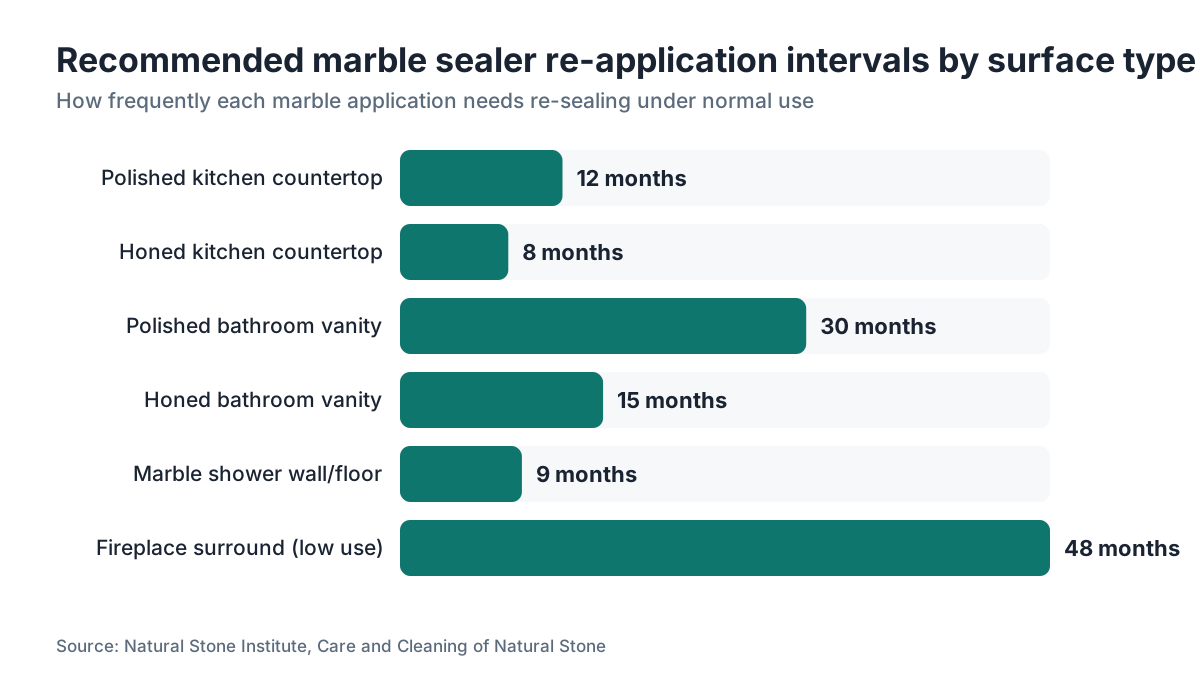
Here's a quick reference:
| Surface & Location | Recommended Re-seal Interval |
|---|---|
| Polished kitchen countertop | Every 12 months |
| Honed kitchen countertop | Every 6 to 9 months |
| Polished bathroom vanity | Every 2 to 3 years |
| Honed bathroom vanity | Every 12 to 18 months |
| Fireplace surround (low use) | Every 3 to 5 years |
These are starting points, not promises. Run the water-bead test every few months and let the stone tell you what it needs.
How do you apply marble sealer correctly?
The process is simple, but the order matters. Skipping steps is where most homeowners trip.
Start with a clean, dry surface. Any wax, old topical sealer, or cleaning residue has to come off first, either with a stone-safe cleaner or a dedicated stripper. Read your sealer's label. Some want the stone bone dry, meaning you wait 24 hours after any wet cleaning before you apply [4].
Apply with a clean, lint-free cloth or a foam pad. Work in sections of about 3 to 4 square feet. Lay it on liberally, keep the surface wet with product for the time on the bottle (usually 5 to 15 minutes), then buff off every trace of excess before it dries. This is the step people rush. Let impregnator dry on the surface and it leaves a white haze that only a solvent removes. Keep a second dry cloth in hand and buff as you go.
For very porous marble, a second coat while the first is still slightly tacky (check the instructions) deepens the protection. Most residential marble doesn't need more than two coats.
Ventilate the room, especially with solvent-based products. Wear nitrile gloves. Keep kids and pets out until the sealer fully cures, typically 24 to 72 hours depending on the product and room temperature. OSHA's Hazard Communication Standard requires access to Safety Data Sheets for the chemical sealers you use [5], so read the SDS before you open the can.
One thing fabricators know that most homeowners don't: temperature matters. Apply when the stone sits between 50 and 80 degrees F. Cold stone absorbs unevenly. Very warm stone, say near a sunny window in July, can flash off the product before it soaks in [10].
What is the difference between sealing and polishing marble?
They're two different jobs, and homeowners mix them up constantly. That confusion leads straight to disappointment.
Sealing protects the stone from soaking up stains. It changes nothing about the shine. It fixes no scratches. It removes no etching.
Polishing is a mechanical or chemical process that closes surface pores, buffs out micro-scratches, and brings back the reflective finish on polished marble. If your marble has etch marks, those dull, often ring-shaped spots from glasses and drips, re-sealing does nothing for them. You have to re-polish those areas.
Minor etch marks on polished marble sometimes buff out with a marble polishing powder (tin oxide or similar) and a felt pad, worked in circles with pressure. Deep scratches, heavy etching, or large areas need a stone restoration contractor with diamond-abrasive gear.
Don't reach for vinegar, baking soda, or generic "stone polish" sprays. Vinegar etches on contact. Baking soda is alkaline and dulls the finish over time. Most spray polishes leave a slippery wax that fouls up future sealing [1].
For how sealing plays out across stone types, our how to clean stone countertops guide runs from quartzite to soapstone.
Does sealing marble prevent all stains?
No. Being straight about that upfront saves a lot of grief.
A properly sealed marble counter resists staining from water-based and oil-based liquids and most common kitchen spills, as long as you wipe them within a reasonable window. The Marble Institute of America, now part of the Natural Stone Institute, has long called sealer a stain inhibitor rather than a stain preventer [6]. That's the honest framing.
The stains most likely to sink into even sealed marble: red wine left more than 30 minutes, heavily pigmented cooking oils soaked into a hot slab, and rust from metal objects sitting on wet marble. Coffee and tea tannins are stubborn too if they sit overnight.
Oil stains can sometimes be pulled out with a poultice. Mix diatomaceous earth or flour with a solvent (acetone for oil, hydrogen peroxide for organic stains) into a thick paste, spread it on, cover with plastic wrap, leave it 24 to 48 hours, then remove. The Natural Stone Institute's care guides walk through poultice methods in detail [6]. Expect to repeat it more than once.
The habit that beats any sealer costs nothing: wipe spills right away. Every time.
Can you seal marble yourself or do you need a professional?
You can do this yourself. Sealing marble is one of the few countertop tasks that truly doesn't need a pro for a standard kitchen or bath.
Buy a quality penetrating impregnator from a stone supply store or online. Follow the label. Set aside 30 to 60 minutes for a typical kitchen, prep and buffing included. Product cost runs $20 to $60 [2].
Pros earn their fee on restoration: drawing out deep stains with professional-grade poultices, re-honing or re-polishing damaged surfaces, or applying industrial sealers on commercial jobs. For a residential kitchen re-seal once a year, there's no reason to pay $150 to $300 for a service call when the DIY version is this easy.
One exception. If your stone came from the fabricator with a factory coating or color enhancement, check before you put anything on top. Some factory treatments don't play well with aftermarket sealers. Ask the fabricator what was applied and get the product name in writing.
Fabricators tracking marble jobs through shop software like SlabWise can log the sealer applied on delivery right in the job record, which makes those 12-month follow-up calls painless.
How much does marble countertop sealing cost?
DIY math is simple. A quality quart of penetrating impregnator costs $20 to $60 depending on brand and formula. A quart covers 200 to 500 square feet on marble, though porous or honed stone drinks more product and gives you less coverage [2]. Most residential kitchens run 30 to 80 square feet of countertop, so one quart lasts several applications.
Hire a stone care pro and expect $1.50 to $3.50 per square foot for sealing alone, or $150 to $300 for a typical kitchen, depending on your region [7]. Many pros bundle sealing into a larger restoration package.
Full restoration (honing, polishing, deep stain removal) runs much higher. A hone-and-seal service commonly costs $5 to $15 per square foot.
Other materials carry very different maintenance bills. Quartzite needs sealing attention close to marble's, while engineered quartz and surfaces like Cambria countertops are non-porous and need no sealing at all.
What household products damage marble sealer or the stone itself?
The don't-use list for marble is longer than most people guess, which is a problem given that marble usually lives in a kitchen surrounded by all of it.
Acidic cleaners come first. Anything with vinegar, lemon, citric acid, or a "natural" acid base etches marble on contact. That includes a lot of popular green products. Read labels.
Bleach and ammonia won't etch the way acids do, but they degrade impregnator sealers over time and can discolor some marbles. Don't use them regularly.
Abrasive scrubbers, steel wool, rough pads, and powdered cleansers scratch the polished surface. Those micro-scratches trap staining material and wear down the sealer layer.
The EPA's Safer Choice program certifies cleaning products for environmental and safety standards, and many stone-safe cleaners carry the label [8]. For marble specifically, chase pH-neutral formulas over "natural" or "green" claims, which mean nothing about acidity.
The only cleaners right for daily marble use are plain warm water, a little mild dish soap, or a dedicated pH-neutral stone cleaner. Dry thoroughly afterward. Standing water near edges or seams can creep under the sealer over time.
For a wider look at care by stone type, the how to clean quartzite countertops and how to clean soapstone countertops guides show how different minerals want different handling.
How does marble sealing compare to other countertop materials?
Marble sits in the middle of the maintenance range. It asks for more attention than engineered stone but less than butcher block countertops, which need oil or wax regularly to keep from drying and cracking.
Granite countertops need sealing too, but granite is denser and less reactive. Many granites hold sealer for 2 to 5 years before the water test shows it's spent. Marble, especially honed marble, usually wants re-sealing every year.
Quartzite (not the same as engineered quartz) is another natural stone that needs sealing and is acid-sensitive like marble, though some quartzites run a bit denser. Soapstone is actually non-porous and needs no sealing at all, though people oil it for looks.
Engineered quartz, laminate countertops, Formica countertops, and Corian countertops need zero sealing. If maintenance weighs on your decision and you're still choosing, that's worth knowing now.
The short version:
| Material | Needs Sealing | Acid-Sensitive | Re-seal Frequency |
|---|---|---|---|
| Marble | Yes | Yes (strongly) | 6 to 12 months |
| Quartzite | Yes | Varies | 12 to 24 months |
| Granite | Yes | No | 2 to 5 years |
| Soapstone | No | No | N/A |
| Engineered quartz | No | No | N/A |
| Butcher block | Oil/wax only | No | Every 1 to 3 months |
For the full picture on picking a material, the kitchen countertops and marble countertops guides cover selection beyond sealing.
What do fabricators need to know about sealing marble before delivery?
If you run a shop, sealing on the bench before delivery is standard in most operations and customers notice. A few specifics matter.
Seal after final polishing or honing, never before. Any abrasive work done after sealing strips the sealer right off in those spots.
Allow full cure before templating or installation if you sealed early. Most products need 24 to 72 hours before the stone gets wet or worked again [4].
Document what you apply. Brand, product name, and date should travel with the job ticket. Homeowners ask at the 12-month mark, and your installer or CS team won't remember which product went on a specific job unless it's recorded. Shops using job management and quoting software can drop this into a note field on the work order so it's retrievable anytime.
For exterior or commercial marble, reach for a premium solvent-based impregnator and print a shorter re-seal interval on the care card you leave behind. Commercial traffic burns through sealer faster than home use. The Natural Stone Institute publishes standards on stone care and fabricator responsibilities worth keeping on file [6].
One practical note: if you're sealing volume, buy gallons. Per-square-foot cost drops a lot compared to quart packaging.
Frequently asked questions
Can I use any stone sealer on marble, or does it need to be marble-specific?
Most penetrating impregnator sealers work on marble, granite, and other natural stones because they bond to silica minerals present in all of them. Check the label for marble compatibility. Avoid enhancing sealers unless you want to permanently darken the stone. Products marketed specifically for marble are fine, but a "granite sealer" from a reputable brand typically works on marble too.
How do I remove old sealer from marble before applying a new coat?
If the old sealer is an impregnator, you usually don't need to strip it first, since penetrating sealers don't build up on the surface. If there's a topical wax or coating, use a dedicated stone stripper or the solvent the coating maker recommends. Apply the stripper, let it dwell, scrub, rinse thoroughly, let the stone dry completely for 24 hours, then apply your new sealer.
Will sealing marble make it shine or look different?
A penetrating impregnator should leave no visible change when applied and buffed correctly. If it leaves a haze, you didn't buff off enough excess before it dried. Topical and enhancing sealers do change the look, which is why most fabricators avoid them on marble. If your stone looks different after sealing, buff it with a dry cloth right away before the product cures.
Can sealer fix etching on marble?
No. Etching is a chemical reaction that physically alters the stone surface. Sealer only addresses porosity. To remove etch marks you need mechanical polishing: marble polishing powder for minor marks, or professional diamond-abrasive refinishing for larger damage. Sealing after re-polishing protects the restored surface, but sealing alone will never make etch marks disappear.
Is sealed marble safe for food prep?
Yes, once the sealer fully cures (24 to 72 hours after application, per the label). Cured penetrating impregnators are inert. That said, marble isn't ideal for direct food prep because it scratches and etches easily from acidic foods like citrus. Many bakers love marble for rolling pastry because it stays cool, and that use is safe with a properly cured sealer.
How long does it take for marble sealer to dry and cure?
Most penetrating impregnators feel dry to the touch within an hour or two, but full cure takes 24 to 72 hours depending on the product, temperature, and humidity. During cure time, keep the surface dry and off-limits. The label specifies the cure window. Don't test with water until after the full cure or you'll get a false negative on the bead test.
What happens if I never seal my marble countertops?
Unsealed marble stains more easily and more permanently from oil, wine, coffee, and other kitchen spills. It still etches from acids regardless of sealing. Over years without sealing, the stone develops a patina of micro-stains that are hard to remove. Some people leave marble unsealed on purpose and accept that character. Others want the original look preserved. Sealing is a choice, not an absolute requirement.
Does new marble countertop come pre-sealed from the fabricator?
Many fabricators seal marble as part of finishing before delivery, but not all do. Ask directly: what sealer was applied, what product, and when. Get the product name so you can use a compatible sealer for re-applications. If they didn't seal it, apply a coat yourself after installation and before the countertop sees any use.
Can I seal marble in a bathroom the same way as a kitchen?
Yes, the same penetrating impregnators work in bathrooms. The difference is frequency: bathroom marble sees less acid and less heavy use, so it holds sealer longer. Re-seal vanity tops every 1 to 3 years rather than annually. Marble shower walls and floors need more frequent sealing because they stay wet; every 6 to 12 months is right for those surfaces.
Is there a sealer that permanently protects marble so I never have to re-seal?
No product permanently seals marble in a single application. Lifetime-protection claims are marketing. Impregnators degrade from cleaning products, abrasion, acid exposure, and UV light. Even the best need re-application every 1 to 5 years depending on use and location. Some professional-grade solvent-based sealers outlast consumer products, but none last forever.
How do I know which sealer brand is best for my specific marble?
The most reliable move is asking your fabricator or supplier what they use in the shop. Tenax, StoneTech, Miracle Sealants, and Aqua Mix are all well regarded in the trade. For high-porosity or honed marble, a solvent-based formula generally penetrates better. For polished white marble in a typical home, any quality water-based impregnator from a reputable stone-care brand performs well.
Can I seal marble countertops while they're still installed in my kitchen?
Yes, and that's the normal case for re-sealing. Clear the counter, clean it with a pH-neutral stone cleaner, let it dry thoroughly, then apply the sealer in small sections, keeping it wet for the dwell time and buffing off the excess. Ventilate the room. Protect adjacent cabinets and walls from drips with painter's tape. The process is the same whether the stone is installed or on a bench.
Sources
- Natural Stone Institute, Technical Bulletin on Stone Care and Maintenance: No impregnator sealer prevents acid etching on marble; etching is a chemical reaction with calcium carbonate that sealers do not stop.
- Marble and Granite Inc., Sealer Product Coverage Guidance: Quart-size penetrating impregnator sealers cost roughly $20 to $60 and cover approximately 200 to 500 square feet depending on stone porosity.
- Natural Stone Institute, Fabricator Standards and Shop Practices: Many fabrication shops apply a penetrating sealer to natural stone as a standard finishing step before delivery and installation.
- Miracle Sealants Company, 511 Impregnator Product Instructions: Sealer application requires a clean, dry stone surface; most products require 24-hour drying time after wet cleaning before sealer is applied.
- U.S. Occupational Safety and Health Administration, Hazard Communication Standard: OSHA's Hazard Communication Standard requires that workers using chemical products have access to Safety Data Sheets, which cover ventilation and handling guidance for sealers.
- Natural Stone Institute, Care and Cleaning of Natural Stone: The Natural Stone Institute describes sealers as stain inhibitors rather than stain preventers, and documents poultice methods for removing oil and organic stains from marble.
- Angi, Stone Countertop Sealing Cost Guide: Professional sealing of stone countertops typically costs $1.50 to $3.50 per square foot, or $150 to $300 for a typical kitchen, depending on region.
- U.S. Environmental Protection Agency, Safer Choice Program: The EPA's Safer Choice program certifies cleaning products that meet environmental and safety standards; pH-neutral stone cleaners may carry this certification.
- U.S. Geological Survey, National Minerals Information Center: Marble is a metamorphic rock composed primarily of calcium carbonate (calcite), which reacts with acids and contributes to the stone's porosity characteristics.
- StoneTech by Laticrete, Professional Sealer Application Guidelines: StoneTech recommends applying BulletProof sealer at temperatures between 50 and 80 degrees F and allowing 24 to 72 hours of full cure before exposing the surface to water.
Last updated 2026-07-09