TL;DR
- Treat new butcher block with food-safe mineral oil, applying 5-7 coats over the first week, then monthly after that.
- For a more durable surface, use a penetrating oil-wax blend or polyurethane if the top won't touch food directly.
- Sand out scratches with 120-grit, re-oil, and your countertop can last decades.
What does treating butcher block actually do?
Raw wood is porous. Leave an untreated butcher block countertop sitting in a kitchen and it will absorb water, swell, crack, and eventually grow bacteria in those cracks. Treating the surface fills the wood grain with oil or a film-forming finish, which slows moisture absorption dramatically and makes the surface easier to clean.
There are two fundamentally different approaches. Penetrating treatments, mainly oils and oil-wax blends, soak into the wood fibers and harden there. They don't leave a glassy film on top. Film-forming finishes like polyurethane or lacquer sit on the surface as a hard shell. Each has real trade-offs worth understanding before you open a can.
One thing people skip: treating the underside matters as much as the top. Wood takes on moisture from all directions, and an oiled top over a bare bottom will cup or warp over time. The Forest Products Laboratory at the USDA, which publishes the most widely cited research on wood moisture and movement, notes that wood shrinks or swells roughly 1% for every 4% change in moisture content in most hardwoods [1]. That's enough movement to crack a joint or pull a countertop off its substrate when only one face is sealed.
Oak drinks oil faster than denser species like maple, because the open grain of red or white oak leaves wide channels for it to soak into. Expect to use more product on your first few coats.
What are the different types of butcher block finishes and which is best?
There's no single best finish. The right choice depends on whether the surface sees food prep, how much maintenance you're willing to do, and the look you want.
| Finish type | Food-safe when cured | Maintenance frequency | Repairability | Best use case |
|---|---|---|---|---|
| Pure mineral oil | Yes | Monthly | Very easy (sand + re-oil) | Active cutting boards and prep surfaces |
| Mineral oil + beeswax blend | Yes | Every 1-3 months | Easy | Prep surfaces, warmer appearance |
| Hardwax oil (e.g., Rubio Monocoat) | Yes after full cure | Every 1-2 years | Spot-repairable | High-traffic counters with some water exposure |
| Waterlox (tung oil resin) | Yes after full cure | Every 2-5 years | Moderate (sand and recoat) | Counters near sinks, island tops |
| Polyurethane | Not for direct food contact (once hardened debate exists, but most fabricators avoid it on prep areas) | Every 3-7 years | Difficult (full strip needed) | Decorative counters, bars, non-prep islands |
| Danish oil / linseed | Not recommended | Varies | Moderate | Legacy use; not advised for kitchens now |
Mineral oil is the most common starting point because it's cheap, food-safe anywhere, and sold at any pharmacy. A quart at a drugstore runs $6-12 [2]. The downside: it never fully cures (it's not a drying oil), so the protection is temporary and needs regular reapplication.
Hardwax oils like Rubio Monocoat have won a following in professional fabrication shops over the past decade. They penetrate, then cure by polymerization, leaving a surface that repels water meaningfully better than plain mineral oil. Rubio's own published data shows the product reaches 80% cure in 5 days at 65°F [3]. They cost a lot more, $60-120 per liter, but one liter covers roughly 500 square feet per coat.
Polyurethane is fine for a decorative island or a bar top where you're not cutting food directly. It gives the best water resistance of anything on this list. But refinishing it means stripping the whole surface, which is genuinely tedious. For a working kitchen, that's a poor trade.
How do you treat a brand-new butcher block countertop step by step?
Start before the countertop is installed if you can. Treating it flat on sawhorses gives you easy access to every surface, including the underside and edges.
Step 1: Sand if needed. Most new butcher block arrives at 120-150 grit, which is fine. If there are mill marks or rough spots, sand with 120-grit, then 150-grit, always with the grain. Wipe off all dust with a clean, dry cloth.
Step 2: Apply the first coat of mineral oil. Pour mineral oil directly onto the surface. Don't be stingy. Spread it with a clean lint-free rag or a foam brush, coating the top, sides, and underside. Let it sit for 20-30 minutes. The wood will look wet and drink the oil unevenly at first.
Step 3: Wipe off the excess. Any oil sitting on the surface after 30 minutes hasn't penetrated. Wipe it thoroughly. Leave excess oil on the surface and you get a gummy, sticky finish.
Step 4: Repeat daily for 5-7 days. For a new surface, the guidance published by the American Hardwood Export Council and repeated by most major butcher block manufacturers is to apply mineral oil once a day for a week [4]. The wood gets more saturated with each coat and eventually stops absorbing as much.
Step 5: Optional wax finish. After the final oil coat has dried 24 hours, you can add a beeswax or carnauba wax layer. Rub it in with a cloth, let it haze (10-15 minutes), then buff. This adds a light sheen and a thin sacrificial layer over the oil.
Step 6: Allow full cure before heavy use. Even after the initial treatment, give the countertop 24-48 hours before putting anything wet on it.
If you're using a hardwax oil or Waterlox instead of mineral oil, follow the specific manufacturer instructions for recoat windows. Most require the first coat to tack up (2-4 hours) before the second, and they typically need only 2-3 coats total rather than 7.
How often should you re-treat or re-oil butcher block countertops?
The honest answer: it depends on how much water and traffic the surface sees, but a rough schedule is the most useful starting point.
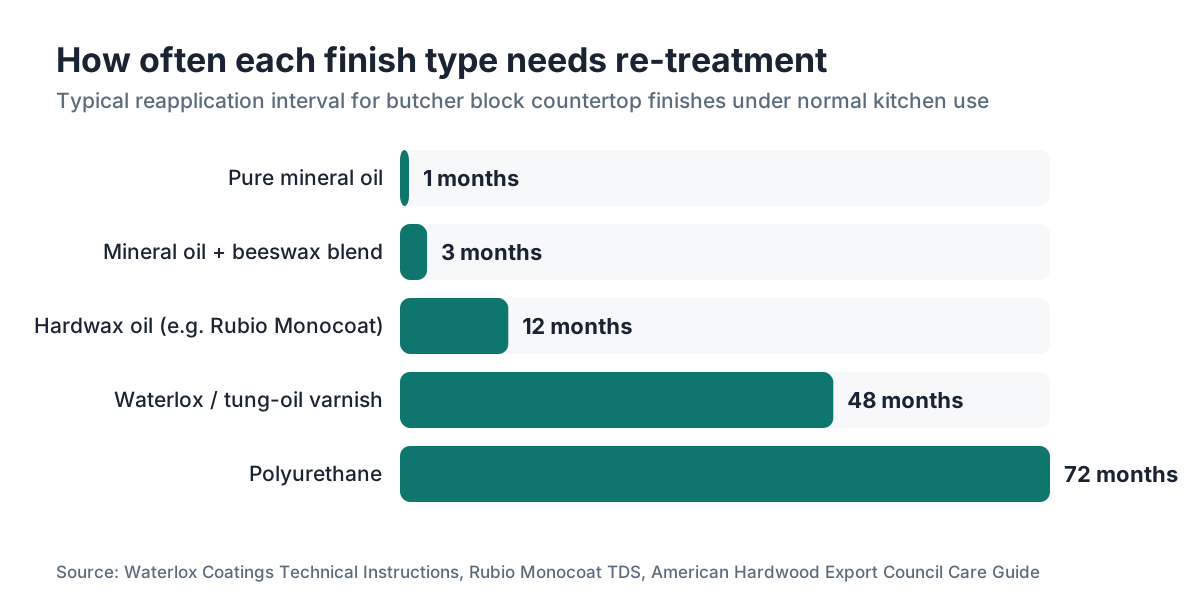
For a countertop sealed with plain mineral oil, most manufacturers and woodworking guides recommend re-oiling monthly for the first year, then quarterly or when the surface looks dry [4]. A dry surface is the real signal. If water stops beading and instead soaks in immediately, it's time.
Hardwax oil finishes need touching up far less often. A properly applied 2-coat Rubio Monocoat finish typically needs a maintenance coat (their "Refresh" product) once a year in high-traffic kitchens, and every 2-3 years in light-use applications [3].
Waterlox and other tung-oil resin finishes are more durable still, needing a recoat every 3-5 years in typical kitchen use. The company's own guidance suggests scuff-sanding with 220-grit between coats [5].
Polyurethane can go 5-10 years before the finish looks worn, but when it does wear, you generally have to strip it entirely. That means sanding back to bare wood, which adds a few hours of real work.
Here's a rule of thumb that holds up in practice: if a few drops of water on the countertop absorb within 30 seconds, you need to re-oil.
Is mineral oil really food-safe for butcher block?
Yes. Food-grade mineral oil is the recommended choice precisely because it doesn't support bacterial growth, doesn't go rancid, and has been affirmed as safe by the FDA for incidental food contact [6]. The FDA classifies white mineral oil as GRAS (generally recognized as safe) for use in food-contact applications.
Avoid linseed oil and tung oil in their raw forms on food-prep surfaces. Raw linseed oil takes weeks to cure and can go rancid. Boiled linseed oil contains metallic driers that are not food-safe. Pure tung oil is technically non-toxic once fully cured, but "danish oil" and other blended products often contain solvents or varnish that don't belong on cutting surfaces.
Beeswax and carnauba wax are both food-safe. Most commercial butcher block conditioners like Howard's Butcher Block Conditioner are a blend of mineral oil and beeswax, which is a fine product with a straightforward ingredient list.
The FDA's 21 CFR 172.878 covers white mineral oil specifically, stating it may be safely used in food as a release agent, float, binder, defoamer, and lubricant [6]. That's as clear a food-safety confirmation as exists for any wood finish ingredient.
Can you use butcher block countertops near a sink, and how does that change the treatment?
You can, but you need a more water-resistant finish than plain mineral oil if the countertop sits right up against the sink. A mineral-oiled surface near a sink that gets splashed constantly will swell, darken, and eventually grow mold in the joint if it isn't resealed often.
For countertops next to or built into a sink, most fabricators recommend Waterlox or a similar tung-oil varnish, or a hardwax oil with good water-repellency ratings. The area right around the sink cutout deserves extra attention: seal the cut edge, the underside of the cutout, and anywhere the wood is end-grain with multiple coats.
End grain is the real weak point. End grain absorbs moisture 8-12 times faster than face grain because the wood's vascular channels are exposed [1]. If your countertop has an undermount sink with exposed end grain around the cutout, give it an extra 2-3 coats of whatever finish you're using, and run a thin bead of clear silicone caulk at the actual seam between the wood and the sink basin.
The installation approach matters here too. See our guide on countertop installation for how the substrate and support structure affect long-term moisture behavior.
Some homeowners skip butcher block near sinks entirely and use a different material there. If you want to see how stone handles water in the same spot, the how to clean stone countertops guide covers sealed natural stone care.
How do you sand and refinish a damaged or stained butcher block?
This is where butcher block genuinely beats most other countertop materials. Scratches, water rings, knife marks, and even light burns sand out and re-oil. You can't do that with granite countertops or engineered stone.
For light scratches and surface stains, hand-sand with 120-grit sandpaper, always with the grain, to remove most damage. Follow with 150-grit to smooth the scratched area, feather the edges into the surrounding surface, wipe clean, and re-oil the entire top. The refinished area will look slightly different until the oil evens out over a few weeks.
For deep gouges, water damage that's caused blackening, or a surface that's completely dried out and cracked, you need more material removed. Run a belt sander or random-orbit sander with 80-grit to take material off, follow with 120-grit and 150-grit to smooth, then do a full 7-coat mineral oil treatment as if the countertop were new.
Black stains specifically are usually a reaction between water, tannins in the wood, and iron, often from a cast-iron pan sitting wet on the surface. Sand past the black layer, then treat the raw wood with a weak oxalic acid solution (wood bleach) before re-oiling if the staining runs deep [7]. Oxalic acid is the active ingredient in most commercial wood brighteners.
For fabricators tracking the scope of a refinish job, SlabWise's estimating workflow can help you cost out material and time on jobs that add surface prep and refinishing beyond templating and installation.
Full surface restoration on a badly damaged butcher block countertop takes 3-6 hours of sanding and then a full week of daily oiling. It's real work. It's still cheaper than replacement.
What is the difference between sealing and oiling butcher block?
People use these words interchangeably, but they describe different things.
Oiling means applying a penetrating product, usually mineral oil or an oil-wax blend, that soaks into the wood grain. The wood surface stays open and breathable. Water still gets in eventually. The oil just slows it down and conditions the fibers.
Sealing means applying a film-forming product, polyurethane, lacquer, or varnish, that cures into a hard shell on the surface. The wood is physically separated from the environment. A properly sealed surface repels water much more effectively than an oiled one.
Hardwax oils like Rubio Monocoat are a middle ground. They penetrate like an oil but then polymerize and cure in place, bonding at a molecular level to the wood fibers. They don't build a surface film, but the cured product resists water better than plain oil [3].
For most homeowners who plan to use the countertop for actual food prep, oiling or hardwax oil is the right choice. The surface stays food-safe and repairable, and it looks natural. For a decorative island, a home bar, or a secondary countertop that sees glasses and bottles rather than knives and cutting boards, sealing with polyurethane makes sense, because you want low maintenance and high water resistance more than easy repairs.
How do you treat an oak butcher block countertop differently than maple or walnut?
Species matters. Oak's large, open pores drink oil aggressively compared to the tighter grain of hard maple, which is the most common species for commercial butcher block. In practice this means an oak butcher block countertop may need 1-2 extra initial oiling coats before the surface reaches the same saturation level as maple.
Oak also carries more tannins than maple. Tannins react with iron and water to produce a dark gray stain, so keeping cast-iron cookware off a wet oak surface is especially important. If you use a water-based polyurethane on oak, the tannins can cause a gray or green tint in the finish. Oil-based products don't have this issue [8].
Walnut is denser than oak and has finer pores, so it behaves more like maple in absorption rate. Walnut also has a natural oiliness that makes it a bit more resistant to drying out between treatments. The dark color of walnut hides water spots more effectively than a lighter maple or oak.
End-grain blocks, common in thick island tops and traditional butcher block designs, need dramatically more initial oil than edge-grain or face-grain surfaces regardless of species, because the exposed tube-like cells wick oil straight up into the wood. Doubling your initial coat count for end-grain surfaces is not an overstatement.
For comparison, see our overview of butcher block countertops for a broader look at species options, pricing, and thickness choices.
What should you avoid putting on butcher block countertops?
A few things cause real damage that's hard or impossible to fix.
Standing water is the primary enemy. A pool of water left overnight, from a flower vase, a damp dishcloth sitting flat, or a toddler with a sippy cup, will cause swelling, warping, and eventually black water staining. Wipe up water immediately.
Heat is the second problem. Hot pots and pans set directly on wood can scorch the surface and push moisture out of the fibers faster than it can redistribute, causing cracks. Use trivets.
Harsh cleaners are the third issue. Bleach, ammonia-based cleaners, and most commercial kitchen degreasers strip oil out of the wood and can raise the grain. The only cleaning product you need on an oiled butcher block is warm water, a few drops of dish soap, and a quick dry afterward.
Raw linseed oil deserves a specific warning. It never fully cures, it can support mold growth, and it can spontaneously combust on a saturated rag left bunched up, which is a genuine fire hazard. The NFPA and most finishing suppliers warn explicitly about this [9]. Always spread oily rags flat outside to dry before disposal.
Dishwashers will destroy a butcher block faster than anything else on this list, though that's more relevant to standalone cutting boards. Hot water, steam, and detergent together strip finish and warp the wood within a few wash cycles.
How long does treated butcher block last, and when should you replace it?
A well-maintained butcher block countertop can last 20-50 years. There are commercial kitchen surfaces from the early 1900s still in use, and high-end residential installs from the 1980s still solid after multiple refinishing cycles.
The limiting factors in practice are joint integrity and structural moisture damage. If the countertop has been soaked repeatedly, the glue joints between boards can fail. Once the surface is no longer flat, refinishing gets difficult or impossible without professional planing equipment. That's typically the end-of-life signal.
Deep cracks running across multiple boards, cupping or warping that won't flatten under clamping, black rot extending more than a millimeter deep after sanding: any of these means replacement makes more sense than refinishing.
Replacement cost for butcher block ranges from about $30-60 per square foot for standard maple edge-grain at a home center up to $100-200 per square foot installed for premium species or custom end-grain work [10]. A typical 30-square-foot kitchen installation runs $900-$6,000 depending on thickness, species, and who installs it.
Compare that to a full refinish, which costs roughly $200-$500 in labor if you hire it out, or a weekend of your own time. Refinishing wins economically unless the structural damage is significant.
If you're shopping for a completely different countertop material after a butcher block that gave you trouble with water, the kitchen countertops overview compares maintenance demands across materials. For lower-maintenance options at a lower price point, laminate countertops are worth a look.
Frequently asked questions
How many coats of mineral oil does a new butcher block countertop need?
Apply 5-7 coats over the first week, one coat per day. Pour generously, let the oil soak for 20-30 minutes, then wipe off the excess. After the initial conditioning week, reapply monthly for the first year, then quarterly or whenever water stops beading on the surface. An oak butcher block countertop may need an extra coat or two because its open grain absorbs more product.
Can I use olive oil or coconut oil on butcher block instead of mineral oil?
Don't. Olive oil, coconut oil, and other food-grade plant-based oils eventually go rancid inside the wood fibers. Rancid oil smells bad and can promote mold growth. Mineral oil doesn't have this problem because it's not a biological oil and won't oxidize. Beeswax and carnauba wax are also safe. Everything else in your pantry should stay out of your countertop.
How do I get rid of water stains and black marks on butcher block?
White water rings: sand with 120-grit with the grain, then re-oil. Black stains (caused by iron or mold reacting with tannins): sand past the black layer. If the stain persists, apply a diluted oxalic acid wood bleach solution, let it dry, neutralize with a baking soda and water rinse, then sand smooth and re-oil with 5-7 coats as if the surface were new.
Is it safe to cut food directly on a sealed or treated butcher block countertop?
Yes, if you used a food-safe finish. Mineral oil, food-grade beeswax, and fully cured hardwax oils like Rubio Monocoat are all appropriate for direct food contact. Polyurethane and lacquer are not recommended for prep surfaces, though the FDA does list some hardened resins as acceptable for incidental contact. When in doubt, use a cutting board rather than cutting directly on any treated surface.
How long after oiling butcher block can I use it?
After each mineral oil coat, you can resume light use in 20-30 minutes once you've wiped the excess. For full initial treatment, the countertop is usable throughout the week-long oiling process, just keep it dry and don't cut directly on it until the last coat is finished and dry for 24 hours. Hardwax oil products require 5-7 days for full cure before heavy use.
Does butcher block need to be sealed around the sink?
Yes, this is the most important area to protect. Use Waterlox, a tung-oil varnish, or a high-quality hardwax oil around sinks, not plain mineral oil. Apply extra coats to the cut edge of any sink cutout and seal the underside of the cutout with silicone caulk at the joint. Plain mineral oil around a sink will allow water infiltration that eventually causes warping and black staining.
Can I use polyurethane on butcher block countertops?
Yes, on countertops that won't be used for food prep directly. Polyurethane gives the best water and abrasion resistance of any finish, but it forms a surface film that will eventually peel or crack, requiring full sanding back to bare wood to repair. It's a good choice for a home bar, a decorative island, or a coffee station. Avoid it on active cutting and prep surfaces.
How do you clean butcher block countertops day to day?
Warm water, a small amount of dish soap, a quick wipe, and immediate drying. That's it. Don't use bleach, abrasive scrubbers, or commercial kitchen degreasers, they strip the finish. For sanitizing after raw meat contact, a diluted hydrogen peroxide spray (3%, standard pharmacy concentration) works well and won't damage an oiled surface. Let it sit for 2 minutes, then rinse and dry.
How do you treat butcher block countertops with Rubio Monocoat?
Sand the bare wood to 150-grit and remove all dust. Mix Rubio's two-part oil per instructions. Apply a thin coat with a cloth or pad, working it into the grain, then wipe off all excess within 5 minutes. A second coat after 12-24 hours is optional for end-grain or very porous wood. Allow 5 days before heavy use. The product covers about 500 sq ft per liter.
What grit sandpaper should I use to refinish butcher block?
Start at 80-grit if you're removing significant material or old finish. Move to 120-grit to smooth the surface, then 150-grit to finish. Always sand with the grain. For light maintenance between full refinishes, 150-grit or 180-grit alone is enough to remove surface scratches. Never skip grits dramatically, going from 80 to 220 leaves 80-grit scratches that are visible under oil.
How do I treat the underside and edges of butcher block countertops?
Treat them the same as the top surface. Apply the same number of coats with the same product. Uncoated undersides allow moisture to enter from below, causing the top to cup toward the dry face. Edges are often end-grain or have exposed glue joints and are particularly vulnerable to water infiltration. Fabricators often apply a full treatment to all surfaces before installation.
How much does it cost to professionally refinish a butcher block countertop?
Professional refinishing typically runs $200-$500 for a standard kitchen installation, depending on condition and region. That includes sanding, treatment, and a return visit if multiple coats are needed. A DIY refinish costs $20-$80 in materials (sandpaper, mineral oil, optional wax) plus your time. Replacement, by contrast, runs $900-$6,000 installed depending on species and size.
Can you use Waterlox on butcher block near a sink?
Waterlox is one of the best choices for butcher block near sinks. It's a penetrating tung-oil resin that cures hard and resists water significantly better than plain mineral oil. Apply 3-4 coats, following Waterlox's specific recoat window (typically 24-48 hours between coats). After full cure, about 7 days, it's considered food-safe. Recoat every 3-5 years or when water stops beading.
How do I know when my butcher block countertop needs to be re-oiled?
The clearest signal is the water-bead test. Put a few drops of water on the surface. If they bead up and sit on top, your finish is intact. If they soak in within 30 seconds or less, the surface is dry and needs oil. Visually, a dry surface looks lighter in color and may feel slightly rough or fuzzy to the touch.
Sources
- USDA Forest Products Laboratory, Wood Handbook: Wood as an Engineering Material: Wood shrinks or swells roughly 1% for every 4% change in moisture content in most hardwoods; end grain absorbs moisture 8-12 times faster than face grain
- U.S. Bureau of Labor Statistics, Consumer Price Index commodity data: Food-grade mineral oil at pharmacy retail typically costs $6-12 per quart
- Rubio Monocoat, Product Technical Data Sheet (official product documentation): Rubio Monocoat reaches 80% cure in 5 days at 65°F; maintenance coat recommended annually in high-traffic applications
- American Hardwood Export Council, Hardwood Care and Maintenance Guide: Apply mineral oil once a day for a week on new butcher block surfaces, then monthly for the first year
- Waterlox Coatings, Technical Application Instructions: Waterlox tung-oil resin finishes need a recoat every 3-5 years in typical kitchen use; scuff-sand with 220-grit between coats
- U.S. Food and Drug Administration, 21 CFR 172.878 White mineral oil: The FDA classifies white mineral oil as GRAS and permits its use in food-contact applications as a release agent, lubricant, and binder
- USDA Forest Products Laboratory, Wood Finishing: Water Stains and Tannin Reactions: Oxalic acid (wood bleach) is effective at treating iron-tannin black stains in wood before refinishing
- USDA Forest Products Laboratory, Finishing of Wood: Oak's high tannin content can cause gray or green discoloration when water-based polyurethane is applied; oil-based finishes do not trigger this reaction
- National Fire Protection Association, NFPA 1 Fire Code Section on spontaneous combustion of oily rags: Rags saturated with drying oils including linseed oil can spontaneously combust; dispose by spreading flat outdoors or submerging in water in a metal container
- National Kitchen and Bath Association, Cost vs. Value and Countertop Material Pricing Survey: Butcher block countertops cost approximately $30-60 per square foot for standard maple edge-grain at retail; premium custom end-grain installations run $100-200 per square foot installed
Last updated 2026-07-09