TL;DR
- Most natural stone countertops (granite, marble, quartzite) need sealing every 1 to 3 years.
- Quartz, laminate, and solid surface never need it.
- A basic penetrating sealer costs $20 to $60 for a DIY job; a professional application runs $100 to $300.
- The water-drop test tells you in 30 seconds whether your stone needs resealing right now.
Which countertop materials actually need to be sealed?
Porous natural stone needs sealing. Everything else either doesn't absorb liquids or comes with a factory finish that a sealer can't improve.
Granite is the classic example. It's porous enough that oil, wine, and bacteria work their way into the surface over time, but dense enough that a good penetrating sealer lasts a year or two before it needs refreshing. [1] Marble is softer and more porous, so it drinks up liquids faster and usually needs sealing every 6 to 12 months in a busy kitchen. Quartzite (the real metamorphic stone, not the soft marble that gets mislabeled and sold as quartzite) sits somewhere in between.
Soapstone is its own case. It's technically porous, but so dense that most sealers can't penetrate it in any meaningful way. The traditional treatment is mineral oil, applied now and then to even out the color as the stone oxidizes on its own. [2]
Butcher block and wood countertops need a surface treatment too, but not the same product. Most fabricators recommend food-safe mineral oil or a hardwax oil, not a stone sealer. [3]
Now the materials that need no sealing at all. Engineered quartz (Cambria, Silestone, every other brand) has resins filling its pores, so a sealer has nothing to do. [4] Laminate countertops, Formica countertops, Corian countertops, and other solid-surface products are non-porous by design. Sealing any of them wastes product and can leave a sticky film that's a pain to remove.
The table below gives you a quick material-by-material reference.
How do you test whether a stone countertop needs sealing right now?
Use the water-drop test. Pour about a tablespoon of water onto the stone in a spot you won't notice, wait 15 to 30 minutes, then wipe it off. If the stone darkened where the water sat and the color hasn't come back after 2 or 3 minutes, the sealer has worn out and the stone is drinking moisture. Reseal it.
If the stone looks exactly like it did before, the sealer is still doing its job.
Run the same test with a few drops of cooking oil too. Oil matters more in a kitchen because oil stains go permanent once they sink into marble or limestone. Oil is a heavier molecule than water, so a stone that passes the water test can still fail the oil test. Do both.
One practical note. Test the zone that wears fastest, near the sink or the cooktop, not some quiet corner. Sealers don't wear evenly. The spot where you prep food and where splashes land day after day loses its protection first, and that's the spot that tells you the truth.
How often does each type of stone countertop need to be resealed?
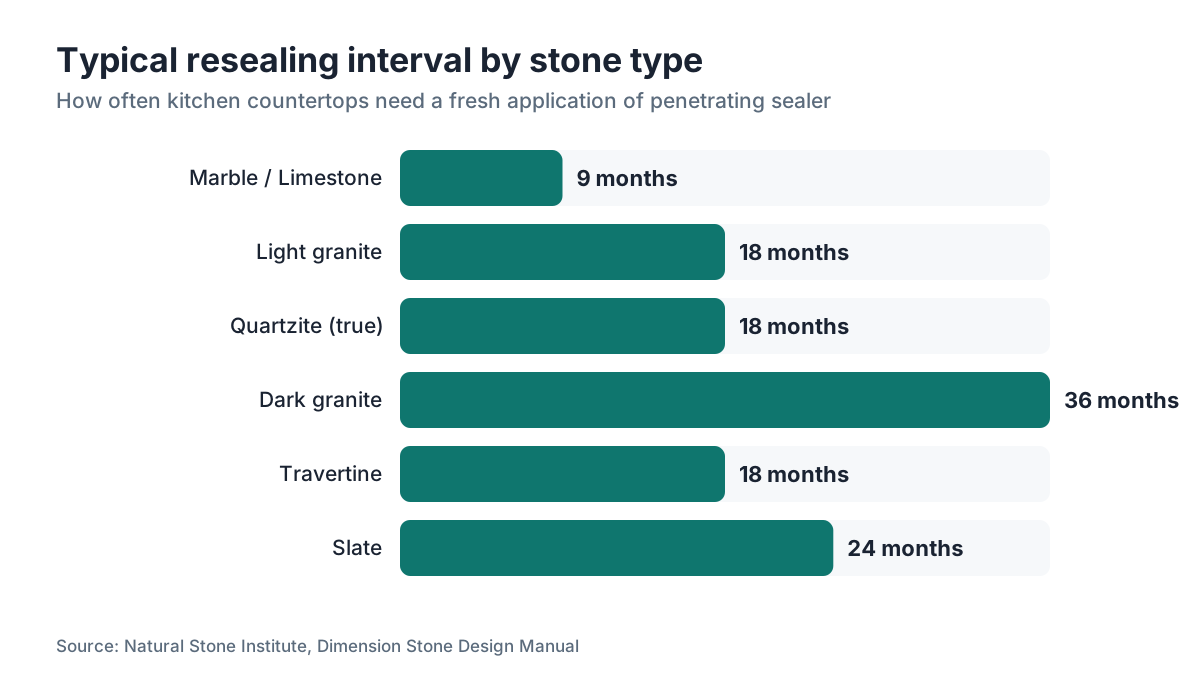
There's no universal schedule. How often you reseal depends on the stone's porosity, the quality of the sealer, how much cooking and cleanup the surface sees, and what cleaners you use. Harsh alkaline or acidic cleaners strip sealers faster than pH-neutral ones. [5]
Here are reasonable starting-point intervals by material:
| Material | Typical resealing interval | Notes |
|---|---|---|
| Marble (kitchen) | 6 to 12 months | High porosity, vulnerable to acids |
| Limestone | 6 to 12 months | Similar to marble |
| Quartzite (true) | 1 to 2 years | Denser than marble |
| Granite (light colors) | 1 to 2 years | Lighter granites tend to be more porous |
| Granite (dark colors) | 2 to 4 years | Often dense enough to need less frequent sealing |
| Travertine | 1 to 2 years | Filled or unfilled changes porosity significantly |
| Soapstone | Mineral oil as needed | Not a sealer, typically every 1 to 3 months initially |
| Slate | 1 to 3 years | Varies widely by origin |
Those numbers assume a professional-grade impregnating sealer applied correctly. Cheap topical sealers (the kind that sit on the surface instead of soaking in) wear off in months and leave a haze. Skip them for kitchen countertops.
The water test beats any schedule. Some granite in a quiet household won't need resealing for 4 or 5 years. A marble island that catches olive oil and tomato sauce every week might need attention every 8 months. Test it. Don't guess.
What's the difference between a penetrating sealer and a topical sealer?
This is the most misunderstood point in the whole subject. A penetrating sealer (also called an impregnating sealer) carries a silicone or fluoropolymer compound down into the pores, where it bonds with the mineral crystals below the surface. It doesn't change the look or feel of the stone. Liquids bead up because the pores are lined with a material that repels water and oil, not because there's a coating on top. [6] This is what you want on kitchen countertops.
A topical sealer forms a film on the surface. It can give stone a glossy or wet look (sometimes that's the point, on honed slate for instance), but it wears off fast in a kitchen, scratches easily, and can trap moisture underneath. That leads to hazing and eventually a stripping job. Most stone fabricators will tell you flat out to keep topical sealers off kitchen counters.
For food surfaces there's a safety angle too. The EPA regulates antimicrobial claims on sealers under the Federal Insecticide, Fungicide, and Rodenticide Act (FIFRA). [7] Any product marketed as antimicrobial has to be registered. Most standard impregnating sealers make no antimicrobial claim, and that's fine. What a kitchen needs is stain resistance and easy cleaning with soap and water, and a good penetrating sealer gives you that without a biocide claim.
How do you seal a granite or stone countertop yourself, step by step?
Clean the surface first. Use a pH-neutral stone cleaner or a drop of dish soap in warm water. Any oil, grease, or residue left behind gets sealed in. Then let the stone dry completely. For most slab granite in a normal indoor room, 24 hours after a thorough cleaning is safe. Some installers run a heat gun on low to speed this up, but you don't need to.
Apply the sealer per the product instructions. Most quality penetrating sealers go on in a thin, even coat with a clean lint-free cloth or a foam applicator, sit for 5 to 15 minutes, then get wiped off completely before the carrier solvent evaporates and leaves residue. Don't let it pool. Work in sections of about 2 to 3 square feet on a large island so you can wipe each one before you move on.
Repeat if the product calls for it. Some dense stones need only one coat. More porous stone (many marbles, lower-quality granites) does better with two coats applied in opposite directions, the first coat fully dry before the second.
Let the sealer cure before you use the surface. Most products ask for 24 to 48 hours before water contact and 72 hours before full use. Read your specific label and follow it.
A few things trip people up. Too much product (more is not better with penetrating sealers). Not wiping off the excess before it hazes. Using the surface too soon. A sealer that wasn't wiped off right leaves a smudgy film that takes a stone-safe solvent to fix.
For granite countertops specifically, check the color. Light granites are almost always more porous and may want two coats. Very dark granites (absolute black, say) are often so dense a sealer barely gets in. You can still apply it, but don't expect dramatic water-beading.
How much does it cost to seal countertops professionally?
DIY sealing costs $20 to $60 for a quality penetrating sealer from a stone-care brand (Aqua Mix, StoneTech, Miracle Sealants, and the like). A standard 24-ounce bottle covers 150 to 300 square feet depending on the stone's porosity, more than enough for a typical kitchen.
Professional sealing runs $100 to $300 for a standard kitchen. Fabricators often offer it as an add-on at installation, and stone-care companies sell it as a standalone service. Some fabricators fold one sealing application into the install price. Ask when you're collecting quotes.
Here's a rough benchmark. The average U.S. kitchen has 30 to 40 square feet of countertop. At that size, even a premium sealer applied by a pro is a small cost next to the value of the stone.
The math surprises people. Resealing every 1 to 2 years costs $30 to $60 in product per session if you do it yourself. Ignore it, then deal with a deep oil stain in white Carrara marble, and you're looking at $200 to $600 in professional stain removal. Some stains never fully come out. Upkeep is cheap. Skipping it is not.
Fabricators running shop-management software like SlabWise can track installed jobs and ping customers when a resealing is due. That helps retention and it helps the customer's stone.
Can you seal marble countertops and does it prevent etching?
You can seal marble, and in a kitchen you should. But here's the part people miss: a sealer will not stop etching.
Etching is a chemical reaction. Acidic liquids (lemon juice, vinegar, tomato, wine, most citrus) dissolve the calcium carbonate in marble and leave a dull, lighter spot. A penetrating sealer sits in the pores but doesn't coat the surface crystals, so acid still reaches them. The marble etches whether it's sealed or not. [8]
What sealing does do for marble countertops is prevent staining. If red wine or olive oil gets into unsealed marble, it can discolor the interior of the stone. A good sealer buys you time to wipe up spills before they sink in. The surface may still etch (look dulled), but you won't get that dark organic stain underneath.
In a kitchen, this is a real tradeoff to understand before you pick marble. Honed marble hides etching better than polished marble, because an etch mark is matte and it barely shows on an already-matte surface. Some homeowners accept etching as part of marble's character. Others hate it. Sealing doesn't change that math. It only handles staining.
For the cleanest information on caring for quartzite (which gets mislabeled as marble or granite constantly), see the guide on how to clean quartzite countertops.
What products are actually worth using to seal stone countertops?
There are hundreds of stone sealers out there. Most of them work. A few things separate the good ones from the rest.
Carrier type: water-based vs. solvent-based. Solvent-based penetrating sealers usually get into denser stones more effectively, but they have stronger fumes and need ventilation. Water-based versions are easier to apply and plenty for most residential kitchens. If you have very dense granite or quartzite that beads water even before sealing, a solvent-based product may give you better penetration.
Active ingredient: silicone vs. fluoropolymer. Fluoropolymer (fluorocarbon) sealers repel oil as well as water. In a kitchen where cooking oils are the bigger threat, that matters. Silicone-only sealers handle water well but do less against oil. For kitchen countertops, look for a fluoropolymer impregnating sealer.
Article 15 of California's Title 17 addresses VOC limits in architectural coatings, and some stone sealers fall under those limits, so if you're in California, check the label for VOC compliance. [9] Other states have adopted similar rules.
Brand examples, widely used in the trade and not a sponsored list: Aqua Mix Sealer's Choice Gold, StoneTech BulletProof Sealer, and Miracle Sealants 511 Impregnator all show up on fabricators' shelves. Any of them does the job when applied correctly. Application quality matters more than the difference between brands.
Skip the cheap generic-label sealers at big-box stores. They technically work, but they wear off faster and you'll be resealing every year instead of every few years.
Does sealing make stone countertops food safe?
Sealing helps. The honest answer on food safety is more complicated than that.
Raw stone surfaces (the porous ones especially) can hold bacteria in their pores, though the research on how much this actually matters, compared to cutting boards and other surfaces, is genuinely mixed. A 1994 study by Dean Cliver at UC Davis found bacteria on wood cutting board surfaces died off faster than on plastic, which kicked off a long debate about surface microbiology that still isn't settled. Stone wasn't the main subject. [10]
Penetrating sealers fill those pores, which shrinks the surface area where bacteria can hide. But a sealer is not a disinfectant, and the EPA draws that line clearly under FIFRA registration rules. [7] Cleaning stone with warm water and dish soap after food contact does more for food safety than any sealer.
What sealing clearly improves is cleanability. By keeping food pigments and oils from soaking in, it makes your cleaning more effective even though the sealer itself kills nothing. A well-sealed surface wiped with hot soapy water after use is a reasonable food-prep surface. A heavily porous, unsealed marble counter with micro-cracks is less so.
For how different stone types compare on cleanability, the guide on how to clean stone countertops covers the specifics.
What mistakes do people make when sealing countertops?
Applying too much product is the most common error. More sealer does not mean more protection. Once the stone has absorbed all it can hold, the excess sits on top and hazes as the carrier solvent evaporates. Wipe off the excess before it dries. If you end up with a hazy residue, a clean cloth dampened with the same sealer (or the manufacturer's recommended solvent) usually re-activates and lifts it.
Sealing over a dirty surface is the next one. Any grease or oil left on the stone gets locked in. It may look fine on day one, but the sealed-in residue discolors over time.
Using the wrong product on the wrong material happens a lot. A soapstone counter treated with a fluoropolymer impregnating sealer is wasted product, because the stone is too dense to absorb it. A quartz counter sealed with anything is pointless and can leave a residue you'll fight to remove. Check the material before you buy the product.
Not waiting long enough after cleaning is another. Sealer applied over a damp surface gets diluted and won't bond with the mineral crystals below. If you cleaned the countertop that same day, let it dry overnight.
For butcher block countertops, a stone-type sealer is the wrong product entirely. Those surfaces want oil or a food-safe film finish (an oil-varnish blend or a pure hardening oil), not a mineral impregnating sealer built for rock.
Resealing before the old sealer has actually failed rounds out the list. The water test tells you what the stone needs. Resealing on a rigid annual schedule regardless of results just burns money and, over many applications, can build up residue in the pores.
How does countertop sealing fit into the overall installation and care timeline?
Most stone fabricators seal the countertop once, before or at installation. That's standard practice, and most customers walk away assuming the stone is sealed forever. It isn't.
That first application matters. At installation the stone is clean, dry, and not yet loaded with cooking residue. A thorough sealing at that moment gives the customer a good baseline. Some installers apply two coats on marble or other high-porosity material.
From there, maintenance falls to the homeowner. The honest gap in the industry is that fabricators often don't explain the ongoing requirement at handoff. Plenty of homeowners find out about resealing only when a stain shows up. Good countertop installation should come with written care instructions and explicit resealing guidance for the exact material installed.
If you run a shop and you're building a customer communication process, the annual or biannual resealing reminder is one of the highest-value touchpoints you can create. Customers who keep their stone maintained are far less likely to call complaining about a stain.
For a full view of material choices and the sealing that comes with each, the kitchen countertops overview is a good starting point. Fabricators quoting across multiple material options can track installed jobs and generate follow-up schedules in SlabWise.
Frequently asked questions
Do quartz countertops need to be sealed?
No. Engineered quartz is made with resins that fill all the pores, so a sealer has nothing to penetrate. Brands like Cambria, Silestone, and Caesarstone explicitly say not to seal their surfaces. Applying a stone sealer to quartz wastes product and can leave a smudgy residue that's annoying to remove. Clean quartz with a pH-neutral cleaner and leave it alone.
How long after sealing can you use the countertop?
Most penetrating sealers ask for 24 hours before water contact and 48 to 72 hours before normal use, cooking and cleaning included. Read the specific label, because dwell times vary. Use the surface too soon and you can disrupt the cure and shorten how long the sealer lasts. In a kitchen, 48 hours of patience is worth it.
Can you seal a countertop that already has a stain?
Remove the stain first if you possibly can. Sealing over an existing stain locks it in and makes it harder to treat later. For oil stains on marble or granite, a poultice of baking soda and acetone (or a commercial stone poultice) can draw the oil out before you reseal. Sealing a clean, stain-free surface always gives better long-term results.
What happens if you never seal a granite countertop?
Unsealed granite slowly absorbs oils, food dyes, and liquids. Staining is the main risk, especially near the cooktop and sink where cooking oils and standing water collect. In extreme cases bacteria can colonize the pores, though regular cleaning with soap and water keeps that in check. The stone won't structurally degrade from lack of sealing, but cosmetic damage gets harder to reverse the longer you wait.
Is sealing the same as polishing a stone countertop?
No. Sealing puts a protective compound into the pores of the stone. Polishing removes microscopic surface scratches through abrasion and friction, restoring reflectivity. They're separate processes for separate problems. A stone can be polished but unsealed, or sealed but scratched. Some stone-restoration services do both in sequence, polishing first, then sealing the fresh surface.
Does sealing a countertop change how it looks?
A quality penetrating (impregnating) sealer should leave the stone looking exactly the same as before. No added shine, no color change, nothing visible. Some topical and color-enhancing sealers are built to darken or add sheen, and those do alter appearance. If keeping the original look matters to you, confirm you're buying a penetrating sealer with no color-enhancing additive before you apply it.
Can I seal my own countertops or do I need a professional?
DIY sealing is very doable for most homeowners. A standard granite or quartzite kitchen takes about an hour including prep and drying. The requirements are a clean, dry surface and the patience to wipe off excess before it hazes. A pro makes more sense for large complex installations, very porous stone like Calacatta marble, or right after professional polishing, where the tech seals as part of the same visit.
How do you remove old or failed sealer from a stone countertop?
For penetrating sealers, failed product usually just stops working rather than leaving visible residue. If a topical sealer has built up and is hazing or peeling, you need a dedicated sealer stripper or a stone-safe solvent (methylene-chloride-free products are easier and safer to use). Apply the stripper per instructions, scrub with a soft brush, then rinse thoroughly. Let the stone dry completely before you apply a fresh penetrating sealer.
What's the best sealer for marble countertops in a kitchen?
A fluoropolymer-based penetrating impregnating sealer is the right category. Fluoropolymer formulas repel both water and oil, which matters in a kitchen where cooking oils are a constant threat. Products like StoneTech BulletProof or Aqua Mix Sealer's Choice Gold are widely used in the trade. Apply two coats on marble, since it absorbs the first coat quickly. Accept that no sealer prevents etching from acids.
How do you seal a soapstone countertop?
Traditional soapstone treatment uses mineral oil, not a stone sealer. The stone is dense enough that impregnating sealers don't meaningfully penetrate it. Apply food-grade mineral oil with a soft cloth, let it soak for 20 to 30 minutes, then wipe off the excess. Do this every few weeks while the stone is new; the frequency drops to a few times a year as the stone darkens and stabilizes. Some fabricators use hardwax oil for a more durable finish.
Does sealing a countertop prevent scratches?
No. Sealers block liquid from getting into pores. They don't add hardness or create a scratch-resistant film. Marble is soft enough (Mohs 3 to 4) to be scratched by ceramic dishes and metal cookware regardless of sealing. Granite (Mohs 6 to 7) is much harder and rarely scratches from normal kitchen use. If scratch resistance is your worry, material choice matters far more than whether it's sealed.
Can you use cooking spray or vinegar near sealed countertops?
Avoid both. Cooking spray leaves an oily film that builds up and turns sticky; it's notoriously hard to get off any stone surface. Vinegar is acidic and will both strip the sealer over time and etch marble or limestone directly. To clean sealed stone, use a pH-neutral cleaner or plain warm water with a little dish soap. Anything acidic (citrus cleaners, many bathroom cleaners) speeds up sealer degradation.
How do I know if a newly purchased countertop was sealed at installation?
Ask your fabricator directly and ask for the product name. Some fabricators seal at installation as standard; others don't, or charge extra. If you can't get a clear answer, run the water-drop test on a dry section of the new countertop. If water soaks in within 15 minutes, the stone wasn't sealed or the sealer was minimal. Reseal it yourself with a quality penetrating sealer. It won't harm a stone that was already sealed.
Sources
- Marble Institute of America (now Natural Stone Institute), Care and Maintenance Guidelines: Natural stone countertops, particularly granite and marble, are porous and benefit from sealing to resist staining
- Virginia Cooperative Extension, Stone Countertop Care publication: Soapstone is treated with mineral oil rather than a penetrating sealer due to its high density
- USDA Forest Products Laboratory, Wood Handbook Chapter 16 (Finishing of Wood): Wood surfaces used in food contact applications are best treated with food-safe oils rather than film-forming sealers
- Cambria (Natural Stone Surface Manufacturer), Care and Maintenance FAQ: Cambria quartz surfaces are non-porous and do not require sealing
- Natural Stone Institute, Approved Fabricator Technical Resources: Alkaline and acidic cleaners accelerate sealer degradation on natural stone, reducing effective protection intervals
- ASTM International, Standard C1577 Specification for Impregnating Sealers for Natural Stone: Penetrating impregnating sealers penetrate below the stone surface and bond to mineral crystals without forming a visible surface coating
- U.S. EPA, Federal Insecticide, Fungicide, and Rodenticide Act (FIFRA) Overview: Products marketed with antimicrobial claims must be registered with the EPA under FIFRA
- Natural Stone Institute, Technical Bulletin: Etching vs. Staining on Marble: Sealing marble prevents staining but does not prevent etching because etching is a chemical reaction with the stone's calcium carbonate content
- California Air Resources Board, Architectural Coatings Regulation Title 17 CCR: California Title 17 sets VOC content limits for architectural coatings including some stone sealers sold in California
- Cliver, D.O. et al., UC Davis Food Safety Laboratory, 1994, Journal of Food Protection, Plastic and wooden cutting boards: A 1994 UC Davis study found bacteria on wood cutting board surfaces died off faster than on plastic, raising questions about surface microbiology for food-contact materials generally
- Marble Institute of America (Natural Stone Institute), Dimension Stone Design Manual: Resealing intervals vary from 6 months to several years depending on stone porosity and kitchen use intensity
Last updated 2026-07-09