TL;DR
- Calacatta quartz countertops copy the bold white-and-gold veining of Italian Calacatta marble, but they cost less, never need sealing, and shrug off stains that ruin natural stone.
- Installed prices run $70 to $140 per square foot depending on brand, edge, and region.
- The catch: quartz can't take sustained heat, and it won't buy you the resale cachet of real marble.
What is calacatta quartz and how is it different from marble?
Calacatta quartz is engineered stone, roughly 90 to 93% ground natural quartz bound with polymer resins and pigments, pressed into slabs under heat and vacuum [1]. That resin layer is where makers print or build the bold veining that copies Calacatta marble, a stone quarried almost entirely from one mountain range near Carrara, Italy.
Real Calacatta marble has thick, dramatic gold or gray veins on a bright white ground. It's rare compared to Carrara marble, which is why it costs a premium even among natural stones. Quartz makers chased that exact look because homeowners want it and can't always stomach the price or the upkeep of the real thing.
The practical gap between the two is wide. Natural Calacatta marble is calcite-based, so it reacts to acids: lemon juice, wine, tomato sauce, most common cleaners. It needs sealing every one to three years and still etches even when sealed. Calacatta quartz has no pores to seal and won't etch from household acids. It's also harder. Quartz sits around 7 on the Mohs scale, calcite around 3, so the slab resists scratches from knives and keys [2].
What quartz gives up is heat. The polymer resin starts to discolor or crack near 300 degrees F (150 C). Pull a pan from the oven, set it straight on the surface, and you can wreck the finish for good. Marble is pure stone and takes the heat without that risk. That's the difference most homeowners wish they'd known before they signed.
How much do calacatta quartz countertops cost?
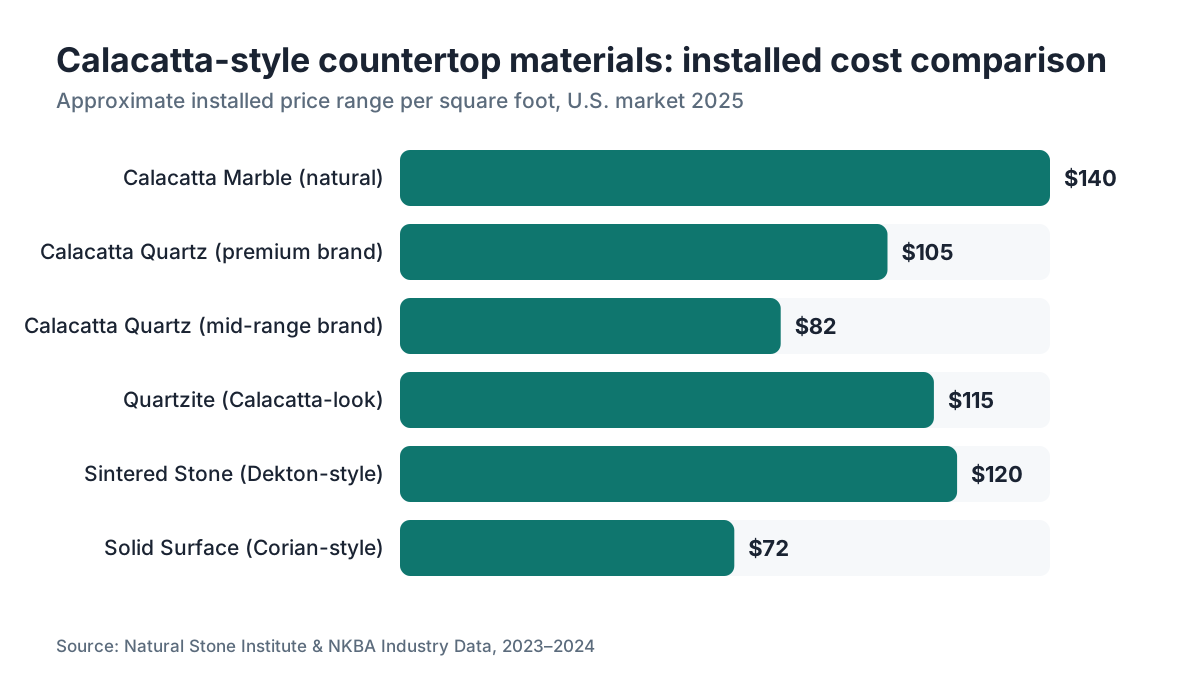
Installed calacatta quartz runs $70 to $140 per square foot in the U.S. as of 2025. That range covers material plus fabrication and basic installation. It leaves out demolition of old counters, plumbing reconnection, and fancy edge profiles that add $15 to $30 per linear foot [3].
The low end gets you an entry-level slab from MSI or Vicostone with simpler veining. The high end covers Silestone, Cambria, or Caesarstone's premium Calacatta lines, which use more convincing vein work and thicker slabs (3 cm instead of 2 cm). Dekton and Lapitec make sintered-stone versions that look similar but sit in a different product class.
Here's what moves the number inside that range:
- Slab thickness: 3 cm slabs cost more but look more substantial at edges and skip the plywood buildup that overhangs need.
- Edge profile: A simple eased edge is usually included. Mitered waterfall edges or ogee profiles add $200 to $600 on a typical kitchen.
- Cutouts: Each sink or cooktop cutout adds $100 to $200 depending on shape.
- Region: Labor swings hard. A shop in San Francisco or New York charges more than one in the Midwest on the same slab.
- Fabricator markup: Most shops buy at wholesale and mark up 30 to 60% before labor [3].
A 40-square-foot kitchen (a typical U-shape) lands at $2,800 to $5,600 installed at those rates. That's a wide spread, and the honest answer is that your layout, edge choices, and local market matter more than any national average.
Getting multiple bids? Ask each fabricator to split the slab cost from the fabrication and installation cost as separate line items. Some shops quote material near wholesale and make their margin on labor. Others flip it. Two numbers tell you where the price actually lives.
Fabricators running thin on Calacatta lines should watch slab yield. Calacatta quartz has directional veining, so you can't rotate remnants freely without the pattern looking wrong. That drives up waste versus a solid-color quartz, sometimes 15 to 20% on complex layouts [4]. Quoting software that accounts for grain direction, like SlabWise, cuts that waste before a single blade drops, which protects margin directly.
What are the most popular calacatta quartz brands and product lines?
A dozen serious players fight over this market, but a few names fill most fabricator racks.
Caesarstone makes Calacatta Nuvo and Calacatta Gold, both 3 cm slabs with a white ground and gold-toned veining. Calacatta Gold is their best-selling variant and has been around long enough that installers know exactly how it behaves.
Silestone by Cosentino sells Silestone Calacatta Gold and the newer Eternal Calacatta Gold. Silestone launched HybriQ technology in 2021, which swaps some polymer resin for a mineral-based binder and adds recycled content. It behaves like traditional quartz, but the company claims better UV stability for outdoor use [5].
MSI Q Premium carries Calacatta Laza and several variations priced under Caesarstone or Silestone. A solid pick for builders doing production work where an exact veining match matters less.
Cambria is U.S.-made in Minnesota and sells Ella, Brittanicca, and Torquay as its Calacatta-style lines. Cambria countertops usually cost a premium but carry a lifetime warranty transferable to one later owner.
Vicostone and Hanstone offer cheaper alternatives, often through home improvement stores. The veining looks less natural up close, but the performance is basically the same.
| Brand | Notable Calacatta Line | Approx. Slab Cost (per sq ft, uninstalled) | Made in USA? |
|---|---|---|---|
| Caesarstone | Calacatta Gold | $35, $55 | No (Israel/India) |
| Silestone | Eternal Calacatta Gold | $40, $60 | No (Spain) |
| Cambria | Brittanicca | $45, $65 | Yes (Minnesota) |
| MSI Q Premium | Calacatta Laza | $25, $40 | No (various) |
| Vicostone | Calacatta series | $20, $35 | No (Vietnam) |
Slab costs above are approximate wholesale-adjacent figures and vary by distributor and region. Retail slab pricing sold direct to homeowners typically runs 20 to 40% higher than what a fabricator pays [3].
How does calacatta quartz compare to calacatta marble?
This is the question that matters most before you spend the money. Here's the honest head-to-head.
Real Calacatta marble is quarried from the Apuan Alps near Carrara, Italy. The Italian government and the marble industry guard that geography closely. A slab labeled "Calacatta" that didn't come from that region is technically a misnomer, though the trade uses the name loosely for similar-looking stone from other origins.
Appearance: Side by side, a premium Calacatta quartz like Caesarstone Calacatta Gold looks convincing from across a kitchen. Up close, or in raking light, the printed vein pattern in quartz tends to repeat at slab intervals, which shows if two slabs meet at a seam. Natural marble has infinite variation and no repeat. To most homeowners standing in their kitchen, this doesn't register. To someone who's spent time looking at stone, it does.
Maintenance: Marble needs sealing, etches from acids, and rings up from wet glasses. The surface dulls even under sealer, because etching is a chemical reaction more than a surface stain. Quartz needs no sealing and won't etch. In a kitchen that sees real cooking, that's a daily difference.
Cost: Natural Calacatta marble runs $80 to $200 per square foot installed, more for exceptional book-matched slabs. Quartz is cheaper at $70 to $140 installed, but the gap narrows at the high end [6].
Heat: Marble wins. You can set a hot pan on marble. You can't on quartz without risking permanent damage.
Resale and prestige: Natural stone still carries more weight in luxury real estate. Whether that shows up in sale prices is debated and market-specific, but agents in high-end markets do treat it as a differentiator [7].
My honest take: if you cook hard, have kids, or want zero maintenance, buy the quartz. If the kitchen is more for show and you want the genuine article, budget for marble and accept the upkeep. Don't let a fabricator tell you quartz is "basically the same" in every way. It isn't, and you deserve a straight comparison before you sign.
For more on natural stone, see our piece on marble countertops and the full kitchen countertops comparison guide.
What does calacatta gold quartz look like and why does the color name matter?
"Calacatta gold" names a specific vein profile: a white or off-white background with veins in warm gold, amber, or honey tones, not the cooler gray veins you see on Calacatta Oro or Calacatta Borghini marble. The gold tone comes from mineral impurities in the original stone, mostly iron oxides, which quartz makers copy with pigmented resin.
In a real kitchen, calacatta gold quartz reads as a creamy-white surface with warm veining that plays well with wood cabinetry, brass hardware, and warm flooring. The cooler Calacatta gray styles (which the same brands sell) look better with white or gray shaker cabinets and chrome or brushed nickel hardware.
White and gold quartz has dominated kitchen design magazines since roughly 2018 and still sells hard in 2025. Whether it looks dated in ten years is a fair question nobody can answer honestly right now.
One practical warning: the gold tones shift a lot between brands and even between slab runs of the same product. Always look at a full slab in person, under lighting close to your kitchen's, before you order. Showroom fluorescents make most slabs look cooler and flatter than they will under warm LED pendants. This is the number one source of buyer regret in the category.
How do you care for and clean calacatta quartz countertops?
Quartz really is low-maintenance, but low-maintenance isn't the same as indestructible. Here's what actually matters.
Daily cleaning: Warm water and mild dish soap on a soft cloth handles almost everything. Wipe spills as they happen. Quartz doesn't stain easily, but dried food or grease can bond to the resin surface over time.
Avoid: Abrasive scrubbers (steel wool, rough pads), alkaline cleaners above pH 11, and anything with high-concentration bleach. Silestone and other makers specifically warn that long contact with strong alkalis can dull the resin binder [5]. The problem with quartz isn't acid (it doesn't etch like marble). It's sustained alkaline exposure and high heat.
No sealing needed: This one is real. Unlike granite countertops or quartzite, which need periodic sealing, quartz's non-porous resin surface doesn't absorb liquid. Any product sold as a quartz sealer is, at best, unnecessary.
Heat: Trivets or pot holders, every time. The 300 degrees F (150 C) threshold isn't the burner temperature. It's what a pan from a 450-degree oven reaches on the counter within seconds. Thermal shock can crack or discolor the surface for good, and warranties almost universally exclude heat damage [5].
Stubborn stains: Dried paint or permanent marker lifts with a plastic scraper and isopropyl alcohol. Grease buildup gives way to a non-abrasive degreaser. For anything really stuck, a citrus-based cleaner like Goo Gone works without harming the surface.
For broader guidance on cleaning stone-look surfaces, our how to clean stone countertops guide covers the whole category.
Does calacatta quartz increase home value?
The honest answer: probably a little, but not reliably enough to build your whole purchase around it.
The National Association of Realtors publishes remodeling impact data. Their most recent numbers put kitchen remodel cost recovery around 50 to 60% at resale on average, but that covers full renovations, not a single countertop swap [7]. There's no clean published data on quartz countertops alone as a value driver. Anyone quoting a precise "quartz adds X%" figure is guessing.
What agents generally agree on: stone-look countertops, quartz or natural, read as an upgrade to most buyers and help a home photograph and show well. A kitchen with laminate counters is a bargaining chip against the seller in most markets. A kitchen with Calacatta quartz is neutral-to-positive. That's about as far as the evidence goes.
The other angle is longevity. Quartz doesn't crack, chip, or stain under normal use the way some materials do. A Calacatta quartz surface installed well and cared for should look the same in 20 years as it does now, which is worth something even if you never sell.
If you're weighing quartz against much cheaper options like laminate countertops or formica countertops purely on ROI, quartz costs more upfront but likely holds up better across a long ownership. That's a different math than "will this add more value than it cost."
What are the real downsides of calacatta quartz countertops?
Every surface has real trade-offs, and quartz is no exception. Here's what I'd tell a friend who asked.
Heat sensitivity: Covered above, but worth saying twice because it's the biggest pain point for people who cook. No hot pans on the surface, period. If that discipline feels annoying or unlikely to stick, build trivets into your workflow or pick a different material.
Seam visibility on patterned slabs: Calacatta's bold veining makes seams stand out more than solid-color or lightly veined quartz. A skilled fabricator minimizes it with careful layout and color matching, but you'll almost always spot a seam if you look. On marble, matched veining is hard too, but the natural variation helps hide it. On quartz with a repeating printed pattern, a mismatch can look obvious.
Outdoor and UV exposure: Most makers don't warranty quartz for outdoor use. Extended UV yellows the resin over time. For an outdoor kitchen with a similar look, sintered stone like Dekton is the better call [8].
Weight: 3 cm quartz weighs roughly 18 to 20 pounds per square foot [1]. Cabinets need to be structurally sound to carry it, and installation takes multiple people or specialized equipment. Not unique to quartz, but confirm your cabinet condition before templating.
Not "green": The polymer resin means quartz slabs don't recycle easily at end of life. Silestone has moved toward recycled water and some recycled silica in manufacturing [5], but that's not the same as the slab itself being recyclable. If environmental impact matters to you, ask your fabricator what disposal actually looks like.
It isn't unique: A popular Calacatta quartz pattern from a major brand shows up in thousands of kitchens. If you want something that reads as rare or distinctive, you'll find it in natural stone, not engineered quartz.
How does the installation process work for calacatta quartz?
Quartz installation follows the same general sequence as any stone surface, with a few wrinkles specific to patterned slabs.
Templating: A fabricator comes to your home and creates a precise template of your countertop footprint, either with physical template material or a digital laser system. Figure 30 to 90 minutes depending on kitchen complexity. For calacatta quartz with directional veining, this is when you talk through how the veins will run and where seams fall. Ask to see a photo or diagram before fabrication starts.
Fabrication: The shop cuts your slabs with a CNC waterjet or bridge saw, grinds the edge profiles, and polishes the cuts. A typical kitchen takes one to three days. Turnaround from templating to install is usually one to two weeks at a well-run shop, though a popular brand or a specific slab may add a wait if it needs ordering.
Installation day: The crew pulls old countertops if that's included, sets the new slabs with adhesive or silicone at seams and along the cabinet rail, then connects the sink and any cooktop cutouts. A standard kitchen install runs three to six hours. Plan to lose the kitchen sink for 24 hours while the adhesive cures.
What to inspect: Check seam alignment and gap width (under 1/16 inch is good work), verify overhangs are consistent, make sure cutout edges are smooth with no chipping, and confirm the finished edge matches what you ordered. Small chips at seam edges or corners are the most common complaints, and they're far easier to fix before the crew leaves. Our countertop installation guide has a full checklist.
Weight on cabinets: As noted, 3 cm quartz is heavy. If your base cabinets are old or feel soft anywhere, have your contractor confirm they're sound before the slabs go on. Fixing a cracked corner after install is expensive and avoidable.
How does calacatta quartz compare to other white countertop materials?
If you love the white-and-gold look but haven't landed on quartz yet, here's where the main alternatives stand.
Quartzite: Not to be confused with quartz. Quartzite is a natural metamorphic stone that can look a lot like Calacatta marble. It's harder than marble and more etch-resistant, but it still needs sealing and can still stain. Prices overlap quartz at $80 to $150 per square foot installed. If you want natural stone with better acid resistance than marble, quartzite is worth a look. Our how to clean quartzite countertops guide covers what upkeep really involves.
Marble: Covered in the comparison section above. The real thing, with all its upkeep.
Dekton/Sintered stone: Ceramic stone made at extreme heat. No polymer resin, so it takes heat and UV without complaint. The Calacatta-style versions look convincing. Usually priced at or above premium quartz. The downside: sintered stone is brittle and can crack if the substrate isn't dead flat.
Porcelain slabs: Large-format porcelain in countertop form. Very heat-resistant, UV-stable, and often cheaper than quartz. Seams show more and edge options are limited. Gaining ground for outdoor kitchens.
Corian and solid surface: Acrylic-based, soft, scratches easily, and the Calacatta-style versions look obviously synthetic. The upside is that scratches sand out. Typically $50 to $100 installed.
Butcher block: No contest on this particular look, but worth knowing you can mix materials. Quartz on the perimeter, butcher block on the island, is a common and practical combo.
The honest summary: quartz wins on maintenance. Natural stone wins on authenticity and heat. Porcelain and sintered stone win on durability extremes. Everything else trades one thing for another.
Where can homeowners get an accurate calacatta quartz quote?
A meaningful calacatta quartz quote starts with knowing what you're actually comparing between shops.
Measure your countertop footprint in square feet (length times width for each run, then add them up). Add 10% for waste, closer to 15% if your layout has corners or angles or you're using a heavily patterned slab. Take that number to at least two or three fabricators.
Ask each shop to quote the same specific slab product, for example "Caesarstone Calacatta Gold, 3 cm, eased edge, one undermount sink cutout." Generic quotes for "calacatta quartz" swing wildly because one shop prices a $22/sq ft slab and another prices a $55/sq ft slab, and the installed total looks close until you dig in.
Homeowners who want a starting number before calling around can use SlabWise's instant quote tool at slabwise.com, which gives a rough range from your layout and material choice. It won't replace a shop visit and template, but it's useful context before you sit down with a sales rep.
Also ask about remnants. A 30-square-foot kitchen is sometimes small enough to cut from a remnant a shop has left over from a bigger job. Remnants of premium calacatta lines turn up 20 to 40% below full-slab prices, and the material is identical. Ask directly whether any remnant inventory exists in your color family.
Frequently asked questions
Is calacatta quartz a real stone?
No. Calacatta quartz is engineered stone made from ground quartz crystals (about 90 to 93% by weight) bound with polymer resins. It copies the look of Calacatta marble, a natural stone from Carrara, Italy, but it's manufactured, not quarried. The name refers to the aesthetic, not the geological origin.
Can you put hot pans on calacatta quartz countertops?
No. The polymer resin binder in quartz starts to discolor or crack near 300 degrees F (150 C). A pan from a hot oven easily hits that on contact. Makers universally exclude heat damage from their warranties. Always use a trivet or hot pad. This is the single most common cause of permanent quartz damage in home kitchens.
Does calacatta quartz need to be sealed?
No. Quartz's resin binder makes a non-porous surface that doesn't absorb liquid. Products sold as quartz sealers are unnecessary and give no real benefit. This is one of the main practical advantages over marble or granite, which need sealing every one to three years depending on the stone and how hard you use it.
How do you fix a chip or crack in calacatta quartz?
Small edge chips fill with color-matched epoxy or acrylic filler, a repair a skilled fabricator can do in place. The result is rarely invisible up close but fine from normal viewing distance. Full cracks through the slab usually mean replacing that section. Check your warranty. Some cover structural defects for 10 to 15 years, but almost none cover impact chips.
What is the difference between calacatta quartz and carrara quartz?
Both copy Italian marble varieties, but with different veins. Carrara quartz has fine, feathery gray veins on a white or slightly gray background, like the softer look of Carrara marble. Calacatta quartz has bolder, thicker veins with warm gold or strong gray tones on a brighter white ground. Calacatta reads more dramatic. Carrara reads more subtle.
How long do calacatta quartz countertops last?
Under normal residential use, quartz counters last 20 to 30 years or more without major degradation. The resin can dull over time from abrasive cleaning or UV exposure, but well-kept quartz holds its look well past 15 years. Most major brands offer 10 to 25-year warranties, and Cambria offers a lifetime warranty on residential installations.
Is calacatta quartz good for bathrooms?
Yes. Quartz is one of the best bathroom countertop materials. The non-porous surface resists moisture, soap scum wipes right off, and there's no sealing or special care. Heat from a curling iron is the one risk, same as in kitchens. Calacatta gold quartz in a bathroom with warm hardware and white cabinetry is one of the most popular current combinations.
How do I choose between calacatta quartz slab brands?
See full slabs in person under lighting like your kitchen's, more than samples. Compare the vein scale (some brands print veins too small or too uniform to read as real marble). Ask your fabricator which brands they've worked with most. They know which ones cut cleanly and which cause seam trouble. Price alone is a poor guide. A $10/sq ft slab difference matters less than how it looks installed.
Can calacatta quartz be used outdoors?
Most quartz makers don't warranty their products outdoors, and extended UV yellows the polymer resin over time. For outdoor kitchens or covered patios, sintered stone (Dekton, Lapitec) or porcelain slabs handle UV and weather far better. Some makers have introduced outdoor-rated quartz lines, but verify the specific product's warranty terms before specifying for exterior use.
What edge profile works best with calacatta quartz?
The most popular pick is a simple mitered or pencil edge that keeps attention on the surface veining, not the edge. Eased (softened square) and beveled edges are classic and cheaper. Waterfall mitered edges look dramatic but cost significantly more and need careful vein matching at the vertical drop. Skip very ornate ogee profiles. They tend to look dated faster than simpler edges.
Does calacatta quartz scratch easily?
No. Quartz is quite scratch-resistant at Mohs 7, harder than knives (typically Mohs 5 to 6.5) or most cookware. Normal use won't visibly scratch it. The risk comes from harder materials: ceramic or porcelain dishes dragged across the surface, or diamond-tipped tools. Even so, use a cutting board, because knives dull faster on quartz than on softer surfaces.
How much does a calacatta quartz kitchen countertop cost for a small kitchen?
A small kitchen with about 25 to 35 square feet of countertop runs $1,750 to $4,900 installed at $70 to $140 per square foot. Edge upgrades, extra sink cutouts, or complex angles add cost. Getting at least three quotes from local fabricators using the same product spec is the best way to find your real market price. Prices vary more by region than by anything else.
What is calacatta gold quartz specifically?
Calacatta gold quartz is Calacatta-style quartz with warm gold or amber tones in the veining, copying the gold vein variety of Calacatta marble. Caesarstone's Calacatta Gold and Silestone's Eternal Calacatta Gold are two of the best-known products. The gold coloring pairs well with brass fixtures and warm wood tones, and reads warmer and richer than gray-veined Calacatta styles.
Can you use vinegar or bleach to clean calacatta quartz?
Avoid both for regular cleaning. Vinegar (acetic acid) won't etch quartz the way it etches marble, but repeated use can dull the resin finish over time. Household bleach (around 3 to 5%) is generally fine for occasional disinfecting, but sustained contact or higher concentrations can degrade the binder. Stick to mild dish soap and warm water for daily cleaning. It's genuinely all you need.
Sources
- USGS, Mineral Resources Program: Silica and Quartz: Engineered quartz slabs are approximately 90 to 93% ground natural quartz by weight, bound with polymer resins, pressed under heat and vacuum.
- USGS, Mohs Hardness Scale reference via Mineral Resources: Quartz crystals have a Mohs hardness of approximately 7; calcite (marble) has a Mohs hardness of 3, making quartz significantly more scratch-resistant.
- National Kitchen and Bath Association, NKBA Design and Industry Surveys: Fabricators typically mark up slab material 30 to 60% over wholesale before adding installation labor; installed quartz countertop costs nationally range from $70, $140 per square foot.
- National Kitchen and Bath Association, NKBA Design and Industry Surveys: Directional-veined engineered stone increases material waste versus solid-color quartz, sometimes 15 to 20% on complex layouts, because remnants cannot be freely rotated without breaking the pattern.
- Silestone by Cosentino, Product Care and Warranty Documentation: Silestone warns against prolonged contact with strong alkalis and states heat damage is not covered under warranty; recommends trivets for all hot items.
- Marble Institute of America (Natural Stone Institute), Stone Industry Education and Pricing Reference: Natural Calacatta marble installed pricing generally ranges from $80, $200 per square foot, with exceptional book-matched slabs exceeding that range.
- National Association of Realtors, 2023 Remodeling Impact Report: Kitchen remodels recover approximately 50 to 60% of cost at resale on average according to NAR's Remodeling Impact Report.
- Dekton by Cosentino, Technical and Warranty Documentation: Sintered stone (Dekton) is UV-stable and warranted for outdoor use, unlike standard polymer-resin quartz which yellows under extended UV exposure.
- Caesarstone, Product Warranty and Care Guide: Caesarstone's residential warranty runs up to 25 years but excludes damage from heat, impact chips, and improper installation or maintenance.
- Cambria Surfaces, Limited Lifetime Residential Warranty: Cambria offers a lifetime warranty on residential countertop installations, transferable to one subsequent owner, covering manufacturing defects.
- U.S. Census Bureau, American Housing Survey: Kitchen Features Data: Stone and engineered stone countertops are tracked as a premium kitchen feature in AHS housing data; quartz surpassed granite as the most installed countertop material in new construction by 2022.
Last updated 2026-07-09