TL;DR
- Beige quartz countertops cost $50 to $120 per square foot installed, set by brand, thickness, and edge profile.
- They never need sealing, resist stains and scratches better than marble, and come in dozens of shades from warm cream to deep caramel.
- This guide covers the real decisions: colors, brands, costs, durability, and what fabricators watch go wrong.
What exactly is beige quartz and how is it made?
Beige quartz is engineered stone, not a slab quarried from the ground. A typical slab is 90 to 94 percent ground quartz aggregate bound with polymer resins and pigments, then compressed under heat and vibration into a dense, non-porous surface [1]. The beige color comes from the pigment blend, not from natural mineral variation, so the color runs consistent through the full thickness of the slab.
That engineered origin is why beige quartz looks so different from beige granite or quartzite. Granite has random pitting and variation. Beige quartz has controlled, repeatable veining or particulate patterns depending on the design. Some slabs mimic limestone. Others look closer to Calacatta marble with warm gold undertones. A few are nearly solid cream with almost no pattern at all.
The big manufacturers, Caesarstone, Cambria, Silestone, and MSI, all use roughly the same process but source aggregate and pigments differently. That's part of why color matching across brands is imprecise [2]. If you're replacing a section of an existing countertop and need an exact match, you almost certainly have to stay with the same brand and ideally the same production run.
What are the most popular beige quartz colors?
There are hundreds of beige quartz SKUs on the market, but a handful account for most of what fabricators actually cut. Here are the categories that matter.
Warm cream and ivory: The lightest beiges, very close to white with a yellow undertone. Caesarstone's "Buttermilk" and MSI's "Bianco Drift" fall here. They read warm under incandescent light and almost white under cool LED.
Mid-tone sand and linen: The true workhorse beiges. Think of the color of unbleached linen or natural sand. Silestone's "Eternal Beige" and Cambria's "Ironsbridge" land in this range. They pair with almost any cabinet color because they're genuinely neutral.
Caramel and taupe: Deeper beiges that shade toward brown or gray. These work well in transitional and farmhouse kitchens. If your cabinets are white or off-white, a deeper beige counter creates contrast without going as stark as black or dark gray.
Veined beige: Any of the above with white, gray, or gold veining to mimic marble or quartzite. Cambria's "Inverness" and Caesarstone's "Empira Sand" are good examples. The veining is printed or ground in during manufacturing and doesn't wear off.
Here's the thing people miss. Beige reads very differently depending on your kitchen's light. Before you commit, take a full-size sample home and look at it in morning light, afternoon light, and under your kitchen's artificial light. The color on a website, or even in a showroom under retail lighting, is not the color you'll live with.
How much do beige quartz countertops cost?
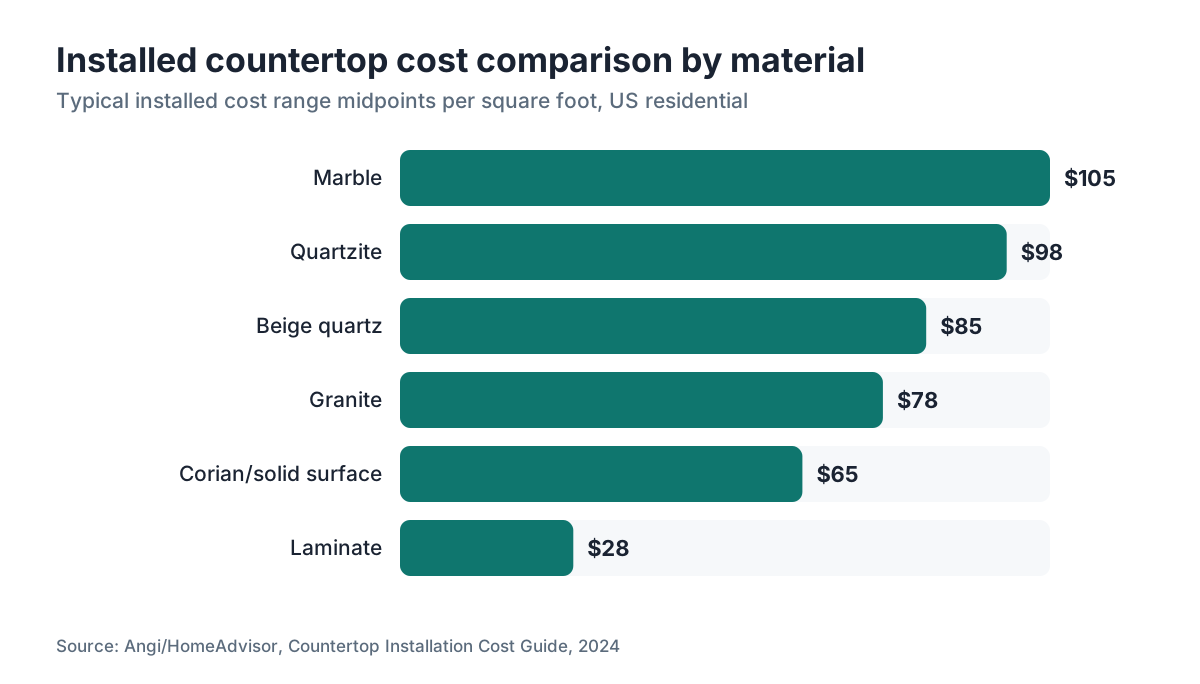
Installed beige quartz costs $50 to $120 per square foot for most residential jobs in the US [3]. The range is wide because it folds material, fabrication labor, and installation into one number, and all three shift with region, brand, and job complexity.
Here's the breakdown:
| Cost component | Typical range (per sq ft) |
|---|---|
| Material (slab, beige mid-grade) | $22, $55 |
| Fabrication (cutting, edging, polish) | $15, $35 |
| Installation (tear-out, setting, plumbing reconnect) | $10, $20 |
| Total installed | $50, $120 |
Premium brands like Cambria or Caesarstone's top collections sit at the upper end. Builder-grade beige from MSI or similar distributors lands near the bottom. Thickness matters too. A 2cm slab costs less than 3cm, but 3cm is the standard for countertops because it doesn't need a plywood substrate to hold itself up [4].
Edge profiles add cost. A standard eased edge is usually baked into fabrication pricing. Waterfall edges, ogee profiles, or mitered joints for a thick look can add $15 to $30 per linear foot to the fabrication bill.
For a typical 40-square-foot kitchen (roughly a U-shape with a modest island), figure $2,000 to $4,800 all-in for mid-grade beige quartz. That's a number from real jobs, not a marketing estimate.
Shops that quote with software get to accurate numbers faster. SlabWise, for one, lets a fabricator build a detailed quote from slab cost and square footage in a few minutes, which matters when a homeowner is standing in the showroom asking what it costs right now.
For the wider picture on kitchen pricing, the kitchen countertops guide has a full breakdown.
How durable is beige quartz compared to other countertop materials?
Quartz scores 7 to 7.5 on the Mohs hardness scale [1]. Granite runs 6 to 7, marble sits at 3 to 4, and laminate is below 1. In plain terms, quartz shrugs off scratches from knives and keys well enough that most homeowners never notice surface damage in normal use. It's harder than granite on average, though granite varieties vary a lot.
The bigger edge over natural stone is density. Because quartz is engineered and compressed, it has essentially zero porosity. The Marble Institute of America notes that granite typically has 0.2 to 2 percent porosity and needs periodic sealing to prevent staining [5]. Beige quartz needs no sealing, ever. Pour red wine on it, leave coffee overnight, deal with a cooking oil spill, and you won't get permanent staining if you wipe within a reasonable time.
Heat is where quartz loses. The polymer resins that bind the stone can discolor or crack under sustained high heat. Manufacturers recommend against setting hot pots or pans on the surface. Thermal shock from a 400-degree pan can cause microfractures or discoloration that no warranty covers [6]. Use trivets.
Against marble countertops, beige quartz is far easier to live with. Marble etches from acids: lemon juice, vinegar, even some cleaning products. Quartz doesn't etch. For a household with kids or heavy kitchen use, that one difference makes quartz the more practical pick even at a similar price.
Against granite countertops, quartz is stiffer and a touch less able to absorb a point-load impact. A heavy cast iron pan dropped on a granite edge might chip the granite. On quartz, the same drop is more likely to crack the slab because quartz flexes less. Both chip and both crack. They just do it differently.
Versus laminate countertops, quartz wins big on scratch resistance and longevity and loses big on upfront cost. Laminate runs $15 to $40 installed per square foot [3]. That's a real budget line.
Does beige quartz show dirt and stains more than other colors?
Beige is forgiving. That's the honest answer fabricators give to a question they hear constantly. Dark quartz shows grease splatter, water spots, and light residue clearly. White quartz shows every coffee ring. Beige sits in the middle, where everyday grime blends in enough that the counter reads clean at a glance even between wipe-downs.
What beige does show is darkening from heavy oil buildup left too long, and it can show calcium deposits (hard water spots) in kitchens with very hard tap water. Those aren't permanent stains. They wipe off with diluted white vinegar or a product made for hard water deposits.
Permanent staining on quartz is rare but not impossible. Turmeric is the one fabricators actually worry about. It contains curcumin, a pigment with strong dyeing power that can penetrate the resin binder if it sits for hours. Same story with concentrated hair dye and some art inks. If you cook a lot of Indian food, or you have teenagers dyeing their hair at the kitchen sink, wipe spills fast.
Day-to-day, mild dish soap and warm water is all you need. The how to clean stone countertops guide has a full protocol. Quartz isn't technically stone, but the cleaning logic overlaps completely.
How does beige quartz hold up long-term?
Most quartz manufacturers offer a limited lifetime warranty on residential installations [6]. Read the fine print. Warranties typically exclude heat damage (pans, steam from slow cookers), chips from impact, chemical damage from off-list cleaners, and outdoor installation. UV exposure is a real problem. Quartz resin binders yellow under prolonged direct sun, which is why you almost never see quartz used outdoors. If your kitchen has a window over the sink that catches hours of direct afternoon sun, a beige quartz counter can yellow noticeably over several years.
Indoors under normal conditions, beige quartz keeps its color and gloss for 10 to 20 years. The surface doesn't wear down the way polished granite can, and it never needs re-honing or re-polishing the way marble sometimes does. The long-term maintenance item is the caulk joints at the walls and around the sink, not the stone itself. Inspect those once a year and re-caulk every few years as the kitchen structure moves with seasonal humidity.
On long-term value, quartz beats butcher block countertops on maintenance. Butcher block needs regular oiling and is vulnerable to water damage at seams. That said, butcher block has a warmth and a repairability that quartz can't match.
What thickness and finish should you choose for beige quartz?
Residential countertops are almost always 2cm (about 3/4 inch) or 3cm (about 1.25 inches). Fabricators default to 3cm for good reason. It's self-supporting, looks substantial, and installs without substrate worries. The extra weight is nothing for standard cabinets.
Want a waterfall edge or a mitered thick-look counter from 2cm material? Fabricators laminate a strip to the front edge to fake the depth of 3cm. It works fine, but it adds cost and creates a seam that has to be polished smooth.
Polished is the default finish for beige quartz and looks most like the showroom samples. Honed (matte) finishes are available from most manufacturers and have caught on in the last five years because they hide fingerprints and give a more organic, stone-like look. The trade-off: honed surfaces show water spots more readily and can be harder to wipe fully clean, since there's no reflective surface to flag streaks. A satin or soft-sheen finish splits the difference.
Leathered finishes show up on some beige quartz lines but are less common than on granite. They add texture and visual depth. One practical note: food particles collect in the texture, so leathered is a poor fit for a high-use cooking surface.
Which brands make the best beige quartz?
Brand quality in quartz is real but often oversold in marketing. The manufacturing process is similar across major brands. What actually differs is color consistency from slab to slab, warranty terms, defect rates, and availability.
Caesarstone, an Israeli company with US manufacturing, is widely distributed and holds tight color consistency. Its residential warranty runs 10 years [6]. Cambria is made in the US (Le Sueur, Minnesota) and is the only major manufacturer using exclusively North American quartz aggregate [2]. Cambria's residential warranty is a limited lifetime. Silestone (Cosentino) is Spanish-made with a strong North American distributor network [7]. MSI is an importer with a very wide beige range at generally lower prices [8].
For homeowners, the practical question is what your local fabricator buys. Fabricators work with distributors they trust, and a brand with good local distribution will be fresher and easier to match for future repairs. Ask your fabricator what they stock or order regularly, rather than starting from a brand name and working backward.
The Cambria countertops guide goes deeper on that brand if you're weighing their specific beige lines.
What cabinet and flooring colors work best with beige quartz?
Beige quartz is one of the more flexible countertop colors precisely because it reads as a warm neutral. A few pairings that actually work:
White or off-white cabinets: The most common combination. Undertone matching is the whole game. Warm white cabinets (yellow or cream undertone) pair naturally with warm beige quartz. Cool bright white cabinets can make some beige slabs look dingy by comparison. Take a cabinet door to the stone yard.
Navy or deep green cabinets: Beige counters keep these from feeling too heavy. The warmth in the beige stops the kitchen from reading cold and dark.
Natural wood or wood-look cabinets: Medium-toned wood with a beige counter can look muddy if the tones sit too close. The fix is contrast: a lighter beige with a slightly cooler tone, or a darker taupe-beige that separates from the wood.
Flooring: Beige quartz sits well on wood floors, tile, and even concrete. The one pairing to watch is very similar-toned porcelain tile, where counter and floor read as one undifferentiated field of the same color. Put contrast somewhere.
Backsplash choices open up with beige counters. White subway, gray stone, patterned cement tile, and warm terracotta all work. Beige quartz with a beige backsplash is the one combination that usually goes flat.
What do fabricators see go wrong with beige quartz installations?
Fabricators see a predictable set of problems, and most are avoidable.
Seam placement. Quartz slabs typically run 55 to 65 inches wide and 120 to 130 inches long [4]. Most kitchens need at least one seam. Where it goes matters a lot for looks, and on a patterned beige it also changes how the veining reads. A seam in a corner or at the edge of a cooktop hides better than one in the middle of a run. Your fabricator should show you a digital layout before cutting.
Color variation between slabs. Even within one brand and SKU, beige quartz has slight batch variation. If your job needs two or more slabs, pull them from the same production lot when you can, and view them together in person before you approve the order.
Undermount sink cutout cracking. The corners of a sink cutout are stress points. Quartz cracks there more often than granite if the radius is too tight or the slab gets moved carelessly during install. A good fabricator uses a router with a proper corner radius, not a jigsaw.
Grout and caulk color. The caulk line at the backsplash and wall is in front of you every day. A mismatched caulk color on beige quartz looks worse than most homeowners expect. Match the caulk to the lighter tone in the slab, not the darker veining.
Fabricators who quote beige jobs carefully, slab yield and seam count and edge linear footage included, make fewer of these mistakes because they thought the job through before they cut. Quoting software that handles slab nesting and square footage, like the tools at SlabWise, cuts the odds of ordering the wrong amount of material or placing seams in bad spots, because the layout happens on screen first.
How does beige quartz compare to other countertop materials?
This table uses realistic installed cost ranges and typical performance based on industry data [3][5]:
| Material | Installed cost (per sq ft) | Needs sealing? | Heat resistant? | Scratch resistant? |
|---|---|---|---|---|
| Beige quartz | $50, $120 | No | No (resins) | Yes (Mohs 7 to 7.5) |
| Granite | $45, $110 | Yes (annually) | Yes | Moderate (Mohs 6 to 7) |
| Marble | $60, $150 | Yes (frequently) | Yes | No (Mohs 3 to 4) |
| Quartzite | $65, $130 | Yes | Yes | Yes (Mohs 7) |
| Laminate | $15, $40 | No | No | No |
| Corian/solid surface | $45, $85 | No | No | Moderate |
For a first countertop replacement, beige quartz hits a practical sweet spot: no sealing, good durability, consistent appearance, mid-range cost. If you want the fully natural look and feel of real stone and you'll maintain it, granite countertops or quartzite are reasonable alternatives. On a tight budget, laminate countertops have come a long way and cost a third as much.
Comparing specifically to solid surface, the Corian countertops guide is worth a read. Corian is repairable in ways quartz isn't (scratches sand out), but it's softer and loses gloss faster.
How do you get an accurate quote for beige quartz countertops?
A real number before you walk into a showroom takes three things: your square footage, your preferred brand and color, and a fabricator who quotes all-in.
Measure square footage by measuring the depth of your counter (typically 25 inches for standard base cabinets) and the length of each run. Multiply depth by length for each section, then add the sections together. Add 10 to 15 percent for waste from cuts, seams, and unusable slab remnants [4].
Call or email two or three local fabricators. Ask for an installed price per square foot for your specific slab, including edge profile, tear-out of the old counter, and sink cutout. Those are the line items that get tacked on later if you don't ask upfront.
Ask to see the slab in person before you commit. Beige quartz looks different under different light, and the stone yard is closer to real conditions than a website photo. Buying a large quantity? Ask to see the specific slabs going on your job.
The countertop installation guide walks through what happens from the day you approve the quote to the day the counter is set, which helps you ask the right questions before you sign anything.
Frequently asked questions
Is beige quartz going out of style?
No. Beige cycles in and out of trend focus, but it never drops off the top-selling countertop colors because it's genuinely neutral and works in almost every kitchen style. The specific shades shift: cool greige and taupe-leaning beiges are more popular right now than warm buttery creams. The category as a whole stays in steady demand, according to fabricators and stone distributors.
Can you use beige quartz in a bathroom?
Yes, and it works well. Quartz's non-porous surface is ideal for bathrooms, where moisture is constant. The same durability and no-sealing advantages apply. Watch the UV issue if your bathroom has a skylight or a large window with direct sun, since prolonged UV can yellow the resin binder over years. Most bathroom setups never hit that problem.
How do you remove stains from beige quartz?
For most stains, mild dish soap and a non-abrasive sponge do it. For dried or set stains, a paste of baking soda and water left a few minutes, then wiped off, handles most organic marks. For hard water deposits or calcium buildup, diluted white vinegar (1:1 with water) or a dedicated hard water remover works. Avoid bleach, acetone, and abrasive scrubbers, which can dull the surface resin.
What's the difference between beige quartz and quartzite?
They're completely different materials despite the similar name. Quartz countertops are engineered stone, about 90 percent ground quartz bound with resin. Quartzite is a natural metamorphic rock quarried from the earth. Quartzite is harder and fully heat-resistant, but it's porous and needs sealing. Quartzite also carries natural variation in veining and color you can't replicate. Beige quartz is consistent; beige quartzite is unique to each slab.
Does beige quartz need to be sealed?
No. This is one of the main practical advantages of quartz over natural stone. The manufacturing process creates a non-porous surface that doesn't absorb liquids or harbor bacteria, so there's no sealing at installation or ever after. Anyone selling you a sealing service for quartz is either confused about the material or selling you something you don't need.
What edge profile looks best on beige quartz?
No single right answer, but the eased edge (a square profile with the top corner slightly softened) is the most popular for good reason: clean, shows off the stone thickness, and doesn't distort the slab color at the edge the way a bullnose or ogee can. Want something more traditional? A beveled or pencil edge adds detail without being fussy. Waterfall edges on islands are popular now and look particularly good on veined beige quartz.
How long does beige quartz countertop installation take?
Template to installation typically runs 1 to 2 weeks for a standard residential kitchen. The fabricator templates your kitchen (digitally or with a physical template), cuts and finishes the slabs in the shop, then returns to install. Installation itself takes 2 to 4 hours for a typical kitchen. You'll need a plumber to reconnect the sink afterward if it's an undermount, which adds time.
Can you put a hot pan directly on beige quartz?
No. The polymer resins that bind quartz aggregate can discolor or crack under high heat. Manufacturers explicitly exclude heat damage from warranty coverage. Sustained contact from a pot or pan above roughly 300 degrees Fahrenheit can cause permanent discoloration, especially on lighter beige slabs where the contrast between discolored resin and the surrounding surface shows most. Always use a trivet or hot pad.
What's the best way to compare beige quartz slabs in person?
Bring a large sample or look at full slabs, not small chips, because veining patterns only read at scale. View slabs under warehouse lighting and near a window or doorway with natural light, since the two look genuinely different. Lay a cabinet door sample or paint chip next to the slab if you have one. Ask to see two or three slabs from the same SKU side by side to check batch variation, especially if you need more than one slab.
Is beige quartz a good choice for resale value?
Generally yes. Quartz countertops show up consistently in real estate listings as a value-add feature, and neutral colors like beige are less divisive than bold or trendy choices. Realtors and home stagers widely recommend neutral countertop colors for pre-sale renovations because they appeal to the widest buyer pool. There's no rigorous study putting an exact dollar return on quartz upgrades, so treat any specific ROI percentage claim skeptically.
How do you choose between a honed and polished finish for beige quartz?
Polished finishes are more reflective, brighten the kitchen by bouncing light, and make it slightly easier to see clean versus dirty. Honed finishes are matte, feel more like natural stone, and hide fingerprints better, but they show water spots more readily. For a high-traffic family kitchen, polished is generally lower maintenance. If looks are the priority and you'll wipe the surface down more attentively, honed gives a warmer, more organic feel.
Can beige quartz be used outdoors?
Manufacturers universally recommend against outdoor installation, and most warranties exclude it. The resin binders in quartz degrade under UV exposure, causing yellowing and surface breakdown over time. Temperature cycling between freezing and high heat also stresses the bond between aggregate and resin. For outdoor kitchen counters, porcelain, granite, or concrete are better choices.
How thick should a beige quartz countertop be?
3cm (about 1.25 inches) is the standard for residential counters and the thickness most fabricators default to. It's self-supporting and doesn't need a plywood substrate. 2cm material is available and costs slightly less per square foot of slab, but it requires substrate support and cracks more easily across unsupported spans. Unless you're on a very tight budget or you specifically want the thinner look, stick with 3cm.
Sources
- USGS, Mineral Resources Program: National Minerals Information Center: Quartz countertops are 90 to 94% ground quartz aggregate bound with polymer resins; quartz scores 7 to 7.5 on Mohs hardness scale
- Cambria, About Cambria manufacturing page: Cambria manufactures quartz surfaces in Le Sueur, Minnesota using North American quartz aggregate
- HomeAdvisor (Angi), Countertop Installation Cost Guide: Installed quartz countertop costs range $50, $120 per square foot; laminate runs $15, $40 installed per square foot
- Natural Stone Institute (Marble Institute of America), Dimension Stone Design Manual: Standard quartz slab dimensions run 55 to 65 inches wide and 120 to 130 inches long; 3cm thickness is self-supporting and standard for countertop fabrication
- Natural Stone Institute (Marble Institute of America), Stone Comparison and Sealing Guidelines: Granite typically has 0.2 to 2% porosity and requires periodic sealing; marble scores 3 to 4 on Mohs scale and etches from acidic liquids
- Caesarstone, Warranty and Care Documentation: Caesarstone offers a 10-year limited residential warranty; warranty excludes heat damage, outdoor installation, and chemical damage from non-approved cleaners
- Silestone by Cosentino, Product and Care Page: Silestone (Cosentino) quartz surface manufacturing and product line including beige and neutral color ranges
- MSI Surfaces, Quartz Countertops Product Range: MSI distributes builder-grade and premium quartz countertops including beige and sand-toned SKUs at generally lower price points than branded manufacturers
- National Kitchen and Bath Association (NKBA), Design Trends Report: Neutral countertop colors including beige and white remain consistently top-selling categories in residential kitchen renovations
- US Consumer Product Safety Commission, Kitchen Safety Guidelines: Hot cookware surfaces above 300°F pose burn and material damage risks on polymer-bound surfaces such as quartz countertops
Last updated 2026-07-10