TL;DR
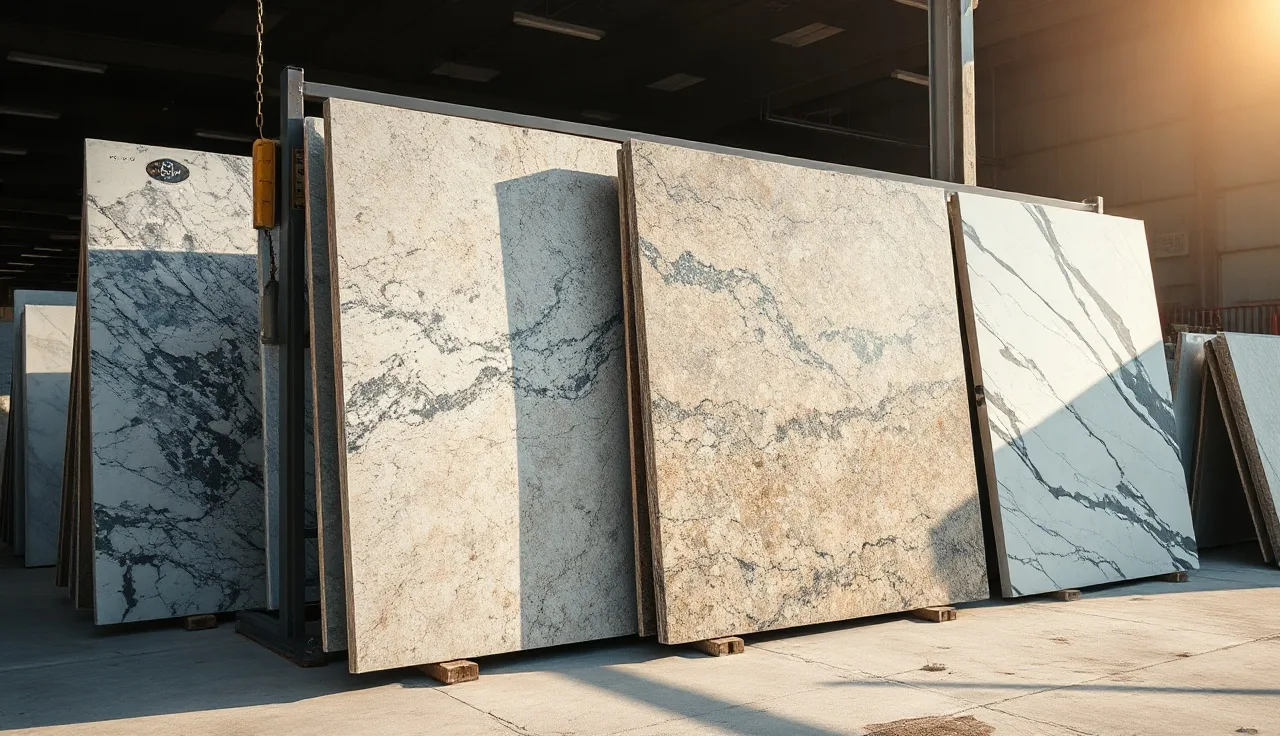
- A remnant slab is the piece of stone left over after a fabricator cuts countertops from a full slab.
- Remnants usually sell for 30 to 70 percent less than full-slab pricing because the material cost is already paid off.
- Homeowners save most on small jobs like bathroom vanities.
- Fabricators price remnants by square footage, edge complexity, and usable area.
What is a remnant slab exactly?
A remnant is the piece of stone left on the shop floor after a fabricator cuts a customer's countertops from a full slab. Full slabs of granite or quartz usually give you 55 to 65 square feet of usable surface. A standard kitchen eats 35 to 45 square feet. What's left is a strip or an L-shaped chunk.
That leftover piece is the remnant. It already paid for itself, because the original customer's invoice covered the whole slab. The fabricator now owns real stone with no material cost hanging over it. That is exactly why remnants get priced so differently from new material.
Remnants are not seconds or damaged goods. Most are sound stone in the same color and finish as the original slab. The catch is size. You get what's there. A remnant might be 12 square feet, or it might be 28. You cannot special-order one in a specific dimension.
Natural stone remnants (granite, marble, quartzite, soapstone) show up most because those slabs cost the most and shops would rather sell the scrap than pay to dumpster it. Engineered stone remnants (quartz brands like Cambria and Silestone) come through regularly too. Sintered surfaces and ultra-thin porcelain generate remnants as well, though their smaller starting sizes leave less behind per job.
How big does a piece have to be to count as a remnant?
There is no industry-standard definition, so it varies by shop. Most fabricators draw the line between 10 and 25 square feet. Below about 10 square feet, a piece is usually too small for any countertop and gets scrapped or cut into samples. Above roughly 25 square feet, some shops call it a partial slab and price it closer to full-slab rates.
The most useful remnants for homeowners land in the 12 to 22 square foot range. That covers a single bathroom vanity (often 8 to 14 square feet), a laundry room shelf, a bar top, or a kitchen island end cap.
If a piece is big enough to yield a full kitchen, most shops will not call it a remnant. They price it as a partial slab at maybe a 15 to 25 percent discount off the full rate, not the steeper remnant discount. The word "remnant" implies a piece that is genuinely limited in what jobs it can serve.
Shape matters too. Some shops separate a remnant that is still one intact rectangle from an odd-shaped offcut with an already-cut radius or angled edge. That shape complicates new cuts and shrinks the usable layout area, so shops price those lower still or pass on them entirely.
How much does a remnant countertop cost compared to a full slab?
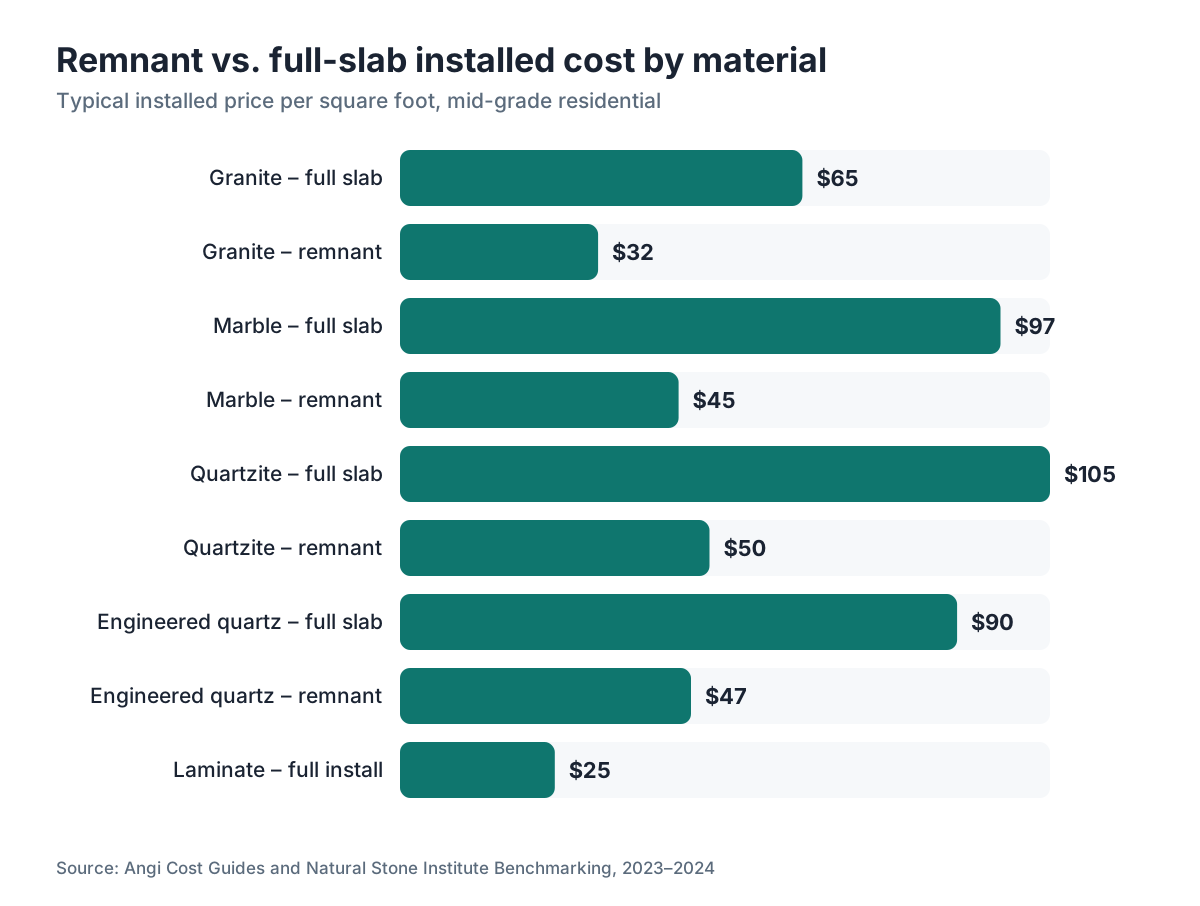
Full-slab granite countertops run roughly $40 to $100 per square foot installed, depending on grade, edge profile, and region [1]. Marble countertops usually land $60 to $150 per square foot installed [2]. Engineered quartz sits in the $70 to $130 range installed.
Remnant pricing strips out most of the material cost. Say a fabricator paid $350 for a slab, cut most of it, and has 15 square feet left. That $350 is already recovered. The remnant's floor price is labor, a little overhead for storage, and whatever margin makes the job worth running through the shop. In practice, installed remnant countertops often come in at:
| Material | Full slab installed ($/sq ft) | Remnant installed ($/sq ft) | Typical savings |
|---|---|---|---|
| Granite (mid-grade) | $50, $80 | $20, $45 | 30 to 55% |
| Marble (Carrara) | $75, $120 | $30, $60 | 35 to 55% |
| Quartzite | $80, $130 | $35, $65 | 35 to 60% |
| Engineered quartz | $70, $110 | $35, $60 | 30 to 50% |
| Soapstone | $70, $120 | $30, $55 | 35 to 60% |
These are broad ranges from fabricator pricing guides and regional surveys. Your local market may run 20 percent higher or lower [1][3]. The savings are real, but they are not uniform. A high-demand exotic remnant (dramatic leathered quartzite in a hot color) might carry only a 15 to 25 percent discount, because the shop knows it will move on its own.
Minimum job charges matter too. Most fabricators set a shop minimum of $300 to $600 no matter the square footage. On a tiny 6-square-foot piece, that minimum can make the per-square-foot math look worse than buying new. Ask what the minimum is before you get excited about a small remnant.
How do fabricators price remnant jobs? What goes into the quote?
From the shop's side, a remnant quote has four parts: material, cutting labor, edge work, and installation.
Material on a remnant is basically sunk cost that's already been recouped. Many shops price remnant stone at $5 to $25 per square foot for the material itself, against $20 to $60 per square foot for new stone. Some shops just slap a flat price on each remnant based on what they think it'll bring, which is why you see pieces tagged at $150 or $400 with no visible per-square-foot logic.
Cutting labor does not drop just because the stone is a remnant. Running a CNC waterjet or bridge saw costs the same per hour whatever the stone's origin. A simple rectangular cut with no sink hole might take 30 to 60 minutes of machine time plus setup. Add a sink cutout and you're at 90 minutes easily. Fabricator shop labor rates run $75 to $150 per hour in most markets [3].
Edge profiles add cost per linear foot. A simple eased edge might be $5 to $12 per linear foot. A full bullnose or ogee can hit $25 to $45 per linear foot. On a 24-inch-wide vanity top that's only 48 inches long, the edge work can equal or beat the material cost.
Installation on remnant jobs often carries the same base charge as any small install: typically $150 to $300 for basic drop-in work, more for complex supports or heavy stone. Some shops waive the trip charge if you pick up a pre-cut vanity top, which is common on remnant bathroom pieces.
Shops that manage remnant inventory well track all of this on paper or in software. A tool like SlabWise lets fabricators log each remnant by actual dimensions, assign a material cost, and build quotes that add edge and cutout charges automatically. That removes the guesswork and keeps shops from undercharging on jobs that look simple but hide long edge runs.
What projects are remnant countertops best for?
Remnants work best on small, defined projects where you don't need the stone to match an existing run of countertop.
Bathroom vanities are the classic use. A standard 31-by-19-inch vanity top is roughly 4 square feet. Even a generous 60-inch double vanity is under 10 square feet. Almost any remnant big enough to qualify will cover a vanity. This is where homeowners score the best deal: a $40-per-square-foot stone for $20 installed, because the shop is glad to move a piece it would otherwise store for months.
Laundry counters, bar tops, outdoor kitchen sections, fireplace hearths, and window sills all fit well. So do island waterfall end panels, where you need a fairly thin strip of matching stone.
Large kitchens are the hard case. A typical U-shaped kitchen needs 50 to 70 square feet of countertop. Very few remnants reach that. Where a remnant helps in a kitchen is a partial remodel: replacing just the island or the peninsula while the existing counters stay put. Then you only need to match the existing stone if it's still in production and available years later, which it often isn't.
Custom furniture is a growing use: dining tops, coffee tables, side tables. Stone furniture is heavy enough that most homeowners don't self-install, so you still pay fabrication and delivery, but the stone cost is low. A 24-by-48-inch coffee table top in leftover Calacatta marble for $200 in material is a genuine value.
Can you find remnants in specific colors or materials?
You can search, but you can't guarantee a find. Remnant inventory is entirely opportunistic. A shop has whatever recent jobs left behind, and that changes week to week.
The most common remnant materials in most U.S. markets are mid-grade granite (Santa Cecilia, Venetian Gold, Uba Tuba, Absolute Black are perennial high-volume stones) and white or gray engineered quartz. Those move in volume, so leftovers pile up. Exotic materials, leathered finishes, and very large format slabs generate remnants less often.
To find a specific material, call shops directly and ask what they have in that color family. Some fabricators post remnant inventory on their sites or on local Facebook Marketplace listings. A few run weekend remnant sales to clear the yard.
Matching an existing countertop from remnants is usually not realistic unless the original stone is a very common granite or quartz still in active production. Natural stone varies in veining and color lot to lot. Even if a shop has a remnant of the same named stone, it can look noticeably different from what you have. Engineered quartz is more consistent batch to batch, but color programs do get discontinued.
If you need a precise match, order a new partial slab from the original supplier rather than hunting remnants. Remnants pay off when you're starting fresh with no matching requirement.
What should homeowners ask a fabricator before buying a remnant?
Five questions cover most of the ground.
First: what are the actual usable dimensions? A fabricator should give you the exact length and width. More to the point, ask about any areas you can't use: existing cut edges with chips, small cracks, or an unusable radius from the last job. Gross square footage and net usable square footage can differ a lot on an irregular piece.
Second: what is the shop minimum? A $400 minimum on a 4-square-foot vanity top is a lot per square foot, even at zero material cost. Get that number before you design the project around the remnant.
Third: does the price include sink or faucet cutouts? A single sink cutout typically adds $100 to $200. An undermount sink with a complex bowl can add more. Ask up front.
Fourth: what edge options are available and what do they cost? Edge profiles are often not baked into remnant prices. A pencil or eased edge is cheap. A mitered waterfall edge on that same remnant costs a lot more.
Fifth: does installation come with it, or is this pickup-only? Some shops sell pre-cut vanity tops you pick up yourself and set on the cabinet, with no install service offered. Fine if you're handy and the piece is manageable, but stone runs 15 to 20 pounds per square foot, so a 10-square-foot piece is 150 to 200 pounds [4]. Plan the lift.
For countertop installation details that apply to remnant jobs as much as full-slab work, it helps to understand how templates get taken and how the stone is secured.
How do fabricators track and manage remnant inventory?
This is where a lot of small shops bleed money without noticing. A remnant that sits in the yard for eight months is not free. It takes up space, gets dirty, sometimes gets chipped by other material moving around it, and the person who would've bought it doesn't know it exists.
Better-run shops tag each remnant the moment the original job comes off the saw: dimensions, material name, finish, and thickness written on the piece or logged in a shop system. They photograph it and post it somewhere visible, on a shop website, a Google Business listing, or an internal quoting tool.
The bigger operational problem is nesting: figuring out whether a new customer's job can come out of an existing remnant instead of a fresh slab. Opening a new slab for a small job wastes material, and the remnant you already own carries a lower effective cost. Shops that do this well run the customer's template dimensions against their remnant inventory before ordering new stone. If a remnant fits, they quote the job cheaper and still make margin close to a full-slab job.
Manual nesting (holding a paper template against a remnant) works, but it's slow. Digital nesting tools let a fabricator enter a remnant's dimensions and a job's cut list and see instantly whether the pieces fit. That trims waste across the whole shop, not only on remnant jobs. Industry estimates put slab loss from offcuts and waste at 15 to 25 percent in an average fabrication shop [5], and better nesting pulls that number down directly.
Are remnant slabs lower quality than full slabs?
No, not by nature. The stone is the same material as any other piece from that slab. If the original slab was Grade A Calacatta marble, the remnant is Grade A Calacatta marble.
That said, inspect any remnant in person before you commit. Look for:
Fissures or cracks along the edges, which are likelier on a piece that's been shuffled around a yard several times. A hairline fissure in the middle of a slab is usually cosmetic and natural in stone. A crack near where you need a new cut is a fabrication risk.
Chips on existing cut edges. Common, and usually harmless if they sit on an edge that gets re-cut or hidden. A chip on the finished face near a polished edge is a problem.
Staining or etching from shop chemicals. More common on marble and other calcium-based stones. A water stain on granite usually comes off. An acid etch on marble is permanent surface damage.
Finish consistency. If part of the remnant was already polished as the original countertop edge and that edge shows in your new application, it may not match the field finish. Ask the fabricator whether any finish work is needed.
Care after installation is the same for remnant stone as any other. How to clean stone countertops covers the basics across materials.
What is a fair price to pay for a remnant slab by itself (not installed)?
Buying just the stone, uncut, to bring to your own fabricator or a DIY project, prices vary widely. Shops motivated to clear inventory will price remnants at $2 to $15 per square foot for basic granite or quartz. More exotic or in-demand material in a larger piece might run $20 to $40 per square foot even as raw stone.
Some shops give away very small remnants (under 6 square feet) for free if you haul them, just to clear the space. Always worth asking, especially for small accent pieces.
Be careful buying a raw remnant to bring to a different fabricator. Not every shop will fabricate stone it didn't supply, and those that do may add a surcharge (often called a "customer-supplied material" fee) that eats some of your savings. Call the fabricating shop first and confirm they'll work with your piece before you haul heavy stone across town.
Think about transport too. Natural stone remnants at 3/4 inch or 1.25 inch thick (the two common countertop thicknesses) do not forgive amateur handling. A 20-square-foot piece of 1.25-inch granite weighs roughly 300 to 350 pounds [4]. You need proper support, padding, and usually two experienced people to move it without cracking it.
How do remnant countertop prices compare to laminate or other budget options?
Remnant stone costs more than the cheapest countertop materials but can close the gap on small projects.
Laminate countertops (including Formica countertops) run $10 to $40 per square foot installed for most residential grades [6]. That's the budget floor for most countertop replacements. Corian countertops and similar solid-surface materials land in the $40 to $65 per square foot installed range.
A remnant granite or quartz vanity top, fully installed, often lands at $25 to $55 per square foot depending on shop and material. At $50 to $60 installed you can get real stone that outlasts laminate and adds more resale value. For a project where budget is the only criterion, laminate still wins on raw price.
The comparison that matters most is on small jobs. A 10-square-foot bathroom vanity in laminate might cost $150 to $250 installed. The same space in remnant granite might cost $250 to $450 installed, since shop minimums push the floor up. At that gap, most homeowners who want stone will find remnants worth it. For a full kitchen, laminate or butcher block countertops still save real money over even discounted stone.
Kitchen countertops as a category cover the full decision tree if you're weighing materials across a larger project.
Can fabricators make money on remnant jobs, or are they a favor to customers?
Fabricators can absolutely make money on well-priced remnant jobs. The math works as long as the shop counts all its real costs and doesn't undercharge on labor.
The trap is psychological. Because the material feels free, shops sometimes price remnant jobs too low, forgetting that cutting, edging, and installing a vanity top takes almost the same labor as cutting one from new stone. A shop that charges $150 for a remnant vanity job, then spends two hours of fabrication at a $100 per hour rate plus a $150 delivery and install charge, is losing money, not being generous.
Here's the correct framing. Price a remnant job at full labor and overhead, with the material component discounted to reflect the shop's actual cost basis (usually near zero for a well-recovered remnant). If the market price for a fabricated and installed vanity top in that material is $400, the shop might quote $280 to $320 on a remnant, hand the customer real savings, and still make positive margin.
Shops that track remnant jobs separately from slab jobs often find remnant jobs carry similar or better margin percentages than full-slab work, precisely because the material cost drag is gone. The catch is that remnant jobs run smaller, so the dollar contribution per job is lower. They work best as fill work: keeping the shop busy between larger orders, not replacing them.
For fabricators who want to formalize remnant quoting, SlabWise lets you log remnant dimensions, assign a recovered material value, and build quotes with full edge and cutout pricing, so nothing slips out of the estimate.
Frequently asked questions
What is the difference between a remnant and a partial slab?
The terms overlap, but most shops use them for different sizes. A remnant is typically under 20 to 25 square feet, left over after a job, and priced at a steep discount. A partial slab is a larger leftover, sometimes over 30 square feet, priced at a smaller discount off the full-slab rate. The distinction is informal and varies shop to shop.
How do I find remnant slabs for sale near me?
Call local fabrication shops directly and ask what remnants they have. Many shops never advertise remnants online. Check Facebook Marketplace, Craigslist, and local stone yard websites too. Some fabricators run remnant sale events to clear inventory. Home improvement stores occasionally stock pre-cut remnant vanity tops, though the selection is thin compared to a dedicated stone shop.
Can you use a remnant slab for a kitchen countertop?
Sometimes, depending on kitchen size. A small galley kitchen or a partial remodel (replacing just the island, say) can often work with a remnant. A full U-shaped or L-shaped kitchen typically needs 50 to 70 square feet of countertop, which beats most remnant sizes. If your project fits under 20 to 25 square feet, a remnant is worth exploring.
Is remnant stone safe to use in kitchens and bathrooms?
Yes. The stone is the same material as any other piece from that slab. Granite, quartz, and other remnant materials are food-safe and moisture-resistant just as they would be cut from a full slab. Inspect the piece for cracks or chips before committing, but material quality is not lower just because it's a remnant.
How thick are remnant countertop slabs?
The two common countertop thicknesses are 2 centimeter (about 3/4 inch) and 3 centimeter (about 1.25 inch). Most residential countertop remnants are 3 centimeter, the standard for most kitchen and bath installs. Thinner 2-centimeter pieces do turn up, especially in older remnant inventory or from certain tile and furniture applications.
Do remnant countertops need to be sealed?
It depends on the material, not on the fact that it's a remnant. Natural stone like granite, marble, quartzite, and soapstone may need sealing on the same schedule as any freshly installed stone. Engineered quartz needs no sealing. The remnant cut changes nothing here. Ask your fabricator whether the specific stone needs sealing and how often.
Can I negotiate the price of a remnant slab?
Yes, and it's worth trying. Remnants are a carrying cost for the shop. A piece sitting in the yard for months is more negotiable than one just off a job. If you're paying cash, taking multiple pieces, or doing pickup instead of installation, say so. Many shops have flexibility on remnant pricing they don't have on new-slab jobs.
What is the minimum square footage for a remnant countertop job?
Most fabricators have a shop minimum charge of $300 to $600 regardless of how small the job is. Practically, projects under about 6 to 8 square feet are often too small for any countertop use, though smaller pieces can serve as window sills, shelves, or decorative cuts. Check with your specific shop for their minimum charge before designing around a very small piece.
How long does a remnant countertop job take from purchase to installation?
Faster than a full-slab job in most cases. There's no slab order lead time. A fabricator who already has the remnant in stock can template, cut, and install in as little as three to seven business days for a simple vanity top. High-volume shops may still take two to three weeks to schedule. Get a timeline commitment before you pay.
Are there remnants available for outdoor countertops or non-standard applications?
Yes. Granite remnants are common for outdoor kitchens, barbecue surrounds, and fire pit surrounds because granite handles heat and weather well. Quartzite also performs well outdoors. Marble and engineered quartz are generally not recommended outdoors because of weathering and UV sensitivity. Check with your fabricator about the specific material's suitability for your application.
What is the resale value impact of remnant versus full-slab countertops?
Buyers and appraisers usually can't tell whether your stone came from a remnant or a full slab. What matters is the material (granite, marble, quartz) and the condition. A well-installed granite vanity top from a remnant contributes the same appraiser value as one cut from new stone. The origin of the stone is not disclosed or visible in any normal resale context.
Can a fabricator combine two remnants to cover a larger area?
Technically yes, but it's almost always visible. A seam between two pieces of natural stone shows color and veining differences even if the material is nominally the same. For a vanity or a bar where a seam can hide in a less visible spot, combining two remnants is sometimes done. For a kitchen island top where the whole surface is exposed, most fabricators and customers avoid it.
What happens to remnants that do not sell?
Most shops eventually dump very old or very small remnants. Some donate pieces to Habitat for Humanity ReStores or similar resale outlets. Others cut them into samples, coasters, or display pieces. A few crush and recycle stone offcuts, though stone recycling infrastructure is limited in most U.S. markets. There's no national system for remnant redistribution. It's entirely local and informal.
Sources
- HomeAdvisor (Angi), Granite Countertop Cost Guide: Granite countertops run roughly $40 to $100 per square foot installed depending on grade and region
- HomeAdvisor (Angi), Marble Countertop Cost Guide: Marble countertops typically cost $60 to $150 per square foot installed
- Natural Stone Institute, Stone Industry Benchmarking Study: Fabricator shop labor rates and countertop pricing benchmarks across U.S. markets
- Marble Institute of America, Stone Weight Reference: Natural stone countertop material weighs approximately 15 to 20 pounds per square foot at 1.25 inch thickness
- Natural Stone Institute, Sustainability and Waste in Stone Fabrication: Industry estimates that 15 to 25 percent of slab material is lost to offcuts and waste in an average fabrication shop
- U.S. Bureau of Labor Statistics, Consumer Price Index, Floor and Wall Coverings: Laminate countertops run approximately $10 to $40 per square foot installed for residential grades
- U.S. Environmental Protection Agency, Sustainable Materials Management: Construction and Demolition Debris: Stone and masonry materials are among the heavy materials tracked in construction waste streams
- National Kitchen and Bath Association, Design Survey, Countertop Materials Usage: Quartz and granite consistently rank as the top installed countertop materials in residential kitchen remodels
- Marble Institute of America / Natural Stone Institute, Countertop Thickness Standards: Industry standard countertop thicknesses are 2 cm and 3 cm; 3 cm is most common in residential countertop applications
- U.S. Census Bureau, American Housing Survey, Kitchen Remodel Costs: Kitchen countertop area and remodel scope data used to estimate typical square footage in residential kitchen projects
Last updated 2026-07-09