
TL;DR
- NSF certification for countertops means an independent lab tested the material against NSF/ANSI Standard 51, which covers food equipment materials.
- A certified surface won't leach harmful substances into food under normal use, and it can be cleaned to a hygienic state.
- It matters most for commercial kitchens, but home food-prep areas get the same assurance.
- Not every material needs it, and not every product that claims it actually has it.
What does NSF certification actually mean for a countertop?
An NSF mark on a countertop product means an independent auditor physically tested samples and confirmed the material meets a published, repeatable standard. NSF International is a nonprofit testing and certification organization founded in 1944 as the National Sanitation Foundation. [9] It writes standards, tests products against them, and licenses manufacturers to carry the NSF mark if they pass.
For countertops, the standard that applies is NSF/ANSI 51: Food Equipment Materials. It asks one question at its core: under normal use, contact, and cleaning conditions, will this material leach substances into food at levels that could harm people? [1] Testing covers heavy metals, chemical migration, and whether the surface can be cleaned to a sanitary condition.
NSF is not a government agency. The FDA does not run the program. What the government does is recognize NSF standards and reference them in federal and state food code requirements. So NSF certification is a private mark that carries regulatory weight in a lot of places.
The certification never sits still. Manufacturers pay annual fees, submit to unannounced factory audits, and must retest if they change materials or formulations. A certificate from five years ago doesn't automatically cover today's product version.
What is NSF/ANSI Standard 51 and what does it test?
NSF/ANSI 51 is titled "Food Equipment Materials" and covers any material that touches food during preparation, storage, or service. [1] The standard has existed in some form since the 1950s. The current version is a joint NSF/ANSI standard, meaning it went through the American National Standards Institute consensus process before adoption.
Testing runs in phases. First, material composition review: the manufacturer submits a full ingredient list, including colorants, binders, and sealers, and NSF chemists check each one against a list of acceptable substances. Second, extraction testing: samples of the finished material soak in food-simulant solutions at elevated temperatures, and the extracts get analyzed for contaminants. Third, cleanability testing: the surface gets loaded with a standard soil, cleaned per the manufacturer's instructions, then swabbed for what's left.
Durability comes into it too, but only as it relates to food safety. Surfaces that crack, pit, or delaminate under normal use become harbors for bacteria, so a material that doesn't hold up physically can fail on sanitation grounds even when the base chemistry is fine.
Here's what NSF/ANSI 51 does not do. It doesn't rank materials against each other, and it doesn't certify that a surface is antibacterial. The certification is pass or fail. The material either meets the criteria or it doesn't. Marketing lines like "certified clean" or "hygienically superior" go past what the standard actually says. [1]
Which countertop materials commonly carry NSF/ANSI 51 certification?
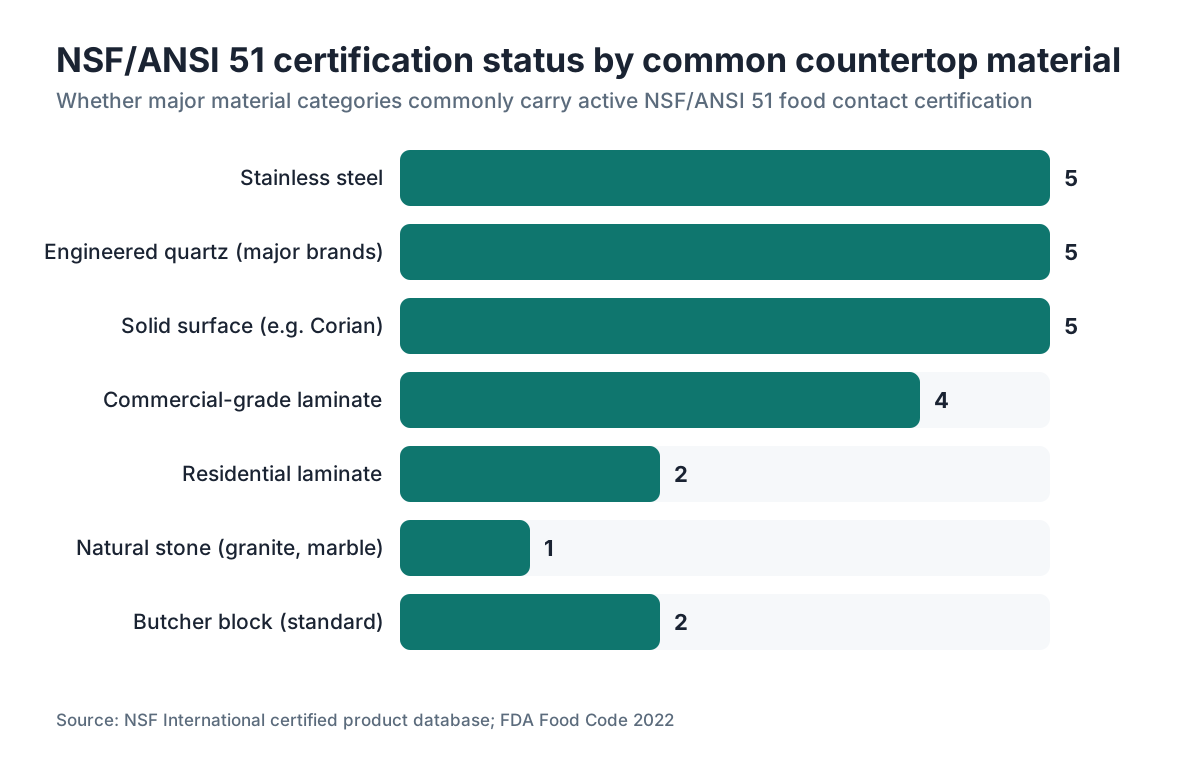
Stainless steel is the most common NSF-certified countertop material in commercial kitchens. It passes cleanability testing easily, has no organic binders to leach, and shrugs off most cleaning chemicals. Almost every commercial prep spec defaults to it for that reason.
Engineered quartz from major manufacturers often carries NSF/ANSI 51 certification. Cambria publishes NSF/ANSI 51 certification for its quartz surfaces, and Silestone and several other engineered stone brands do too. [2] If you're looking at Cambria countertops, check their certification page directly, because certification applies to specific product lines, not the whole catalog.
Solid surface materials like Corian countertops have carried NSF certification for years. Corian by DuPont has been listed under NSF/ANSI 51 for a long time. Solid surface is popular in healthcare and food service because it's nonporous and can be refinished when it scratches.
High-pressure laminate, including products in the Formica countertops and laminate countertops category, can carry NSF/ANSI 51 certification, and many commercial-grade laminates do. Residential grades may or may not. You have to check the specific product.
Natural stone like granite countertops and marble countertops is where it gets complicated. The stone itself is inert mineral, so it has no organic compounds to leach. The sealers applied to it are another story. Natural stone as a category isn't NSF-certified because there's no single formulation to test, and the sealer brand and application matter too. This is a real gap in the certification landscape.
Butcher block countertops made from food-safe wood species and finished with approved oils or sealers can meet NSF standards in some configurations. End-grain butcher block in contact with raw meat raises sanitation questions that the standard handles through cleanability testing, and many commercial operations avoid wood for raw meat prep for exactly that reason.
For a full picture by material type, the kitchen countertops overview walks through the main options and their maintenance profiles.
Is NSF certification required by law for residential countertops?
No. For a private home, no federal law or building code requires NSF/ANSI 51 certification on countertop surfaces. Install whatever you want.
Commercial food service is a different world. The FDA Food Code, which the FDA publishes and states adopt (with variations) as the basis for their food service rules, calls for materials that are safe and durable for food contact. [3] Most state health departments, when they inspect commercial kitchens, look for surfaces that comply with a recognized food safety standard, and NSF/ANSI 51 is the primary benchmark. Some states reference it by name in their food service rules.
The FDA Food Code says food-contact surfaces should be "smooth; free of breaks, open seams, cracks, chips, inclusions, pits, and similar imperfections" and made of "safe material." [3] NSF certification is the cleanest way a manufacturer demonstrates that "safe material" compliance in a regulatory setting, which is why inspectors treat it as the default check.
Building a licensed home-based food business, a cottage food operation, or an Airbnb that serves food? Your local health department has jurisdiction and may require NSF-compliant surfaces in the licensed area. That varies a lot by state and county. Call your local health department before you pick surfaces for any commercially licensed space.
How do you verify that a specific product actually has NSF certification?
Start with the NSF product database at nsf.org. NSF maintains a searchable online listing of certified products, and you can search by manufacturer name, product name, or standard number. If a product isn't in the database, the marketing claim of NSF certification isn't valid, no matter what the brochure says. [4]
When you search, look specifically for NSF/ANSI 51 under the applicable product category. Some countertop products are certified under other NSF standards. NSF/ANSI 61 covers drinking water system components, for example, and that's a different certification for a different job.
Ask the manufacturer for the certificate number. A real NSF certificate has a specific number tied to a specific product formulation and a specific manufacturing facility. If the sales rep can't produce it, ask them to pull it from the NSF database with you watching.
One catch: certification applies to the material as manufactured, not necessarily as installed. A certified quartz slab set with a non-food-safe adhesive, or grouted with an uncertified product, is not a certified installation in the food safety sense. Commercial kitchen designers who spec NSF-certified surfaces also vet the adhesives, caulks, and edge treatments.
Does NSF certification mean a countertop is antimicrobial or bacteria-proof?
No. This is one of the most common misreads. NSF/ANSI 51 tests whether a material can be cleaned to a hygienic state, not whether it kills bacteria on contact.
Some manufacturers separately seek EPA registration for antimicrobial claims, which is an entirely different program. The EPA regulates antimicrobial claims under FIFRA, the Federal Insecticide, Fungicide, and Rodenticide Act. [5] A surface that claims to kill bacteria must hold EPA registration for that specific claim. NSF certification and EPA antimicrobial registration are separate, independent programs.
Here's the practical version. An NSF/ANSI 51-certified countertop, cleaned and maintained properly, gives you a hygienic food contact surface. It won't kill pathogens sitting on it between cleanings. The cleaning step is still on you. What the certification tells you is that the material won't make things worse through chemical migration or a surface texture you can't clean.
Does NSF certification matter for home kitchens or just commercial spaces?
It matters for home kitchens too, just for different reasons. No inspector is coming to check your countertop certification at home. But the science underneath is identical: a certified surface won't leach compounds into food, can be cleaned effectively, and won't harbor bacteria in surface defects.
For households with immunocompromised members, families with young kids, or anyone processing raw meat and poultry at home on the regular, the certification gives you documented proof the surface does what the manufacturer says. That's worth something even without a rule forcing it.
The honest counterpoint: plenty of natural stone surfaces that lack formal NSF certification are perfectly safe and sanitary in residential use when properly sealed and maintained. No certification does not mean dangerous. It means the surface hasn't been through that specific testing protocol. Granite has served as a kitchen surface for decades with no meaningful documented harm from the stone itself.
Where certification earns its keep in the residential market is with any material that has an organic binder, a coating, or a manufactured composition. Engineered products gain more from third-party verification than pure mineral surfaces do. The how to clean stone countertops guide covers practical sanitation regardless of certification status.
How does NSF certification compare to other food safety standards for countertops?
NSF/ANSI 51 is the dominant food contact standard in North America, but it isn't the only one, and the others address different risks.
| Standard | Issuing Body | Scope | Common Use |
|---|---|---|---|
| NSF/ANSI 51 | NSF International / ANSI | Food equipment materials | US/Canada food service |
| UL Environment (formerly GREENGUARD) | UL | Chemical emissions to indoor air | Residential/schools |
| EN 1186 | European Committee for Standardization | Plastics in food contact | EU food service |
| FDA 21 CFR Parts 170-186 | US FDA | Substances Generally Recognized As Safe (GRAS) | All US food contexts |
| California Prop 65 | CA OEHHA | Chemical exposure warnings | California only |
GREENGUARD certification, now managed by UL, tests for chemical emissions into indoor air, not food contact safety. [6] A countertop can be GREENGUARD-certified for low emissions and not NSF/ANSI 51-certified for food contact, or the reverse. The two track different exposure pathways.
FDA's 21 CFR regulations set which substances can legally go into food contact materials under GRAS provisions. Manufacturers who use NSF/ANSI 51 as their framework still work inside FDA's substance rules, because NSF's composition review draws partly on FDA's approved substance lists. [8]
For fabricators quoting across commercial and residential work, knowing which standard the client or their health department actually requires saves time. Quoting software that tracks material certifications alongside slab costs can flag this early. SlabWise's job management tools let fabricators attach certification notes to material records so nothing slips during quoting.
California Prop 65 is not a certification program. It's a disclosure law requiring businesses to warn consumers when a product exposes them to listed chemicals above threshold levels. [7] An NSF-certified product can still need a Prop 65 warning if it contains a listed substance above the threshold, because the two programs use different thresholds and different lists.
What is the cost of NSF certification and who pays for it?
Manufacturers pay for NSF certification. Not consumers, not fabricators. The cost includes an application fee, testing laboratory fees, and ongoing annual listing fees. NSF doesn't publish a public fee schedule, but industry sources put initial certification for a single product formulation somewhere from several thousand to tens of thousands of dollars, depending on the material's complexity and how many test protocols it takes.
Annual maintenance fees and unannounced audit costs stack on top. For a large engineered stone brand, NSF certification is a routine line in the product development budget. For a small regional solid surface maker, the same cost can be a real barrier to entry.
What that means for buyers: NSF-certified products cluster in the mid-to-upper price tier, because only manufacturers with enough volume to justify the certification cost bother. You're unlikely to find a bargain-tier surface with NSF/ANSI 51 certification. Not impossible, just rare.
Fabricators pay nothing extra to install NSF-certified materials. The certification travels with the material as manufactured. What does add cost is making sure every ancillary material (adhesives, caulks, edge treatments) is appropriate for food contact when the install is for a commercial kitchen. Those specs are the designer's or GC's job, but fabricators who know the difference stay clear of liability.
How should you maintain an NSF-certified countertop to keep it food-safe?
Certification tells you what the material is, not what you do to it. Maintenance carries the rest of the weight.
For most NSF-certified surfaces, the manufacturer's cleaning instructions are part of what NSF evaluates during certification. Following those instructions is what keeps the surface performing the way it was tested. Take an abrasive to a surface certified as smooth and you create micro-scratches that harbor bacteria, which defeats the whole point.
A few rules hold across most certified materials. Clean with food-safe cleaners. Keep bleach at or below the concentration the manufacturer specifies, because bleach can degrade some solid surfaces over time. Skip abrasive pads on polished surfaces. Replace caulk and sealants on a schedule, since caulk joints are usually the least food-safe part of any countertop install regardless of the slab.
For natural stone that isn't NSF-certified but sees home food prep, sealing is the maintenance step that matters. A properly sealed stone surface cleans to a hygienic state far more easily than an unsealed one. The how to clean quartzite countertops and how to clean soapstone countertops guides cover material-specific protocols.
In commercial settings, cleaning frequency matters as much as method. Health departments typically require food contact surfaces to be cleaned and sanitized at set intervals during service, more than when the shift ends. NSF-certified surfaces are built to take that frequency of chemical exposure.
What should fabricators know about NSF certification when quoting commercial jobs?
Quoting a commercial kitchen, a food service operation, or any licensed food facility? NSF compliance isn't optional background. It's part of scoping the job right.
Confirm what the health department actually requires. In most US jurisdictions, the FDA Food Code version the state has adopted sets the baseline, and NSF/ANSI 51 is the benchmark for food contact surfaces. [3] State adoptions vary, and some carry amendments. A quick call to the local health department, or a look at the state food code before you price, saves everyone time.
Source the documentation. Commercial clients often need NSF certification paperwork for their health department inspection. Build the step into your process: pull the NSF certificate for every material you spec on a commercial job, and keep it in the project file.
Think past the slab. Adhesives, undermount clips, and caulk all touch the underside of a surface that will be food contact on top. In commercial installs, review those materials for food contact compatibility even when they're not technically food contact themselves. The inspector has discretion, and some are thorough.
Upcharges are real. NSF-certified adhesives and caulks cost more than standard residential materials. Factor it in when you quote. Fabricators using structured quoting tools like SlabWise can build commercial kitchen line items into templates so these costs don't vanish on a fast quote.
For countertop installation across material types, the countertop installation guide covers what to expect.
Frequently asked questions
Is NSF certification the same as FDA approval for countertops?
No. NSF certification comes from NSF International, a private nonprofit. FDA approval comes from a federal agency under specific statutory authority. The two overlap: NSF's material review draws partly on FDA's GRAS substance lists, and FDA references standards like NSF/ANSI 51 in regulatory guidance. But they're separate programs. An NSF-certified countertop has not been reviewed or approved by the FDA directly.
Can a granite countertop be NSF certified?
Not easily, because NSF/ANSI 51 certification applies to a defined, reproducible product formulation. Natural granite varies by quarry and slab. The stone itself is inert mineral, so leaching isn't the concern. A sealer applied to granite could carry a food-safe certification, but the stone-plus-sealer combination as installed isn't tested as a system. For home kitchens, properly sealed granite is generally considered safe for food contact.
Do quartz countertops need NSF certification?
Not legally, in residential settings. But major engineered quartz brands like Cambria and Silestone have pursued NSF/ANSI 51 certification for many lines because it helps them win commercial kitchen and healthcare specs. If you're buying quartz for a commercial food facility, confirm the specific product line has current NSF/ANSI 51 certification in the NSF product database before specifying it.
How long does NSF certification last?
It doesn't expire on a fixed date, but it requires annual renewal and is subject to unannounced factory audits. If a manufacturer changes the formulation, materials, or process, they must notify NSF, which can trigger retesting. A certificate that covered a 2018 product version doesn't automatically apply if the formula changed in 2023. Verify current certification status in the NSF online product database.
What is the NSF mark and where should it appear on a countertop product?
The NSF mark is a registered certification mark that licensed manufacturers can apply to certified products, packaging, and documentation. On countertop materials, you'll more often see it on the product data sheet, the manufacturer's website, or sales literature than on the slab itself. For verification, the NSF online database is the authoritative source. A mark on a brochure with no database listing is not valid certification.
Does NSF certification cover the adhesive and caulk used to install countertops?
No. NSF/ANSI 51 certification applies to the countertop surface material itself. Adhesives, caulks, and sealants used during installation are separate products and may or may not have their own food-safe certifications. In commercial kitchens, verify every material that could contact food for food contact compatibility. This matters most for undermount sink installs where adhesives sit directly behind the food prep area.
Is GREENGUARD certification the same as NSF food safety certification?
No. GREENGUARD certification, managed by UL, tests for chemical emissions into indoor air. It's relevant for indoor air quality, especially in schools and residences. NSF/ANSI 51 tests for food contact safety: whether the material leaches harmful substances into food and whether it cleans to a hygienic state. A product can hold one, both, or neither. They address different exposure pathways and different risks.
Do butcher block countertops meet NSF food safety standards?
Some configurations can meet NSF/ANSI 51 requirements, depending on wood species, finish, and construction. End-grain butcher block used for raw meat prep raises cleanability concerns that health departments scrutinize. Many commercial food codes restrict or prohibit wood surfaces in contact with raw animal proteins. For home kitchens, properly oiled butcher block is widely used and considered safe by most food safety authorities with appropriate maintenance.
Where can I look up whether a specific countertop product has NSF certification?
The NSF International product and service database at nsf.org is the authoritative source. Search by manufacturer name or product name and filter by NSF/ANSI 51 under food equipment materials. If the product isn't listed, the marketing claim of certification isn't valid. You can also ask the manufacturer for their certificate number, then cross-reference it in the database.
Does NSF certification affect countertop cost?
Indirectly. NSF certification costs manufacturers several thousand to tens of thousands of dollars per product line in testing and annual fees. Those costs feed into pricing, so certified products cluster in mid-to-premium tiers. There's no line labeled 'NSF certified' on a quote, but the material itself typically costs more than an uncertified equivalent. In commercial bids, specifying certified materials and certified installation products adds cost you should scope in advance.
Are laminate countertops NSF certified?
Commercial-grade high-pressure laminates often carry NSF/ANSI 51 certification. Residential-grade laminates may or may not; it depends on the product. Wilsonart, Formica, and other major laminate makers offer commercial lines tested under NSF/ANSI 51. If you need a certified laminate surface, look specifically at the manufacturer's commercial or food service product lines and confirm certification in the NSF database before buying.
What happens if a health inspector finds uncertified countertop surfaces in a commercial kitchen?
The outcome depends on state and local food code requirements and inspector discretion. If the jurisdiction requires NSF-compliant surfaces and the installed surface isn't certified, the operation could get a violation, be required to resurface before opening, or face fines. The FDA Food Code's safe-materials language gives inspectors significant discretion. Specifying certified materials before buildout is far cheaper than a required remediation afterward.
Can solid surface countertops like Corian be used in commercial kitchens?
Yes. Solid surface materials including Corian have carried NSF/ANSI 51 certification for years and are widely used in food service, healthcare, and school cafeterias. Solid surface is nonporous, repairs by sanding, and withstands standard commercial cleaning chemicals. The ability to refinish scratches and chips is especially valuable in commercial settings, where surface integrity directly affects sanitation. Always confirm the specific product line has active certification.
Sources
- NSF International, NSF/ANSI 51: Food Equipment Materials: NSF/ANSI 51 is the standard for food equipment materials, covering food contact safety, cleanability, and material composition review for surfaces used in food preparation.
- Cambria, Product Certifications and Compliance: Cambria engineered quartz surfaces carry NSF/ANSI 51 certification for food contact safety.
- US FDA, FDA Food Code 2022: The FDA Food Code requires food contact surfaces to be made of safe, smooth, durable material and references recognized standards including NSF criteria for equipment materials.
- NSF International, Certified Product Listings Database: NSF maintains a public searchable database of all currently certified products; a product not listed is not validly NSF-certified regardless of marketing claims.
- US EPA, Pesticides (FIFRA antimicrobial registration): Antimicrobial surface claims require separate EPA registration under FIFRA; NSF/ANSI 51 certification does not confer EPA antimicrobial registration.
- UL, GREENGUARD Certification Program: GREENGUARD certification tests for chemical emissions into indoor air, which is a different exposure pathway than food contact safety tested under NSF/ANSI 51.
- California OEHHA, Proposition 65 Overview: California Proposition 65 requires warnings when products expose consumers to listed chemicals above established threshold levels; it is a disclosure law, not a certification program.
- US FDA, 21 CFR Parts 170-186: Food Additives and GRAS Substances: FDA's 21 CFR regulations establish which substances are GRAS for food contact applications; NSF material composition reviews reference these FDA substance lists.
- NSF International, About NSF: NSF International was founded in 1944 as the National Sanitation Foundation and operates as a nonprofit testing, auditing, and certification organization.
- Conference for Food Protection, FDA Food Code Adoption by State: States adopt the FDA Food Code with variations; adoption status and version in effect varies by state and directly affects which equipment material standards apply in commercial kitchens.
Last updated 2026-07-11