TL;DR
- Dallas has hundreds of stone fabrication shops, from large production houses to small custom studios.
- Expect to pay $45 to $120 per square foot installed for granite or quartz, depending on slab grade and edge profile.
- Turnaround runs 1 to 3 weeks after template.
- Knowing how fabricators price, cut, and install stone saves you money and headaches.
What does a stone fabricator in Dallas actually do?
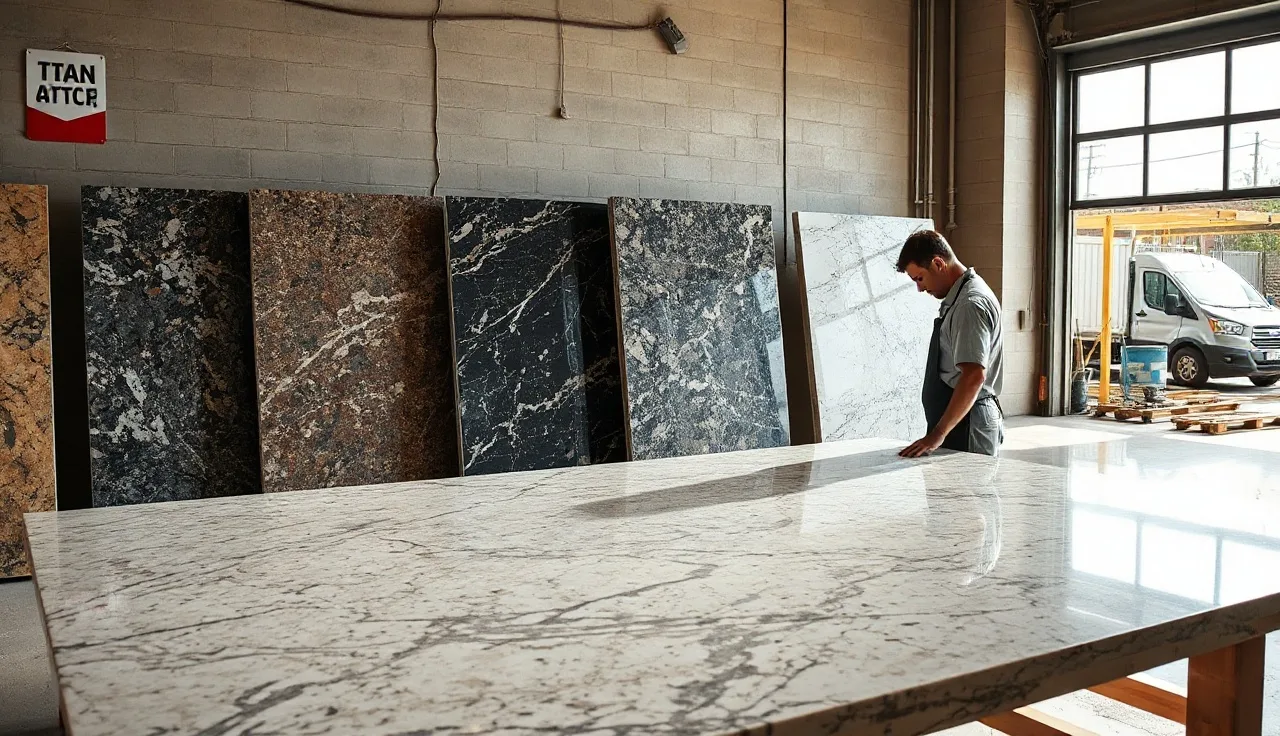
A stone fabricator is not a countertop retailer and not a general contractor. They buy raw slabs, cut them to your kitchen or bathroom layout, profile the edges, cut sink and cooktop openings, and install the finished tops in your home. The stone you see at a big-box store display is usually outsourced to a local fab shop anyway. The fabricator is the skilled middle step between a quarry slab and your finished kitchen countertops.
Most Dallas fabricators run a shop with CNC saws and waterjet or bridge saws, polishing lines, and a template crew that visits your home first. Template day is when a technician measures every wall, cabinet, and corner precisely, usually with a laser measuring tool or physical templating strips. That template drives every cut. If the template is wrong, the stone is wrong. It's that simple.
Some shops also carry their own slab inventory. Others work as cut-only shops, meaning you buy your slab at a separate stone yard and they fabricate it for you. Both models exist in Dallas, and both can produce excellent work. The difference is mainly in who controls your slab selection and who absorbs the material markup.
How many stone fabricators are in the Dallas-Fort Worth area?
The DFW metro has one of the highest concentrations of stone fabrication businesses in the country. The Natural Stone Institute (formerly the Marble Institute of America) has historically counted Texas among the top states by fabrication shop count [1]. A search of the Texas Secretary of State business registry under NAICS code 327991 (cut stone and stone product manufacturing) shows several hundred active registrations across Collin, Dallas, Denton, and Tarrant counties combined, though that figure includes wholesalers and importers alongside pure fabricators.
A Dallas homeowner can realistically get three to five quotes within a week without leaving the metro. The competition is real and it works in your favor on price. It also means the quality range is wide. Shops run from 20-year operations with their own stone yards to two-person startups working out of a leased warehouse bay.
The North Dallas corridor (Carrollton, Farmers Branch, Irving) has a notable cluster of solid stone fabricators, partly because warehouse space is affordable and the highway access to DFW Airport makes slab imports efficient [2]. Large stone yards sit next to some of these shops, which lets you walk the slab selection yourself before committing.
What does stone fabrication cost in Dallas right now?
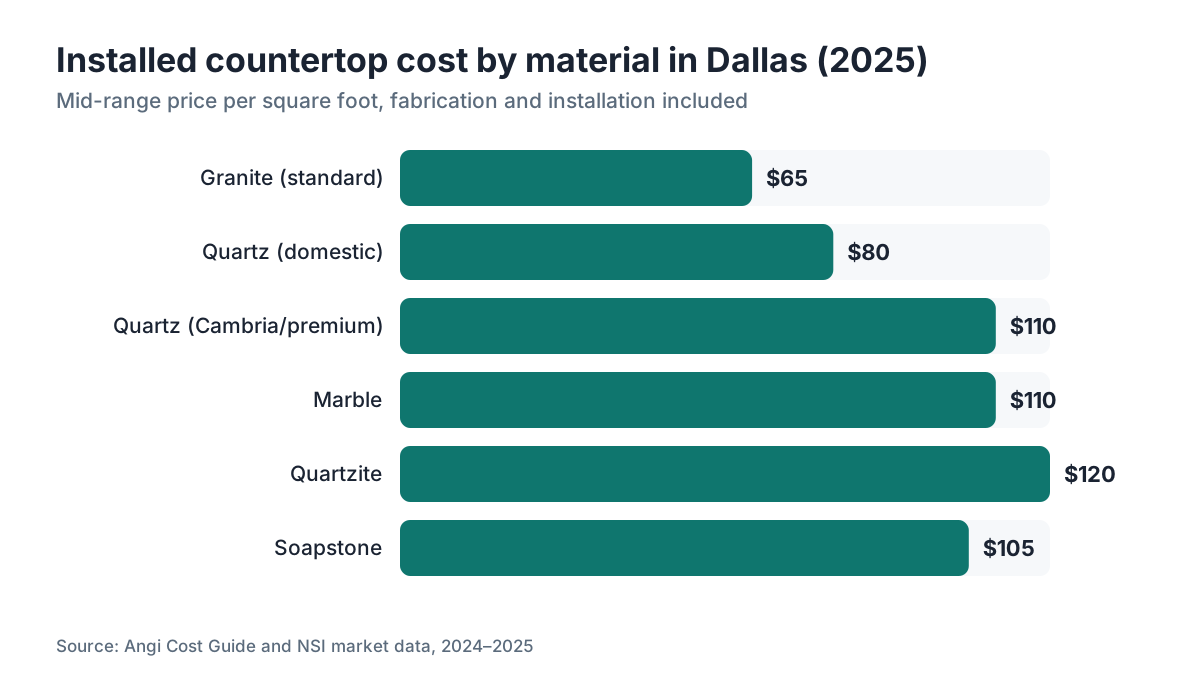
Prices vary by material, slab grade, edge complexity, and shop overhead. The table below gives realistic installed price ranges based on typical Dallas market quotes as of 2025. These are per-square-foot figures for fabrication plus installation. They do not include demolition of old countertops or plumbing disconnects.
| Material | Entry level ($/sq ft) | Mid-range ($/sq ft) | Premium ($/sq ft) |
|---|---|---|---|
| Granite (standard colors) | $45 | $65 | $90 |
| Granite (exotic) | $75 | $100 | $140+ |
| Quartz (domestic brands) | $55 | $80 | $110 |
| Quartz (Cambria, premium) | $85 | $110 | $140 |
| Quartzite | $80 | $120 | $180+ |
| Marble | $70 | $110 | $160+ |
| Soapstone | $75 | $105 | $145 |
Edge profiles add cost. A standard eased edge (the flat, slightly softened edge on most quartz) is usually included in the base price. Ogee, waterfall, and mitered edges can add $15 to $40 per linear foot. Undermount sink cutouts typically run $150 to $250 each [3].
Demolition of laminate or tile tops usually costs $200 to $500, depending on the size of the job and whether the installer has to work around plumbing. Some Dallas fabricators include demo in their quote. Others subcontract it or exclude it entirely. Always ask.
For laminate countertops or Formica countertops as an alternative, big-box prices run $20 to $40 per square foot installed. Stone is a real step up in cost. That's not a reason to avoid it, but it is a reason to have budget clarity before you start calling fabricators.
How do Dallas stone fabricators price a job?
The quote starts with square footage, but that's just the beginning. Fabricators measure your layout and calculate the number of slabs required. A standard granite slab from a Texas stone yard runs roughly 55 to 65 square feet of usable surface after accounting for cuts and waste [4]. For a large kitchen with an island, you might need two slabs, which often means a big jump in price even if the kitchen is only slightly larger than a one-slab job.
Most shops price the job, not the slab. You pay for material, fabrication labor, edge work, cutouts, and installation. Some shops use per-square-foot pricing as a simple all-in number. Others line-item everything. Both approaches are legitimate. Line-item quotes are easier to compare apples to apples.
Shops running modern quoting and nesting software can show you exactly how your template lays out on the slab and where waste will fall. This matters because a sharp fabricator can sometimes reposition pieces to avoid seams in bad places or to use less of a second slab. If a shop is still quoting off a yellow pad, that's not automatically bad, but it does mean you're trusting their mental arithmetic rather than a system. SlabWise is one platform Dallas fabricators use for this kind of digital quoting and slab nesting, so if your fabricator mentions it, that's a signal they run a modern operation.
Seams are a separate conversation. On a 10-foot run, a single slab can span the whole length with no seam. But an L-shaped kitchen often needs a seam at the corner. Ask every fabricator where the seam will fall before you sign anything. Seam placement is a craft decision and it varies by shop.
What materials can Dallas fabricators work with?
Pretty much everything. The Dallas market is large enough that most shops can fabricate granite countertops, marble countertops, quartz composites, quartzite, Cambria countertops, soapstone, and even butcher block countertops (though butcher block is usually prefab, not custom-cut stone work).
Granite and quartz are the most common requests by far. Quartzite has grown fast in the last five years as homeowners want the look of marble with better durability. Soapstone stays a niche choice, but several Dallas shops stock it. Corian countertops and solid surface materials are typically handled by fabricators who specialize in that material, since the tooling and adhesive chemistry differ from natural stone.
If you want a less common material like dekton, neolith, or porcelain slab, confirm the shop has experience with it before handing over a deposit. Ultra-compact surfaces crack differently under a saw, and an inexperienced cut is an expensive mistake.
Care requirements vary by material. Granite needs periodic sealing. Marble scratches and etches. Quartzite is harder but still porous depending on the variety. If you're curious about maintenance, the guides on how to clean quartzite countertops, how to clean soapstone countertops, and how to clean stone countertops cover the specifics without upselling you on products.
How long does stone fabrication take in Dallas?
From signed contract to installed countertops, the typical timeline runs 10 to 21 calendar days. Template day is the starting gun. After template, the shop programs the cuts, orders any additional materials if needed, and queues the job. CNC processing takes a few hours for a standard kitchen once the job is on the machine. Polishing and edge work add another day. Then installation is scheduled.
Busy seasons slow this down. Dallas fabricators report their heaviest backlogs from March through June and again in September and October, when home sales, remodels, and new construction all peak at once [5]. During peak periods, three to four weeks is not unusual.
If a shop promises install in five days from template, push back a little. It's possible for a small job with no complications, but it often means they're rushing the queue or the template-to-cut review is thin. Rushing stone fabrication is how you get a seam in the wrong place or an undermount sink that doesn't quite align.
For countertop installation specifics, the actual install day, from removing old tops to the final caulk line, is worth understanding separately.
What licenses and insurance should a Dallas stone fabricator carry?
Texas does not require a specific state license for countertop fabrication or installation as a standalone trade [6]. Any contractor working on your home in Dallas should still carry general liability insurance and workers' compensation coverage. Ask for a certificate of insurance before the job starts, and make sure it's current.
The Texas Department of Licensing and Regulation (TDLR) does regulate certain trades that touch countertop work. Plumbers who reconnect your sink after installation must be licensed in Texas [7]. If your fabricator also does the plumbing reconnect, confirm they're using a licensed plumber for that part, or that your quote excludes it so you can hire one separately.
Some fabricators belong to the Natural Stone Institute, which offers training and certification programs for installers [8]. NSI certification is not a state requirement, but it signals the shop has invested in training. The technical manual published by the Natural Stone Institute is the closest thing the industry has to a code of practice for fabrication quality.
For larger jobs or commercial work, Dallas fabricators may also need to register as contractors with the city. Residential countertop-only work generally does not trigger a permit requirement in most Dallas jurisdictions, but ask your city's building department if you're unsure [9].
How do you evaluate and compare Dallas stone fabricators?
Start with three quotes minimum. The lowest quote is not always the worst shop and the highest is not always the best. You're weighing three things: price, communication quality, and evidence of past work.
Ask each shop to show you a finished kitchen they've done in a similar material. If they can't produce photos or references, that's a signal. Ask specifically where they source their slabs and whether you can visit the slab yard to pick your own stone before the job. Many solid stone fabricators in Dallas allow, or even encourage, this. Picking your own slab means no surprises when the stone arrives.
Ask how they handle a mistake. What happens if the sink cutout is off by half an inch? What's the process? A good shop has a clear answer. A vague answer or defensiveness is worth noting.
Get every quote in writing. The quote should specify the material, grade, slab name or SKU if known, edge profile, cutout count, whether demo is included, and payment terms. Dallas shops typically ask for 50% at signing and 50% at installation, though some ask for the full balance before install. Never pay 100% upfront.
Check Google reviews, but read them critically. Look for reviews that mention the template crew, seam quality, or how the shop handled a problem. Generic five-star reviews with no specifics are noise. Detailed complaints or detailed praise are the signal.
What are the red flags when hiring a Dallas stone fabricator?
No physical shop address. Some fabricators work from a residential garage or a phone-only setup with no verifiable location. This isn't automatically disqualifying for a very small custom shop, but it makes dispute resolution harder.
No written contract. Verbal quotes in stone work lead to disputes almost every time a complication comes up. If the shop resists putting the scope in writing, walk away.
Pressure to skip the template visit. Some shops offer to estimate from photos or rough measurements, then template later. That's fine for a ballpark quote, but no stone should be cut without a proper template from your actual space. Cabinets are never perfectly level or square. A template skipped is a fit problem waiting to happen.
Vague subcontracting. Some shops quote the job and then hand off fabrication to a third party without telling you. Ask directly: who cuts the stone and who installs it? Is the installer an employee or a subcontractor? Subcontracting isn't inherently bad, but you should know.
Unusually short warranties. Industry-standard fabrication warranties in Texas typically run one year on workmanship, not including material defects (which are covered by the slab supplier). A shop offering 30 days or no warranty on their work is a signal to ask more questions.
What questions should you ask a Dallas stone fabricator before signing?
Here's the list that actually filters problem shops from good ones.
First: How do you handle seams, and where will the seam fall on my layout? Ask them to show you on a sketch or digital layout.
Second: Can I see the slab before you cut it? If they say no, and they're supplying the material, that's a problem. You should always have the chance to approve the specific slab going into your kitchen.
Third: What's your process if the stone cracks during fabrication? Rare, but it happens with marble and some quartzites. A good shop has a clear answer: they replace the slab at their cost.
Fourth: Is the installer who comes to my house your employee? If a subcontractor, how long have you worked together?
Fifth: What's included in your warranty and what isn't? Specifically ask about chip repair, seam separation, and sealant.
Sixth: What happens if my cabinets aren't level and your top doesn't sit flat? This is a real issue in older Dallas homes. Good fabricators shim, scribe, or address this as standard. Some try to charge extra.
If a shop gives you straight, undefensive answers to all six, you're probably talking to a competent operation. Fabricators who've done this for years aren't defensive about these questions. They've heard them all.
How do Dallas stone fabricators differ from national chains or big-box countertop programs?
Home Depot and Lowe's both offer countertop installation programs in Dallas. They outsource the fabrication to local shops, add a margin, and manage the customer relationship. The price is usually higher than going direct to a local fabricator for comparable quality, and the turnaround tends to be longer because of the extra coordination layer [10].
The main advantage of big-box programs is accountability. If something goes wrong, you have a large corporation to escalate to. For homeowners who aren't comfortable vetting a small shop on their own, that's a real benefit.
The main disadvantage is less flexibility. You often can't visit the slab yard and pick your exact slab. You can't negotiate edge profiles or ask the actual fabricator about seam placement. The big-box rep who takes your quote is not the person cutting your stone.
Most experienced remodelers and contractors in Dallas go direct to a fabricator for custom work. The exception is on-spec flips or rental properties where speed and simplicity matter more than customization.
Shops using software like SlabWise can produce detailed digital quotes with slab nesting diagrams so you see exactly what you're buying before any money changes hands. This is the kind of transparency that used to be the exclusive advantage of the big-box programs. The gap has mostly closed.
For a fabricator trying to compete on transparency and efficiency, software-driven quoting is now table stakes in a competitive market like Dallas.
What should you know about stone slab yards in Dallas?
Dallas has several large slab import yards and wholesale distributors that sell to fabricators and sometimes directly to the public. Major stone-importing companies with Texas distribution hubs include MSI International and Bedrosians, both of which have Dallas-area showrooms [11][12]. These yards carry granite, quartz, quartzite, marble, and porcelain slabs at wholesale or near-wholesale prices.
If you're working with a fabricator who lets you pick your own slab, visiting one of these yards in person is worth the trip. Photos of stone don't capture the movement, veining depth, or color variation of a real slab. Two slabs from the same quarry batch can look very different. On a large kitchen with high-visibility stone, walking the yard yourself is the only way to get the slab you actually want.
Bundle pricing is common at Dallas slab yards. Buy two or more slabs from the same lot and the price per slab often drops. On a large project, your fabricator may be able to negotiate this on your behalf.
Slab dimensions vary. Most granite slabs run 9 to 10 feet long and 5 to 6 feet wide [4]. Some exotic quartzites and marbles come in smaller slab sizes, which affects how many seams you'll need. Your fabricator should confirm slab sizing before you fall in love with a specific stone.
Frequently asked questions
How much does a stone fabricator charge per square foot in Dallas?
Most Dallas fabricators charge $45 to $90 per square foot installed for standard granite and $55 to $110 for quartz, depending on slab grade and edge profile. Exotic stones like quartzite or high-end marble can run $120 to $180 per square foot or more. These figures include fabrication, edge work, and installation but typically exclude demolition of old countertops and plumbing reconnection.
How long does it take a Dallas fabricator to install countertops after the template?
Expect 10 to 21 calendar days from template to installation for most Dallas shops under normal conditions. During peak remodeling seasons (spring and early fall), some shops run 3 to 4 weeks out. A credible shop gives you a realistic timeline at quoting rather than promising an unusually fast turnaround.
Do I need to be licensed to hire a stone fabricator in Texas?
No license is required from you as a homeowner. The fabricator doesn't need a state trade license specific to countertops, but they should carry general liability insurance and workers' comp. Any plumber reconnecting your sink must hold a Texas plumbing license issued by the Texas State Board of Plumbing Examiners. Ask for proof of insurance before work starts.
Can I pick my own granite slab at a Dallas stone yard?
Yes, and you should whenever possible. Many Dallas fabricators either have their own slab inventory or work with local import yards where you can walk the slabs and mark the one you want. Two slabs from the same quarry batch look very different in person. Photos are genuinely not reliable for exotic stones. Ask your fabricator early whether yard visits are part of their process.
What is the difference between granite and quartzite, and can Dallas fabricators work with both?
Granite is an igneous rock with mineral-flecked patterning. Quartzite is a metamorphic rock that often resembles marble but is harder and more heat-resistant. Both are natural stone and both require sealing periodically. Yes, virtually all Dallas stone fabricators work with both, though very unusual quartzite slabs may need shops with specific waterjet or tooling experience. Always confirm the shop has cut your chosen material before.
What is a seam and how do I know where it will be in my kitchen?
A seam is where two pieces of stone meet. On any run longer than a single slab can span (usually 10 feet), there will be at least one seam. Seam placement is a design and craft decision. Ask every fabricator to show you on a diagram exactly where seams will fall before signing the contract. Good fabricators hide seams at natural breaks like corners or behind cooktops when possible.
Do Dallas stone fabricators offer warranties?
Most reputable shops offer a one-year workmanship warranty covering seam quality, edge finish, and installation fit. Material defects in the slab are typically the slab supplier's responsibility, not the fabricator's. Warranties generally do not cover chips, etching, or damage from improper care. Get the warranty terms in writing and ask specifically what's excluded.
Should I go with a big-box store countertop program or a local Dallas fabricator?
Local fabricators almost always cost less for comparable quality and give you more control over slab selection, seam placement, and edge options. Big-box programs add a margin for managing the process, which raises price and often extends lead time. The main reason to choose a big-box program is if you want a single corporate point of accountability. For custom or high-visibility work, most experienced remodelers in Dallas go direct to a local shop.
What is the typical payment structure for a Dallas stone fabrication job?
Most Dallas shops require 50% at contract signing and 50% at installation, or sometimes before installation. Requiring full payment before template or fabrication is unusual and a flag worth asking about. Never pay 100% before the stone is cut. Your bargaining power disappears the moment the full balance is paid, and any corrections or disputes become much harder to resolve.
What materials do solid stone fabricators in Dallas typically carry?
Most carry granite, quartz composites, quartzite, marble, and travertine. Some also stock soapstone, limestone, and dekton or porcelain slabs. Quartz composites from brands like Caesarstone, Silestone, and Cambria are widely available. Ultra-compact surfaces like dekton require specific tooling; confirm the shop has that experience before committing to an unusual material.
How do I find a reputable stone fabricator in Dallas?
Get at least three written quotes. Ask each shop to show photos of completed work in your chosen material. Visit a slab yard if possible. Check whether the shop belongs to the Natural Stone Institute. Read Google and Houzz reviews with an eye for specifics about seam quality and how problems were handled. Avoid any shop that won't put the full scope in writing or can't provide proof of insurance.
Can Dallas fabricators do outdoor kitchen countertops?
Yes. Granite is the most common choice for outdoor kitchens in the Dallas climate because it handles heat, UV exposure, and rain better than most alternatives. Some quartzites also perform well outdoors. Quartz composites are generally not recommended outdoors because prolonged UV exposure can fade the resin binders over time. If you're planning an outdoor kitchen, tell the fabricator upfront so they can steer you to appropriate materials.
What is slab nesting and why does it matter for my countertop quote?
Slab nesting is the process of digitally laying out your countertop pieces on a virtual slab to minimize waste and position seams intelligently. Fabricators who use nesting software can show you exactly how pieces fit on the slab, where cuts land, and how much material is left over. This matters for your quote because a smart layout can sometimes fit a job on one slab instead of two, saving hundreds of dollars.
Sources
- Natural Stone Institute, Industry Statistics: Texas ranks among the top states for stone fabrication shop concentration in the US
- Texas Secretary of State, Business Search (NAICS 327991): Several hundred cut stone and stone product manufacturing businesses are registered in Collin, Dallas, Denton, and Tarrant counties
- HomeAdvisor (Angi), Countertop Installation Cost Guide: Undermount sink cutouts typically cost $150, $250 per opening for stone countertops
- Marble Institute of America / Natural Stone Institute, Dimension Stone Design Manual: Standard granite slabs run approximately 55 to 65 square feet of usable surface and typically measure 9 to 10 feet long by 5 to 6 feet wide
- National Association of Home Builders, Remodeling Market Index: Home remodeling activity in major metros peaks in spring (March, June) and early fall (September, October)
- Texas Department of Licensing and Regulation, Licensed Trades List: Texas does not require a specific state license for countertop fabrication or installation as a standalone trade
- Texas State Board of Plumbing Examiners, Licensing Requirements: Plumbers performing work in Texas, including sink reconnections, must hold a current license issued by the Texas State Board of Plumbing Examiners
- Natural Stone Institute, Accreditation and Certification Programs: The Natural Stone Institute offers training and certification programs for stone fabricators and installers
- Consumer Reports, Kitchen Countertop Buying Guide: Big-box countertop installation programs typically cost more than going direct to a local fabricator for comparable stone material and quality
- MSI International, Dallas Showroom: MSI International operates a Dallas-area slab showroom and distribution hub for granite, quartz, quartzite, and marble
- Bedrosians Tile and Stone, Dallas Location: Bedrosians operates Dallas-area locations carrying slab stone inventory available to fabricators and consumers
Last updated 2026-07-09