TL;DR
- Stainless steel countertops cost $75 to $150 per square foot installed for residential work.
- Commercial-grade 16-gauge steel sits at the low end, thick custom fabrication at the top.
- They last decades, shrug off heat, and stay sanitary without sealing.
- But they dent, scratch, and amplify noise.
- Best for serious cooks, modern kitchens, and anyone who never wants to seal a surface again.
What do stainless steel countertops actually cost?
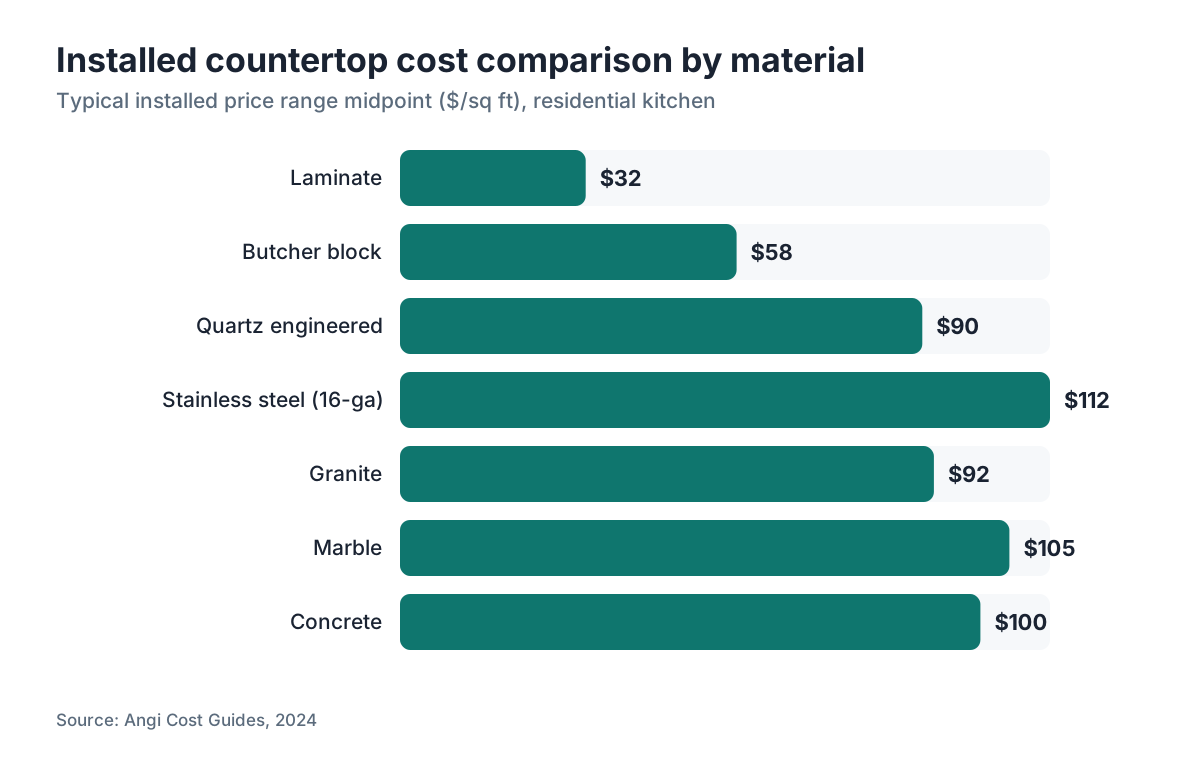
Residential stainless steel countertops run $75 to $150 per square foot installed, fabrication and installation included [1]. A typical 30-square-foot kitchen lands between $2,250 and $4,500 all in. That puts stainless in the mid-to-upper tier alongside engineered quartz, well above laminate countertops or Formica countertops, and roughly even with mid-grade granite countertops.
What drives the spread? Gauge is the biggest variable. Thinner 18-gauge steel (the gauge number goes up as the metal gets thinner, which confuses everyone the first time) costs less but flexes under pressure and dents more easily. Most residential fabricators recommend 16-gauge for countertops, and some commercial kitchens spec 14-gauge. Going from 18 to 14 gauge can add $15, $25 per square foot in material cost alone.
Custom cutouts push the price up fast. A farmhouse sink opening, an integrated backsplash, or a drainboard welded straight into the countertop surface all need skilled TIG welding and grinding time that adds real labor cost. A flat slab with a square sink cutout is the cheapest possible job. A fully integrated sink-and-drainboard assembly in 14-gauge brushed steel can run $300, $400 per square foot for the specialty piece.
Backsplash choices matter too. A 4-inch integral backsplash welded during fabrication is cheaper than a separate piece applied later. If your design calls for a full 18-inch backsplash in matching steel, budget that separately.
Here is the number most quotes hide. Supply cost at the sheet level: 16-gauge 304 stainless sheet stock runs roughly $4 to $7 per pound depending on market conditions, and steel commodity prices swing hard. The stainless coil market tracks London Metal Exchange nickel prices, which have moved from under $10,000 per metric ton to over $48,000 per metric ton since 2020 [2]. That volatility is real. A quote you got six months ago may be stale.
How does stainless steel compare to other countertop materials?
Here is a straight comparison across the materials homeowners weigh against stainless most often.
| Material | Installed cost ($/sq ft) | Heat resistance | Scratch resistance | Sanitation | Maintenance |
|---|---|---|---|---|---|
| Stainless steel (16-ga) | $75, $150 | Excellent | Fair (shows scratches) | Excellent | Low (no sealing) |
| Quartz engineered | $60, $120 | Poor (can crack from heat) | Good | Very good | Very low |
| Granite | $55, $130 | Excellent | Very good | Good (when sealed) | Low-medium |
| Marble | $60, $150 | Good | Poor | Fair | High (sealing, etching) |
| Butcher block | $35, $80 | Poor | Poor | Fair (if oiled) | High |
| Laminate | $20, $45 | Poor | Fair | Good | Very low |
| Concrete | $65, $135 | Good | Good | Fair (sealed) | Medium |
For a full rundown on how quartz countertops stack up on cost and durability, or how marble countertops compare on maintenance, those guides go deeper on each.
The column that surprises people most is sanitation. Stainless steel is non-porous by nature and it is the material of choice for every commercial kitchen, hospital prep area, and food-processing plant on earth. No ongoing sealing keeps that non-porous surface intact, unlike granite or concrete countertops that need periodic resealing to stay truly impermeable.
The column that disappoints people most is scratch resistance. Stainless scratches from knives, pots dragged across the surface, and abrasive cleaners. It shows fingerprints on polished finishes. Those scratches are not structural, and over time they blend into what fabricators call a patina. But if you want a surface that looks pristine after five years of real cooking, stainless is probably not your answer.
What grade and gauge of stainless steel should you use for countertops?
Grade and gauge are two different things and both matter.
Grade refers to the alloy composition. The two you will meet for countertops are 304 and 316. Grade 304 is the standard, containing 18% chromium and 8% nickel, which is why it gets called 18/8 stainless [3]. It handles everything a residential kitchen throws at it: acidic foods, heat, moisture. Grade 316 adds 2 to 3% molybdenum, which improves corrosion resistance against chlorides, making it the spec for coastal homes with salty air or outdoor kitchens near pool chemicals. You will pay roughly 20 to 30% more for 316 over 304 in the same sheet.
Gauge refers to thickness. Lower gauge number means thicker metal.
- 14-gauge: 0.075 inches thick. Rigid, heavy, commercial spec. Overkill for most residential jobs but worth it if you want the counter to feel solid and never flex.
- 16-gauge: 0.060 inches thick. The residential sweet spot. Most professional fabricators default here.
- 18-gauge: 0.048 inches thick. Found on budget installations and prefab modular pieces. You can feel it flex when you press on it, which most homeowners hate.
- 20-gauge: 0.036 inches thick. Used for backsplashes and light-duty work. Not appropriate as a primary countertop surface.
For a residential counter seeing daily cooking, 16-gauge 304 stainless is the practical answer. Installing outdoors or within 1,000 feet of saltwater? Upgrade to 316. Spanning more than 6 feet without a joint and want zero flex under heavy loads? Go 14-gauge.
What finishes are available, and which one should you choose?
The finish decides how the countertop looks, how well it hides scratches, and how badly it shows fingerprints. You have four real options for residential work.
Brushed or satin finish (called No. 4 finish in the industry) is the most popular by a wide margin. The fine unidirectional grain hides fingerprints better than polished steel, blends new scratches as they pile up, and suits kitchens from modern to industrial. This is what most commercial kitchens use and what you see in professional photos of residential stainless counters.
Polished or mirror finish (No. 8 finish) looks dramatic in a showroom and shows absolutely everything in use. Every water spot, fingerprint, and hairline scratch is visible. Unless you want a very specific design effect and you are committed to frequent wiping, this is a high-maintenance choice.
Matte or No. 2B finish comes from the mill as a cold-rolled, smooth but not brushed surface. It has less visual character than brushed but hides fingerprints reasonably well. Less common in residential work.
Embossed and patterned finishes exist (basket weave, hammered, and so on) and hide dents and scratches extremely well, but they are harder to clean because debris catches in the texture. A hammered finish over a food prep area is a sanitation liability.
My honest recommendation: brushed 16-gauge 304 stainless. It is the standard for good reason. It ages gracefully, tolerates a real kitchen, and looks clean even as it picks up that patina from years of use.
Do stainless steel countertops scratch and dent easily?
Yes to scratches, moderately yes to dents.
Scratching is unavoidable. Knives dragged across the surface, pots slid off the stove, rings on someone's hand, abrasive sponges. All of them leave marks. On a brushed finish those marks mostly run parallel to the existing grain and blend in over time. On a polished finish they stand out and look bad fast. This is not some flaw unique to home kitchens. Every commercial kitchen on the planet has scratched stainless counters and nobody there treats it as a problem. The surface stays non-porous and sanitary regardless.
Denting depends on gauge and what sits under the steel. An 18-gauge counter over an empty cabinet cavity will dent from a dropped cast iron pan. A 16-gauge counter with a solid substrate (typically 3/4-inch plywood glued underneath before installation) resists dents far better because the substrate spreads impact load across a wider area. The plywood backer is standard practice in quality residential fabrication. Without it you are working with an unsupported metal sheet.
Deep dents can be hammered out from below by a skilled metalworker, but the repair shows on a brushed finish. Minor dents and dings on a well-used counter become part of the material's character. If surface perfection matters to you long-term, stainless is the wrong choice. Quartz countertops or engineered stone hold their looks better under that standard.
Acids are not the worry with stainless that they are with marble or limestone. Lemon juice, vinegar, tomato: none of them etch stainless the way they wreck a polished marble surface. That alone makes stainless better for actual cooking than the natural stones that demand protective sealing.
Are stainless steel countertops sanitary and safe for food prep?
This is one of the strongest arguments for the material. Stainless steel is non-porous at the surface, so bacteria cannot colonize subsurface crevices the way they can in wood, concrete, or slightly porous stone. The FDA Food Code identifies food-contact surfaces as needing materials that are "smooth, easily cleanable, and nonabsorbent" [4]. Stainless steel meets all three and dominates every professional food service environment regulated under FDA and state health codes.
One nuance worth understanding. The scratch network on a heavily used stainless counter can harbor bacteria if you clean it poorly. A 2012 study in the Journal of Food Protection found that even scratched stainless steel surfaces were easily sanitized to safe levels with standard food-service sanitizers, while wood cutting surfaces showed more persistent bacterial recovery [5]. The practical takeaway: cleaning stainless is easy and effective, not that you can skip cleaning.
For household use, soap and water handles routine cleanup. Food-safe sanitizers work for deep cleaning. Go easy on bleach-based cleaners. Chlorine bleach in high concentrations, or left sitting on 304 stainless, can pit the surface over time. Rinse promptly. In a coastal environment on 316 grade, this concern shrinks but never fully disappears.
The absence of a sealing requirement is a genuine sanitation advantage. Granite, concrete countertops, and some quartzite need periodic resealing to stay non-porous. A stainless counter that is 10 years old and never sealed is still as non-porous as it was on day one. That matters for households that take hygiene seriously.
What are the main downsides of stainless steel countertops?
Four real problems come up again and again.
Noise. Stainless steel rings, clangs, and carries impact sound more than stone or wood. Dropping a utensil, setting down a pot, running a glass across the surface, all of it is louder than you expect. A plywood backer helps some, and some fabricators add an undercoating or rubber isolation pads at contact points to dampen vibration. It helps but does not solve the problem. Open-plan kitchen and a family that cooks hard? The acoustic difference from stone or quartz is noticeable.
Fingerprints and smudges. On a brushed finish, manageable. On a polished finish, relentless. A quick microfiber wipe removes fingerprints, but a busy household with kids will be wiping constantly.
Cold to the touch. Stainless pulls heat away from your hands fast, which is why it feels cold. That is physics, not a defect, but some people dislike standing at a cold prep surface. Stone counters do the same thing. Butcher block countertops feel noticeably warmer underhand.
Aesthetic limits. Stainless suits industrial, modern, and contemporary kitchens well. In a traditional, farmhouse, or Arts and Crafts kitchen it can read clinical or out of place. It also follows design trends and can date a kitchen faster than neutral stone. That said, well-designed stainless kitchens in commercial-residential hybrids have looked good for 30 years and counting.
How do you clean and maintain stainless steel countertops?
Routine maintenance is genuinely simple.
For daily cleaning, warm water and a few drops of dish soap on a soft cloth or sponge does the job. Wipe in the direction of the grain on a brushed finish. Wiping across the grain drags debris into the texture and leaves light marks. Rinse with clean water and dry with a soft cloth to head off water spots.
For fingerprints and smudges, a little mineral oil or a commercial stainless cleaner applied with the grain works well. Baby oil, olive oil, or dedicated stainless polish all do roughly the same thing. This is optional maintenance, not a required sealing process.
Avoid these: steel wool, abrasive scrubbing pads, bleach left in contact for more than a minute or two, and cleaners high in chlorides. Any of them can cause pitting or accelerated corrosion, worst of all in coastal environments.
For deep stains or discoloration, a paste of baking soda and dish soap worked with the grain, then rinsed clean, handles most situations. Bar Keepers Friend (which contains oxalic acid) is effective on rust spots and stubborn stains and is a standby in commercial kitchens for exactly this. Follow it with a thorough rinse.
Rust spots look alarming but are usually surface contamination from carbon steel particles left by steel wool or steel cookware, not corrosion of the stainless itself. Bar Keepers Friend or a commercial oxalic acid cleaner removes them. True corrosion pitting from prolonged chloride exposure is more serious and harder to reverse.
Compared to the maintenance on marble countertops (annual sealing, acid avoidance, etching risk) or how to clean stone countertops, stainless is easy. You do not seal it, you do not re-oil it every year, you do not sweat citrus juice sitting on it.
How are stainless steel countertops fabricated and installed?
Residential stainless counters are almost always custom-fabricated to your exact measurements. Unlike stone cut from a standard slab, stainless starts as sheet stock that gets cut, bent, welded, and ground to fit. There is no templating step for slab selection, but precise measurement still matters enormously.
The typical process: a fabricator measures your existing cabinets or templates the space, then cuts the stainless sheet to size with a plasma cutter, laser cutter, or shear. Edges are bent on a press brake to form the front edge profile and any integral backsplash. Cutouts for sinks, cooktops, and faucets get cut and finished. If the design calls for an integrated sink with no visible joint, that piece is TIG welded in and ground smooth. The whole surface then gets re-finished so the welds blend into the surrounding grain.
A solid substrate (usually 3/4-inch exterior-grade plywood) is commonly glued to the underside before installation. This adds rigidity, cuts noise, and makes the counter feel substantial. Some fabricators use marine-grade plywood to reduce moisture concerns.
Installation: the countertop sets onto the cabinets and typically gets mechanically fastened with clips that allow slight thermal expansion. Stainless steel expands and contracts measurably with temperature, roughly 9.9 micrometers per meter per degree Celsius [6]. For a 10-foot run, that is about 1.2 mm across a 40 degree F daily swing, enough that a rigid connection with no allowance can cause edge gaps or cabinet stress over time.
For fabricators running multiple custom stainless jobs, accurately quoting sheet requirements, cutout time, and welding labor is where estimating errors creep in. Getting the nesting right on sheet stock matters most, because stainless sheet is expensive and offcuts rarely go back to inventory. This is the kind of job-specific calculation that countertop quoting and nesting software like SlabWise handles for shops running mixed custom metalwork and stone work.
Are stainless steel countertops a good choice for outdoor kitchens?
For outdoor kitchen countertops, stainless is one of the top choices, full stop. It handles temperature extremes, UV exposure does not degrade it (unlike some sealers on stone), and it is fully waterproof. Rain is not a concern.
The grade decision matters more outdoors. In a dry inland climate, 304 stainless with a brushed finish holds up well. Within a mile or so of the ocean, or next to pool areas where chlorinated water can splash, 316 stainless is worth the premium. Chlorides are the primary corrosion threat to stainless outdoors, and 316's molybdenum content specifically addresses that [7].
Keep a few practical points in mind. The countertop gets extremely hot in direct summer sun. A black granite surface in direct sun can reach 140 degrees F, and stainless in the same conditions reaches similar temperatures and will burn bare hands. Some shade structure, or a design that keeps the prep surface out of direct afternoon sun, helps. The noise that annoys you indoors barely registers outdoors. And the fingerprint problem stops mattering once the surface develops a little character from outdoor use.
For coastal outdoor kitchens, stainless is also easier to maintain than natural stone, which needs preserving sealers that break down under sun exposure and rain cycles.
What should you know before getting a stainless steel countertop installed?
A few things catch buyers off guard.
Get multiple quotes. Fabrication pricing for custom stainless varies widely because welding skill varies widely. An integrated sink welded poorly shows visible weld lines or gaps. Ask to see finished samples of a shop's welded seam work before you commit.
Talk substrate before the job starts. Confirm they are using 3/4-inch plywood under the steel. If they plan to install steel directly over your existing cabinet tops with no substrate, ask why and get an answer you believe. The difference in feel and noise is significant.
Check for galvanic corrosion potential. If copper plumbing touches the underside of a stainless sink or counter, a dielectric fitting between the metals prevents galvanic corrosion over time. Small thing, and most plumbers know it, but worth raising if you are coordinating your own subcontractors.
Understand lead times. Custom stainless fabrication from a quality shop typically runs 2 to 4 weeks. A shop that does mostly stone and takes on stainless as a side job can be inconsistent on quality control. Shops that do commercial kitchen work as their core business are often the best source for residential stainless counters, because they handle the material daily.
One last thing: the color will not match your appliances exactly unless you specify the same finish grade. Stainless appliances vary between manufacturers in surface texture and tone. A perfect match is rare. Most well-designed kitchens treat the appliances and the countertop as complementary rather than identical, which reads better anyway.
Who should and who should not get stainless steel countertops?
Good fit: serious home cooks who prize hygiene and heat tolerance over pristine looks. People building restaurant-style home kitchens with commercial-grade ranges. Homeowners who want to never seal a surface again. Modern, industrial, or contemporary kitchen designs. Outdoor kitchen builds, coastal ones especially.
Poor fit: households with kids who will be hard on surfaces where visual perfection matters to you. Traditional, farmhouse, or transitional kitchens where stainless reads clinical. Anyone who finds noise irritating in an otherwise quiet open-plan home. Homeowners planning to sell within a few years who want broad buyer appeal, since stainless counters are a polarizing choice that narrows your market.
Honestly, the comparison to kitchen countertops as a whole category comes down to use pattern. If the kitchen is a serious tool and the cook treats it that way, stainless is an excellent, durable, sanitary answer. If the kitchen is a social and visual centerpiece where appearance matters as much as function, other materials age more gracefully to most eyes. Both are legitimate priorities.
Frequently asked questions
How much do stainless steel countertops cost per square foot?
Expect $75 to $150 per square foot installed for residential stainless in 16-gauge 304 grade with a standard brushed finish. Thicker 14-gauge, integrated sinks, or grade 316 for coastal use push toward the top of that range or above it. Commodity steel prices swing, so quotes older than a few months may not reflect current material costs.
Do stainless steel countertops rust?
True corrosion pitting from chloride exposure can happen, but it is uncommon in normal indoor use with 304 stainless. What looks like rust is usually iron contamination transferred from steel wool or carbon steel cookware left on the surface. Bar Keepers Friend or another oxalic acid cleaner removes those spots easily. For coastal or outdoor settings, upgrade to 316 grade for real chloride resistance.
Are stainless steel countertops worth the money?
For the right homeowner, yes. You get a non-porous, heat-resistant surface that never needs sealing and lasts as long as the house if maintained. The cost lines up with mid-range stone. The tradeoff is scratching, noise, and a polarizing look. If you cook seriously and sanitation beats pristine appearance for you, stainless delivers real value. If you want a surface that looks perfect after five years, quartz or granite ages better visually.
What gauge stainless steel is best for countertops?
16-gauge is the residential standard and the right answer for most homeowners. It is 0.060 inches thick, rigid enough to feel solid with a plywood substrate underneath, and available from most custom fabricators. 14-gauge is heavier and more dent-resistant but noticeably more expensive. Avoid 18-gauge for countertop work; it flexes under pressure and dents more easily.
Do stainless steel countertops scratch easily?
Yes, they scratch from knives, dragged pots, and abrasive cleaners. On a brushed finish, new scratches blend into the existing grain over time and most cooks stop noticing them. On a polished finish, scratches show clearly. The scratches do not affect the surface's non-porous character or sanitation. If long-term surface appearance is your priority, engineered quartz handles daily use with less visible marking.
Can you cut on stainless steel countertops?
You can but you should not. Cutting directly on stainless scratches the surface and, worse, dulls your knives fast. The material is harder than wood and softer than stone, so it loses on both counts: knife edge and surface appearance. Use a cutting board. Stainless is excellent as a landing zone for hot pots and pans but a poor substitute for a proper cutting surface.
Are stainless steel countertops good for outdoor kitchens?
Stainless is one of the best outdoor countertop materials available. It handles temperature extremes, UV exposure, and moisture without degrading. Specify 316 grade instead of 304 if you are within a mile of the ocean or next to pool areas, because 316's molybdenum content resists chloride corrosion. The surface gets hot in direct summer sun, so think about the orientation of your prep area.
How do you clean stainless steel countertops?
Warm water and dish soap on a soft cloth handles daily cleaning. Always wipe with the grain of a brushed finish. A little mineral oil removes fingerprints and leaves a light protective film. Avoid steel wool, abrasive pads, and bleach left sitting on the surface. For rust spots or stubborn stains, Bar Keepers Friend worked with the grain, then rinsed completely clean, is effective and widely used in commercial kitchens.
What is the difference between 304 and 316 stainless steel for countertops?
Both are austenitic stainless alloys. Grade 304 contains 18% chromium and 8% nickel and handles normal residential kitchen use well. Grade 316 adds 2 to 3% molybdenum, which improves resistance to chloride corrosion from salt air, pool chemicals, and some cleaning products. 316 costs roughly 20 to 30% more for the same sheet. Use 304 indoors in typical residential settings; upgrade to 316 for coastal homes or outdoor kitchens.
Do stainless steel countertops make a lot of noise?
More than stone or wood, yes. Setting down pots, dropping utensils, and general kitchen activity is louder on stainless. A 3/4-inch plywood substrate glued to the underside absorbs some vibration and cuts the ring noticeably. Some fabricators also apply undercoating. It helps but does not eliminate the acoustic difference. Open-plan kitchens or households sensitive to noise should factor this in.
Can stainless steel countertops be repaired if dented?
Minor dents can be hammered out from below by a skilled metalworker, but the repair usually shows on a brushed surface because the grain gets disrupted. Deeper gouges or creases are harder to address. Prevention beats repair: a solid plywood substrate cuts denting from impact significantly. When dents happen, most owners accept them as part of the material's character rather than chase a repair that may look worse.
How long do stainless steel countertops last?
With reasonable care, decades. Commercial kitchens run stainless counters for 20 to 30 years under conditions far harder than any home kitchen. The steel itself does not degrade, delaminate, or need periodic renewal. The surface shows wear, scratches, and a patina, but structural failure of properly fabricated and installed stainless countertops is essentially unheard of in normal use.
Are there stainless steel countertop options for DIY installation?
Prefab modular stainless sections exist in standard widths (typically 25 inches deep) and sell through restaurant supply companies and some home improvement retailers. Quality is generally 18-gauge without an integrated substrate, so the fit and finish sits noticeably below custom work. They work for utility areas, garages, or laundry rooms. For a primary kitchen counter, custom fabrication from a metalwork or commercial kitchen shop produces a much better result.
Do stainless steel countertops increase home value?
The evidence here is thin, and the honest answer is probably not in most markets. Stainless counters appeal to a specific buyer and turn off others who find them clinical or commercial-looking. In standard residential resale, neutral stones like quartz and granite have broader appeal. Stainless is worth considering if you plan to stay long-term and want the functional benefits, less so if resale value drives your decision.
Sources
- HomeAdvisor / Angi, Stainless Steel Countertop Cost Guide: Installed residential stainless steel countertops cost approximately $75, $150 per square foot including fabrication and installation.
- London Metal Exchange, Nickel price history: Nickel prices, a key input for stainless steel alloys, swung from under $10,000 to over $48,000 per metric ton between 2020 and 2022, driving stainless sheet price volatility.
- ASTM International, Standard A240 / A240M, Chromium and Chromium-Nickel Stainless Steel Plate, Sheet, and Strip: Grade 304 stainless contains 18% chromium and 8% nickel; Grade 316 adds 2 to 3% molybdenum for improved chloride corrosion resistance.
- U.S. Food and Drug Administration, FDA Food Code 2022: The FDA Food Code requires food-contact surfaces to be smooth, easily cleanable, and nonabsorbent; stainless steel is the dominant material meeting this standard in commercial food service.
- Journal of Food Protection, 'Comparative Evaluation of Bacterial Attachment and Sanitization of Stainless Steel and Wood Surfaces,' 2012: Scratched stainless steel surfaces were easily sanitized to safe bacterial levels with standard food-service sanitizers, while wood surfaces showed more persistent bacterial recovery.
- Engineering Toolbox, Thermal Expansion Coefficients of Metals: Austenitic stainless steel has a coefficient of thermal expansion of approximately 9.9 micrometers per meter per degree Celsius.
- Nickel Institute, Stainless Steel in Architecture and Construction: Grade 316 stainless steel's molybdenum addition specifically improves performance in chloride-containing environments including coastal and marine applications.
- U.S. Geological Survey, Nickel, Mineral Commodity Summaries 2024: Nickel is a primary alloying element in 300-series stainless steel; USGS tracks its production, pricing, and supply chain as a critical mineral commodity.
- National Sanitation Foundation / NSF International, NSF/ANSI 2, Food Equipment Standards: NSF/ANSI 2 sets material and surface finish standards for commercial food equipment, with stainless steel identified as a primary acceptable material for food-contact surfaces.
- U.S. Department of Agriculture, Food Safety and Inspection Service, Kitchen Sanitation and Food Safety: FSIS food safety guidance emphasizes non-porous, easily sanitized surfaces for food preparation; stainless steel meets these requirements without requiring sealing.
Last updated 2026-07-09