TL;DR
- The best kitchen countertop material depends on your budget, how hard you cook, and how much maintenance you'll actually do.
- Quartz owns mid-range renovations ($55 to $120/sq ft installed), granite holds the premium natural-stone market, laminate is the smartest budget pick, and butcher block suits bakers and DIYers.
- This guide covers every major option with real costs and honest trade-offs.
What are the most popular kitchen countertop materials right now?
Quartz is the best-selling countertop material in the U.S. by volume, according to Marble Institute of America market data [6]. Granite is second. Behind those two, laminate has quietly clawed back share as manufacturers got much better at making convincing stone-look surfaces for a fraction of the cost. Quartzite, soapstone, porcelain slabs, ultra-compact surfaces (think Dekton and Neolith), butcher block, and concrete fill out the rest.
No single material is best for every kitchen. A busy household with kids that wipes down surfaces with whatever's nearby needs something different from a home cook who wants Calacatta marble and will seal it twice a year. The choices that make people happy long-term match the material's real maintenance needs to the homeowner's real habits, not their aspirational ones.
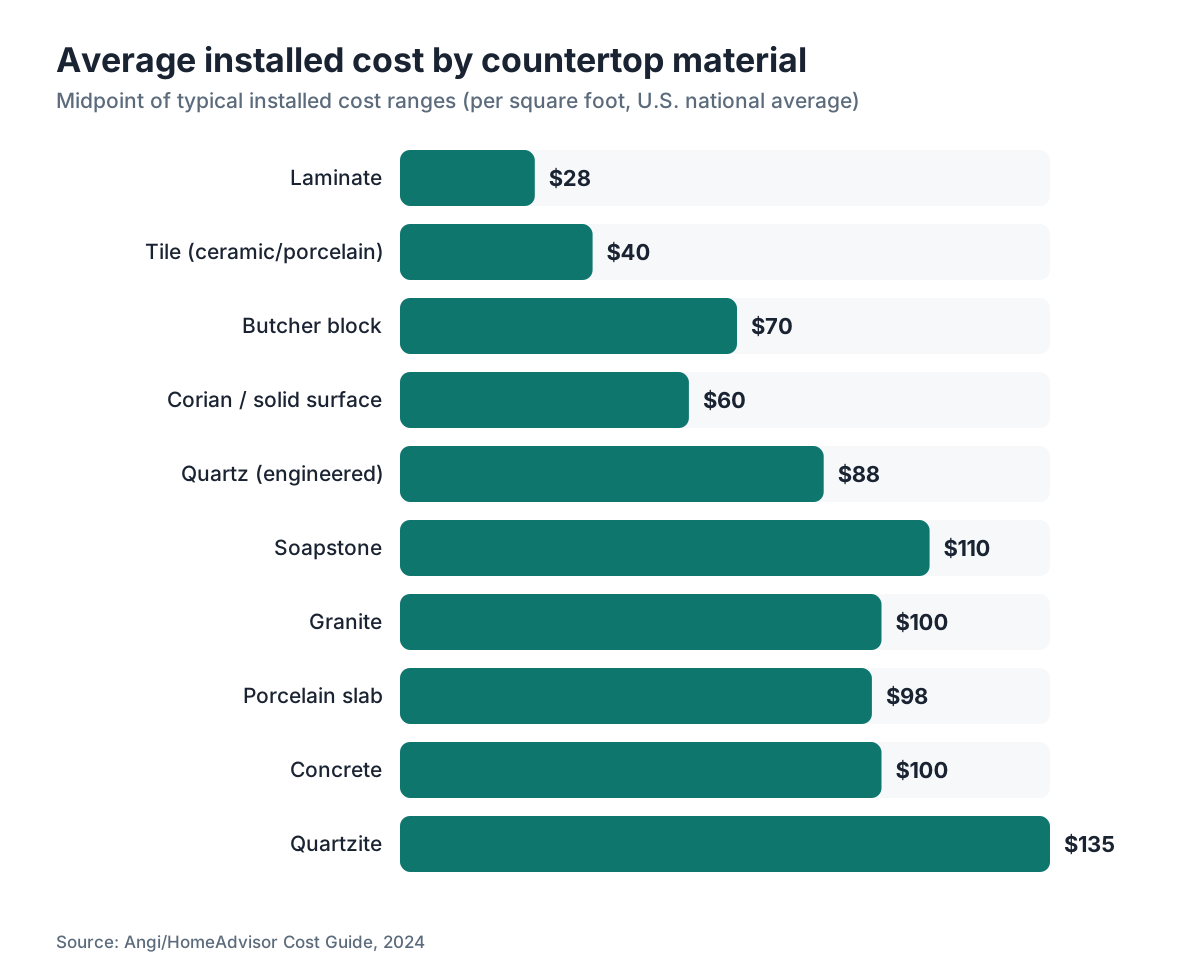
Here's a quick comparison of installed cost ranges and the key trade-off for each major option [1][2]:
| Material | Avg. installed cost (per sq ft) | Key trade-off |
|---|---|---|
| Laminate | $15, $40 | Looks great, can't handle heat or deep scratches |
| Butcher block | $40, $100 | Warm, repairable, needs oiling and hates standing water |
| Tile (ceramic/porcelain) | $20, $60 | Durable, grout lines are a pain to keep clean |
| Quartz (engineered) | $55, $120 | Low maintenance, consistent look, not heat-proof |
| Granite | $50, $150 | Natural beauty, durable, needs periodic sealing |
| Marble | $75, $250 | Stunning, etches and stains, demands real care |
| Quartzite | $70, $200 | Harder than marble, often misidentified at the yard |
| Soapstone | $70, $150 | Darkens with oil, heat-resistant, develops patina |
| Porcelain slab | $65, $130 | Scratch/heat resistant, heavy, unforgiving at seams |
| Concrete | $65, $135 | Custom look, prone to cracking if not reinforced |
| Stainless steel | $80, $150 | Professional look, scratches easily, very loud |
Prices reflect national averages from contractor cost surveys and vary a lot by region, slab choice, and layout complexity [1][2].
What are the best quartz kitchen countertop ideas for 2026?
Quartz is engineered stone: roughly 90 to 94% ground quartz crystals bound with polymer resins and pigments [10]. Because it's manufactured, you get consistent color across the whole slab, no sealing, and resistance to most household stains. The catch is heat. Setting a hot pan directly on quartz can crack the resin binder, and most warranties won't cover it.
For 2026, the design direction in quartz runs toward longer, more dramatic vein patterns that chase the look of natural quartzite or bookmatched marble. Cambria, Silestone, and MSI have all released collections with veining that runs the full length of a 128-inch slab [11]. If that look appeals to you, check out Cambria countertops for how their collections are priced and sourced.
White and light gray quartz with subtle movement is still the dominant seller. Warm beiges and greige tones (think the Calacatta Nuvo family) have climbed steadily since 2022. Dramatic black quartz with gold veining peaked around 2023 and is settling into a design classic rather than a novelty.
The most functional quartz configurations:
- A perimeter quartz surface paired with a butcher block island. You get low-maintenance engineered stone for the main work zones and the warmth of wood where you prep and chop.
- Full quartz perimeter plus a quartz waterfall island in a contrasting color, where one face drops vertically to the floor. Fabricators charge a premium for the mitered waterfall joint, typically $200, $600 extra depending on thickness and complexity.
- Quartz countertops with a matching full-height quartz backsplash. This reads clean and modern and kills the grout-cleaning headache of tile.
One fabricator reality: matching veining across a backsplash and countertop means the shop has to book-match slab sections. If your fabricator is cutting both from the same slab, get that in writing before you sign off on the template.
How much do kitchen countertops actually cost installed?
The national average for installed kitchen countertops runs roughly $2,500 to $4,500 for a typical kitchen of about 30 to 40 square feet of countertop area, depending on material [1]. That range is wide because material choice is the biggest single cost driver, followed by layout complexity and edge profile.
Edge profiles add cost. A simple eased or beveled edge is usually in the base price. An ogee or full bullnose can add $10, $20 per linear foot. Waterfall ends run higher because they need extra material and precise mitering.
Sink cutouts typically add $100, $200 per cutout. Cooktop cutouts are similar. Odd angles, curves, and radius corners all add fabrication time and price.
Region matters a lot. Fabrication labor in the Northeast and California runs 30 to 50% higher than in the Midwest or Southeast, according to contractor pricing surveys [2]. The same quartz slab in Boston might cost $95/sq ft; that same job in Kansas City might run $65/sq ft.
Want a real number fast without calling three shops and waiting a week? Tools like SlabWise's instant quote calculator let you enter your square footage and material choice and get a calibrated estimate right away, which gives you a baseline for judging bids.
A few costs that surprise people:
- Demolition and haul-away of old countertops: $150, $400 in most markets.
- Plumbing reconnection after undermount sink install: often $100, $200 extra if your plumber has to disconnect and reconnect.
- Leveling cabinets before install: fabricators will flag unlevel cabinets, and some charge extra to shim during installation.
Get three bids. Not two, three. The spread between the cheapest and priciest bid for the same job is frequently 25 to 40%, and the cheapest isn't always the worst shop.
What countertop ideas work best for a white kitchen?
White kitchens have been the dominant design choice in American homes for over a decade, and the countertop you pair with white cabinets either makes the whole thing sing or makes it look cold and flat.
Contrast is the most reliable approach. A white kitchen with white quartz can work beautifully if the quartz has strong movement and veining. Pure white-on-white with no pattern reads sterile in most homes, unless the rest of the space has plenty of texture (open shelving, pendant lighting, warm wood floors).
What fabricators see people love most in white kitchens:
- Soft white or cream quartzite with gray and gold veining. The natural variation gives depth that engineered white quartz can't fully copy. The trade-off is that real quartzite needs sealing and more care than quartz, which you can read about at how to clean quartzite countertops.
- Calacatta marble, either real or quartz-replica. Real marble etches from acids (lemon juice, vinegar, wine) and stains from oils. In a working kitchen, the quartz replica is usually the smarter call. If the kitchen is lightly used and you love natural stone, real marble is genuinely beautiful and the etching often becomes part of the lived-in character. Read the full picture at marble countertops.
- Black granite or black quartz for a high-contrast, dramatic look. Works especially well with hardware-heavy shaker cabinets.
- Warm butcher block on an island against white perimeter cabinets. A classic combination that photographs well and works. Full details at butcher block countertops.
One thing to avoid: pairing bright white laminate countertops with off-white or cream cabinets. The slight mismatch in whites looks accidental, not designed. If you're going laminate, commit to a color that's clearly different from the cabinet tone.
What are the best countertop ideas for dark or two-tone cabinets?
Dark lower cabinets paired with light uppers have been trending since about 2021, and the countertop in these kitchens has to work with both tones at once. That's a harder design problem than all-white or all-dark kitchens.
Light countertops on dark lowers work because the countertop becomes a visual break between the dark base and whatever sits above. White or cream quartz, light marble, or a warm sand-tone granite all read well. The countertop draws the eye and separates the two cabinet colors cleanly.
Dark countertops on dark lowers can work if you add contrast somewhere else, usually through light walls, a white subway tile backsplash, or very light upper cabinets. All-dark kitchens with no relief point can feel cave-like, especially under 200 square feet.
For deeply colored cabinet palettes (navy, forest green, charcoal), warm-toned natural stones tend to balance better than cool-gray engineered surfaces. A navy kitchen with a creamy Bianco Antico granite reads rich and intentional. The same navy kitchen with a flat cool-gray quartz can feel slightly disconnected.
Working with navy or deep green cabinets? Look at granite countertops for how different granite families photograph and how much variation to expect between the sample and the actual slab.
What are the best low-maintenance countertop ideas?
If you cook a lot, have kids, or just don't want to think about your counters, maintenance belongs near the top of your decision criteria. The honest ranking from lowest to highest maintenance:
- Quartz (engineered): no sealing, resists most stains, cleans with soap and water. The only real rules are no hot pans and no prolonged UV exposure, which can yellow some lighter colors over time near south-facing windows [10].
- Porcelain slab: scratch-resistant, heat-resistant, stain-resistant, no sealing. The main hassle is that large-format porcelain is brittle during fabrication, so complex cutouts and tight scribes are difficult. Find a fabricator with real porcelain experience.
- Laminate: wipes clean easily, never needs sealing. The weak spots are heat (it blisters), sharp knives (permanent scratches), and water infiltration at seams over time [9].
- Stainless steel: fully sanitary, heat-proof, never needs sealing. Scratches and water spots are constant cosmetic issues. A look you either accept or don't.
- Soapstone: needs periodic oiling to even out the natural darkening, but it shrugs off heat and doesn't etch the way marble does. Care details at how to clean soapstone countertops.
- Granite: needs sealing every 1 to 3 years depending on the stone's porosity. Most granites are dense and stain-resistant, but some lighter colors (white and gold granites in particular) can be porous enough to stain from oil.
- Quartzite and marble: both need sealing and both etch from acidic liquids.
The National Kitchen and Bath Association notes that maintenance expectations are one of the top reasons homeowners are unhappy with their countertop choice after installation [3]. The gap between what they expected and what the material actually requires is the source of most regret.
What countertop ideas work on a tight budget?
A tight budget doesn't mean ugly countertops. It means being strategic.
Laminate is the most underrated countertop in residential renovation right now. The textured, matte-finish laminates from Wilsonart and Formica look genuinely good in photos, cost $15, $40 installed per square foot, and swap out relatively easily if your tastes or your budget grow [9]. A closer look at modern laminate options is at laminate countertops and Formica countertops.
Tile is another underappreciated budget option. Large-format porcelain tile (24x24 or bigger) on a countertop gives you a durable, heat-resistant surface with far fewer grout lines than traditional 4-inch tile. You can have this installed for $20, $45 per square foot in most markets, and it can look legitimately expensive.
Corian and other solid-surface materials sit in the middle, typically $45, $75 installed. Solid surface gives you a joint-free look, repairs are relatively straightforward, and undermount sinks are easy to integrate. Details at Corian countertops.
Want the look of stone on a budget? A remnant slab is worth chasing. Fabrication shops often have full-slab remnants from previous jobs, sometimes big enough for an entire small kitchen, and they sell them at steep discounts because the alternative is storing or dumping them. Call local stone yards and fabricators directly and ask about remnants in your square footage range.
One honest thing to say: if your cabinet quality is low, spending a lot on countertops doesn't make financial sense unless you're planning a full renovation soon. The countertop and cabinet investment should be roughly proportional.
What countertop ideas are best for a kitchen island?
Islands get used differently from perimeter countertops. They're where people gather, where you prep food, where kids do homework, and where guests end up leaning. The design requirements really are different from the rest of the kitchen.
The most functional island countertop handles impact without chipping (butcher block, quartz, granite), looks good from every angle since people sit at it (waterfall edges help), and doesn't show every handprint (matte or leathered finishes over polished).
Contrasting the island from the perimeter is a well-established move that works across many kitchen styles. Perimeter in white quartz and island in a warm wood is the most common version. Perimeter in gray quartz and island in dark granite is another. The contrast adds visual organization and often makes both surfaces look better than a single material would.
For island seating, the overhang matters. A standard 12-inch overhang allows knee-height seating at counter height (36 inches). For bar-height seating (42 inches), a 12-inch overhang usually works too. Go beyond 12 inches and your fabricator should recommend corbels or hidden steel brackets to keep the cantilevered section from cracking under load. This is a real structural concern with heavier stones.
Thicker countertops (3 cm, about 1.25 inches, is now standard) look proportionally correct on islands. Some designers use a mitered-edge detail to make a 3 cm slab look like a 6 cm slab, which gives the island substantial visual weight without the cost of an actual 6 cm slab.
How do fabricators price and cut kitchen countertops?
This section is for homeowners who want to understand what they're paying for, and for fabricators who want a benchmark.
A fabricator's cost to produce installed countertops breaks into material (slab cost), fabrication labor (cutting, edging, polishing), and installation labor. Material is usually 40 to 55% of the total job cost; the rest is labor and overhead. Slab prices vary enormously by stone type and origin. A mid-grade quartz slab for a 40 sq ft kitchen might cost the shop $400, $700 wholesale. The installed retail price for that same kitchen might be $2,200, $3,500.
Nesting matters in fabrication. A good shop lays out all your pieces (perimeter runs, island top, any bar sections) to minimize waste from the slab. Efficient nesting can meaningfully cut slab cost, which is one reason digital fabrication software makes a real difference in shop profitability. SlabWise, for example, gives fabricators nesting and quoting tools that shorten the time from template to quote and speed up pricing turnaround for homeowners.
For homeowners, the practical takeaway is simple: a quote with detailed line items (material, fab labor, installation, edge profile, cutouts, removal) is more trustworthy than a single square-foot number. Ask for itemization.
Templating is a step you shouldn't skip. The fabricator either physically templates your cabinets with cardboard or plastic strips, or uses a digital laser templater. A bad template means gaps or pieces that don't fit. Some shops charge $100, $200 for templating (applied toward the job if you proceed); others include it free. Digital templating is increasingly common and tends to produce more accurate results [4].
What are the most common mistakes people make choosing kitchen countertops?
Choosing a material off the sample, not the slab. The 12-inch sample in a showroom is a small, usually very consistent section of the stone. Natural stone slabs vary enormously, and the full slab may look almost nothing like the sample. Always view the actual slab at the yard before approving it. This goes for granite, quartzite, marble, and any natural stone.
Ignoring the edge profile until it's too late. The edge adds character and affects cost. More importantly, certain edges don't work in certain kitchens. A sharp-cornered or ornate edge on an island with young kids nearby is a legitimate safety concern. Settle your edge at design time, not after the template.
Overbuying on thickness for looks. Three-centimeter (about 1.25") slabs are standard and look proportionally correct in most kitchens. Going thicker adds cost without meaningfully changing performance. The mitered-edge trick gets you the look of a thick slab for less money.
Not asking about lead times. Stone availability changes week to week. The slab you saw at the yard last month may be sold; the brand you want may have an 8-week backorder. Build real lead times into your renovation schedule.
Forgetting the backsplash decision. The countertop and backsplash interact visually and practically. Deciding one without the other sometimes lands you a combination neither party chose on purpose. Make both decisions at the same time.
Writing off Corian and solid surface for busy kitchens. Solid-surface materials get dismissed as a dated 1990s choice, but the modern formulations are genuinely good for high-traffic kitchens. Minor scratches sand out. The integrated sink option removes a common leak point. Worth reconsidering. See Corian countertops for the full picture.
For a broader view of the install process and what to expect on job day, countertop installation covers the steps, timeline, and questions to ask your installer.
How do you clean and maintain different kitchen countertop materials?
The short version: most countertops just need warm water, mild dish soap, and a soft cloth for daily cleaning. The differences are in what you can't do.
For quartz, skip abrasive scrubbers and harsh cleaners like full-concentration bleach. Don't leave cut lemons or vinegar sitting on it (the acid won't etch quartz the way it etches marble, but concentrated acids can affect the resin over time). No hot pans directly on the surface [10].
For granite, wipe up spills fast, especially oils. Use a pH-neutral cleaner. Reseal every 1 to 3 years; a simple water bead test tells you when. If water soaks in rather than beading, it's time. More on stone care at how to clean stone countertops.
For marble and quartzite, acids are the enemy. No lemon, vinegar, wine, or tomato left sitting. Even some cleaning products etch marble. Use only stone-safe cleaners. Reseal regularly.
For butcher block, oil it. Mineral oil works; food-safe cutting board oil works. Do it when the wood looks dry, roughly monthly for a heavily used surface, and never let standing water pool on it [12]. Knife gouges sand out and the surface re-oils, a real advantage no stone offers.
For laminate, avoid abrasives, never cut directly on it, and keep water from pooling at seams. There's no fix for deep scratches or burns; at that point you're replacing the section.
For soapstone, mineral oil is the tool. You apply it periodically to even out the darkening that happens naturally as the stone oxidizes. Untreated soapstone darkens unevenly over time. Full details at how to clean soapstone countertops.
Which kitchen countertop ideas have the best resale value?
Resale value from countertops is harder to pin down than the renovation industry wants you to believe. Remodeling Magazine's Cost vs. Value Report gets cited a lot, but it covers full kitchen remodels, not countertop swaps in isolation [5]. The honest answer: good countertops in good condition help home value mainly by keeping the kitchen competitive with comparable homes in your market, not by returning a dollar-for-dollar payback on the material upgrade.
That said, there are real patterns.
Stone countertops (granite, quartz) in neutral colors and good condition rarely hurt a sale and frequently help. Buyers comparing two similar homes often pick the one with stone over laminate when the price is close.
Highly personalized choices (very bold patterning, unusual color combinations, ultra-high-end marble in a modest neighborhood) can be a harder sell. The next buyer has to want what you wanted.
Laminate in good condition doesn't hurt resale as much as people fear, especially in entry-level and mid-market homes where buyers expect to make their own changes later.
The practical guidance: choose a material you'll genuinely enjoy for the years you live there and that photographs well in listing photos. Natural stone and quartz photograph beautifully, which matters more than it probably should in 2026, when most buyers form their first impression online.
For a full look at what drives countertop costs and value in a kitchen context, kitchen countertops is the companion reference.
Frequently asked questions
What is the most durable kitchen countertop material?
For pure physical durability, quartzite and granite sit at the top. Both are harder than engineered quartz on the Mohs scale. Porcelain slab is highly scratch- and heat-resistant but chips under sharp impact at edges. Quartz is extremely durable for everyday use but isn't heat-proof. The most durable surface for a specific kitchen depends on which kind of abuse you're most likely to dish out.
What countertops look the most expensive?
Polished white marble with dramatic gray veining photographs as the most premium material, followed by bookmatched quartzite and high-movement quartz that mimics marble. Waterfall edges and thick profiles (6 cm, or mitered to look thick) also read as expensive regardless of material. Leathered or honed finishes on dark granite can look very high-end in the right kitchen.
Is quartz or granite better for a kitchen countertop?
Quartz is better if you want low maintenance, consistent color, and no sealing. Granite is better if you want a natural stone with unique patterning and don't mind periodic sealing. Granite handles heat better than quartz. For resale, both are viewed comparably in most markets. Your cooking habits and design preferences should drive the decision more than a universal ranking.
What countertop is easiest to maintain in a kitchen?
Quartz is the easiest overall: no sealing, resists most household stains, cleans with soap and water. Porcelain slab is equally low-maintenance and adds heat resistance. Laminate is easy to clean but can't be repaired if scratched or burned. Soapstone is easy once you accept the oiling routine. Marble and quartzite need the most attention and are least forgiving of neglect.
How thick should kitchen countertops be?
Three centimeters (about 1.25 inches) is the current standard for stone and quartz kitchen countertops. It's structurally solid and looks proportionally correct in most kitchens. Two-centimeter slabs are thinner and lighter but can need extra substrate support. Some designers use a mitered 3 cm edge to simulate a 6 cm slab for visual weight. For laminate and tile, thickness comes from the substrate underneath.
Can you put hot pans on quartz countertops?
No. Quartz contains polymer resins that can crack or discolor from sudden heat. The stone itself tolerates heat, but the resin does not. Always use a trivet or hot pad. This is one of quartz's few real functional limits. Granite, soapstone, and stainless steel handle direct heat contact better, though any dramatic temperature shock is hard on any countertop material.
What is the cheapest countertop option for a kitchen?
Laminate is the lowest-cost option, typically $15, $40 installed per square foot. Ceramic tile runs $20, $60 installed and is a step up in durability. Butcher block starts around $40 per square foot installed and is a legitimate mid-budget option, especially for islands. Remnant stone slabs from fabrication shops can bring granite or quartz into a near-laminate price range if you have a small kitchen.
What countertop color is best for resale?
Neutral tones sell most consistently: white, light gray, cream, and warm beige in stone or quartz. They appeal to the widest pool of buyers and photograph well in listing photos. Very bold or highly personalized choices (bright colors, ultra-dramatic veining, unusual materials) can attract the right buyer strongly but narrow your audience. Safe bet: a white or light-gray quartz or granite in a popular finish.
How long does it take to get kitchen countertops installed after you order?
Typical timeline from signed contract to installation is 2 to 4 weeks for in-stock quartz and common granite. Templating usually happens within a few days of contract signing. Fabrication takes 3 to 10 business days depending on shop backlog. Specialty stones, custom orders, or busy season (spring and fall) can push this to 6 to 8 weeks. Ask your fabricator for the current lead time before committing to a contractor schedule.
What countertop ideas work best for small kitchens?
Light-colored countertops open up a small kitchen visually. Consistent materials across the perimeter (no contrasting island) make the space feel larger by cutting visual breaks. A matching full-height backsplash in the same countertop material reads as one continuous surface and removes the visual noise of a tile pattern. Avoid heavily veined or very dark countertops under 100 square feet unless the cabinet and wall colors are also light.
Is butcher block a good choice for a kitchen countertop?
Yes, in the right situation. Butcher block is warm, repairable, and genuinely functional for food prep. The risks are water damage from standing water at the sink area (seal that zone with a waterproof finish or use a different material there) and the commitment to regular oiling. It's best on islands or prep areas rather than the primary sink run. It works especially well as a contrast element with a stone or quartz perimeter.
What questions should I ask a countertop fabricator before hiring them?
Ask: Can I see the actual slab before fabrication, more than a sample? Do you do digital or physical templating? Who installs, your own crew or a subcontractor? What's included in the quoted price (removal of old tops, plumbing reconnect, haul-away)? What's your current lead time? What warranty do you offer on fabrication defects? Get answers in writing. A fabricator who resists itemizing the quote or won't show you the slab is a risk.
What countertop trends are popular for kitchens in 2026?
Long, full-slab veining in quartz that mimics natural stone is the dominant engineered-stone trend. Warm neutrals and earthy tones are gaining on the cool-gray palettes that ran 2018 to 2022. Leathered and honed finishes are growing at the expense of polished. Porcelain slabs are a growing category for buyers who want the look of stone with less maintenance. Waterfall island edges stay popular for modern and transitional kitchens.
Can kitchen countertops be repaired if they chip or crack?
Quartz and granite chips can be repaired with color-matched epoxy by a stone repair specialist; the result is usually good but rarely invisible on close inspection. Solid surface (Corian) repairs blend better because the material sands and buffs. Laminate damage generally isn't repairable and needs replacement of the section. Butcher block sands and re-oils to remove most surface damage. Prevention (trivets, cutting boards) is still the best strategy.
Sources
- Angi (HomeAdvisor), Countertop Installation Cost Guide: Installed countertop cost ranges by material, including quartz $55, $120/sq ft and granite $50, $150/sq ft
- Angi (HomeAdvisor), Countertop Installation Cost Guide: Regional labor cost variation of 30 to 50% and average kitchen countertop project totals of $2,500, $4,500
- National Kitchen and Bath Association, Industry Research: Maintenance expectations are a top driver of homeowner dissatisfaction after countertop installation
- NKBA, Design and Installation Best Practices: Digital laser templating produces more accurate results than physical templating and is increasingly standard in fabrication shops
- Remodeling Magazine, Cost vs. Value Report: Kitchen remodel cost recoupment data used to contextualize countertop investment and resale value claims
- Natural Stone Institute (formerly Marble Institute of America), Market Data and Stone Industry Statistics: Quartz is the best-selling countertop material in the U.S. by volume; granite ranks second
- U.S. Geological Survey, National Minerals Information Center: Dimension Stone: Natural stone production and import data supporting material availability and pricing context
- U.S. Environmental Protection Agency, Radiation Sources and Doses (granite countertops): EPA assessment of radon emissions from granite countertops, relevant to homeowner material selection
- Wilsonart, Laminate Product Specifications: Laminate countertop heat and scratch resistance specifications referenced in maintenance comparison
- Cosentino (Silestone), Technical Specifications for Quartz Surfaces: Quartz engineered stone composition (90 to 94% quartz crystals with polymer resin binder) and heat resistance limitations
- Cambria, Product Line and Quartz Composition Data: Quartz slab vein pattern design direction in 2025 to 2026 collections referenced for trend section
- University of Minnesota Extension, Wood Care and Finishing Guidance: Butcher block care guidance including mineral oil application frequency and water damage prevention
Last updated 2026-07-09