TL;DR
- Ceramic tile kitchen countertops run $5 to $30 per square foot installed, depending on tile grade and labor market.
- They handle heat and scratches well, but grout lines stain and harbor bacteria if not sealed.
- Tile makes sense for tight budgets and DIY-friendly kitchens.
- It's a real trade-off: low price and high heat resistance versus grout maintenance that never really ends.
What does ceramic tile actually cost for kitchen countertops?
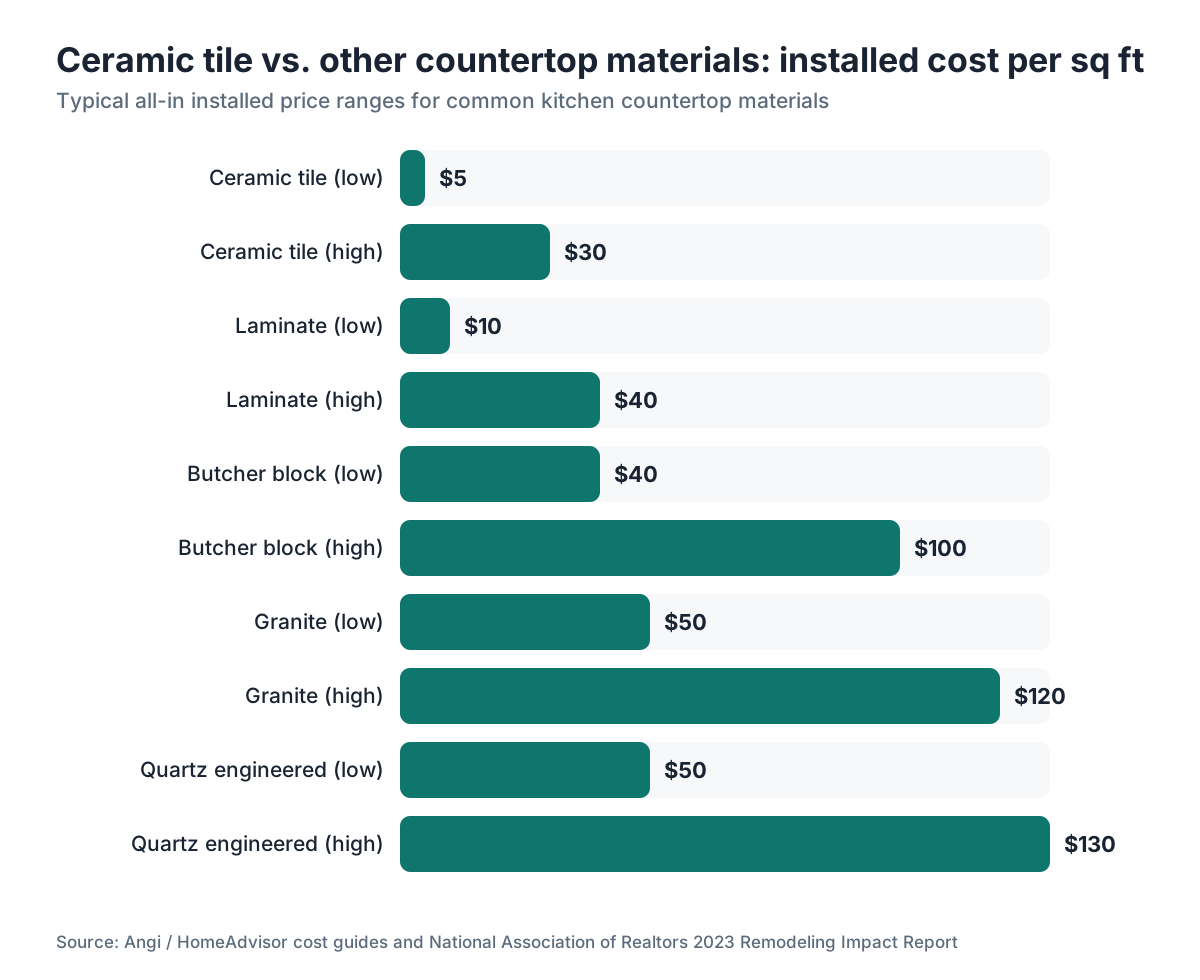
Ceramic tile is the cheapest hard countertop you can buy. Material costs run $1 to $15 per square foot for the tile itself, and installation adds $4 to $15 per square foot depending on your region and the complexity of the layout [1]. All-in, most homeowners land between $5 and $30 per square foot installed, with the national midpoint sitting around $12 to $18 for a basic countertop-grade ceramic with standard grout lines [2].
That price spread is wide for a reason. A 4-inch square subway-style ceramic from a big-box store might cost $0.89 per tile. A 24x24 rectified porcelain-adjacent ceramic with a tight grout joint installed by a skilled tilesetter in a high-cost city hits the top of that range quickly. The tile category itself is a world of options.
Labor is a bigger variable than people expect. A countertop tile job is slower per square foot than floor tile because you're working with edges, backsplash transitions, and trim pieces. Edge treatment alone adds cost: a simple V-cap tile edge costs far less than a bullnose or schluter strip detail, but both add time. Budget 10 to 15 percent extra for edging materials and the labor to set them.
DIY is genuinely viable here, which is not always true with stone. If you're comfortable with a wet saw, grout float, and a level substrate, you can cut labor costs to near zero on material-only projects. The skill floor is lower than most people assume, though a sloppy layout shows permanently on a countertop where it might get forgiven on a floor.
How does ceramic tile compare to other countertop materials?
Here's a straight comparison across the materials most homeowners are actually choosing between:
| Material | Installed cost (per sq ft) | Heat resistance | Scratch resistance | Grout/seam maintenance | DIY-friendly |
|---|---|---|---|---|---|
| Ceramic tile | $5, $30 | Excellent | Good (tile surface) | High (grout) | Yes |
| Laminate | $10, $40 | Poor | Moderate | Low | Yes |
| Butcher block | $40, $100 | Poor | Low (scars) | Medium (oiling) | Moderate |
| Granite | $50, $120 | Excellent | Excellent | Low (seal every 1-2 yr) | No |
| Marble | $60, $150 | Excellent | Low (etches) | Medium (seal freq.) | No |
| Quartz (engineered) | $50, $130 | Moderate | Excellent | Very low | No |
Ceramic tile wins on raw cost and heat resistance, full stop. It's the only countertop material where you can set a hot pan directly on the surface without risk [3]. That matters in a working kitchen.
Where tile loses ground is hygiene and visual continuity. Grout lines are porous and collect grease, bacteria, and food dye even when you're careful. The Ceramic Tile Education Foundation notes that unsanitary grout is the single most common consumer complaint about tile countertops [4]. A premium epoxy grout changes that math considerably, which we'll cover below.
For homeowners weighing tile against laminate countertops or Formica countertops: tile beats both on heat and longevity but loses on smooth continuous looks and easy wipe-downs. For comparisons against stone, check the full kitchen countertops guide.
Is ceramic tile durable enough for a kitchen countertop?
The tile itself is extremely durable. Ceramic hardens at kiln temperatures between 1800 and 2400 degrees Fahrenheit, and the finished surface resists knife scratches better than most people expect [5]. A standard floor-rated ceramic tile (PEI Class 3 or higher) handles countertop use without issue. The surface won't etch from acidic foods the way marble does, and it won't scorch the way laminate or butcher block will.
The weak points are the grout and the substrate, not the tile.
Grout is a cement-based material with microscopic pores. Without sealing, it absorbs oil, wine, coffee, and anything else that touches it within days of installation. Even sealed, grout is softer than tile and wears over years of daily use. Cracked grout invites moisture behind the tile, which can undermine the substrate and eventually pop tiles loose.
The substrate matters more on countertops than floors because countertops flex slightly under load. A properly installed tile countertop uses a cementitious backer unit (CBU) like HardieBacker or Durock over a solid, deflection-free base. The Tile Council of North America (TCNA) recommends a maximum deflection of L/360 for tile substrates [6]. On older cabinets or unsupported spans, that limit gets exceeded all the time, which is why tile countertops from the 1970s and 1980s so often have cracked grout lines no matter how well the tile itself held up.
A tile countertop installed correctly on a solid substrate lasts 20 to 30 years before it needs replacement. The grout needs attention well before that.
What tile type and size actually work best on kitchen countertops?
Not all ceramic tile works equally well as a countertop. Four things decide it: size, finish, thickness, and wear rating.
Size: Larger tiles (12x12, 18x18, 24x24) mean fewer grout lines, which means less surface to maintain. The aesthetic argument for smaller tiles (mosaic, 4x4 classic subway) is strong, but you pay for it in grout square footage. A 24x24 tile on a 30-inch-deep countertop might run two tiles across the depth and one grout line. A 4x4 tile has seven tiles across and six grout lines. The math on daily cleaning is obvious.
Finish: Matte and satin finishes beat high-gloss on countertops. Glossy tile scratches visibly from routine knife and dish use even though the scratch sits only in the glaze. Matte hides minor abrasion and shows fingerprints less. Textured tile is a poor choice on a horizontal food-prep surface: it's hard to clean and traps debris.
Thickness: Standard wall tile (3/8 inch) is too thin and fragile for countertop use. Use floor-rated tile at 3/8 to 1/2 inch minimum, or choose tiles marketed specifically for countertop applications.
PEI rating: The Porcelain Enamel Institute wear rating should be Class 3 (moderate traffic) or higher for countertop use [7]. Class 1 and 2 tiles are rated only for light foot traffic and will show wear patterns on a busy kitchen counter within a few years.
Rectified vs. non-rectified: Rectified tiles are ground to precise dimensions after firing, which allows tight grout joints (1/16 to 1/8 inch). Non-rectified tiles vary slightly in size and need wider joints (3/16 inch minimum). Rectified tiles with narrow grout lines look more like solid stone and clean up easier, but cost more per tile.
What is the grout situation, and can epoxy grout fix it?
Grout is the honest reason most fabricators and designers stopped recommending tile countertops as a premium option in the 2000s. Standard sanded Portland cement grout is porous, stains readily, and needs sealing every six to twelve months to stay serviceable [8].
Epoxy grout is a real solution, not a marketing claim. Two-part epoxy grout (products like Spectralock or Mapei Kerapoxy) is nearly non-porous, needs no sealing, and resists staining, bacteria, and chemical cleaners far better than cement grout. The Tile Council of North America Handbook lists epoxy grout as the correct specification for countertop and food-service tile applications [6]. It costs two to four times more per bag than standard grout and is harder to work with: it sets faster, cleans up only with specific solvents while wet, and leaves haze if you don't wipe it properly.
For a kitchen countertop, epoxy grout is worth every extra dollar. It's the single best upgrade you can make to a tile countertop installation. If a contractor quotes you cement grout for a countertop and waves off epoxy as unnecessary, find a different contractor.
Stuck with an existing cement grout countertop? Dedicated penetrating sealers (silicone or fluoropolymer-based) applied every six months slow staining considerably. Products that color-seal grout (sold at tile stores as grout paint or color sealer) refresh the look of discolored grout and add a layer of protection. They don't last forever, but they work.
Day-to-day cleaning is simple: pH-neutral dish soap and water. Avoid bleach on colored grout (it fades pigment) and avoid acidic cleaners on cement grout (vinegar and citrus cleaners break down the cement binder over time). For more on cleaning stone and tile surfaces, the how to clean stone countertops guide covers the chemistry in detail.
Can you install ceramic tile countertops yourself?
Yes, and this is where tile separates from every other countertop material. You cannot DIY a granite slab. You cannot cut a quartz slab in your garage without specialty equipment. You can tile a countertop with tools that cost under $200 total.
The core tools: a wet tile saw (or a good scoring cutter for straight cuts only), a notched trowel (1/4-inch v-notch for most floor tile), a grout float, spacers, a level, and a rubber mallet. Tile adhesive (thinset mortar) costs about $20 per 50-pound bag. All of it is available at any home center.
The process in practical terms: demo the old countertop, install and screw down cement backer board over the existing cabinet structure, tape seams with alkali-resistant mesh tape and thinset, lay out your tile dry from the front edge back, set tiles in thinset, let it cure 24 hours, grout, let cure another 24 hours, seal (if using cement grout). The whole job on an average kitchen takes a long weekend.
Where DIYers go wrong, consistently: poor substrate prep (the backer board has to be flat and solid), inconsistent tile spacing, and rushing the grout before thinset is fully cured. Cracked grout lines in the first year are almost always a substrate or cure-time problem.
For a pro installation, expect a tilesetter to charge $4 to $10 per square foot in labor in most US markets [1]. That's fair for the skill involved, especially on complex layouts with a lot of cuts. On a simple rectangular countertop with large-format tile and straight cuts, DIY is viable for anyone with basic tool comfort.
For the broader process across materials, the countertop installation guide walks through what to expect from pros.
What are the honest disadvantages of tile countertops?
There are real downsides, and any article that skips them is not being straight with you.
Grout lines collect debris. No matter how diligently you clean, grout lines on a food prep surface trap food particles, grease, and bacteria in a way a solid-surface countertop simply does not. The FDA Model Food Code addresses this directly: food contact surfaces should be smooth, non-porous, and easily cleanable [9]. Cement-grouted tile technically fails that standard. Epoxy grout substantially closes the gap, but grout lines are still physical channels that catch debris.
Tile chips and cracks. Drop a cast iron skillet on a tile countertop and you'll likely chip or crack a tile. Replacing a single tile sounds simple, but if the pattern is discontinued (very common five to ten years out), a perfect color match is often impossible. Keeping extra tiles from your original installation is standard advice for exactly this reason.
Grout discolors over time even with maintenance. White or light grout in a kitchen yellows or grays regardless of sealing. Darker grout colors hide staining far better and are the right practical choice for countertops, even if you prefer the look of white.
Resale perception can be mixed. In the current US market, buyers in most regions read tile countertops as dated next to quartz or granite. That's not a universal rule, and tile can look great in the right kitchen, but it's a real factor if you're thinking about resale in the next five years.
The working surface is not flat. Even a well-installed tile countertop has slight texture from grout lines. Rolling out pastry dough, kneading bread, or doing fine pastry work is noticeably harder on tile than on smooth stone or solid surface.
How do you maintain and clean a ceramic tile countertop long-term?
The maintenance load on tile is real but manageable if you set up the system correctly from the start.
Daily: Wipe down with a damp cloth and a few drops of pH-neutral dish soap. Rinse. Dry. That's it. The mistake people make is leaving water sitting in grout lines, especially near the sink, which encourages mold and mildew.
Weekly: A mild spray cleaner or a baking soda paste scrubbed into grout with an old toothbrush handles most surface staining. Bar Keepers Friend (oxalic acid-based) works well on stubborn mineral deposits around the sink without harming ceramic glaze, but use it sparingly on cement grout.
Annually with cement grout: Apply a penetrating grout sealer after thoroughly cleaning and drying the surface. Let it cure per manufacturer instructions before using the counter again. Most sealers recommend 24 to 72 hours before exposing the grout to water [8]. Skipping this step is why tile countertops stain in kitchens.
With epoxy grout: No sealing required. Clean with standard kitchen cleaners. Done.
Re-grouting is a legitimate long-term option. If your grout is beyond saving, a grout saw or oscillating tool removes it without disturbing the tiles, and fresh grout (ideally epoxy this time) goes back in. It's messy and takes a day, but it's far cheaper than a countertop replacement.
For keeping grout and stone clean without damaging either, the how to clean stone countertops guide covers material-safe cleaning in depth.
Is ceramic tile a good choice for a rental property or budget kitchen remodel?
Honestly, yes, with the right approach. Tile is one of the few countertop materials where you can land under $10 per square foot all-in if you DIY with basic ceramic from a builder-supply source. In a rental, that economics works: lower upfront cost, easy individual tile replacement, and no need for a fabricator with a CNC machine and a truck-mounted vacuum to show up.
The catch for rentals is tenant maintenance. Cement grout in a rental looks terrible within two to three years of heavy use unless you spec epoxy grout at installation. Epoxy costs more upfront but kills the resealing requirement and holds up far better to tenants who won't baby the counter. The math on epoxy grout in a rental is clearly worth it.
For a budget kitchen remodel in an owner-occupied home, tile is worth a look if you're stretching to afford a refresh and quartz or granite is out of budget. A tile countertop installed with quality materials and a skilled hand can look excellent. The keys are large-format rectified tile, epoxy grout, a solid edge treatment, and honest expectations about maintenance.
Fabricators and shop owners thinking about how tile jobs fit their quoting workflow: the pricing variables (tile grade, substrate prep, edge detail, grout type) are big enough that a structured quote template prevents margin erosion. Shops using SlabWise can template material and labor variables for tile jobs the same way they do for stone, keeping quotes consistent across estimators.
Deciding between tile and a mid-range solid surface like Corian countertops or Cambria countertops? Tile wins on price and loses on nearly every other practical dimension at those price points.
What edge treatments work for tile countertops?
Edge treatment is the single most visible sign of whether a tile countertop was done well or done cheap. Four main approaches cover almost every job.
V-cap tile: A purpose-made L-shaped tile that wraps the front edge. It's the most common and least expensive treatment. It looks dated to some eyes but works fine.
Bullnose tile: A tile with one pre-finished, rounded edge. Usually used to terminate the tile surface at a wall or window. On a countertop front edge, it needs a second tile cut behind it and some ingenuity to look finished.
Schluter or metal edge strips: A metal (aluminum or stainless) trim strip installed at the front edge before tiling, then tiled up to. It gives a clean, contemporary look and shows up often in modern tile installations. Stainless strips are durable and easy to clean.
Wood edge: A wood nosing (often oak or maple, sometimes matching the cabinet door style) attached to the front edge of the substrate before tiling. The tile runs to the wood, not over the edge. This was the standard approach in 1980s tile countertops and reads dated in most current kitchens, but it's making a modest comeback in farmhouse and craftsman remodels.
The edge treatment moves the total tile count and labor cost more than people expect. Budget for it explicitly instead of treating it as a detail to figure out during installation.
Does ceramic tile increase or hurt home resale value?
This one is genuinely hard to pin down with clean data. The National Association of Realtors tracks kitchen remodel ROI, and its 2023 Remodeling Impact Report found that a mid-range kitchen upgrade returns roughly 67 cents on the dollar at resale nationally [10]. That study doesn't isolate countertop material, though, so read it as directional.
What real estate agents generally say: tile countertops read as dated in most markets, especially next to quartz or granite. In competitive markets (over $400,000 home values), buyers often price in a countertop upgrade as a future expense when they see tile. In value markets and rental conversions, tile is neutral to slightly positive because buyers in those segments care more about clean and functional than premium materials.
The honest answer: if your home already sits in the bottom third of your local market, tile countertops won't hurt you. If your home competes with granite and quartz kitchens in its price range, tile is a liability that experienced buyers will notice.
There are exceptions. A designer kitchen with large-format, tight-joint, high-end tile that looks intentional reads very differently than a 1990s 4x4 white tile countertop with gray grout. The material category matters less than the execution and whether the choice reads as a deliberate design decision or a budget shortcut.
How do ceramic tile countertops compare to porcelain tile countertops?
The terms ceramic and porcelain get used loosely in retail, and the distinction matters more than most people realize.
True ceramic tile is made from red or white clay fired at lower temperatures (around 1800 degrees Fahrenheit). It's less dense, more porous, and softer than porcelain. Standard ceramic tiles typically have a water absorption rate above 0.5 percent by weight [5].
Porcelain tile is made from refined kaolin clay fired at higher temperatures (2300 degrees Fahrenheit or above) and compressed at higher pressure. The result is a tile with water absorption under 0.5 percent (usually under 0.1 percent for true porcelain), greater hardness, and better stain resistance in the body of the tile, more than the glaze [5].
For countertops, porcelain is the better technical choice. It's harder, denser, and the body of the tile resists moisture and staining even if the glaze chips. A chip in ceramic exposes the porous red or white clay body, which stains readily. A chip in porcelain exposes a body nearly as dense as the surface.
The practical difference on a well-maintained countertop is modest: a glazed ceramic in good condition performs a lot like glazed porcelain because neither surface sees through-body moisture in normal use. Where it matters is at chips, edges, and areas of heavy wear.
Budget for porcelain if you can. The premium over standard ceramic is usually $1 to $5 per square foot at the material level and worth it on a surface you'll use every day.
Frequently asked questions
How much does it cost to tile a kitchen countertop?
Most homeowners spend $5 to $30 per square foot installed for ceramic tile countertops, with the midpoint around $12 to $18 for standard countertop-grade ceramic and basic grout. DIY drops the cost to $3 to $10 per square foot in materials only. High-end large-format rectified tile with epoxy grout in a high-cost labor market can push toward $30 to $40 per square foot.
Are tile countertops sanitary for food prep?
Cement-grouted tile countertops are harder to keep sanitary than solid surfaces. Grout is porous and harbors bacteria if it isn't sealed and maintained. Epoxy grout nearly eliminates the problem: it's non-porous and needs no sealing. If you're getting new tile countertops and food safety matters to you, spec epoxy grout. The FDA Model Food Code recommends smooth, non-porous, easily cleanable food contact surfaces.
How long do ceramic tile kitchen countertops last?
The tile itself can last 20 to 50 years or longer with basic care. The grout is the life-limiting component: cement grout may need re-grouting every 10 to 15 years in a busy kitchen, while epoxy grout can last the life of the installation without replacement. Individual tiles chip and may need swapping, so keeping spare tiles from your original install is always worthwhile.
What grout should I use for kitchen countertops?
Epoxy grout is the right answer for kitchen countertops. It's non-porous, stain-resistant, and needs no periodic sealing. The Tile Council of North America specifies epoxy grout for food-service and countertop tile applications. It costs more and is harder to work with than cement grout, but the long-term performance difference is large. If you're committed to cement grout, use a sanded grout and seal it every six months.
Can I put hot pans directly on a tile countertop?
Yes, for the tile surface itself. Ceramic and porcelain are fired at temperatures far above anything a pan reaches on a residential stove, so the tile won't scorch, crack, or discolor from a hot pan. The one caution is rapid thermal shock to cold tile (say, a pan straight from a broiler onto a very cold counter), which can theoretically crack tile, though it's rare in practice.
How do I get stains out of tile countertop grout?
For fresh stains, a paste of baking soda and water scrubbed in with a stiff brush works well. For older stains, a diluted hydrogen peroxide solution (equal parts peroxide and water) left on the grout for 10 minutes before scrubbing handles most organic stains. Bar Keepers Friend clears mineral deposits. Avoid bleach on colored grout (it fades pigment). After cleaning, reseal cement grout before using the surface again.
What size tile is best for kitchen countertops?
Larger tiles (12x12 or bigger) mean fewer grout lines, which means less maintenance and a cleaner look. If hygiene and easy cleaning are priorities, go as large as the space allows. Small mosaic or 4x4 tiles look traditional but multiply the grout surface area dramatically. Whatever size you choose, use rectified tiles to keep grout lines tight and the surface as close to flat as possible.
Can you replace a single cracked tile on a countertop?
Yes, and this is one of tile's genuine advantages over solid slabs. You can chisel out a cracked tile without disturbing its neighbors, then set and grout a replacement. The challenge is matching the original tile exactly, which gets harder once the product is discontinued. Always keep spare tiles from your original install. Color and texture variation between old and new tiles from the same line is possible even when you order the same SKU years later.
Is ceramic tile countertop a good idea for resale value?
In most US markets, tile countertops read as dated compared to quartz or granite and may signal a future upgrade cost to buyers. The NAR 2023 Remodeling Impact Report found mid-range kitchen remodels return about 67 cents on the dollar nationally. In value markets and rentals, tile is neutral to acceptable. In higher-end markets where comparable homes have stone, tile is a mild negative. Design execution matters more than the material category.
How do you install ceramic tile over an existing countertop?
Tiling over an existing laminate or solid-surface countertop is possible but not generally recommended. The existing surface has to be perfectly flat, firmly attached, and able to bear the added weight of tile and thinset. Most professionals recommend removing the existing countertop and installing cement backer board over the cabinet substrate for a proper bond and deflection-resistant base per TCNA guidelines. Skipping that step is a common cause of tile failure within a few years.
What is the difference between wall tile and countertop tile?
Wall tile is thinner, softer, and designed for vertical surfaces with no weight or impact loads. It's typically rated PEI Class 0 or 1 and will chip and wear rapidly on a countertop. Countertop and floor tile is thicker (3/8 to 1/2 inch), harder, and rated PEI Class 3 or higher. Always use floor-rated or countertop-specific ceramic for kitchen countertops. The price difference is modest and the durability difference is substantial.
How do tile countertops hold up to cutting on them directly?
The tile surface resists knife cuts better than wood or laminate, but cutting directly on tile dulls your knives fast because ceramic is harder than steel. It also scratches the glaze over time on some finishes. Use a cutting board. Beyond protecting your knives, grout lines are unhygienic for a surface you're cutting raw meat on. Tile is excellent as a countertop material; it's not meant to be a cutting surface.
Sources
- HomeAdvisor / Angi, Tile Countertop Cost Guide: Ceramic tile countertop installation labor costs $4 to $15 per square foot in most US markets, with total installed prices ranging $5 to $30 per square foot.
- U.S. Bureau of Labor Statistics, Consumer Price Index for floor covering and household maintenance: National midpoint installed cost for ceramic tile countertops sits in the $12 to $18 per square foot range for standard countertop-grade ceramic.
- Tile Council of North America (TCNA), TCNA Handbook for Ceramic, Glass, and Stone Tile Installation: Ceramic and porcelain tile surfaces are suitable for direct contact with hot cookware due to their kiln-fired composition; the TCNA Handbook specifies tile as appropriate for countertop and food-service applications.
- Ceramic Tile Education Foundation (CTEF), Tile Installation Standards and Consumer Guidance: Unsanitary or stained grout is the single most common consumer complaint about tile countertop installations.
- ASTM International, ASTM C373 Standard Test Method for Water Absorption of Ceramic Body Specimens: Standard ceramic tile has a water absorption rate above 0.5 percent; true porcelain tile is defined by water absorption under 0.5 percent, typically under 0.1 percent, per ASTM C373.
- Tile Council of North America (TCNA), TCNA Handbook for Ceramic, Glass, and Stone Tile Installation: The TCNA recommends a maximum substrate deflection of L/360 for tile installations, and specifies epoxy grout for countertop and food-service tile applications.
- Porcelain Enamel Institute (PEI), Wear Rating Classifications for Ceramic Tile: The PEI wear rating system classifies tiles from Class 0 (no foot traffic) to Class 5 (heavy commercial); PEI Class 3 or higher is recommended for countertop use.
- Tile Council of North America (TCNA), Grout Installation and Maintenance Guidance: Cement-based grout on countertop applications requires penetrating sealer applied every six to twelve months; most sealers require 24 to 72 hours cure before water exposure.
- U.S. Food and Drug Administration, FDA Model Food Code 2022, Section 4-101.11: The FDA Model Food Code states that food contact surfaces shall be smooth, non-porous, and easily cleanable, a standard that cement-grouted tile does not fully meet without epoxy grout.
- National Association of Realtors, 2023 Remodeling Impact Report: NAR's 2023 Remodeling Impact Report found that a mid-range kitchen upgrade returns roughly 67 cents on the dollar at resale nationally.
- U.S. Department of Housing and Urban Development, Residential Rehabilitation Inspection Guide: HUD rehabilitation guidance identifies substrate flatness and deflection control as primary factors in the long-term performance of tile countertop and floor installations.
Last updated 2026-07-09