TL;DR
- Leathered granite runs $10 to $30 per square foot more than the same polished slab.
- The extra cost comes from brushing time, faster tool wear, and a second sealer coat.
- Fabricators should price the finish as a separate line item, not a markup on the slab.
- Homeowners should ask for two coats of penetrating sealer and a physical sample.
What is leathered finish granite and how is it made?
Leathered finish is what you get when a fabricator runs a diamond-tipped brushing wheel across a honed granite surface. The brush opens up the natural crystal pits in the stone. What's left is a low-sheen surface that looks matte but still has depth, and it feels textured under your hand. Some shops call it "brushed." The two words mean the same thing in most shops.
Polished granite goes a different route. It runs through a progressive grit sequence ending at 3000 grit or higher, then gets buffed with an oxide compound. That closes the surface pores almost completely and gives you the mirror gloss most people picture when they say "granite countertop."
Leathering adds one or two passes with diamond-impregnated brush pads after the honing stage. On a soft granite like Venetian Gold, those passes go fast. On a hard quartzite-like granite such as Blue Bahia, the brushes wear out noticeably faster and the labor time climbs. That single difference is why a flat percentage markup for leathered finish falls apart as a pricing method.
How much more does leathered granite cost than polished?
The honest range is $10 to $30 per square foot in added fabrication cost. Call it $15 as a midpoint for a mid-hardness granite in a shop that leathers regularly. Slab cost itself sometimes differs too: certain exotics get priced higher by distributors because they were already brushed at the quarry, which is a different animal from a shop leathering a polished slab after the fact.
Polished granite fabrication (material plus labor, before installation) typically runs $40 to $80 per square foot for standard residential slabs [1]. Add a leathered finish and most jobs land in the $55 to $110 per square foot range before install. High-end exotics with very hard mineralogy can push past $120.
Here's a simplified cost comparison for a 40-square-foot kitchen counter in a mid-grade granite:
| Cost element | Polished | Leathered |
|---|---|---|
| Slab material (40 sq ft) | $800 | $800 |
| Fabrication labor | $1,000 | $1,300 |
| Edge profiles | $200 | $200 |
| Sealer (1 coat) | $60 | $120 |
| Total (before install) | $2,060 | $2,420 |
Those numbers are illustrative, built from the ranges above, not a guaranteed quote. Local labor markets, slab thickness (2 cm vs. 3 cm), and edge complexity all move the total. The structure holds either way: leathering adds 10 to 20 percent to project cost on most residential jobs.
Why does leathering cost more to fabricate?
Three things drive the added cost. A fabricator who ignores any one of them will underprice the job.
Labor time is the first. Brushing a slab takes 20 to 45 minutes of active machine time depending on size and hardness. That's on top of the honing stage, which itself can run longer than polishing on some setups because you stop the grit sequence early and then swap to brushing tools.
Tooling is the second. Diamond brush pads wear out faster than polishing pads, and hard granites chew through them. A set of brush pads costs $80 to $200 and lasts through 50 to 150 square feet of hard granite before performance drops [2]. On softer stones you might get 400 to 600 square feet per set. Shops that don't track tooling cost per job tend to underprice leathered work until the tool budget takes the hit at year end.
Sealing is the third. A leathered surface has more exposed micro-texture than a polished one. It drinks sealer faster and usually needs two coats instead of one to reach the same protection. Sealer alone can add $40 to $80 per job over polished. If the shop is selling a sealed finish in the contract, that doubles the sealer line.
Some shops also report more touch-up passes after installation, because the brushed texture can show handling marks before the final sealer cures. That's unpredictable. It's still real rework time.
How should fabricators structure the leathered finish as a line item?
Price leathering as its own fabrication line, not a slab markup and not a vague "exotic finish" fee. Two reasons.
One, it's honest. The slab costs the same whether you polish it or leather it. The extra charge reflects shop labor and tooling, so it should be traceable. Bury it in a markup and it goes invisible the day you try to audit job profitability.
Two, it makes quotes easy to compare. A homeowner with three quotes can see a $15/sq ft leathering line from one shop and a $20/sq ft line from another, and ask why. That question closes jobs. You get to explain your brushing process, the tool grades you run, and why you don't skip the second sealer coat.
A clean quote for leathered granite looks like this:
- Slab material ($/sq ft x sq ft)
- Fabrication base (cutting, polishing to hone, edge work)
- Leathering upgrade ($/sq ft)
- Sealer (number of coats x cost)
- Cutouts (sink, cooktop)
- Installation
Shops running countertop quoting software like SlabWise can build leathering as a selectable finish with a pre-set per-square-foot adder, so a salesperson can't accidentally quote the wrong rate.
One more thing. Quote leathering by the square foot of finished surface, not the square foot of slab purchased. Buy a 55-square-foot slab to yield a 40-square-foot counter, and you only brush the 40 that ends up installed. Some shops charge for the whole slab and then spend ten minutes explaining a confusing number to an annoyed customer.
Does leathered granite cost more to maintain than polished?
Yes, in most cases. The texture holds oils and food particles in the micro-pits, so daily cleaning takes a little more attention. A quick wipe handles polished granite. Leathered surfaces want a slightly damp cloth or a dedicated stone cleaner to get into the texture without leaving residue. For more on this, see how to clean stone countertops.
On sealing, the Marble Institute of America recommends an annual water absorption test. If a few drops soak into the stone within a few minutes instead of beading up, it's time to reseal [3]. Leathered granite tends to hit that point sooner than polished granite from the same slab, because the open pores let sealer break down faster under repeated cleaning.
For a homeowner, that means resealing once or twice a year instead of every two to three years for polished. A DIY impregnating sealer runs $20 to $40 per bottle and takes about 30 minutes to apply. Professional resealing runs $60 to $150 per job depending on countertop area. Call it $30 to $100 per year in extra ownership cost. Real, but not scary.
Some people pick leathered on purpose because it hides fingerprints and water spots better than polished. True. The matte texture scatters light instead of reflecting it, so smudges nearly disappear. In a busy kitchen with kids, that can outweigh the extra sealing.
Which granite types work best for leathering, and does stone choice affect price?
Not every granite leathers the same. Stones with larger, more open crystal structures give you a more dramatic leathered effect. Brazilian granites like Absolute Black, Uba Tuba, and Volga Blue leather well because their mineralogy creates pronounced texture. Lighter stones with tight, even grain can look flat after brushing, because there's less open pore to expose.
Hardness drives price because it drives tool wear and time. Granite ranks between 6 and 7 on the Mohs hardness scale [4], and that range covers real variation. A dense, hard granite slows the brushing pass noticeably compared to a soft one. Some stones sold commercially as granite are actually closer to quartzite or gabbro, harder still, and they punish brush pads.
On pricing, high-volume leathering shops often keep two or three tiers: a standard adder for typical granites, a hard-stone surcharge for dense materials, and a premium tier for quartzite-type exotics. That keeps a shop from quoting the same $15/sq ft for Uba Tuba and Blue Bahia and then losing money on every Blue Bahia job.
Homeowners should ask what varieties the fabricator has actually leathered. A shop that has done 50 jobs has calibrated its pricing. A shop that has done it twice is guessing at the adder.
Is the price premium for leathered granite worth it?
Depends on what you're buying it for. Want a finish that hides daily wear, kills glare in a bright kitchen, and reads as natural instead of manufactured? Leathered granite earns its premium. It's a genuinely different look, and it holds up in high-use kitchens because small scratches and scuffs vanish against the matte texture in a way they never would on a mirror gloss.
Picking leathered mostly because a showroom made it sound exotic is a different story. In that case $15 to $30 per square foot can feel like money you didn't need to spend once the novelty fades. The finish needs more sealing attention, and some homeowners find the pits near the cooktop grab grime faster than they expected.
On resale, there's no strong data that leathered finishes beat polished. The National Kitchen and Bath Association tracks countertop upgrades as a category that helps kitchen appeal, but finish type isn't isolated in the available research [5]. The safe read: a well-done leathered finish on a quality granite adds the same way a polished finish does. Not more, not less.
Here's the comparison worth running. Leathered vs. honed. Honed granite is also matte, usually costs less (often $5 to $15/sq ft over polished vs. $10 to $30 for leathered), and cleans easier because the surface is smooth even though it isn't reflective. If matte is the whole goal and budget matters, price honed alongside leathered before you decide.
How does leathered granite pricing compare to other countertop materials?
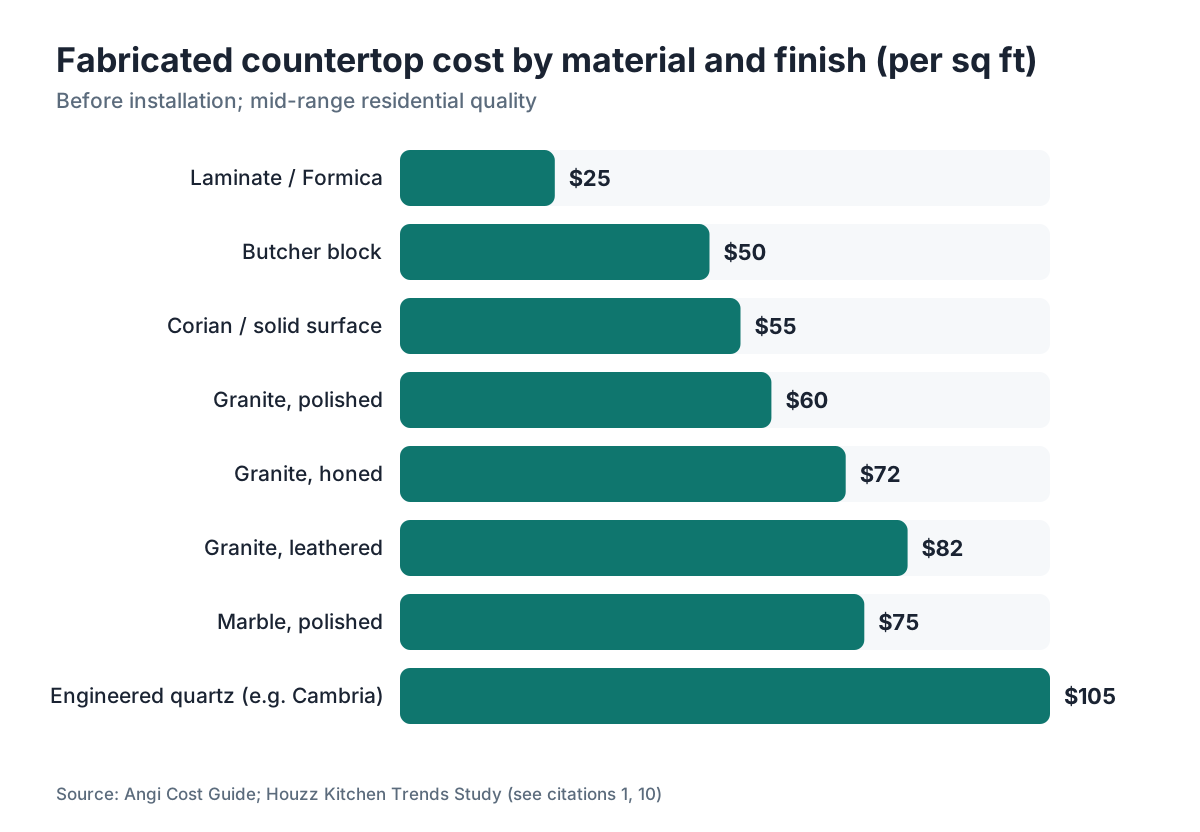
Context helps when a homeowner is weighing the leathering premium against a whole different material. Leathered granite at $55 to $110 per square foot (fabricated, before installation) sits above standard polished granite and polished marble, roughly level with some engineered quartz, and below most premium quartzite.
Marble countertops in polished finish typically run $50 to $100 per square foot fabricated. Kitchen countertops in engineered quartz run $50 to $100 as well. Cambria countertops, a high-end quartz brand, often run $80 to $130 per square foot installed.
Cheaper tiers are a different budget world. Laminate countertops or Formica countertops run $10 to $40 per square foot installed. Butcher block countertops at $40 to $60 per square foot sit well below leathered granite but bring their own maintenance. Corian countertops land at $45 to $65 per square foot installed and are worth a look if low-maintenance solid surface is the real goal.
Now the fabricator side. Leathered granite isn't the highest-margin job in the shop, but it isn't the worst either. The margin lives or dies on whether the adder is priced right. A properly priced leathered job at $15 to $20/sq ft over polished covers tool cost and labor with modest profit left. A shop quoting $8/sq ft because it eyeballed a competitor is losing money on every job.
What should homeowners ask fabricators when getting a leathered granite quote?
Ask these four questions before you sign anything.
First: is the leathering done in-house or sent out? Smaller shops sometimes ship slabs to a larger facility for brushing, which adds handling risk and days to the lead time. Outsourced leathering is fine if the shop is upfront about it. You should still know.
Second: how many sealer coats are included, and what product? A single coat of bargain sealer on leathered granite will likely need redoing inside six months. Ask for an impregnating (penetrating) sealer, not a topical coating, and get two coats written into the contract.
Third: can you see a finished sample on the same or similar stone? Online photos show leathered granite under studio lighting that flatters it. Your kitchen recessed lights don't. A physical sample in your actual space is worth asking for.
Fourth: what's the warranty on the fabrication work? Countertop installation workmanship warranties run anywhere from 90 days to a year or more. Leathering is a specialized process, so it's fair to ask whether finish-quality issues are covered.
Fabricators, take note: those are exactly the four questions a sharp buyer asks. Crisp answers to each, built into your quoting and customer communication, close more jobs than a lower number does. SlabWise lets you attach finish-specific notes and sealer specs to individual quote line items, so the documentation is automatic instead of something a salesperson has to remember.
How do fabricators track leathered finish costs accurately across jobs?
The problem most shops have isn't the initial quote. It's the job costing after the fact. A shop that doesn't track actual brush pad usage, actual leathering time, and actual sealer used per job is pricing future work on feelings instead of numbers.
Here's the minimum tracking a shop needs for leathered pricing:
- Time-per-square-foot for leathering passes, broken out by stone type. Average it across at least 10 to 15 jobs before you trust the number.
- Brush pad cost per square foot, by hardness tier. One easy method: weigh a new set of pads, weigh them after the job, note the wear. A dozen jobs in, you'll have a real per-square-foot tooling cost.
- Sealer consumption per square foot by finish (polished vs. leathered vs. honed). Just track bottle usage by job.
Shops with this data quote leathered finishes within a narrow range and explain exactly where the adder comes from. Shops without it are either overcharging and losing bids, or undercharging and losing money. Neither one lasts.
Tracking this by hand is tedious. That's the honest truth. It's also the specific operational problem countertop fabrication software is built to solve, by logging per-finish labor and material costs across jobs so your pricing adders calibrate themselves over time.
Frequently asked questions
Is leathered granite always more expensive than polished?
In almost all cases, yes. Leathering adds labor time, wears through tooling faster, and needs more sealer coats. The only time leathered might cost the same or less is when a distributor sells pre-brushed slabs at the polished price, which is uncommon. Expect $10 to $30 per square foot more for leathered finish from most fabricators.
Can any granite be leathered, or only certain types?
Almost any granite can be leathered, but the visual result varies a lot. Stones with open, pronounced crystal structure, like many Brazilian granites, give the most dramatic texture. Very fine-grained or uniform granites may look only slightly different from honed after brushing. Ask your fabricator for a sample or a reference job on the specific stone before you commit.
How does leathered granite affect the resale value of a home?
There's no solid data isolating leathered finish as a resale driver. The National Kitchen and Bath Association tracks countertop upgrades as a category that helps kitchen appeal but doesn't break out finish type. A well-installed leathered granite on a quality stone reads as a premium upgrade to most buyers, roughly on par with high-end polished. It's unlikely to hurt resale and unlikely to move it much on its own.
Does leathered granite need to be sealed differently than polished?
Yes. Leathered granite typically needs two coats of penetrating (impregnating) sealer instead of one, because the open micro-texture absorbs sealer faster. The sealer type stays the same, an impregnating formula rated for natural stone, not a topical coating. Resealing also comes more often, roughly once a year vs. every two to three years for polished granite.
Is leathered granite harder to clean than polished?
Slightly, yes. The brushed texture can trap cooking oils and fine food particles in the micro-pits in ways a smooth polished surface doesn't. A damp cloth or a dedicated stone cleaner handles routine cleaning fine. Avoid abrasive scrubbers, which erode the texture unevenly over time. The same cleaning principles that apply to other natural stones are a good starting point.
What is the difference between leathered and honed granite, and which is cheaper?
Honed granite is ground to a flat matte finish, smooth to the touch, with no sheen and no texture. Leathered granite is brushed after honing to open the crystal pits, adding tactile texture to the matte look. Honed typically costs $5 to $15 per square foot over polished; leathered runs $10 to $30 over. Both are matte. Leathered has the texture and the higher price.
How long does the leathering process add to fabrication lead time?
In shops that leather in-house, the added time is usually one half-day or less for a standard kitchen job. If the shop outsources the brushing step to a larger facility, add two to five business days. Always ask specifically whether leathering is done on-site. On tight installation deadlines, that answer matters.
Should fabricators charge leathering by the square foot or as a flat fee?
Per square foot is the right method. Leathering cost scales with surface area, because both labor time and tool wear depend on area. A flat fee only works across a narrow range of sizes; it will systematically underprice large islands and overprice small bathroom vanities. A per-square-foot adder of $10 to $30 tracks actual cost behavior and holds up across job sizes.
Can fabricators leather a countertop after it's already installed?
Technically yes, but it's rarely practical. In-place leathering means handheld angle grinders with brush attachments instead of a CNC or bridge saw setup. That's slower, harder to keep even, and it dumps significant dust into the home. The cost would likely beat the cost of doing it right in-shop. Decide on leathered finish before fabrication starts.
Does the color or pattern of granite look different after leathering?
Yes, noticeably. Leathering mutes the depth of color compared to polished and softens the contrast between minerals. Some stones shift a lot: a highly reflective exotic can turn into a subtle, earthy surface after brushing. Colors generally read slightly warmer and less saturated. If you chose the slab based on how it looked polished in a yard, see a leathered sample of the same material first.
What thickness of granite slab works best for leathered finish?
Both 2 cm (3/4 inch) and 3 cm (1-1/4 inch) slabs can be leathered. Three-centimeter slabs are generally preferred for kitchen counters regardless of finish, because they don't require substrate support and handle edge detailing better. The leathering process has no strong thickness preference, but if you're already upgrading to leathered, stepping up to 3 cm for a kitchen is usually worth it.
Are there any granite varieties that should not be leathered?
Very light or uniform granites, like Kashmir White or Colonial White, often don't show enough texture difference after leathering to justify the cost. The result can look more like honed than leathered. Extremely porous granites can also get harder to seal once brushing opens the pores further. Ask your fabricator whether they've done that specific stone. An honest answer tells you a lot.
How do fabricators account for tool wear when pricing leathered granite?
Track brush pad usage per job and calculate a per-square-foot tooling cost by hardness tier. Brush pads for leathering cost $80 to $200 per set and last 50 to 600 square feet depending on stone hardness. Divide total pad cost by usable square footage and you get a tooling adder of roughly $0.30 to $4.00 per square foot on top of labor, which belongs in the leathering line item.
Sources
- HomeAdvisor (Angi) – Granite Countertops Cost Guide: Polished granite fabrication and material for residential countertops typically runs $40 to $80 per square foot before installation
- Braxton-Bragg – Diamond Tooling & Consumables catalog: Diamond brush pad sets for leathering granite cost $80 to $200 and yield varying square footage depending on stone hardness
- Marble Institute of America – Care and Cleaning for Natural Stone Surfaces: MIA recommends an annual water absorption test: if drops absorb within a few minutes rather than beading, resealing is needed
- USGS Minerals Information: Granite ranks between 6 and 7 on the Mohs hardness scale
- National Kitchen and Bath Association – NKBA Kitchen and Bath Market Index: Countertop upgrades contribute to kitchen resale appeal per NKBA market research, though finish type is not isolated in available data
- Marble Institute of America – Dimension Stone Design Manual: Leathered (brushed) finish defined as a textured matte surface produced by diamond brush tooling on honed stone
- Natural Stone Institute – Fabrication Best Practices: Penetrating (impregnating) sealers are the recommended sealer type for natural stone countertops, including granite with open-texture finishes
- OSHA – Silica in Construction: Countertop Fabrication: Stone fabrication operations, including finishing processes, are subject to OSHA silica dust exposure limits under 29 CFR 1910.1053
- National Stone, Sand & Gravel Association: Granite is the most widely fabricated dimension stone category in U.S. countertop production
- Houzz – U.S. Houzz Kitchen Trends Study: Granite remains one of the top countertop materials chosen in kitchen renovations according to Houzz annual survey data
Last updated 2026-07-11