TL;DR
- For everyday cleaning, wipe quartz with a soft cloth, warm water, and a small drop of mild dish soap, then rinse and dry.
- Avoid bleach, vinegar, abrasive pads, and anything above pH 10.
- Quartz is stain-resistant but not stain-proof, and the polymer resin binder that holds it together is what harsh chemicals actually damage.
What makes quartz countertops different to clean?
Quartz countertops are engineered stone, typically 90 to 95 percent ground natural quartz bound together with polymer resins and pigments [1]. That resin is the reason quartz needs different care than granite or marble. Natural stone is porous and needs periodic sealing to resist stains. Quartz does not need sealing because the resin fills the pores. But that same resin is vulnerable to harsh chemicals and prolonged heat in ways that granite is not.
The Marble Institute of America (now part of the Natural Stone Institute) has noted for years that engineered stone manufacturers universally prohibit acidic cleaners, bleach-based products, and high-pH alkaline cleaners because they degrade the polymer matrix over time [2]. You won't see the damage immediately. It shows up as a dull patch, a slight discoloration, or a micro-etched surface that catches light wrong. By then, there is no fix short of professional polishing or replacing the slab.
So the cleaning rules for quartz are really rules about protecting resin, not stone. Keep that distinction in your head and the rest of the instructions below make obvious sense.
What do you actually need to clean quartz countertops?
Short answer: almost nothing special. You need warm water, a few drops of pH-neutral dish soap (Dawn original, for example, has a pH close to 7), and a soft microfiber cloth or a non-scratch sponge. That covers 95 percent of daily cleaning.
For tougher jobs you might add:
- A plastic scraper or old credit card to lift dried food without scratching
- Isopropyl alcohol (70 percent solution) for grease, marker, or ink stains
- A purpose-made quartz cleaner like Method Daily Granite or Granite Gold Daily Cleaner (despite the name, both are formulated for engineered stone and stay pH-neutral)
- Bar Keepers Friend Granite & Stone Cleaner (the stone-specific version, not the original powder, which is too abrasive)
Avoid paper towels if you use them aggressively. They're fine for a light wipe, but repeated hard scrubbing with paper towels over years does leave micro-scratches on polished surfaces. Microfiber is better.
You do not need steam cleaners, enzymatic cleaners, Magic Eraser pads (slightly abrasive), or any product marketed for tile and grout. Those are either chemically aggressive, physically abrasive, or both.
Step-by-step: the best way to clean quartz countertops daily
Step 1. Clear the surface. Move dishes, appliances, and anything else sitting on the counter. You can't clean around a toaster.
Step 2. Wipe with a damp microfiber cloth. Run warm (not hot) water, wring the cloth so it's damp rather than soaking, and make one pass across the entire surface to pick up loose crumbs, dust, and dry spills.
Step 3. Apply dish soap and scrub lightly. Put two or three drops of neutral dish soap directly on the cloth, not on the countertop. Work in small sections, applying light pressure. For stuck-on food, lay the damp cloth on the spot for a minute to soften it, then use the plastic scraper at a low angle before wiping.
Step 4. Rinse and dry. This step gets skipped constantly and it matters. Soap residue left to dry leaves a hazy film. Wipe the entire surface again with a clean damp cloth to rinse, then go over it with a dry cloth. The whole process takes about three minutes.
Do this after cooking or after anything spills. For light-use days, a quick damp wipe before bed is enough.
What should you never use on quartz countertops?
This list is not paranoia. Each item has a documented mechanism for damaging the resin binder or the surface finish.
Bleach and chlorine-based cleaners. Clorox, bleach sprays, and disinfecting wipes with sodium hypochlorite will discolor the pigments in quartz over time and can cloud the resin. Most major quartz manufacturers (Cambria, Silestone, Caesarstone) explicitly void the warranty for bleach exposure [3]. If you need to disinfect, use isopropyl alcohol instead.
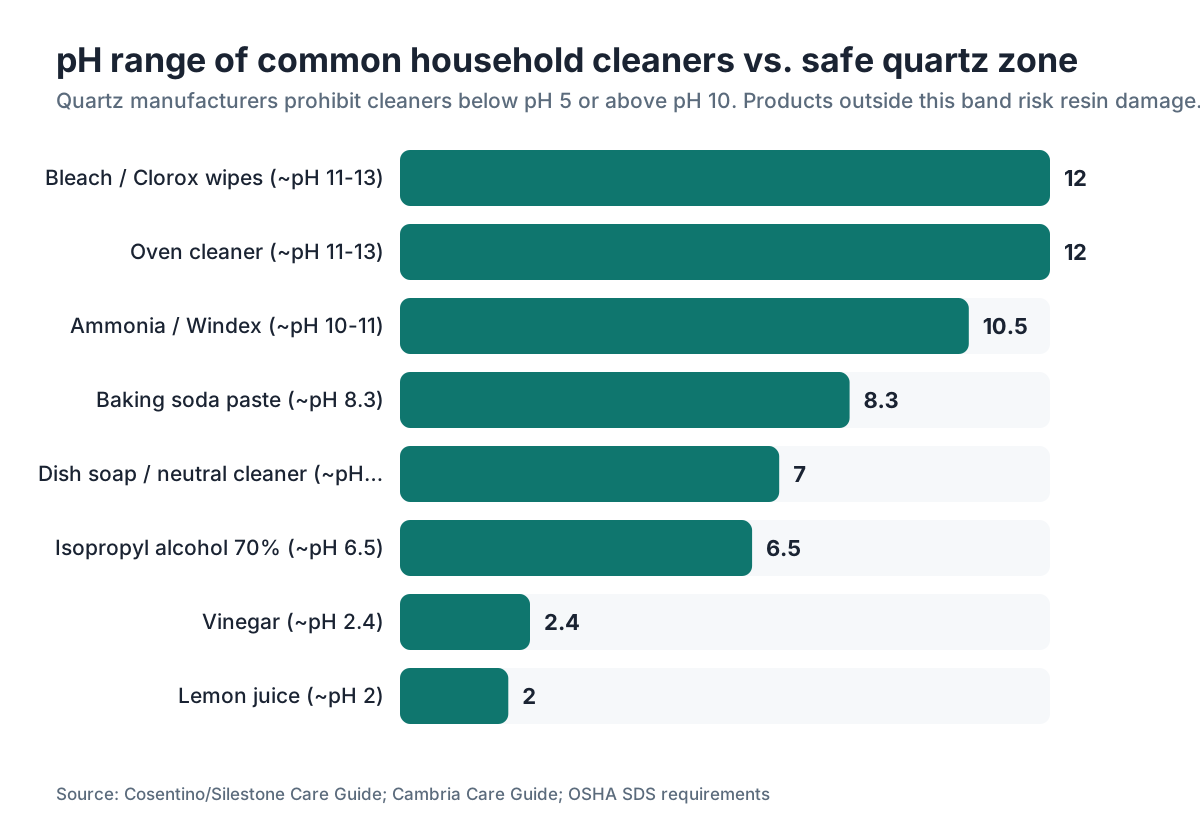
Vinegar, lemon juice, and other acids. Anything below pH 4 can etch the resin surface with repeated use. This is the same chemistry that etches marble, just slower. The natural-cleaning community's love of vinegar is a problem here.
Harsh alkaline cleaners. Oven cleaners, ammonia-based glass cleaners at full strength, and anything above pH 10 are just as damaging on the other end of the scale.
Abrasive scrubbers. Steel wool, green Scotch-Brite pads, and pumice-based cleansers scratch the polished surface. Scratches are permanent.
High heat directly on the surface. Quartz tolerates brief warmth fine, but setting a pan straight from the burner on the counter can thermally shock the resin, causing cracks or permanent discoloration. Use a trivet. This is one area where granite countertops have a genuine edge, since natural stone handles heat better than the polymer binder in engineered quartz [4].
Paint thinner, nail polish remover (acetone), and solvents. These dissolve the polymer resin directly. If you spill nail polish, use a purpose-made quartz cleaner or isopropyl alcohol, not acetone.
How do you remove tough stains from quartz?
Most stains on quartz sit on the surface rather than inside it, because the resin fills the pores. That means fresh spills wipe up easily, but stains that have dried and bonded to the surface take more work.
Coffee, tea, wine, and juice: Dampen the area with warm water, apply a small amount of non-bleach dish soap, and let it sit two to three minutes. Wipe and rinse. If the stain is older, put a wet cloth on it for five minutes first.
Grease and oil: Isopropyl alcohol on a cloth, left for 30 seconds, then wiped clean. Repeat if needed. This is faster and safer than any degreaser spray.
Dried food (curry, tomato sauce, beets): Use the plastic scraper first to lift the bulk. Then treat with dish soap as above. Pigment-heavy foods like turmeric can temporarily stain lighter quartz if left overnight, but they usually respond to repeated soap applications.
Marker, pen, and ink: Isopropyl alcohol again. Apply, let sit, wipe. Don't scrub; blot.
Hard water spots and mineral deposits: This is actually the trickiest category for quartz owners. You can't use vinegar or lemon juice the way you would on other surfaces. Instead, use a product specifically formulated for hard water on stone, like a diluted Bar Keepers Friend Granite & Stone Cleaner paste (rinse thoroughly) or a dedicated limescale remover labeled safe for engineered stone. Check the manufacturer's care guide for your specific brand before trying anything new.
Permanent marker or paint: A small amount of isopropyl alcohol or a purpose-made adhesive remover (Goo Gone original formula, not the Pro-Power version) applied with a cloth. Test in an inconspicuous spot. Rinse thoroughly.
Does quartz need sealing or special maintenance?
No. Do not seal quartz countertops.
This is one of the most common misconceptions in countertop care, probably because quartz gets sold alongside granite, which does need periodic sealing. The resin binder in engineered quartz is non-porous, so a sealer has nothing useful to bond with. You'd be adding a coating on top of the resin that could actually dull the finish or peel unevenly.
If a stone supplier, cleaning company, or well-meaning relative tells you to seal your quartz, they're thinking of granite. The two surfaces look similar and are often compared (the "granite vs quartz countertops" debate comes up constantly for good reason) but they require different care. You can read more about the differences in our guide to quartz countertops and granite countertops.
Quartz also does not need oiling, waxing, or any periodic treatment. The one bit of ongoing maintenance worth doing is checking the caulk lines at the backsplash and sink cutout once a year. Caulk degrades and separates. When it does, water can get underneath the slab and cause substructure damage that has nothing to do with the quartz itself. Re-caulking is a $10 job.
How does cleaning quartz compare to cleaning granite?
A lot of searches compare these two materials, and cleaning is one real area where they differ. Here's a practical comparison:
| Factor | Quartz | Granite |
|---|---|---|
| Needs sealing | No | Yes, every 1-3 years [5] |
| Safe cleaner pH range | 5-10 | 5-10 |
| Handles heat from pans | Use trivet | Generally tolerates brief heat |
| Reacts to vinegar/acid | Yes, over time | Yes, can etch or dull |
| Resistant to bacteria in crevices | High (non-porous) | Moderate (depends on seal) |
| Scratch resistance | Mohs ~7 | Mohs 6-7 (varies by type) |
| Stain from red wine if left overnight | Usually wipes clean | Can stain if unsealed |
For everyday cleaning, the method is nearly identical for both: mild pH-neutral soap, warm water, rinse, dry. The differences show up in what you can't do. Granite handles a brief splash of vinegar-based cleaner better than quartz can with repeated use. Quartz resists staining better than an unsealed or poorly-sealed granite. Neither surface is as forgiving as laminate countertops for chemical tolerance, but both are far easier to maintain than marble countertops or concrete countertops.
For a deeper look at the granite side of this comparison, the guide to how to clean stone countertops covers granite, quartzite, and other natural stones in more detail.
What about quartzite? Is it cleaned the same way as quartz?
No. Quartzite and quartz are completely different materials and this confusion causes real damage to countertops every year.
Quartzite is a natural metamorphic stone, formed when sandstone is subjected to heat and pressure. It looks similar to marble and is genuinely hard (Mohs 7+), but it is porous and must be sealed like granite. It is susceptible to acid etching from vinegar, lemon juice, and acidic cleaners. The cleaning rules for quartzite are basically the rules for natural stone: seal it, use pH-neutral cleaners, avoid acids.
Engineered quartz (Cambria, Silestone, Caesarstone, MSI Q, etc.) is manufactured, non-porous, and does not need sealing. The word "quartz" appears in both names because both contain a high percentage of the mineral quartz, but that's where the similarity ends.
If you're not sure which surface you have, check the original invoice or look up the brand name on the slab. The guide to how to clean quartzite countertops covers the natural stone in full detail.
What do quartz manufacturers specifically say to use?
The three largest-selling quartz brands in North America give specific guidance in their care documents:
Cambria recommends pH-neutral soap and water for everyday cleaning and says to avoid "bleach, products containing bleach, or high pH cleaners" [3]. For dried spills they suggest a non-scratch pad with soapy water.
Silestone (made by Cosentino) recommends mild neutral soap, warm water, and a soft cloth. Their technical documentation states: "Do not use products containing bleach, acids (pH < 5) or strong alkaline solutions (pH > 10) on Silestone surfaces." [6]
Caesarstone similarly prohibits chlorine-based cleaners and anything with a pH above 10 or below 4. They specifically mention that extended exposure to direct sunlight and UV can yellow lighter quartz surfaces, which is worth knowing for outdoor or sunroom kitchens [7].
The pattern is consistent across manufacturers. pH-neutral cleaners, no bleach, no harsh acids, no prolonged heat. If you're ever unsure whether a product is safe, look up its Safety Data Sheet (SDS) for the pH value. OSHA and the EPA require SDS documents for commercial cleaning products and they're usually one search away [9]. A pH between 5 and 10 is your green zone.
How do you clean quartz countertops in a commercial or high-traffic setting?
Commercial kitchens, restaurant prep surfaces, and office break rooms put quartz through more abuse per day than a residential kitchen sees in a week. The core rules don't change, but the frequency and disinfection method matter more.
For disinfection without bleach, 70 percent isopropyl alcohol is your best option. It meets EPA Emerging Viral Pathogen guidance for surface disinfection and won't damage quartz resin [8]. Apply with a cloth, leave for 30 seconds of contact time, then wipe. Do not let it pool and evaporate, since repeated pooling can eventually dull a high-gloss finish.
For end-of-day deep cleaning in a commercial setting, a pH-neutral commercial surface cleaner (verify the SDS, target pH 6-8) applied with a microfiber mop or cloth, followed by a clear-water rinse and drying, handles most situations. Avoid quaternary ammonium-based disinfectant wipes that contain solvents; check the ingredient list.
If you're running a fabrication shop and demoing quartz remnants to clients, SlabWise's quoting tools include material notes fields where you can attach care instructions to each quartz SKU, so customers get the right cleaning guidance with their quote documentation rather than finding out the hard way that bleach wipes void their warranty.
Can you use Windex, Clorox wipes, or Magic Eraser on quartz?
These come up constantly in search because they're in nearly every home. Here's the real answer for each:
Windex (ammonia-based): Occasional use probably won't ruin your quartz, but Windex contains ammonia, which is alkaline (around pH 10-11). Most manufacturers say to avoid it. For a streak-free shine on quartz, a damp microfiber cloth followed by a dry one works better anyway.
Clorox wipes: Contains sodium hypochlorite (bleach). Universally prohibited by quartz manufacturers. The convenience isn't worth the warranty risk or the long-term surface damage. Use isopropyl alcohol wipes instead.
Magic Eraser (melamine foam): These work by micro-abrasion. They will scratch a polished quartz surface over time, even though it's not obvious at first. On a matte or honed quartz finish the damage can show up faster. Avoid.
Pledge, Endust, furniture polish: These leave a waxy film on quartz that builds up and looks greasy. Not worth it.
Method Daily Granite Cleaner: Despite the name, this product is pH-neutral and safe for quartz. It's one of the better spray-and-wipe options for busy households.
Why does my quartz look dull or hazy after cleaning?
Dull, hazy, or filmy quartz after cleaning almost always traces back to one of three causes:
Soap residue. The most common reason. If you're not rinsing after using dish soap, a thin film builds up with each cleaning. Fix: wipe with a clean damp cloth (no soap) and then dry immediately. The haze usually disappears.
Hard water deposits. If your tap water is high in calcium and magnesium, it leaves white mineral spots when it evaporates. This is especially visible on darker quartz. Fix: use a stone-safe hard water remover as described in the stain removal section above, or simply dry the surface after every cleaning so water doesn't sit.
Chemical damage from an incompatible cleaner. If the haze is in a specific spot that was cleaned with a strong cleaner, bleach wipe, or abrasive, the resin surface may be permanently etched or micro-scratched. This cannot be fixed with more cleaning. A fabricator can re-polish a small area in some cases, but for large zones it typically means replacing the section.
Wax or polish buildup. If someone applied a granite sealer or furniture polish to the quartz, the coating sits on top of the resin and looks cloudy. Try isopropyl alcohol on a cloth to lift it. If it's a thick coating, a professional can buff it off.
For homeowners just starting with a new kitchen, the SlabWise kitchen countertops guide walks through care and maintenance for several surface types side by side, which is useful context if you're comparing options before committing.
How is cleaning quartz different from cleaning other countertop materials?
If you're comparing surfaces or have a mix of materials in your home, it helps to know where quartz sits on the maintenance spectrum.
Butcher block countertops need regular oiling (food-grade mineral oil every few months) and can be sanded to remove stains. They're the highest-maintenance countertop in most kitchens. Corian countertops (solid surface acrylic) are non-porous like quartz but can be sanded and repaired if scratched, which engineered quartz cannot. Formica countertops and laminate countertops are cleaned exactly like quartz (mild soap, no abrasives) but are more vulnerable to edge delamination from standing water.
Soapstone countertops are non-porous naturally but are soft (Mohs 1-2) and need periodic oiling to maintain an even patina. Quartzite (as discussed above) needs sealing and acid-avoidance like granite.
Quartz sits in the low-maintenance tier: no sealing, no oiling, no periodic treatments. The main thing you're protecting is the surface finish and the resin binder, and both are easy to preserve if you avoid the specific chemicals listed above.
Frequently asked questions
How do you clean quartz countertops every day without streaks?
Use a damp microfiber cloth with two or three drops of pH-neutral dish soap. After wiping, go over the whole surface with a clean damp cloth to rinse off the soap, then dry with a dry cloth. The rinsing step is what most people skip. Soap left to dry is the main cause of streaks and haze on quartz.
Can I use vinegar to clean quartz countertops?
No. Vinegar is acidic (roughly pH 2.4) and repeated use will degrade the polymer resin surface of engineered quartz over time, causing dull patches. Most quartz manufacturers explicitly prohibit acidic cleaners below pH 5. For everyday cleaning, stick to neutral dish soap and warm water.
What is the best way to clean quartz countertops without damaging them?
Mild dish soap, warm water, a soft microfiber cloth, and thorough rinsing. For tougher stains, isopropyl alcohol (70 percent) handles grease, ink, and marker without damaging the resin. The worst things you can do are use bleach-based cleaners, abrasive pads, or anything with a pH below 5 or above 10.
Is Clorox or bleach safe on quartz countertops?
No. Chlorine-based cleaners including Clorox wipes and diluted bleach solutions are prohibited by all major quartz manufacturers (Cambria, Caesarstone, Silestone) and typically void the warranty. They discolor the pigments and degrade the resin over time. Use 70 percent isopropyl alcohol for disinfecting instead.
Do quartz countertops need to be sealed?
No. Engineered quartz does not need sealing. The polymer resin binder fills the pores, making the surface non-porous. Applying a sealer on top of quartz adds nothing useful and can actually dull the finish or peel unevenly. Granite and quartzite do need periodic sealing, but quartz does not.
How do you get stains out of quartz countertops?
For most stains (coffee, wine, juice), let a damp cloth soaked in diluted dish soap sit on the spot for a few minutes, then wipe. For grease, ink, or marker, use 70 percent isopropyl alcohol applied with a cloth. Hard water spots need a stone-safe limescale remover since vinegar and lemon juice are off-limits.
Can you put hot pans on quartz countertops?
You shouldn't. The mineral quartz itself handles heat well, but the polymer resin binder used in engineered stone can crack or discolor from thermal shock when a pan comes straight from a burner. Set a hot pan on a trivet or cooling rack. This is one area where natural granite countertops have an advantage over quartz.
How is cleaning quartz countertops different from cleaning granite countertops?
Day-to-day, the method is the same: pH-neutral soap, warm water, rinse, dry. The differences are that granite needs periodic sealing (every one to three years) while quartz does not, and granite tolerates brief heat from pans better than quartz does. Both materials are sensitive to acidic and high-pH cleaners.
Why does my quartz countertop look dull after cleaning?
The most common cause is soap residue that wasn't rinsed off. Wipe with a clean damp cloth (no soap) and dry immediately. If the haze is in one specific spot and appeared after using a strong cleaner, the resin surface may be permanently etched. Hard water deposits are the second most common cause and need a stone-safe mineral remover.
Is quartz or granite better in terms of maintenance and cleaning?
Quartz is generally lower maintenance because it needs no sealing and resists staining well even if not sealed. Granite, if kept sealed, is very easy to maintain too, and handles direct heat better. Both use the same daily cleaning approach. For busy households that don't want to think about periodic sealing, quartz has a practical edge.
Can you use Magic Eraser on quartz countertops?
No. Magic Eraser pads work through micro-abrasion. They'll scratch and dull a polished quartz surface over time. The damage is subtle at first but accumulates with repeated use. Use a non-scratch sponge or microfiber cloth instead.
What household products are safe to use on quartz countertops?
Plain warm water, pH-neutral dish soap (like original Dawn), 70 percent isopropyl alcohol, and purpose-made stone cleaners verified as pH-neutral (Method Daily Granite Cleaner, Granite Gold Daily Cleaner). Avoid bleach products, ammonia-based cleaners, vinegar, baking soda pastes, and abrasive scrubbers.
How often should quartz countertops be cleaned?
Wipe up spills immediately, and do a full damp wipe-down after cooking. A quick damp cloth before bed keeps the surface in good shape. There is no periodic deep-clean treatment needed, no sealing schedule, and no oiling. It's genuinely one of the lowest-effort countertop surfaces to maintain.
Can I use baking soda to clean quartz countertops?
Baking soda paste is mildly alkaline (pH around 8.3) and mildly abrasive. A small amount on a soft cloth for a specific stubborn stain is unlikely to cause immediate harm, but it's not recommended for regular use. The abrasiveness can dull the surface over time. Isopropyl alcohol handles most of what people reach for baking soda to solve.
Sources
- U.S. Geological Survey, Mineral Resources Program, Industrial Minerals: Quartz: Engineered quartz countertops consist of approximately 90-95% ground natural quartz mineral bound with polymer resins
- Natural Stone Institute, Care and Cleaning for Natural Stone: Engineered stone manufacturers universally prohibit acidic cleaners and bleach-based products that degrade the polymer matrix
- Cambria, Surface Care and Maintenance Guide: Cambria recommends pH-neutral soap and water and prohibits bleach or high-pH cleaners, with warranty coverage affected by prohibited product use
- Natural Stone Institute, Technical Bulletin on Thermal Resistance of Stone: Natural granite handles brief direct heat better than engineered quartz because granite lacks the polymer resin binder susceptible to thermal shock
- University of Tennessee Extension, Home and Garden: Countertop Materials: Granite countertops require resealing every one to three years depending on porosity and use
- Cosentino / Silestone, Care and Maintenance Technical Guide: Silestone documentation states: 'Do not use products containing bleach, acids (pH < 5) or strong alkaline solutions (pH > 10) on Silestone surfaces.'
- Caesarstone, Product Care and Maintenance: Caesarstone prohibits chlorine-based cleaners and pH extremes, and notes that prolonged UV/sunlight exposure can yellow lighter quartz surfaces
- U.S. EPA, Emerging Viral Pathogens Guidance for Antimicrobial Pesticides: 70% isopropyl alcohol meets EPA guidance for surface disinfection against viral pathogens and is safe for non-porous surfaces including engineered quartz
- OSHA, Hazard Communication Standard: Safety Data Sheets (SDS requirements): OSHA requires Safety Data Sheets for commercial cleaning products, which include pH values useful for evaluating countertop compatibility
- NSF International, NSF/ANSI 51 Food Equipment Materials Standard: Non-porous engineered stone surfaces with no open pores demonstrate low bacterial harborage compared to porous unsealed natural stone
Last updated 2026-07-09