TL;DR
- A finished butcher block countertop has been treated with a protective coating, oil, or wax so it's ready to install and use.
- Food-safe oil finishes cost $30 to $80 in materials and need reapplication every 3 to 6 months.
- Polyurethane or varnish finishes are harder, last 3 to 5 years, and cost $40 to $120 in materials.
- Factory-finished slabs run $200 to $600 installed depending on species and thickness.
What does 'finished' mean on a butcher block countertop?
A finished butcher block countertop is wood that's been sanded smooth and then coated with something that either soaks into the grain (oil, wax) or sits on top of it (polyurethane, lacquer, varnish). Unfinished butcher block is raw wood straight off the planer. It absorbs moisture right away, stains within days, and starts to warp or crack in a normal kitchen within weeks if you ignore it.
The industry draws a real line between "pre-finished" slabs, where the manufacturer applied a factory coat before shipping, and "site-finished" slabs, where the installer or homeowner applies the finish after installation. Pre-finished slabs arrive sealed and ready. Site-finished slabs need sanding and coating on-site, which gives you more control over the final look but adds a day or two to your project.
The finish decides more than how the counter looks. It sets your food safety, water resistance, maintenance schedule, and how hard scratch repair gets. Pick the wrong finish for how you actually cook and you'll either be re-oiling every few months or watching a cracked poly coat peel by year two.
For a broader sense of how butcher block fits alongside other countertop materials, see our guide to butcher block countertops.
What are the main types of butcher block finishes?
There are four categories, and they behave nothing alike.
Penetrating oils. Mineral oil is the classic. It soaks into the wood fibers, conditions them, and cuts how much moisture the wood takes on. It does not form a hard film on top. So it won't peel or crack, but water still gets in if you let puddles sit. You reapply every 1 to 3 months under heavy use [1]. Tung oil and linseed oil penetrate the same way but cure harder than mineral oil, so you get a small bump in water resistance. Pure tung oil (not "tung oil finish," which often hides varnish and solvents) is considered food-safe once fully cured [2].
Wax and oil-wax blends. Beeswax over a base oil coat is the old bakery approach for butcher blocks. The wax fills the open grain after the oil conditions the wood, so the surface beads water better than oil alone. Howard Butcher Block Conditioner and similar products mix mineral oil with carnauba or beeswax. Still a penetrating system. Still not waterproof. Still needs regular reapplication.
Hardening oils (polymerizing). Waterlox and similar tung-oil-based products cross-link as they cure, building a semi-film finish over several coats. They resist water better than straight mineral oil, stay food-safe once cured, and need a refresh roughly once a year instead of monthly. They sit in a useful middle ground: more protection than straight oil, more repairable than polyurethane.
Film finishes: polyurethane, lacquer, varnish. These build a hard, glossy or satin layer on top of the wood. Oil-based polyurethane is the most common factory finish on pre-finished butcher block. It's durable, easy to clean, and genuinely water resistant. The catch is how it dies: cracking, peeling, and clouding, more than going dull. Repair means stripping the whole surface, sanding to bare wood, and starting over. Film finishes also raise a food-contact question. The FDA regulates coatings that touch food under 21 CFR 175.300, which covers resinous and polymeric coatings for food-contact surfaces [3]. Most cured polyurethane products comply, but read the manufacturer's data sheet, not the label copy, before you put any finish on a cutting surface.
Which finish is actually food-safe for a cutting surface?
Mineral oil, food-grade tung oil (cured), beeswax, and compliant hardening oil finishes are generally accepted as food-safe. Polyurethane and lacquer, once fully cured, also count as safe for incidental food contact under FDA 21 CFR 175.300 [3]. But nobody serious tells you to chop directly on a poly-finished surface, because the film cracks under knife work.
The USDA Food Safety and Inspection Service says food-contact surfaces must be smooth, impervious, and cleanable [4]. A butcher block with a fresh oil finish clears that bar in a home kitchen. A butcher block with cracked or peeling polyurethane does not.
Here's the practical split. If you're going to chop right on the countertop, use a penetrating oil or hardening oil system. If you keep a separate cutting board and just want a good-looking, easy-clean counter, a polyurethane or varnish finish works fine and holds its looks for years.
One option people skip past: a grey butcher block countertop with a factory-applied oil finish. Grey-toned maple or ash (achieved through wire brushing or a diluted stain under the oil) gives you a modern look while keeping the penetrating-finish maintenance model. It's a real product, not a fad on its way out.
How much does a finished butcher block countertop cost?
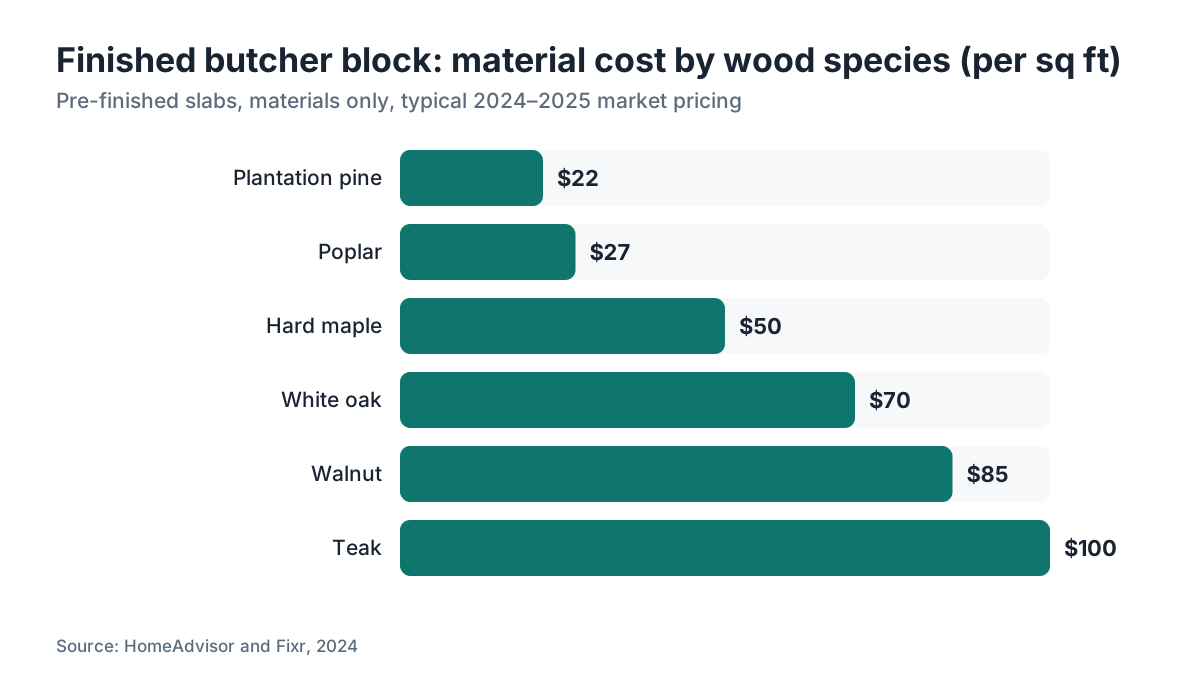
Price depends on species, thickness, edge style, and whether you buy pre-finished or finish on-site. Here's what you'll actually pay in 2024 to 2025 for pre-finished butcher block countertop slabs [5][6].
| Species | Typical price per sq ft (pre-finished, standard thickness) |
|---|---|
| Plantation pine (soft) | $15 to $30 |
| Poplar | $20 to $35 |
| Hard maple (standard) | $35 to $65 |
| Walnut | $60 to $110 |
| Teak | $70 to $130 |
| White oak | $50 to $90 |
Those are material costs only. Add $30 to $50 per linear foot for professional installation, plus cutouts (sink, cooktop) at $100 to $200 each [7]. A typical 25-square-foot kitchen countertop in hard maple runs $875 to $1,625 installed, depending on region and complexity.
Factory poly-finished slabs sometimes cost $5 to $10 per square foot less than oil-finished equivalents from the same supplier, because the factory oil process runs more coats and more dry time. That gap closes or flips at the high end (walnut, teak), where the oil finish reads as more premium.
Finishing raw butcher block yourself, an oil-wax system runs $30 to $80 in materials for a standard kitchen. A polyurethane kit for the same job runs $40 to $120. The real cost is time: a proper oil finish takes 3 to 5 coats over 2 to 3 days. Poly takes 2 to 4 coats with a full cure of up to 30 days before it reaches full hardness [8].
For context on how these prices compare to stone, see our guides on granite countertops and kitchen countertops.
How long does a butcher block finish last before you need to refinish?
This varies more than most guides admit, because finish life rides on use patterns, cleaning habits, and how much your kitchen humidity swings.
Penetrating oil lasts 1 to 4 months between applications under regular use. People with very dry kitchens in arid climates re-oil monthly. People with moderate use stretch to 6 months. You know it's time when water stops beading and soaks in.
Hardening oil systems (Waterlox, Rubio Monocoat) go 1 to 2 years between maintenance coats, and a light wipe-on refresh in year one is often enough.
Polyurethane or varnish factory finishes last 3 to 7 years before visible wear in medium-use kitchens, 2 to 4 years in heavy-use kitchens that see daily cooking, hot pans set down (bad idea), and cleaning with harsh products.
Wax-over-oil runs monthly to quarterly, same as straight oil.
The wood underneath matters too. Harder species like hard maple (1,450 Janka [9]) hold a finish longer than softer species like pine (around 870 Janka for heart pine). Denser wood moves less with humidity, so you get fewer micro-cracks that let moisture in.
One rule of thumb actually earns its keep: the more a finish can be repaired in one spot (oils, waxes, hardening oils), the less the longevity number matters, because you never hit a catastrophic failure. Film finishes last longer between full refinishes. But when they go, they really go.
How do you maintain a finished butcher block countertop?
Day-to-day care is the same no matter the finish: wipe up spills right away (especially citrus, vinegar, and anything acidic, which attack oil finishes), don't let water pool near the sink, and skip steel wool or abrasive scrubbers that scratch the surface.
On oil-finished surfaces, the main job is re-oiling. Sand lightly with 220-grit if the surface feels rough, wipe on mineral oil with a clean cloth, let it soak 20 minutes, wipe off the excess, and repeat after 24 hours. Keep going until the wood stops drinking oil eagerly. The University of Missouri Extension recommends food-grade mineral oil for wooden kitchen surfaces and notes it does not go rancid, unlike cooking oils [10].
On poly-finished surfaces, maintenance is mostly avoidance: don't cut on the surface, don't set hot pans down (thermal shock cracks the film), and clean with mild soap and water. When scratches show up, a light scuff with 400-grit and a wipe-on poly touch-up buys the finish another year or two before a full strip-and-refinish.
On hardening oil systems, follow the maker's maintenance-coat instructions. Most want an annual coat of the same product, applied without sanding if the surface is in decent shape.
One thing that catches homeowners off guard: butcher block next to a sink is always the hardest-working spot, whatever the finish. The daily splash zone shows wear first. Some people build up a heavier oil layer there, or run a sink grid to cut direct contact. Others let it patina and call it character.
Can you change the finish on an existing butcher block countertop?
Yes, but the direction of the change decides how hard it is.
Going from oil to polyurethane is hard. Oil in the grain fights film adhesion. You'd need to sand past every point the oil reached, which on a well-oiled surface means removing real wood. On a 1.5-inch slab you have some margin. On a thinner piece, you might not.
Going from polyurethane to oil is easy by comparison: strip the poly with a chemical stripper or sand it off, then oil the bare wood. It's work, but a weekend gets it done.
Going from one oil or hardening oil to another is usually fine. Between different brand systems of hardening oils, test in a hidden spot first, because some cross-link chemistries fight each other.
So your first finish choice carries weight. Want the freedom to switch later without major work? Start with oil. Want the hard protective film? Commit from day one and keep it maintained so you never hit a full-strip situation.
Refinishing as part of a bigger kitchen project? Our guide on countertop installation covers the sequencing questions that come up when you're coordinating new counters with existing cabinetry.
Is butcher block cheaper than other countertop materials?
Hard maple butcher block at $35 to $65 per square foot beats most natural stone and engineered quartz, runs roughly even with solid-surface materials, and costs more than laminate. Here's an honest comparison [5][6][11].
| Material | Typical installed price range per sq ft |
|---|---|
| Laminate | $15 to $40 |
| Butcher block (pine/poplar) | $25 to $55 |
| Butcher block (hard maple) | $55 to $100 |
| Butcher block (walnut) | $90 to $160 |
| Corian / solid surface | $45 to $100 |
| Granite | $50 to $140 |
| Quartz (engineered) | $60 to $150 |
| Marble | $70 to $200+ |
The finish adds up over the years. A surface that needs re-oiling every 2 months at $10 in mineral oil costs about $60 a year in materials alone, plus your time. Polyurethane might cost $80 in materials once every 5 years. Neither breaks the bank, but put the ongoing cost in your math before you decide.
For a closer look at the lower price range, see laminate countertops. For the high end, marble countertops is worth reading.
Fabricators pricing butcher block jobs already know this material acts nothing like stone in the shop. If you're building quotes that account for wood movement allowances, edge profiles, and finish labor, SlabWise has quoting tools that handle non-stone materials and mixed-material kitchens in one workflow.
What wood species are best for a finished butcher block countertop?
Hard maple is the industry standard, and it earns it. It has a tight, even grain that holds finish well, shrugs off knife marks better than softer species, and adds no flavor to food. The National Hardwood Lumber Association grades hard maple as one of the densest domestic hardwoods sold commercially [9]. Almost every commercial butcher block maker offers it as the base product.
Walnut is the premium pick for looks. The dark, open grain runs dramatic and hides wear better than pale maple. It costs more, sits a bit softer (1,010 Janka against maple's 1,450), and takes oil finishes beautifully. That open grain means you'll pour more oil into it during the first seasoning.
White oak is having a moment in kitchen design, partly because wire-brushed white oak delivers that grey butcher block countertop look on its own. White oak shows large ray fleck patterns and a slightly open grain. It's genuinely tough (1,360 Janka) and finishes well with both oil and hardening-oil systems.
Teak is the best performer in wet spots because of its natural oil content. Shipbuilders have used it near water for centuries. For a butcher block countertop next to a farm sink with heavy daily use, teak is a legitimate choice, just an expensive one. It costs more and can be hard to source with sustainable certification, but the Forest Stewardship Council (FSC) keeps a database of certified suppliers [12].
Softwoods (pine, fir) cost less and dent more. They're fine for a light-use island or a low-traffic secondary counter, but expect visible knife marks and compression dents inside the first year of real cooking.
For how other surface materials handle kitchens with high moisture and traffic, see our guide on how to clean stone countertops.
What are common problems with finished butcher block and how do you fix them?
Warping is the most common structural problem. Butcher block moves with its moisture content. Oil only the top and glue the bottom rigid to a cabinet, and you create a moisture differential that cups the slab (the edges curl up). The fix is to oil every surface before installation and use figure-8 fasteners or clips that let the slab expand and contract instead of screwing it down rigid [13].
Black staining near the sink is almost always iron tannate, a reaction between tannic acid in the wood and iron from water or metal hardware. It looks alarming but does no structural harm. Oxalic acid (wood bleach) pulls it out reliably. Apply a diluted solution, let it sit 15 minutes, neutralize with water, sand lightly, and re-oil.
Cracking in the finish on polyurethane countertops usually starts at the sink edge or wherever the wood flexes with temperature. Small cracks let water in, which drives more movement, which drives more cracking. Catch it early with a wipe-on poly touch-up. If the cracking is everywhere, you're into a full refinish.
Deep knife marks on oil-finished surfaces: sand the area with 120-grit, feather out into the surrounding surface, work up to 220-grit, then re-oil. On a poly surface, deep marks are much harder to spot-repair without a visible patch.
Color change over time: all butcher block darkens with oil and use. Maple goes from cream to honey. Walnut mellows from dark brown toward a warmer tone. This is normal. Anyone who wants the countertop to look brand-new forever should probably pick stone or an engineered surface instead. See our guides on granite countertops or cambria countertops for surfaces that don't shift color with age.
Can you DIY finish a butcher block countertop or should you hire a pro?
For an oil or wax finish, DIY makes real sense. The process forgives you: too much finish, wipe off the excess; missed a spot, add more. The tools are a clean cloth and some sandpaper. The odds of a catastrophic mistake are low.
For a polyurethane finish, DIY is doable but demanding. Surface prep decides everything: any dust, oil contamination, or sanding scratch shows up in the final film. You need a dust-free space and thin coats. Plenty of homeowners get a finish that looks fine at install and turns hazy or bubbly in window light. A pro finish applicator charges $200 to $500 extra for a standard kitchen, which buys HVLP spray application, controlled conditions, and usually a warranty on the finish workmanship.
Buying pre-finished butcher block from a supplier, the factory finish almost always beats what you can do on-site, because the factory belt-sands to 180-grit, applies finish in a humidity-controlled booth, and uses commercial-grade poly that cures harder than hardware-store products.
The DIY call also comes down to how much you trust yourself around new cabinetry. Sanding a finished butcher block countertop in place, with cabinets already installed and paint on the walls, takes careful masking and a dust containment plan. Sanding dust in a freshly painted cabinet interior is a real problem people discover too late.
Fabricators handling butcher block: the quoting headache is that finish labor doesn't fit a per-square-foot stone model. If you're tracking finish coats, dry time, and material cost apart from the slab price, the right software saves you. SlabWise handles line-item finish costs inside a single quote, so you're not running parallel spreadsheets.
How does humidity and climate affect a finished butcher block countertop?
Wood is hygroscopic. It takes on and releases moisture with the surrounding air. The wood in a butcher block countertop swells in humid summer months and shrinks in dry winter months no matter what finish you put on it. The finish slows that moisture exchange. It doesn't stop it.
What that means in practice: a butcher block installed in a kitchen at 45% relative humidity should be fine year-round in most climates. In a very dry climate (below 30% RH) or right next to a forced-air vent blasting dry winter heat, the slab shrinks and can crack along glue lines. In a tropical kitchen above 70% RH, the wood swells and can cup or make cabinet doors stick.
The Forest Products Laboratory at the U.S. Forest Service publishes equilibrium moisture content (EMC) tables showing what moisture content wood reaches at different temperature and humidity combinations [13]. A countertop installed at 8% moisture content in a 35% RH kitchen eventually settles near 7%, which means real shrinkage. The same slab installed in a 60% RH kitchen swells.
So here's the advice worth following: acclimate your butcher block slab in the kitchen for 48 to 72 hours before installation, with the HVAC running at normal operating conditions. Don't install a slab delivered from a warehouse in January after running humidifiers for a week. You'll end up with a counter sized for the humid state that shrinks once you shut the humidifiers off.
Film finishes (poly, lacquer) slow moisture exchange more than oil finishes, which argues for them in very low or very high humidity environments where you want to dampen the seasonal movement cycle.
Frequently asked questions
What is the best finish for a butcher block countertop next to a sink?
A hardening oil finish like Waterlox strikes the best balance near a sink. It resists water better than straight mineral oil, stays food-safe once cured, and spot-repairs without a full strip-and-sand when water exposure happens. Polyurethane works if you keep it in perfect shape, but the sink edge is where film finishes crack first, and once they crack, water gets underneath and speeds up the failure.
How often should you oil a butcher block countertop?
For mineral oil, monthly in the first year is a common recommendation, tapering to every 3 to 6 months once the wood is well-conditioned. The real test is the water bead test: pour a little water on the surface. If it beads up, you're fine. If it soaks in within 30 seconds, oil it. Hardening oil systems like Waterlox need maintenance roughly once a year.
Can you use cooking oil on a butcher block countertop?
No. Vegetable, olive, and other cooking oils go rancid inside the wood and produce off-smells and potentially harmful compounds. Use food-grade mineral oil (sold at pharmacies and hardware stores as "mineral oil USP"), which does not go rancid because it's a petroleum-derived oil with no unsaturated fatty acids to oxidize. Some commercial butcher block oils mix mineral oil with beeswax or carnauba wax, which is also fine.
Is polyurethane finish on butcher block food-safe?
Cured polyurethane that complies with FDA 21 CFR 175.300 counts as safe for incidental food contact, and most major manufacturer products meet that standard. But food safety regulators generally don't recommend using a poly-finished surface as a cutting board, because the film cracks under knife pressure and creates crevices that harbor bacteria. Use a poly-finished butcher block as a prep surface, not a cutting surface, and it's fine for normal kitchen use.
What causes black stains on a butcher block countertop near the sink?
Black staining is almost always iron tannate, a reaction between tannins in the wood and iron particles from water or metal hardware. It's a surface stain, not structural damage. Remove it with diluted oxalic acid (wood bleach), let it sit 15 minutes, rinse, neutralize, sand lightly, and re-oil. Switching to brass or stainless faucet hardware can prevent it from coming back.
How do you fix scratches on a finished butcher block countertop?
On oil-finished surfaces, sand the scratched area with 120-grit, feather out into the surrounding wood, finish with 220-grit, and re-oil. The repair blends invisibly. On poly-finished surfaces, light scratches respond to 400-grit followed by a wipe-on poly coat, but deep scratches or a network of them usually require sanding the entire surface back to bare wood and refinishing completely.
Can you put a grey butcher block countertop in a modern kitchen?
Yes, and it looks good done right. Wire-brushed white oak with a grey-tinted oil, or a diluted grey stain under a clear hardening oil, gives a genuinely modern look. Some manufacturers sell pre-finished grey-toned maple or ash. The grey tone comes from wire brushing (which opens the grain for a weathered look), liming wax, or a very diluted water-based stain. It pairs well with white or charcoal cabinetry.
Does butcher block countertop add value to a home?
There's no clean published data that isolates butcher block countertops in home resale value studies. Realtors generally count updated kitchens as adding value, and butcher block in good condition reads as a premium material choice. In high-end markets dominated by stone, a buyer might prefer granite or quartz. In mid-market homes or kitchens with a farmhouse or craftsman look, a well-maintained walnut or maple butcher block is a legitimate selling point.
How thick should a finished butcher block countertop be?
The standard is 1.5 inches, which gives enough mass to resist warping and enough depth for a few refinishing cycles over the counter's life. Thicker slabs at 2.25 or 3 inches look more substantial, but they're heavier and may need cabinet reinforcement. Thinner slabs at 1 inch exist for budget jobs, but they leave little margin for sanding down over time.
Can butcher block countertops be installed on top of existing countertops?
Technically yes, if the existing surface is level, structurally sound, and the added height (around 1.5 inches for standard butcher block) works with your appliances and dishwasher. This is a common budget DIY move. The main risks are moisture trapping between layers (which causes warping and mold) and the added weight on cabinets not built for it. Make sure any existing surface is dry and stable before installing over it.
How do you seal the edges of a butcher block countertop?
Edges and end grain drink moisture faster than face grain, so they need more finish attention. For oil finishes, hit the edges and especially the end grain with extra coats until the wood stops absorbing oil. For poly finishes, the edge usually gets the same number of coats as the face, but brush carefully to avoid runs. The back edge (against the wall) and the sink cutout edge are the two spots most likely to be underfinished and cause trouble later.
What is the difference between end-grain and edge-grain butcher block?
End-grain butcher block shows the circular cross-section of the wood (like looking at a log from the top). It's the classic cutting-board style, very gentle on knife edges, and self-healing to a degree. It also costs significantly more, weighs more, and absorbs oil and moisture faster than other orientations. Edge-grain shows the long side of the wood fibers, stays more dimensionally stable, takes finish more evenly, and is what most kitchen countertop butcher block is. Face-grain (flat-sawn) is the least recommended for countertops because it's most prone to warping.
How long does it take to finish a butcher block countertop yourself?
An oil finish takes 2 to 3 days: sand to 220-grit (a few hours), then 3 to 5 coats of mineral oil with 20-minute soak-and-wipe cycles, resting the surface 4 to 8 hours between coats. A polyurethane finish takes longer: sanding, then 3 to 4 coats with 24-hour dry time between each, then a 7 to 30 day full cure before the finish hits maximum hardness. Rush the cure by setting heavy objects on it and you'll dent the soft film.
Sources
- University of Missouri Extension, "Cutting boards and food safety": Mineral oil needs regular reapplication on wooden kitchen surfaces; frequency depends on use intensity
- Real Milk Paint Co., Pure Tung Oil product technical data: Pure tung oil is considered food-safe once fully cured, unlike many "tung oil finish" products that contain varnish and solvents
- FDA 21 CFR 175.300, Resinous and polymeric coatings for food-contact surfaces: FDA 21 CFR 175.300 governs resinous and polymeric coatings for food-contact surfaces, including cured polyurethane
- USDA Food Safety and Inspection Service, HACCP Hazard Analysis Guidance: USDA FSIS states that food-contact surfaces must be smooth, impervious, and cleanable
- HomeAdvisor, Butcher Block Countertop Cost Guide 2024: Butcher block countertop material prices range from roughly $15/sq ft for pine to $130/sq ft for teak; installation adds $30, $50 per linear foot
- Fixr, Butcher Block Countertop Cost 2024: Pre-finished hard maple butcher block runs $35, $65 per square foot in materials; walnut runs $60, $110 per square foot
- Angi, Countertop Installation Cost Guide 2024: Sink and cooktop cutouts in countertop material typically cost $100, $200 each for professional installation
- Minwax, Oil-Based Polyurethane Product Technical Data Sheet: Oil-based polyurethane reaches full hardness cure in up to 30 days after final coat application
- National Hardwood Lumber Association, Hardwood Species Guide: Hard maple has a Janka hardness rating of approximately 1,450 lbf; walnut approximately 1,010 lbf; white oak approximately 1,360 lbf
- University of Missouri Extension, Food Safety in the Kitchen: Food-grade mineral oil is recommended for wood kitchen surfaces because it does not go rancid, unlike cooking oils
- Consumer Reports, Kitchen Countertop Buying Guide 2024: Installed countertop prices range from roughly $15/sq ft for laminate to $200+/sq ft for premium marble; granite and quartz fall in the $50, $150 range
- Forest Stewardship Council, FSC Certified Supplier Database: FSC maintains a public database of certified teak and hardwood suppliers for consumers seeking sustainably sourced wood
- USDA Forest Products Laboratory, Wood Handbook: Wood as an Engineering Material (General Technical Report FPL-GTR-282): The USDA Forest Products Laboratory publishes equilibrium moisture content tables showing how wood moisture content changes with ambient relative humidity, and recommends figure-8 fasteners or clips for countertop installation to allow wood movement
Last updated 2026-07-09