TL;DR
- A 6-foot butcher block countertop (72 inches long, usually 25 inches deep) costs $150 to $600 for an unfinished or pre-finished slab at home centers, or $400 to $900 installed by a custom fabricator.
- Species, edge profile, thickness, and finish drive the price gap.
- It's a repairable surface that rewards regular oiling.
What does a 6-foot butcher block countertop actually measure?
Six feet means 72 inches of length. That part is obvious. The other two dimensions are where people get tripped up.
Stock slabs at home centers are almost always 25 inches deep, which matches a standard 24-inch base cabinet and leaves a 1-inch overhang at the front. Thickness runs 1.5 inches (often written 1-1/2") in the budget tier and 2.0 or even 4.0 inches for edge-grain or end-grain block that needs the structural mass. If your run wraps a corner, that 25-inch depth almost never matches a 36-inch island, so measure twice before you buy a stock piece.
Custom fabricators cut to whatever size you need, but anything outside the standard 25x72 footprint usually adds a cutting charge plus material waste. A 6-foot run is a sweet spot. It fits inside one standard slab from most domestic hardwood mills, so there are no glue joints mid-run. Joints done right aren't structurally weak, but they interrupt the look and give water a place to get in, so skipping them on a 6-foot piece is a real advantage.
Common retail thicknesses: 1.5", 2", and 4". The 1.5" slabs are lighter (which matters if your cabinets are old), easier to cut on site, and cheapest. The 4" end-grain blocks give you the classic butcher-block look, but they're heavy and pricey. Most kitchen renovations land on 1.5" or 2".
How much does a 6-foot butcher block countertop cost?
Material-only prices for a 72-inch slab swing hard by species and where you shop. Here's a realistic snapshot based on 2024 retail pricing at major home centers and hardwood suppliers.
| Species | Thickness | Approximate retail (72"×25") |
|---|---|---|
| Pine / Poplar | 1.5" | $80 to $150 |
| Maple (edge-grain) | 1.5" | $150 to $280 |
| Oak (red or white) | 1.5" | $170 to $310 |
| Walnut | 1.5" | $300 to $550 |
| Teak | 1.5" | $350 to $600 |
| Maple (end-grain) | 4" | $400 to $700 |
Those are unfinished or lightly sanded slabs from big-box stores (Home Depot, Menards, IKEA's BADELUNDA and KARLBY lines) [8]. Online hardwood dealers and custom fabricators often charge more for the material but deliver better surface prep and tighter grain selection.
Installation adds $100 to $350 depending on your area and whether the job needs a sink cutout [1]. A sink cutout on butcher block is not trivial. The installer has to seal the exposed end grain right after cutting or it wicks moisture and eventually cracks. Budget $50 to $100 for that step alone if you hire it out.
Total installed cost for a straight 6-foot run: $250 on the low end (pine slab, DIY) to $900 or more (walnut, professional install with a sink cutout). Maple installed by a carpenter lands around $400 to $550, and that's the scenario most homeowners describe on renovation forums and contractor bid sheets.
For comparison, a 6-foot laminate top runs $100 to $200 installed [see laminate countertops], and a granite piece of similar size runs $400 to $900 installed [see granite countertops]. Butcher block sits between them, and it's the only one of the three you can renew with sandpaper.
Which wood species is best for a 6-foot kitchen countertop?
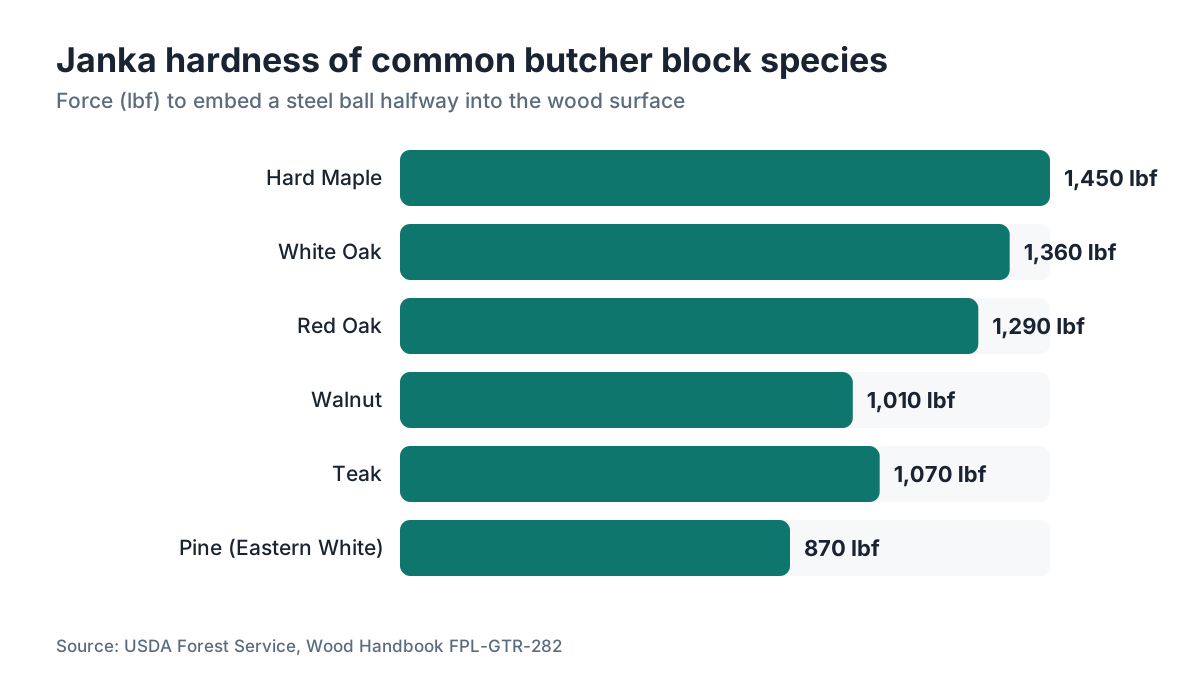
Hardness is the first filter. The Janka test measures the force in pounds needed to embed a steel ball halfway into a wood plank. Higher number, more resistance to dents and scratches [2]. For a counter that sees daily knife work, dropped pots, and wet glasses, aim for a Janka rating above 1,000 lbf.
Maple is the default, and for good reason. Hard maple (Acer saccharum) rates 1,450 lbf on the Janka scale [2], it's everywhere, it has a tight grain that hides stains better than open-grain species, and it's priced fairly. Most commercial butcher blocks in restaurant kitchens are maple. If you want one species and don't want to think about it, get maple.
Walnut (1,010 lbf) is softer than maple but still above the practical line. Its appeal is aesthetic. The dark brown grain looks expensive. It dents a bit more than maple, which some people like because it picks up character fast.
Oak (1,290 lbf for red, 1,360 for white) is hard enough, but its open grain is a real drawback. That visible grain traps food particles and bacteria more readily than maple's tight surface, and it's harder to sand smooth after use. I'd pick maple over oak for a food prep surface every time.
Teak (1,070 lbf) is popular for its water resistance, which comes from natural oils. It's also a lot more expensive. In a bathroom vanity or a wet bar, teak makes sense. In a main kitchen counter, maple with a proper finish is just as waterproof and costs less.
For purely visual countertops where you aren't doing heavy prep, softer species like pine (870 lbf) can work, and the rustic look has fans. Just know they dent easily and will look beat up within a year of real use.
Edge-grain vs. end-grain: which construction should you pick?
This is where marketing language confuses buyers. Here's the plain version.
Edge-grain butcher block is made by gluing boards together on their edges, so the surface shows the long face grain running the length of the board. It's flat, relatively smooth, and less prone to warping than end-grain. Almost all 6-foot stock slabs at home centers are edge-grain. It's a good surface for a kitchen counter.
End-grain shows the cross-section of the wood, the rings and radial pattern you see when you cut a log. This is the classic checkerboard or brick pattern. End-grain is kinder to knife edges (the blade slips between the fibers instead of cutting across them), but it drinks liquid more aggressively and is harder to keep sealed. It's also heavier and a lot more expensive. The 4-inch end-grain blocks are statement pieces. Beautiful and functional, but not necessary for most kitchens, and they'll challenge your cabinet structure if you've got standard 3/4" boxes.
Face-grain (boards laid flat) is the third option and generally the worst for countertops. It cups and warps with moisture changes. Skip it for a kitchen.
For a standard 6-foot run, edge-grain in maple or walnut is the right answer for 90% of people.
What finish should you put on a 6-foot butcher block countertop?
Your finish decides how much maintenance you sign up for and how the surface handles water. Three realistic options: oil, oil-wax blend, and a film finish like polyurethane or hardwax oil.
Food-grade mineral oil is the classic choice and it's cheap. Apply it liberally, let it soak in, wipe off the excess, repeat every few weeks at first, then taper to monthly or quarterly once the wood is saturated. Pure mineral oil won't go rancid (vegetable oils will) and it's food-safe under FDA 21 CFR 178.3620 [3]. The downside: an oiled surface is not waterproof. Sitting water penetrates. You have to wipe spills fast. If the slab has a sink cutout, an oiled finish means diligent resealing around that edge.
Oil-wax blends (Howard Butcher Block Conditioner, or homemade beeswax-and-mineral-oil mixes) bead water better than straight oil and are also food-safe. Application is about the same. This is what most experienced woodworkers actually use on working surfaces.
Film finishes (Rubio Monocoat, Osmo Polyx, or standard polyurethane) build a barrier on top instead of soaking in. They resist water better out of the box, need less frequent reapplication, and clean up easier. The trade-off: when the film eventually scratches or wears through, you sand back to bare wood and refinish that spot. With an oil finish, you just wipe on more oil.
For a counter next to a sink, a film finish or hardwax oil earns its extra cost. For a dry prep area away from water, pure mineral oil or an oil-wax blend is plenty and gives you the most natural look [12].
Do not use raw linseed oil, hardware-store "pure" tung oil (often blended with driers that are not food-safe), or deck sealers on any surface where food touches the wood [3].
Can you install a 6-foot butcher block countertop yourself?
Yes, in most cases. This is one of the friendliest countertop materials for DIY because it needs no wet-grinding, no diamond tooling, no specialized adhesives. A circular saw with a good blade, a belt sander, and two people to lift it covers the basics.
Here's the process most competent DIYers follow:
- Measure your cabinet run carefully. A 6-foot slab leaves zero room for error on a 6-foot cabinet span if you need scribe cuts against a wall.
- Cut to length before finishing if you're starting unfinished. Seal every cut edge immediately with mineral oil or your chosen finish.
- Sand the surface up through the grits: 80, then 120, then 180. Wipe with a damp cloth between grits to raise the grain, let it dry, then sand again at the next grit.
- Apply finish before or after installation, your call. Many installers finish in place because handling a heavy slab that's already sitting on the cabinets is easier.
- Secure with figure-8 fasteners or small L-brackets that let the wood move. Do not run a rigid bead of construction adhesive across the full width. Wood moves with humidity, and a rigid bond causes cracking [6].
- Caulk the backsplash joint with a paintable silicone or a color-matched caulk. No grout.
The step that trips DIYers up consistently is the sink cutout. A jigsaw works, but you need a sharp blade, a good template or router guide, and you have to seal that exposed end grain before any water touches it. If that step makes you nervous, paying a carpenter or countertop installer for two hours of labor is money well spent [see countertop installation].
Weight note: a 1.5-inch maple slab at 72"×25" weighs roughly 55 to 65 lbs. Two people handle that fine. The 4-inch end-grain blocks at similar dimensions can hit 150 lbs. Plan your lifting crew accordingly.
How do you maintain and clean a butcher block countertop?
Day-to-day cleaning is simple. Wipe with a damp cloth or sponge and a mild dish soap. Rinse, then dry. Don't let standing water sit, especially near a sink or seam.
For cutting-board-style cleaning after heavy use, a diluted white vinegar spray (1 part vinegar to 4 parts water) works as a mild disinfectant and is safe for wood finishes. USDA Food Safety and Inspection Service guidance on cutting boards backs diluted vinegar as an effective mild disinfectant for food-contact surfaces at this kind of concentration [4].
Scrubbing with coarse salt and half a lemon is the old trick for odors and surface stains. The salt abrades, the citric acid lifts stains. Rinse and dry well afterward.
For deeper maintenance, sand lightly with 180 or 220 grit, wipe clean, and reapply your finish. You can do this as often as you need, and that's the single biggest edge butcher block has over stone. A scratched granite slab means a call to a fabricator. A scratched butcher block counter you sand and re-oil in an afternoon.
Avoid soaking the surface, the dishwasher (obviously), and wet dishrags left overnight. Those three habits cause warping and cracking faster than anything else.
For how these care rules compare to stone, the principles in how to clean stone countertops make a useful contrast and show what makes wood different.
Where does a 6-foot butcher block countertop fit in a kitchen layout?
Seventy-two inches is a useful length. It fits a standard 6-foot base cabinet run, a two-sink vanity, an island that seats two on stools, or a utility zone in a mudroom or laundry. It won't fill a full L-shaped or U-shaped kitchen without seaming, so if your counter wraps a corner, you're looking at a second piece joined with biscuits and dowels or a purpose-built L-section.
The common uses for a 6-foot slab:
Primary counter on one wall. Works well if the run is actually 72 inches or a hair less, because you can scribe the slab to the wall instead of adding a filler strip.
Island surface. A 72"×36" or 72"×42" island top is popular, but stock slabs are typically only 25" deep. You'll need a custom piece for a full-depth island. Some homeowners join two stock slabs edge-to-edge, though that glue line is a permanent feature.
One-wall prep area next to a different primary material. This is a smart move. Put the butcher block on the prep and baking side, and use granite or quartz near the cooktop and sink where heat and water are worst. Kitchen countertops come in many materials, and mixing two on the same run is completely normal.
Bathroom vanity. A 6-foot butcher block vanity top looks striking and pairs well with trough sinks. Teak is popular here for its natural moisture resistance, though any well-sealed hardwood works fine.
One honest caution. If your kitchen runs hot and humid (you cook daily, no exhaust fan, humid climate), wood moves more than it would in a dry room. Gaps and slight bowing can develop. That's not a catastrophic failure, but it means your backsplash caulk joint needs a look once a year.
How does butcher block compare to other countertop materials at this size?
For a 6-foot section, here's how the realistic options stack up.
| Material | Approx. installed cost (6 ft) | Heat resistance | Water resistance | Repairability |
|---|---|---|---|---|
| Butcher block (maple) | $250 to $600 | Low | Moderate (with care) | Excellent |
| Laminate | $100 to $250 | Low | Good | Poor |
| Granite (slab) | $400 to $900 | Excellent | Excellent | Poor (chips) |
| Quartz | $500 to $1,100 | Moderate | Excellent | Poor |
| Marble | $500 to $1,200 | Good | Poor (etches) | Poor |
| Corian / solid surface | $350 to $800 | Moderate | Good | Good |
Cost ranges draw on National Kitchen and Bath Association survey data and contractor bid databases [1].
Butcher block's strongest argument is repairability. When a granite counter chips near a sink, you're calling a fabricator. When a butcher block counter gets gouged, you're reaching for 120-grit paper. That matters a lot across a 10 to 20 year ownership stretch.
Its weakest point is heat. Set a hot pan straight from the burner on butcher block and you'll scorch it. Trivets and silicone pads, always. This one is not negotiable. Against laminate countertops on pure price, laminate wins on day one, but butcher block can be refinished forever and laminate cannot.
If you want a natural material that's genuinely low-maintenance and waterproof, quartz or granite is the smarter pick. Butcher block rewards people who actually engage with its care. If you'll ignore it, buy something else.
Fabricators quoting several materials at once find that tracking butcher block alongside stone in one workflow is easier with shop management software. SlabWise keeps multi-material quoting in a single job file, which cuts the back-and-forth when a customer mixes wood and stone on one project.
What are common problems with butcher block countertops and how do you fix them?
Warping is the most frequent complaint. It almost always comes from uneven moisture: one side of the slab gets sealed, the other doesn't. The underside, against the cabinet, needs sealing just as well as the top. Skip that and the top absorbs humidity from cooking while the bottom stays dry, and the slab cups upward at the edges. Fix: re-flatten (doable with hand planes and belt sanding if the cup isn't severe), seal both faces evenly, and re-secure with figure-8 fasteners that allow movement [6].
Cracking near the sink is the second most common issue. Water infiltrates end grain, freezes in winter if the kitchen is in an unheated space, or just fails the glue joints over time. Fix: for small cracks, work mineral oil into the crack with a brush, let it soak, then fill with a wood-glue-and-sawdust mixture, clamp, and sand flush. For cracks that run deep or compromise the slab, replacement is sometimes the honest answer.
Dark stains around the sink are almost always mold or mildew in wood fiber that's been wet again and again. The only real fix is sanding back to clean wood and refinishing with better water protection than you had before. A film finish or hardwax oil around the sink zone is worth doing even if you oil the rest of the counter.
Black spots in the grain can also be iron tannate staining, which happens when water carries iron from a metal pot or your water supply and reacts with the tannins in the wood. It's cosmetic. Sand it out.
Loose joints between the boards mean excessive moisture cycling. You can glue and clamp if the gap is small, but the root cause is usually a poorly sealed bottom face or too much humidity. Fix the cause first, or you'll do it again.
Good news: almost none of these need replacement. That's the butcher block promise, and it mostly holds.
Where can you buy a 6-foot butcher block countertop?
Home centers are the first stop for most people. Home Depot, Menards, and Lowe's carry 6-foot (and sometimes 8- and 10-foot) slabs in maple, pine, and sometimes walnut [8][11]. IKEA's KARLBY (in several lengths, with oak or walnut veneer over particleboard) is technically not solid wood butcher block, but it gets shelved next to them. Know what you're buying: solid wood and veneer-over-particleboard behave very differently with moisture, and veneer cannot be sanded and refinished [9].
Online hardwood dealers (Bell Forest Products, Woodworkers Source, and others) sell custom-cut solid wood slabs with better species selection and often better grain than home centers. Lead times run 1 to 2 weeks.
Custom countertop fabricators and local millwork shops build a true custom-sized piece in whatever species you want, with edge profiles and pre-applied finishes. This is the priciest route and the best-quality result. If your kitchen has odd dimensions, awkward angles, or unusual depth needs, a fabricator is the right call.
For fabricators pricing butcher block alongside stone, the workflow differences matter: no water jet, no CNC edge profiling unless you have wood tooling, a different material cost structure. SlabWise's quoting module lets shops add custom material categories and run wood jobs through the same pipeline as stone, so nothing slips at the billing stage.
Thrift stores, architectural salvage yards, and Craigslist sometimes have removed slabs in excellent shape. At the right price, a used slab you refinish yourself is a legitimate option. Check the underside for mold and the glue joints for separation before you hand over cash.
Is a 6-foot butcher block countertop food-safe?
Yes, with the right finish and care. Wood's relationship with food safety is more surprising than people assume. A widely cited study by Ak, Cliver, and Kaspar in the Journal of Food Protection (1994) found that bacteria introduced into wooden cutting surfaces were drawn down into the wood and did not multiply, while bacteria on plastic surfaces survived at the surface [5][10]. That doesn't make wood sterile, but it does mean the common belief that wood is dirtier than plastic isn't well supported.
The FDA lists food-grade mineral oil under 21 CFR 178.3620 as an acceptable coating for surfaces that contact food [3]. That regulation is the basis for recommending mineral oil on butcher block. The rule permits mineral oil "as a component of nonfood articles intended for use in contact with food."
Finishes to avoid on food-prep surfaces: solvent-based stains, and any finish labeled not for food contact. Cured polyurethane is generally considered safe by many woodworkers but is not specifically FDA-cleared for food contact. Hardwax oils like Rubio Monocoat and Osmo Polyx are marketed as food-safe once cured, and their safety data sheets support that, but they're not FDA-cleared the way mineral oil is.
Practical bottom line: oil your butcher block with food-grade mineral oil, keep it clean, and sand out deep cuts before bacteria can settle in them. A well-maintained butcher block counter is a food-safe surface. A neglected, cracked, moldy one is not, exactly like a neglected, cracked plastic cutting board.
Frequently asked questions
What is the standard depth of a 6-foot butcher block countertop?
Stock 6-foot butcher block slabs at home centers are almost always 25 inches deep. That fits a standard 24-inch base cabinet and gives a 1-inch front overhang. For a deeper island top you'll need a custom piece, since 36-inch-deep stock is not commonly available off the shelf.
How heavy is a 6-foot butcher block countertop?
A 1.5-inch maple slab at 72 by 25 inches weighs about 55 to 65 pounds, light enough for two people to carry and set. A 4-inch end-grain block of similar size can hit 140 to 160 pounds and may need cabinet reinforcement. Check your cabinet structure before ordering a thick slab.
Can I cut on a butcher block countertop without damaging it?
Yes, that's the original purpose. Cutting directly on the surface leaves marks over time, and those marks can harbor bacteria if you don't maintain them. The advantage is that you can sand the surface smooth again and refinish. Many owners use a thin board for raw meat and cut vegetables right on the counter.
How often do you need to oil a butcher block countertop?
For the first month, apply food-grade mineral oil every 3 to 5 days (about 5 to 7 coats) until the wood stops drinking it in. After that, monthly for roughly six months, then quarterly or whenever the surface looks dry. A surface that beads water is oiled enough. A surface that absorbs a water drop fast needs oil.
What thickness butcher block countertop should I buy?
1.5 inches is right for most kitchen applications. It's strong enough to span a 6-foot run without sagging, light enough for two people, and compatible with standard undermount and drop-in sinks. The 4-inch end-grain blocks look great but add cost and weight without meaningful functional benefit for most home kitchens.
Can a 6-foot butcher block countertop have an undermount sink?
Yes, but handle the cutout carefully. The exposed end grain inside the cutout must be sealed immediately and thoroughly, ideally with several coats of a film finish, before the sink goes in. Water getting into unsealed end grain near a sink is the number one cause of butcher block failure. Many fabricators apply epoxy or marine-grade sealant right at the cutout.
Does butcher block countertop work in a bathroom?
Yes. A 6-foot butcher block vanity top can look striking. Teak is the popular pick for its natural water resistance, but any well-sealed hardwood works. The difference from a kitchen is that bathroom humidity tends to run higher and more constant, so a film finish (hardwax oil or polyurethane) outperforms a straight oil finish here.
How do I fix a cracked butcher block countertop?
For small cracks, work food-grade mineral oil into the crack to condition the surrounding wood, then fill with wood glue mixed with fine sawdust from the same species. Clamp or weight it flat while it dries, then sand flush and refinish. Cracks near the sink that keep coming back usually mean a moisture problem: the underside or the sink cutout edge isn't properly sealed.
Is IKEA butcher block the same as solid wood butcher block?
No. IKEA's KARLBY and similar countertops use a thin hardwood veneer over a particleboard or MDF core. They're not solid wood and can't be sanded and refinished the way solid block can. They're also more vulnerable to water damage at edges and seams. IKEA's BADELUNDA is a solid pine panel, so it's solid wood but a soft species below the practical Janka threshold for heavy kitchen use.
What edge profile options are available on a 6-foot butcher block countertop?
Stock slabs usually ship with a simple eased or slightly rounded machine edge. Custom fabricators can cut any profile: square, roundover, bevel, ogee, or a thick waterfall edge that shows the full slab thickness. Edge pricing for wood is similar to stone. A simple roundover adds little, a full ogee on a thick slab adds $15 to $40 per linear foot depending on the shop.
Can I put a hot pan on a butcher block countertop?
No. Wood scorches. A pan straight from a 400°F oven or a lit burner set on butcher block will leave a burn mark, and depending on the finish it may create permanent discoloration. Always use a trivet or heat pad. A shallow scorch can be sanded out, but deeper burns may mean removing a lot of material to reach clean wood.
How long does a butcher block countertop last?
A well-maintained butcher block counter can last 20 to 30 years or more in a home kitchen. The oldest surfaces in restaurants and delis have been in service 50-plus years with periodic resurfacing. Lifespan comes down almost entirely to maintenance. An oiled, protected surface in a dry kitchen outlasts a neglected one near an unprotected sink by decades.
Is butcher block countertop cheaper than granite?
Usually yes, at the entry to mid level. A 6-foot maple slab costs $150 to $280 for material, while comparable granite slab runs $200 to $500 just for the stone, before fabrication and installation. Installed, butcher block often runs $100 to $300 less than granite for the same footage, though high-end walnut can approach granite pricing.
Do you need to seal butcher block before installation?
Seal all cut edges and the underside before installation, not after. Once the slab sits on the cabinets, the underside is nearly impossible to reach. An unsealed underside absorbs moisture from the cabinet interior and cups the slab. Apply at least two coats of your chosen finish to the bottom face before setting the countertop in place.
Sources
- National Kitchen and Bath Association (NKBA), Kitchen and Bath Market Index: Installed countertop cost ranges including labor for standard kitchen countertop configurations
- USDA Forest Service, Wood Handbook: Wood as an Engineering Material (General Technical Report FPL-GTR-282): Janka hardness values for hardwood species including maple (1,450 lbf), walnut (1,010 lbf), and red oak (1,290 lbf)
- U.S. Food and Drug Administration, 21 CFR 178.3620 - Mineral oil: Mineral oil is approved by FDA for use as a component of nonfood articles intended for contact with food
- USDA Food Safety and Inspection Service, Cutting Boards and Food Safety: Diluted white vinegar (approximately 1:4 with water) used as a mild disinfectant on food-contact surfaces
- Ak, N.O., Cliver, D.O., and Kaspar, C.W. (1994). Decontamination of plastic and wooden cutting boards for kitchen use. Journal of Food Protection, 57(1), 23-30.: Bacteria introduced into wood cutting surfaces were drawn into the wood and did not multiply, while bacteria on plastic surfaces survived at the surface
- USDA Forest Service, Forest Products Laboratory - Glued Structural Members: Wood movement with humidity changes and structural considerations for glued wood assemblies
- U.S. Consumer Product Safety Commission, CPSC Safety Standards for Kitchen Equipment: General safety standards applicable to kitchen surfaces and materials
- Home Depot, Butcher Block Countertops product listings: Retail price ranges for 6-foot (72-inch) butcher block countertop slabs in multiple species and thicknesses
- IKEA, KARLBY Countertop product specification: IKEA KARLBY uses veneer over particleboard core, not solid wood construction
- University of California, Agriculture and Natural Resources (Cliver cutting board research summary): UC Davis research on bacterial behavior on wood versus plastic cutting surfaces
- Menards, Butcher Block Countertops product listings: Retail price and size availability for 6-foot butcher block slabs at home centers
- U.S. Forest Service, Forest Products Laboratory, Wood Handbook Chapter 19: Finishing of Wood: Properties and performance of oil, wax, and film finishes on hardwood surfaces
Last updated 2026-07-09