TL;DR
- Pure tung oil soaks into butcher block instead of sitting on top of it.
- It's food-safe once fully cured (about 30 days), gives moderate water resistance, and needs a fresh coat every 1-2 years.
- Apply 3-5 thin coats, sanding lightly between each.
- It won't stop every water ring, but it's one of the best-looking natural finishes you can buy.
What is tung oil and how does it work on wood?
Tung oil comes from the seeds of the tung tree (Aleurites fordii), native to China. It's a drying oil, which means it polymerizes when it reacts with oxygen. That reaction hardens the oil inside the wood fibers instead of leaving a film on top. So the finish protects from within. That's very different from polyurethane or epoxy, which build a solid coating on the surface. [7]
The distinction matters a lot for countertops. A surface film can chip, peel, or crack at joints and edges. A penetrating oil can't peel, because it's literally part of the wood. The tradeoff: penetrating oils don't create a hard barrier against water the way a film finish does.
Here's the catch. A huge share of products sold as "tung oil" contain little or no actual tung oil. Real options include 100% pure tung oil (just the oil, nothing else), tung oil finishes (tung oil plus solvents and sometimes other drying oils), and flat-out mislabeled products that are basically mineral spirits with a marketing name. If food safety matters to you, and on a countertop it does, read the label and choose pure tung oil or a product that discloses every ingredient. [1]
Is tung oil food-safe for countertops and cutting surfaces?
Pure tung oil is food-safe once it has fully cured. The FDA's food contact regulations, 21 CFR 175.300 and 21 CFR 175.105, list certain drying oils, including tung oil, among substances allowed in food-contact coatings when properly cured. [2] The operative word is cured, not dry.
The surface may feel dry to the touch in 24-72 hours. But actual polymerization, the chemical process that makes the finish inert, takes much longer. Most manufacturers and woodworking references cite 30 days for full cure at room temperature. During that window, don't use the surface as an active cutting board.
Blended "tung oil finishes" are a different animal. They often carry dryers (metallic salts like cobalt or manganese), solvents, or varnish resins. Those additives may or may not be food-safe, and manufacturers usually don't disclose the full formula. If you can't identify every ingredient, treat the product as non-food-safe and skip it for a countertop that sees raw food prep. Buy 100% pure tung oil from a supplier who clearly states that's what's in the can. [1]
Mineral oil is the other common food-safe pick for wood. It never fully cures and needs more frequent application, but it's cheap and obviously safe. Tung oil is a real step up in protection if you're willing to wait out the cure.
How does tung oil compare to other butcher block finishes?
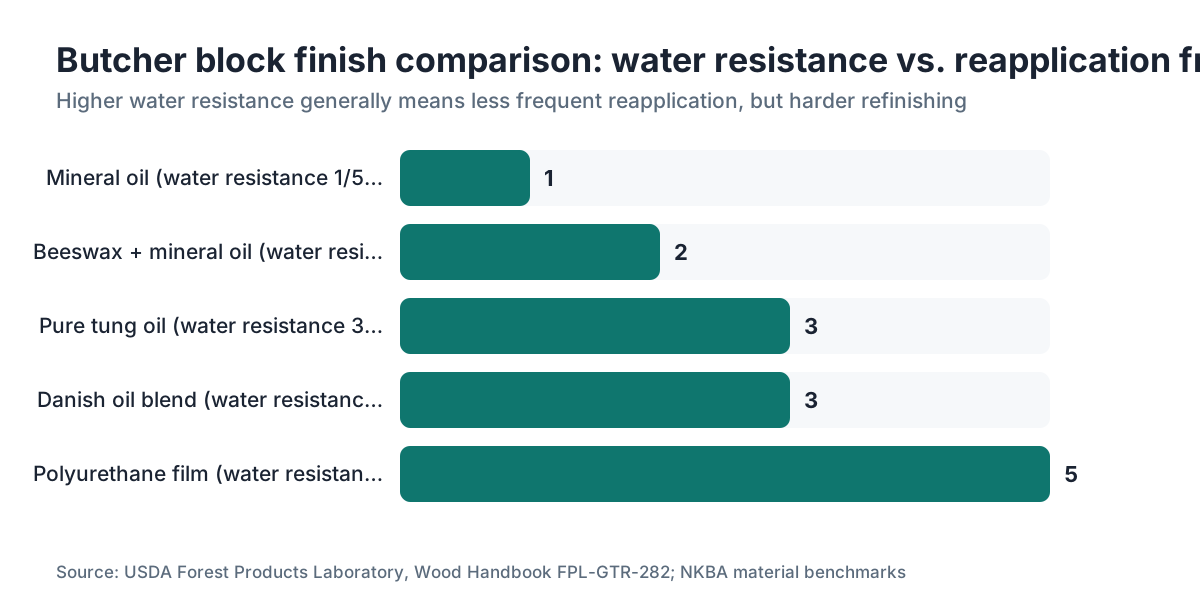
Four finishes cover almost every butcher block countertop out there: mineral oil, tung oil, danish oil, and polyurethane (or a similar film finish). Each sits in a different spot on the tradeoff between protection, maintenance, and food safety.
| Finish | Food-safe | Water resistance | Reapplication frequency | Repairability |
|---|---|---|---|---|
| Mineral oil | Yes | Low | Monthly or more | Very easy |
| Pure tung oil | Yes (cured) | Moderate | Every 1-2 years | Easy |
| Danish oil (blended) | Usually no | Moderate | Every 1-2 years | Easy |
| Polyurethane (film) | Yes (cured) | High | Every 5-10 years | Hard (full sand) |
| Beeswax + mineral oil | Yes | Low-moderate | Every few months | Very easy |
Mineral oil is where most people start, because it's cheap and forgiving. The problem is it never hardens, so it gives almost no structural protection against water at the wood fibers. You're keeping the wood lubricated, and that's about it.
Polyurethane gives the best water resistance on this list. But the film is unforgiving. Once it cracks or chips, moisture creeps under it and you have a worse problem than any oil finish would ever hand you. Refinishing means sanding the whole surface back to bare wood.
Tung oil lands in a genuinely useful middle. Better water resistance than mineral oil, still repairable with more coats instead of a full sand-down, and actually food-safe when you use the real thing. For a countertop that won't take a knife every single day, it's a smart choice. [3]
Danish oil gets recommended in the same breath as tung oil, but most danish oils are blends of solvents and varnish, and the formulas aren't fully disclosed. Plenty of fabricators and woodworkers keep it off food-contact surfaces for exactly that reason.
How do you apply tung oil to butcher block countertops?
The process is simple. It just takes several days, because you need drying time between coats. Here's what actually works.
Start with bare, sanded wood. New butcher block may already be sanded to 150 or 180 grit. An existing countertop with another finish needs that finish stripped completely. Tung oil can't penetrate polyurethane or wax, so any residue defeats the whole point. Sand to 180 or 220 grit for a final pass. Wipe away dust with a tack cloth or damp rag, and let the wood dry fully before you start.
Thin the first coat. Pure tung oil is thick and works better cut 10-25% with citrus solvent (d-limonene) on the first pass. Thinning helps it reach deeper into the grain. Some suppliers sell pre-thinned versions. Later coats can go on straight or lightly thinned. [4]
Apply with a lint-free cloth, working with the grain. Skip the brush, which introduces bubbles. Lay down a thin, even coat across the whole surface, let it sit 20-30 minutes, then wipe off all the excess. This is the step most people botch. Oil that isn't wiped off sits on top, takes forever to cure, and turns tacky or gummy. Wipe off everything that hasn't soaked in.
Let it dry 24-48 hours between coats, depending on temperature and humidity in your shop or home. Do a light scuff with 320-grit sandpaper or a fine scotch-brite pad between coats to knock down raised grain. Wipe off the dust.
Apply 3-5 coats total. The first coat soaks in hard. By coats 3-4 the wood is saturating, and later coats build a faint surface presence. Five coats is a good stopping point for a countertop that gets real use.
After the final coat, wait a full 30 days before food prep. You can use the countertop for other things in the meantime. Just keep heavy moisture off it and don't chop directly on it.
How long does tung oil take to dry and cure?
Dry time and cure time are two different things, and the gap between them matters.
Between-coat dry time runs 24-48 hours at 65-75°F with moderate humidity. Cold, damp conditions slow it way down. Below 50°F, a drying oil cures very slowly or not at all. Applying tung oil in a cold garage or shop in winter? Warm the space and the wood first. [4]
Full cure, meaning the polymerization reaction is finished and the finish is chemically stable, takes roughly 30 days. This is the number that matters for food safety. Through those 30 days the oil is still hardening, and some byproducts of the reaction may not be inert until it wraps up.
The 30-day figure comes from manufacturer guidance and holds steady across tung oil suppliers. Independent testing on this exact threshold is thin, and the honest answer is that cure time shifts with product formula, coat thickness, and environment. Heavy coats you didn't wipe off will drag the cure out. Thin coats cure faster.
You can tell full cure is close when the surface has no tackiness left and shows a consistent, slightly warm sheen. A spot still sticky after a week almost always means you left excess oil on top. Light sanding and a clean, thin recoat fix it.
How often do you need to reapply tung oil on butcher block?
For a kitchen countertop with normal use, plan on a fresh coat of tung oil every 1-2 years. A butcher block taking heavy daily cutting and wet dishes needs attention closer to the 12-month mark. A decorative surface or dry prep area might stretch to 2-3 years.
The signal is dead simple: water no longer beads on the surface. Drop a little water on the countertop. If it domes up and wipes away clean, the finish is still working. If it soaks in fast and darkens the wood, recoat.
Reapplication is much easier than the first job. No sanding back to bare wood. Clean the surface, scuff lightly with 220-grit, wipe away the dust, and lay on 1-2 fresh coats using the same thin-coat-and-wipe method. The old finish bonds to the new oil coming in. [3]
That's a genuine edge over film finishes. A polyurethane countertop that starts to fail means a major refinishing job. A tung-oiled surface just wants a maintenance coat.
What are the downsides of tung oil on butcher block?
Tung oil isn't the right answer for every kitchen. Know the limits before you commit.
It doesn't block water reliably. Tung oil cuts moisture absorption a lot compared to bare wood or mineral oil, but it won't stop a standing puddle from getting in if you leave it long enough. Around a sink, at seams, and near the dishwasher, tung oil alone isn't enough. Some fabricators oil the field of the countertop and use a separate sealant at the sink cutout and seams.
The cure window is a pain. Thirty days before the surface is fully food-safe is a real inconvenience in a working kitchen. Planning around it during a renovation is doable. A maintenance recoat while the kitchen is in daily use is harder.
Products labeled "tung oil" often aren't. This is a real consumer problem. The name has no legal definition, so it lands on almost anything. Buy a varnish blend, treat it as food-safe pure tung oil, and you've got a genuine risk. Buy from suppliers who label 100% pure tung oil and disclose ingredients. [1]
Tung oil also yellows slightly over time. On lighter woods like maple, you'll see a warm amber tone develop. Some people love it. If you want the wood to stay light and bright, a water-based finish or plain mineral oil shifts the color less.
Comparing all your countertop options, including surfaces that skip the finishing question entirely? butcher block countertops vs. granite countertops is worth reading through.
Can you use tung oil on a butcher block that will be used as a cutting board?
You can. It's just not the ideal finish for a heavy cutting surface.
On a daily cutting area, the wear from knives and prep is aggressive. Tung oil won't show scratches the way polyurethane does, because there's no film to scratch. The oil lives in the wood. But knife marks pile up in the wood fibers, and those marks eventually break down the oil's protection right in the cut zone. You'll sand out that area and recoat more often than the rest of the countertop.
Mineral oil and beeswax blends are honestly more practical for a high-use cutting surface, because they reapply so easily. Every week or two, rub in some mineral oil and you're done. No cure time, no waiting.
Got a full countertop where one section is dedicated cutting surface and the rest isn't? You can still tung oil the whole thing. Just accept that the cutting zone needs more frequent attention. Some people tung oil everything, then keep a separate cutting board on top so the countertop itself stays protected.
What happens if you apply too much tung oil or apply it wrong?
Two problems come up most: tacky spots that never seem to cure, and blotchy, uneven absorption.
Tackiness almost always comes from leaving too much oil on top instead of wiping it off. Tung oil dries by oxidation, so it needs oxygen contact. A thick puddle cures from the outside in, and the layers underneath can stay soft for a long time. Got a tacky spot after several days? Wipe on a little mineral spirits to soften and lift the excess, then let the surface dry again. A light sand and a very thin recoat usually settles it.
Blotchy absorption shows up when the wood isn't sanded evenly, or when residue (wax, prior finish, mill glaze) sits on part of the surface. Sand more thoroughly and more evenly. End grain drinks oil much faster than face grain, so watch those sections and give them a thinned first coat.
One safety note. Rags and cloths soaked in tung oil can spontaneously combust as the oil oxidizes. That's a real fire hazard, not a theoretical one. The U.S. Fire Administration warns that oil-soaked rags left in a pile can generate enough heat to ignite on their own. [5] Lay used rags flat and spread out outdoors to dry. Don't bunch them or stack them indoors. Once fully dry, they're fine in regular trash. Some shops keep a metal can with a tight lid just for oily rags. [8]
How does tung oil affect the look of butcher block?
Tung oil gives wood a warm, natural look that most people like. It deepens the grain, brings out the figure, and leaves a low-sheen finish that reads oiled, not plastic-coated. [9]
The color shift is real, especially on maple, the most common wood in butcher block countertops. Raw maple is almost white. After tung oil, it warms to a cream or light amber. After multiple coats over the years, the patina deepens further. Most people count that as part of the appeal, not a flaw.
Against mineral oil, tung oil runs a touch more amber and builds a bit more sheen. Both keep the surface natural rather than glossy. Against polyurethane, tung oil looks dramatically more natural. Polyurethane creates a plastic-like clarity that plenty of homeowners dislike on wood, especially in a kitchen with strong natural light.
Weighing butcher block against other materials entirely? Surfaces like marble countertops or laminate countertops come with their own maintenance profiles and looks worth understanding before you choose.
Where can fabricators and shop owners get accurate butcher block job costs for quotes?
Fabricators pricing butcher block need to cover material cost, labor for finish application, and the honest maintenance story they'll hand the customer. Finishing isn't always a one-time line item. Some shops fold the first-year maintenance visit into the job price.
Shops quoting wood countertops alongside stone save real time by keeping pricing under one system. SlabWise's quoting software handles material variety and job configuration in one place, including notes and specs you attach to each job. That comes in handy when a customer calls back about tung oil maintenance six months later. Request a demo at slabwise.com.
On materials, butcher block runs $30-100 per square foot installed, depending on species, thickness, and edge profile. Finishing labor adds to that. A realistic consumer-facing quote should spell out the material, the finishing cost, and exactly what the homeowner has to do to keep it up. [6]
For a wider look at options and how they're priced and installed, kitchen countertops and countertop installation give useful context for homeowners and shop staff alike.
What's the best tung oil product to buy for butcher block?
Short answer: buy 100% pure tung oil from a supplier who says explicitly that it's pure and discloses nothing else in it. Skip anything labeled "tung oil finish", "danish tung oil", or any variation that hints at a blend, unless you've verified every ingredient is food-safe.
Waterlox is a well-regarded tung oil varnish that many woodworkers use, but it's a blended finish with resins and solvents, not pure tung oil. It works well on non-food-contact wood and gives excellent protection. It just isn't what you reach for when food-contact safety is your main concern on a countertop.
Real Milk Paint Co. and Allback both sell 100% pure tung oil that's clearly labeled. Hope's 100% Pure Tung Oil is another common one. There are others. The test is simple: if the label or SDS (Safety Data Sheet) lists anything beyond tung oil and a citrus solvent for thinning, it isn't pure tung oil.
Pure tung oil runs roughly $30-60 per quart as of mid-2025, depending on brand and where you buy. A quart covers a 4-6 coat application on a typical 25-30 square foot kitchen countertop, though end-grain sections drink far more oil than face grain. [4]
Frequently asked questions
Is tung oil safe to eat off of?
Pure tung oil is food-safe once fully cured, which takes about 30 days. The FDA permits certain cured drying oils including tung oil in food-contact coatings under 21 CFR 175.300. During the cure period, keep the surface off direct food prep. Blended products sold as 'tung oil finish' may contain non-food-safe additives and should never be assumed safe.
How many coats of tung oil does butcher block need?
Most sources and manufacturers recommend 3-5 coats for a countertop. The first coat soaks in deeply, and each later coat builds slightly more protection. Five coats is a practical stopping point for a working kitchen surface. Apply thin coats, wipe off all excess after 20-30 minutes, and sand lightly with 320-grit between coats. Thick coats don't mean better results.
How long does tung oil smell last?
Pure tung oil has a mild nutty odor that fades within a few days as the surface dries. Blended tung oil products with solvents smell stronger and take longer to clear. Ventilate the space well during application and drying. By the 30-day full cure, any odor is typically gone. Cold or humid conditions slow off-gassing.
Can you put tung oil over mineral oil on butcher block?
Technically yes, but it's not ideal. Mineral oil never cures, so it can interfere with tung oil's ability to penetrate and bond to the wood fibers. For best results, let the wood dry thoroughly after the last mineral oil application, several days to a week, and do a light sand before applying tung oil. Some residual mineral oil is unavoidable but generally tolerable.
What's the difference between pure tung oil and danish oil?
Pure tung oil is just the pressed seed oil, nothing added. Danish oil is a marketing term for a blend that usually contains a drying oil (often linseed, not necessarily tung), varnish resins, and solvents. Danish oil builds a slight film on top of penetrating, cures faster, and gives more water resistance. But ingredients aren't fully disclosed, so food safety on a countertop is uncertain. Pure tung oil is the safer pick for food prep.
Does tung oil prevent water damage on butcher block?
Tung oil cuts moisture absorption a lot compared to bare wood or mineral oil, but it isn't waterproof. Prolonged standing water, especially at sink cutouts or seams, can still get in over time. For high-moisture areas, some fabricators add sealant at joints and around sink cutouts while using tung oil across the field. Wipe up spills promptly and don't leave wet sponges sitting on the surface.
Can tung oil be used on an undermount sink cutout in butcher block?
Tung oil should go inside the sink cutout, ideally before installation, including the end grain in the opening. End grain absorbs far more oil than face grain, so give it extra coats. Some installers follow with a marine-grade sealant or silicone at the sink rim joint for added protection. Even with tung oil, the area right around an undermount sink needs more maintenance than the rest of the surface.
How do you maintain a tung oil finish on butcher block over the years?
Watch for water absorption. If drops soak in instead of beading, it's time. Clean the surface, scuff lightly with 220-grit sandpaper, wipe away dust, and apply 1-2 thin coats using the same wipe-on, wipe-off method as the original. No need to strip back to bare wood for routine upkeep. A maintenance coat every 1-2 years is typical for a normal kitchen countertop.
Can you use tung oil on end-grain butcher block?
Yes, and end grain especially benefits, because it absorbs so much more than face grain. The first coat soaks in almost completely within minutes. Give end-grain sections extra coats, and thin the first coat with citrus solvent so it penetrates deeply before it starts polymerizing near the surface. Plan on at least 5-6 coats on end grain versus 3-4 on face grain.
Is linseed oil better than tung oil for butcher block?
Raw linseed oil is food-safe but dries very slowly and yellows more than tung oil. Boiled linseed oil dries faster but contains metallic dryers that aren't food-safe. Pure tung oil dries faster than raw linseed oil, gives slightly better water resistance, and yellows less. For a food-contact countertop, pure tung oil is the better of the two.
What grit sandpaper should you use between tung oil coats?
320-grit sandpaper or a fine scotch-brite pad between coats is enough. The goal is to knock down raised grain or dust nibs, not remove the previous coat. Sand lightly with the grain, wipe away all dust with a tack cloth, and apply the next coat. Going coarser than 220 between coats risks scratching too deep into the previous layer.
How do you get rid of sticky tung oil on butcher block?
Stickiness almost always means too much oil was left on top instead of wiped off. Apply a little mineral spirits or citrus solvent to the sticky area with a clean cloth, let it sit briefly to soften the excess, then wipe it off. Let the area dry thoroughly, do a light sand, and apply a fresh thin coat, wiping off all excess promptly. Keep future coats thin.
Can you use tung oil on walnut or other dark wood butcher block?
Yes. Tung oil works well on walnut, cherry, and other hardwoods used in butcher block. On dark woods, the amber color shift is much less noticeable than on maple. Apply the same way: thin coats, wipe off excess, multiple applications. Walnut is somewhat more porous than hard maple, so absorption rates may differ, but the technique is the same.
Does tung oil protect butcher block from heat?
No. Tung oil gives minimal heat resistance. Setting a hot pan directly on a tung-oiled butcher block can scorch the wood and damage the finish. This is true of all penetrating oil finishes. Use trivets and hot pads. Film finishes like polyurethane don't offer much more heat resistance anyway. Heat protection on any wood countertop is a matter of habits, not finish choice.
Sources
- International Wood Products Association, Wood Finishing Overview: Many products sold as 'tung oil' contain little or no actual tung oil; the name has no legal definition.
- U.S. Food and Drug Administration, 21 CFR 175.300 Resinous and polymeric coatings: FDA regulations 21 CFR 175.300 and 21 CFR 175.105 permit certain cured drying oils including tung oil in food-contact coatings.
- University of Minnesota Extension, Wood Countertop Finishing and Maintenance: Penetrating oil finishes like tung oil require reapplication roughly every 1-2 years and are repairable without full sanding, unlike film finishes.
- Forest Products Laboratory, USDA Forest Service, Wood Handbook: Wood as an Engineering Material (FPL-GTR-282): Drying oils including tung oil polymerize by oxidation and cure more slowly in cold or humid conditions; thinning with solvents improves initial penetration.
- U.S. Fire Administration, FEMA, Spontaneous Combustion Fire Safety: Rags soaked in drying oils including tung oil can spontaneously combust; they must be spread flat outdoors or stored in sealed metal containers.
- National Kitchen and Bath Association, Cost vs. Value and Material Pricing Benchmarks: Butcher block countertops typically cost $30-100 per square foot installed depending on species, thickness, and edge profile.
- USDA Agricultural Research Service, Aleurites fordii (tung tree) crop and oil properties: Tung oil is pressed from the seeds of Aleurites fordii and is a fast-drying drying oil due to its high alpha-eleostearic acid content.
- Occupational Safety and Health Administration, Flammable and Combustible Liquids and Oily Waste: OSHA guidance on flammable materials includes safe disposal of oily rags: lay flat to dry before disposal, do not bunch.
- FPL-GTR-282, USDA Forest Service, Wood Handbook Chapter 16: Finishing of Wood: Oil finishes including tung oil provide a natural appearance, deepening grain and producing a low-sheen surface compared to film finishes.
- U.S. Consumer Product Safety Commission, VOC and coating safety in consumer products: Blended finishes containing metallic driers and solvents may present food-safety concerns on food-contact surfaces until fully disclosed and evaluated.
Last updated 2026-07-09