TL;DR
- An 8 ft butcher block countertop (96 inches long) costs roughly $150 to $650 unfinished or pre-oiled, depending on wood species, edge style, and thickness.
- Ikea and big-box stores sell them in the $200, $350 range; hardwood specialty suppliers charge more.
- Plan for an extra $50, $150 in finishing supplies and $100, $300 for professional installation if you're not DIYing.
What does an 8 ft butcher block countertop actually cost?
An installed 8 ft butcher block countertop costs $350 to $750 all-in for most homeowners. The panel alone runs $150 to $650. The spread is wide because "8 ft butcher block" covers a lot of ground. A basic edge-grain birch or rubberwood panel from a big-box store runs $150 to $250. A thick end-grain walnut slab from a hardwood supplier can hit $600 or more for the same footprint. Most people land in the $250 to $450 range for a decent mid-tier piece.
Ikea's 96-inch Badelunda and Karlby countertops in oak and acacia sell for roughly $250 to $350 depending on species and depth, and they're a real option if you can live with 1.5-inch thickness and don't need custom edging [1]. Home Depot and Menards stock similarly priced edge-grain maple and acacia panels.
Installation adds $100 to $300 for a straightforward kitchen run if you hire someone. Finishing supplies (food-safe oil, mineral oil, beeswax blends, or polyurethane) run $20 to $60 per application. If the slab arrives unfinished, budget for two to three coats before you set a glass on it.
So the math: do the work yourself and you can land near $200. Pick an exotic species or a thick end-grain build and you'll clear $900. Everyone else sits in the middle.
What sizes are actually available, and how does 8 ft compare to 6 ft?
Standard butcher block panels come in 4 ft, 6 ft, 8 ft, 10 ft, and 12 ft lengths. The 8 ft (96-inch) length is the most commonly stocked size at big-box retailers because it covers a typical kitchen run without a seam or a special order.
A 6 ft butcher block countertop (72 inches) works well for shorter walls, islands, or a single-wall galley kitchen. It weighs 30 to 50 lbs less than its 8 ft counterpart, moves through a doorway easier, and costs a bit less. If your run is under 70 inches, buying a 6 ft panel and trimming to fit wastes less material than cutting down an 8 ft panel.
Width is the variable most buyers underestimate. Standard depths are 25 inches (fits a standard 24-inch base cabinet with a 1-inch overhang) or 30 inches for islands. Some suppliers offer 36-inch-wide panels for large islands. Thickness runs from 1 inch (budget), to 1.5 inches (most common), to 2.25 or 4 inches for end-grain or commercial-style slabs.
| Length | Typical Width | Approx. Weight (1.5" maple) | Common Use |
|---|---|---|---|
| 6 ft | 25" | 65 to 80 lbs | Short walls, bars |
| 8 ft | 25" | 90 to 110 lbs | Standard kitchen run |
| 8 ft | 30" | 110 to 130 lbs | Islands |
| 10 ft | 25" | 115 to 140 lbs | Long runs, L-shapes |
| 12 ft | 25" | 140 to 170 lbs | Open-plan kitchens |
Weights are approximate and vary by species and moisture content. Hardwoods like walnut and teak run heavier. Softer species like pine run lighter.
Which wood species should you choose for a kitchen countertop?
Hardness matters more than looks here. Janka hardness ratings tell you how much force (in pounds) it takes to embed a steel ball halfway into the wood. Higher is more dent-resistant, but also more expensive and harder to work with. The USDA Forest Products Laboratory publishes Janka values in its Wood Handbook [2].
Maple is the standard. Hard maple sits at about 1,450 lbf on the Janka scale, it's food-safe, takes mineral oil well, and is usually the cheapest of the hardwoods. Almost every commercial butcher block you've seen in a restaurant kitchen is maple.
Walnut (1,010 lbf) is softer than maple but cuts beautifully and has a color that hides staining well. It's the most popular "upgrade" pick.
Acacia (1,700+ lbf) is harder than maple, shows antimicrobial properties in some studies [3], and usually costs less because it grows fast in managed plantations. The grain is busy, which either looks great or chaotic depending on your kitchen.
Teak (1,000 to 1,155 lbf) has natural oils that make it water-resistant without finishing. It dulls tools faster, costs more, and the sustainability picture depends heavily on source.
Skip pine, poplar, and other softwoods for a kitchen countertop. They dent, gouge, and soak up stains far too easily.
For an 8 ft run, weight matters too. A 96x25x1.5-inch maple slab weighs roughly 95 to 105 lbs. An equivalent teak panel can weigh 15 to 25 lbs more. If you're installing solo, that difference is real.
Edge-grain vs. end-grain vs. face-grain: what's the actual difference?
These three constructions look and perform differently, and the price gap is large.
Edge-grain is the most common in retail panels. The boards are glued on their edges, so you see the long grain running along the surface. It's durable, takes finishes well, and costs the least to build. Most 8 ft big-box panels are edge-grain.
End-grain is the checkerboard look. The boards are cut and glued so the cut ends face up. It's harder on the surface, hides minor knife marks better than edge-grain, and drinks oil deeply. It also costs two to three times more and weighs a lot more. A 96x25x4-inch end-grain maple block can weigh 180 to 200 lbs and run $500 to $900 before finishing.
Face-grain (also called flat-grain) shows the wide face of the board. It looks the most like regular lumber, which some people love. It's the most prone to warping and cupping with moisture changes, so it's the worst choice for sink surrounds or heavy prep surfaces.
For a standard kitchen where you want looks and durability without a big premium, edge-grain in maple or walnut is the sensible pick. End-grain earns its money only in a dedicated butcher or prep area where the self-healing surface actually gets used.
How do you finish an 8 ft butcher block countertop?
Finishing decides how the countertop ages, how easy it is to clean, and whether it can safely touch food. You have two camps: oil/wax finishes and film-forming finishes.
Oil and wax finishes (mineral oil, cutting board oil, Danish oil, tung oil, beeswax blends) sink into the wood and leave no surface film. They're easy to reapply, food-safe once cured, and give butcher block that warm, natural look. The catch: they need reapplication every one to three months depending on use, and they resist water less than film finishes. For a surface around the sink, that's a real maintenance commitment.
Mineral oil is the cheapest and most foolproof option. It's inert and food-safe (the FDA recognizes food-grade white mineral oil for incidental food contact [4]). Apply liberally, let it soak in overnight, wipe off the excess. Repeat three to four times at first, then monthly.
Film-forming finishes (polyurethane, water-based polyurethane, hardening oils) sit on top of the wood and build a protective layer. They resist water better, need less frequent maintenance, and hold up near sinks. But they can peel, bubble, or scratch, and when they fail they look bad. They also stop you from using the surface as a cutting board, since knife marks break the film. Waterlox Original is a popular middle ground: a penetrating tung-oil-based finish that hardens into a light film and reads as food-safe once fully cured.
The USDA Food Safety and Inspection Service notes that wood can harbor bacteria in cuts but that properly maintained and sanitized wood surfaces perform comparably to plastic in studies [5]. The key word is "maintained."
For an 8 ft span, plan on 16 to 20 oz of mineral oil per coat. Figure one quart per initial conditioning cycle.
What's the right way to install an 8 ft butcher block?
Installation is where a lot of DIY projects go sideways. The big three issues are support, movement, and sink cutouts.
Support: butcher block needs continuous support from the base cabinets below. Standard 24-inch-deep base cabinets handle this fine. Overhang beyond 6 to 8 inches without corbels or brackets is asking for cracking over time, especially with end-grain.
Movement: wood expands and contracts with humidity. In most U.S. climates, expect seasonal movement of 1/8 to 1/4 inch across the width of a 25-inch panel [6]. That means you do NOT glue butcher block flat to the cabinet base across its full width. Use clips or figure-8 fasteners that let the wood move, the same way solid hardwood floors are fastened. Gluing it down is the single most common mistake that cracks and splits a top.
Sink cutouts: drop in an undermount or top-mount sink and the wood around the cutout meets water constantly. That area needs extra finish coats (five to six applications of oil-based finish, or a film finish rated for wet areas). Many installers run a bead of silicone caulk on the underside of the rim to stop water from wicking into the cut edge.
Seams: a straight 8 ft run usually needs no seam. An L-shaped kitchen might need a miter or butt joint. Butt joints on butcher block show. Miters look cleaner but demand precise cutting. Either way, use waterproof wood glue and make sure both faces are flat before joining.
For more on the mechanics across different materials, countertop installation covers what to expect from a pro job versus a DIY one.
One practical note: an 8 ft panel comes in at 90 to 110 lbs for a standard 1.5-inch maple piece. You need two people to move it safely. Solo installation is possible but not smart.
How does butcher block compare to other countertop materials at this size?
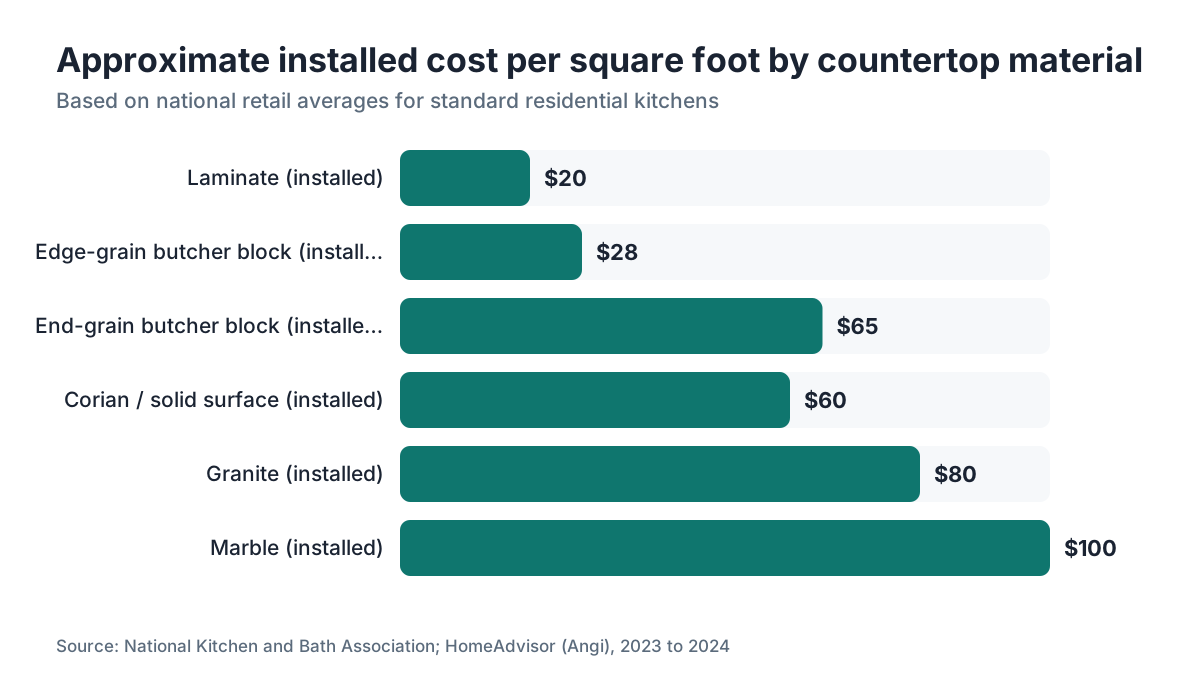
Cost per square foot is the cleanest comparison. Treat the slab as 8 ft x 2.08 ft, which is 16.67 sq ft of material.
| Material | Typical Installed Cost/sq ft | DIY Friendly? | Notes |
|---|---|---|---|
| Edge-grain maple butcher block | $15, $40 | Yes | Needs regular finishing |
| End-grain walnut butcher block | $45, $90 | Harder | Very heavy, premium look |
| Laminate countertops | $10, $30 | Yes | No heat resistance |
| Formica countertops | $12, $30 | Moderate | Post-form edges, limited sizes |
| Granite countertops | $50, $120 | No | Heavy, needs professional install |
| Marble countertops | $60, $150 | No | Etches with acids |
| Corian countertops | $40, $80 | No | Seams hide well |
Prices are installed retail estimates and vary a lot by region and grade [7]. Butcher block wins on DIY access and warmth. It loses on heat resistance (hot pots scorch it) and water resistance near sinks.
Comparing materials across a full remodel? Kitchen countertops has a broader breakdown of what each one costs over a whole project.
One honest opinion. If you're handy and money is the driver, an 8 ft edge-grain maple panel from a big-box store, finished with three coats of Waterlox and installed correctly, is one of the best value countertops you can buy. It'll outlast laminate, look better than Formica, and cost a fraction of stone.
How do you maintain and repair an 8 ft butcher block countertop?
Butcher block is the most repairable countertop material sold. That's not marketing copy. It's just how wood works.
For oil-finished surfaces, re-oiling every one to three months is the core task. Signs it's time: the wood looks dry or gray, and water stops beading and soaks straight in. Apply a generous coat of food-grade mineral oil, let it sit four to six hours or overnight, wipe off the excess. Done.
Scratches and knife marks on oil-finished butcher block sand out. Light scratches: 120-grit sandpaper, then 180-grit, then re-oil the spot. Deeper gouges: start at 80-grit. A full 8 ft surface refinishes in an afternoon with a random-orbit sander and a few sheets of paper. No other countertop material does that.
Water stains (white rings or dark spots) on oil-finished wood usually sand out. If the stain is dark and went deep, it may be mold. Sand past it, bleach lightly with a dilute oxalic acid solution if needed, let it dry fully, and re-oil.
Film-finished surfaces are more limited. Peeling or scratched polyurethane is hard to touch up invisibly because the new layer leaves a hard edge. A full strip-and-refinish is often the only fix when a film finish fails. Strip with a card scraper or 80-grit paper, clean the surface, then re-coat with polyurethane or switch to an oil finish.
Heat damage is the one thing that's genuinely hard to fix. A burned ring from a hot pan sands out if it's shallow, but deep char needs more material than most panels have to spare. Use trivets. Always.
Where is the best place to buy an 8 ft butcher block countertop?
You have four channels: big-box retailers, Ikea, hardwood specialty suppliers, and custom fabricators.
Home Depot and Menards stock edge-grain maple and acacia panels in the $200 to $350 range for standard 8 ft x 25-inch pieces [10]. Quality is consistent if unremarkable. Handy when you need something fast and can haul it in a truck. Defect rates are low, but inspect for cupping before you leave the store.
Ikea sells the Badelunda (acacia), Karlby (oak and walnut), and other options depending on current stock, generally in the $249 to $349 band [1]. These are real wood, not veneer over particleboard in every case, but confirm the specific product. The oak Karlby is solid wood. Good value, and they fit Ikea kitchen systems cleanly.
Hardwood specialty suppliers (Woodcraft, Bell Forest Products, local hardwood dealers) offer more species, thicker slabs, and better-grade lumber. Expect $350 to $600 for an 8 ft run in walnut or hard maple with quality joinery [9]. If you want end-grain, this is where you buy it.
Custom fabricators build to your exact dimensions, species, and edge profile. Lead times run two to six weeks. Price is higher (often $600 to $1,200 for an 8 ft custom piece installed), but you get exactly what you spec. Fabricators who quote butcher block alongside stone can use software like SlabWise to estimate material and labor together, which beats eyeballing it.
Online retailers like Amazon and Wayfair carry panels too. Be careful: return shipping on a 100-lb panel is a nightmare if it arrives damaged. Buy locally if you can.
Are butcher block countertops food-safe?
Yes, with proper finishing and maintenance. The longer answer has some nuance.
The FDA recognizes food-grade white mineral oil as safe for incidental contact with food [4]. Properly cured tung oil and hardening oil finishes are generally accepted as food-safe, though the FDA keeps no specific "countertop finish" approval list. Waterlox and similar products market themselves as food-safe after full cure (typically 30 days). Polyurethane, once fully cured, reads as inert.
The bacteria question comes up constantly. A 2013 study in the journal Food Control found that end-grain hardwood surfaces showed antimicrobial properties against several foodborne pathogens when properly maintained [3]. The USDA FSIS notes that both wood and plastic cutting surfaces can harbor bacteria in cuts, and that neither is clearly superior when both are cleaned well [5].
The practical reality: butcher block used for cutting will pick up knife marks over time, and bacteria can shelter in those cuts. Sanitize regularly with dilute white vinegar or a food-safe sanitizer. Don't leave raw meat juices sitting on the surface. Re-oil on schedule to keep the wood from drying and cracking, which creates more harborage.
A dedicated butcher block prep zone, separate from your main countertop, is arguably the smartest setup: oil-finished wood for prep and cutting, and a more water-resistant surface (stone, laminate, or solid surface) around the sink.
What should fabricators know about quoting 8 ft butcher block projects?
Butcher block is a different quoting exercise than stone. With granite or quartz, the main variables are slab cost, cutouts, and edge profiles. With butcher block, you're also quoting finishing labor, hardware (clips, fasteners), and sometimes custom-length ripping when the cabinet run doesn't hit exactly 96 inches.
Material waste is lower than stone because butcher block comes in a predictable rectangle and cuts to length with a circular saw on site. But finishing time adds up fast on an 8 ft run: three coats of oil, 20 minutes per coat plus dry time, is a real line item.
Sink cutouts in butcher block take longer than stone because you seal all four cut edges before installation. Budget extra time for that step. A router with a flush-trim bit beats a jigsaw for clean inside corners.
For shops that handle both stone and wood jobs, software that tracks material types, linear footage, and finishing steps separately earns its keep. Shops using SlabWise for quoting can add butcher block line items alongside stone cuts in one estimate, which helps avoid the common mistake of underquoting mixed-material kitchens.
One thing fabricators consistently undercharge: the second and third oil applications after installation. Finish on site and that's a revisit. Finish in the shop and you need staging space and dry time built into the schedule.
Are butcher block countertops food-safe?
Yes, with proper finishing and maintenance. The longer answer has some nuance worth knowing before you cook on one.
The FDA recognizes food-grade white mineral oil as safe for incidental contact with food [4]. Properly cured tung oil and hardening oil finishes are generally accepted as food-safe, though the FDA keeps no specific "countertop finish" approval list. Waterlox and similar products market themselves as food-safe after full cure (typically 30 days). Polyurethane, once fully cured, reads as inert.
The bacteria question comes up constantly. A 2013 study in the journal Food Control reported antimicrobial properties in end-grain hardwood surfaces against several foodborne pathogens when properly maintained [3]. The USDA FSIS notes that both wood and plastic cutting surfaces can harbor bacteria in cuts and perform comparably when cleaned well [5].
Sanitize regularly with dilute white vinegar or a food-safe sanitizer, don't let raw meat juices sit, and re-oil on schedule so the wood doesn't dry and crack. A dry, cracked surface hides more bacteria than a well-oiled one.
Frequently asked questions
How heavy is an 8 ft butcher block countertop?
A standard 8 ft x 25-inch x 1.5-inch edge-grain hard maple panel weighs roughly 90 to 110 lbs. End-grain versions at 2.25 inches thick can hit 150 to 180 lbs for the same footprint. Heavier tropical species like teak add 15 to 25 lbs on top of that. You need two people to move an 8 ft panel safely; dropping it on a corner is an expensive mistake.
Can I use an 8 ft butcher block as a kitchen island?
Yes, and it's a popular choice. Island use typically means a 30-inch-deep or wider panel rather than the standard 25-inch. The main considerations are adequate support from the island base, sealing all edges well (islands see use from all sides), and accounting for wood movement on wider panels. A 30-inch-wide panel can move up to 3/8 inch seasonally, so don't fix it rigidly to the base.
Do I need to sand an 8 ft butcher block before finishing?
Most retail panels arrive sanded to 120-grit or finer. A light hand-sand with 180-grit before your first oil coat removes any mill marks, opens the grain slightly for better oil penetration, and gives you a cleaner final surface. Don't skip this step. It takes 20 minutes and makes a real difference in how evenly the first coat soaks in.
Can I cut an 8 ft butcher block panel down to a shorter length?
Yes. A circular saw with a sharp, fine-tooth blade (60-tooth or higher) cuts butcher block cleanly. Clamp a straight edge as a guide. For the cleanest result, score the cut line with a utility knife first to prevent tearout. After cutting, sand the cut end to 180-grit and apply two to three coats of mineral oil or finish to seal the exposed end grain before installation.
How long does it take to finish a butcher block countertop before using it?
With mineral oil, the surface is safe for light use after 24 hours, but a full initial conditioning of three to four coats takes three to four days with overnight dry times between coats. Film finishes like polyurethane want 72 hours between coats and a full 30-day cure before heavy use. Waterlox recommends 30 days for full food-safe cure. Don't rush the first conditioning; it sets the baseline for years of maintenance.
What's the difference between an 8 ft and a 6 ft butcher block countertop?
Length is the obvious difference. A 6 ft (72-inch) panel covers shorter runs, weighs 25 to 40 lbs less, and typically costs $50 to $100 less than an equivalent 8 ft piece. If your countertop run is under 70 inches, a 6 ft panel trimmed to fit wastes less material than cutting down an 8 ft panel. For runs over 70 inches, the 8 ft is the more efficient buy.
Can butcher block countertops be installed next to a sink?
They can, but it takes extra care. The area within 6 inches of the sink sees constant moisture and needs five to six coats of finish versus three for dry areas. A film-forming finish (Waterlox or exterior polyurethane) holds up better than straight mineral oil near the sink. Seal all cut edges around the sink cutout thoroughly. Many fabricators run a bead of silicone on the underside rim to stop water from wicking into the end grain.
Does butcher block work with an undermount sink?
Yes, but it's more involved than with stone. The sink rim channel must be routed precisely, all four inside edges of the cutout need sealing with multiple finish coats before the sink is set, and the sink clips that pull the rim up must be adjusted carefully to avoid over-compressing the wood. Some fabricators add a bead of silicone caulk at the wood-to-sink contact line as an extra water barrier. Done correctly, undermount sinks in butcher block work well.
How much does it cost to have an 8 ft butcher block countertop installed professionally?
For a straightforward straight run with no cutouts, professional installation typically adds $100 to $250 to the material cost. Add a sink cutout and that jumps to $200 to $400 total for labor. Costs vary by region; urban markets run higher. A custom edge profile routed on site adds another $50 to $100. These ranges are general estimates; get at least two quotes from local countertop installers or kitchen contractors.
Is butcher block cheaper than granite at 8 feet?
Usually yes, by a lot. An 8 ft x 25-inch granite slab installed costs $400 to $1,000 or more depending on grade and edge profile, plus the stone needs professional cutting and installation. An 8 ft butcher block panel installed runs $350 to $750 all-in for most homeowners, and a DIYer can cut that to $200 to $400. The cost advantage shrinks at the high end of wood species but rarely disappears.
Can I stain my butcher block countertop a different color?
You can, but you shouldn't if the surface will be used for food prep or cutting. Stains contain solvents and pigments that aren't food-safe. If you want to darken butcher block, choose a naturally dark species like walnut or acacia, or use a dark finishing oil. If the countertop is purely decorative (a bar top, laundry room, or desk surface with no food contact), standard wood stain followed by a sealing coat is fine.
How do I prevent an 8 ft butcher block from warping?
Finish all six sides, including the bottom and the cut ends, as much as the top. Unfinished wood on any face absorbs or releases moisture unevenly, which causes cupping. Use movement-allowing fasteners (figure-8 clips or countertop clips) rather than gluing across the full width. Keep kitchen humidity reasonably stable; swings above 20 percentage points seasonally are hard on any solid wood surface. A humidifier in winter helps in dry climates.
What edge profile options work best for butcher block?
Eased edge (slightly rounded corners) is the most common and practical. It reduces chipping at the corner and is easy to rout. A full bullnose is classic and forgiving on hips and forearms. Bevel and chamfer edges look modern but leave a sharper corner. Ogee and other decorative profiles are possible but tend to look fussy on natural wood. For a DIY build, an eased edge done with a 1/8-inch roundover bit is the right call: clean, simple, hard to mess up.
How often do I need to re-oil an 8 ft butcher block countertop?
Every one to three months for an oil finish, more often in dry climates or heavy-use kitchens. The test is simple: drip water on the surface. If it beads, you're fine. If it soaks in and darkens the wood, it's time to re-oil. Plan on 16 to 20 oz of food-grade mineral oil per coat across an 8 ft span, applied liberally and wiped down after a few hours.
Sources
- Ikea USA, Kitchen Countertops product page: Ikea's 96-inch butcher block countertop options including Karlby and Badelunda in oak and acacia, priced in the $249 to $349 range
- USDA Forest Products Laboratory, Wood Handbook (Chapter 5: Mechanical Properties of Wood): Janka hardness ratings for wood species including hard maple at approximately 1,450 lbf and walnut at approximately 1,010 lbf
- Food Control journal (Elsevier), study on antimicrobial properties of hardwood surfaces (2013): End-grain hardwood surfaces showed antimicrobial properties against several foodborne pathogens when properly maintained
- U.S. Food and Drug Administration, CFR Title 21, Section 172.878 (White Mineral Oil): FDA recognizes food-grade white mineral oil for incidental food contact applications
- USDA Food Safety and Inspection Service, cutting boards and food safety guidance: Wood and plastic cutting surfaces can both harbor bacteria in cuts and perform comparably when properly cleaned and maintained
- USDA Forest Products Laboratory, Wood Handbook (Chapter 4: Moisture Relations and Physical Properties): Solid wood panels expand and contract seasonally with humidity changes; movement across a 25-inch-wide panel can reach 1/8 to 1/4 inch in typical interior conditions
- National Kitchen and Bath Association, kitchen remodeling cost benchmarks: Countertop material costs and installation ranges cited for kitchen remodeling benchmarks across product categories
- HomeAdvisor (Angi), butcher block countertop cost guide: Professional installation of butcher block countertops typically adds $100 to $300 to material costs for a standard run
- Woodcraft Supply, hardwood countertop and butcher block product listings: Hardwood specialty suppliers price 8 ft walnut and maple butcher block panels in the $350 to $600 range for quality-grade material
- Home Depot, butcher block countertop product category: Big-box retailers stock 8 ft edge-grain maple and acacia butcher block panels in the $200 to $350 price range
Last updated 2026-07-09