TL;DR
- Hard maple is the best wood for most butcher block countertops.
- It scores 1,450 lbf on the Janka hardness scale, has a tight grain that stays sanitary, and costs less than walnut or teak.
- Walnut is the premium pick for looks.
- Teak is the one to buy for wet zones.
- Softwoods like pine gouge too easily for daily kitchen work.
What makes a wood good or bad for butcher block countertops?
Three things decide it: hardness, grain tightness, and how the wood handles water. Color, price, and availability all follow from those three.
Hardness gets measured by the Janka test, which records the force in pounds needed to embed a steel ball halfway into a plank. The Forest Products Laboratory at the USDA publishes Janka values for hundreds of North American species [1]. A wood below about 900 lbf dents and gouges under normal kitchen use. A wood above 2,000 lbf can chew up knife edges and fights you during machining.
Grain tightness matters for a plain reason. Open-grain woods like red oak trap food and bacteria in their pores even after sanding. Closed-grain species like maple and cherry wipe clean and stay sanitary. USDA Forest Products Laboratory research on wood anatomy notes that tight-grained hardwoods are the traditional cutting-surface choice precisely because porous woods hold food particles [8].
Moisture resistance is what keeps your countertop flat. A kitchen counter gets wet every single day. Woods with high natural oil content, teak being the obvious one, resist cupping and warping far better than porous domestic hardwoods. Any wood countertop still needs a real finish or regular oil. No species survives sitting in a puddle.
Construction style ties back into the species choice too. End-grain butcher block (the chopping-block look with tree rings facing up) reads every wood's character differently than edge-grain or face-grain. End-grain is gentler on knives and closes around minor cuts, but it drinks up more moisture and costs more to build. Edge-grain is the workhorse for most home kitchens.
How hard does the wood need to be? Understanding the Janka scale
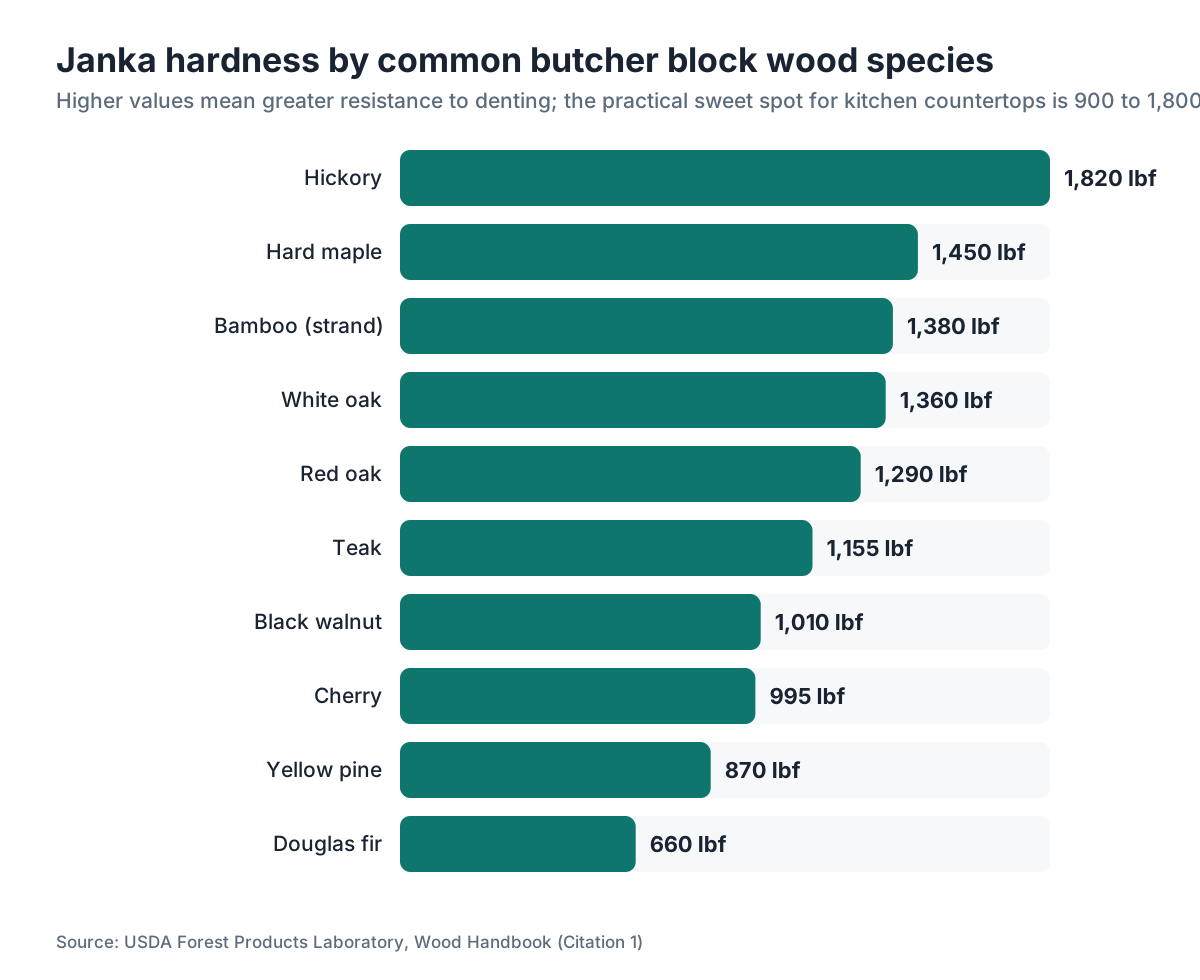
For a primary prep surface, stay at 900 lbf or above on the Janka scale. Below that, the wood dents under daily use. Above about 2,000 lbf, you start fighting your knives and your tooling. Hard maple at 1,450 lbf sits in the sweet spot.
The Janka test was developed by Austrian-born wood researcher Gabriel Janka in the early 1900s and is still the standard hardness reference in the United States [1]. The values below give the force in pounds needed to embed a 0.444-inch steel ball to half its diameter.
| Wood species | Janka hardness (lbf) | Grain type | Relative cost |
|---|---|---|---|
| Hard maple | 1,450 | Closed | $ |
| White oak | 1,360 | Semi-open | $$ |
| Cherry | 995 | Closed | $$ |
| Black walnut | 1,010 | Semi-open | $$$ |
| Teak | 1,155 | Closed/oily | $$$$ |
| Red oak | 1,290 | Open | $ |
| Hickory | 1,820 | Closed | $$ |
| Bamboo (strand) | ~1,380 | N/A | $ |
| Douglas fir | 660 | Open | $ |
| Pine (yellow) | 870 | Open | $ |
Hard maple is hard enough to shrug off serious denting and soft enough that it does not destroy knife edges over months of use. Hickory is harder but checks more (surface cracks), and it is tough to find in wide, consistent slabs. Red oak has fine hardness numbers, but its open pores are a sanitation problem you cannot sand away.
Softwoods like pine and fir show up in farmhouse kitchens and they photograph beautifully. They are not honest working surfaces. You will have deep knife marks within a month of regular cooking. If you want that rustic pine top, put it somewhere it only sees light duty.
Which wood is best overall for a butcher block countertop?
Hard maple. Full stop, for most kitchens.
No other species matches its combination at the price. The hardness is right at 1,450 lbf. The grain is tight and easy to clean. It takes oil finishes and polyurethane equally well. It machines cleanly, so fabricators produce consistent, flat slabs without odd waste. And it is widely available across the United States, sourced domestically from managed northern forests [2].
The one real knock on maple is color. It runs pale cream to light tan, and it can yellow slightly with age and certain oil finishes. If that bothers you, walnut or cherry are the next calls, for different reasons.
Black walnut is the wood people pick when they want the countertop to be the story. The chocolate brown with purple undertones is genuinely striking, and it photographs like the kitchen it belongs in. It costs roughly two to three times what maple costs in slab form. Its Janka number (1,010 lbf) sits below maple, so it shows wear faster under hard use, but it is still solidly in the acceptable range.
Cherry splits the difference. It starts pink-red and deepens to a warm auburn over years of light exposure, a patina many people love. Hardness (995 lbf) is close to walnut. Price lands between maple and walnut in most markets.
For fabricators pricing jobs: maple slab stock runs $8 to $14 per board foot in most US markets as of mid-2025, walnut runs $15 to $28, and teak can reach $35 to $50. Those are rough wholesale ranges that move with region and supplier. Pull a current quote before you commit a number to a customer.
Is teak worth the price for a butcher block countertop?
Teak is the right answer for one specific job: a countertop that stays wet, where you will pay for the performance. Everywhere else it is overkill.
Teak's silica and natural oil content give it moisture resistance that domestic hardwoods cannot touch without heavy finishing. Boat builders use it for a reason. In a kitchen with a farmhouse sink where water splashes all day, or next to a dishwasher that steams every cycle, teak holds its shape far better than a maple top that has not been finished and maintained with care.
The downsides are real. Teak is expensive. Figure $35 to $50 per board foot for quality slab stock, though prices ride import costs. Most teak in the US market comes from plantation-grown sources in Southeast Asia and South America, so verify FSC certification from your supplier if sustainability matters to you [3]. The silica that helps in the kitchen is hard on tooling, which is why fabricators sometimes add a surcharge to work it.
For a dry island or a baking station, skip it. For a wet zone, teak is the best-performing wood you can buy.
What about white oak for butcher block?
White oak is a legitimate choice, and it has taken over kitchen design over the last decade. Janka hardness at 1,360 lbf is solid. The ray fleck figure in quartersawn white oak is distinctive in a way maple never is. The catch is grain openness.
White oak is semi-open grained. Not the sanitation headache red oak is, but still more porous than maple or cherry. For an end-grain or edge-grain top used as a cutting surface, finish it well and re-oil on schedule so food does not settle into those pores.
White oak also takes wire-brushing and light fuming (ammonia treatment that deepens the gray tones) beautifully, which suits certain design directions. If you have wood cabinets with butcher block countertops in mind and the cabinets are white oak or a similar warm gray-brown, matching the countertop species reads as a genuinely cohesive room rather than a coincidence.
Can you use bamboo as a butcher block countertop?
Technically yes, and bamboo countertops sell widely. Bamboo is not wood (it is a grass), but strand-woven bamboo products reach Janka equivalents around 1,380 lbf, right in maple territory. The problem is consistency, not hardness.
Bamboo countertops are manufactured composites: many strips glued under heat and pressure. Quality swings more than it does with solid hardwood. Cheaper products can use formaldehyde-based adhesives, so look for CARB Phase 2 compliant products if that concerns you [4]. The CARB rule, enforced by the California Air Resources Board, limits formaldehyde emissions from composite wood products and is the bar most reputable manufacturers clear [4]. The EPA treats formaldehyde from composite wood adhesives as a regulated indoor air quality concern, which is the same reason the adhesive matters here [9].
Bamboo also does not act like wood when it gets wet over and over. It can delaminate over time in high-moisture spots. For a dry prep area, it is a reasonable budget choice. I would not put bamboo in a wet zone without hard evidence from the manufacturer about their adhesive and finish system.
What wood should you avoid for butcher block countertops?
Skip anything under 900 lbf Janka for a primary prep surface. That rules out pine, most firs, poplar, and basswood. They look great in photos and feel pleasant underhand, but they turn into a scarred mess within months of real cooking.
Red oak deserves its own callout because it looks fine on paper (1,290 lbf) and fails in practice. Its open, porous grain makes it genuinely hard to keep clean as a cutting surface. NSF/ANSI 2, the food equipment standard, does not list wood species by name, but the food-safety principle behind it is clear: surfaces should be non-absorbent, smooth, and easy to clean [5]. Open-grain woods work against all three.
Exotic hardwoods like purpleheart or padauk get proposed for their color. They can be hard enough, but some exotic species carry compounds that trigger allergic reactions in sensitive people, and responsible sourcing is much harder to verify than with domestic species. USDA Forest Service tracks timber import data, but consumer-level chain of custody on exotics is thin [6].
Reclaimed wood is a special case. People love the idea, and reclaimed barn wood has real worn character. The problem is contamination: it may carry lead paint, pesticides, or worse, depending on its history, and you cannot verify that by looking. If you want reclaimed wood, put it somewhere other than the primary food prep surface, or have it tested first.
Edge grain vs. end grain vs. face grain: which construction should you pick?
For most homeowners, edge-grain maple or walnut is the call. It is stable, flat, and priced sensibly. Construction affects the species decision, so it belongs right here alongside the wood choice.
Edge-grain butcher block shows the long edge of the board, arranged side by side. It is the most common residential countertop construction and the easiest to fabricate. Every species recommendation above applies directly to edge-grain.
End-grain shows the cross-section of the wood, the pattern you see looking at the end of a log. Classic professional butcher shops use it. End-grain is genuinely gentler on knife edges because the fibers separate and close around the blade instead of getting sliced across, and it closes over light surface marks. But it costs 30 to 50 percent more to build (more waste, more labor), it weighs more, and it drinks oil and moisture aggressively. End-grain needs steady oiling to stay sealed, especially the first year.
Face-grain shows the wide flat face of the board. It looks the most like furniture and shows the most figure in walnut and cherry. It is also the least stable option for a countertop, because wide face-grain panels move a lot with humidity and cup and check more readily. Most fabricators steer clients away from face-grain for primary kitchen tops.
If you want a dedicated cutting spot at the end of an island, drop in an end-grain section right there. That is a common and smart hybrid.
How much does a butcher block countertop cost by wood species?
Installed butcher block runs roughly $35 to $175 per square foot depending on species, from budget bamboo to premium teak. Prices vary by region, supplier, and thickness. The ranges below cover a standard 25-inch-deep edge-grain countertop as of 2025, for a typical 30 to 40 square foot kitchen run, with basic fabrication and installation but no backsplash or plumbing work.
| Wood species | Material cost per sq ft | Installed range per sq ft |
|---|---|---|
| Hard maple | $25 to $45 | $40 to $75 |
| White oak | $30 to $55 | $50 to $90 |
| Cherry | $35 to $60 | $55 to $95 |
| Black walnut | $55 to $90 | $80 to $140 |
| Teak | $75 to $120 | $110 to $175 |
| Bamboo (strand) | $20 to $35 | $35 to $65 |
End-grain construction typically adds 30 to 50 percent to the material cost over edge-grain in the same species.
For comparison, granite countertops typically run $50 to $100 installed per square foot, so mid-range butcher block competes with stone once you weigh in the warmth and workability of wood. A full kitchen countertops project gets complicated fast once you add edge profiles, sink cutouts, and backsplash work.
Fabricators running quoting software like SlabWise can build butcher block line items with species, construction type, and finish as separate variables. That beats a spreadsheet for material-sensitive jobs where a customer wants three species priced side by side.
What finish should you put on a butcher block countertop?
It depends on how you plan to use the top, and the honest answer splits into two camps: oil if you cut on it, film finish if you do not.
Food-safe oil (mineral oil, or blends like pure tung oil and citrus solvent) is the traditional maintenance finish. It soaks into the wood, feeds it, and keeps it from drying and cracking. It does not build a hard surface barrier. A raw oiled butcher block will show water rings, red wine and beet stains, and general patina over time. Some people love that. Others hate it.
Polyurethane and other film finishes build a hard, water-resistant surface that cleans easily and shrugs off stains. The tradeoff: a poly-finished countertop should never be a cutting surface, because you cut through the finish and open pockets that are impossible to re-seal without stripping and refinishing the whole top. It is also harder to repair when it does get gouged.
Hardwax oils (Rubio Monocoat, Osmo) sit in the middle. They penetrate like oil but leave a light film with more protection than pure mineral oil. They cost more and spot-repair more easily than polyurethane.
One rule worth knowing from FDA food-contact guidance: mineral oil used as a wood conditioner should be United States Pharmacopeia (USP) grade or food-grade, not hardware-store petroleum distillates [7]. Most products labeled for butcher block comply, but read the label.
Stone finishing is a different animal. The maintenance thinking in articles like how to clean stone countertops does not transfer directly to wood, but it gives useful context on how surface porosity drives a cleaning routine.
What backsplash works best with butcher block countertops?
The best backsplash for butcher block is usually the simplest one. White subway tile, a slab of honed marble, or a plain painted wall gives the wood grain a clean, cool break so it reads as intentional. The question is more about contrast and material honesty than any strict rule.
The combinations that keep working follow two logics. The first is contrast: a cool, hard material behind a warm wood countertop. White subway tile, marble tile, or a painted wall makes the wood the hero. In practice, 3x6 white ceramic or honed marble is hard to beat.
The second is layering warm materials on purpose. Wood countertop, terracotta or zellige backsplash, linen curtains. This is harder to pull off, and when it lands it is genuinely beautiful. The risk is that too many warm organic textures at once reads as clutter.
What looks awkward: busy patterned tile behind a heavily figured walnut top. Both elements fight. Let one win.
On the practical side, the backsplash takes splashing water and cooking grease, so it needs to be nonporous or sealed. Glazed ceramic and porcelain are easy. Natural stone tile behind butcher block needs sealing, same as you would seal a marble countertops surface.
For backsplash ideas that photograph well: beaded board in a warm white, unlacquered brass fittings, a simple ceramic tile. That combination shows up over and over in design work. It is not original. It is honest, and it works.
How do you maintain a wood butcher block countertop long-term?
Oil it on a schedule and keep standing water off it. Those two habits carry most of the maintenance load. For a raw or oil-finished countertop, apply food-grade mineral oil once a month for the first year, then every three to six months after, or whenever the wood looks dry. Let it soak several hours, then wipe off the excess.
Standing water is the enemy. Wipe up spills fast. Do not leave a wet dish towel sitting on the surface. Keep plants and anything that traps moisture off the counter.
Sanding is your repair option and a genuine advantage over stone. A gouged or stained butcher block sands back with 80-grit to 120-grit paper and re-finishes clean. You cannot sand a scratch out of granite. Most edge-grain countertops refinish two to four times over their lifespan before thickness becomes a concern, depending on the original slab.
Heat is a limitation. Wood tolerates incidental warmth but is not built for hot pots. Use trivets. Sustained heat raises the grain, cracks a film finish, or scorches the surface.
A well-maintained maple butcher block countertop lasts 20 to 30 years in a residential kitchen. That matches most stone options and beats laminate countertops and formica countertops, which usually show wear in 10 to 15 years.
Which wood is best if you have wood cabinets?
Match tone and grain scale, not species. Coordinating butcher block to wood cabinets is about contrast and intent, not a rule that forces you to buy the same wood twice.
If your cabinets are painted (white, gray, navy), almost any species works. Walnut reads as a bold choice that pops against paint. Maple reads softer and more integrated.
If your cabinets are natural wood, you have two honest paths: match the species closely (white oak cabinets with a white oak top) for a unified room, or pick a clearly different species for deliberate contrast. Cherry cabinets with a walnut countertop works because the tone shift is obvious and intentional. Cherry cabinets with a honey maple top can feel like you almost matched and missed.
The common mistake with wood cabinets and butcher block: choosing a wood that is similar in tone but different in grain pattern. You get visual noise without the payoff of real contrast. Some kitchen visualizer tools let you layer countertop and cabinet selections before you commit. On the pricing side, SlabWise lets fabricators attach species and finish specs directly to a job record, which helps when a homeowner wants several wood options priced fast.
For a full comparison of countertop materials beyond wood, the kitchen countertops overview covers the field.
Frequently asked questions
Is hard maple really the best wood for butcher block countertops?
For most kitchens, yes. Hard maple scores 1,450 lbf on the Janka hardness scale, has a tight grain that resists bacteria buildup, machines cleanly, and costs less per board foot than walnut or teak. It is not the flashiest choice, but it is the most consistent performer across the widest range of kitchen conditions. Walnut beats it on looks; teak beats it in wet zones.
What is the hardest wood commonly used for butcher block?
Hickory is the hardest domestic species commonly available for butcher block at around 1,820 lbf Janka. It is harder than maple, but the extra hardness does not translate to a better kitchen countertop. Hickory is tough to source in consistent wide slabs, more prone to checking, and harder on fabrication tooling. For most purposes, the hardness edge over maple is not worth the trade-offs.
Can you use butcher block countertops as an actual cutting surface?
Yes, if the countertop is oil-finished rather than coated with polyurethane. An oil-finished wood surface is safe for food contact using food-grade mineral oil (USP grade). A poly-coated surface is not intended as a cutting surface because knife marks break through the finish and create unsealable gaps. End-grain construction is gentler on knife edges than edge-grain.
How often do you need to oil a butcher block countertop?
For a raw or oil-finished surface, oil it once a month for the first year, then every three to six months after that. Apply food-grade mineral oil (USP grade), let it soak for several hours, wipe off excess. If the wood starts looking dry or lighter in color between scheduled oilings, that is your signal to apply another coat early.
What is the cheapest wood option for butcher block countertops?
Hard maple and bamboo (strand-woven) are the most affordable options at $25 to $45 per square foot for materials before fabrication. Bamboo is technically a composite grass product, not wood, and quality varies by manufacturer. For a true wood at the budget end, maple is the pick. Avoid softwoods like pine even if they are cheaper; they will not hold up.
Does walnut butcher block scratch easily?
More easily than maple. Walnut's Janka hardness (1,010 lbf) is lower than maple's (1,450 lbf), so it shows wear faster under heavy cutting use. For a prep surface that sees daily serious cooking, that matters. For an island used mostly for casual entertaining, the lower hardness is not a real problem, and the visual payoff of walnut is hard to argue with.
What backsplash goes with butcher block countertops?
Simple and cool often works best: white subway tile, honed stone tile, or a plain painted wall. These let the wood grain read clearly. Zellige tile and terracotta work if you are intentionally layering warm textures throughout the kitchen. Avoid busy patterned tile behind heavily figured wood like walnut; the two textures compete visually. Glazed ceramic and porcelain are the easiest to maintain behind a wood countertop.
Is teak good for kitchen countertops?
Teak is the best wood for high-moisture zones like around farmhouse sinks. Its natural oils and silica content resist warping and water damage better than any domestic hardwood. The trade-offs are significant cost ($75 to $120 per square foot in material before fabrication), harder machining due to silica content, and the need to verify FSC or other sustainable sourcing certification since most teak is imported.
Can you put hot pans on a butcher block countertop?
No, not directly. Wood countertops will scorch, raise grain, or crack a film finish under sustained heat from hot pots or pans. Use trivets or heat pads consistently. Brief contact from a warm coffee mug is generally fine, but wood does not have the heat tolerance of stone. This is a genuine practical limitation compared to granite or quartzite.
How long does a butcher block countertop last?
A well-maintained edge-grain maple or walnut countertop in a residential kitchen typically lasts 20 to 30 years. The key is consistent oiling for oil-finished surfaces, prompt cleanup of standing water, and occasional sanding and refinishing when the surface shows significant wear. Most 1.5-inch thick slabs can be refinished two to four times before thickness becomes an issue.
Is bamboo a good substitute for wood in butcher block countertops?
Strand-woven bamboo reaches Janka equivalents around 1,380 lbf, competitive with maple. It is a budget-friendly option for dry prep areas. The risks are adhesive quality (look for CARB Phase 2 compliant products) and potential delamination in wet zones over time. It is not solid wood and does not behave identically in high-humidity environments. For a dry island, it is a reasonable choice.
What finish is food-safe for a butcher block countertop?
Food-grade mineral oil (USP grade) is the standard food-safe finish for butcher block. Pure tung oil and linseed oil are also food-safe once fully cured. Avoid boiled linseed oil, which contains metallic driers that are not food-safe. Polyurethane is not food-safe for a cutting surface, though it is fine for a display or non-cutting countertop. The FDA's food contact surface guidance generally requires surfaces to be smooth, non-absorbent, and non-toxic.
What is the difference between edge grain and end grain butcher block?
Edge-grain shows the long side of the board and is the most common residential construction: stable, flat, and moderately priced. End-grain shows the cross-section of the wood, like looking at a log end. End-grain is gentler on knife edges and closes over minor cuts, but it costs 30 to 50 percent more to fabricate, absorbs oil more aggressively, and weighs more.
Does the wood species matter if you are painting or heavily staining the countertop?
Yes, because hardness and grain tightness still matter regardless of color. A painted soft wood is still a soft wood that will dent. If you are staining, grain tightness affects how evenly the stain absorbs: open-grain woods like oak take stain unevenly and need a grain filler for a smooth result. Maple takes stain evenly but can blotch without a conditioner. Cherry and walnut are usually left natural because they are beautiful without it.
Sources
- USDA Forest Products Laboratory, Wood Handbook: Wood as an Engineering Material: Janka hardness values for domestic wood species and grain characteristics relevant to food-contact surfaces
- USDA Forest Service, Forest Inventory and Analysis Program: Hard maple is widely available from sustainably managed domestic northern forests in the United States
- Forest Stewardship Council, FSC Certification Program: FSC certification verifies sustainable sourcing for imported wood species including teak
- California Air Resources Board, Composite Wood Products Regulation (CARB Phase 2): CARB Phase 2 limits formaldehyde emissions from composite wood products including bamboo composites
- NSF International, NSF/ANSI 2: Food Equipment Standard: Food equipment surfaces should be non-absorbent, smooth, and easy to clean per food safety standards
- USDA Forest Service, Timber Import Data and Foreign Species Tracking: Consumer-level chain of custody for exotic imported hardwoods is difficult to verify through standard retail channels
- U.S. Food and Drug Administration, Food Contact Substances and GRAS Substances: Mineral oil used as a wood conditioner for food-contact surfaces must be USP grade or food-grade
- USDA Forest Products Laboratory, Center for Wood Anatomy Research: Tight-grained hardwoods are the traditional choice for cutting surfaces because porous woods trap food particles
- U.S. Environmental Protection Agency, Formaldehyde in Products: Formaldehyde from composite wood adhesives is a regulated indoor air quality concern relevant to bamboo countertop products
- National Institute of Standards and Technology, Voluntary Product Standard PS 20-20 for American Softwood Lumber: Lumber grading standards define species classifications and mechanical properties used in Janka hardness comparisons
Last updated 2026-07-09