TL;DR
- A 10 foot butcher block countertop costs $200 to $900 for the slab alone, depending on species and thickness.
- Walnut and teak run 3 to 4 times what hard maple does.
- Professional installation adds $150 to $400.
- IKEA, Home Depot, LL Flooring, and specialty millwork shops carry them, with lead times from same-day to 6 weeks for custom orders.
What does a 10 foot butcher block countertop actually cost?
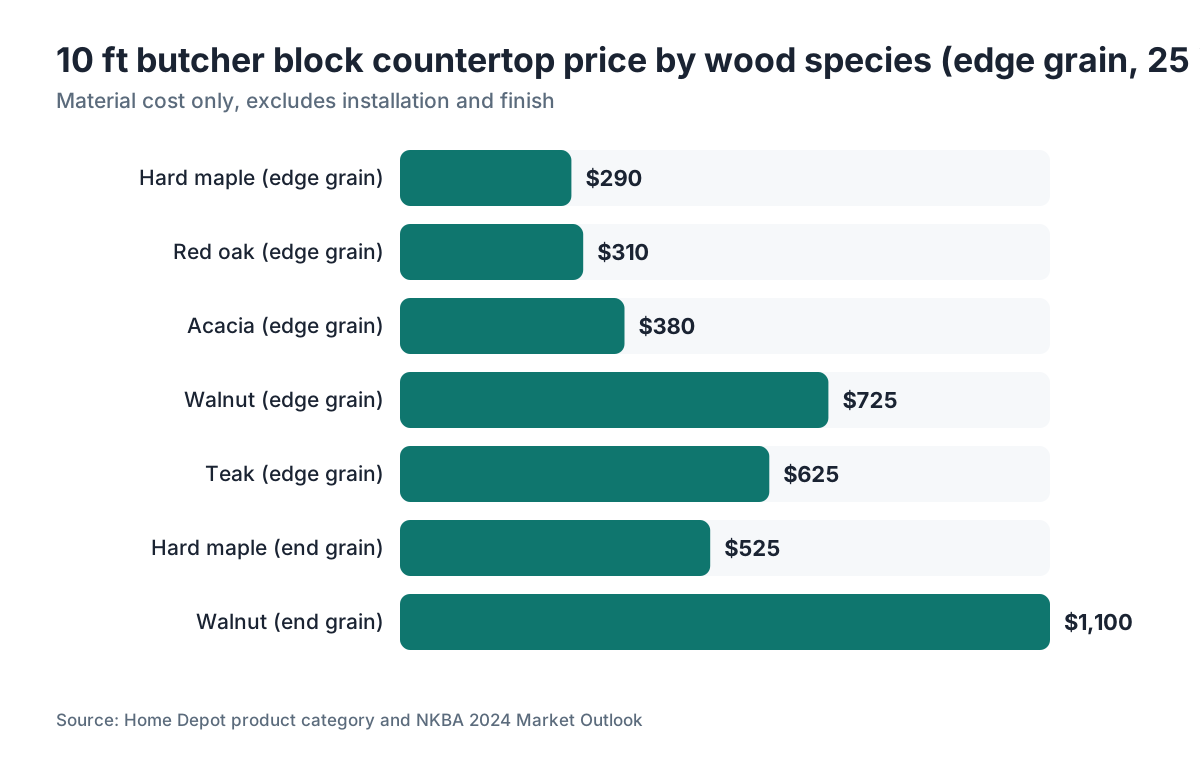
A 10 foot butcher block slab costs $200 to $900 before install, and species drives most of that spread. Hard maple edge grain sits at the bottom. Walnut and teak sit at the top. Construction method and thickness fill in the rest. Here is what you can realistically expect to pay for a standard 25-inch depth, 1.5-inch thick slab, material only:
| Species | Construction | Typical price (10 ft x 25 in x 1.5 in) |
|---|---|---|
| Hard maple | Edge grain | $200, $380 |
| Red oak | Edge grain | $220, $400 |
| Acacia | Edge grain | $280, $480 |
| Teak | Edge grain | $500, $750 |
| Walnut | Edge grain | $550, $900 |
| Hard maple | End grain | $400, $650 |
| Walnut | End grain | $800, $1,400 |
Those figures come from current retail pricing at Home Depot, IKEA, and specialty suppliers like LL Flooring and Boardwalk Hardwood Countertops [1][2]. They are pre-installation. Professional installation adds $150 to $400 depending on whether the installer cuts a sink opening, scribes to a wall, or applies an oil finish on-site [3].
Thickness is the other big lever. Most stock countertops come in 1.5 inches. But 3/4-inch butcher block shows up in IKEA's BADELUNDA and PINNARP lines as cabinet panel stock, and 2.25-inch or 4-inch end-grain blocks for heavy prep can double the material cost. Know what thickness your base cabinets and undermount sink clips need before you order.
Here's the plain version. A 10 ft slab of hard maple edge grain from a big-box store is one of the cheapest countertop materials you can buy at this length. Laminate beats it on raw price. Nothing else touches it on warmth and repairability [see our comparison of kitchen countertops].
Where can you buy a 10 ft butcher block countertop?
You have four real options. Each trades price against wait time and customization.
Big-box retailers (Home Depot, Lowe's). Home Depot stocks butcher block in 4-foot, 6-foot, 8-foot, and occasionally 12-foot lengths, but a true 10 ft slab is not a standard SKU at most locations. Some stores carry BOOS or Cali Bamboo products at 10 feet. Availability is regional and shifts with inventory. Check online stock for your zip before you drive over. Home Depot's standard butcher block starts around $28 to $40 per linear foot for maple edge grain [1].
IKEA. IKEA's KARLBY countertop (243 cm, roughly 8 ft) and BADELUNDA (186 cm) both stop short of 10 feet, so IKEA is not the answer for a single unjointed 10 ft run. Some people butt two sections and hide the seam under a range or at a corner. That works fine structurally, but you can see it. IKEA's price per square foot is genuinely hard to beat for a simple galley kitchen [2].
Specialty millwork and hardwood suppliers. Grothouse Lumber, Armani Fine Woodworking, and regional hardwood dealers cut any length you need, usually 2 to 6 weeks out for custom orders. This is where you go for walnut, teak, or a non-standard depth. Expect a cut charge of $50 to $150 plus the per-board-foot material cost.
Online specialty retailers. LL Flooring (formerly Lumber Liquidators), Build with Ferguson, and Amazon third-party sellers ship butcher block freight. At 10 feet and 1.5 inches thick, a maple slab weighs 60 to 80 pounds, so freight damage is a real risk. Inspect for damage before signing the delivery receipt. Photograph the crate before you open it.
If you're a fabricator pricing butcher block alongside stone, you're probably not cutting it yourself, but you may be installing it. Accurate material costs in your quote matter. Tools like SlabWise let you add accessory materials and installation labor to stone quotes so the full project cost shows up in one document.
Is a 12 foot butcher block countertop easier or harder to find than a 10 foot?
Easier, and that surprises most homeowners. Twelve feet (144 inches) is a standard length for many butcher block manufacturers because it matches common cabinet run lengths and shipping pallet dimensions. Home Depot, Lowe's, and specialty suppliers all stock 12-foot slabs in maple, oak, and sometimes walnut as regular inventory [1].
A 10 foot butcher block countertop is the awkward one. Most manufacturers offer 8-foot or 12-foot stock, so a 10-foot run usually means buying a 12 ft slab and cutting it down (losing $60 to $150 in material plus a straight-cut fee), or ordering a true custom-length piece. If your run falls between 9 and 11 feet, price both paths before you decide. Buying a 12 foot slab and cutting it to 10 feet is usually cheaper than a custom order, as long as the offcut is usable (a bathroom vanity top, a laundry room shelf, an island prep end).
Pricing for a 12 foot slab climbs the same species ladder as the 10-foot version, just about 20% more on material. A hard maple 12-foot edge-grain slab at 25-inch depth runs $300 to $480 retail [1][2].
Which wood species should you choose for a kitchen countertop?
Species choice comes down to two things: hardness and how the wood handles moisture. The Janka hardness scale measures the force needed to press a steel ball halfway into a wood sample. For a countertop that sees knives and traffic, harder is better [4].
| Species | Janka hardness (lbf) | Relative price | Notes |
|---|---|---|---|
| Hard maple | 1,450 | $ | Best value; resists dents; glues well |
| Red oak | 1,290 | $ | Open grain holds bacteria unless properly sealed |
| Black walnut | 1,010 | $$$ | Softer but gorgeous; good for lower-use areas |
| Teak | 1,070 | $$$ | Naturally oily; sheds water well; hard to glue |
| Acacia | 1,700 | $$ | Very hard; color can be inconsistent |
| White oak | 1,360 | $$ | Tighter grain than red oak; better for wet areas |
Data from the USDA Forest Products Laboratory Wood Handbook, the reference for domestic species mechanical properties [4].
For a prep area, hard maple is what I'd use. It's the commercial kitchen standard for a reason: food-safe when oiled, durable, and when it picks up knife marks you sand it flat and re-oil. Walnut looks magnificent but dents easier and costs three times as much. Save walnut for a lower-use island top or a bar section.
For a 10 ft countertop near a sink, teak is worth a look. Its natural silica and oil make it more water-resistant than maple, and it needs oiling less often. The tradeoffs are cost and the way those same oils fight film finishes.
Open-grain species like red oak are food-safe once sealed, but the USDA recommends tight-grain woods like maple for cutting surfaces because they clean easier and give bacteria fewer places to hide [4]. If you already have oak and love it, use a penetrating oil finish and keep it out of standing water.
For more options across price points, the butcher block countertops guide covers edge grain versus end grain in more detail.
Edge grain vs end grain: which construction is right for a 10 foot run?
Edge grain is boards glued on their long edges, face grain showing on top. End grain shows the cross-section of the fibers, the classic checkerboard. Both are structural and food-safe. The differences are practical.
Edge grain is flatter, lighter per foot, and cheaper to make. It machines well. At 10 feet, a 1.5-inch maple edge-grain slab weighs roughly 70 to 80 pounds, fine for two people. End grain at the same size runs 20 to 30% heavier because the denser cross-section weighs more per board foot.
End grain is self-healing in a way edge grain isn't. Cut on end grain and the knife pushes between the fibers instead of across them, and the fibers spring back. Over time edge grain shows linear scratches. End grain shows almost none. That's why butcher counters and professional prep tables traditionally used end grain.
For a 10-foot kitchen run with a sink cutout, edge grain is the practical pick. It cuts easier, supports with standard cabinet clips, and handles the mix of prep work and water without warping, as long as it's finished well and the sink area stays dry. End grain absorbs water from the top and can cup or crack if the underside seals differently than the top. At 10 feet, a warped end-grain slab is an expensive problem.
Save end grain for an island top or a freestanding prep table where you control moisture from every side.
How do you finish a butcher block countertop, and which finish lasts longest?
Three finish categories exist: food-safe penetrating oils, polyurethane film finishes, and waterglass (sodium silicate). Each has its own maintenance curve.
Mineral oil and oil/wax blends. Food-grade mineral oil is the cheapest option and what most manufacturers recommend for initial conditioning. Apply generously, let it soak 20 minutes, wipe the excess, repeat three to five times before first use. Ongoing, re-oil every 1 to 3 months. Mineral oil never fully hardens, which keeps the wood flexible but leaves the surface slightly porous. USDA guidance treats food-grade mineral oil (USP grade) as safe for cutting board surfaces [5]. Beeswax blends and pure tung oil sit in the same category.
Polyurethane or varnish film finishes. These build a hard, water-resistant film. They last 3 to 8 years without recoating and clean easily. The tradeoff: you can't use the surface as a cutting board (the knife wrecks the film), and when the finish fails, you sand it all off before refinishing. For a perimeter countertop that sees pots and glasses but little direct knife work, polyurethane makes sense.
Waterglass. Sodium silicate soaks in and hardens the surface fibers. Durable and water-resistant, but it darkens the wood a lot and isn't widely sold. Mostly a commercial thing.
For a 10-foot kitchen countertop you'll cut on, go with a penetrating hardwax oil like Rubio Monocoat or Osmo Polyx. They cure harder than mineral oil, they're food-safe after curing (Rubio's data sheet lists food contact compliance under EU Regulation 10/2011 [6]), and they spot-repair easily. For a no-cutting countertop near a sink, water-based polyurethane is the lower-maintenance call.
How do you install a 10 foot butcher block countertop over cabinets?
Installation is simple if you honor two non-negotiable rules: fasten the slab so it can move, and seal every exposed surface including the underside before or right after installation.
Measure and cut. A 10 ft slab usually comes pre-cut to length, but you'll almost always scribe it to the wall. Walls are never straight. Use a compass or scribing tool to transfer the wall contour to the slab, then cut with a jigsaw or circular saw and a fine-tooth blade. Cut from the bottom face up to keep tearout off the visible surface.
Sink cutout. Template the cutout from the sink's installation guide. Most undermount sinks clip straight to the wood with epoxy and mounting hardware. Seal the cutout edges right away with multiple coats of oil or varnish. Raw end grain at the sink opening is where butcher block countertops fail. This is not optional.
Fastening. Wood expands and contracts with humidity. A 10-foot maple slab can move 1/4 inch or more across its width across the seasons [4]. Never screw rigidly through the cabinet web frame into the wood from below without oversized slots. Use figure-eight fasteners or Z-clips in slotted holes that let the wood slide. This is standard in every woodworking installation guide, and it's why you see cracked butcher block in kitchens where someone used drywall screws.
Sealing before installation. Put at least two coats of your chosen finish on the underside, ends, and all cutout edges before the slab goes on the cabinets. Once it's installed, those surfaces are hard to reach.
Seams. If your run is longer than your slab (an L-shaped kitchen needing two pieces), butt the seam at a corner or beneath an appliance. Use biscuits or a spline to align the pieces, then fill the joint with the same finish you're using on top. A 10 ft slab avoids seams on most straight runs, which is one practical reason to buy at this length instead of joining two 6-foot pieces.
For how butcher block compares to stone on install complexity, the countertop installation guide is worth reading.
How do you maintain a butcher block countertop so it lasts 20 years?
Butcher block is the most maintenance-heavy of the common countertop materials. That's not a reason to skip it, but go in clear-eyed. The payoff: it's also the most repairable. A sanded and re-oiled butcher block can look new after a decade of hard use, which no stone or laminate surface can claim.
Maintenance depends on your finish. For oil-finished surfaces:
- Monthly (first year): wipe with food-grade mineral oil or your chosen hardwax oil. More often if the surface looks dry or chalky.
- Ongoing: every 1 to 3 months. The wood tells you when it's thirsty. It lightens in color and feels rough.
- Annually: sand lightly with 120 to 150 grit to level knife marks and scratches, then re-oil.
- Every 5 to 10 years: full re-sand with 80 grit if you need to remove deep gouges, then build the finish back up from scratch.
For polyurethane-finished surfaces: clean with mild soap and water. Recoat when the finish looks worn, typically every 3 to 7 years depending on traffic. Skip abrasive scrubbers that scratch the film.
What kills butcher block fast: standing water around the sink (seal, seal, seal), hot pots straight on an oil finish (use trivets), and citrus or other acids left on the wood for long stretches (the acid bleaches the finish).
A well-maintained butcher block countertop has a realistic life of 20 to 30 years and often outlasts the kitchen itself. Research from UC Davis on wood food-contact surfaces found that properly cleaned wood carries no more bacterial risk than plastic, and scrubbing removes bacteria effectively [10].
What are the pros and cons of butcher block vs stone or laminate at 10 feet?
No single material wins on every axis. Here's an honest comparison at the 10-foot scale.
| Factor | Butcher block | Granite/quartz | Laminate |
|---|---|---|---|
| Material cost (10 ft run) | $200, $900 | $500, $2,500 | $150, $400 |
| Installed cost | $350, $1,300 | $1,000, $4,000 | $200, $600 |
| Repairability | Excellent (sand and refinish) | Poor (chips are permanent) | Poor (delamination) |
| Water resistance | Moderate (finish-dependent) | Excellent | Excellent (except at seams) |
| Heat resistance | Low (always use trivets) | High | Low |
| Weight (10 ft x 25 in) | 60 to 100 lbs | 200 to 350 lbs | 40 to 70 lbs |
| Maintenance | High | Low | Low |
| Lifespan | 20 to 30 years (with care) | 30+ years | 10 to 20 years |
Costs drawn from the NKBA 2024 Kitchen & Bath Market Outlook and aggregated retail pricing [3][7].
My honest take: butcher block makes the most sense for people who actually cook, value repairability over convenience, and will maintain it. If you want to set a hot pan down and forget about it, get granite countertops or quartz. If budget is the main driver, laminate countertops at 10 feet cost less installed than raw butcher block at many price points.
For a kitchen with a prep area and a baking zone, some homeowners run a hybrid: butcher block on one section, stone on another. It works visually and practically, though you're now juggling two maintenance protocols.
If you're weighing kitchen countertops more broadly, put all the material categories side by side before you commit. It's worth the hour.
What are the most common mistakes people make with butcher block countertops?
After watching a lot of installations go sideways, the same failures keep coming up.
Under-finishing the sink area. The single most common failure. Raw end grain around a sink opening wicks water every time someone runs the tap. Two coats of oil before installation is not enough. Five coats of a film finish, or a generous application of moisture-curing urethane on all cut edges, is the floor.
Rigid fastening. Screwing the slab tight to the cabinet web without room for wood movement cracks the slab or racks the cabinet. Use Z-clips or figure-eight fasteners in slotted holes.
Skipping the underside finish. Wood sealed on top but raw underneath cups toward the finished side as humidity shifts. Seal every surface.
Using the wrong oil. Vegetable oils (olive, canola) go rancid inside the wood and eventually stink. Stick to food-grade mineral oil (USP grade) or purpose-made hardwax oils for penetrating finishes.
Putting an end-grain slab at a sink. End grain is beautiful, but it drinks water from the top. At a kitchen sink it will fail eventually unless you apply and maintain a film finish religiously.
Not letting the slab acclimate. A 10-foot slab shipped from a humidity-controlled warehouse to a dry or humid jobsite needs time to settle. Most manufacturers recommend 24 to 72 hours of acclimation in the install room before cutting or finishing [8].
Ignoring cabinet levelness. Butcher block bridges any low spot in your cabinet run and telegraphs it, especially at this length. Level your cabinets first. Shim individual boxes as needed.
Is butcher block food-safe, and what does the research actually say?
Yes. Properly maintained butcher block is food-safe. The USDA Food Safety and Inspection Service and NSF both recognize wood cutting surfaces as acceptable for food contact when properly cleaned and maintained [5][9].
A frequently cited study by Dean O. Cliver at UC Davis (Journal of Food Protection) found that wood surfaces, despite absorbing bacteria, did not let the bacteria multiply, and that proper washing reduced contamination to safe levels. The study noted that "wooden boards that were heavily used and had many knife cuts in their surfaces were also capable of absorbing bacteria." Even so, the same study found bacteria recovered from wood were no more dangerous than those from plastic [10].
The practical food-safety rules on butcher block: wash with hot soapy water after raw meat contact; don't soak the wood; sanitize with a dilute white vinegar solution (1:5 vinegar to water) or a 1 tablespoon per gallon bleach solution on an oil finish; skip bleach on polyurethane, since it degrades the film over time.
Butcher block that's cracked, has deep uncleanable crevices, or shows delaminating glue joints should be resurfaced or replaced. Open joints harbor bacteria in a way a solid slab does not.
Some people worry about the adhesives used to laminate the panels. Most commercial butcher block uses Type II or Type III waterproof PVA or urea-formaldehyde glue. Food-grade slabs from reputable makers like John Boos comply with NSF/ANSI Standard 2 for food equipment, which covers adhesives, finishes, and construction [9].
How does a fabricator or shop owner price butcher block work accurately?
If you run a countertop shop, butcher block is a different animal than stone. You're usually buying pre-manufactured slabs instead of cutting from raw lumber, and your labor is installation and finishing rather than CNC machining. Pricing it right means knowing your costs on three axes.
Material cost per square foot. At $28 to $80 per square foot depending on species and construction, butcher block often runs cheaper than engineered stone. But price it with the finish applied (if you're doing it) and freight included. A 10 ft x 25 in maple slab at 1.5 inches weighs about 70 pounds, and freight is real money at that weight.
Labor for sink cutouts. A sink cutout in butcher block takes 45 to 90 minutes with a jigsaw and template, versus 20 to 30 minutes on a CNC for stone. Price it that way. Finishing the cutout edges (5 to 7 coats of sealer) is additional labor.
Finishing labor. If the client wants you to apply and cure the finish on-site instead of shipping a pre-finished slab, budget 1 to 3 hours of skilled labor plus return visits for multiple coats.
Movement allowance. Unlike stone, butcher block forces you to plan the hardware and fastening method into the quote. Frameless cabinets need different clip hardware than face-frame boxes. Spec this before you quote.
Quoting software that handles mixed materials (stone on one section, butcher block on another, laminate in the laundry room) earns its keep here. SlabWise lets fabricators build multi-material quotes so nothing slips through when a client mixes countertop types across a project.
Frequently asked questions
How much does a 10 foot butcher block countertop weigh?
A 10 ft x 25 in x 1.5 in hard maple edge-grain slab weighs about 65 to 80 pounds. End-grain construction at the same size runs 10 to 20% heavier due to the denser cross-section. Walnut is slightly lighter than maple by volume; teak is heavier. Two people can handle a 10-foot slab without mechanical help, which makes it far easier to install than a stone countertop of the same size.
Can you use a 10 foot butcher block countertop in a bathroom?
Yes, but it needs more careful finishing than a kitchen application. Bathroom countertops face constant humidity and splash, so a film finish (polyurethane or conversion varnish) beats a penetrating oil here. Seal all cut edges around the sink with five or more coats. For a bathroom vanity, avoid end grain entirely, since the constant moisture will eventually swell or delaminate it.
What is the difference between a 10 ft and a 12 ft butcher block countertop in terms of availability?
Twelve-foot slabs are stocked more often at big-box retailers and specialty suppliers because they match standard cabinet run dimensions. A true 10-foot slab is less often a standard SKU. In practice, many buyers purchase a 12 ft slab and cut it to 10 feet, keeping the offcut for another use. Custom 10-foot orders from millwork suppliers typically take 2 to 6 weeks.
How often do you need to oil a butcher block countertop?
Monthly for the first year, then every 1 to 3 months for oil-finished surfaces. The wood signals when it needs oil: it lightens in color and feels rough or dry. Polyurethane-finished butcher block needs no periodic oiling, only soap-and-water cleaning and a recoat every 3 to 7 years. High-use prep surfaces need oiling more often than decorative or low-traffic areas.
Can you cut directly on a butcher block countertop?
On an oil-finished surface, yes. That's the traditional purpose of butcher block and why commercial kitchens use it. On a polyurethane film finish, cutting scratches and breaks down the film, which then needs a full sand-off and refinish. If you plan to cut on the surface, use a penetrating oil or hardwax oil finish and accept that it will show knife marks that need periodic sanding.
What thickness should a 10 foot butcher block countertop be?
For standard kitchen use, 1.5 inches is the right call. It's rigid enough over a 10-foot span without intermediate support, heavy enough to stay put, and light enough for two people to handle. Thicker slabs (2.25 or 4 inches) are for heavy-duty prep blocks or looks, and they add real cost and weight. IKEA's 3/4-inch panels suit cabinet doors better than structural countertops.
Does butcher block work over a dishwasher?
Yes, with caution. A dishwasher vents heat and steam upward, so butcher block over one sees more moisture than other sections. Seal the underside of that section heavily, make sure the dishwasher has a proper air gap or vent, and confirm the fastening allows wood movement. Some manufacturers void warranties for butcher block installed directly over a dishwasher without proper ventilation.
Can you put a hot pan on a butcher block countertop?
No, not directly. Wood chars and scorches at high temperatures, and even a moderately hot pan off the stovetop can leave a burn mark. Always use trivets or hot pads. This is one place where stone has a clear edge. Oil finishes fail faster under heat than film finishes do, but treat neither as heat-safe.
How do you repair a scratch or burn on a butcher block countertop?
Sand the damaged spot starting with 80 or 100 grit to remove the scratch or char, then work up through 120, 150, and 180 grit. Feather the sanding into the surrounding area to avoid a visible dip. Re-apply your finish to the repaired section and blend it into the adjacent surface. Deep burns may need to be cut out and patched. Full repairability is the core advantage of butcher block.
What is the best wood species for a butcher block countertop near a sink?
Teak is the most water-resistant thanks to its natural silica and oil. Hard maple with a good film finish is the practical standard for most kitchens. Avoid red oak near sinks: its open grain drinks water even when finished. Whatever species you pick, sealing all cut edges around the sink opening with multiple coats of film finish or moisture-cure urethane matters more than the species itself.
Is it cheaper to buy a 12 foot slab and cut it down to 10 feet?
Often yes. A 12 ft slab from stock is priced at retail; a custom-cut 10-foot order from a millwork supplier may carry a setup fee of $50 to $150 on top of material. If you can use the 2-foot offcut somewhere (a bathroom vanity, a laundry shelf, a small island prep section), buying the 12-foot and cutting it down is almost always cheaper. The cut itself costs $20 to $60 at a local cabinet shop or lumber yard.
How do you install a butcher block countertop with an undermount sink?
Cut the sink opening with a jigsaw using the manufacturer's template. Immediately seal all cut edges with 5 or more coats of your chosen finish, especially the end grain. Let the finish cure fully before installing the sink. Most undermount sinks attach to butcher block with silicone adhesive and mounting clips (same system as stone). Don't use mitered clips designed for stone; use wood-rated undermount hardware.
What glue is used to make butcher block, and is it food-safe?
Most commercial butcher block uses Type II waterproof PVA glue or urea-formaldehyde (UF) adhesive. Both are considered food-safe once fully cured. Food-grade butcher block from NSF-certified makers like John Boos must comply with NSF/ANSI Standard 2, which covers adhesive safety. If you're sensitive to formaldehyde, look for products labeled 'no-added formaldehyde' (NAF) or those using polyurethane adhesive systems.
How long does it take to install a 10 foot butcher block countertop?
A straight 10-foot run with no sink cutout takes 1 to 2 hours for an experienced installer, including scribing to the wall, fastening, and cleanup. Add 1 to 2 hours for a sink cutout and edge sealing. If the installer also applies an on-site oil or wax finish, add 1 hour per coat with drying time between coats. Most professional butcher block installations wrap in a half day.
Sources
- Home Depot, Butcher Block Countertops product category: Big-box retail pricing for butcher block countertops by species and length, including maple edge grain starting around $28 to $40 per linear foot
- IKEA, KARLBY and BADELUNDA countertop product pages: IKEA butcher block countertop maximum lengths (KARLBY at approximately 8 feet) and pricing
- National Kitchen and Bath Association, 2024 Kitchen & Bath Market Outlook: Professional installation cost ranges for kitchen countertops, $150 to $400 for butcher block installation labor
- USDA Forest Products Laboratory, Wood Handbook: Wood as an Engineering Material (General Technical Report FPL-GTR-282): Janka hardness values for domestic wood species and wood movement coefficients showing 10-foot maple slab can move 1/4 inch or more across width with seasonal humidity changes
- USDA Food Safety and Inspection Service, Kitchen Safety fact sheets: Food-grade mineral oil (USP grade) is food-safe for cutting board surfaces; wood surfaces are acceptable for food contact when properly cleaned
- Rubio Monocoat, Product Data Sheet for Rubio Monocoat Oil Plus 2C: Rubio Monocoat hardwax oil food contact compliance per EU Regulation 10/2011 after full curing
- National Kitchen and Bath Association, 2024 Kitchen & Bath Market Outlook: Installed cost ranges for granite and quartz countertops at $1,000 to $4,000 for a 10-foot run
- John Boos & Co., Butcher Block Installation and Care Guide: Manufacturers recommend 24 to 72 hours of acclimation in the installation room before cutting or finishing butcher block slabs
- NSF International, NSF/ANSI Standard 2: Food Equipment: NSF/ANSI Standard 2 covers adhesives, finishes, and construction requirements for food equipment including butcher block countertops
- Dean O. Cliver, UC Davis Department of Food Science and Technology, Journal of Food Protection: research on cutting boards and food safety: Study found wooden boards absorb bacteria but do not allow multiplication; properly washed wood surfaces are no more dangerous than plastic; quote: 'wooden boards that were heavily used and had many knife cuts in their surfaces were also capable of absorbing bacteria'
Last updated 2026-07-10