TL;DR
- Countertop installation in Florida runs roughly $15 to $250 per square foot installed, depending on material, edge profile, cutouts, and local labor.
- A typical Florida kitchen (40 to 50 sq ft) lands between $800 and $8,000 for laminate through granite.
- Quartz and granite hold the middle market at $55 to $130 installed.
- Coastal and metro markets like Miami, Naples, and Orlando run 10 to 20% above the state average.
What does countertop installation cost in Florida right now?
Florida homeowners are paying between $800 and $12,000 for a full kitchen countertop replacement in 2025, with the fat part of the bell curve at $2,500 to $5,500. The range is wide because the variables are wide. A laminate top in a Gainesville rental is not in the same universe as a book-matched Calacatta island in a Coral Gables remodel.
Here's the one number most people want. The statewide median installed cost for quartz and granite, the two most popular materials, runs about $65 to $90 per square foot all-in. A 45-square-foot kitchen, close to the Florida average for a single-family home, comes out to $2,925 to $4,050 before any add-ons.
Florida's labor market pushes hard on that number. The state has one of the highest concentrations of stone fabricators per capita in the Southeast, which creates real price competition in most metros. Miami-Dade and Broward run a little higher because commercial demand competes with residential for shop time. The Panhandle and rural Central Florida run a bit lower, though material trucking costs eat into some of that savings.
Tax is worth flagging. Florida has no state income tax, but it charges 6% sales tax on fabricated stone and installed countertops. The material portion is taxable; installation labor is generally exempt as a real property service [1]. County surtaxes add up to 2.5% on top of that in many counties. Get the line-item breakdown on any quote so you know exactly what you're paying tax on.
How much does each countertop material cost installed in Florida?
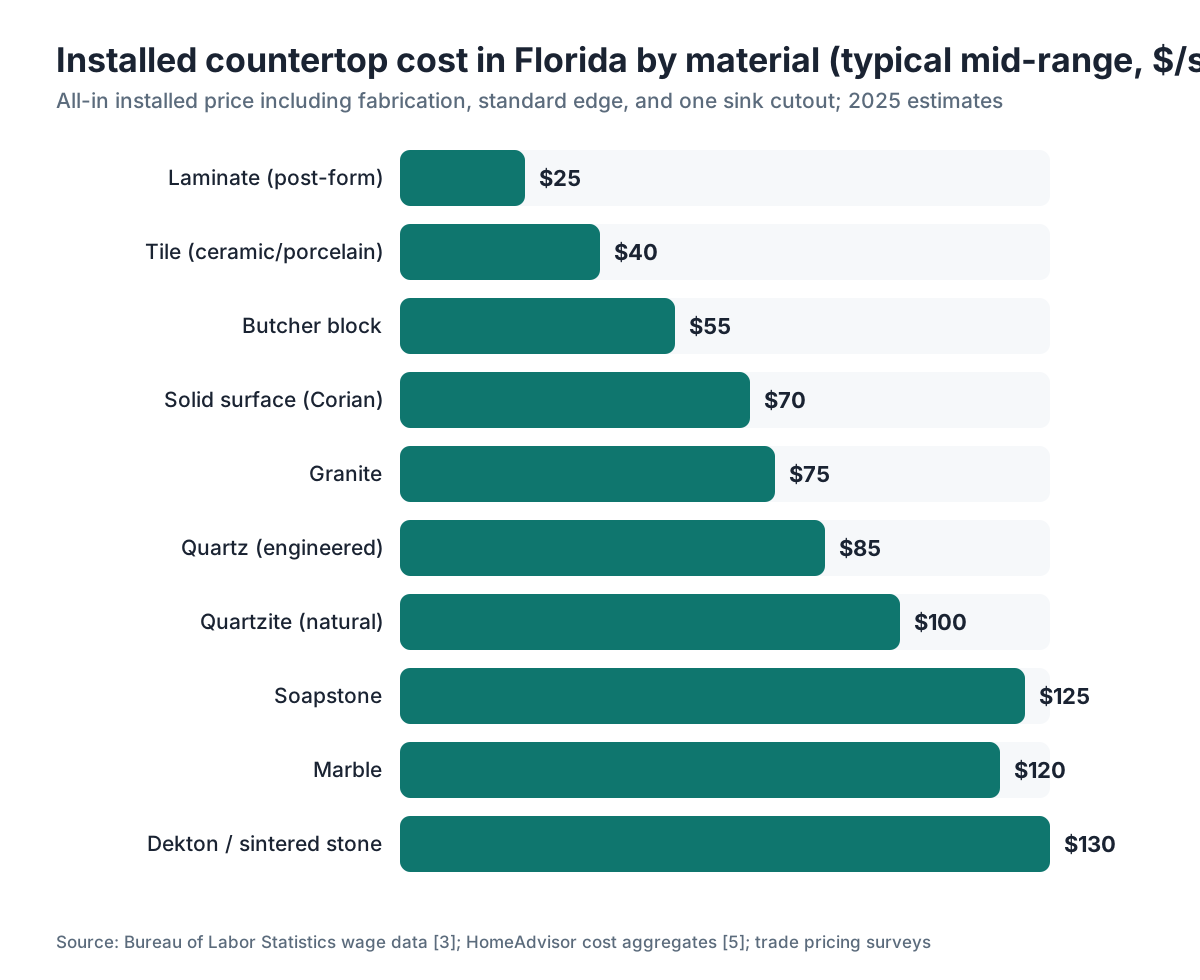
Here's a realistic price table for installed countertops in Florida in 2025. These are fabricated-and-installed totals per square foot, including a standard eased or beveled edge, a basic sink cutout, and typical delivery. They do not include tear-out of the old surface.
| Material | Low ($/sq ft) | Typical ($/sq ft) | High ($/sq ft) |
|---|---|---|---|
| Laminate (post-form) | $15 | $25 | $40 |
| Laminate (custom) | $28 | $45 | $65 |
| Tile (ceramic/porcelain) | $20 | $40 | $75 |
| Butcher block | $35 | $55 | $90 |
| Solid surface (Corian-style) | $45 | $70 | $100 |
| Granite | $50 | $75 | $130 |
| Quartz (engineered) | $55 | $85 | $140 |
| Quartzite (natural) | $65 | $100 | $180 |
| Marble | $75 | $120 | $200 |
| Dekton / ultra-compact | $80 | $130 | $210 |
| Soapstone | $85 | $125 | $190 |
| Quartzite premium / exotic | $120 | $175 | $250+ |
Notice a few things. Granite and quartz overlap heavily through the middle, which is why both sell so well. The real price separation happens at the exotic end. Rare Brazilian quartzite and book-matched marble push past $250 per square foot once fabrication complexity and slab waste get factored in. Laminate countertops and Formica countertops are still the cheapest installed option by a wide margin, and they've gotten a lot better in the last decade.
For Cambria countertops specifically, expect the higher end of the quartz range, roughly $95 to $140 installed in Florida. Cambria is a premium brand sold only through authorized dealers, and that limits price competition [2].
Material costs run about 50 to 70% of the installed total for natural stone. Labor and overhead make up the rest. For laminate, material is a smaller share and labor is proportionally higher.
What drives the price up from the base quote?
The base per-square-foot price in any quote assumes a simple job: straight runs, one or two sink cutouts, a standard edge profile. Real kitchens are messier than that, and the extras add up fast.
Edge profiles are the first common add-on. An eased or beveled edge is usually included. An ogee, waterfall, or laminated (double-stacked) edge adds $15 to $40 per linear foot on top of the base price. A full waterfall island with mitered corners might add $400 to $900 to the job.
Cutouts cost real money because they take time and waste slab. A standard undermount sink cutout runs $150 to $250. A cooktop cutout adds $100 to $200. Each extra hole for a soap dispenser or faucet adds $50 to $100.
Thickness matters for stone. The Florida residential standard is 3 cm (roughly 1.25 inches), and most quotes assume it. Ask for 2 cm with a built-up edge, or a thicker slab for a statement piece, and the price per square foot climbs because the slab costs more and takes longer to cut.
Backsplash work sometimes gets bundled, sometimes quoted separately. If your fabricator extends the countertop material up the wall as a full-height backsplash, budget an extra $30 to $70 per square foot for that section, plus extra template time when the wall has outlets or windows.
Removal of the old countertop is almost never in the base quote. Expect $150 to $400 for demo and haul-away depending on kitchen size and what's coming out. Cast-iron sinks and tile set in mud beds take longer and cost more to pull.
Florida humidity and older construction create leveling headaches too. Cabinets out of level by more than about 3/8 inch force the fabricator to shim, or sometimes call in a carpenter to re-level before setting stone. That's a cost that shows up on some jobs and not others.
How does Florida's climate affect countertop choice and cost?
Florida is rough on certain materials in ways homeowners from cooler states don't expect. High humidity, salt air near the coast, and intense UV through big windows all matter.
Moisture is the main threat to butcher block countertops. Wood can work beautifully in Florida, but it needs more frequent oiling than in drier climates, and it's a poor choice within 50 feet of an open coast where salt spray is real. Budget for annual maintenance if you go that route.
UV matters for some quartz brands. Most major engineered quartz lines (Silestone, Caesarstone, Cambria) use UV-stable pigments, but some budget quartz can yellow near large west-facing windows over time. That's an aesthetic problem, not a safety one, but ask your fabricator about warranty coverage on color stability.
Salt air and natural stone is nuanced. Granite is dense enough that coastal exposure is fine with proper sealing. More porous stones like marble or unsealed limestone absorb salt and humidity and etch faster in coastal homes. On the water, a dense engineered quartz or sealed granite forgives a lot more than open-pored marble.
Outdoor kitchens are far more common in Florida than in most of the country, and material choice shifts hard outdoors. Granite countertops and porcelain tile handle Florida heat and UV well. Quartz manufacturers generally void warranties on outdoor installs because the polyester resin binders degrade under prolonged sun. Dekton and sintered stone are built for outdoor use and keep gaining ground in Florida outdoor kitchens, though they cost more.
Outdoor installation adds cost across the board: stainless brackets or concrete substrate, waterproof adhesive, extra templating time for an irregular setup. Budget 20 to 35% more per square foot outdoors versus indoors.
What are typical labor rates for countertop installers in Florida?
Pure labor, separated from material and fabrication, runs about $10 to $30 per square foot in Florida. That range reflects differences in job complexity more than shop overhead.
Simple drop-in laminate with post-form edges is almost no field work. The crew sets it, applies adhesive, and is done in an hour or two. A complex natural stone job with custom edges, multiple miters, and undermount sinks takes a two-person crew four to six hours for an average kitchen.
The Bureau of Labor Statistics puts Florida tile and stone setters at a median wage around $21 to $24 per hour in recent surveys [3]. Fabricator-installers who own the shop equipment bill at effective rates of $60 to $120 per man-hour once overhead and insurance get factored in. That's not gouging. It reflects the real cost of equipment, liability coverage, and commercial vehicle maintenance.
Permit requirements are usually minimal. Replacing countertops in kind typically needs no permit in most Florida jurisdictions under Florida Building Code Section 105.2.2 [4], which exempts ordinary repairs and replacement work. Adding a new gas cooktop cutout might require an inspection depending on the county. Check with your local building department if you're unsure.
Tipping is not standard in this trade. Cold drinks and a clear workspace are the normal courtesy.
How do Florida countertop prices compare to national averages?
Florida installed countertop prices run at or slightly below the national average for mid-range materials like granite and quartz. The state's large fabrication industry and stiff competition keep prices from inflating the way they do in New England or the Pacific Northwest.
The national average for granite countertop installation is usually cited at $75 to $110 per square foot all-in. Florida's granite average of $50 to $100 per square foot sits in the lower half of that range for most of the state, with South Florida (Miami, Fort Lauderdale, Naples) closer to the national number.
Laminate is the exception. Florida runs slightly above the national average because the state's construction volume drives up demand for installer time, even though laminate material costs about the same everywhere.
Labor as a share of total project cost tracks the national pattern. HomeAdvisor cost data across 2023 to 2024 suggests labor represents about 20 to 35% of countertop project totals nationally [5], and Florida is consistent with that range.
Trucking is the one Florida-specific factor national averages miss. Most premium slab material (Brazilian quartzite, Italian marble, specialty quartz) ships to Florida ports and then trucks to distributors. The state stretches 500 miles tip to tip, so shops in the Panhandle or Keys pay more for material freight than shops in Orlando or Tampa. That freight cost lands on the customer's invoice.
Should you use a big-box store or an independent fabricator in Florida?
This is a real choice with real tradeoffs, not a fake binary. Both can do good work. The right pick depends on your material and layout.
Home Depot and Lowe's both offer countertop installation across Florida. They contract with fabricators, usually regional shops, and handle the customer service layer. You get financing options, familiar return policies, and one point of contact if something goes wrong. You also pay for that overhead, your material choices are narrower, and the sub-contracted installer may or may not be the best shop in your area.
For basic laminate or a builder-grade granite slab in a standard color, big-box pricing is competitive and the process is predictable. For anything with a complex layout, exotic material, or custom edge work, an independent fabricator almost always does better work at the same or lower price, because you're dealing directly with the person running the CNC router and templating the job.
Quoting from independent shops has gotten less opaque. Fabricators using software like SlabWise generate accurate, itemized quotes faster than they used to. Ask any fabricator for a line-item quote that separates material, fabrication, edge profiles, cutouts, and installation. If they won't break it out, that's a signal.
Get three quotes on any job over $2,000. Price spreads of 20 to 30% between reputable shops for the same material and scope are common, and quality doesn't always explain them. Sometimes one shop is just busier than another that week.
What does a countertop installation quote in Florida actually include?
A complete quote for countertop installation in Florida should spell out at least these line items: material (slab or sheet, unit price per square foot), fabrication (cutting, polishing, edge work), templating fee (usually $75 to $200 for a separate template visit), number and type of cutouts, delivery, and installation labor. Some shops bundle several of these. Just make sure the totals are apples-to-apples when you compare bids.
What a quote usually leaves out: demolition and haul-away of the old top, plumbing disconnection and reconnection (you typically need a licensed plumber in Florida, a separate $150 to $350 charge), and any carpentry to level cabinets.
Florida law requires licensed contractors for certain work. Countertop fabrication and installation on its own doesn't require a state contractor's license, but plumbing connected to the project does. A Florida-licensed plumbing contractor is required to disconnect and reconnect an undermount sink under Florida Statutes Chapter 489 [6]. Some homeowners disconnect the supply lines themselves before the fabricator arrives, which is allowed as owner-performed work on your own residence.
Deposit terms in Florida usually run 50% down at signing and the balance on installation day. Florida Statute 501.1375 governs deposits on residential construction and contractor agreements [7]. It doesn't set a mandatory cap for countertop work specifically, but 50/50 is standard and reasonable. Be cautious of any shop asking for more than 70% upfront before material is even ordered.
How long does countertop installation take in Florida?
From signed contract to finished kitchen, a typical Florida countertop job takes 1 to 3 weeks. Here's how the time breaks down.
Template day happens after cabinets are set and level. Digital templating takes 30 to 90 minutes. Old-school cardboard templating takes a bit longer. Most shops schedule template day within 3 to 7 days of signing.
Fabrication after templating runs 3 to 7 business days for common materials in stock. Exotic slabs that have to be sourced from a distributor add time. During peak season (January through April, when seasonal residents renovate), some shops run 2 to 3 week lead times.
Installation day for a standard kitchen runs 2 to 4 hours. The pieces arrive cut, polished, and ready to set. The crew sets them, does final seam work, secures everything, and cleans up. You need the sink disconnected before they arrive, and a plumber can reconnect it the same day.
Total sink downtime is usually one day, sometimes less. Plan to use a bathroom or utility sink for 24 hours while the adhesive cures. Most shops recommend waiting 24 hours before running water on the new surface and a full 48 hours before heavy use.
Rush jobs exist. Some Florida fabricators offer expedited turnaround (3 to 5 days total) for a 15 to 25% premium. That can make sense for a rental turnover or a renovation with a tight move-in deadline.
How do you compare countertop quotes accurately in Florida?
Three quotes from three different shops is the standard advice, and it's right. Comparing them takes discipline, because shops quote differently and the cheap-looking bid isn't always cheap.
Compare total installed cost per square foot, not the material price. A shop quoting $45/sq ft for granite "material" but charging $250 for a single cutout and $400 for templating is not cheaper than a shop quoting $75/sq ft all-in.
Make sure the slab grade matches. Commercial-grade granite and first-quality granite can vary $15 to $30 per square foot at the fabricator level. Ask each shop which grade they're quoting and whether you can see the actual slab before signing. Most mid-tier Florida fabricators let you visit the slab yard. Take them up on it.
Check the warranty. A reputable Florida fabricator should offer at least a one-year warranty on seams, edge work, and installation. Some material manufacturers back their product directly to the homeowner (Cambria offers a lifetime warranty [2]; Silestone offers a 25-year warranty), but only when the fabricator is an authorized dealer.
For kitchen countertops specifically, ask whether the quote breaks out the island or folds it into the square footage total. Islands often carry more complex edge work and a higher per-square-foot cost than perimeter runs, and some shops quote them at a flat rate.
Reviews and references still matter. A shop with 200 Google reviews averaging 4.6 stars is a meaningful signal in a market where fabrication quality varies a lot. Read the reviews that mention how the shop handled a problem, because problems happen even at good shops.
What are the best countertop materials for Florida homes?
For most Florida homeowners balancing durability, looks, and resale value, quartz and granite are the practical defaults, and that's what most Florida fabricators sell most of.
Granite holds up well in Florida conditions. It's dense, heat-resistant, and handles coastal humidity without issue if sealed annually. The color selection here is huge because the state imports heavily from Brazilian and Indian quarries. See our full guide to granite countertops.
Quartz is the most popular material in new Florida construction right now. It's non-porous (no sealing required), consistent in color, and easy to maintain. The tradeoffs: it can't go outdoors, some colors look artificial up close, and the manufacturing carries an environmental footprint some homeowners care about.
On a lower budget, today's laminate countertops beat what you got 20 years ago. High-definition photo printing makes some patterns hard to tell from stone at normal viewing distance. Smart choice for rentals and secondary kitchens.
Marble stays popular in South Florida's luxury bathrooms and laundry rooms, but it needs more care in humid rooms. How to clean stone countertops and how to clean quartzite countertops are good reading before you commit to a porous natural stone in a wet Florida space.
Soapstone is worth knowing about. It's naturally non-porous, handles heat well, and develops a patina over time that some people love. Florida fabricators don't stock it widely, so lead times run longer, but the material cost is reasonable. See how to clean soapstone countertops for what ongoing care looks like.
For fabricators running high volume in Florida, tracking material cost and waste across jobs is where software earns its keep. Platforms like SlabWise give shops real-time visibility into slab yield and quote accuracy, which matters when granite prices swing with import tariffs.
Are countertop prices going up or down in Florida in 2025?
Prices for most materials are flat to slightly up in 2025 compared to 2024, after a stretch of heavy inflation from 2021 to 2023. Don't hold your breath for a drop.
The main pressure right now is tariffs. Section 301 tariffs on Chinese-manufactured quartz, in place since 2018 and tightened in 2024, have pushed some quartz prices up 10 to 15% versus pre-tariff levels [8]. Most fabricators absorbed part of that through margin compression, so the consumer impact is maybe 5 to 8% compared to 2019 baseline prices.
Florida construction activity stays high. The Census Bureau reports Florida issued over 200,000 residential building permits in recent years, ranking among the highest-volume states in the nation [9]. Busy shops don't discount aggressively. If you're not in a hurry, late summer (July through September) is traditionally the slowest stretch for Florida residential remodeling, and some shops price better then.
Labor costs have risen. Florida and national construction wage indices have tracked above general CPI for most of the past four years [10]. That flows into installation costs even for shops that held material margins steady.
Natural stone from Brazil and India hasn't seen the tariff pressure that hit Chinese quartz, so granite and quartzite from those sources stayed relatively stable. Italian marble saw modest increases tied to shipping costs normalizing after the pandemic.
The honest forecast: Florida countertop prices are unlikely to drop meaningfully in 2025 or 2026 given construction demand and the labor market. If you're planning a renovation, waiting for a price drop is probably the wrong bet.
Frequently asked questions
How much does it cost to replace kitchen countertops in Florida?
Most Florida kitchen countertop replacements cost $2,000 to $6,000 installed for a typical 40 to 50 square foot kitchen. Laminate jobs run $800 to $2,000; granite and quartz land at $2,500 to $5,000; premium stone like marble or exotic quartzite can reach $8,000 to $14,000. The total depends heavily on square footage, edge profiles, number of cutouts, and whether tear-out of the old top is included.
Do I need a permit to replace countertops in Florida?
For a straight material replacement, no permit is typically required. Florida Building Code Section 105.2.2 exempts ordinary repairs and replacements that don't change the structure or mechanical systems. If the project involves new gas cooktop cutouts or significant electrical work, a permit may be required depending on the county. Plumbing disconnection and reconnection for a sink requires a licensed Florida plumbing contractor regardless of permit status.
How long does countertop installation take in Florida?
From contract to finished installation, expect 1 to 3 weeks for most Florida jobs. Templating typically happens 3 to 7 days after signing; fabrication takes 3 to 7 business days for materials in stock. Installation day itself runs 2 to 4 hours for a standard kitchen. Peak season (January through April) stretches lead times to 2 to 3 weeks at busy shops. Rush jobs with 3 to 5 day turnaround are available at some fabricators for a 15 to 25% premium.
What is the cheapest countertop option in Florida?
Post-form laminate is the least expensive installed option at $15 to $40 per square foot in Florida. Custom laminate (with an upgraded pattern and edge) runs $28 to $65 per square foot installed. Laminate has improved a lot in appearance and durability over the past decade and remains the practical choice for rentals, secondary kitchens, laundry rooms, and tight budgets. Tile is a close second at $20 to $75 per square foot depending on material and complexity.
Is granite or quartz cheaper to install in Florida?
They overlap heavily in the Florida market. Granite typically runs $50 to $100 per square foot installed; quartz runs $55 to $110 per square foot. Entry-level granite is often slightly cheaper than entry-level quartz because granite slab costs at Florida distributors are very competitive. At the high end, premium quartz brands like Cambria cost more than most granite options. The bigger cost difference is usually fabrication complexity, not material choice.
Are outdoor countertops more expensive to install in Florida?
Yes, typically 20 to 35% more per square foot than indoor work for equivalent material. Outdoor kitchens need waterproof substrate, different fastening, and often more complex templating around grills and custom cabinetry. Material choice also shifts: quartz warranties are voided outdoors by most manufacturers, so granite, porcelain, or sintered stone like Dekton are the practical options. Dekton runs $80 to $210 per square foot installed even indoors, so outdoor budgets climb quickly.
What does a countertop fabricator charge for a sink cutout in Florida?
A standard undermount sink cutout typically costs $150 to $250 at most Florida fabricators. A cooktop cutout adds $100 to $200. Drop-in sinks are slightly cheaper to cut because the opening doesn't need to be as precisely finished. Each additional accessory hole (soap dispenser, faucet, pot filler) typically adds $50 to $100. Always confirm cutout pricing before signing; it's a common source of sticker shock on final invoices.
How much does a bathroom countertop replacement cost in Florida?
A single bathroom vanity top replacement in Florida typically runs $300 to $1,500 installed depending on material and size. A standard 36-inch vanity top in cultured marble or granite is at the lower end. A double-sink vanity top in quartz or premium stone can reach $1,200 to $2,500 installed. Small bathroom jobs sometimes carry a shop minimum charge of $400 to $600, since they need the same templating and delivery overhead as a larger job.
Should I buy the slab myself and hire a separate installer in Florida?
It's possible but usually not the move. Most Florida fabricators prefer to source the slab themselves so they can inspect it, account for it in their warranty, and manage yield. Buy a slab separately and the fabricator may charge more for fabrication (no material margin to offset overhead) or decline to warranty the finished work if the slab has a defect. Owner-supplied slabs make more sense for truly exotic or collector-grade pieces you've sourced from a specific quarry.
Does Florida sales tax apply to countertop installation?
Florida charges 6% state sales tax on the material portion of a countertop job, plus applicable county surtaxes (up to 2.5%). Installation labor is generally treated as a real property service and is not taxed separately. When a contractor provides both material and installation as a combined contract, taxability can depend on how the contract is structured. Ask for a line-item invoice showing material and labor separately so you only pay tax on the taxable portion.
What is the best countertop for a Florida coastal home?
Dense, non-porous materials perform best in coastal Florida where salt air and humidity are factors. Quartz, sealed granite, and porcelain are the safest choices for resisting moisture and corrosion near the water. Marble and limestone are porous enough to absorb salt and etch faster in coastal conditions. For outdoor areas, granite and sintered stone (Dekton) are the practical options; quartz warranties are voided outdoors. Butcher block needs more frequent oiling in coastal humidity.
How much does a waterfall island countertop cost in Florida?
A waterfall island with mitered stone edges falling to the floor on one or both sides typically adds $400 to $900 to the base countertop cost for the edge work and miter cuts alone. Material cost for the island depends on size and slab choice. A 4-foot by 8-foot quartz island with a single waterfall side might total $2,500 to $4,500 installed. Two waterfall sides and a book-matched pattern in premium marble can push an island project past $8,000 to $12,000.
How do I find a reputable countertop installer in Florida?
The Natural Stone Institute runs an accreditation program for fabricators that meet quality and safety standards, and its member directory is a solid starting point. Google reviews with 100-plus ratings are a practical signal. Ask any fabricator whether they cut in-house or sub out the fabrication; in-house work generally means tighter quality control. Get three line-item quotes, ask to see the slab before signing, and confirm insurance and warranty terms in writing before paying a deposit.
Sources
- Florida Department of Revenue, Sales and Use Tax: Florida charges 6% sales tax on the material portion of fabricated countertop jobs; installation labor as a real property service is generally exempt
- Cambria, Product Warranty: Cambria offers a lifetime warranty on its quartz surfaces and sells exclusively through authorized dealers
- U.S. Bureau of Labor Statistics, Occupational Employment and Wage Statistics, Tile and Stone Setters (SOC 47-2044): Florida tile and stone setters earn a median wage of approximately $21 to $24 per hour per BLS occupational wage data
- Florida Building Code, Section 105.2.2, Work Exempt from Permit: Florida Building Code Section 105.2.2 exempts ordinary repairs and replacements that do not affect structure or mechanical systems from permit requirements
- Angi / HomeAdvisor, Cost to Install Countertops: Nationally, labor represents about 20 to 35% of countertop project total costs based on 2023-2024 cost data aggregated across projects
- Florida Statutes Chapter 489, Contracting: Florida Statute Chapter 489 requires a licensed plumbing contractor for plumbing work including sink disconnection and reconnection in residential projects
- Florida Statutes Section 501.1375, Deposits for Residential Dwelling Units: Florida Statute 501.1375 governs contractor deposit requirements for residential construction agreements
- Office of the U.S. Trade Representative, Section 301 Investigations: Section 301 tariffs applied since 2018 and tightened in 2024 have raised costs on Chinese-manufactured quartz by 10 to 15% at the import level
- U.S. Census Bureau, Building Permits Survey: Florida issued over 200,000 residential building permits in recent years, ranking among the highest-volume states in the nation
- U.S. Bureau of Labor Statistics, Employment Cost Index: Florida and national construction wage indices have tracked above general CPI for most of the past four years, increasing installation labor costs
- Natural Stone Institute, Accreditation Program: The Natural Stone Institute offers accreditation for stone fabricators meeting quality and safety standards, serving as a vetting tool for consumers
- Florida Department of Business and Professional Regulation, Contractor Licensing: Florida DBPR oversees contractor licensing requirements; countertop fabrication and installation does not require a specific state contractor license as a standalone trade category
Last updated 2026-07-10