TL;DR
- Porcelain countertops run $55 to $120 per square foot fully installed.
- Most kitchens land between $2,500 and $6,600 total.
- Slab thickness, edge profile, and cutout count move the number most.
- Thin porcelain (under 12mm) costs less but limits your edge options.
- Quartzite installs a step higher, $70 to $140 per square foot installed, and needs sealing porcelain never does.
What does porcelain countertop installation cost in 2025?
The honest range for a fully installed porcelain countertop is $55 to $120 per square foot. That covers material, fabrication (cutting, polishing, edge work), and the labor to set it. It does not cover tearing out your old counters, plumbing reconnection, or backsplash. Those land as separate line items.
Most homeowners with a standard kitchen (roughly 40 to 55 square feet of countertop) pay $2,500 to $6,600 all in [1]. Budget porcelain in a plain finish with a simple eased edge sits at the low end. Large-format Italian or Spanish porcelain, book-matched, with a mitered waterfall edge sits at the top and can pass $150 per square foot installed.
Fabricators price porcelain differently from natural stone, and there's a real reason. It needs diamond tooling and slower feed rates so the edges don't chip. That extra shop time shows up in your quote. If a shop quotes porcelain at the same rate as granite, they either have very efficient CNC gear or they're about to lose money on your job.
What factors change the price the most?
Thickness is the biggest lever on both material and fabrication. Porcelain slabs come in 6mm, 12mm, and 20mm [6]. Six-millimeter is almost always used for overlays over existing counters, which keeps the install fast and cheap. Twelve-millimeter is the standard for new work. Twenty-millimeter is for outdoor kitchens or clients who want a genuinely thick edge without laminating two pieces together.
Edge profiles matter a lot. An eased or beveled edge on 12mm porcelain is easy. A mitered edge, where two pieces meet at 45 degrees to fake a thick slab, doubles or triples the edge labor because that joint has to disappear. Add $30 to $60 per linear foot for a mitered waterfall on top of the base install price [2].
Cutouts drive cost too. A standard undermount sink cutout runs $150 to $300 depending on shop rates. A cooktop cutout adds roughly the same. Faucet holes run $30 to $60 each. Porcelain cracks at interior corners more readily than granite or quartzite, so a good fabricator reinforces those spots, and that takes time.
Slab size and waste factor in. Standard porcelain slabs from the major makers run about 126 by 63 inches. A kitchen with an island often needs two slabs, which raises both material cost and seam count. Seam placement in porcelain takes real planning so you don't end up with a joint sitting in the middle of your sightline.
Where you live changes the labor rate hard. Stone setters earned a median of $23.83 an hour nationally in 2023, but the top-paying metros pay well above that [7]. The same kitchen that costs $4,000 installed in Columbus, Ohio can run $6,500 in the Bay Area on labor alone [9].
How does the cost break down: materials vs. labor vs. fabrication?
Here's a realistic breakdown for a mid-range porcelain job.
| Cost component | Low end | High end | Notes |
|---|---|---|---|
| Porcelain slab material | $10, $25/sq ft | $40, $60/sq ft | Entry-level domestic vs. Italian large-format |
| Fabrication (cutting, edge, finish) | $20, $35/sq ft | $40, $60/sq ft | Mitered edges add more |
| Installation labor | $10, $20/sq ft | $20, $30/sq ft | Includes setting, leveling, seaming |
| Sink cutout | $150 flat | $300 flat | Per cutout |
| Seam (if needed) | $100, $200 each | $200, $400 each | Matched seams cost more |
| Demolition (old counters) | $200, $400 | $500, $800 | Usually a separate line item |
Material is usually 35 to 50 percent of the total installed cost. Fabrication is 30 to 40 percent. Installation labor is the rest, 15 to 25 percent [2]. These ratios shift when you go high-end, because the slab price climbs faster than labor does.
One thing homeowners miss: fabricators buy slabs wholesale and mark them up, usually 20 to 40 percent over cost. That markup is fair. It pays for their carrying costs and their eye for picking good slabs. If you want to supply your own slab, most shops will fabricate and install it, but they'll charge a higher hourly rate because they've lost the material margin that normally subsidizes labor. Supply-your-own saves less than it looks like it should.
How does porcelain compare to quartzite countertop installation cost?
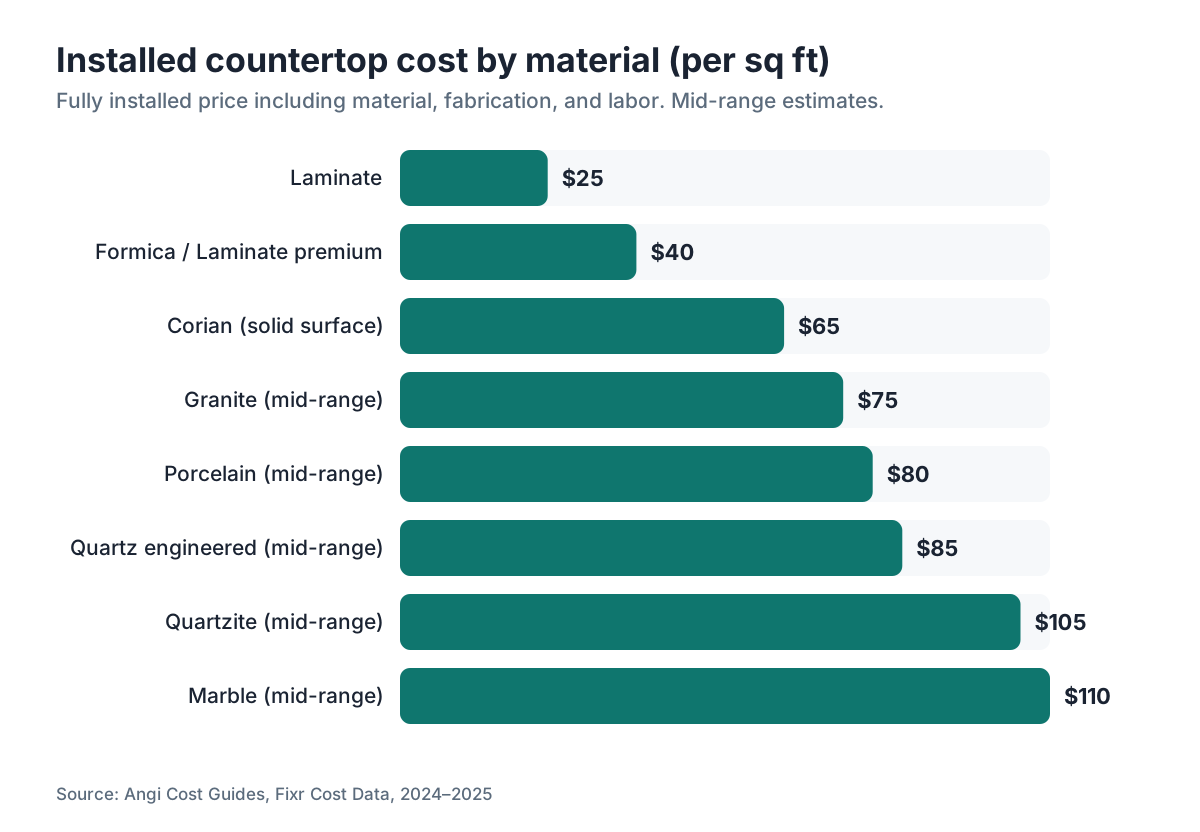
Quartzite installs for $70 to $140 per square foot, consistently above porcelain at the mid and high ranges [3]. The gap comes from quartzite being a natural stone: it burns through saw blades faster, its variable hardness slows the cut, and the slabs cost more at the distributor [4].
The two aren't really substitutes, though. Quartzite is a natural metamorphic stone with genuine depth and variation, the kind of look high-end buyers pay for [8]. Porcelain is manufactured, with a printed or through-body pattern that imitates stone. Porcelain is harder (roughly 7 to 8 on the Mohs scale versus quartzite's 7), more stain-resistant, and needs zero sealing. Quartzite may want sealing once a year depending on how dense the slab is [4].
On a budget with a stone look in mind, porcelain usually wins. Want the real thing and don't mind the upkeep? Quartzite wins on looks. Timing splits them too: natural stone shops usually run 2 to 4 weeks from template to install, while porcelain can sometimes finish in 1 to 2 weeks because the toolpaths for standard slabs are more predictable.
For context, granite countertops are the closest natural-stone comparison, typically $50 to $100 per square foot installed, under quartzite but above budget porcelain.
Here's the head-to-head.
| Material | Installed cost range | Sealing needed? | Mohs hardness | Typical lead time |
|---|---|---|---|---|
| Porcelain (12mm) | $55, $120/sq ft | No | 7 to 8 | 1 to 2 weeks |
| Quartzite | $70, $140/sq ft | Usually yes, annually | ~7 | 2 to 4 weeks |
| Granite | $50, $100/sq ft | Yes, every 1 to 3 years | 6 to 7 | 2 to 3 weeks |
| Quartz (engineered) | $60, $110/sq ft | No | 7 | 1 to 2 weeks |
What does a porcelain countertop overlay cost vs. full replacement?
A porcelain overlay bonds 6mm slabs directly over your existing countertop surface. Skip the demolition, the new substrate, and most of the install complexity, and overlays run $30 to $60 per square foot installed, about half the cost of full replacement [2][5].
The catch is that overlays only work if your current counters are flat, sound, and the extra height won't clash with appliances or cabinets. Most undermount sinks can't survive an overlay. You also give up some edge options, because you're working with a very thin slab.
For a rental or a budget refresh where you want a new look without gutting the kitchen, overlays make real sense. For a primary home where you're also swapping the sink or moving the layout, full replacement is the better call even at the higher price.
How much does porcelain countertop installation cost for a bathroom vs. a kitchen?
Bathrooms almost always cost more per square foot than kitchens, even though the whole job is smaller. Blame fixed costs. A fabricator drives out, templates, sets up tooling, and installs the counter whether the job is 15 square feet or 55. Those trip and setup costs spread over fewer square feet in a bathroom, so the rate looks higher.
A typical porcelain vanity top runs $800 to $2,500 installed depending on size, sink style, and edge profile [1]. Drop-in sinks cost less to accommodate than undermounts, because the cutout doesn't have to be as precise. A vessel sink on a flat porcelain top is the simplest and cheapest to fabricate.
For a kitchen with 45 square feet of counter and one undermount sink, the same shop might quote $3,500 to $5,500. The per-square-foot rate on the kitchen is lower even though the total is higher.
What hidden costs should you watch for in a porcelain installation quote?
Cheap-looking square-foot rates often claw the money back through line items buried in fine print, or not listed at all. These are the ones that bite homeowners most.
Templating fees. Most shops charge $75 to $200 for a digital template visit. Some waive it if you go ahead with the job. Ask upfront.
Delivery and crane fees. Large-format porcelain is heavy (a 12mm slab weighs 7 to 9 pounds per square foot) and fragile. A narrow hallway or a staircase can trigger a handling surcharge.
Plumbing reconnection. A plumber usually charges $100 to $250 to disconnect and reconnect the sink. Fabricators almost never include this, because they don't do plumbing. Hire it separately.
Seam location disputes. Seam placement matters more in porcelain than in granite, because book-matched designs have a visual center that a bad seam ruins. If the shop doesn't bring up seam location during templating, bring it up yourself.
Material waste surcharges. Some shops tack on a 15 to 20 percent waste factor over your measured square footage to cover offcuts. Others fold it into the per-square-foot price. Know which method applies before you sign.
For fabricators writing quotes, tools like SlabWise automate the nesting and waste math so these surcharges are baked in accurately instead of guessed at by feel.
How long does porcelain countertop installation take?
Signed contract to finished counters usually runs 1 to 3 weeks for porcelain. Here's the shape of it.
Day 1 to 3: template visit. The shop sends a tech with a digital templating tool (or old-school cardboard) to measure your space exactly. On-site time is usually 1 to 2 hours.
Days 2 to 10: fabrication. The shop programs the cuts, runs the CNC or bridge saw, polishes edges, and handles any special work like mitered joints. Porcelain tends to run faster than natural stone because its uniform body means fewer surprises mid-cut.
Days 10 to 21: install day. A standard kitchen takes 3 to 6 hours with a two-person crew. Big kitchens with islands and complex seams can eat a full day.
If the shop is backed up (common in spring and fall renovation seasons), add 1 to 3 weeks to the fabrication window. Get the lead time in writing before you commit, especially if you've got other trades waiting on the counter to finish their work.
Is porcelain a good investment compared to other countertop materials?
Porcelain holds up unusually well in a kitchen. It doesn't stain, doesn't need sealing, shrugs off heat that would mark most natural stone (though a hot pan set straight on a thin slab can trigger thermal-shock cracking), and the color stays put because it doesn't oxidize or react with acids.
Resale is where natural stone still has the edge. A listing that says "quartzite countertops" reads more premium to the average buyer than "porcelain slab countertops," even when the porcelain is harder and easier to live with [10]. That perception gap is closing as large-format porcelain shows up in more high-end builds, but it hasn't closed.
Against budget options like laminate countertops ($10 to $40 per square foot installed) or Formica countertops ($20 to $50 installed), porcelain costs two to four times more and lasts a lot longer while looking closer to real stone. Against Corian countertops ($45 to $85 installed), porcelain is harder and more heat-resistant, but less forgiving if a seam shows.
For most people doing a full kitchen remodel, porcelain at $65 to $90 per square foot installed hits a sweet spot: tough, low-maintenance, good-looking, priced under premium natural stone [11]. That's about where I'd spend my own money if I wanted the stone look without the sealing routine.
How do you get an accurate quote for porcelain countertop installation?
The best quotes come from shops that visit and measure in person. Online square-footage calculators give a ballpark, never a real number, because they can't see odd angles, count your cutouts, or figure the seams your layout forces.
When you call shops, ask directly. Is fabrication included in your price? Does the quote include the template visit? What's the lead time right now? Which edge profiles are included and which cost extra? Does the price include removing my old counters?
Get at least three quotes. For porcelain specifically, ask each shop which slab brands they run regularly. A shop new to porcelain that mostly cuts granite will be slower and more likely to chip edges, and that comes back to you as rework or callbacks.
For fabricators, software that automates the quoting workflow (material costing, edge pricing, cutout fees) cuts the time from template to signed contract way down. The countertop installation process is worth reading before you gather quotes, so you know what to ask.
Want to see the whole field before you commit to porcelain? Compare a few kitchen countertops side by side instead of chasing quotes one material at a time.
Can you save money on porcelain countertop installation without sacrificing quality?
Yes. A few moves actually work without cutting corners.
Pick a simpler edge profile. An eased or lightly beveled edge looks clean and modern. Jumping from eased to a mitered waterfall can add $500 to $1,500 to a mid-size kitchen. Tight budget? Skip the waterfall.
Cut your seam count. Careful slab layout at templating can sometimes dodge a second slab entirely. Ask your fabricator to show you the nesting plan before you sign off.
Keep the sink where it is. Moving plumbing adds $300 to $800 to most jobs depending on local plumber rates. If the current location works, leave it.
Skip book-matching unless you truly want it. Book-matched slabs need more waste planning, tighter seam work, and sometimes a second slab you barely touch. The effect is beautiful and expensive.
Time the job off-peak. Fabrication shops are slowest in January and February in most markets. Some will negotiate on price or throw in a better edge profile during slow stretches to keep crews busy.
Buy remnants for small jobs. A bathroom vanity or a laundry counter often cuts from a fabricator's remnant at a steep discount, sometimes $10 to $20 per square foot for the material alone.
Frequently asked questions
What is the average cost to install porcelain countertops in a kitchen?
A standard kitchen with 40 to 55 square feet of porcelain typically costs $2,500 to $6,500 fully installed, including fabrication and labor. The per-square-foot rate runs $55 to $120 depending on slab grade, edge profile, and cutout count. Kitchens with islands or complex layouts land toward the top of that range.
Is porcelain cheaper than quartz for countertops?
They're close. Entry-level porcelain runs $55 to $75 per square foot installed; entry-level quartz runs $60 to $80. At the high end, both can top $110. The real difference depends on the specific brand and slab. Porcelain fabrication is more specialized, which can push labor up at shops less experienced with the material.
How much does quartzite countertop installation cost compared to porcelain?
Quartzite installs for $70 to $140 per square foot, consistently above porcelain. The gap reflects higher slab costs at the distributor and slower, more variable fabrication for natural stone. A 45-square-foot kitchen in quartzite typically runs $3,500 to $7,000 installed, versus $2,500 to $5,500 for a comparable porcelain job.
Can porcelain countertops be installed over existing counters?
Yes. Six-millimeter porcelain bonds directly over flat, sound existing counters in what's called an overlay. Overlays cost $30 to $60 per square foot installed, roughly half of full replacement. The tradeoffs: limited edge options, a slight height bump, and the likely need to swap undermount sinks for drop-in or vessel styles.
How long does it take to install porcelain countertops after templating?
Fabrication usually takes 5 to 10 business days after templating. Install day for a standard kitchen runs 3 to 6 hours with a two-person crew. Total time from signed contract to finished counters is usually 1 to 3 weeks, though peak-season backlogs in spring and fall can stretch it to 4 to 6 weeks at busy shops.
What thickness of porcelain is best for kitchen countertops?
Twelve-millimeter (about half an inch) is the standard for kitchen counters. It's thick enough for undermount sinks, handles most edge profiles, and resists impact better than 6mm. Twenty-millimeter suits outdoor kitchens or clients who want a genuinely thick edge without laminating. Six-millimeter works only for overlays over existing surfaces.
Does porcelain countertop installation cost more than granite?
At the low and mid range they're close: granite installs for $50 to $100 per square foot, porcelain for $55 to $120. High-end porcelain can top high-end granite because large-format Italian slabs are pricey and the specialized tooling adds labor. Budget granite from a high-volume shop is often the cheapest stone-look option you'll find.
What is included in a porcelain countertop installation quote?
A full quote should include slab material, fabrication (cutting, edge profiling, polishing), delivery, and installation labor. Often excluded and billed separately: template fee ($75 to $200), sink cutout ($150 to $300), demolition of old counters ($200 to $500), plumbing reconnection, and backsplash. Confirm what is and isn't in the number before you sign.
How do I find a fabricator experienced with porcelain slabs?
Ask flat out whether they own diamond tooling and a CNC bridge saw or waterjet that cuts large-format porcelain without chipping. Ask to see photos of finished porcelain jobs, especially seams and edges. Shops that mostly do granite or marble can cut porcelain but may not have dialed in their speeds and feeds, which raises the chipping risk at edges and cutout corners.
Does porcelain countertop need sealing?
No. Porcelain is vitrified at very high temperatures, which makes it non-porous. It doesn't absorb liquids, so sealing does nothing for it. That's one of the main advantages over natural stones like quartzite, marble, and granite, which need periodic sealing to resist staining. Porcelain also resists UV fading, which makes it a solid pick for outdoor kitchens.
What edge profiles cost extra on porcelain countertops?
A simple eased or lightly beveled edge is usually in the base price. Bullnose, ogee, and dupont profiles add $15 to $40 per linear foot. A mitered edge that fakes a thick slab adds $30 to $60 per linear foot, because it joins two pieces at a precise 45 degrees with a nearly invisible seam. Waterfall edges on islands add the most, often $500 to $1,500 total.
Can you DIY porcelain countertop installation to save money?
Fabrication isn't realistic without a CNC bridge saw and diamond tooling. Installing pre-fabricated pieces is more feasible but still risky: porcelain is heavy, brittle, and unforgiving of uneven cabinets. Crack a slab during a DIY install and you're buying another. Most fabricators won't warranty a slab they didn't install. Weigh the DIY savings against the real cost of a mistake.
What maintenance does a porcelain countertop require?
Very little. Wipe with a damp cloth and mild dish soap for daily cleaning. Skip abrasive pads that can scratch the finish. Unlike quartzite or marble, porcelain never needs sealing. Its main weak spot is impact chipping at corners and edges, especially on 12mm slabs. Silicone bumpers under heavy objects and careful handling near edges keep it looking new for years.
How does porcelain countertop installation cost compare to marble?
Marble installs for $75 to $150 per square foot at most shops, above mid-range porcelain. And marble needs regular sealing, etches from acidic food and drink, and shows wear over time. Porcelain that mimics marble runs $55 to $100 installed with none of that upkeep. For kitchens that see heavy cooking, porcelain is the pragmatic marble alternative at a lower price.
Sources
- HomeAdvisor (Angi), Countertop Installation Cost Guide: Typical installed countertop costs by material and region, including porcelain and quartzite ranges
- Fixr, Countertop Cost Guide: Cost breakdown of material, fabrication, and labor shares plus overlay and edge pricing ranges
- HomeAdvisor (Angi), Quartzite Countertops Cost: Quartzite countertop installation cost range of $70 to $140 per square foot installed
- U.S. Geological Survey, National Minerals Information Center, Dimension Stone: Physical properties of quartzite as a metamorphic stone including density and hardness characteristics relevant to fabrication and maintenance
- Tile Council of North America, ANSI A108 Installation Standards: Installation standards for large-format porcelain tile and slab products including substrate requirements and adhesive specifications
- Ceramic Tile Distributors Association, Technical Resources: Industry classification of porcelain slab thickness ranges (6mm, 12mm, 20mm) and their recommended applications
- U.S. Bureau of Labor Statistics, Occupational Employment and Wage Statistics, Tile and Stone Setters (47-2044): Median hourly wage of $23.83 for tile and stone setters in 2023 and regional wage variation underpinning geographic labor cost differences
- Natural Stone Institute, Technical Resources: Fabrication standards and tooling requirements for natural stone versus porcelain slab countertops
- RSMeans Building Construction Cost Data (Gordian): Regional cost multipliers for countertop installation labor used to estimate geographic price variation
- Remodeling Magazine, Cost vs. Value Report: Kitchen remodel cost and resale value data used to contextualize countertop investment relative to home value return
- National Association of the Remodeling Industry (NARI): Survey data on typical kitchen countertop replacement costs and homeowner spending patterns
Last updated 2026-07-10