TL;DR
- Concrete countertops typically cost $75 to $150 per square foot installed, while quartz runs $50 to $120 per square foot installed.
- Concrete is pricier per square foot and takes longer to fabricate, but it offers truly custom shapes and finishes.
- Quartz wins on consistency, stain resistance, and lead time.
- For most kitchens, quartz is the better value.
- Concrete earns its price in high-design or commercial applications.
What does a concrete countertop actually cost?
Concrete countertops cost somewhere between $75 and $150 per square foot installed, with the national midpoint sitting around $100 per square foot. That wide range is real, not a cop-out. A single artisan pouring a custom island with integral drainboards and embedded glass aggregate on one coast can easily hit $200 per square foot. A precast concrete slab from a regional shop in a lower-cost market might come in at $65 to $75 per square foot.
The main cost drivers are whether the slab is cast-in-place or precast, the complexity of the pour (cutouts, curves, integral sinks), pigmentation and sealing, and local labor rates. Cast-in-place work costs more because the fabricator builds forms, pours, and finishes the concrete right on your cabinetry, which ties up a crew for days. Precast work gets fabricated off-site and delivered as a finished piece, which is faster but still requires a truck and a two-person crew for anything over 200 pounds.
Material cost alone (concrete mix, reinforcement, pigment, sealer) typically runs $20 to $40 per square foot. Everything else is skilled labor. That labor intensity is the core reason concrete countertops cost more than most homeowners expect before they get their first quote. [1]
What does a quartz countertop actually cost?
Engineered quartz countertops run $50 to $120 per square foot installed, based on data from multiple contractor cost aggregators and fabricator pricing surveys. The midpoint is roughly $75 to $80 per square foot for a standard kitchen with a straightforward layout. Premium brands like Cambria push toward the top of that range; entry-level brands from large distributors can come in below $60 per square foot installed for simple jobs. [2]
Quartz is manufactured in large slabs (typically 55 x 120 inches or 63 x 130 inches) at factories, then cut and polished by local fabricators. The material itself costs $25 to $65 per square foot at the wholesale level depending on brand and color. Fabrication and installation add $20 to $50 per square foot on top of that. Edge profiles, sink cutouts, cooktop openings, and mitered edges all add cost.
For a 40-square-foot kitchen countertop (a typical mid-size U-shape), expect to pay $2,000 to $4,800 for quartz installed. The same footprint in concrete would likely cost $3,000 to $6,000, sometimes more if the design is complex. Those are real-world numbers from fabricator price sheets, not theoretical minimums. [3]
If you want to compare this against other materials, the kitchen countertops overview has current price benchmarks for stone, solid surface, and laminate side by side.
How do concrete and quartz prices compare head to head?
Here is a straightforward comparison across the main cost and performance dimensions. All installed prices assume a standard residential kitchen, professional installation, and mid-range complexity.
| Factor | Concrete | Quartz |
|---|---|---|
| Installed cost (low) | $75/sq ft | $50/sq ft |
| Installed cost (high) | $150/sq ft | $120/sq ft |
| Typical mid-range | ~$100/sq ft | ~$75/sq ft |
| 40 sq ft kitchen (est.) | $3,000, $6,000 | $2,000, $4,800 |
| Material availability | Custom, made-to-order | In-stock slabs, fast turnaround |
| Lead time | 2 to 6 weeks (cast), 1 to 3 weeks (precast) | 1 to 3 weeks typical |
| DIY feasibility | High (with skill and time) | Very low (needs wet saw, polisher) |
| Stain resistance | Low to moderate (sealer-dependent) | High (non-porous by nature) |
| Heat resistance | High | Moderate (resin can discolor) |
| Crack risk | Real, especially cast-in-place | Low |
| Repairability | Patchable, sometimes invisibly | Difficult to repair cleanly |
| Custom shapes/sinks | Excellent | Limited by slab dimensions |
The price gap between these two materials is real and consistent. Concrete countertops vs quartz cost comparisons almost always show concrete running 20 to 40 percent higher for a comparable installation. The reason is purely labor: concrete fabrication is a craft trade, while quartz fabrication has been largely mechanized by CNC routers and automated polishing lines. [4]
What factors drive concrete countertop prices up (or down)?
Cast-in-place versus precast is the single biggest lever. Cast-in-place work requires a fabricator to build wooden forms directly on your cabinets, pour wet concrete, consolidate it, let it cure for at least a week, then grind and seal it in your home. That ties up a skilled craftsperson for three to five days of on-site time plus curing time. Most fabricators quote cast-in-place at a premium of $20 to $40 per square foot over their precast rates because the job is slower and the risk of cracking or adhesion failure belongs to them once the concrete is down.
Precast concrete gets made in a shop, on a flat table, under controlled conditions. The fabricator can vibrate the mix properly, flip the slab for a glass-smooth face-down finish (called GFRC or face-mix technique), and inspect every inch before delivery. Precast is more consistent and generally less expensive, though your cabinets need to be level and your walls need to be straight for the pieces to fit.
Pigmentation adds $5 to $15 per square foot. Integral (mixed-in) colors cost less than acid stains or dyes applied after curing, which require more labor and sometimes multiple coats. Embedded aggregates like glass, shells, or river stones add $10 to $25 per square foot depending on material cost and placement complexity.
Sealing is not optional. Concrete is porous. Most fabricators use penetrating sealers (silane/siloxane chemistry) or topical sealers (epoxy, polyurethane, or carnauba wax). High-performance topical sealers add $5 to $15 per square foot to the installed cost. You will also need to reseal every one to three years, which costs $50 to $200 as a DIY job or $150 to $400 if you hire out. That ongoing cost is something the quartz marketing materials do not mention when comparing the two materials. [5]
Thickness matters too. Standard concrete countertops run 1.5 to 2 inches thick. Thicker slabs cost more in material and add significant weight, which can stress cabinet boxes not designed for 18 to 25 pounds per square foot of dead load.
What factors drive quartz countertop prices up (or down)?
Brand is the biggest variable in quartz pricing. Caesarstone, Cambria, Silestone, and MSI all sell engineered quartz, but their price tiers differ substantially. Cambria, which manufactures exclusively in the US, sits at the top of the price range. MSI and other warehouse-distributed brands sit near the bottom. Within a single brand, pattern complexity drives price: solid colors cost less than dramatic veining patterns that require careful layout and matching at seams. [2]
Slab size affects yield, which affects price. Quartz slabs come in standard dimensions and your fabricator has to cut your countertop shapes from them. An oddly shaped kitchen with a lot of corners and cutouts generates more waste, and that waste cost gets passed to you through a higher installed square-foot price or explicit waste charges. A simple galley kitchen is cheap per square foot because yield is high. A complex layout with a peninsula and integrated breakfast bar is expensive because of all the offcuts.
Edge profiles add $10 to $30 per linear foot for miter folds, ogee edges, or waterfall sides. A basic eased edge is usually included. Undermount sink cutouts add $150 to $350 per opening.
Cambria countertops has a detailed breakdown of why that brand commands a premium if you are comparing Cambria specifically against concrete.
Installation difficulty matters too. Quartz slabs are heavy (roughly 18 to 22 pounds per square foot for 3 cm material), and seams need to be cut and finished precisely on-site. A job with many seams costs more to install even if the material price is the same.
Is concrete or quartz more durable long-term?
This is where the honest answer diverges from what most design blogs tell you.
Quartz is more durable for day-to-day kitchen use. The resin binder makes it non-porous, which means bacteria, wine, oil, and coffee cannot soak in. It does not need sealing. It resists scratching better than most natural stones. The one real weakness is heat: the polymer resin can discolor or crack with sustained high heat (above 300 to 400 degrees Fahrenheit), so you should use trivets. [6]
Concrete is tough but requires maintenance to stay that way. An unsealed or poorly sealed concrete countertop will stain within the first week of kitchen use. Properly sealed concrete resists most stains, but the sealer itself wears and needs refreshing. Concrete also cracks. Hairline cracks are common, especially in cast-in-place work where the slab spans cabinets and is subject to slight movement. Most fabricators will tell you those cracks are a natural characteristic of concrete. That is technically true. Whether you find it acceptable is a personal preference, but you should go in expecting it.
On the other hand, concrete handles heat well (it is not going to discolor from a hot pan), and a good concrete fabricator can patch cracks and rebuff surface damage in ways that a quartz repair shop simply cannot match invisibly. Quartz chips are hard to hide.
For the average family kitchen with kids and daily cooking, quartz is the more forgiving material. Concrete earns its price for design-forward applications where a homeowner genuinely wants the material's characteristics and is prepared for the maintenance.
Can you DIY concrete countertops to save money?
Yes, and this is one area where concrete has a real financial argument over quartz. DIY concrete countertops are genuinely feasible with the right preparation, and they can bring your cost down to $10 to $25 per square foot in materials. That is not a typo.
You need a concrete mix designed for countertop use (look for products specifically marketed as countertop mix, which have fine aggregate and high early strength), fiber reinforcement, pigments if you want color, forms (melamine-coated boards work well), a variable-speed grinder with diamond pads, and sealer. Total material cost for a 40-square-foot kitchen in basic pigmented concrete runs $400 to $1,000 depending on the products you choose.
The catch is time and skill. Grinding and polishing concrete to a smooth finish takes practice. You will likely spend a full weekend on forms and pouring, another on grinding and polishing, and more time on sealing and curing. If the pour goes wrong (honeycombing, air pockets, uneven surface), you are starting over. Most first-time DIYers underestimate this.
DIY quartz is not really a thing. The slabs require a wet-saw bridge saw to cut accurately, a CNC router for precise edges and cutouts, and a truck with suction cups to move slabs that weigh 400 to 700 pounds. Home fabrication of quartz is impractical. So if budget is the primary concern and you have time and patience, DIY concrete has a legitimate place in the conversation in a way that quartz does not.
For everything else about the installation process, the countertop installation guide covers what to expect whether you hire out or do it yourself.
How do concrete and quartz compare on resale value and buyer perception?
Neither material has strong published data on resale impact in isolation. The National Association of Realtors does track kitchen renovation ROI broadly: a minor kitchen remodel (which includes countertop replacement) returns roughly 77 cents on the dollar on average, while a major upscale kitchen remodel returns about 38 cents. Those figures come from the NAR's Remodeling Impact Report and do not break out material type. [7]
Buyer perception is another matter. In markets where concrete countertops are trendy (design-forward urban markets, high-end new construction), concrete can be a selling point. In conservative suburban markets, a buyer encountering hairline cracks and a surface that needs annual sealing may be put off.
Quartz is widely considered a safe, neutral improvement. It photographs well for listings, it looks current without being polarizing, and buyers understand what it is. Concrete reads as either an upgrade or a risk depending on the buyer.
If you are renovating to sell, quartz is the lower-risk choice. If you are renovating to live in the home for ten-plus years, the question shifts entirely to what you actually want to wake up to every morning.
How do concrete and quartz each compare to other countertop materials?
Concrete and quartz sit in the upper-middle to premium tier of the countertop market, but they are not the most or least expensive options.
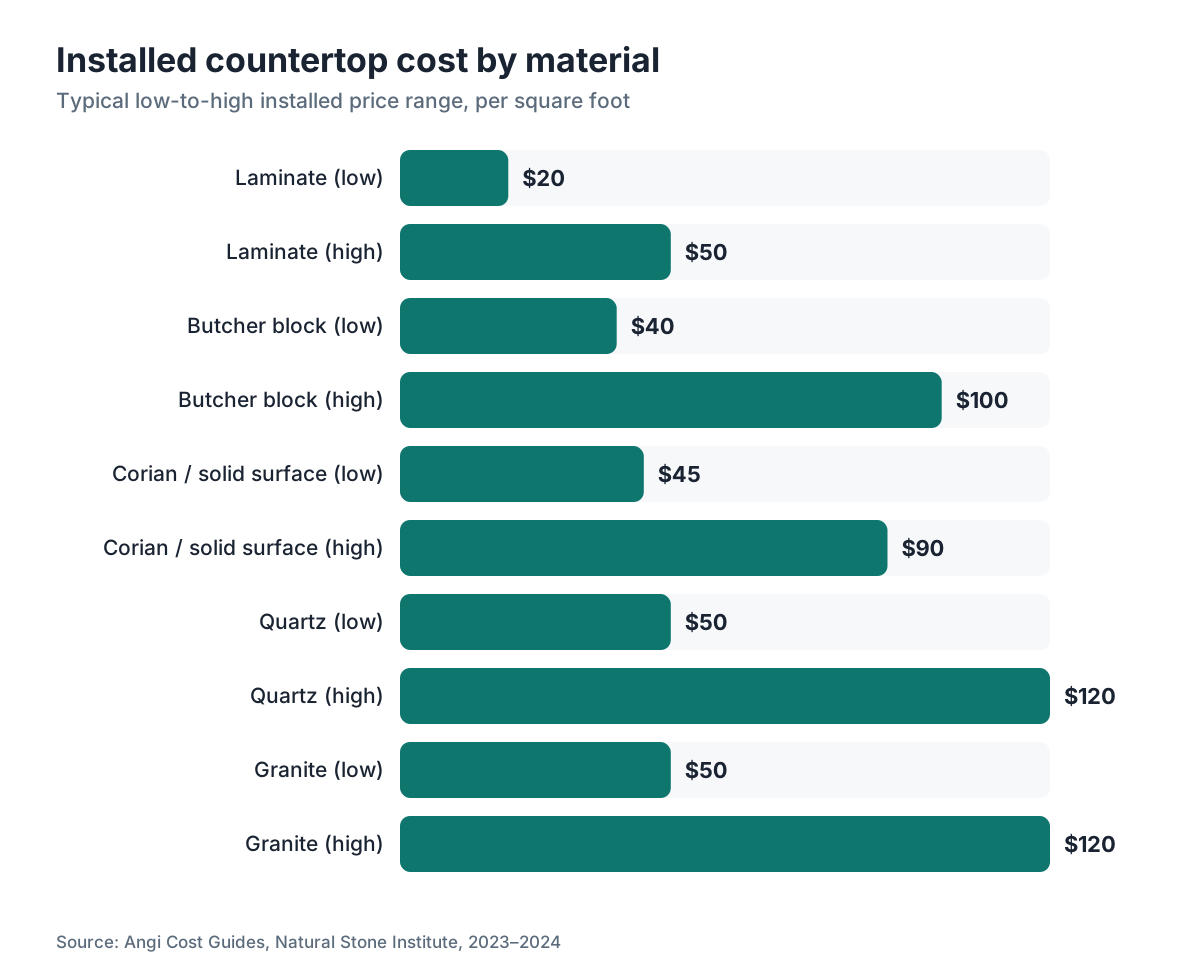
Granite countertops overlap heavily with quartz on price ($50 to $120 per square foot installed) and offer natural stone variation that some buyers prefer. Marble countertops are in the same price band but are more porous and softer than granite or quartz.
At the affordable end, laminate countertops run $20 to $50 per square foot installed and have improved dramatically in appearance and durability over the last decade. Formica countertops are laminate by another name and carry a similar price. Butcher block countertops run $40 to $100 per square foot installed, depending on wood species and thickness.
For solid surface, Corian countertops run $45 to $90 per square foot installed, with joins you can sand invisible and repairability that concrete shares but quartz does not.
So in context: concrete is at or above the top of the stone tier in cost, and it delivers that premium through customization, not through being a harder or more durable surface. Quartz sits comfortably in the mainstream stone tier and beats its price point on maintenance ease. [3]
How do fabricators quote and price concrete versus quartz jobs?
For fabricators reading this: the quoting math for concrete and quartz is structured differently, and that difference matters for margin management.
Quartz jobs are material-cost-anchored. You buy the slab at a known wholesale price, add a markup (typically 30 to 60 percent in competitive markets), then layer in labor by the hour or as a flat rate per job complexity tier. Waste factors run 15 to 25 percent on average for residential layouts. A shop with good nesting software can push waste down to 10 to 15 percent on straightforward jobs, which is where the margin lives. Shops using manual layout on quartz jobs commonly leave 5 to 10 percent in margin on the table through inefficient nesting.
Concrete jobs are labor-cost-anchored. Material is cheap; skilled time is expensive. Most concrete fabricators price by the hour for design and formwork, add a flat rate per square foot for the pour and cure, then add variable rates for finish work (grinding, polishing, sealing). Cast-in-place work carries additional risk premium because any error is on-site and hard to fix.
For shops that do both, concrete jobs typically carry higher gross margins (40 to 60 percent is common among established concrete specialists) but much higher time investment. Quartz jobs run at lower margins (25 to 40 percent) but move faster through the shop. Volume favors quartz; premium custom work favors concrete.
If you run a shop and want to model this properly, SlabWise's quoting tools let you set material and labor cost structures separately for different product lines, so you are not guessing at concrete margins the same way you quote stone slabs.
Good nesting on quartz jobs is where the profit hides. The kitchen countertops guide has context on typical job sizes that affect how you approach layout.
What should you actually choose: concrete or quartz?
Concrete wins if you want a completely custom shape (integrated sink, curved island, unusual dimensions), if you have a specific design vision that off-the-shelf materials cannot deliver, or if you are a skilled DIYer willing to invest the time. It also makes sense in outdoor kitchens and applications with high heat exposure.
Quartz wins for almost every other situation. It is easier to maintain, more consistent in appearance, faster to install, and usually $20 to $30 per square foot less expensive. It does not crack, does not need sealing, and does not require you to call a specialist every two years.
The one honest thing that budget-focused guides miss: price per square foot is not the whole picture. Add in sealing costs for concrete ($150 to $400 per service, every one to three years) and the gap widens over a ten-year period. A $4,000 concrete countertop that gets sealed four times over ten years has a true ownership cost closer to $5,200. A $3,200 quartz countertop has a ten-year ownership cost of about $3,400 (occasional cleaning products only).
That math is not the only input. Concrete is genuinely beautiful in the right kitchen, and some people will tell you the patina and character that develops over time is the whole point. That is a legitimate position. Just go in with clear eyes about the maintenance commitment. [5]
For more ways to cross-shop materials before committing, SlabWise's instant quote tool can generate a real installed price for quartz and stone options in your area, which gives you a concrete (so to speak) number to compare against any concrete specialist bids you get.
Frequently asked questions
Is concrete more expensive than quartz countertops?
Yes, in most cases. Concrete typically runs $75 to $150 per square foot installed, while quartz runs $50 to $120 per square foot. For a typical 40-square-foot kitchen, concrete usually costs $500 to $2,000 more than a comparable quartz installation. DIY concrete can bring the cost below quartz, but professionally installed concrete is almost always pricier.
How long do concrete countertops last compared to quartz?
Both materials can last decades. Quartz holds up better day-to-day because it is non-porous and needs no sealing. Concrete can last just as long but requires resealing every one to three years to stay stain-resistant. Poorly maintained concrete will stain and may crack within a few years. Well-maintained concrete in a careful kitchen can look excellent for twenty-plus years.
Do concrete countertops crack more than quartz?
Yes. Hairline cracks are a real and common characteristic of concrete countertops, especially cast-in-place work. They happen because concrete has low tensile strength and can flex slightly with cabinet or floor movement. Fiber reinforcement and proper curing reduce risk but do not eliminate it. Quartz, being a manufactured composite, has a much lower crack rate under normal residential use.
Can you seal concrete countertops to make them as stain-resistant as quartz?
A high-quality topical sealer (polyurethane or epoxy-based) brings concrete close to quartz on stain resistance, but not quite equal. The sealer can scratch and wear, exposing the concrete beneath. Quartz is non-porous by nature and does not rely on a surface coating. For a kitchen with heavy daily use, quartz is still the lower-maintenance choice even with the best concrete sealer applied.
How much does a DIY concrete countertop cost in materials only?
Materials for a DIY concrete countertop typically run $10 to $25 per square foot, covering countertop-mix concrete, fiber reinforcement, pigment, grinding pads, and sealer. For a 40-square-foot kitchen, expect to spend $400 to $1,000 on materials. The real cost is time: plan on two to four full days of work across the pour, cure, grind, and seal phases.
Does quartz or concrete add more resale value to a home?
Neither has strong isolated data. The NAR's Remodeling Impact Report shows a minor kitchen remodel (including countertops) returns roughly 77 cents on the dollar on average, but does not break down by material. In most markets, quartz is a safer choice for resale because it is more widely recognized as a neutral upgrade. Concrete can appeal in design-forward markets but may concern buyers who see hairline cracks.
What is the best countertop material for a kitchen with kids?
Quartz is generally the most practical choice for family kitchens. It does not need sealing, resists stains from juice and food coloring, and wipes clean easily. Concrete requires sealing and is more vulnerable to staining from anything acidic. Quartz also does not crack from normal use. If your family is hard on surfaces, quartz's non-porous, no-maintenance character makes it considerably easier to live with.
Can you put hot pans on concrete or quartz countertops?
Concrete handles heat well and is unlikely to discolor or crack from a hot pan. Quartz is less heat-tolerant: the polymer resin binder can discolor or crack with sustained heat above roughly 300 to 400 degrees Fahrenheit. Manufacturers universally recommend using trivets on quartz. For a kitchen where you regularly pull hot pots from the stove and set them down immediately, concrete has a real practical advantage on this one dimension.
How long does it take to get concrete countertops installed versus quartz?
Quartz typically has a lead time of one to three weeks from templating to installation. Precast concrete runs one to three weeks as well, but cast-in-place concrete adds on-site curing time of at least one week after the pour before the surface is usable, so total project time is often three to six weeks. If you are doing a kitchen remodel with a tight schedule, quartz is considerably easier to time.
Are concrete countertops hard to maintain?
Compared to quartz, yes. Concrete needs resealing every one to three years depending on use and sealer type. You should avoid prolonged contact with acidic foods (lemon juice, vinegar, wine) and use cutting boards consistently. Day-to-day cleaning is simple soap and water, but the maintenance schedule is real and ongoing. Quartz needs essentially nothing beyond routine cleaning.
What is the weight difference between concrete and quartz countertops?
Both are heavy. Standard 1.5-inch concrete runs 18 to 22 pounds per square foot. Standard 3 cm (about 1.2-inch) quartz runs 18 to 22 pounds per square foot as well. They are comparable in weight. Neither is safe on cabinet boxes that were not designed for stone or concrete loads. Standard residential kitchen cabinets can typically handle the weight, but confirm with your installer if you have older or lightweight cabinetry.
Is quartz cheaper than concrete per square foot everywhere in the US?
In most markets, quartz is cheaper per square foot installed. However, in areas with a strong concrete artisan community and limited quartz distribution (some rural markets, parts of the Mountain West), prices can converge. High-end quartz from premium brands like Cambria can reach $120 per square foot installed, which overlaps with mid-range concrete. Get local bids from both material types before assuming quartz is always cheaper in your area.
Can concrete countertops be made with an integrated sink?
Yes, and this is one of concrete's genuine advantages over quartz. A concrete fabricator can cast an integral sink basin directly into the countertop, creating a single unbroken surface with no seam, no undermount clips, and no caulk line to maintain. The cost adds $300 to $800 typically depending on basin size and complexity. Quartz cannot be fabricated into an integral sink without a separate sink unit.
Sources
- HomeAdvisor (Angi), Concrete Countertop Cost Guide: Concrete countertops cost $75 to $150 per square foot installed, with most homeowners spending $75 to $200 per square foot depending on complexity
- Cambria, Product Pricing and Collections: Cambria quartz sits at the premium end of the engineered quartz price range, manufactured in the United States
- HomeAdvisor (Angi), Quartz Countertop Cost Guide: Quartz countertops cost $50 to $120 per square foot installed, with a typical 40-square-foot kitchen running $2,000 to $4,800
- National Kitchen and Bath Association (NKBA), Design and Cost Trends Report: Quartz is the most popular countertop material in residential kitchens; fabrication has been largely mechanized by CNC equipment
- Portland Cement Association, Concrete Countertop Sealing and Maintenance: Concrete countertops require periodic sealing with penetrating or topical sealers; resealing interval depends on sealer type and use intensity
- Occupational Safety and Health Administration (OSHA), Silica in Construction: Engineered Stone: Engineered quartz contains 90 to 95 percent crystalline silica by weight; the resin binder makes the finished surface non-porous under normal use
- National Association of Realtors, 2022 Remodeling Impact Report: A minor kitchen remodel returns approximately 77 percent of its cost at resale on a national average basis
- US Bureau of Labor Statistics, Producer Price Index: Fabricated Structural Metal: Labor costs in skilled trades including stone and concrete fabrication have risen faster than general inflation since 2020
- Natural Stone Institute, Countertop Material Comparison: Quartz and granite countertops occupy similar installed price ranges; quartz offers better stain resistance than most natural stones
- Concrete Decor Magazine, Concrete Countertop Pricing Survey: Cast-in-place concrete countertops typically cost $20 to $40 per square foot more than precast work from the same shop due to on-site labor intensity
- University of Florida IFAS Extension, Home Improvement and Renovation ROI: Kitchen countertop upgrades are among the most visible renovation investments and affect buyer perception in resale scenarios
- ASTM International, Standard C192: Making and Curing Concrete Test Specimens: Concrete achieves sufficient strength for surface finishing and sealing at a minimum of seven days of cure time under standard temperature conditions
Last updated 2026-07-09