TL;DR
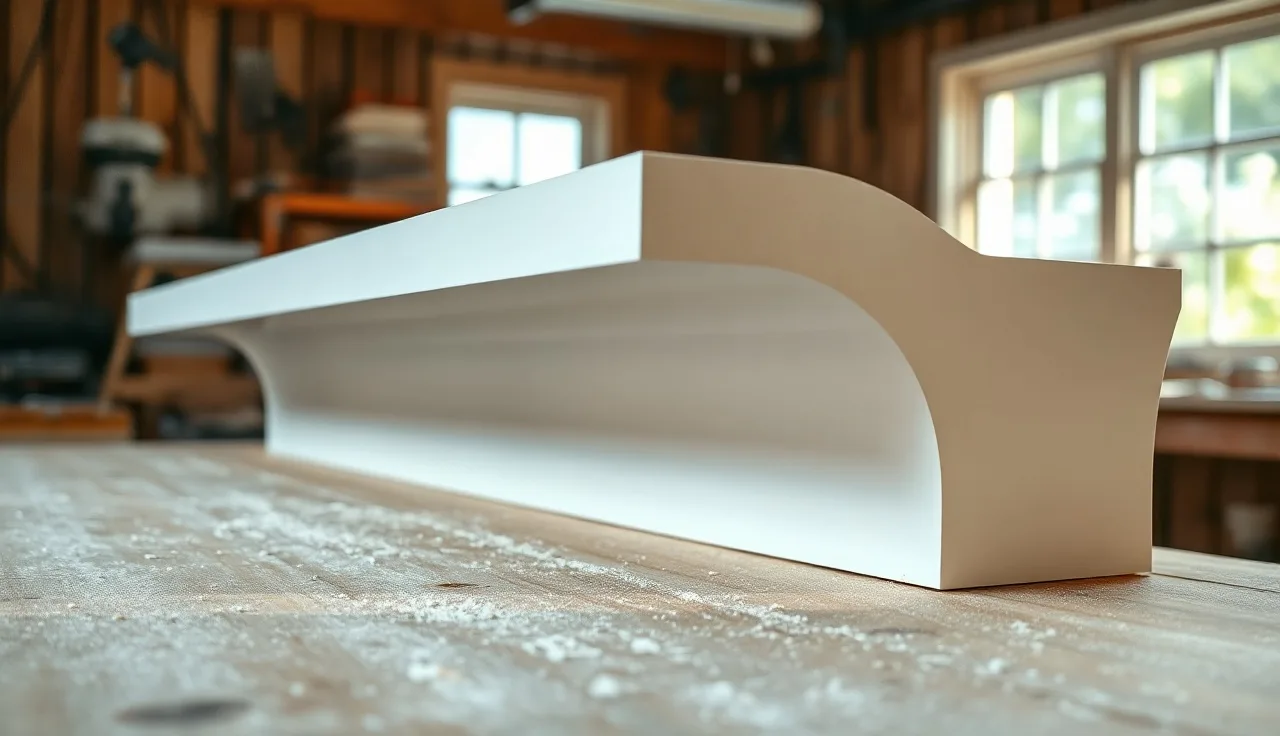
- Backsplash cope is a concave cove milled into the back of a countertop so the integral backsplash sits flush against a wall that isn't perfectly flat.
- It's standard on post-form laminate and adapted for stone.
- The cut runs about 3/4 inch wide and 3/8 inch deep, removing material where the counter meets the wall so gaps disappear and the joint looks finished.
What exactly is backsplash cope on a countertop?
Backsplash cope is a routed relief channel on the underside of a countertop's integral backsplash, right where the backsplash meets the wall. The router carves out a small arc of material, usually about 3/4 inch deep, so the backsplash can press flat against a wall that's a little out of plumb, carries a bead of old caulk, or has baseboard trim running too high behind the counter.
The name borrows from woodworking. A "cope" is a cut that lets one piece follow the profile of another. In countertop shops it goes by "scribe cut" or "cope cut" too. What you get is a curved hollow on the back face of the backsplash that bridges over bumps instead of riding on top of them.
Skip the cope and the backsplash only touches the wall at its high spots. Every other inch of the joint shows a gap, and you're stuck filling it with caulk that ages badly and looks sloppy. A coped backsplash doesn't rock on anything. The cut clears whatever's in the way.
Don't confuse it with the cove profile on the front edge of a counter. The cope is pure function and it's hidden the moment the counter goes in. Nobody sees it. That's the whole point.
Which countertop materials use backsplash cope?
Post-form laminate counters with rolled integral backsplashes almost always get a cope. The backsplash on a post-form counter is one continuous piece of laminated particleboard that curves up from the surface, so it has to conform to the wall. Fabricators run the cope as a standard operation on a shaper or CNC router before the counter leaves the shop. Our laminate countertops overview covers how these surfaces get built, and the classic version lives in Formica countertops.
Stone handles wall bumps a different way. Fabricators working granite countertops, marble countertops, and engineered stone like Cambria countertops usually scribe the backsplash with an angle grinder or CNC to trace the wall, grinding the back of the stone itself rather than routing a formal cove. Same idea, different execution. Stone is too brittle for the thin-walled router cut that works fine in MDF or particleboard.
Solid surface like Corian countertops copes much like laminate because the material machines clean. Butcher block copes too; see butcher block countertops for how wood movement plays into the back joint.
Short version: cope is standard on post-form laminate, optional or adapted on everything else.
Why does backsplash cope matter for installation?
Walls are rarely plumb or flat. Residential framing tolerances allow noticeable bow across a wall span, and drywall compound and paint add their own irregularity on top of that [1]. In a kitchen, a quarter inch of variation matters a lot when you're trying to press a rigid backsplash flat.
A cope means the installer doesn't have to shim the counter forward to dodge a high spot, doesn't have to grind the wall down, and doesn't have to accept a gap that catches grease. The counter sits level, the backsplash hugs the wall, and one thin bead of paintable caulk along the top edge closes the joint.
For fabricators, a skipped cope is a callback. The homeowner calls two weeks out because the backsplash won't sit flat, or because caulk is splitting where the counter only touches at one point. Callbacks cost real money. A proper cope takes a couple minutes on the shaper and kills that risk.
For homeowners the effect is simple. A coped backsplash looks finished on day one and stays that way. The joint doesn't crack open as the house settles, because the cope already made room for the movement.
How is the cope cut actually made?
On post-form laminate, the standard tool is a shaper table fitted with a cove or cope bit, usually a 3/4-inch radius carbide cutter. The fabricator runs the counter section upside-down along a fence, cutting the relief the full length of the backsplash. Plenty of shops do it on a CNC router instead, which repeats better and lets them set exact depth per job.
Cope depth gets set to clear the tallest thing it might hit. That's often less about baseboard than you'd think. A 3.5-inch baseboard with a 1/4-inch shoe peaks around 3/4 inch above the subfloor, but the counter deck sits near 36 inches up, so the baseboard usually isn't the culprit. The cope is more often clearing a paint ridge, an old caulk bead from a previous counter, or a slight bow in the drywall.
Shops running quoting and job software, like SlabWise, log the cope as a line item so it never gets skipped in production. That checklist discipline matters when dozens of jobs move across the floor every week.
For stone and engineered quartz, the scribe is done with a 4-inch angle grinder or a CNC profile wheel. The fabricator sets the counter in place, marks the wall gap with a compass or scribing tool, then grinds the back of the stone to that line. Slower than routing particleboard, same principle.
What does a cope cut look like before installation?
Grab a post-form countertop section at any home improvement store and flip it over. The underside of the backsplash has a smooth concave channel running end to end. That's the cope. It reads like a shallow half-pipe, roughly 3/4 inch wide and 1/4 to 3/8 inch deep at its deepest.
The channel is smooth because a cove bit leaves a rounded profile, not a sharp notch. That round shape spreads stress better than a square cut, which matters because particleboard and MDF are weak across short grain sections.
From the front, after install, you see nothing. The backsplash face lies flat against the wall. The cope hides completely between the backsplash and the wall. The only joint you'll ever see is the top edge of the backsplash where it meets painted drywall, and that's where the caulk goes.
How is backsplash cope different from scribing a countertop?
People swap these terms, but they aren't the same. A cope is a fixed-profile router pass that removes a standardized arc. Scribing is custom: you measure the actual wall irregularity and take off material to match that exact profile.
In practice most post-form fabricators cope first and scribe only if they have to. The cope handles ordinary wall variation. If a wall is badly out of plumb (more than 3/8 inch over the counter run), the installer scribes on top of the cope, taking more off the back face to close what's left.
Stone has no pre-cut cope. Every stone install is effectively a scribe job. The installer grinds the back of the stone backsplash to match whatever the wall actually does. That's one reason stone jobs take longer than a post-form drop.
The last difference is wiggle room. A coped post-form counter can be shimmed and nudged during install because the cope leaves clearance to move. A tightly scribed stone backsplash gives you almost nothing once the adhesive grabs.
Does every countertop with a backsplash need a cope cut?
No. Separate tile backsplashes don't need one, because the tile goes on the wall after the counter is set and doesn't have to conform to anything. The counter just needs to be level, then tile runs up behind it.
Counters with no backsplash at all don't need a cope, obviously. A counter meant to accept a separate stone or glass tile backsplash later usually just has a square back edge, maybe a small lip or recessed ledge depending on the design.
The cope exists for integral backsplashes, where the backsplash is part of the countertop itself. That's most common with post-form laminate, some solid-surface work, and certain budget stone packages where the fabricator cuts a short 4-inch stone backsplash piece that glues to the wall behind the counter. That stone piece needs its back face ground to trace the wall.
For most kitchen countertops with separate tile or stone tile backsplashes, the cope question never comes up.
What are the typical dimensions of a backsplash cope cut?
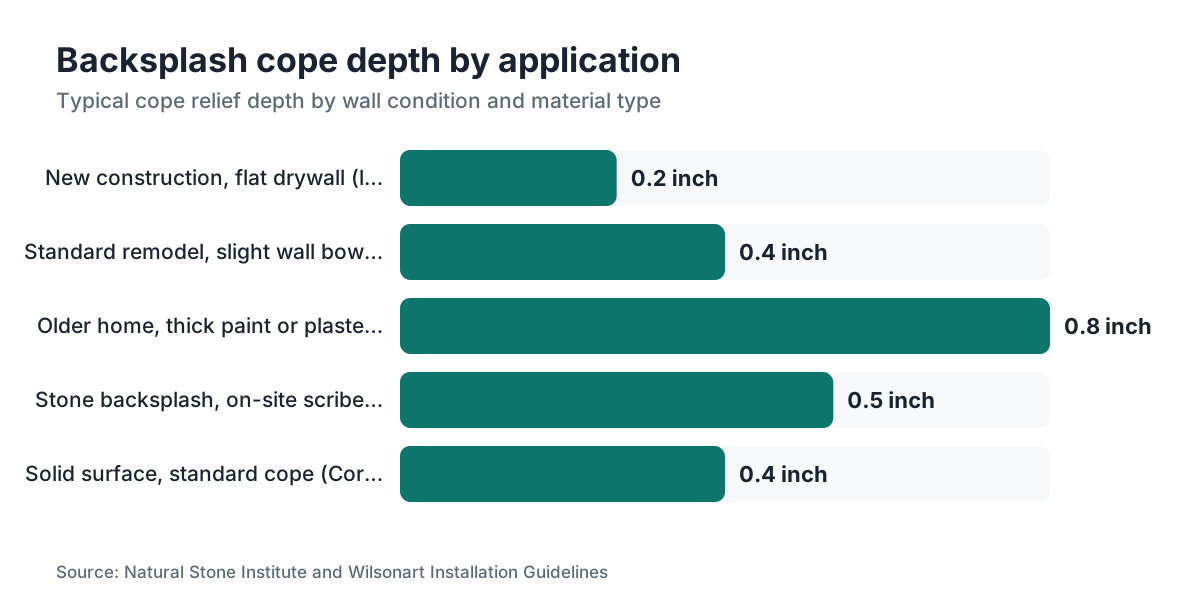
The standard post-form cope runs about 3/4 inch wide and 3/8 inch deep, cut with a 3/4-inch radius cove bit. Some manufacturers go shallower at 1/4 inch for walls in good shape, and some custom shops go deeper when the job site has known baseboard or trim conflicts.
Here's how the common profiles compare:
| Cope depth | Typical use case | Wall clearance provided |
|---|---|---|
| 1/4 inch | New construction, flat drywall | Handles minor paint ridges and thin caulk |
| 3/8 inch | Standard residential remodel | Handles most baseboard toe situations and moderate wall bow |
| 3/4 inch | Older homes, thick baseboard, plaster walls | Clears heavy irregularity, thick paint buildup |
The cope on the backsplash face usually runs the full backsplash height minus about 1/2 inch at the top, so the top edge still makes solid contact with the wall for caulking. Run the cope all the way up and you'd open a gap at the top instead of a clean relief channel.
For stone backsplashes scribed on-site, depth is whatever the wall demands. Some installers grind almost nothing. Others take 1/2 inch or more off a warped section.
Can you add a cope cut to a countertop that doesn't have one?
On post-form laminate, yes, but it's awkward. You'd pull the counter, flip it, run it through a shaper or trace the profile with a router and fence, then reset it. Most homeowners won't. If a post-form counter is already in and the backsplash won't sit flat, the practical fix is to scribe on-site with a belt sander or oscillating tool, taking off material until the backsplash settles.
On stone, adding a cope or scribe after install means pulling the counter, grinding the back of the stone, and resetting it. That's a full reinstallation. Doable, but figure a few hundred dollars in labor depending on your market.
The smarter move is to check wall conditions before install and flag anything that needs extra clearance. A good fabricator visits the site, checks for baseboard conflicts, and sets the cope depth before the slab is cut. Catch it then and it costs nothing. Catch it after and it costs real time and money.
Doing a countertop installation yourself? Run a long straightedge along the wall at counter height before you accept delivery. Mark high spots with masking tape so whoever's cutting knows exactly where the clearance needs to go.
How much does a backsplash cope cut cost?
On post-form laminate, the cope is almost always baked into the base price. It's a standard step, less than a minute of machine time, and it never shows up as a line item. Buy a laminate counter at a home improvement store and the cope is already there.
For stone and engineered quartz, scribing the backsplash to the wall usually gets charged separately. Expect $50 to $150 per run of countertop in most U.S. markets as of 2024, higher in coastal metros. Nobody has published a rigorous national survey on scribing costs specifically, so these ranges come from fabricator pricing discussions and trade sources like Stone World and the Natural Stone Institute's fabrication guidelines [2].
For solid surface, cope or scribe work usually bills at shop labor rate, roughly $75 to $125 per hour, with a scribe on a standard 10-foot kitchen taking 30 to 60 minutes.
The real question homeowners should ask: what happens if the installer shows up, the wall needs scribing, and it wasn't quoted? Get scope in writing before install day. Some fabricators include one pass of scribing and charge for anything beyond 1/4 inch of adjustment.
What can go wrong if a backsplash cope is skipped or done wrong?
The usual failure is a rocking backsplash. The counter lands on the high point of the wall, so one end of the backsplash floats 1/8 to 1/4 inch off. You fill it with caulk, the caulk bridges a void, and within a year thermal movement and house settling crack it open. Then water gets behind the counter.
Water behind a backsplash is a bigger deal than it sounds. Particleboard swells when wet. MDF delaminates. A swollen backsplash pushes the laminate face and cracks the top edge of the counter. At that point the repair is a full replacement.
Too deep a cope is a lesser problem but still annoying. Remove too much and the top edge won't touch the wall, so you get a visible gap at the top where caulk has to bridge a real void instead of sealing a hairline. Caulk over a gap bigger than about 1/8 inch doesn't hold up.
A cope that isn't parallel to the counter surface tilts the backsplash forward, so it looks like it's leaning away from the wall at the top. That's a shaper fence setup error, and the whole section needs re-cutting.
For stone, a scribe that takes off too much leaves a thin spot that can crack in transport or from thermal shock. Most fabricators leave at least 3/8 inch of stone thickness after scribing.
How do fabricators check their cope cut quality before delivery?
The shop check is a straightedge and feeler gauge. Lay the coped backsplash face against a flat reference and confirm the cope clears the surface by the intended depth while the top and bottom edges make solid contact. If the edges rock, the cope is too deep or not parallel.
Some shops build a simple mock-wall jig from 3/4-inch plywood with a known out-of-plumb condition. They press the finished section against it to confirm the cope clears without the top edge gapping.
CNC shops verify through machine records. The router cuts the cope to a programmed depth, and the program is the record. Human operators do a visual check on the first piece of a run and after any bit change.
Stone fabricators check scribed backsplashes on-site with a strip of flexible cardstock slid behind the backsplash after setting. Anywhere the card slides all the way through without resistance flags a gap that needs more grinding.
Frequently asked questions
Is backsplash cope the same as a cove edge profile?
No. A cove edge profile is a decorative concave shape on the visible front or top edge of a countertop, chosen for looks. Backsplash cope is a functional relief channel on the hidden back face of the backsplash that lets it sit flush against an imperfect wall. One is decorative and visible. The other is structural and completely hidden once installed.
Do granite countertops need a backsplash cope cut?
Not a formal router cope, but granite backsplashes do need their back face ground or scribed to fit the wall. Stone fabricators call this scribing rather than coping. The result is the same: the backsplash conforms to wall irregularities instead of rocking on high spots. For granite, the grinding uses an angle grinder or CNC profile wheel, not a router, because granite is too brittle for a thin cove cut.
How do I know if my countertop already has a cope cut?
Flip the section over and look at the back face of the backsplash (the side that presses against the wall). A smooth concave channel running the length of the backsplash means a cope cut was made. On post-form laminate it's almost always present from the factory. On stone sections, look for grinding marks along the back face instead of a clean saw cut.
Can I cope a countertop backsplash myself without a shaper?
You can, but it takes patience. Use a router with a cove bit and a straight fence clamped to the back face, or an oscillating tool with a flexible sanding pad to remove material gradually. Work in light passes and check with a straightedge often. For laminate, a router works well. For stone, you need an angle grinder with a diamond cup wheel, which a careful DIYer can manage but carries a real risk of cracking the stone.
What is the standard depth for a countertop cope cut?
The common standard is 3/8 inch deep with a 3/4-inch radius cove bit, which handles typical residential wall variation. Some fabricators use 1/4 inch for new construction with smooth drywall and 3/4 inch for older homes with thick paint buildup or plaster walls. There's no single industry-mandated standard. Depth is a fabricator judgment call based on job site conditions.
Will a missing cope cut void a countertop warranty?
It depends on the manufacturer's terms. Most post-form laminate makers require installation per their guides, and those guides call for a coped backsplash on walls that aren't perfectly plumb. If water damage to the substrate results from a backsplash that wasn't coped and didn't sit flat, a manufacturer can reasonably argue installation error. Check the installation instructions for your specific product before filing any claim.
Does a laminate countertop's cope cut affect its overall strength?
Minimally. The cope removes a small amount from the back face of the backsplash, which isn't a structural section. The countertop surface is unaffected. As long as the cope doesn't cut so deep that it leaves under 1/4 inch of substrate behind the backsplash face, the strength is fine. MDF and particleboard are weakest across the grain anyway, so the cope direction isn't the critical load path.
How do installers handle a wall that's more than 3/4 inch out of plumb behind the counter?
When the deviation exceeds what a standard cope can clear, installers have three options: add a secondary scribe pass removing more material from the back of the backsplash, shim the counter forward so the backsplash clears the high spot entirely and then caulk the top gap, or repair the wall before installation. Most of the time shimming forward and caulking is the fastest field fix, though it leaves a wider visible caulk joint.
Do post-form countertops from big-box stores already have a cope cut?
Yes. Standard post-form sections sold at retailers like Home Depot and Lowe's are factory-coped as part of the post-forming process. The 3/8-inch cope is built in. What they don't have is a custom scribe for your specific wall. If your wall is significantly out of plumb, you'll scribe on top of the existing cope, usually done on-site during installation.
Is backsplash cope the same thing as a scribing strip?
No. A scribing strip is a separate thin strip added to the edge of a cabinet or countertop that's then custom-cut to follow the wall. Backsplash cope is material removed from the backsplash itself. A cope subtracts; a scribing strip adds. Both solve the same wall-conformity problem through opposite approaches. Cabinet installs use scribing strips more often than countertop fabricators do.
How long does it take a fabricator to cut a cope on a countertop section?
On a shaper table, a standard 10-foot run takes about 2 to 4 minutes including setup and the pass, assuming the fence is already dialed in. On a CNC router the program runs in under 2 minutes once the counter is fixtured. Setting up a shaper fence from scratch takes 10 to 20 minutes, so shops doing post-form work keep a dedicated fence setting for their standard cope depth and rarely touch it.
Can you cope a stone backsplash that is already glued to the wall?
Not really, not without pulling it off the wall first. Once a stone backsplash is set with construction adhesive or silicone, you can't reach the back face to grind it. If a glued stone backsplash isn't sitting flat, your in-place options are to caulk the gaps aggressively or remove the backsplash, grind it, and reinstall. Removal risks cracking the stone, especially if the bond is strong.
Does a countertop cope cut affect how the countertop is priced?
For post-form laminate, no. It's included in the base price. For stone and engineered quartz, scribing the backsplash is sometimes a line-item add-on, typically $50 to $150 per run depending on the market and how much material comes off. Ask your fabricator during the quote whether scribing is included or billed separately, and confirm what happens if on-site conditions call for more scribing than planned.
Sources
- National Association of Home Builders, Residential Construction Performance Guidelines: Residential wall framing tolerances allow measurable deflection across a wall span per NAHB construction performance guidelines.
- Natural Stone Institute (formerly Marble Institute of America), Dimension Stone Design Manual and Fabrication Guidelines: Industry fabrication guidelines for stone countertop scribing and backsplash fitting referenced for pricing and dimensional standards.
- Architectural Woodwork Institute, Architectural Woodwork Standards: AWI standards for countertop fabrication and scribing tolerances in residential and commercial applications.
- U.S. Department of Housing and Urban Development, Minimum Property Standards: HUD Minimum Property Standards reference plumb and level tolerances for interior wall finish in residential construction.
- International Code Council, International Residential Code, Chapter 6 Wall Construction: IRC wall construction standards govern stud alignment and surface flatness tolerances relevant to countertop installation conditions.
- Stone World Magazine, Countertop Fabrication Technical Articles: Trade publication source for fabricator pricing norms and shop practices including scribing and backsplash fitting costs.
- Wilsonart, Post-Form Countertop Installation Instructions: Manufacturer installation documentation specifying cope cut requirements for post-form laminate backsplash installation.
- Formica Corporation, Laminate Countertop Installation Guide: Installation guide specifying scribing and coping procedures for laminate backsplash against irregular walls.
- OSHA, Construction Industry Standards 29 CFR 1926: Safety standards for shop operation of routers and shapers used in countertop cope cutting.
Last updated 2026-07-10