TL;DR
- For most white quartz countertops, use a 100% silicone caulk in pure white or bright white.
- Match the caulk to the lightest background tone in your slab, not the veining.
- Color is the second decision.
- Material comes first: use silicone, not latex, because silicone resists mold and stays flexible at the sink and backsplash joints where quartz moves.
Why does caulk color matter so much on white quartz?
White quartz hides nothing. A slightly off-white caulk line at the backsplash or sink cutout reads like a stain the first time you clean around it. The slab has almost no visual noise to bury a mismatch, so the joint becomes a design element whether you meant it to or not.
Quartz counters also sit at the wettest spots in a kitchen or bath: the sink, the wall, and sometimes a cooktop cutout. The caulk there does real work, keeping water from creeping under the slab or into drywall. A bad color choice is annoying. A bad material choice causes rot and mold.
So the decision has two layers. Pick the right material, then pick the right shade. Most homeowners jump straight to shade and regret the material later.
What type of caulk should you use on quartz countertops?
Use 100% silicone. Not latex, not "siliconized latex," not painter's caulk. Full silicone.
Here's the reason. Quartz slabs expand and contract a little with temperature, and the joint between the slab and a wall or sink flexes every time someone leans on the counter or a pot of boiling water heats the surface. Silicone stays permanently flexible. It stretches and returns without cracking. Latex and siliconized hybrids harden over time, crack, and let water through.
Silicone also holds off mold far better than latex in the wet zone around a sink. The CDC puts it plainly in its mold guidance: mold grows where there is moisture and a food source. Silicone gives mold almost no organic food, while latex caulk breaks down at the surface and feeds it.
The real tradeoff with silicone: you cannot paint it, and it comes in a limited color range. That's fine for white quartz, because white, bright white, almond, and clear cover everything you need. If someone tells you to buy a paintable caulk for a stone countertop joint in a wet spot, that's bad advice.
For the backsplash joint, some fabricators run a color-matched sanded grout where tile meets stone. But anywhere the joint has to flex or sits in standing water, silicone is the call. The countertop installation guide breaks down which joints get caulked versus grouted.
What color caulk options exist for white quartz?
Silicone made for kitchen and bath comes in a narrower color range than latex. Here's what you'll actually find at a hardware store or stone supplier.
| Color Name | Typical Use Case | Notes |
|---|---|---|
| Pure White | Bright white quartz (Calacatta, Arctic White) | Closest to true white; may read slightly blue-white |
| Bright White | Most standard white quartz | Warmer than pure white; the most versatile choice |
| White | Mid-range white quartz | Slightly cream; good for quartz with warm undertones |
| Almond / Biscuit | Off-white, cream, or warm quartz | Matches counters that are more ivory than white |
| Clear / Translucent | Any color | Invisible but shows buildup over time; best at cooktop cutouts |
| Gray | White quartz with heavy gray veining | Matches grout lines; can look intentional |
Most white quartz lands in the bright white or pure white bucket. Silestone Iconic White, Cambria Torquay, and MSI Calacatta Laza read as cool whites, and bright white silicone usually matches. Warmer quartz like Caesarstone Clamshell or Silestone Blanco Norte often needs almond or a true white rather than bright white.
How do you match caulk color to your specific white quartz?
Bring a sample of your actual slab to the store, or shoot a photo in natural light. Skip warm incandescent lighting, which shifts everything yellow. Hold the caulk tube against the stone edge. Most tubes carry a color patch on the label.
Watch two things. Match the background field of the stone, not the veining. The veining in a Calacatta-style quartz is gray or gold, and you don't want that. You want the white ground. Then check the caulk in daylight and under your own kitchen lighting. A pure white that looks perfect in the fluorescent hardware aisle can go slightly blue-white under warm recessed lights at home.
If you're torn between two shades, go slightly warmer. A caulk a touch more cream than the slab reads as deliberate, or at least neutral. A caulk that's cooler or brighter than the stone looks like a mistake.
Many fabricators run a test bead on a scrap of the actual stone before install day. Doing a DIY re-caulk? Test on a hidden spot near the back of the counter first.
Should you use clear caulk on white quartz instead?
Clear silicone earns its spot in a few places: around a cooktop cutout, under an undermount sink rim where the joint barely shows, or anywhere you want the stone to look like one unbroken surface. There, it's a reasonable pick.
At the backsplash joint and the wall joint, clear caulk has one stubborn problem. It picks up mineral deposits, soap scum, and grease vapor from cooking, and it turns from clear to a murky yellow-gray. White caulk that discolors still reads as somewhat dirty but blends with the stone. Clear caulk that discolors just looks like a failed joint. If your backsplash is tile, clear caulk tends to show the tile adhesive or wall texture through it, which looks unfinished.
So: clear works at low-visibility joints. Skip it at any joint you stare at from a standing position at the counter.
What about caulk at the sink versus the backsplash?
Two different environments, two slightly different priorities.
At the sink, especially an undermount, the joint handles regular water and needs maximum mold resistance. GE, DAP, and Sashco all make kitchen-and-bath 100% silicone with mildew inhibitors. These earn the small price bump over basic silicone. Color barely matters here because the joint hides under the sink rim or inside the cutout.
At the backsplash, the joint is fully visible, it's relatively dry compared to the sink, and color match is the whole game. This is where you spend your color-selection time. The joint here is also smaller, usually 1/8 to 3/16 of an inch, so a fine-tip applicator or a narrow nozzle cut at a shallow angle matters for a clean line.
Where the counter meets a side wall (not a backsplash), some people reach for paintable caulk so they can match the wall color. Fine, if the joint sits above the splash zone and never gets wet. Below the splash zone, silicone only.
Are there specific caulk brands that work well on quartz?
A handful of products come up again and again in fabricator shops and on stone industry forums.
GE Advanced Silicone 2 Kitchen and Bath (formerly GE Supreme) is the most widely recommended general-purpose silicone for countertop joints. It comes in pure white, bright white, and almond, cures in about 24 hours, and holds up in wet spots. GE's technical data sheets document the cure time and water rating.
DAP All-Purpose 100% Silicone sits on most hardware store shelves and comes in a useful color range. It runs a bit thinner than GE, which some people find easier to smooth.
Mapei's Keracaulk S and Custom Building Products' Polyblend Plus are sanded silicone caulks that match standard tile grout colors. They matter if your backsplash tile has a white or light gray grout line and you want the countertop-to-tile joint to disappear. They aren't pure silicone in the same way, so use them only at the tile joint, never at the sink.
Oxford Silaprene is used by some professional fabricators for stone joints. It's harder to find at retail, but some stone supply houses stock it.
One caution. Avoid any silicone labeled "acetoxy cure" that reeks of vinegar (acetic acid) as you apply it. OSHA's chemical hazard guidance flags acetic acid off-gassing as a mucous-membrane irritant, and neutral-cure products are the better choice indoors near food prep. That acid can also etch some polished stone. Most retail kitchen-and-bath silicones are neutral-cure and safe, but check if you're buying from a contractor supply house.
How do you apply caulk to quartz countertops for a clean result?
Clean the joint completely first. Old caulk, grease, or stone sealer residue kills adhesion. A plastic caulk-remover tool and denatured alcohol on a lint-free cloth handle most joints. Let the surface dry fully, ideally overnight.
Mask both sides of the joint with painter's tape before you apply. This is the one step most DIYers skip and then regret. Tape controls exactly how wide your caulk line runs and gives you a clean edge to work to.
Cut the nozzle at a 20 to 30 degree angle. For a 1/8-inch joint, the opening should be about 1/8 inch. Bigger is not better. Apply in one continuous pass if you can, pressing the bead into the joint instead of dragging a fat fillet across the surface.
Smooth with a wet finger or a caulk tool right away. Pull the painter's tape while the caulk is still wet, before it skins over. That's the step that separates a professional line from a ragged one.
Don't use the counter or run water over it for at least 24 hours. Most 100% silicones need 24 to 48 hours to cure fully, though a surface skin forms in about an hour.
If you run a shop, fabricators using job management software like SlabWise can itemize caulking as its own line, which makes proposals easier for homeowners to compare.
How long does caulk last on quartz countertops?
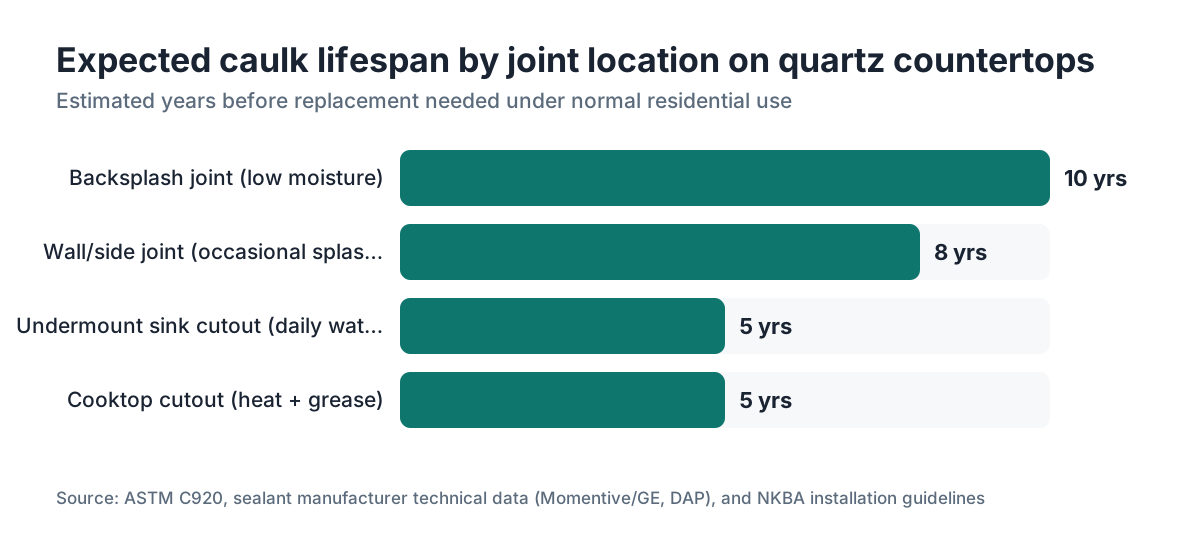
A well-applied 100% silicone bead in a normal kitchen lasts 5 to 10 years before it needs replacing, assuming no physical damage and normal cleaning. High-traffic spots with daily water (around the sink) need refreshing closer to the 5-year mark. Dry backsplash joints can run 10 years or more.
You'll know it's time to re-caulk when you see any of these: gaps or cracks in the bead, discoloration that won't clean off, black mold spots that come back within a day or two of cleaning, or the caulk pulling away from the stone or wall along an edge.
One thing shortens caulk life fast: abrasive cleaners or bleach-based products used directly on the joint. Bleach degrades silicone over time. For routine cleaning around the joint, diluted dish soap or a stone-safe cleaner does the job. The how to clean stone countertops guide covers products that are safe near stone joints.
What if the caulk color still doesn't match after it cures?
Silicone can shift color a little as it cures. Pure white products sometimes look bright or even slightly translucent when wet, then dry to a truer white. If a fresh bead looks off after 24 hours, give it another 24 to 48 hours before you decide it's wrong. Some products keep developing color as moisture leaves the bead.
If the cured color really doesn't match, you have two moves. Remove it with a plastic scraper and a commercial silicone remover (Goo Gone Pro-Power or a dedicated silicone stripper works, though you'll need to clean the surface hard before reapplying). Or lay a thin second bead over the fully cured first one in a different shade, though layered beads are harder to keep clean.
For a fabricator on a new install, the smart move is a test bead on a scrap of the actual slab before the job, with the result noted in the file. That adds maybe five minutes per project and kills color callbacks.
Does caulk color affect how you clean or seal white quartz?
Quartz is a non-porous engineered stone, so it doesn't need sealing the way natural stone does. The Natural Stone Institute notes that engineered quartz surfaces are factory-finished and do not require topical sealers. The caulk joint is a different story.
Some stone sealers get applied in a wide pass and accidentally coat the caulk bead. Silane or siloxane-based sealers can leave silicone looking white or hazy. If you're treating the stone nearby, mask the caulk joint or seal before you re-caulk.
Cleaners that are safe on white quartz (mild soap, water, isopropyl alcohol) are also safe on cured silicone. Skip regular bleach-based sprays at the joint. Occasional diluted bleach for a mold spot is fine, but steady bleach exposure degrades silicone faster than normal. The how to clean quartzite countertops article covers compatible cleaning chemistry on related surfaces.
Is this any different for a quartz backsplash compared to a countertop?
A quartz slab backsplash or quartz tile backsplash gets the same material rule (silicone at joints that flex or get wet) with a slightly different color priority.
If your backsplash and countertop are the same quartz, the caulk at the seam between them should match both, which is usually easy. If your backsplash is white ceramic or subway tile over a white quartz counter, match the caulk to whichever surface reads more prominent from the normal viewing angle, usually the tile grout color.
For quartz-to-quartz seams in a multi-slab job (a large island, for example), the color logic is the same but the application isn't. The fabricator joins those with a color-matched epoxy or polyester adhesive, not standard silicone. Those seams are structural.
Frequently asked questions
Can I use white grout instead of white caulk at my quartz backsplash joint?
No. Grout is rigid and cracks at the joint between countertop and backsplash because that joint flexes. The Tile Council of North America requires a flexible sealant, not grout, at all changes of plane and changes of material. Use silicone caulk there, even if you grout everywhere else on the tile field.
What happens if I use the wrong color caulk?
Functionally, nothing. The performance gap between white and almond silicone is zero. Visually, a mismatched line reads as a dirty joint or an unfinished install. On bright white quartz it's especially loud because the stone has so little texture to distract from the joint. Spend 10 minutes matching before you apply.
How long should I wait after installation before caulking?
On a brand-new install, most fabricators caulk during or right after installation. The stone needs to be dry and at room temperature. If fresh adhesive went under the slab, wait for it to cure per the manufacturer's spec, usually 24 to 48 hours, before caulking the perimeter. For a re-caulk on an existing counter, the surface just needs to be clean and dry.
Is silicone caulk food-safe near a kitchen countertop?
Once fully cured, 100% silicone is considered inert and non-toxic. The FDA lists certain cured silicone formulations as acceptable for indirect food contact under 21 CFR Part 177. Cured kitchen-and-bath caulk at a countertop joint isn't a food-contact surface in normal use anyway. Don't use the joint itself as a cutting surface, whatever the material.
My white quartz has gold or warm gray veining. Should I match the veining color instead?
Match the background field, not the veining. The veining in a Calacatta or Statuario style covers a minority of the surface. A gold or gray caulk line reads as a dirty joint, not a design choice. Stick with bright white or white and let the veining do its own work.
Can I paint over silicone caulk if I decide I don't like the color?
No. Latex and alkyd paint won't stick to cured silicone. It peels within days. To change color, remove the silicone and lay a new bead. Some specialty adhesion primers claim to prep silicone for paint, but results are inconsistent, and a wet, flexing joint makes paint adhesion worse over time regardless.
How wide should the caulk bead be at the backsplash joint?
For most countertop-to-backsplash joints, 1/8 inch is the target. Wide enough to allow movement, narrow enough to look intentional. A bead over 1/4 inch tends to look sloppy and is harder to keep clean. Cut your nozzle to match the actual joint width rather than skimming a fat bead over a small gap.
Can I use caulk to fill a chip in white quartz?
Silicone is the wrong product for stone chip repair. It's flexible, slightly translucent, and doesn't bond to polished stone for structural purposes. Fabricators repair quartz chips with color-matched epoxy or polyester filler kits made for engineered stone. Caulk at a chip looks worse than the chip and won't hold.
Does quartz brand affect what caulk color I should use?
Somewhat. Cambria, Silestone, and Caesarstone all make whites with different undertones: some cool and blue-white, others warm or cream. The brand doesn't change the product type you need (100% silicone), but it does affect the shade. Compare the caulk tube against a sample of your actual slab in natural daylight before buying.
What's the best way to remove old caulk from a quartz countertop?
Use a plastic scraper or a dedicated caulk-removal tool, never a metal blade, to protect the polished surface. Most cured silicone peels fairly cleanly once you get an edge started. A commercial silicone remover like Goo Gone Pro-Power or a silicone solvent softens any residue. Wipe thoroughly with denatured alcohol before you apply new caulk.
Is there a caulk color that works for white quartz in a bathroom as well as a kitchen?
Bright white 100% silicone is the most transferable option. Kitchen and bath silicone is sold for both rooms; there's no separate formulation you need. The main bathroom difference is that the counter may sit against tile with a specific grout color. Match the caulk to the stone background as in a kitchen, unless the tile grout is a very close match to almond or gray, in which case blend to the tile.
Do fabricators caulk countertops as part of installation, or is that the homeowner's job?
Most fabricators caulk the countertop perimeter, sink cutout, and cooktop cutout as part of a standard install. The backsplash tile joint often falls to the tile setter or homeowner if tile follows the stone work. Confirm what's included before install day. An itemized quote should spell out whether caulking is in the price.
Sources
- CDC, Basic Facts about Mold and Dampness: Mold grows where moisture is present and organic material is available as a food source
- Natural Stone Institute (formerly Marble Institute of America), Dimension Stone Design Manual: Engineered quartz surfaces are factory-finished and do not require topical sealers
- Tile Council of North America, TCNA Handbook for Ceramic, Glass, and Stone Tile Installation: Flexible sealant is required at all changes of plane and changes of material; grout must not be used at those joints
- ASTM International, ASTM C920 Standard Specification for Elastomeric Joint Sealants: Defines performance requirements for elastomeric (silicone) sealants used in construction joints including countertop applications
- GE Sealants / Momentive, Advanced Silicone 2 Kitchen and Bath Technical Data Sheet: GE Advanced Silicone 2 Kitchen and Bath achieves full cure in about 24 hours and is rated for continuous water exposure
- EPA, Mold and Your Home: What You Need to Know: Controlling moisture is the primary method of mold prevention in residential construction
- HUD, Healthy Homes: Mold: Water intrusion at construction joints is a leading cause of residential mold growth
- National Kitchen and Bath Association (NKBA), Kitchen and Bathroom Planning Guidelines: Caulk rather than grout is specified at countertop-to-backsplash joints in NKBA installation standards
- Occupational Safety and Health Administration (OSHA), Chemical Hazards: Acetic acid off-gassing from acetoxy-cure silicone can irritate mucous membranes; neutral-cure products are preferred for interior residential use near food preparation areas
- FDA, Food Ingredients and Packaging (21 CFR Part 177, Indirect Food Additives: Polymers): Certain cured silicone formulations are listed as acceptable for indirect food contact applications
- Natural Stone Institute, Quartz Surfaces Care and Maintenance: Bleach-based cleaners used repeatedly on engineered quartz surfaces can degrade joint sealants and discolor certain quartz finishes
Last updated 2026-07-10