TL;DR
- Milwaukee has a deep bench of stone fabrication shops, and installed countertop pricing runs roughly $40 to $120 per square foot depending on material, edge profile, and job complexity.
- Three line-item quotes, a shop visit, and a quick contractor-license check will save you more money than any other move you make in this process.
What does a stone fabricator actually do, and why does it matter in Milwaukee?
A stone fabricator is the shop that takes a raw slab, cuts it to your exact kitchen or bathroom dimensions, profiles the edges, cuts the sink and cooktop holes, and installs the finished piece. It is not a showroom. It is not a material supplier either, though many Milwaukee shops run their own slab yards or buy direct from distributors in the Menomonee Falls warehouse corridor.
The distinction matters because buyers confuse shopping for material with hiring a fabricator. You can fall in love with a slab at a showroom and still end up with a lousy countertop if the shop cutting it runs sloppy templates or uses dull blades that microcrack the stone. The quality of your finished counter is mostly a fabrication story, not a material story.
Milwaukee is a competitive Midwest market. The metro, which the U.S. Census Bureau estimated at roughly 1.57 million people as of 2023, supports somewhere between 25 and 40 stone fabrication businesses. [1] They range from one-person waterjet operations out of West Allis to multi-bay shops in Menomonee Falls and Oak Creek. That spread is good news for buyers. Competition keeps margins tighter here than in smaller Wisconsin cities.
What does stone countertop fabrication cost in Milwaukee?
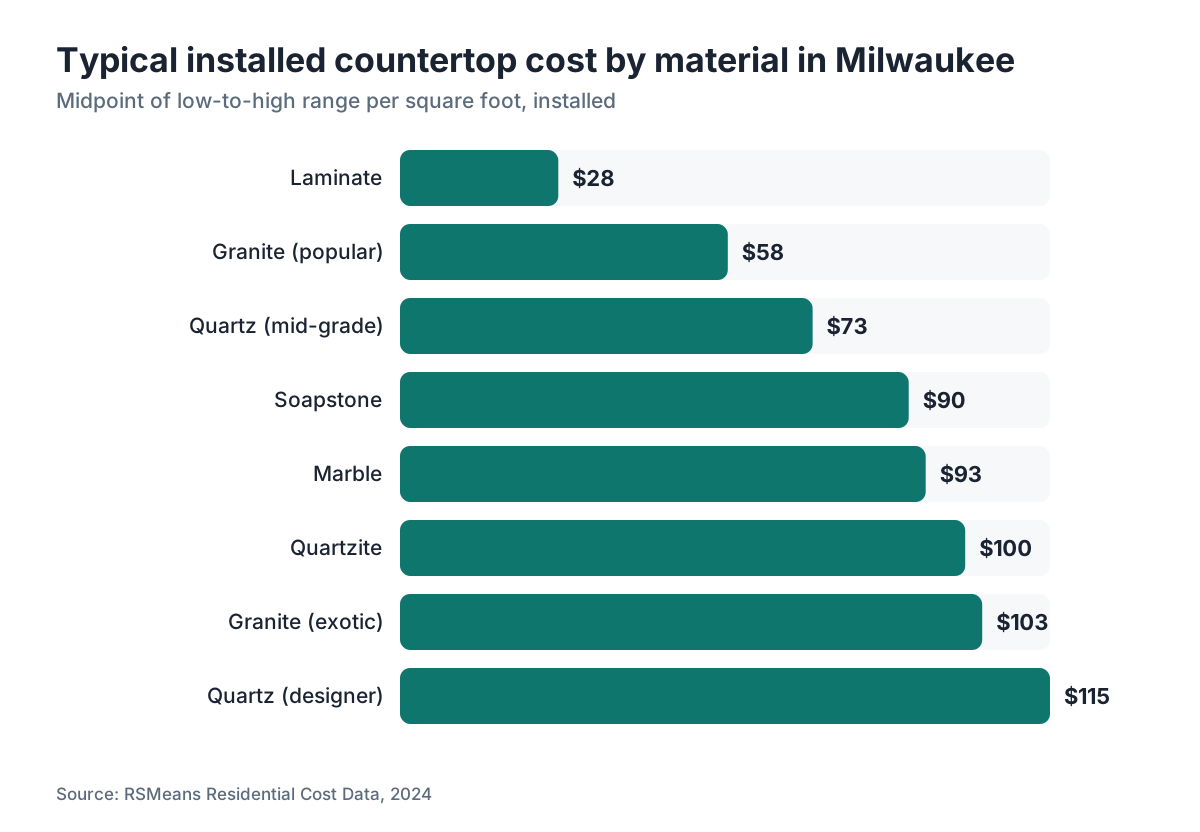
Installed cost per square foot is the number everybody wants, and the honest answer is that it swings hard by material. Popular granite runs $40 to $75 installed. Designer quartz can hit $140. Here is the full range for the Milwaukee area.
| Material | Typical installed cost per sq ft (Milwaukee area) |
|---|---|
| Granite (popular colors) | $40 to $75 |
| Granite (exotic/rare) | $75 to $130 |
| Quartz (mid-grade) | $55 to $90 |
| Quartz (designer/thick) | $90 to $140 |
| Marble | $65 to $120 |
| Quartzite | $70 to $130 |
| Soapstone | $70 to $110 |
These ranges come from RSMeans residential cost data blended with contractor pricing surveys. Your actual quote will move on edge complexity, number of cutouts, backsplash work, and whether the shop is pulling the slab from its own yard or sourcing it elsewhere. [2]
A typical Milwaukee kitchen with 50 square feet of counter runs $2,000 to $6,000 installed, all in. Bathrooms are smaller, but the per-square-foot cost often runs higher because setup and template time is nearly fixed no matter the size. A 15-square-foot vanity top costs $600 to $1,400 installed, which makes the price per foot look steep next to a big kitchen job.
Edge profiles add cost. A standard eased or beveled edge is usually included. Ogee, waterfall, or triple-radius profiles can add $15 to $30 per linear foot. On a kitchen with 20 linear feet of exposed edge, that is $300 to $600 you can see or skip.
Labor tracks with local construction wages. The Bureau of Labor Statistics puts Milwaukee-area skilled construction trades at a median of roughly $28 to $35 per hour, below coastal metros, which keeps installed costs under a comparable job in Chicago or Minneapolis. [3]
How do Milwaukee stone shops differ from each other?
The biggest split is between shops that fabricate in-house and shops that farm the cutting out to a third party and resell the finished product. In-house fabrication gives you one accountable party. Outsourced work is not automatically bad, but you should know which model you are dealing with before you sign anything.
Equipment matters more than most homeowners realize. A shop running a CNC bridge saw with digital templating will produce tighter seams and more accurate cutouts than one leaning on hand templates and manual cutting. Ask what templating method a shop uses. Laser or digital templating (Proliner, Slabsmith, and similar tools) measures accurate to within 1 to 2 millimeters, which shows on runs with multiple seams.
Certification is a real screen. The Natural Stone Institute, which absorbed the old Marble Institute of America, runs a Fabricator Certification Program that audits shops on equipment, processes, and quality standards. [4] Certified shops are not automatically better than uncertified ones, but the audit catches problems. Only a handful of Milwaukee shops hold or have held that certification. Asking about it, and about what certifications the installers carry, is a fair screening question.
Turnaround in Milwaukee usually runs 10 to 21 days from signed contract to install. A shop quoting two weeks out is booking at a healthy pace. A shop promising to install a big job next week may be slow for a reason. Six weeks might signal real demand, or it might signal staffing trouble. Three to four weeks is a common honest timeline in this market.
What materials are Milwaukee fabricators most experienced with?
Granite is still the bread and butter for most Milwaukee shops. The area has been buying granite since the 1990s boom, so most established fabricators have thousands of granite jobs behind them. That experience shows in seam placement and polishing quality.
Quartz (engineered stone) now rivals granite by volume. Silestone, Caesarstone, and Cambria (which manufactures in Le Sueur, Minnesota, a genuine Midwest product) fill Milwaukee-area kitchens. [5] Cambria has a strong Wisconsin dealer network. If you are weighing Cambria countertops, Milwaukee fabricators generally reach the full slab inventory through regional distribution.
Marble is growing here, mostly in bathrooms and on kitchen islands. It is softer than granite and quartz and asks for more care. See our guide on marble countertops if that is on your list.
Quartzite gets confused with quartz by salespeople and homeowners both. Quartzite is a natural stone, quarried and fabricated like granite. It tends to run harder than marble, but hardness varies a lot by source. If a shop can't explain the difference without stumbling, that is a flag.
Soapstone has a small, loyal following in Wisconsin, often in farmhouse kitchens. It is dense, non-porous, and shrugs off heat. Not every shop has deep soapstone experience, so ask about past soapstone projects if that is your material.
How do you evaluate a Milwaukee stone fabricator before signing?
Get three quotes, minimum. This is not about chasing the cheapest bid. It is about knowing what you are comparing. Quote A might include the sink cutout and haul-away. Quote B might not. A line-item quote beats a single lump number every time.
Ask to see the shop. Any reputable Milwaukee fabricator should let you walk the floor. Watch how slabs are stored (vertical cradles beat flat-stacking on the ground), whether the saws look maintained, and whether the polishing area is orderly. A chaotic shop floor predicts chaotic workmanship.
Check the Wisconsin Department of Safety and Professional Services for licensing status. [6] Fabricators and installers working in Wisconsin should hold a valid state contractor registration, and you can verify registration numbers on the DSPS site. This takes five minutes and knocks out a whole category of bad actors.
Reviews on Google, Houzz, and the Better Business Bureau help, but read them for patterns. A shop with 200 Google reviews at 4.6 stars tells you more than one with 12 reviews at a perfect 5. Repeated complaints about seam alignment, delivery damage, or silence after install are the ones that matter.
Ask for references from jobs like yours. A shop that mostly does commercial work may not give a residential kitchen the same care. A shop that mostly does bathrooms may struggle to manage a complex 80-square-foot kitchen with an island.
Running a shop yourself? Tools like SlabWise handle quoting and slab nesting digitally, which cuts estimating time and trims material waste. Worth a look if you are still on paper templates and spreadsheets.
What questions should you ask a Milwaukee stone fabricator before signing a contract?
This is the list that separates informed buyers from everyone else. Six questions, and none of them are hard to ask.
Who does the template and who does the install? Some shops send one crew to measure and a different crew to set. A single crew that templates and installs knows exactly what it measured. Consistency shows up in the seams.
Where does the slab come from? If you are buying material through the shop, find out which distributors it uses. Milwaukee-area distributors stock Brazilian granite, Italian marble, and domestic quartzite. Knowing the chain lets you verify the material spec.
What is the seam placement plan? For a kitchen run over about 10 feet, a seam is almost unavoidable. Where it lands affects both looks and strength. A good fabricator shows you a layout drawing before anyone cuts.
What warranty covers fabrication and installation? Reputable shops offer a workmanship warranty of one to five years. Material defects usually fall under the supplier's warranty, not the fabricator's, but a good shop will fight that claim for you.
What does the contract say about delivery damage? Slabs are heavy and fragile. A crack in transport or during install should be covered. Get it in writing.
What is the payment schedule? A fair structure is 50% at signing and 50% at completion. A shop demanding 100% upfront is asking you to carry all the risk.
How does Milwaukee's climate affect stone countertop installation?
Wisconsin winters are real, and they hit stone work in ways homeowners rarely think about. A slab sitting in an unheated warehouse in January can be far colder than room temperature. Move it straight into a heated kitchen and thermal shock can stress the material, especially on thin profiles or heavily veined marble.
Good Milwaukee shops either store slabs in climate-controlled space or let them acclimate at the job site before cutting. Ask about it during your shop visit, particularly for a winter install.
Epoxy fillers and adhesives have temperature limits too. Most two-part epoxies used for seaming and crack repair call for application above 50°F. [7] An installer rushing a cold job can produce seams that look clean on day one and fail within a year.
Season shapes price and scheduling. Spring and summer are peak; shops fill up fast between April and September when remodeling activity climbs. Book a fall or winter job and you may get quicker turnaround and sometimes a better price, because shops want to keep crews busy through the slow months.
What are common installation problems Milwaukee homeowners report?
Visible seams top the complaint list. A seam that misses the color, shows a raised lip, or leaves a gap is almost always a fabrication or installation error, not a material fault. Tight seams need accurate templating, consistent slab thickness, and careful epoxy color matching. If a shop's portfolio shows rough seams, that tells you plenty.
Unlevel countertops come second. Cabinets in older Milwaukee homes are often not level, and Milwaukee has a lot of older housing, with a median house age around 40 years. [8] Good fabricators shim and adjust for it. Bad ones drop flat stone onto crooked cabinets and hand you a rocking counter.
Cracked stone around sink cutouts is real but overblown. A properly cut and supported undermount opening does not crack from normal use. When it does crack, the cause is usually a cutout radius that was too tight, a chip left during cutting, or a crew dropping a heavy undermount sink into an unsupported opening.
Silicone failure at the sink perimeter is maintenance, not fabrication, though homeowners blame the shop anyway. Silicone seals around undermount sinks last 5 to 10 years and need reapplication. That is normal wear.
For care once your stone is in, our guide on how to clean stone countertops covers the basics.
How does natural stone compare to alternatives Milwaukee fabricators also offer?
Most Milwaukee stone shops fabricate and install engineered quartz, and many also do solid-surface materials like Corian. A smaller group works with porcelain slabs (a growing category), ultra-compact surfaces, and the occasional butcher block.
Quartz versus granite is the comparison buyers face most. Quartz wins on stain resistance and consistency: no natural variation, no sealing. Granite wins on heat resistance and the pull of a one-of-a-kind slab. Both make good counters. The pick is mostly personal.
Laminate (Formica and its cousins) is not something stone shops usually install, but the cost gap frames the budget talk. Laminate runs $15 to $40 installed per square foot, roughly half or less the cost of entry-level granite. [2] If money is tight, that gap is real. See our laminate countertops and Formica countertops guides for a balanced look.
Corian and other solid surfaces use a different process. They bond so seams can be sanded invisible, and not every stone shop has that skill. If you want Corian, ask whether the shop is a certified fabricator for the brand. Our Corian countertops guide has the details.
For material comparisons across the full range, start with our kitchen countertops overview.
How do Milwaukee stone shops handle slab selection and waste?
Most Milwaukee homeowners pick their slab at the shop's yard or at a regional distributor the shop works with. The shop reserves the slab with a deposit once you sign, then templates and cuts it to your layout.
Slab utilization drives your quote, because material is a big chunk of it. A 3cm granite slab usually measures 55 to 65 usable square feet. A kitchen with 50 square feet of counter plus a 10-square-foot island might need two slabs, depending on layout and how well the fabricator nests the cuts.
Good shops run layouts through digital nesting software, or at least hand-draw a cut plan to cut waste. Sloppy planning can force an extra slab for a job that should have fit on one, and that cost lands on you. Ask to see the cut layout before fabrication starts. Any shop worth hiring can show you one.
Remnants (the leftover pieces after your job is cut) are usually the shop's property unless you negotiate otherwise. They have value: a decent piece of granite or quartz goes for $100 to $400 at most Milwaukee shops. If you have a bathroom vanity coming later, buying a remnant for it often beats ordering a fresh slab by a wide margin.
Is there a difference between hiring a stone fabricator for residential versus commercial work?
Yes, and it changes who you should call. Commercial stone work (hotel lobbies, restaurant bars, office reception counters) runs on tighter schedules, different contracts, and higher volumes. Some Milwaukee fabricators live almost entirely on commercial jobs and have little interest in a single kitchen. Their crews are built for speed on big projects, not the patient back-and-forth a homeowner renovation needs.
Residential-focused shops tend to keep a better review trail, run more careful templating, and tolerate the mid-project change order (you decide after templating that you want a different edge). They usually offer a showroom and handle permit questions more readily.
A hybrid shop that does both can work, but understand which side it prioritizes. If you are a single-family homeowner in Wauwatosa or Shorewood, you want a shop that values residential customers enough to pick up the phone.
For a full walkthrough of installation day, our countertop installation guide covers the sequence from template to final polish.
Frequently asked questions
How many stone fabricators are in the Milwaukee area?
The Milwaukee metro has roughly 25 to 40 stone fabrication businesses, from small specialty shops to larger operations with multiple bridge saws and full slab yards. That count shifts as shops open, close, or change hands. The Wisconsin Department of Safety and Professional Services is where you verify that any shop you hire holds a current contractor registration.
What is the average cost of granite countertops in Milwaukee?
Popular granite colors run $40 to $75 per square foot installed in Milwaukee. Exotic or rare granites from Brazil, Italy, or Africa can push $75 to $130 installed. A 50-square-foot kitchen in a popular granite comes out to roughly $2,000 to $3,750 installed, before any cutout fees, which usually add $100 to $300 per opening.
How long does it take to get countertops installed after I sign a contract?
Most Milwaukee fabricators run a 10 to 21 day timeline from signed contract to install. Template day usually falls within a few days of signing, and fabrication eats the bulk of the time. Spring and summer are peak season, so turnarounds can stretch to four weeks or more. Winter jobs often move faster because shops have open slots.
Do Milwaukee stone fabricators offer warranties?
Reputable shops offer a workmanship warranty of one to five years covering seam quality, edge profiles, and installation integrity. Material defects (cracks inherent in the slab, color inconsistencies) usually fall under the stone supplier's warranty rather than the fabricator's. Get both warranties in writing before you sign, and confirm what the claims process looks like.
What is the difference between a stone fabricator and a stone supplier?
A supplier sells or distributes raw slabs. A fabricator cuts, edges, and installs them. Many Milwaukee shops do both, but some are pure fabrication operations sourcing slabs from local distributors. Which model your shop uses matters: a shop that stocks slabs has more control over material quality and availability, while a pure fabricator may open up a wider range of supplier options.
Can I supply my own slab and have a Milwaukee fabricator do the work?
Some Milwaukee shops will fabricate customer-supplied material, but many prefer to supply the slab themselves because it removes liability disputes over pre-existing cracks or defects. If you want to bring your own stone, ask upfront. Shops that agree usually charge a slightly higher fabrication rate or add a liability waiver covering any issue traced to the slab itself.
How do I verify that a stone fabricator in Milwaukee is properly licensed?
Check the Wisconsin Department of Safety and Professional Services contractor registry at dsps.wi.gov. Fabricators and installers should hold a valid Wisconsin dwelling contractor qualifier or general contractor registration. The search is free and takes a few minutes. Also confirm the shop carries general liability insurance and workers compensation, and ask for proof before any work begins.
What is the Natural Stone Institute Fabricator Certification, and does it matter?
The Natural Stone Institute runs a fabricator certification program that audits shops on equipment, safety, quality control, and production processes. Certified shops have passed an independent third-party review. It does not guarantee perfection, but it means the shop hits a baseline standard. Plenty of good Milwaukee fabricators are not certified, but asking about it signals you know what to look for.
Are quartz countertops cheaper than granite in Milwaukee?
Mid-grade quartz runs $55 to $90 per square foot installed in Milwaukee, which overlaps the granite range rather than undercutting it. Premium quartz brands can cost more than many granites. The price difference is smaller than most people expect. The real differences are maintenance (quartz needs no sealing) and appearance (granite has natural variation, quartz does not).
What should I look for when visiting a Milwaukee stone fabrication shop?
Look at how slabs are stored (vertical cradles, not flat on the floor), whether the bridge saw and CNC equipment look maintained, and whether the polishing stations are orderly. Ask to see finished seam work. A shop that welcomes tours and can show you projects like yours is confident in its work. A shop that dodges tours is worth a hard question about why.
Do Milwaukee fabricators also install butcher block or laminate countertops?
A few Milwaukee stone shops handle butcher block as part of a mixed countertop project, often subcontracting that portion. Most do not touch laminate. For laminate or Formica, you will generally need a dedicated kitchen and bath contractor rather than a stone fabricator. Some shops can refer you to a laminate installer they trust.
How do I get an accurate quote from a Milwaukee stone fabricator?
Measure your countertop square footage before you call, and know your material preference. Provide the number of sink cutouts, cooktop cutouts, and edge linear footage. Ask for a line-item quote that breaks out material, fabrication, edge profile, cutouts, and installation separately. Three line-item quotes from different shops give you a real comparison instead of three apples-to-oranges numbers.
What happens if my countertop cracks after installation?
First figure out the cause. Cracks from installation (impact, improper support) are a fabricator warranty issue. Cracks from pre-existing slab defects are a supplier issue. Thermal cracks from extreme heat set directly on the stone are usually not covered. Photograph everything right away, contact the shop in writing, and check your contract warranty terms. Most reputable Milwaukee shops will inspect within a few business days.
Sources
- U.S. Census Bureau, Milwaukee-Waukesha Metropolitan Statistical Area Population Estimates: Milwaukee metro area population estimated at approximately 1.57 million as of 2023
- RSMeans Online, Residential Cost Data, Countertop Material and Installation: Installed countertop cost ranges by material including granite, quartz, marble, and laminate
- U.S. Bureau of Labor Statistics, Occupational Employment and Wage Statistics: Milwaukee-area construction trade median wages approximately $28 to $35 per hour for skilled trades
- Natural Stone Institute, Fabricator Certification Program: NSI runs a fabricator certification program evaluating shops on equipment, processes, and quality standards
- Cambria, Company Overview and Manufacturing: Cambria manufactures quartz surfaces in Le Sueur, Minnesota, with strong Midwest dealer distribution
- Wisconsin Department of Safety and Professional Services, Contractor Registration: Wisconsin requires contractor registration through DSPS; registration status is publicly searchable
- U.S. Bureau of Labor Statistics, Producer Price Index: Stone Product Manufacturing: Stone product manufacturing and epoxy application temperature context for cold-weather installation
- U.S. Census Bureau, American Community Survey, Housing Characteristics: Milwaukee median housing age is approximately 40 years, indicating significant older housing stock with unlevel cabinets
- U.S. Bureau of Labor Statistics, Producer Price Index: Stone product manufacturing costs used to contextualize material pricing trends
- Natural Stone Institute, State of the Industry Report: Industry data on fabricator counts, certification rates, and market trends in stone countertop fabrication
Last updated 2026-07-10