TL;DR
- Denver has dozens of stone fabricators, from small custom shops to large production houses.
- Granite and quartz countertops typically run $55 to $130 per square foot installed in the Denver metro, depending on material and edge profile.
- Lead times average 1 to 3 weeks.
- The right shop depends on your material, your budget, and how much personal service you want.
What does a stone fabricator in Denver actually do?
A stone fabricator takes raw slabs of granite, quartz, quartzite, marble, or similar materials and turns them into finished countertops, vanities, fireplace surrounds, and other surfaces. That process includes templating your space, cutting slabs on a CNC waterjet or bridge saw, grinding and polishing the edges, then installing the finished pieces in your home or commercial project.
Fabrication is a different business from distribution. Stone distributors like Arizona Tile, MSI Stone, or Dal-Tile sell slabs wholesale. Fabricators buy from those distributors (or carry their own inventory), do all the cutting and finishing, and then install. Some shops handle everything in-house. Others send you to a distributor's warehouse to pick your own slab, then fab what you chose.
The Denver metro supports a big fabrication market because Colorado remodels a lot. The Denver-Aurora-Lakewood metro area consistently ranks in the top 15 U.S. markets for residential remodeling spending, and the U.S. Census Bureau's American Community Survey shows median home values well above $500,000 in Denver County, which drives demand for higher-end finishes [1]. That demand feeds a competitive local fabrication industry. Good news for buyers.
How much do stone countertops cost from Denver fabricators?
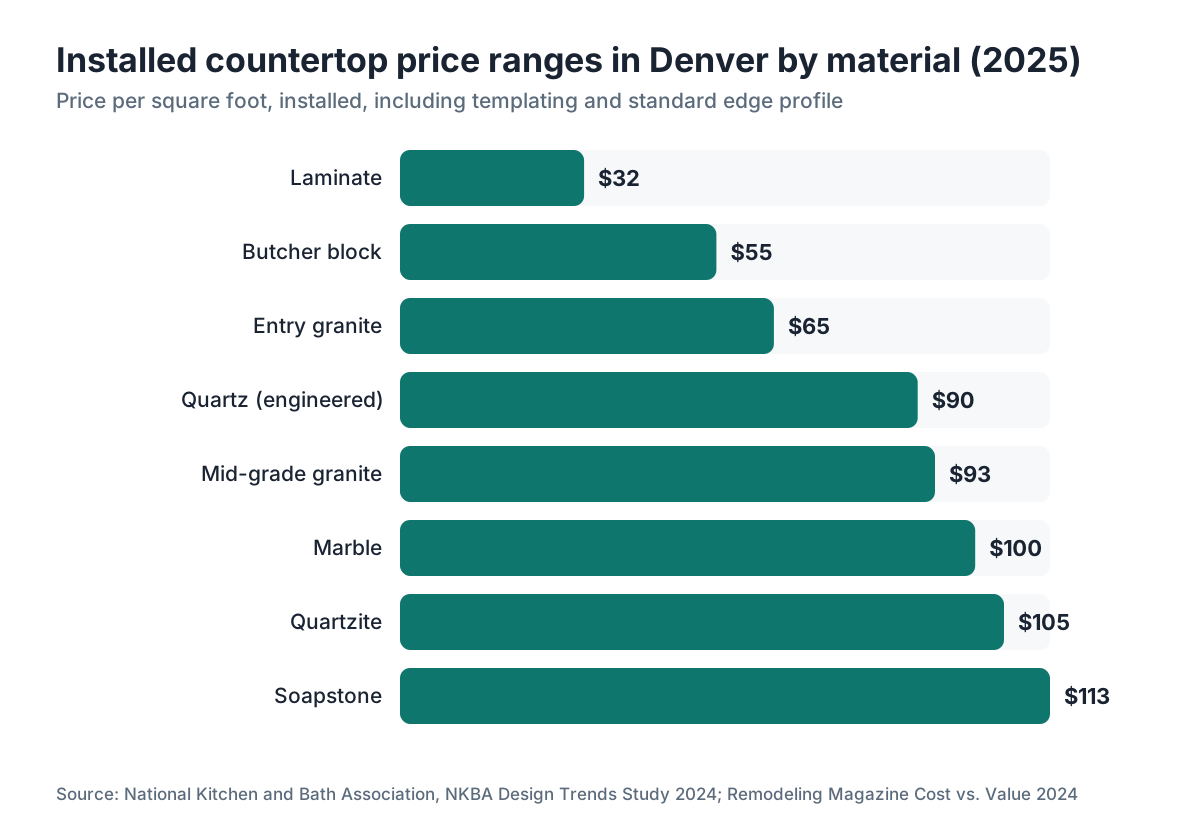
Prices swing hard depending on material, thickness, edge profile, and how complex your layout is. Here's a realistic range for installed countertops from Denver-area fabricators, based on 2025 market activity and national benchmarks from Remodeling Magazine and the National Kitchen and Bath Association [2][3]:
| Material | Installed price range (per sq ft) | Notes |
|---|---|---|
| Laminate (Formica-style) | $20 to $45 | Not stone; included for comparison |
| Butcher block | $30 to $80 | Varies by wood species and thickness |
| Entry granite | $55 to $75 | Level 1-2 slabs, basic edge |
| Mid-grade granite | $75 to $110 | More movement, premium edges |
| Quartz (engineered) | $65 to $115 | Brands like Cambria run toward the top |
| Quartzite | $80 to $130 | Harder to work, more waste |
| Marble | $75 to $125 | Honed finishes add cost |
| Soapstone | $85 to $140 | Limited local slab availability |
Those ranges assume a standard kitchen with 40 to 60 square feet of countertop, a single undermount sink cutout, and an eased or slightly beveled edge. Add $10 to $20 per linear foot for a fancy ogee or waterfall edge. Add $200 to $400 for a farmhouse sink cutout. Seams in visible spots cost labor time and sometimes need color-matched epoxy that pushes the quote up.
Denver fabricators generally charge a minimum job fee, often $800 to $1,500, so a tiny bathroom vanity costs more per square foot than the table suggests. Always ask about the minimum before you get attached to a slab.
Want to run your own numbers before calling shops? kitchen countertops breaks down how to estimate square footage and what each material category involves.
What questions should you ask a Denver stone fabricator before hiring?
Most homeowners call a fabricator, get a price, and hire whoever was cheapest or nicest on the phone. That works out fine about half the time. The other half, they end up with bad seam placement, chipped edges, or an installer who never checked whether the cabinets were level.
Here are the questions that actually separate shops:
-
Do you template in-person, or do you work off measurements I provide? A shop that sends someone out to template with a laser or digital system will have far fewer problems than one that asks you to measure. For any job over $2,000, insist on professional templating.
-
Who does your installation? Some shops use in-house crews. Others sub the install to independent contractors who may or may not have seen your kitchen before they show up. Both models can work, but you want to know which one you're getting.
-
Can I see your shop and your work? Any serious fabricator will let you visit. You want clean CNC equipment, organized slab storage, and finished samples you can touch. If a shop dodges a shop visit, walk away.
-
What's your seam policy? Seams are unavoidable on most kitchen projects. A good fabricator will show you on the template drawing exactly where seams will fall. Avoid shops that say seam placement gets figured out during installation.
-
What's your warranty, and how do you handle chips or cracks? Most reputable Denver shops offer a one-year workmanship warranty covering fabrication defects. That won't cover natural stone characteristics like fissures or pitting, but it should cover poor cuts, loose sink clips, and sealant failure.
-
Are you licensed and insured in Colorado? Denver requires contractors to carry general liability insurance for most residential work. Ask for a certificate of insurance naming you as an additional insured, or at minimum confirm their coverage [4].
The honest answer on reviews: Google and Houzz reviews help some, but stone projects take weeks, and the bad experiences often get posted months later. Look for shops with at least 50 reviews and a pattern in the negative ones. A one-off complaint about scheduling means less than three reviews all naming the same installation crew cracking a sink.
How long does stone countertop fabrication take in Denver?
The typical timeline from signed contract to installed countertops runs 7 to 21 calendar days for most Denver shops in 2025. Here's how that breaks down:
Template appointment: usually scheduled 2 to 5 business days after you sign and pay a deposit. The templating visit itself takes 30 to 90 minutes depending on kitchen complexity.
Fabrication: once the template is in the shop, most CNC shops can cut and polish a standard kitchen in 1 to 3 days of actual production time. But shops batch jobs, so your pieces often sit in a queue for 5 to 10 days before the saw touches your slab.
Installation: scheduled after fabrication is complete, typically 2 to 4 days out. Installation day itself runs 2 to 6 hours for a standard kitchen.
Big caveat: custom or exotic materials take longer. If your slab has to be ordered in from a distributor who doesn't stock it locally, add 1 to 3 weeks. Quartzite and some exotic marbles come from importers who ship from overseas, and freight delays are real.
Spring and fall are the busiest seasons for Denver remodels. That's when people list their homes or rush to finish projects before winter. If you're trying to hit a move-in deadline, add a buffer of at least a week to whatever the shop promises.
What materials can Denver fabricators work with?
Most Denver shops can cut and install granite, quartz, quartzite, marble, soapstone, travertine, porcelain slabs, and sintered stone products like Dekton or Neolith. The limiting factor is usually equipment and experience, not slab availability.
Granite countertops remain the highest-volume product in most Denver shops. Granite is forgiving to cut, widely available from local distributors, and has a proven install process. If you want granite, you'll have no trouble getting multiple competitive bids.
Marble countertops are trickier. Marble is softer, scratches and etches easily, and the fabrication needs a gentler polish sequence. Ask specifically how many marble jobs a shop has done in the past year. A shop doing 300 granite jobs and 10 marble jobs a year may not have the polish wheels or the hands to handle a book-matched Calacatta.
Engineered quartz (brands like Cambria, Silestone, or MSI's Q Premium) is the second most common product in Denver shops. Cambria countertops in particular carry a full manufacturer warranty that depends on a Cambria-certified fabricator doing the install, so if you're buying Cambria, confirm certification before hiring.
For harder materials like quartzite or sintered stone, ask whether the shop uses diamond tooling rated for those materials. Sintered stone like Dekton is dense enough to crack during cutting if the shop runs worn-out blades or the wrong blade type.
Curious about caring for natural stone after installation? how to clean stone countertops covers the basics, and how to clean quartzite countertops goes deeper on that specific material.
What's the difference between small custom shops and large production fabricators in Denver?
Denver has both types, and they genuinely serve different customers.
Large production shops move high volume. They run multiple CNC machines and dedicated installation crews. Many are connected to a stone distribution yard, which means better slab pricing and a large on-site selection. Their templating and installation processes are well-practiced. The downside is that you're one of 30 jobs moving through the shop that week. Project managers are busy, communication can be slow, and custom requests (unusual edge profiles, matching veining across a seam, hand-finishing a specific section) may get treated as problems rather than features.
Small custom shops typically run one or two CNC machines with owner-operators who do much of the work themselves. Seam placement gets more attention. Unusual materials and complex layouts are welcomed rather than charged out as headaches. Communication is usually faster because you're dealing directly with the person who will cut your stone. The downside is that lead times may stretch if the shop is busy, and pricing may run higher on commodity materials where the big shops have buying power.
My honest take: for a standard kitchen in common granite or quartz, a large shop with good reviews is fine and likely cheaper. For marble, book-matching, exotic quartzite, or anything requiring real artisanship, find a smaller custom shop and pay the premium. The cost difference is rarely more than $300 to $600 on a typical project, and the quality difference can be big.
How does slab selection work with Denver stone distributors?
Most homeowners don't realize they have options here. Some fabricators carry their own slab inventory. Others send you to a stone distributor's warehouse where you pick your slab in person, then buy and fab it for you.
The main stone distributors serving Denver fabricators include MSI Stone (with a regional presence across the West), Arizona Tile (with Denver-area locations), Dal-Tile, and several smaller importers operating out of warehouse space along the I-25 and I-70 corridors. Individual distributors hold different inventory, so a slab you love at one yard may not exist anywhere else.
When you visit a slab yard, ask for the slab to be pulled off the rack and set in natural light. A slab that looks nice in the rack and a slab that's genuinely beautiful in light are often two different things. Stone is a natural material and every slab is unique. Two slabs with the same name from the same quarry can look completely different.
If your project needs more than one slab (most kitchens do), ask to see all available slabs from the same lot, also called a bundle. Slabs cut sequentially from the same block will have closely matching veining, which matters when your counters sit in the same sightline.
For budget projects or rentals, it's worth at least looking at laminate countertops or formica countertops before committing to stone. The gap has narrowed in recent years.
What permits or regulations apply to countertop installation in Denver?
Most countertop replacement projects in Denver do not require a building permit. The City and County of Denver's building code treats like-for-like fixture replacement and finish work as falling below the permit threshold [4]. If your project involves moving a gas line for a cooktop, adding or relocating a plumbing drain, or making structural changes to support a heavy stone installation on a questionable substrate, you'll need permits for those specific trades.
The countertop itself, meaning the stone slab cut and set on existing cabinets, is generally permit-free. The work around it may not be.
Colorado does not have a specific state license category for stone fabricators. General contracting in Colorado is largely unregulated at the state level for residential work below certain thresholds, but Denver's own construction rules require any contractor working in the city to carry appropriate liability insurance [4]. Some larger commercial projects require a licensed general contractor to oversee the work.
For practical purposes: ask your fabricator for their COI before any work starts. If they can't produce one, move on.
How do Denver fabricators price jobs, and what's negotiable?
Most fabricators price by the square foot for the finished, installed countertop. That square footage comes off the template, not your rough estimate. The stone you actually buy is almost always more than the square footage of your countertop surface, because cuts produce waste, especially around sinks and cooktops. Expect 15 to 30 percent waste on a typical kitchen layout.
The base price per square foot usually includes one or two standard edge profiles (eased, bevel, or bullnose). Ogee, dupont, waterfall, or miter edges add to the per-linear-foot cost. Undermount sink cutouts typically run $100 to $250 each. Cooktop cutouts are similar.
What's negotiable: material upgrades sometimes carry a smaller markup than you'd expect if a shop is overstocked on a particular slab. Edge profile pricing has some give if you're asking during a slower period. Minimum job fees can sometimes shrink or disappear if you're doing multiple rooms at once.
What's usually not negotiable: templating fees on jobs that don't proceed (expect to pay $75 to $200 if you template and then cancel), installation travel fees for addresses far outside the metro, and seam count on large layouts.
For fabricators running their own shops, software that ties material cost, labor, and waste into an accurate quote makes a real difference in margin consistency. SlabWise is built for exactly this, handling quoting and nesting in one tool. Worth a look if you're still pricing on spreadsheets.
For what happens on install day, countertop installation covers it.
What should homeowners inspect before accepting delivery of stone countertops?
The moment to catch problems is before the installer's van pulls out of your driveway, not a week later. Here's what to check:
Edge quality. Run your hand slowly along every exposed edge. You're feeling for rough spots, chips, or uneven polish. Even a small chip on a visible front edge is worth flagging on the spot.
Seam quality. Get down to counter height and look at each seam at eye level. The two pieces should sit flush (no more than 1/32 of an inch difference in height), the gap should be tight, and the color-matched epoxy should be clean. A seam that rocks or catches your fingernail on the transition is a workmanship problem.
Sink and cooktop cutouts. Check that the cutout is clean, the radius corners are smooth, and the undermount clips (if applicable) are all engaged. Turn on the water and look for any water touching the stone at the sink rim.
Leveling. The countertop should sit flat on the cabinets. Use a long straightedge if you have one. A slight bow over a long run is sometimes unavoidable when your cabinets aren't perfectly level, but the fabricator should have flagged that during templating.
Sealant. Most natural stone (granite, quartzite, marble, soapstone) should be sealed before installation or on the day of. Ask the installer what sealant they used and when the surface can get wet. The Marble Institute of America recommends testing stone's porosity before specifying a sealer [5].
Sign the completion form only after you've done this walkthrough. Most shops will address legitimate issues within a week, but your bargaining position drops fast once you've signed off.
How do Denver's elevation and climate affect stone countertop performance?
Denver sits at 5,280 feet above sea level in a semi-arid climate with low humidity and intense UV exposure. None of that hurts a stone countertop inside your kitchen in any structural way. Stone is stone.
What does matter: sealers dry faster and can lap in dry conditions, so application technique carries more weight. Some fabricators who mostly work in humid markets apply sealant at the wrong spread rate for Denver's lower relative humidity. Ask your fabricator whether they've adjusted their sealant process for Colorado conditions. It's a small thing, but it decides how long the first seal lasts.
Hard water is the bigger practical issue. Denver Water's distribution system delivers moderately hard water, typically in the 65 to 130 mg/L (as calcium carbonate) range depending on source and season [6]. That hardness leaves mineral deposits on polished stone over time. On dark granite or polished quartzite, hard water spots show and annoy. Regular wiping and an occasional mild acid treatment (diluted white vinegar is fine on granite, never on marble) handles it. How to clean quartzite countertops covers this in detail.
Colorado's altitude also means slightly lower boiling points and different thermal stress patterns if you set hot pots directly on stone. The rule still holds: use trivets. Thermal shock is real with quartz (which has a resin binder) and with thinner natural stone slabs.
What red flags should make you walk away from a Denver fabricator?
This is the section most fabricator-written guides skip. Here are the actual warning signs.
No shop visit allowed. Any fabricator unwilling to let you see the facility before you sign is hiding something: outdated equipment, a disorganized operation, or a shop floor that would make you nervous about your $8,000 slab.
No written contract or quote. Verbal quotes lead to disputes. Every job needs a written document listing material, slab lot number, square footage, edge profile, cutout count, seam locations, installation date, total price, and payment terms. If a shop resists putting this in writing, walk.
Pressure to skip templating. Some shops offer a discount if you provide your own measurements and skip professional templating. On a $3,000 job, saving $150 in templating fees is a bad trade for the risk of a mis-cut slab.
Payment in full before templating. A standard deposit is 50 percent at signing, with the balance due at installation or completion. A shop asking for 100 percent upfront before they've even templated your space has cash flow problems.
No certificate of insurance on request. This one is binary. Either they have it or they don't. No exceptions.
One more filter: the National Association of the Remodeling Industry (NARI) keeps a contractor database and a code of ethics that member firms agree to uphold [7]. Plenty of great fabricators aren't NARI members, but it's a useful signal.
Frequently asked questions
How much does a granite countertop cost installed in Denver in 2025?
Entry-level granite runs $55 to $75 per square foot installed in the Denver metro. Mid-grade granite with more movement or a premium edge profile runs $75 to $110 per square foot. A typical 50-square-foot kitchen lands between $2,750 and $5,500 all-in, including templating, fabrication, and installation. Exotic colors or complicated layouts push to the high end.
How long does it take to get countertops installed after ordering in Denver?
Plan on 7 to 21 calendar days from signed contract to installed countertops. Templating is usually scheduled within 2 to 5 days of signing. Fabrication takes 1 to 3 production days but sits in a queue for another week in busy periods. Installation is booked 2 to 4 days after fabrication is done. Exotic materials or back-ordered slabs can add 1 to 3 more weeks.
Do I need a permit for countertop replacement in Denver?
No permit is required for a straight countertop swap on existing cabinets in Denver. The exception is if your project involves relocating plumbing, moving a gas line, or making structural changes to support heavy stone. Those specific trades need permits. The countertop fabrication and installation itself is finish work and falls below Denver's permit threshold.
What's the best material for kitchen countertops in Denver?
There's no single answer, but granite and quartz are the most practical for most Denver households. Granite handles Denver's dry climate well, takes heat, and resists scratches. Quartz needs no sealing and stays consistent in color. Quartzite is beautiful but harder to source and costs more to fabricate. Marble is stunning but demands maintenance. What you cook and how you clean matters as much as the material itself.
How do I find a reputable stone fabricator in Denver?
Start with Google Business listings filtered to at least 4.3 stars and 50-plus reviews, then check Houzz for photos of real local projects. Ask any fabricator you're considering for references from jobs finished in the last 6 months. Verify their general liability insurance with a certificate of insurance. Visit the shop before signing anything. NARI membership is a useful secondary filter.
What is the difference between a stone fabricator and a stone distributor?
A distributor imports, warehouses, and sells raw slabs, usually to trade buyers like fabricators and occasionally to the public. A fabricator takes those raw slabs and turns them into finished countertops by cutting, edging, polishing, and installing them. Most fabricators have a buying relationship with one or more distributors. Some large operations do both, carrying their own inventory and fabricating in-house.
Can I pick my own slab at a Denver stone yard?
Yes, and you should whenever possible. Many Denver fabricators will direct you to a distributor's yard to choose your slab in person, then order it on your behalf. Ask for the slab to be pulled from the rack into natural light before you decide. If you're using more than one slab, ask to see all slabs from the same bundle so veining matches. You usually pay a slab hold deposit at the yard.
Is quartz or granite better for Denver's climate and altitude?
Both perform well in Denver's climate. The altitude itself doesn't affect stone performance. Denver's low humidity means sealers dry fast, so proper sealant application matters for natural stone like granite. Denver's moderately hard water leaves deposits on polished surfaces, so regular wiping matters more than material choice. Quartz requires no sealing and resists hard water staining better on a day-to-day basis.
What should a countertop fabrication contract include?
At minimum: homeowner and contractor names, project address, material description including slab lot number, total square footage, edge profile, number and type of cutouts, seam diagram or note on seam locations, total price, deposit amount, balance due date, estimated installation date, workmanship warranty terms, and a process for handling defects found at installation. If any of these are missing, ask for them in writing before signing.
How thick should stone countertops be?
The standard for most kitchen countertops is 3 centimeters, which is about 1.25 inches. That's thick enough to be structural without additional substrate in most applications and gives clean edge profiles. Two-centimeter slabs are thinner and often need a plywood underlayment for support. Some fabricators offer mitered edges that fake a thicker slab. Three-centimeter is the right choice for most kitchen and bathroom projects.
Do Denver stone fabricators install bathroom vanities too?
Yes. Vanity tops are smaller jobs than kitchens and most shops take them on, though some have minimums of $800 to $1,500 that make a tiny bathroom vanity relatively expensive per square foot. Vanity fabrication runs the same process as a kitchen: templating, cutting, polishing, installation. Most shops also do shower surrounds, fireplace mantels, and outdoor kitchen counters.
How do I care for new stone countertops after installation?
Wipe spills promptly, especially acids like citrus, wine, and vinegar on marble. Use mild dish soap and water for daily cleaning. Avoid abrasive pads on polished surfaces. Reseal natural stone (granite, quartzite, marble, soapstone) every 1 to 3 years depending on porosity. Quartz needs no sealing. Hard water mineral deposits respond to diluted white vinegar on granite, but never on marble or limestone.
What's the typical payment structure for a Denver countertop project?
Standard in the Denver market is 50 percent deposit at contract signing and the remaining 50 percent due at or immediately after installation. Some shops ask for the balance before delivery. Be cautious about any shop asking for more than 50 percent upfront before templating has happened. Paying the final balance after you've inspected the installed countertop protects you most if there's a problem.
Are there lower-cost countertop alternatives if stone is out of budget?
Yes. Laminate (Formica-style) runs $20 to $45 per square foot installed and has improved a lot in looks and durability. Butcher block costs $30 to $80 per square foot and is popular for kitchen islands. Solid surface products like Corian land in the $65 to $100 range. These aren't inferior choices for every situation. For a rental property or a secondary bathroom, laminate often makes more financial sense than stone.
Sources
- U.S. Census Bureau, American Community Survey, Denver County housing value data: Denver County median home values above $500,000 supporting demand for higher-end finishes
- Remodeling Magazine, Cost vs. Value Report 2024: National benchmark pricing for kitchen remodeling projects including countertops
- National Kitchen and Bath Association, NKBA Design Trends Study 2024: Material pricing benchmarks and popularity data for countertop materials in U.S. markets
- City and County of Denver, Community Planning and Development, Building Permits: Like-for-like finish work including countertop replacement does not require a building permit in Denver; contractors must carry liability insurance
- Marble Institute of America (MIA), Care and Maintenance of Natural Stone: MIA recommends testing stone porosity before specifying a sealer to ensure appropriate product selection
- Denver Water, Annual Water Quality Report: Denver Water distribution delivers water in the 65 to 130 mg/L hardness range depending on source and season
- National Association of the Remodeling Industry (NARI), Contractor Search and Code of Ethics: NARI maintains a member contractor database and code of ethics that member firms agree to uphold
- U.S. Geological Survey, Mineral Resources Program, Dimension Stone Statistics: U.S. dimension stone (including granite and marble) production and import volume data
- Colorado Department of Regulatory Agencies, Division of Professions and Occupations: Colorado does not maintain a specific state license for stone fabricators; general contractor regulation for residential work is limited at state level
- Marble Institute of America, Dimension Stone Design Manual: Industry standard slab thickness specifications: 3 cm standard for kitchen countertops, 2 cm requiring substrate support
Last updated 2026-07-09