TL;DR
- The eased edge is the most popular countertop edge profile in the U.S.
- today, with beveled and full bullnose close behind.
- Simple profiles cost nothing extra or $5 to $15 per linear foot.
- Decorative profiles like ogee or waterfall run $15 to $50 and up.
- Material, shop labor rate, and profile complexity drive the final price.
What is a countertop edge profile and why does it matter?
An edge profile is the shape a fabricator cuts and polishes into the exposed front edge of your countertop. It sounds like a finishing detail. It changes how the counter feels to lean against, how easy it is to wipe crumbs off, how light bounces around the kitchen, and how much you pay at the end of the job.
Thicker material gives fabricators more to work with. A 3 cm slab (roughly 1.2 inch) of granite or quartz takes any profile in this guide without lamination. Thinner 2 cm slabs often need a strip of stone glued under the front edge, called a lamination or buildup, before a decorative profile can be cut. That adds cost and a seam line.
For granite countertops and engineered quartz, the edge is cut and polished in one operation at the shop using CNC machines or hand-held angle grinders with profile wheels. For laminate countertops and formica countertops, the options are more limited because the substrate is thinner and the decorative layer can chip if overworked.
The edge you pick also signals a style. Straight eased edges read contemporary. Ogee and cove-and-bead edges read traditional. Waterfall mitered edges read high-end modern. None of those are rules. They're just how designers and buyers tend to sort them.
Which countertop edge profile is most popular right now?
The eased edge is the most popular kitchen countertop edge profile in North America, and the most common granite edge too. It's a flat face with the top and bottom corners barely softened so they don't chip or cut. Nearly every fabricator on the continent includes it at no extra charge.
Why does it win? Three reasons. It's the default: unless a homeowner asks for something else, most shops cut an eased edge. It photographs cleanly for listings and design portfolios. And it works in every kitchen style without looking dated five years later.
The beveled edge is the runner-up. Flat face, small 45-degree cut along the top corner, usually 1/8 inch to 1/4 inch wide. It adds a little visual interest without complicating cleaning. Many fabricators include a standard bevel for free or charge a few dollars per linear foot.
Full bullnose (a completely rounded edge, like a half-cylinder) ruled granite kitchens through the 1990s and early 2000s. It fell out of fashion as contemporary design took over. It's still the third or fourth most requested profile and a sensible pick for families with young kids, because there are no sharp corners anywhere.
Ogee, dupont, and waterfall follow after that. Each shows up on a smaller share of projects, chosen on purpose for a specific look.
The industry doesn't publish annual data on profile popularity broken down by percentage, and I won't invent numbers. What fabricators consistently report, and what kitchen design survey data from sources like Houzz reflects, is the clear lean toward simple, flat-faced edges in contemporary renovations [1].
What are the main countertop edge profiles and how do they differ?
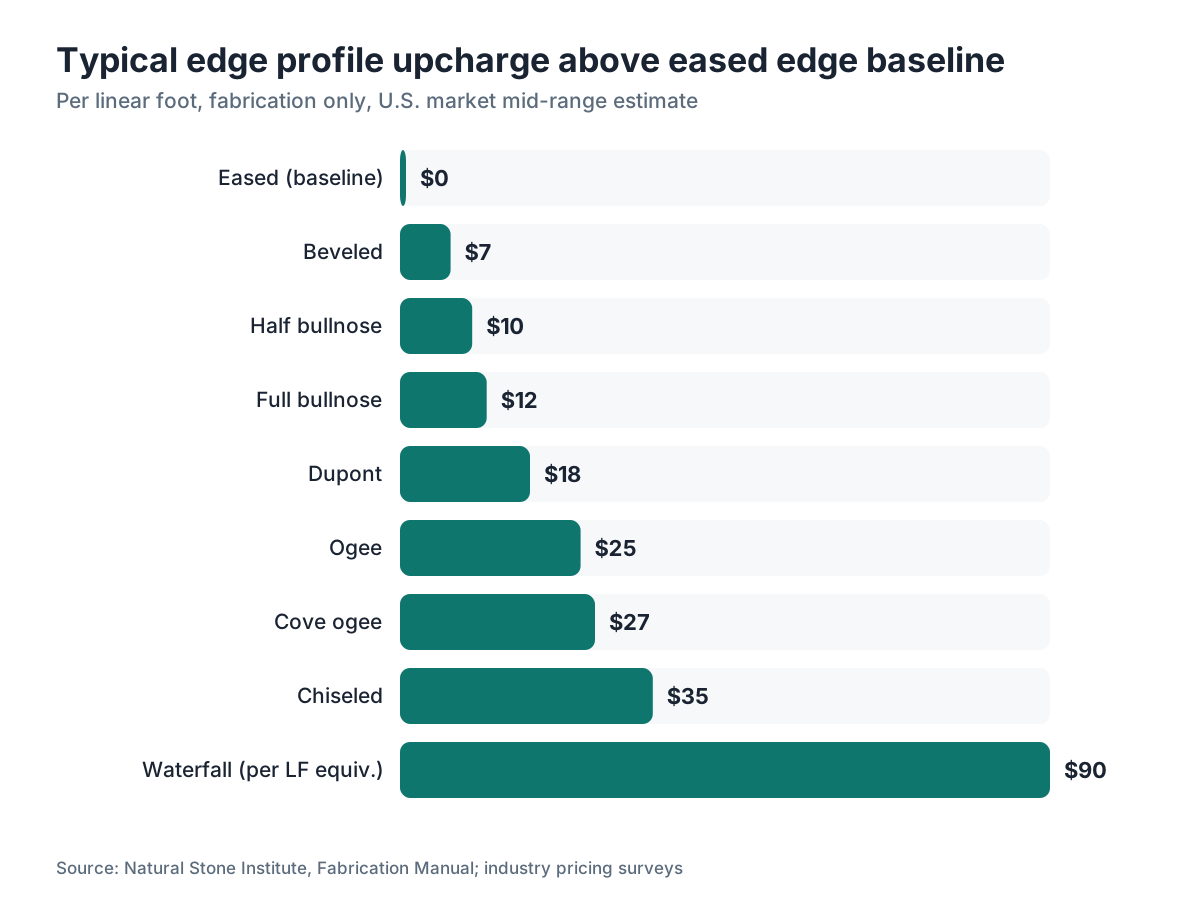
Here is a plain comparison of the profiles you'll actually run into at most shops, with typical upcharges above the baseline eased edge:
| Profile | Description | Typical upcharge (per LF) | Style fit |
|---|---|---|---|
| Eased | Flat face, corners barely softened | $0 (included) | Universal |
| Beveled | Flat face, 45° angled top cut | $0, $10 | Contemporary, transitional |
| Half bullnose | Rounded top corner only | $5, $15 | Transitional |
| Full bullnose | Fully rounded edge, top to bottom | $5, $15 | Traditional, family kitchens |
| Ogee | S-curve with a cove below and a rise above | $10, $30 | Traditional, ornate |
| Dupont (DuPont) | Flat face with a small cove at the top | $10, $25 | Transitional, classic |
| Waterfall/mitered | 90° miter continues the slab face to the floor | $40, $150+ | High-end modern |
| Chiseled/rough | Textured hammered look on edge | $20, $50 | Rustic, artisan |
| Laminated double edge | Two pieces glued for extra thickness illusion | $10, $40 | Traditional |
| Cove ogee | Deeper S-curve, more traditional | $15, $35 | Formal traditional |
Prices in the table are ranges gathered from public fabricator pricing guides and industry discussions. Your region, your stone choice, and your shop's labor rate all move the number. A shop in rural Ohio prices differently than one in Manhattan.
The eased edge is the baseline because it takes the fewest passes. A CNC machine or hand grinder touches the edge once or twice. An ogee needs a shaped wheel, several passes, and hand-polishing to hit the inside curve cleanly. That time and tooling cost is what you're paying for.
Waterfall edges are a separate category. The fabricator doesn't just profile an edge. They miter two slabs at 45 degrees so the stone face runs unbroken from the countertop surface down to the floor. Material waste is real (sometimes a whole extra slab), and the seam has to be perfect. That's why many shops quote waterfall per project rather than per linear foot.
Which edge profiles work best for granite specifically?
Granite takes all standard profiles well. It's dense, hard (Mohs 6 to 7), and polishes to a high gloss on any exposed surface, including curved ones [2]. The material itself rarely limits your choice.
For granite specifically, the most requested options in rough descending order are eased, beveled, full bullnose, ogee, and dupont. Chiseled or leathered edges have a niche following for outdoor kitchens and rustic interiors.
One practical note. Busy granite with lots of movement, think rivers of color or dramatic veining, usually looks better with a simple eased or beveled edge. A complex profile breaks that movement into a confusing three-dimensional surface that's hard to read. Solid or low-movement stones like absolute black granite or a tight-grained white show decorative profiles more cleanly.
Granite is heavy. A 3 cm slab weighs roughly 18 to 20 pounds per square foot [3]. Lamination for a decorative profile on a 2 cm slab adds more stone and more weight. Check that your cabinets and supports are rated for it before you commit to a laminated ogee on a big island.
For anyone looking at marble countertops, the same profile options apply. Softer stones like marble (Mohs 3 to 4) can chip on sharp internal curves if the polishing isn't careful. An experienced fabricator handles it fine, but it's a reason to ask about their track record with decorative marble edges before you sign.
Which edge profiles cost the most?
Waterfall mitered edges cost the most by a wide margin, and calling them an "edge profile" is a stretch. They're a design element that needs extra slabs, precision mitering, and sometimes color-matched epoxy for an invisible seam. A waterfall on a kitchen island can add $500 to $2,000 or more, depending on island size, stone, and whether you need a second full slab.
Among carved profiles, ogee and cove-ogee are the priciest for granite and other natural stone. They need profile wheels (which wear out and cost money to replace), several grinding passes, and hand-polishing on the inside curve. Expect $20 to $35 per linear foot over base price at most shops.
Dupont edges sit in the middle. They look impressive but are mechanically simpler than a full ogee, so they usually run $10 to $25 per linear foot.
Laminated edges (where the shop glues a strip of stone under the front edge to fake a thicker slab) add both material and labor. The glue joint has to be polished and color-matched. Budget $10 to $40 per linear foot depending on the stone and how much buildup is needed.
If a fabricator charges you for an eased edge, find a different fabricator. An eased edge should be standard and free.
How do I choose the right edge profile for my kitchen?
Start with your cabinet style. Shaker and flat-panel cabinets pair naturally with eased or beveled edges. Raised-panel or beaded-inset cabinets work better with bullnose, ogee, or dupont profiles that carry the traditional visual weight.
Next, think about who uses the kitchen. Families with toddlers often land on bullnose edges for islands specifically because there are no corners at child hip-height. Eased edges keep a small sharp corner on top; it's not dangerous, but a full bullnose is softer. The bottom edge is a rarer injury point, though it matters on islands where kids run past.
Cleaning is the other practical filter. Ogee and cove-ogee have inside curves where grime collects. If your household cooks hard and messy, a flat-face edge is genuinely easier to wipe. I'd pick eased or beveled for a high-use kitchen and save the decorative profiles for lower-traffic surfaces like bathroom vanities or a butler's pantry.
Ask your fabricator for sample boards. Most shops keep edge samples cut from real stone, and a profile on paper or a screen looks different from the same profile on a 3 cm granite slab under kitchen lighting. The sample visit is worth the trip.
For a new countertop installation, have the edge conversation before templating, not after. Some profiles change how the templater accounts for overhangs and material yields.
Fabricators who use quoting software (like SlabWise) can show per-linear-foot edge pricing broken out in the quote, so you see exactly what each upgrade adds before you commit.
Do different countertop materials change which edge profiles are available?
Yes, a lot. Here's how material affects your options:
Natural stone (granite, quartzite, marble, soapstone) and engineered quartz all support the full range of profiles. Thickness is the limiter, not the material. A 2 cm slab can still do any profile if you add lamination first.
Quartzite and quartzite-look stones: same rules as granite. Maintain them right (see our guide on how to clean quartzite countertops) and a polished decorative edge stays sharp for years.
Soapstone is soft (Mohs 1 to 2) [4] and scratches easily, edges included. Simple flat profiles hide scratches better than curved ones because there are fewer planes catching light at different angles. Want an ogee on soapstone? Go in knowing the inside curve will show wear. More on care at how to clean soapstone countertops.
Laminate and Formica: options stop at post-form rounded edges (built into the sheet at the factory) or square-cut edges finished with edge banding. A true bullnose or ogee isn't realistic without heavy custom work. See laminate countertops for what's actually doable.
Corian and solid surface: these route easily, so most profiles are possible. But curved edges finish satin, not high-gloss stone, so ornate profiles read differently. Corian countertops come with their own profile guide from DuPont/Corian listing compatible options.
Butcher block: profiles are limited by wood grain and end-grain direction. A simple roundover or eased edge is typical. See butcher block countertops for the full picture.
Cambria and other premium quartz brands: Cambria publishes its own edge menu with specific upcharge tiers. Cambria countertops profiles run from standard eased to waterfall, and pricing varies by dealer.
How much does an edge profile upgrade add to the total countertop cost?
A typical kitchen has roughly 30 to 40 linear feet of exposed edge. The island alone might be 10 to 15 linear feet. That math matters when you weigh profile pricing.
Upgrade from eased to ogee at $20 per linear foot, with 35 linear feet of exposed edge, and you've added $700 to fabrication. A waterfall island at roughly $80 per linear foot equivalent (including the extra slab) can add over $1,500 on a 12-foot perimeter island, before installation.
Some fabricators apply the upcharge only to finished, exposed edges, not to edges that butt against walls or appliances. Always ask. If only 20 of your 35 linear feet are actually visible, you pay the upcharge on 20.
The national average for granite countertop installation lands in the $40 to $100 per square foot range installed, covering material, fabrication, and basic install [5]. Edge upgrades are usually a separate line item. A good quote shows them broken out, not buried in a per-square-foot total.
For fabricators: breaking out edge pricing protects you from scope disputes and helps customers choose on purpose instead of defaulting to whatever you cut last. Software that handles per-LF edge pricing as its own line (the kind of thing SlabWise structures into its quoting templates) cuts the back-and-forth on this one item.
Which edge profile holds up best over time?
Simple profiles hold up better than complex ones, purely on maintenance. The eased edge has two corners, and the top one takes the most abuse from pots, pans, and elbows. On granite or quartz, a chip on an eased edge is visible but fixable with a color-matched epoxy fill. A chip on an ogee inside curve is harder to hide because the geometry is complex.
Full bullnose has no sharp corners to chip at all. That's one reason it still sells in family kitchens despite being out of fashion in design circles. If durability and easy repair matter more than looks, bullnose is a legitimate pick.
Waterfall mitered edges age well when the miter seam is done right, with proper adhesive and color-matched filler. A bad miter seam opens up as the cabinet settles and turns into a visible crack. On good installations that's rare, but it's a reason to ask how the fabricator handles movement and whether they warranty the seam.
The material under the profile matters for longevity too. Natural stone edges on a properly sealed slab won't stain. Unsealed stone at an edge with constant water contact (a sink perimeter, say) can etch or soak up stain over years. General stone care applies to edges the same as surfaces. See how to clean stone countertops for a practical routine.
Engineered quartz edges are color-consistent all the way through, so a chip or repaired scratch reads less on an edge than it does on a natural stone with a distinct surface pattern.
What do fabricators wish homeowners knew about edge profiles before they came in?
This is the section most guides skip. Here's what actually comes up in the shop:
The sample board matters. A profile that looks elegant on a 6-inch sample at the showroom can look fussy on 30 linear feet of kitchen counter. Ask to see it mocked up on a full-length piece if you're unsure.
Inside corners limit your choices. Where two sections meet at a 90-degree inside corner (an L-shaped kitchen), an ogee or dupont profile can't wrap the inside corner cleanly. Fabricators square it off or use a small radius. If you want one consistent look around the whole kitchen, pick a profile that handles inside corners gracefully. Eased and beveled do it easily. Ogee and dupont need a specific inside-corner approach that looks fine up close but reads different from the outside corners.
Islands with seating need the right edge for the overhang. A full bullnose on a 12-inch overhang is comfortable to sit at because there's no hard corner hitting your legs. An eased edge is fine too. An ogee with its bottom cove can feel awkward against your knee if the cove is large.
Backsplash tile height decides whether the back edge is even visible. If full-height tile covers the back edge, don't pay for a premium profile there. Apply the upcharge only to edges that get seen and touched.
The templating measurement includes edge profiles for a reason. A waterfall edge changes how the template reads at the island corners. Make sure the templater knows the profile before they leave, not after the stone is cut.
What are the most popular edge profiles for bathroom vanity countertops?
Bathroom vanities follow kitchen trends with a slight lag, and the smaller surface area gives homeowners more room to experiment. An ogee or dupont edge that runs $700 in a full kitchen might cost $150 on a 48-inch vanity top. That gap makes people more willing to try a decorative profile in the bathroom first.
Eased edges dominate vanities too, but the share of decorative profiles is higher here than in kitchens. Full bullnose is popular on pedestal-style and freestanding vanity tops, where the fully rounded edge looks finished from every angle, which matters when the vanity is visible from the side.
Ogee and dupont show up on bathroom vanities in traditional and transitional homes at a noticeably higher rate than in kitchens. The lower footage makes them affordable, and the formal feel suits bathroom design better than casual kitchen design.
For vessel sink installs, the countertop is often just a cutout with a small exposed perimeter, so the profile choice barely registers visually. The edge of the deck is what matters, and an eased or beveled edge is usually fine there.
Frequently asked questions
What is the most popular countertop edge profile in kitchens?
The eased edge is the most popular countertop edge profile in U.S. kitchens. It has a flat face with the top and bottom corners lightly softened so they don't chip or cut. Nearly all fabricators include it at no extra charge, and it works with every kitchen style, which is why it dominates by default. The beveled edge is the second most requested.
What is the most expensive edge profile for granite countertops?
Waterfall mitered edges cost the most, often adding $500 to $2,000 or more per island because they need extra slabs and precision 45-degree mitering. Among carved profiles, ogee and cove-ogee cost the most, typically $20 to $35 per linear foot above the base eased edge price, due to shaped polishing wheels and multiple finishing passes.
Is an eased edge or bullnose edge better for families with kids?
Full bullnose edges are genuinely safer around young children because the edge is completely rounded with no sharp corners anywhere. An eased edge has a softened but still slightly angular top corner. For kitchen islands at child hip-height, bullnose is the more forgiving choice. The style trade-off is that bullnose reads traditional rather than contemporary.
Do edge profiles cost extra, and how much?
Eased and lightly beveled edges are usually included at no extra charge. Most decorative profiles add $5 to $35 per linear foot depending on complexity. Ogee and cove-ogee run $10 to $35 per linear foot over base. Waterfall edges are priced per project and commonly add hundreds to over a thousand dollars. On a 35-foot kitchen, a $20 per linear foot ogee upcharge adds $700 to the total.
What edge profile is easiest to clean?
Flat-face profiles like eased and beveled are easiest to clean. There are no inside curves where food and grease collect. Ogee and cove-ogee have curved recesses that need a sponge corner or a brush to clean properly. If your kitchen generates heavy cooking mess, a flat-face edge is the practical choice regardless of what's fashionable.
Can all countertop materials have any edge profile?
No. Natural stone and engineered quartz support the full range of profiles given adequate thickness (3 cm is the standard). Laminate countertops are limited to post-form and square-cut edges. Solid surface like Corian supports most profiles but finishes satin rather than high-gloss. Butcher block is typically limited to simple roundover or eased edges due to wood grain constraints.
What is the most common edge profile for granite countertops?
The eased edge is the most common granite countertop edge profile. It ships as the default from most shops unless the homeowner asks otherwise. Full bullnose ruled granite kitchens through the early 2000s and remains common in traditional homes. Beveled edges are the second most requested contemporary option for granite.
Does the edge profile affect countertop resale value?
No study isolates edge profile as a resale driver. Buyer surveys do show that outdated-looking kitchens reduce offers, and buyers may tie very ornate or very dated profiles to older renovations. An eased or beveled edge is unlikely to hurt resale. A dramatic waterfall edge either appeals strongly to a buyer or is neutral. Ogee in a contemporary kitchen can read dated.
What is a dupont edge and how does it compare to an ogee?
A dupont edge has a flat face with a small curved cove cut into the top, for a subtle traditional look. An ogee is a full S-curve running the whole height of the edge, with a concave cove below and a convex rise above. The ogee is more dramatic and traditional. Dupont is more restrained and works in transitional kitchens. Both cost more than eased, with ogee typically the pricier of the two.
Do I need to choose the edge profile before or after templating?
Before templating, especially if you're considering a waterfall edge or any profile that changes how corners are measured or cut. The templater needs to know so they account for overhangs, inside corners, and material use correctly. For standard profiles like eased or beveled, you can confirm at templating. Never leave it until fabrication. Changing a profile after stone is cut usually means waste and extra charges.
What edge profile is best for a kitchen island with bar seating?
Full bullnose is the classic choice for seating overhangs because the rounded edge is comfortable against legs and knees. Eased edges work fine too. Avoid large-profile ogee on seating edges because the bottom cove can feel awkward against your knee. Whatever profile you choose, keep the overhang to 12 inches maximum for unsupported stone without corbel or bracket support.
What does a waterfall countertop edge actually involve?
A waterfall edge means the countertop stone continues vertically down the side of the cabinet to the floor, creating an unbroken stone face. It needs a second slab mitered at 45 degrees so the seam disappears at the corner. It's not a profile cut on a single slab edge. It's a multi-slab design element. Material waste, precision mitering, and extra installation time make it the most expensive edge option.
Are there edge profiles that look bad on granite?
Not inherently, but some combinations look off. Very busy granite with lots of color movement looks cluttered on complex ogee profiles because the curved geometry breaks the pattern unpredictably. Simple patterns and solid stones show decorative profiles more cleanly. Chiseled or rough edges can look unfinished on highly polished exotic granite. The best move is to look at a sample with your actual stone before committing.
How do I get an accurate edge profile price before committing to a fabricator?
Ask for a line-item quote that shows edge pricing as a separate per-linear-foot charge. A transparent fabricator breaks out material cost, fabrication, edge upcharge, and installation as distinct numbers. If the quote lumps everything into one per-square-foot price, ask them to separate it. Also confirm whether the edge upcharge applies to all edges or only to exposed, finished edges. That distinction can move the number a lot.
Sources
- Houzz, 2023 U.S. Houzz Kitchen Trends Study: Contemporary and transitional kitchens dominate new renovations, driving preference for clean, flat-face edge profiles over ornate carved styles.
- USGS, Granite Mineral Resources Program: Granite has a Mohs hardness of approximately 6 to 7, making it suitable for polishing on any exposed surface including curved edge profiles.
- Natural Stone Institute, Stone Weight Reference: A 3 cm granite slab weighs approximately 18 to 20 pounds per square foot, relevant when adding lamination for decorative edge profiles on 2 cm slabs.
- USGS, Talc and Pyrophyllite Mineral Commodity Summaries: Soapstone (steatite) has a Mohs hardness of approximately 1 to 2, meaning it is significantly softer than granite and more susceptible to scratching on exposed edge profiles.
- HomeAdvisor (Angi), Granite Countertop Cost Guide: National average for granite countertop installation is approximately $40 to $100 per square foot installed, covering material, fabrication, and basic installation.
- National Kitchen and Bath Association (NKBA), Design Trends Reports: NKBA design trend surveys track kitchen countertop material and style preferences, including edge profile trends in residential renovation projects.
- Marble Institute of America (now Natural Stone Institute), Fabrication Manual: Industry fabrication standards describe edge profile options for natural stone including eased, beveled, bullnose, ogee, and waterfall mitered edges, along with thickness requirements.
- U.S. Census Bureau, American Housing Survey: American Housing Survey data tracks kitchen renovation frequency and improvement spending, providing context for countertop upgrade rates nationally.
- USGS, Mineral Commodity Summaries, Stone, Crushed and Dimension: USGS tracks domestic and imported dimension stone (granite, marble, quartzite) volumes, supporting data on natural stone countertop prevalence in U.S. construction.
- Cambria, Edge Profile Guide (Cambria official product documentation): Cambria publishes a branded edge profile menu for its engineered quartz products with specific upcharge tiers ranging from standard eased to waterfall mitered edges.
- Natural Stone Institute, Quarrying and Fabrication Best Practices: Industry guidance confirms that 3 cm thickness is the standard for running any decorative edge profile without lamination in natural stone fabrication.
Last updated 2026-07-09