TL;DR
- You can paint marble countertops with epoxy kits or chalk-style paints, but durability is limited.
- DIY kits run $50 to $200 and last 2 to 5 years with care.
- Professional refinishing costs $300 to $800.
- For a fix that lasts, replacing with quartz or laminate almost always beats painting real marble on the numbers.
What is marble countertop paint and how does it actually work?
Marble countertop paint is a catch-all term for any coating you put over an existing marble or laminate surface to change its color, hide stains, or fake a stone look. The category splits into three product types, and they behave nothing alike.
First, epoxy-based refinishing kits. Brands like Rust-Oleum Countertop Transformations and Giani Granite sell the most of these in the U.S. They're two-part systems: a base coat binds to the surface, a top coat gives you a hard, semi-glossy finish. Applied right, they grip most non-porous surfaces well.
Second, chalk paints and cabinet-style paints (Benjamin Moore Advance, Annie Sloan). Some homeowners reach for these to get a matte, painted look. They're water-based and easy to roll on. They're also soft, and they chip and water-mark fast on a horizontal kitchen surface that gets used every day.
Third, faux-marble kits sold specifically to turn a plain surface into something stone-like using veining tools, sponges, and feathers. These don't go on raw marble. They go on an already-painted or primed base to build a decorative finish.
Here's the distinction most guides skip. Painting real marble is a different job from painting a surface to look like marble. If you own actual Carrara and want to change its color, you're bonding a coating to natural stone that breathes, runs cold, and may carry old sealer that fights adhesion. If you have laminate or a worn synthetic top and want a marble look, your substrate is far friendlier to paint.
On real marble, the coating just sits on the stone. It doesn't lock in the way it would on a sanded wood cabinet door. Heat, moisture, and the natural porosity of marble all work against the bond over time. That's the honest starting point.
What does it cost to paint marble countertops?
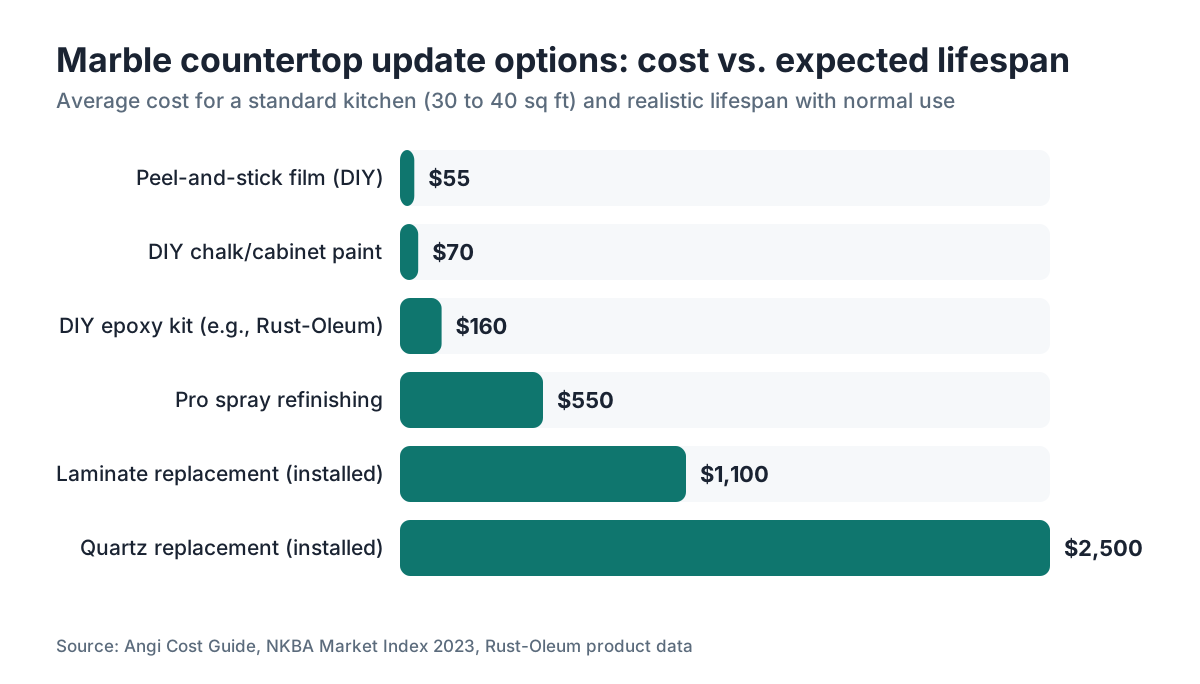
Cost hangs on two things: DIY versus pro, and how many square feet you're covering. DIY runs $70 to $250 all-in for an average kitchen. A pro job runs $300 to $800. Paint is genuinely cheaper upfront than any replacement. The catch is how long it lasts.
DIY kits from the major brands cost $50 to $200 for the kit alone, and one kit usually covers 35 to 50 square feet. A standard kitchen with 30 to 40 square feet of counter fits inside one kit. You'll also want painter's tape, sandpaper (80- and 220-grit), a foam roller, mineral spirits for cleanup, and maybe a bonding primer if the marble carries old sealer. Add $20 to $40 for supplies. [1]
Professional refinishing (also called reglazing or resurfacing) costs more. Refinishers bill by the linear or square foot. National averages are hard to pin down because pricing swings by region and product, but most estimates for countertop resurfacing land at $300 to $800 for a standard kitchen. High-end spray-applied systems push past $1,000 on large surfaces or custom color matching. [2]
Compare that to replacement. New laminate on the same 35-square-foot counter runs roughly $700 to $1,500 installed, depending on edge profile and region. Quartz starts around $1,500 to $3,500 installed for that square footage. [12]
A well-done epoxy kit holds up 2 to 5 years before wear shows at the hot spots: around the sink, near the stove, and wherever people set hot pans down. A pro spray finish can go longer, and some companies claim 5 to 10 years, but independent proof of those claims is thin. Plan on repainting or replacing inside 3 to 5 years either way.
How do you paint marble countertops step by step?
If you're going ahead, technique beats brand. A badly prepped surface fails in weeks no matter what kit you bought. The prep is the whole game.
Step 1: Clear and degrease. Take everything off the counter. Clean the whole surface with a degreasing cleaner (a TSP substitute, or a dish-soap-and-water scrub) and let it dry all the way. Any grease, wax, or silicone sealer left behind blocks the bond. If you've ever put a silicone-based sealer on this marble, test the kit's adhesion promoter on a hidden corner before you commit to the full surface.
Step 2: Sand. Scuff the surface with 80-grit to give the coating something to grab. Don't skip this. Polished marble is glass-smooth, and paint slides right off a glassy finish. Follow with 220-grit to knock down the scratches, then wipe every speck of dust with a tack cloth. Surface abrasion is what makes coatings hold, a point the Tile Council of North America makes for stone substrates generally. [11]
Step 3: Apply bonding primer. Most epoxy kits include a primer or bonding base coat. Roll it on in thin, even passes. Thick coats pool, cure slow, and cause adhesion failures. Let it dry to the kit's stated time, usually 2 to 4 hours.
Step 4: Apply color coats. Roll your base color in thin layers, foam roller again for the smoothest surface. Two thin coats beat one thick coat every single time. Doing a faux-marble effect? This is where you drag veins in with a small artist's brush or a feather while the paint is still wet.
Step 5: Apply topcoat. The topcoat decides durability. Epoxy topcoats are harder than polyurethane, and water-based polyurethane is harder than nothing at all. Put on at least two coats, sanding lightly with 400-grit between them. Let the final coat cure the full time specified, usually 24 to 72 hours before light use and up to 7 days before you set anything heavy or hot on it.
Two-part epoxy is a hazardous material during application, so ventilate and wear a respirator and gloves. OSHA's Hazard Communication Standard covers exactly these products. [9]
What to skip. No latex wall paint. No skipping the sand step. Don't coat over marble with active efflorescence (white salt deposits) or cracks, because both telegraph through the coating and peel it early. And never set a hot pan on a painted surface. The heat blisters it on contact, and most kits are rated only to 150 to 200 degrees F, well under what a cast iron pan off a burner hits.
Which paint or kit actually holds up best on countertops?
No independent long-term lab study compares countertop paint brands on marble specifically. So the honest answer pulls from product specs, consumer reports, and what pro refinishers reach for on the job.
For DIY, Rust-Oleum's countertop-specific products (Countertop Transformations and their dedicated countertop paint) beat generic wall paint or chalk paint on adhesion and hardness on hard surfaces. Giani Granite kits are popular for the faux-stone look and hold up decently, though the finish sits thinner than a true epoxy system. [1]
For pro work, most refinishers spray conversion coatings or catalyzed polyurethane, harder and more chemical-resistant than anything in a consumer box. Acrylic urethane sprays run common in the trade. Spraying also kills the brush and roller marks that are the usual complaint with DIY results.
Here's how the main options stack up:
| Option | Typical cost (avg. kitchen) | Expected lifespan | Skill level | Heat resistance |
|---|---|---|---|---|
| DIY epoxy kit (e.g., Rust-Oleum) | $70 to $250 | 2 to 5 years | Moderate | ~150 F |
| DIY chalk/cabinet paint | $30 to $100 | 1 to 2 years | Low | Very low |
| Pro spray refinishing | $300 to $800 | 4 to 10 years | Pro only | Higher |
| Laminate replacement | $700 to $1,500 | 15 to 25 years | Contractor | N/A |
| Quartz replacement | $1,500 to $3,500 | Indefinite | Contractor | Moderate |
Want a durable result and can spend $300 or more? A pro refinisher beats any DIY kit. Doing it yourself? Use an epoxy kit and follow the prep to the letter. Chalk paint on a working kitchen counter is a bad idea unless that counter barely gets touched.
Can you paint real marble to look like a different stone or color?
Yes, but the limits are real. Painting real marble a solid color, usually white or gray, works with proper prep and an epoxy primer-and-topcoat system. It covers the existing veining and gives you a uniform surface.
Faking a different stone is harder. Faux marble and faux quartz techniques layer colors and add veining by hand. The effect can convince from across the room. Up close it almost always reads as painted, because real stone has depth and translucency a surface coating can't fake. Stagers, photographers, and designers use faux finishes all the time for short-term visual impact. For a kitchen you cook in daily, keep the bar lower.
One case where painting makes real sense: you've got old pink or harvest-gold laminate with a faux-marble print, and you want to update the color without ripping it out. Laminate paints easier than marble because it's already non-porous and uniform. Sand, prime with a bonding primer, apply. It holds better on laminate than on natural stone. For more on laminate, see laminate countertops and formica countertops.
If you want a true marble look and you're starting fresh, the smarter path is marble-look quartz or marble-look laminate, both built to mimic the real thing for far less than real marble. Check cambria countertops for one well-regarded manufactured marble-look surface that never needs painting or sealing.
What are the real risks of painting marble countertops?
Peeling is the big one, and it shows up faster than kit marketing lets on. On polished natural marble, the coating rides on top of the stone with no true chemical bond into the material. Sink moisture, pot heat, and the daily abrasion of prep work attack it from above. The marble's porosity and any leftover sealer attack the bond from below. It's squeezed from both sides.
Peeling usually starts at edges, corners, and the sink cutout within 6 to 18 months on a working kitchen. Once it starts, clean spot repair is off the table. The lip of the peeled area shows through any touch-up coat.
Second risk: you box in your future options. Want to bring the marble back to its natural finish later? Stripping cured epoxy off stone is hard and sometimes flat-out impossible without surface damage. Some strippers work, but you risk etching the stone or leaving a haze that needs professional polishing or honing to clear. Painting marble is not truly reversible.
Third: food safety. A chipped or peeling painted surface is not a food-safe prep area. The FDA Food Code sets construction standards for food-contact surfaces in commercial kitchens, and Section 4-101 requires those surfaces be "safe," "durable," and "nonabsorbent." That's a commercial rule, but the logic carries home: a coating flaking into your food prep zone is a hygiene problem. [3]
Fourth: resale. Buyers and appraisers tend to dock kitchens with obviously painted counters compared to new counters or even well-kept original stone. NAHB buyer-preference surveys put natural stone and quartz well ahead of refinished surfaces. [6] If you're selling within a few years, the paint money is often better aimed at a real replacement. See kitchen countertops for a wider read on which materials hold their value.
How do you maintain and clean painted marble countertops?
Painted marble needs gentler care than sealed natural stone. The surface is a coating, not a mineral, and most coatings are softer and more chemically touchy than the stone underneath.
Clean with mild dish soap and water. That's it. No bleach. No ammonia glass cleaners. No abrasive pads or powders. Any of those can dull, cloud, or soften a painted surface within months. The Natural Stone Institute makes the same call for sealed stone: mild soap and water, skip the bleach and ammonia. [4]
Dry the surface after you clean it. Standing water at the edges and around the sink cutout is the quickest route to adhesion failure. Wipe spills fast, especially acidic ones (citrus, wine, vinegar), because acid can soften certain topcoats.
Use trivets and cutting boards, always. No hot pans. No cutting straight on the surface. Painted coatings aren't rated for either, and both leave immediate, visible damage.
Some makers suggest a paste wax once or twice a year to stretch topcoat life. Check your kit's instructions first. Not every topcoat takes wax, and some wax formulas yellow over time on white painted surfaces.
Natural marble care runs similar in spirit: gentle cleaners, no acid, no abrasives. The practical gap is that real marble can be professionally repolished or honed when it gets damaged. A painted surface can only be repainted. For general stone cleaning, see how to clean stone countertops.
Is painting marble countertops worth it, or should you just replace them?
Most articles dodge this one. Here's the direct answer from the numbers: paint is worth it as a short-term stopgap and a bad bet as a permanent fix on marble you plan to keep.
Painting makes sense in a few spots. You're renting and can't swap the counters (check the lease first, plenty of landlords ban modifications). You're staging a home for sale and need a quick refresh on a tight budget. Or you're planning a full remodel inside 2 to 3 years and want something cleaner to live with meanwhile.
It does not pencil out long-term on real marble. Over 10 years you'd likely repaint 2 to 3 times, spending $150 to $750 in materials plus your own time, or $600 to $2,400 for two rounds of pro refinishing. And you still land on a painted surface with weak resale value that can't be brought back to natural stone easily.
For homeowners who want to know what actual replacement costs, fabricators using quoting tools like SlabWise can produce a detailed estimate in minutes, broken into material, fabrication, and installation. The paint-versus-replace math often flips once you see the real number for your exact square footage.
If the marble is structurally sound but stained or etched, professional polishing and re-honing beats painting almost every time. A pro can lift most etching and surface stains and bring back the original finish for roughly $200 to $500, depending on area and severity, and you keep real marble. The Natural Stone Institute confirms polished marble can be restored this way. [10]
If the marble is chipped, cracked, or a color you genuinely can't stand, replace it with something you actually want (quartz, quartzite, even a marble-look laminate) instead of layering paint over a material you dislike. See marble countertops for a straight look at marble's real maintenance demands versus the alternatives.
How do you get a marble look on countertops without replacing them?
This one comes up most from people with dated laminate or tile counters who want a stone look without the stone price. Three routes work: faux painting, epoxy pour kits, and peel-and-stick film. None fully fools the eye up close.
Faux marble painting is the most DIY-friendly. The method: prime with a white or off-white base, then drag a thin artist's brush loaded with gray, gold, or taupe paint in a diagonal, varying pressure to mimic natural movement. A clear coat pulls it together. YouTube has hundreds of walkthroughs. Results run from surprisingly convincing to obvious craft project, almost entirely on the painter's skill.
Epoxy countertop kits push further. Products like Leggari and Countertop Epoxy let you pour and swirl a self-leveling epoxy into marble-like patterns. They're more durable than paint because epoxy cures to a hard, thick surface. They're also messier and less forgiving: you get maybe 20 to 30 minutes of working time once mixed, and a bad pour is very hard to fix. Kits run $80 to $300 for an average kitchen.
The overlooked option: peel-and-stick countertop films. These vinyl wraps, common in apartments and rentals, give a marble look that's fully removable. Durability is short (2 to 3 years at most, and seams and edges show), but for low-use surfaces or rentals they do the job. They cost $30 to $80 for an average kitchen.
For a truly convincing marble look without replacing anything, honestly none of these match real stone. The most believable marble aesthetic at a reasonable price comes from quartz countertops or a quality marble-pattern laminate. If you also want to see how real-stone maintenance differs, how to clean quartzite countertops shows what actual stone care looks like.
What do fabricators and shop owners think about painted marble?
Most stone fabricators are skeptical of painted marble, and they've earned the skepticism, because they see the aftermath. A homeowner paints marble, it starts peeling around 18 months, and they walk in asking about replacement. By then, pulling the painted top can sometimes damage the cabinets underneath if the bond between stone and cabinet got altered.
From a shop operations angle, there's no real business in painting marble. Margins are thin. Liability is real, because if the paint fails the homeowner may claim the stone got damaged. And customer expectations rarely match what the product actually does. Most fabricators who offer refinishing at all treat it as a last resort, usually for commercial bathrooms or rentals where cost drives everything.
Shops that quote and track jobs carefully, using tools like SlabWise, see it in their own data: replacement jobs are more profitable and lead to happier customers than refinishing. That's not a pitch for replacement. It's a pattern that keeps showing up in the job records.
What fabricators do suggest for budget-minded homeowners: a laminate countertop replacement over painting real stone. A good marble-pattern laminate, properly installed, looks far better than painted marble by year two and costs in a similar range once you count the repainting cycles. Houzz's kitchen trends work notes renewed interest in laminate for budget renovations, alongside quartz and quartzite dominating overall. [8] For a broader material comparison, kitchen countertops covers the full range. And if you're weighing stone alternatives, granite countertops and butcher block countertops are both worth understanding in context.
Frequently asked questions
Can you paint marble countertops white?
Yes. White is the most common color used to paint marble. An epoxy primer and topcoat system over properly sanded, degreased marble covers the existing veining and gives you a solid white surface. The challenge is keeping it white: painted surfaces yellow over time from heat, UV, and cleaning products. Use a non-yellowing water-based topcoat and clean with mild soap only.
How long does paint last on marble countertops?
Realistically, 2 to 5 years for a DIY epoxy kit on a working kitchen counter. Professional spray refinishing can go 4 to 10 years. Both numbers assume proper prep and gentle daily care. The paint almost always fails first at the sink edge, around the cutout, and in the busiest prep zone. Skip the prep steps and you cut the lifespan roughly in half.
Does painting marble countertops reduce home value?
Generally, yes. Buyers and appraisers can usually spot painted counters, especially if there's peeling or wear. A painted counter reads as deferred maintenance, not an upgrade. The exception might be a very clean, recent professional refinishing job on a counter that would otherwise look badly dated. For resale, replacement with even budget laminate usually shows better than painted original stone.
What kind of paint sticks to marble?
Epoxy-based paints and primers adhere best to marble among consumer products. They cure harder than latex or chalk paint and resist moisture better. Alkyd (oil-based) primers also bond well and can be topcoated with water-based products after they cure. Chalk paint and standard interior latex do not stick reliably to polished stone and aren't recommended for horizontal kitchen use.
Can you use Rust-Oleum on marble countertops?
Yes. Rust-Oleum makes a dedicated countertop product, their Countertop Transformations kit, formulated for hard, non-porous surfaces. It uses a mineral chip system to build a faux-stone look and bonds reasonably well to marble with proper sanding and priming. Follow the prep steps closely. Skipping the sanding is the most common cause of early adhesion failure with this product.
Is it possible to paint marble to look like quartz?
You can paint marble to mimic the solid, consistent color of engineered quartz, but replicating quartz's depth and fleck realistically is hard. Epoxy pour kits with metallic pigments come closest. For a surface that actually performs like quartz, painting isn't a real substitute. Manufactured quartz resists heat, acids, and scratches in ways painted surfaces don't, no matter how close they look.
What happens if you put a hot pan on painted marble?
The coating blisters or softens almost instantly. Most consumer epoxy and paint products for countertops are rated to 150 to 200 degrees F. A pan pulled off a medium burner easily tops 300 to 400 F. The damage is usually permanent: a ring or blister you can't touch up cleanly without repainting the whole surface. Use a trivet. This is the most common cause of early paint failure on kitchen counters.
How do you remove paint from marble countertops?
Removing cured epoxy or paint from marble is difficult. Chemical strippers made for stone (a non-acidic paint remover) can soften the coating without etching the marble, but results vary widely. Mechanical scraping risks gouging the stone. In most cases a professional marble restoration company is the safest route. Budget $200 to $500 or more, and expect some haze or micro-scratches may remain and need polishing.
Can you paint cultured marble countertops?
Cultured marble (marble dust and resin under a gel coat) actually takes paint better than natural marble in some ways, because the gel coat sands to a good bonding profile. Bonding primer is still required. Many painted bathroom vanity surfaces are cultured marble, not real stone. The same epoxy kit approach applies, and durability lands close to natural marble with similar prep and care.
Can a renter paint marble countertops?
Only with explicit written permission from the landlord. Most leases ban surface modifications, and painting marble counts as one. Paint without permission and have the coating fail or alter the stone, and you're likely on the hook for restoration costs, which can run from several hundred dollars up past the security deposit. Peel-and-stick countertop films are the better renter option since they come off without surface damage.
How do you prep marble for painting?
Clean with a degreaser to strip wax, oils, and sealer residue. Sand with 80-grit to dull the polished surface, then 220-grit to smooth it. Wipe thoroughly with a tack cloth. Apply a bonding primer matched to your paint system. Let the primer cure fully before color coats. This sequence is the single biggest factor in how long the paint lasts. Shortcuts here cause almost every early failure.
What's the cheapest way to update marble countertops without replacing them?
Professional polishing to restore the original finish ($200 to $500) is often the cheapest meaningful update if the stone is just etched or dull. If color is the problem, a DIY epoxy kit ($70 to $250 all-in) is cheapest, though it won't last long. Peel-and-stick vinyl film is cheaper still ($30 to $80) but the shortest-lived. Full replacement with laminate, from around $700 to $1,500 installed, is the cheapest permanent solution.
Are there food-safe paints for marble countertops?
Once fully cured, most quality epoxy coatings are considered food-safe by their makers, but no consumer countertop paint kit carries FDA food-contact certification. The FDA Food Code standards apply formally to commercial food service. At home the practical concern is a degrading or peeling surface contaminating food prep. A well-maintained, intact painted surface poses minimal risk. A flaking one should be repaired or replaced before you prep food on it.
How do you make a faux marble countertop look realistic?
Start with a white or warm gray base coat. Load a small artist's brush with heavily diluted gray, taupe, or gold and add veins in diagonal strokes, varying pressure and direction for natural irregularity. Feather the vein edges while still wet. Add a second, thinner vein layer slightly offset from the first. Finish with a high-gloss clear epoxy topcoat for the depth that sells the stone look. Practice on cardboard first.
Sources
- Rust-Oleum, Countertop Transformations product page: Consumer epoxy countertop kits cost $50 to $200 and cover approximately 35 to 50 square feet per kit
- Angi, Countertop Refinishing Cost Guide: Professional countertop refinishing typically costs $300 to $800 for a standard kitchen
- U.S. Food and Drug Administration, Food Code 2022, Section 4-101 (Materials for Construction and Repair): FDA Food Code Section 4-101 requires food-contact surfaces in commercial operations to be safe, durable, and nonabsorbent; a degrading painted surface does not meet these standards
- Natural Stone Institute, Care and Cleaning for Natural Stone: Mild dish soap and water is recommended for cleaning sealed stone surfaces; bleach and ammonia-based cleaners are discouraged
- U.S. Environmental Protection Agency, Safer Choice Program: Chemical strippers and solvents used to remove coatings are subject to EPA Safer Choice guidance on VOC content
- National Association of Home Builders, What Home Buyers Really Want (2021): Countertops rank among the top features home buyers evaluate; natural stone and quartz outrank painted or refinished surfaces in buyer preference surveys
- U.S. Census Bureau, American Housing Survey: Kitchen remodeling is among the most common home improvement projects; countertop replacement accounts for a significant share of kitchen renovation spending
- Houzz, 2023 U.S. Houzz Kitchen Trends Study: Quartz and quartzite are the most popular countertop materials in kitchen renovations; laminate has seen renewed interest in budget renovations
- Occupational Safety and Health Administration, Hazard Communication Standard (29 CFR 1910.1200): Two-part epoxy systems are classified as hazardous materials requiring proper ventilation and PPE during application
- Natural Stone Institute, Marble Technical Bulletin: Polished marble surfaces can be restored through professional honing and polishing to remove surface etching and stains
- Tile Council of North America, Handbook for Ceramic, Glass, and Stone Tile Installation: Surface preparation including cleaning, priming, and mechanical abrasion is essential for adhesive and coating bond strength on stone and similar substrates
- National Kitchen and Bath Association, Kitchen and Bath Market Index 2023: Laminate countertops, starting around $700 to $1,500 installed, represent the most common budget countertop replacement in kitchen renovations
Last updated 2026-07-09