TL;DR
- Wood countertops cost roughly $40 to $100 per square foot installed, depending on species and finish.
- They're warm, repairable, and genuinely functional, but they need regular oiling and will show wear.
- Hard maple and walnut hold up best.
- This guide covers costs, species, finishes, maintenance, sanitation research, and how wood stacks up against stone, quartz, and laminate.
What does a kitchen with wooden countertops actually look like in daily life?
Wood has a warmth and texture stone can't touch. Run your hand across a freshly oiled end-grain maple surface and you'll get why people pick it over granite. The visual depth, the slight give when you're standing at the prep station, the way a used surface develops character instead of just looking beat up: all of that is real.
Now the other side. Wood absorbs water. It moves with humidity. Knives mark it. Heat scorches it. A kitchen with wooden countertops is one where you think about the surface, at least until the habits go automatic. That's not a dealbreaker. It's a trade-off you should understand before you sign anything.
Most wood counters in working kitchens live near the prep area, a baking station, or an island. The sink run and the cooktop zone are where wood causes the most grief, so plenty of homeowners put wood on the island and quartz or granite around the perimeter. That hybrid setup is common for a reason. You get the warmth and the practicality in one kitchen.
For fabricators pricing jobs, wood is a different animal than stone. The material is lighter, but milling, joinery, and finish work eat real hours. Jobs with integrated sinks or curved edges especially. Know that before you quote one flat.
See kitchen countertops for a full comparison of every surface type if you're still deciding.
What kinds of wood are used for kitchen countertops?
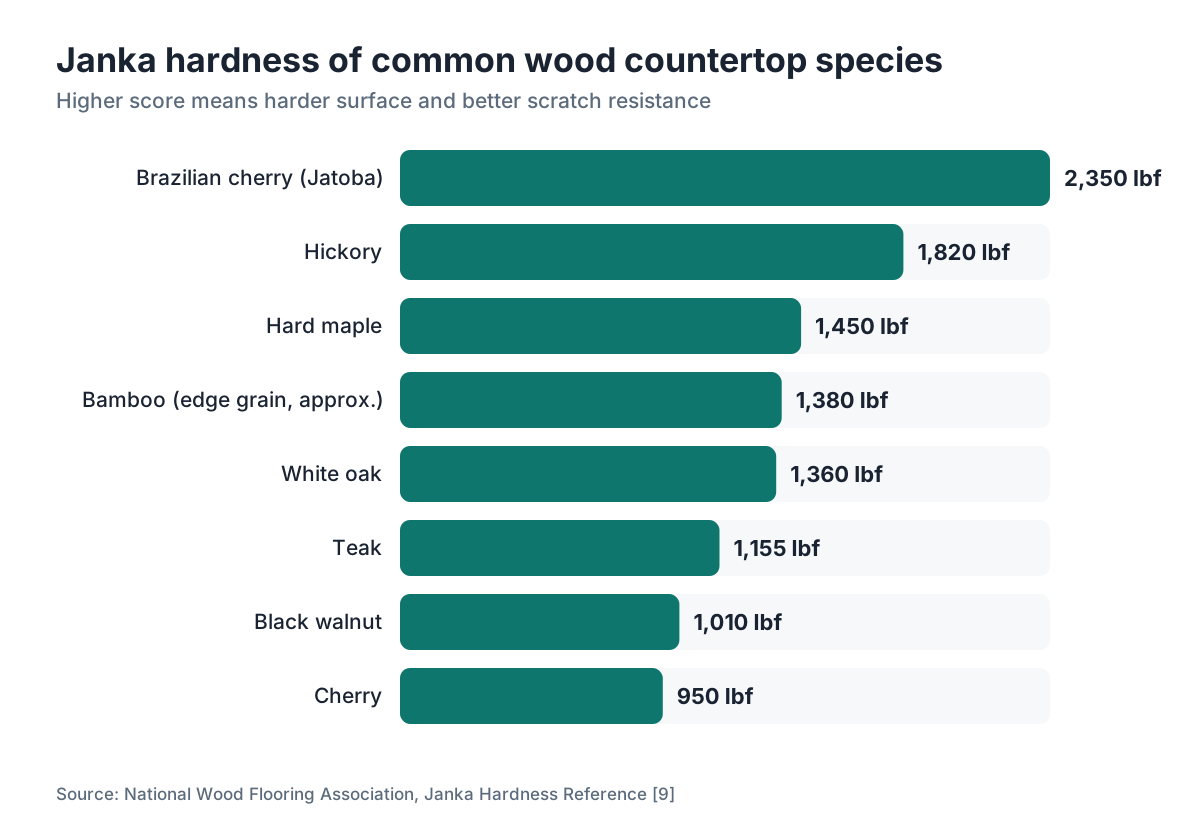
Not every species makes a good countertop. You want hardwoods with a Janka hardness above roughly 1,000 lbf, tight grain, and reasonable stability. Here's how the main options compare, with Janka figures from the National Wood Flooring Association [9]:
| Species | Janka Hardness (lbf) | Grain Type | Relative Cost | Notes |
|---|---|---|---|---|
| Hard maple | 1,450 | Fine, closed | $ | Classic butcher block choice; resists moisture well |
| Black walnut | 1,010 | Open | $$$ | Dark, striking; softer than maple |
| White oak | 1,360 | Open | $$ | Tighter grain than red oak; better for wet areas |
| Cherry | 950 | Fine | $$ | Darkens beautifully with age; softer end |
| Teak | 1,155 | Medium | $$$ | Naturally oily; excellent moisture resistance |
| Bamboo (edge grain) | ~1,380 (varies) | Very fine | $ | Technically a grass; very stable; widely available |
| Hickory | 1,820 | Pronounced | $ | Very hard; dramatic figure; can look busy |
| Brazilian cherry (Jatoba) | 2,350 | Open | $$ | Extremely hard; deep red tone |
Maple is the workhorse. It's what most commercial butcher blocks are made from, and there's a reason: hard enough to shrug off everyday knife work, tight-grained enough to resist moisture, pale enough to tell you when it needs cleaning. Walnut is the showpiece. Beautiful, and genuinely softer.
Grain orientation matters as much as species. End grain (the cross-section of the log, like the face of a cutting board) is the best surface for knife work and self-heals minor cuts to a degree. It also costs the most to mill. Face grain runs lengthwise and reads like traditional lumber. Edge grain shows the growth rings on the side of a board and is the common middle ground: good looking, reasonably durable, cheaper than end grain [1].
See butcher block countertops for a dedicated breakdown of construction options.
How much do wooden kitchen countertops cost?
Wood countertops run about $40 to $100 per square foot installed, with most jobs landing in the $50 to $75 range [2]. That price includes basic edge profiles. Here's where the spread comes from.
Species is the biggest driver. Maple and bamboo start around $40 to $55 per square foot installed. Walnut, teak, and exotic hardwoods push toward $80 to $100 or more. End-grain construction adds cost on top of species because it needs more raw material and more labor to mill and finish.
Thickness matters too. Standard countertop thickness is 1.5 inches. Thicker slabs, 2 to 3 inches, add weight and cost. Some fabricators build a thinner field with a built-up edge, giving you the look of a thick slab at lower material cost.
Custom cutouts for sinks, integrated drainboards, or carved-in prep areas push prices up fast. An undermount sink cutout in stone is a 10-minute CNC operation. In wood it's a hand-fit, sealed, and finished job that takes real care.
Geography moves prices a lot. Labor rates in coastal metros can push installed costs well above the national range. Rural shops often come in below it. Get at least three quotes.
For fabricators: if you track material yield and cut optimization on wood jobs alongside stone, SlabWise handles quoting for both surface types, which helps when a job mixes materials.
For comparison: granite countertops typically run $45 to $100 per square foot installed, marble countertops $60 to $150. Wood sits mid-range, but the ongoing maintenance cost is real.
What finish should you choose for a wooden countertop?
This choice matters more than most people think, and it's hard to reverse without real work. Two camps: oil and wax finishes, or film finishes.
Oil and wax finishes (mineral oil, food-safe tung oil, Danish oil, beeswax blends) soak into the wood and leave nothing on top. The counter still looks and feels like wood. Water beads, but the surface isn't waterproof. You reapply every one to three months depending on use. The payoff comes when the surface gets scratched or scorched: sand it lightly, re-oil, and it's back. No pro needed.
Film finishes (polyurethane, lacquer, hardwax oil with a built-up sheen) sit on the surface and form a protective layer. They resist water better day to day and need less frequent maintenance. The trouble is failure. Film finishes peel, chip, and cloud. When they do, you strip the whole surface back to bare wood and refinish. That's a bigger job.
For a prep-heavy kitchen that gets used hard, oil is the practical pick. For a low-traffic bar top or an island that mostly holds drinks, a film finish can make sense.
Whatever you choose, the finish has to be food-safe once cured. The FDA regulates food-contact substances under 21 CFR, and USP-grade mineral oil is listed as safe for incidental food contact [3]. Many Danish oils and tung oil products contain chemical driers that are safe once fully cured but should not touch food while wet.
Wood near a sink needs a penetrating oil or a purpose-built waterproofing finish on every surface, including the underside and edges. Unfinished or poorly finished wood near water will swell, cup, and eventually crack or mold.
How do you maintain and clean wooden kitchen countertops?
The rhythm for an oiled wood counter is simple once you know it. Day to day: wipe spills right away, clean with a damp cloth and mild dish soap, dry the surface. Never let standing water sit. Never submerge the counter (yes, people do this). Never set a hot pan directly on it.
Monthly, or when the wood looks dry and dull, apply a thin coat of food-safe mineral oil or a dedicated cutting board oil. Let it soak 20 to 30 minutes, wipe off the excess. That's the whole job.
Every year or two, or when scratches and stains start to bug you: sand with 120-grit, then 180-grit, clean the dust, and re-oil. You can bring most oiled wood counters back to near-new this way. No stone, quartz, or solid surface matches that at a similar DIY difficulty.
For film-finished counters, skip the oil (it just sits on top). Clean with pH-neutral cleaners. Skip abrasives.
What wood genuinely can't take: strong alkalis (bleach, ammonia-based cleaners), long wet contact, and sustained heat above roughly 150°F. The USDA Forest Service Wood Handbook notes that wood held above about 150°F for extended periods undergoes accelerated degradation and surface charring [4]. A cutting board under a hot pan is a simple habit that stops most scorching.
If you want to see how other natural surfaces clean up, how to clean stone countertops has the parallel guidance for granite and marble.
Are wooden countertops sanitary?
This comes up every time someone considers wood, and the research is more interesting than the gut reaction. Short version: well-maintained wood in a dry prep area is a reasonable food-prep surface. Wet, cracked, or unsealed wood is not.
A widely cited 1993 study by Dean O. Cliver at UC Davis found that bacteria drawn into the surface of wooden cutting boards died and could not be recovered, while knife-scarred plastic boards held live bacteria in the scratches. The USDA cites this line of research in its guidance that both wood and plastic can be kept sanitary with proper cleaning [5].
The qualifier is "proper cleaning." Wood that stays damp, has deep cracks, or never dries fully can harbor mold and bacteria. A regularly oiled surface with no standing water is not a hygiene problem for a home.
Under-sink areas are the real concern. If the wood around a sink cutout isn't sealed on every face and edge, water wicks in, the wood swells, gaps open, and mold grows where you can't reach. A properly fabricated, properly sealed cutout solves this. A sloppy one becomes a sanitation problem.
Commercial kitchens are a different story. NSF/ANSI 2, the food equipment standard, prohibits unsealed wood for food-contact surfaces in commercial food service equipment [6]. Residential kitchens have no such restriction. The distinction matters if you're building a home kitchen versus a food-service operation.
How does wood compare to stone, quartz, and laminate?
Here are the real trade-offs on the table.
| Factor | Wood | Granite/Quartzite | Quartz (engineered) | Laminate |
|---|---|---|---|---|
| Cost (installed, $/sq ft) | $40, $100 | $45, $100 | $55, $120 | $10, $40 |
| Heat resistance | Poor (scorches) | Excellent | Good (avoid direct heat) | Poor |
| Scratch resistance | Moderate | Excellent | Very good | Poor |
| Water resistance | Moderate (with finish) | Excellent | Excellent | Moderate |
| Repairability | Excellent (sand + re-oil) | Poor (chip repair visible) | Poor | Poor |
| Warmth/feel | Excellent | Cold | Cold | Moderate |
| Maintenance frequency | Monthly oiling | Sealing 1 to 2x/year | Minimal | Low |
| Lifespan (well-kept) | 20 to 50 years | 30+ years | 20 to 25 years | 10 to 20 years |
Wood wins on repairability. Nothing else comes close. Stone wins on heat and scratch resistance. Quartz wins on low maintenance. Laminate wins on cost.
The honest read for most homeowners: if you want a surface you never have to think about, wood probably isn't your first pick. If you like the idea of a surface that improves with use and can be fully restored, wood is genuinely compelling.
For fabricators, wood jobs turn slower than stone but carry good margins if you price labor right. The finish work and any sink integration is where the hours go.
See laminate countertops for the budget end, and cambria countertops for the premium engineered quartz side.
What are the best wood species for a kitchen island specifically?
Islands are the sweet spot for wood. They're usually away from the sink, and the usage skews toward prep rather than wet work. That changes the math compared to a perimeter run.
For an island used mostly for prep and eating: hard maple end grain is about as good as it gets. It handles knife work better than any other common option, it refinishes, and the look is clean and neutral. The premium over face-grain maple is real, often 30 to 50% more, but the performance earns it if the budget allows.
For an island that's more of a visual statement and gets lighter use: walnut face grain. The dark, rich color plays off white or light gray cabinetry. Accept that it shows marks over time and let that become part of the character.
For a seating island where people rest elbows and set drinks: teak or white oak with a good oil finish. Both handle moisture and light abrasion well. Teak's natural oils make it especially forgiving in casual use.
On thickness: a 1.5-inch top with a built-up waterfall edge looks substantial without the full weight of a 3-inch slab. Most fabricators build this cleanly. If you want a true live-edge slab, that's a specialty woodworking job more than a countertop fabrication job, and pricing swings wildly by source.
Can you install wooden countertops yourself, or do you need a professional?
Pre-made butcher block panels from suppliers like IKEA, Floor & Decor, or Crate & Barrel are built for DIY. They come in standard widths (typically 25 inches for a standard counter depth) and cut to length with a circular saw and a straightedge. If you're comfortable with basic carpentry, this is a real DIY project. The University of Minnesota Extension notes that pre-made butcher block panels can be installed with basic carpentry tools [7].
Here's what pushes you toward a pro.
Sink cutouts. An undermount sink in wood needs a precise cutout, clean routing, and thorough sealing on all exposed edges and the underside. A mistake here means water damage within months. Many experienced DIYers can do it with a jigsaw and careful marking, but it's the step where things go wrong most.
Multiple sections with seam joins. Wood panels usually top out at 8 or 10 feet. Longer runs or L-shaped layouts need seams. A tight seam that also allows for seasonal movement takes experience.
Counters over out-of-level cabinets. Cabinets that aren't level need shimming and scribing. Wood is more forgiving than stone here (you can plane and sand), but the finish work takes time.
For a simple straight-run island top with no sink, DIY is very reasonable. For a full perimeter with an undermount sink, get a pro, or at least have one advise on the cutout.
For countertop installation on other surfaces, the DIY-versus-pro line shifts a lot.
How long do wooden kitchen countertops last?
A well-maintained wood counter can last 20 to 50 years. That's not marketing. Antique kitchen worktables from the 1920s with heavily used maple tops still exist in working condition because the wood was thick enough to resurface again and again.
Realistic lifespan in a modern kitchen comes down to maintenance. An oiled maple counter that gets re-oiled monthly and refinished every few years will outlast most other countertop materials. An oiled counter that never gets re-oiled dries out, cracks, and fails within a decade.
The biggest killer is water. Standing water at the sink, under a dish rack, or from a leaking faucet base. Wood near water that isn't sealed on all faces will cup and crack. The USDA Forest Service Wood Handbook explains that wood is hygroscopic and moves with relative humidity, and that sealing all surfaces reduces but doesn't eliminate moisture uptake [8]. This isn't a flaw. It's a property of wood people have understood for centuries. Design around it.
Refinishing stretches lifespan a lot. Each pass removes maybe 1/16 to 1/8 inch. A 1.5-inch top can be refinished many times before it gets structurally thin. That's a built-in lifespan extension no other countertop material offers.
One honest hedge: nobody has solid population-level data on average wood countertop lifespans in homes. The numbers above come from woodworking industry guidance and the known properties of hardwood, not a longitudinal study.
What does wood do that stone and quartz can't?
Three things stand out.
Repairability is the big one. Scratch a quartz counter and you either live with it or call a specialist for a fill repair that may never match. Scratch a wood counter, spend 20 minutes with sandpaper and a rag, and it's gone. For families with kids, for serious cooks, for anyone who hates living with damage, that's genuinely valuable.
Acoustics. Wood dampens sound. A kitchen with wood counters is noticeably quieter than one with stone. Plates, glasses, and utensils ring out on stone. On wood they thud and go quiet. That's a real quality-of-life difference that rarely comes up in design meetings but shows up every single day.
Knife friendliness. Wood, especially end grain, is gentle on knife edges. Stone and ceramic are brutal on blades. If you cook a lot and care about your knives, this counts. You still shouldn't treat the whole counter as a cutting board (a separate board keeps the surface cleaner and more even), but accidental contact does less damage both ways.
For homeowners choosing between materials, weigh these functional wins against the maintenance commitment. If you're comparing against other natural materials, how to clean quartzite countertops and how to clean soapstone countertops show what those surfaces ask of you.
How do fabricators price and quote wood countertop jobs accurately?
Wood prices differently from stone and needs more line items in a quote to protect your margin.
Material cost swings more per board foot than slab cost swings per square foot. Grain orientation (end versus edge versus face), species, and panel dimensions all hit yield. Build in at least 15 to 20% waste for end-grain jobs because of the milling needed to create the glued-up blocks.
Labor lines people miss on wood quotes: finish prep (multiple sanding stages), finish application time (several coats of oil or poly with dry time between), sink cutout sealing on all faces, and any custom milling for integrated drainboards or carved prep areas. None of these exist in stone jobs, and they add real hours.
Delivery and install weight is lighter than stone, which cuts equipment needs, but it also means the cabinets have to be properly leveled and shimmed. Wood doesn't bridge small cabinet irregularities the way a heavy stone slab does.
For mixed-material shops, tracking per-job material cost, labor hours, and finish costs in one system tightens pricing over time. SlabWise's quoting tools let shops build custom line items for finish work and non-standard materials alongside standard stone jobs, which helps when you're quoting a kitchen that's half quartzite and half walnut island.
The most common pricing mistake on wood: quoting a per-square-foot rate without counting the actual finish hours. A basic stone install might take an hour of finish work. A wood counter with an undermount sink, integrated drainboard, and three coats of oil might take four. Quote accordingly.
Frequently asked questions
Are wooden countertops good for kitchens?
Yes, with honest caveats. Wood is warm, repairable, and functional for food prep. It needs regular oiling and is vulnerable to prolonged water contact and direct heat. For most homeowners the right answer is wood on the island or prep area and a harder surface near the sink and cooktop. Hardwoods like maple, oak, and walnut are the practical choices.
What is the best wood for kitchen countertops?
Hard maple is the most consistently recommended species. It's hard (1,450 lbf Janka), tight-grained, resists moisture well, and is affordable relative to exotics. Walnut is the premium visual choice but softer. Teak performs exceptionally near water thanks to its natural oils. Avoid softwoods like pine: they dent and scratch too easily for daily countertop use.
How do you protect wood countertops in a kitchen?
Apply a food-safe finish before use and keep it up. For oiled surfaces, reapply mineral oil or food-grade cutting board oil monthly or whenever the wood looks dry. Seal all edges and undersides before installation, especially near sinks. Use cutting boards for heavy knife work. Keep the surface dry: wipe spills immediately and never leave standing water. Never set hot pans directly on wood.
How often do wood kitchen countertops need to be refinished?
For oil-finished counters, the routine is monthly oiling (about five minutes) and a full sand-and-re-oil every one to three years depending on use. Film-finished counters (polyurethane) need refinishing only when the finish peels or clouds, typically every five to ten years, but that job is more involved. Regular oiling delays the need for a full refinish considerably.
Can you put a sink in a wood countertop?
Yes, but execution matters enormously. Every cut edge around the cutout must be sealed on all faces before installation. A drop-in sink is more forgiving than undermount because less raw wood is exposed. Undermount looks cleaner but demands thorough sealing and a well-maintained caulk line. Neglecting this is the number one cause of wood countertop failure near sinks.
How much do wooden kitchen countertops cost per square foot?
Installed costs typically run $40 to $100 per square foot. Maple and bamboo start around $40 to $55 installed. Walnut, teak, and exotic species push toward $80 to $100 or more. End-grain construction adds 30 to 50% over face or edge grain because of extra material waste and milling time. Custom features like integrated drainboards or undermount sinks add further labor cost.
Do wood countertops harbor bacteria?
Research at UC Davis found that bacteria pulled into wood surfaces died and could not be recovered, while knife-scarred plastic boards held live bacteria. Keeping any surface dry and clean is the deciding factor. Wood near sinks that stays wet or has unsealed cracks is a real sanitation risk. Well-maintained wood in a dry prep area is not a significant hygiene concern for residential use.
What's the difference between butcher block and wood countertops?
Butcher block is a type of wood countertop construction: multiple wood strips or blocks glued together, originally built to take heavy chopping. End-grain butcher block shows the end of each piece and is the most knife-friendly. Edge-grain shows the side of strips. A wood countertop can be a single slab, a live-edge piece, or butcher block construction. Butcher block is the most common form for kitchens.
Can wood countertops be used next to a stove?
Wood and direct heat are a bad match. Wood scorches at temperatures above roughly 150°F, and radiant heat from a cooktop can dry and crack a nearby wood surface over time. If you want wood near a range, keep at least 6 to 12 inches of clearance and always use trivets for hot items. Stone, quartz, or tile are more practical for the immediate cooktop surround.
How do you remove stains from a wood countertop?
For oil-finished surfaces, light stains often sand out with 120 to 180 grit paper followed by re-oiling. Deeper stains from wine, beets, or coffee may need oxalic acid (wood bleach) applied per product instructions, then sanding and re-oiling. For film-finished surfaces, bleach-based cleaners risk damaging the finish, so spot-test first. Most stains on well-maintained oiled wood come out, which is a genuine edge over stone or engineered surfaces.
Are bamboo countertops better than wood?
Bamboo is a grass processed to behave like a hardwood countertop. It's dimensionally stable, relatively moisture-resistant, and usually cheaper than hardwood. Edge-grain bamboo tests around 1,380 lbf Janka. The trade-off: most bamboo panels use formaldehyde-containing adhesives, so look for CARB Phase 2 compliant products. For pure hardness and repairability, hard maple is still the reference standard.
Does a wood countertop increase home value?
There's no clean data specifically on wood countertops and resale value. Remodeling Magazine's Cost vs. Value report tracks kitchen remodel ROI broadly, not by countertop material. Wood appeals strongly to some buyers and puts off others who worry about maintenance. In markets where buyers expect low-maintenance surfaces like quartz and granite, wood can be a harder sell. In design-forward markets it often reads as premium.
What oil should I use on wood kitchen countertops?
Food-safe mineral oil (USP grade) is the standard pick. It's cheap, easy to find, non-toxic, and doesn't go rancid. Fractionated coconut oil works similarly. Avoid olive oil, vegetable oil, or other food-based oils: they go rancid inside the wood and cause odor. Beeswax blended with mineral oil adds a light sheen and a bit more water repellency. Apply liberally, let soak 20 to 30 minutes, wipe off the excess.
Sources
- USDA Forest Service, Wood Handbook: Wood as an Engineering Material: Grain orientation (end, edge, face) affects the wear performance and stability of wood surfaces
- Angi (formerly HomeAdvisor), Butcher Block Countertop Cost Guide: Wood and butcher block countertops installed typically cost $40 to $100 per square foot
- U.S. Food and Drug Administration, food-contact substances guidance under 21 CFR: USP-grade mineral oil is listed as safe for incidental food contact
- USDA Forest Service, Wood Handbook: Wood as an Engineering Material: Wood held above approximately 150 degrees Fahrenheit for extended periods undergoes accelerated degradation and surface charring
- USDA Food Safety and Inspection Service, Cutting Boards and Food Safety guidance: Both plastic and wood cutting surfaces can be kept sanitary; USDA cites UC Davis research by Dean O. Cliver showing bacteria do not recover from knife-scarred wood surfaces
- NSF International, NSF/ANSI 2 Food Equipment Standard: NSF/ANSI 2 prohibits unsealed wood for food-contact surfaces in commercial food service equipment
- University of Minnesota Extension, home improvement and remodeling guidance: Pre-made butcher block panels can be installed with basic carpentry tools
- USDA Forest Service, Wood Handbook: Wood as an Engineering Material: Wood is hygroscopic and moves seasonally with relative humidity; sealing all surfaces reduces but does not eliminate moisture uptake
- National Wood Flooring Association, Janka hardness species reference: Janka hardness ratings for common hardwood species including hard maple (1,450 lbf), black walnut (1,010 lbf), and white oak (1,360 lbf)
- Remodeling Magazine, Cost vs. Value Report: Kitchen remodels return roughly 70 to 80 percent of cost at resale; countertop material is not tracked as a separate line item
- California Air Resources Board, Composite Wood Products Program: CARB Phase 2 compliance limits formaldehyde emissions from composite wood products including bamboo panels sold in California
Last updated 2026-07-09