TL;DR
- Replacing kitchen countertops costs roughly $1,500 to $5,500 installed for a typical 30 to 40 square foot kitchen, depending on material.
- Laminate runs $500, $1,500 total; granite and quartz land in the $2,000, $5,000 range; marble and quartzite can push $6,000 or more.
- Labor, edge profiles, cutouts, and demolition add $300, $800 on top of the slab price.
What does kitchen countertop replacement actually cost in 2025?
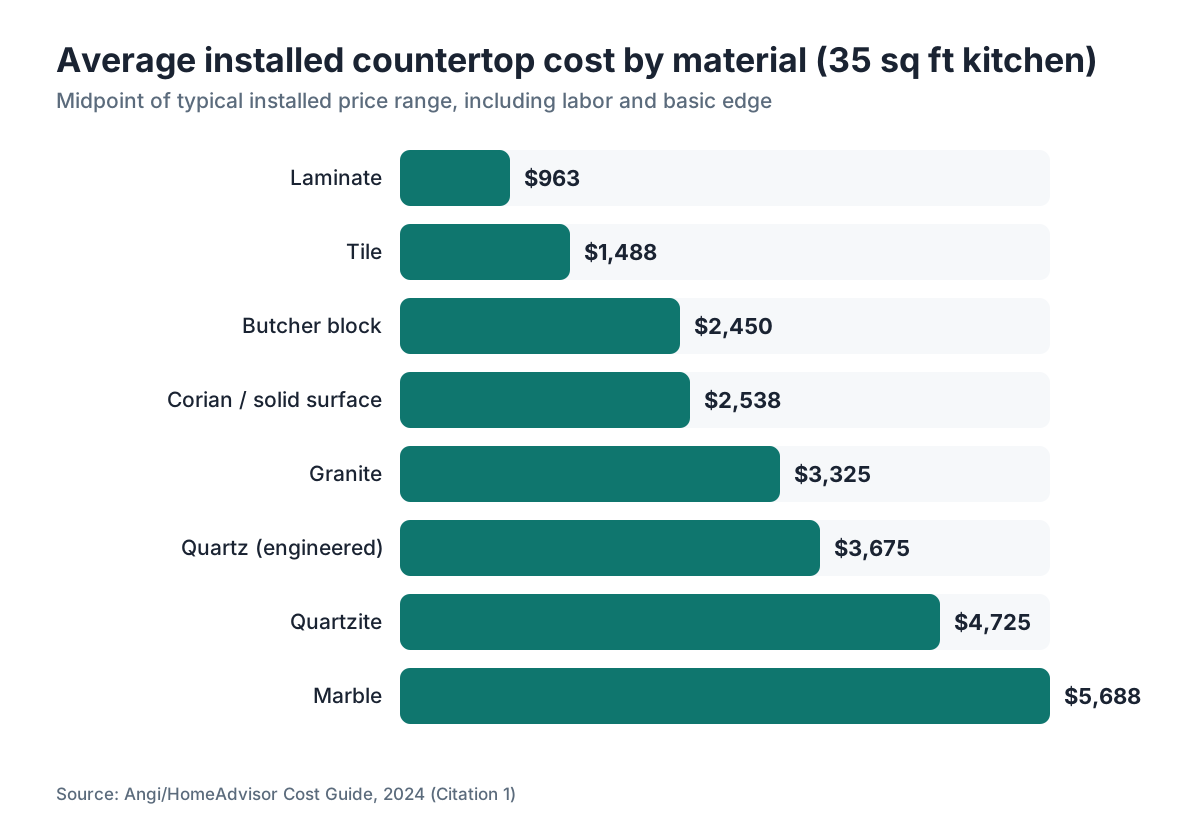
"It depends" is the honest answer here, and it's not a dodge. Material choice swings the total more than any other single factor. For a kitchen with 35 square feet of countertop, here are the realistic installed ranges:
| Material | Installed cost per sq ft | 35 sq ft total |
|---|---|---|
| Laminate (Formica-style) | $15, $40 | $525, $1,400 |
| Butcher block | $40, $100 | $1,400, $3,500 |
| Tile (ceramic/porcelain) | $20, $65 | $700, $2,275 |
| Corian / solid surface | $45, $100 | $1,575, $3,500 |
| Quartz (engineered) | $60, $150 | $2,100, $5,250 |
| Granite | $50, $140 | $1,750, $4,900 |
| Marble | $75, $250 | $2,625, $8,750 |
| Quartzite | $70, $200 | $2,450, $7,000 |
Those are rough market ranges from fabricator surveys and retail pricing guides. Prices in your zip code will vary.[1][2] High-cost metros (New York, San Francisco, Boston) typically run 20 to 35% above the national midpoint. Rural markets can run 10 to 15% below.
The price people see advertised is almost always the material-only or slab-only number, not the installed total. Installation, edge work, sink and faucet cutouts, tear-out of old counters, and disposal together add $300, $800 to the job. Sometimes more if there's a lot of plumbing to disconnect and reconnect. Always get a quote that spells out what is and is not included.
For a broader look at material options and what makes a good countertop for everyday cooking, see our guide to kitchen countertops.
What are the main materials for kitchen countertops and how do they compare?
About eight materials account for the bulk of replacements. Each carries a real trade-off, more than a price point.
Laminate is cheap, DIY-friendly, and comes in a wider range of patterns than it did fifteen years ago. It chips and burns, it can't be sanded back, and the seams swell if water gets underneath. Flipping a rental or working a tight budget? It makes sense. Cook hard, and it shows wear fast. Our laminate countertops article covers the current product lines, including the thicker post-form options that hold up better than the old stuff.
Butcher block is warm, cuttable (you can sand out scratches), and affordable next to stone. The catch is moisture. Unsealed wood around a sink rots. Oiled and maintained, it lasts decades; neglected, it fails in a few years. See our full butcher block countertops guide for maintenance specifics.
Quartz (engineered stone) is the highest-volume countertop material sold in the U.S. right now.[2] It's non-porous, needs no sealing, and comes in consistent patterns natural stone can't match. The downside is heat: a hot pan set directly on quartz can crack or discolor the resin binder. Brands like Cambria use different resin formulations; see Cambria countertops for what the premium tier buys you.
Granite stays popular, and the price has come down a lot since the early 2000s. It's heat-resistant, hard, and every slab looks different. It needs sealing once a year or so, and some lighter granites stain if you leave red wine or oil sitting on them. Our granite countertops guide walks through the sealing question honestly.
Marble is the one that generates the most regret. It's genuinely beautiful. It also etches (acid from lemon juice, vinegar, even coffee leaves a dull spot) and stains more readily than granite. Marble prices reflect both the material cost and the fabrication difficulty, since marble is softer and cracks more easily during cutting. Want the look without the maintenance? Look at honed quartzite or a marble-look quartz instead. For those who still want the real thing, see our marble countertops guide.
Corian and solid surface materials hide their seams, buff out scratches, and come in dozens of colors. They're less heat-resistant than stone and can read a little plastic-y in person. More detail is in our Corian countertops article.
Soapstone and quartzite are the niche natural stones with a growing following. Quartzite is genuinely hard and heat-resistant, and it's often mislabeled at showrooms, so know what you're buying. See how to care for it at how to clean quartzite countertops. Soapstone develops a patina over time; maintenance tips are at how to clean soapstone countertops.
What actually drives the total price up (or down)?
Material is the biggest lever. Several other factors move the total by hundreds or even thousands of dollars.
Square footage and layout complexity. Simple straight runs with one sink are the cheapest to fabricate. L-shapes and U-shapes have more linear feet of edge, more corners, more seams. Islands, especially large ones, sometimes need two-piece slabs with a seam in the middle, which adds labor.
Edge profiles. A standard eased edge (a softened 90-degree corner) costs nothing extra on most bids. An ogee, waterfall, or stacked profile adds $10, $25 per linear foot on top of the base price. A 25-foot run of fancy edge work adds $250, $600 before you've changed a single material.
Cutouts. A standard undermount sink cutout runs $100, $200. A cooktop cutout (gas or electric) adds another $100, $150. Each extra cutout (prep sink, soap dispenser, filtered water tap) adds to the bill.
Demolition and disposal. Some fabricators include tear-out; many don't. Tile that's thinset directly onto the substrate takes longer to demo than pulling off a laminate top. Budget $100, $300 for demo if it isn't explicitly included.
Thickness. Standard stone slabs come in 2cm and 3cm. 3cm (about 1.25 inches) is the default for kitchens today and doesn't need a buildup strip along the edge; 2cm does, which adds cost. Materials like Dekton and ultra-compact surfaces also come in thinner formats that need special handling.
Material waste and yield. Fabricators cut your countertop shapes from a larger slab, and the leftover is usually scrap. A simple layout might use 70% of a slab. Lots of curves, a big island, or an odd kitchen shape push waste up, and the fabricator prices it in. This is one reason an itemized quote beats a bare per-square-foot number.[3]
Fabricators using digital templating and nesting software can often cut waste by 10 to 15%, which is where tools like SlabWise come in. Tighter nesting means better material estimates and fewer surprise add-ons when the fabricator finds waste mid-job.
How long does kitchen countertop replacement take from quote to install?
The full timeline from first call to finished kitchen is usually 2 to 4 weeks for stone, and as little as 1 week for in-stock laminate or prefabricated countertops.
Here's the typical sequence for custom stone (granite, quartz, marble):
- Showroom visit and material selection: 1 to 3 days, longer if you need to see multiple slabs.
- Quote and deposit: same day to a few days after selection.
- Template (measure) visit: usually 1 to 3 days after deposit, once cabinets are confirmed level and any plumbing rough-in is finalized. This is when the fabricator makes exact measurements, either with a laser or a physical template.
- Fabrication: typically 5 to 10 business days in the shop. Busy seasons (spring remodel season, pre-holiday) can push this to 2+ weeks.
- Installation day: usually 2 to 6 hours for a standard kitchen. The crew disconnects plumbing, removes old tops (if included), sets and adheres the new stone, and reconnects plumbing.
Don't schedule a plumber to reconnect the sink until the countertops are confirmed installed. The number one scheduling mistake homeowners make is booking trades back-to-back with no buffer.
Prefab granite or quartz (pre-cut standard sizes from a big-box store) can shorten the timeline a lot, but it limits you to certain sizes and edge profiles. For non-standard kitchens, prefab usually ends up needing cuts on-site, which is not ideal for stone.
Can you replace countertops without replacing cabinets?
Yes. This is one of the most cost-effective kitchen updates you can make. Cabinet boxes last 20 to 30 years or more if they're structurally sound. Countertop replacement is often done specifically to refresh a kitchen without the cost and disruption of a full reno.
The requirements are simple: the cabinets have to be level and structurally solid. Fabricators check this during the template visit. If cabinets are significantly out of level (more than 1/4 inch across a run), the stone has to be shimmed, which can create visible gaps at the wall or an uneven look. Some installers use a scribe strip at the wall to cover the gap; others shim under the slab.
If cabinets are damaged, sagging, or have drawers that no longer work, address those before spending money on new stone. Replacing countertops on failing cabinets is wasted money.
One thing to factor in: new countertops often make old cabinet doors look worse by contrast. Many homeowners end up painting or refacing cabinet doors after the new tops go in. Budget for that possibility.
What's the process for getting an accurate kitchen countertop replacement quote?
Getting three quotes is the standard advice, and it's correct. What matters more than the number of quotes is comparing equivalent scopes.
Ask each fabricator to specify: material (slab name and grade), thickness (2cm or 3cm), edge profile, number of cutouts included, whether demo and disposal are included, whether sink and faucet reconnect is included or needs a separate plumber, and the payment and cancellation terms.
A quote that comes in 20% cheaper is usually cheaper because it leaves something out. The lowest-priced stone quotes I've seen homeowners get often had demo at extra cost, plumbing reconnect excluded, a basic laminated edge instead of eased, and no allowance for the cooktop cutout. Add those back, and it wasn't cheaper.
For fabricators, the accuracy of the first quote hits profitability directly. Digital tools that turn a template straight into a cut list and material cost reduce the chance of leaving money on the table or overbidding and losing the job. Run a shop and want to see how that works? The SlabWise demo covers the quoting workflow specifically.
Measuring your own kitchen before calling fabricators is useful for a ballpark. Measure the full length of each cabinet run and the depth (most countertops are 25.5 inches for laminate or 25 inches for stone to the wall, plus any overhang). Don't forget the island. Total the square footage, add 10% for waste, and you have a number to sanity-check quotes against.
What permits or codes apply to countertop replacement?
In most U.S. jurisdictions, replacing countertops is cosmetic work and does not require a building permit. The U.S. Census Bureau's American Housing Survey and most state building codes treat countertop replacement as maintenance, not a structural alteration.[4]
The exception is if the replacement involves moving or adding plumbing (relocating a sink, adding a prep sink where there wasn't one). Moving a drain or supply line typically needs a plumbing permit in most states, and the work usually has to be done by or inspected by a licensed plumber.
If you're in an HOA or a condo building, there may be internal rules requiring notice or approval before any contractor work, even cosmetic. Check your governing documents before scheduling.
For rental property owners, the IRS splits repairs (deductible in the year incurred) from improvements (depreciated over time). Replacing a countertop that has failed is generally a repair. Swapping a functional countertop for a higher-grade material as part of a renovation is generally an improvement. IRS Publication 527 covers residential rental property deductions, including the repair-versus-improvement line.[5]
What are the biggest mistakes homeowners make during countertop replacement?
A few of these come up constantly, and they're worth knowing before you start.
Choosing material from a small sample. A 4-inch chip in a showroom looks nothing like a 10-foot slab in your kitchen. Go to the slab yard, or ask to see the actual slab that will be cut for your job. Granite and marble especially vary wildly from slab to slab.
Not confirming the slab is in stock. You pick a quartz sample, you're told it's available, and two weeks later you find out it's backordered. Ask when the material is physically on-site before you commit. Lead times on some imported stones run 4 to 8 weeks.
Skipping the backsplash decision. If you're getting a tile backsplash installed after the countertops, the tile installer needs a finished countertop to work off. If you're doing a stone backsplash that matches the countertop, the fabricator needs to know during templating so they can cut it from the same slab. Get these two trades out of sequence and you add cost and time.
Assuming the quote includes a plumber. It almost never does. Stone fabricators set the slab; a licensed plumber reconnects the sink and faucet in most municipalities. Budget $100, $300 for plumbing reconnect as a separate line item.
Ignoring the existing substrate. Tile set on concrete backer board can be a nightmare to demo cleanly. Laminate over particleboard can reveal a swollen or soft substrate underneath. If the old top hides a problem, replacing the countertop is the moment it becomes visible. Budget a small contingency.
For a full breakdown of what happens on installation day and how to prep your kitchen, the countertop installation guide walks through it step by step.
Does countertop replacement add value to a home?
Yes, but not dollar-for-dollar, and the return depends on what you're replacing and what the rest of the kitchen looks like.
Remodeling Magazine's annual Cost vs. Value report (2024 edition) found that a minor kitchen remodel, which includes countertop replacement among other updates, returned an average of 96.1% of the project cost at resale nationally.[6] A major upscale kitchen remodel returned only about 38%. The lesson: replacing worn or dated countertops as part of a midrange refresh pays well; spending $15,000 on marble in a house that supports $8,000 of countertop does not.
Real estate agents consistently list countertop condition among the top things buyers notice in kitchen walkthroughs. A cracked, stained, or visibly dated countertop signals deferred maintenance, even if everything else in the kitchen is fine. Replacing a $600 laminate top with a $2,500 quartz top in a house where buyers expect stone can remove an objection and justify the asking price, even if it doesn't raise the price itself.
For investment property, the math is different. Choose durable and neutral over beautiful. Quartz in a light neutral color holds up, doesn't need sealing, and appeals to the widest range of tenants. Marble in a rental is almost always a bad idea.
One more thing: a countertop you live with for 10 to 15 years before selling has utility value to you, more than resale value. That's genuinely hard to quantify, but it's real.
How do you care for new countertops after replacement?
The right answer depends entirely on the material, and getting it wrong is how people ruin a $4,000 investment in the first year.
Natural stone (granite, marble, quartzite, soapstone) generally needs sealing. Granite should be sealed at installation, then annually or every two years depending on the stone's porosity. Marble needs sealing too, but sealing does not prevent etching, which is a chemical reaction, not a stain. Quartzite is variable; some quartzites are barely more porous than quartz, others drink up sealer. Our guide to how to clean stone countertops covers the sealing protocol for each stone type.
Engineered quartz needs no sealing. Clean it with mild soap and water. Skip bleach-based cleaners on light colors over time; they can discolor the resin. Keep prolonged heat off it.
Laminate: wipe clean, avoid abrasive scrubbers, never cut on it directly. Water pooling at seams is the enemy.
Butcher block: oil it. Food-safe mineral oil applied monthly for the first year, then a few times a year after that. Keep the area around the sink as dry as you can.
For stone-specific cleaning, our guides on how to clean quartzite countertops and how to clean soapstone countertops are the most detailed starting points we have.
Are there any health or safety considerations with countertop replacement?
A few are worth knowing.
Silica dust. Cutting, grinding, and dry polishing of stone and engineered quartz generates respirable crystalline silica dust, which causes silicosis with repeated occupational exposure. OSHA's silica standard for construction (29 CFR 1926.1153), finalized in 2016, requires fabricators to control dust exposure using wet cutting, vacuum shrouds, or respiratory protection.[7] As a homeowner watching installation in your kitchen, your exposure is minimal and brief. For fabricators and workers doing this every day, it's a real occupational hazard, and compliance with OSHA's standard is not optional.
Radon from granite. This comes up all the time. The EPA has studied it. Their position, based on multiple studies, is that while granite can emit radon and other radiation, "the levels attributable to granite countertops are not likely to be a major contributor to indoor radon concentrations in most homes."[8] If you have a general radon concern, the EPA recommends testing your home's air, not your countertop specifically.
Lead in some imported tiles. Replacing older decorative tile countertops? Some vintage tiles (especially pre-1970s imports) may contain lead in the glaze. Disturbing them during demo can release dust. A simple lead test swab from a hardware store, under $5, tells you what you're dealing with before you start grinding.
Formaldehyde in some laminates. Particleboard and MDF substrates used in some prefab laminate countertops can off-gas formaldehyde. Products certified under CARB Phase 2 (California Air Resources Board's composite wood regulation) or EPA's TSCA Title VI standards meet strict emission limits.[9] Look for that certification if this is a concern.
Frequently asked questions
How much does it cost to replace kitchen countertops in an average-sized kitchen?
For a kitchen with 30 to 40 square feet of countertop, total installed cost runs $1,500, $5,500 for most mid-range materials like quartz or granite. Laminate jobs can come in under $1,000. Marble or exotic stone in the same footprint can reach $8,000 or more. The biggest variables are material choice, edge profiles, and whether demo and plumbing reconnect are included in the fabricator's quote.
What is the cheapest countertop material for a kitchen replacement?
Laminate is the least expensive option by a wide margin, running $15, $40 per square foot installed. Tile comes next at $20, $65 installed, though the grout lines need more maintenance. Butcher block runs $40, $100 installed and is the most affordable natural material. If budget drives everything and you want an upscale look, prefabricated granite or quartz from big-box stores can undercut custom fabrication by 20 to 30%.
How long does it take to replace kitchen countertops?
The physical installation day takes 2 to 6 hours for a standard kitchen. The full project timeline, from selecting material to finished install, is 2 to 4 weeks for custom stone. Laminate or prefab countertops can be done in under a week. The longest waits are usually material lead time (especially for specialty or imported stone) and the fabrication queue at busy shops during spring remodel season.
Do I need a permit to replace my kitchen countertops?
In most U.S. jurisdictions, replacing countertops is cosmetic work and does not require a building permit. If the project involves moving or adding plumbing, such as relocating a sink, a plumbing permit is typically required. HOA or condo buildings may have their own approval requirements. Always check your local building department and HOA rules before work begins to avoid compliance issues.
Can I replace countertops without replacing cabinets?
Yes, and it's one of the most common kitchen updates homeowners do. The cabinets must be level and structurally sound. The fabricator will check levelness during the template visit. If there's more than about 1/4 inch of variation across a run, shimming or scribing is needed. Countertop replacement on sound cabinets is a straightforward project; the only real complication is if demo reveals a damaged substrate underneath.
What is the most durable countertop material for a busy kitchen?
Quartz and granite are the two most practical choices for high-use kitchens. Quartz is non-porous, resists staining without sealing, and comes in consistent patterns. Granite is heat-resistant and hard; it needs annual sealing but holds up to daily cooking well. Both have installed lifespans of 20+ years with normal use. For truly heavy commercial-style use, quartzite and Dekton are worth considering for their hardness and heat resistance.
How much does marble kitchen countertop replacement cost?
Marble kitchen countertops price out at $75, $250 per square foot installed, depending on the variety, origin, and slab quality. Carrara marble (the most common) tends to sit at the lower end; rarer varieties like Calacatta or Statuario run higher. A 35-square-foot kitchen with Carrara marble typically costs $3,500, $6,500 installed. Marble also needs more maintenance than granite or quartz, and etching from acids is permanent without refinishing.
How do I find a reputable countertop fabricator?
Ask for references from previous residential jobs, more than a portfolio of photos. Visit the shop if you can; organized stone storage, proper dust controls, and CNC or waterjet equipment signal a professional operation. Get at least three itemized quotes. Check Google and Yelp reviews specifically for mentions of accurate timelines and cleanliness on installation day. Local stone associations like the Natural Stone Institute maintain member directories as well.
Can I install countertops myself to save money?
Laminate and butcher block are realistic DIY projects if you're comfortable with basic carpentry. Stone is not. Granite and quartz slabs weigh 15 to 20 pounds per square foot; a typical kitchen run weighs 400 to 600 pounds. Cutting stone accurately requires diamond blades, water cooling, and experience to avoid cracking. Undermount sink cutouts are particularly unforgiving. Most fabricators will not warranty a slab if you attempt self-installation and damage it.
How does countertop thickness affect price?
Standard stone countertops come in 2cm (about 3/4 inch) and 3cm (about 1.25 inch) thicknesses. Most fabricators default to 3cm for kitchen tops because it doesn't need a laminated buildup edge, looks cleaner, and resists cracking during handling. 3cm slabs cost more per square foot than 2cm, but you save the labor of building up the edge. The price difference is usually $5, $15 per square foot depending on material.
What's the difference between quartz and quartzite countertops?
Quartz countertops are engineered: roughly 90 to 95% ground quartz mineral bound with polymer resin and pigment. They're consistent, non-porous, and need no sealing. Quartzite is a natural metamorphic rock, genuinely hard and heat-resistant, but it is porous and does need sealing. Quartzite is often mislabeled at showrooms as 'quartz' or even as marble. Ask for a scratch test or a hardness certification if you're unsure what you're looking at.
Will new countertops make my old cabinets look worse?
Probably, yes, at least a little. New stone against existing painted or stained cabinet doors tends to highlight any wear, color inconsistency, or dated hardware. Many homeowners budget for cabinet door painting or hardware replacement after the countertop install. It's a much cheaper update than full cabinet replacement and can close the visual gap significantly. Plan for it rather than being surprised by it.
How do I care for and maintain new stone countertops?
Granite and natural stone need sealing at installation and roughly every 1 to 2 years depending on porosity. Quartz needs no sealing. Avoid cutting directly on stone (protects the stone and your knife). Keep acidic liquids off marble. Use a mild pH-neutral dish soap for daily cleaning; avoid bleach, ammonia-based cleaners, and abrasive pads on polished surfaces. Our guide on how to clean stone countertops covers sealing products and methods for each stone type.
Sources
- HomeAdvisor (Angi), Countertop Installation Cost Guide: Installed cost ranges per square foot for major countertop materials including laminate, quartz, granite, and marble
- IBISWorld, Kitchen Cabinet & Countertop Manufacturing in the US, Industry Report: Engineered quartz is the highest-volume countertop material sold in the U.S. residential market
- Natural Stone Institute, Stone Industry Education: Fabrication Basics: Material waste and yield vary significantly by kitchen layout complexity and affect total slab cost
- U.S. Census Bureau, American Housing Survey: Countertop replacement is classified as maintenance or cosmetic improvement in residential housing surveys, not structural alteration
- IRS, Publication 527: Residential Rental Property: IRS Publication 527 distinguishes repairs (deductible in year incurred) from improvements (depreciated over time) for rental property owners, relevant to countertop replacement decisions
- Remodeling Magazine, 2024 Cost vs. Value Report: Minor kitchen remodels nationally returned an average of 96.1% of project cost at resale in 2024; major upscale kitchen remodels returned approximately 38%
- OSHA, Silica Standard for Construction, 29 CFR 1926.1153: OSHA's 2016 silica standard requires stone fabricators to control respirable crystalline silica dust through wet cutting, vacuum shrouds, or respiratory protection
- U.S. EPA, Radiation Protection: Granite Countertops and Radon: EPA states that granite countertop radiation levels 'are not likely to be a major contributor to indoor radon concentrations in most homes'
- California Air Resources Board (CARB), Composite Wood Products Regulation: CARB Phase 2 sets formaldehyde emission standards for composite wood products; Phase 2 compliance is a recognized certification for low-emission laminate substrates
Last updated 2026-07-09