TL;DR
- Imitation butcher block countertops use laminate, LVP, peel-and-stick vinyl, or ceramic tile to copy the look of real wood grain.
- They run $15 to $45 per square foot installed, against $40 to $100 for solid butcher block.
- They shrug off moisture better than real wood.
- The catch: none of them can be sanded and refinished when the surface wears out.
What are imitation butcher block countertops?
Imitation butcher block countertops are surfaces made from non-wood materials printed, embossed, or shaped to look like the warm, linear grain of traditional butcher block. The term covers several different products that share one thing: the look of wood without any actual wood underneath.
Four categories cover almost all of it. High-pressure laminate sheets (think Formica or Wilsonart with a woodgrain print). Luxury vinyl plank or tile laid over a substrate. Peel-and-stick vinyl film applied over an existing countertop. And ceramic or porcelain tile printed with a wood-look texture. Each one behaves differently in a kitchen, costs differently to install, and looks more or less convincing depending on which tier you buy.
Real butcher block countertops are made from strips or blocks of hardwood, usually maple, walnut, or acacia. They run $40 to $100 per square foot installed, need periodic oiling or sealing, and can be sanded and refinished when they get dinged up [1]. Imitation versions give up the refinishing option entirely. In exchange they dodge the moisture sensitivity that makes real wood a headache around sinks.
Neither one is a clean substitute for the other. They're different products for different jobs.
What materials are used to fake the butcher block look?
Four materials do the work, and they are not close to equal. Here is what each one is and how it behaves.
High-pressure laminate (HPL) is the most common approach. Formica, Wilsonart, and Kronospan print photographic woodgrain onto kraft paper, bond it under heat and pressure to a resin core, then add a wear layer on top. The result is a sheet about 1/16 inch thick that gets glued to a particleboard or MDF substrate. Laminate holds up well against scratches and spills, but the core swells if water reaches an exposed edge or seam. Laminate countertops have been doing the faux-wood trick longer than any other category, and the print quality jumped in the last decade.
Luxury vinyl plank (LVP) or tile over a flat substrate is newer. The same planks sold for flooring get glued or clicked together over a smooth countertop base. The wear layer runs 12 to 20 mil on commercial-grade product, which handles cutting boards and coffee cups fine. It's still vinyl, and a hot pan will damage it.
Peel-and-stick vinyl film is the bottom of the price range. Brands like d-c-fix sell rolls of self-adhesive woodgrain vinyl meant to go over existing laminate or tile. You install it in hours, not days. Durability is thin, corners peel, and it reads as a film rather than a surface. It's a rental fix, not a renovation.
Wood-look porcelain tile is the most durable option here by a wide margin. Porcelain tiles get printed at 1200 DPI or higher, and the grain runs the length of a plank-format tile. Set with tight grout lines or epoxy grout, it beats everything else in this category on heat, moisture, and scratch resistance. The grout is the catch. Those lines break the illusion, collect grime, and feel different under your hand than a smooth run of laminate.
There's a fifth thing worth naming: engineered wood-veneer countertops. A real wood veneer (as thin as 0.6 mm) sits over an HDF or plywood core. Some people file these under "imitation," but the surface you see and touch is actual wood, so it's really a hybrid. It behaves more like laminate than solid wood for moisture.
How much do imitation butcher block countertops cost?
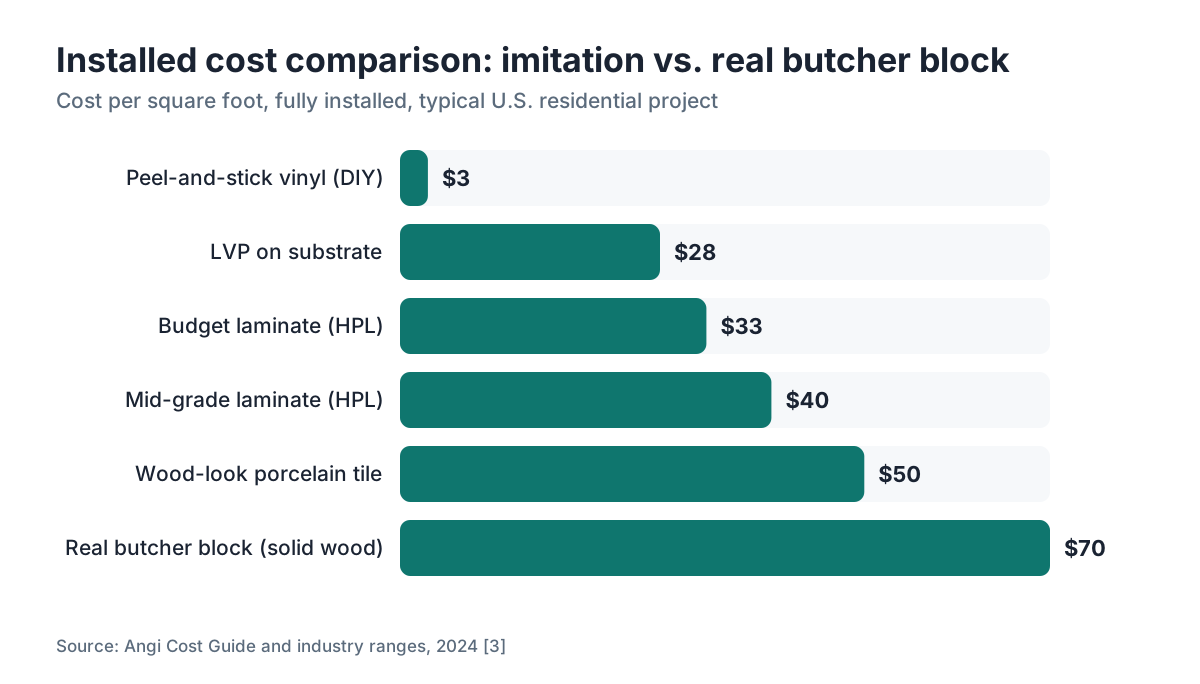
Cost swings harder across this category than almost any other countertop type. "Imitation butcher block" covers a $3 DIY vinyl roll and a $45-per-square-foot installed laminate job. Same look, wildly different money.
Here's a realistic installed-cost breakdown by material [2][3]:
| Material | DIY material cost ($/sq ft) | Installed cost ($/sq ft) |
|---|---|---|
| Peel-and-stick vinyl film | $1, $4 | $1, $4 (DIY only) |
| Budget laminate (HPL) | $8, $15 | $25, $40 |
| Mid-grade laminate (HPL) | $12, $20 | $30, $45 |
| Luxury vinyl plank on substrate | $6, $12 | $20, $35 |
| Wood-look porcelain tile | $4, $12/sq ft tile | $35, $65 |
| Real butcher block (solid wood) | $20, $60 | $40, $100 |
Labor for laminate countertop installation runs roughly $30 to $50 per linear foot in most U.S. markets, which usually covers cutting the substrate, templating, and scribing to walls [3]. Tile adds a full-day tile-setting job on top of substrate prep. Vinyl plank over an existing surface is sometimes a one-day DIY.
Mid-grade laminate in the $25 to $35 per square foot installed range is where most budget-minded homeowners land. You get a convincing print at that price from any of the major brands. Go cheaper and you're usually into thin big-box product that the fabricator won't warranty, because the substrate quality is all over the place.
Waste is a real line item. A shop cutting laminate for an L-shaped kitchen with an undermount sink cutout can waste 20 to 30 percent of the sheet depending on layout, and that waste gets priced into the quote. Shops running nesting software (more on that in the countertop installation guide) trim that waste, and it sometimes shows up as a lower number.
How realistic does faux butcher block actually look?
At 10 feet it looks fine. At two feet, with good laminate, it still looks decent. Put your hand on it and nobody mistakes it for real wood.
The giveaways are texture and edge. Real butcher block has grain running through the material, so the edge shows the same wood as the top. Laminate is a paper print on a gray or brown core, and the edge either shows that core (cheap), gets a matching PVC edge tape (better), or gets a post-formed rounded profile (better still). None of those edges look like grain running through solid wood.
Embossing has gotten good enough that dragging a finger across a quality HPL sample in a showroom gives you a grain-like feel. It's a repeating pattern, though, and anyone who's worked with wood spots the repeat. Porcelain tile comes closest to fooling the eye, because the variation from panel to panel can be programmed to break up repetition. Then you're back to grout lines.
So here's the honest verdict. For a rental, a basement bar, a laundry room, or a kitchen where you're staying on budget and don't care if guests can tell, imitation butcher block is perfectly fine. For a primary kitchen where the counters are the thing people look at, the gap between this and real wood shows, and plenty of homeowners end up wishing they'd spent the extra money.
How durable is imitation butcher block compared to real wood?
Here's where imitation materials actually beat real butcher block, in two ways that matter.
Moisture resistance is the big one. Real wood expands and contracts with humidity, stains from water rings, and rots if a sink seal fails and water sits under it for days. Quality laminate and porcelain barely notice surface water, though laminate's particleboard core will swell and fail if water gets into a seam or under the sheet at an edge [4]. Vinyl is waterproof through its full thickness.
Stain resistance runs the same direction. A laminate surface with a melamine wear layer doesn't drink up red wine, beet juice, or turmeric the way raw or oiled wood does. Real butcher block has to be sealed or re-oiled to keep its stain resistance, and mineral oil treatments come around every few months depending on use [1].
Real butcher block wins on the long game. A well-kept solid maple or walnut top gets sanded and refinished more than once, resetting the clock on surface damage every time. Laminate, vinyl, and tile can't be refinished, full stop. Once the wear layer scratches through or a chip shows up, you're replacing the whole surface. Heat is a steady weakness for vinyl and laminate too: a hot pan set straight down can cause whitening or delamination, while real wood chars instead of melting.
Porcelain tile posted the best overall durability profile in testing referenced by the Tile Council of North America, which found that properly installed porcelain with a PEI hardness rating of 4 or 5 resists scratching, heat, and chemical exposure at a level no laminate or vinyl product matches [5].
Can you install imitation butcher block countertops yourself?
Depends entirely on which material. One is an afternoon. One is a trade skill.
Peel-and-stick vinyl: yes, most homeowners knock this out in an afternoon with a squeegee and a utility knife. The stakes are low and the DIY result is about as good as the product gets.
Laminate sheets over a new substrate: this is real work. Cutting the substrate, routing a clean undermount sink opening, spreading contact cement evenly, laying the sheet without bubbles, trimming edges with a flush-trim router bit, and scribing to a wall that isn't straight all take practice and the right tools. Most first-timers get a functional result with visible bubbles, chipped edges, or a rough scribe. If money is tight, hire the fabricator for the cut-and-laminate work and do the demo and disposal yourself. That split is reasonable.
LVP over an existing surface: easier than new laminate. If the base is flat and in good shape, some vinyl plank installs with construction adhesive and a roller. Edges and the sink cutout are the hard parts.
Wood-look tile: this is a tile-setter's job. Backerboard prep, thinset choice, lippage control with plank-format tiles, and grout selection all make or break the result. The DIY failure rate is high enough that counter tile is worth paying a pro for.
Shops quoting laminate work have gotten sharper about waste and cut time since nesting and quoting went digital. SlabWise, for one, gets used to quote laminate countertop jobs with material waste built into the price, which means fewer surprise change orders landing on the homeowner.
What are the best laminate brands for a butcher block look?
Three brands run the U.S. fabrication-shop market for high-pressure laminate countertops: Formica, Wilsonart, and Pionite. All three carry woodgrain patterns built to copy butcher block or linear grain.
Formica's "Butcher Block" and "Natural Beech" patterns are two of its more popular woodgrain options in the countertop line. Wilsonart's "Crema Maple" and similar patterns sell well in new construction because they pair with standard cabinet packages. Pionite shows up more in commercial work but is available through distributors.
End-grain butcher block (the checkerboard look on traditional chopping blocks) is hard to find in laminate. Most laminate patterns copy face-grain or edge-grain wood, the parallel-stripe look. End-grain prints exist but they're rare and sometimes have to be special-ordered.
Past the big three, Trespa and Abet Laminati make higher-end phenolic panels with excellent woodgrain depth that some European-style designers spec. Those price above entry laminate and often need a specialized fabricator.
You can see how Formica countertops and Corian countertops stack up against each other and against stone if you're still picking a material direction.
How does imitation butcher block compare to other budget countertop options?
At $20 to $45 per square foot installed, you've got several real options to weigh against each other.
Ceramic or porcelain tile is the other classic budget counter. Heat-proof and hard to damage, but grout lines are a forever maintenance chore. Laminate beats tile on cleaning and gets close on durability for normal kitchen use.
Laminate countertops in a solid color or stone print cost about the same as woodgrain laminate, so the butcher block look carries no premium over other laminate patterns. That's a style call, not a price call.
Corian and other solid surface start around $45 per square foot installed and can be refinished by sanding, a real edge over laminate. Solid surface also allows invisible seams. For a kitchen you plan to own 15-plus years, that refinishability probably earns the higher cost.
Quartz (engineered stone) starts around $50 to $80 per square foot installed for entry-level slabs [6]. It's harder, more scratch-resistant, and more heat-tolerant than any laminate. No quartz reads as butcher block, though, so it isn't a direct swap if the warm-wood look is the whole point.
Granite countertops and marble countertops sit at a higher price entirely, but they're worth understanding when you're placing laminate on the quality ladder.
For the full picture at every price point, the kitchen countertops overview lines them all up side by side.
What are the biggest downsides of faux butcher block countertops?
Four things. The first one gets underestimated the most.
No refinishing. Real butcher block, even after years of knife marks and stains, sands down with a belt sander and re-oils to look nearly new. Laminate or vinyl carries its wear permanently. A fabricator installing a laminate countertop today should say it plainly: when it looks rough in 10 to 15 years, you replace the whole thing, you don't refresh the surface.
Edge visibility. A laminate edge shows the substrate unless a matching treatment covers it. Post-formed laminate (rounded, continuous pour) hides this better than flat-sheet with applied edge banding, but no profile fully copies solid wood grain running to the edge.
Limited heat tolerance. Most laminate is rated for brief contact up to about 275 degrees F before whitening or delamination risk gets serious [8]. In a busy kitchen where pots come off the stove straight onto the counter, that limit gets tested a lot. Vinyl is worse: LVP on a countertop starts deforming below the temperature a hot skillet bottom hits.
Perceived value. If you plan to sell inside five years, a realtor will tell you real wood or stone reads differently to buyers than laminate does [11]. The gap is harder to put a number on than the actual cost, but it's real.
And moisture at seams is the quiet killer for laminate specifically. A countertop installed without proper silicone at the backsplash, sink, and cooktop cutouts lets water into the substrate within a year or two, especially with a particleboard core. Once swelling starts, the fix is replacement, not repair.
How do you maintain and clean imitation butcher block countertops?
The maintenance story here is short compared to real wood. No oiling, no sealing, no annual refinishing on the calendar.
For laminate, a damp cloth and mild dish soap handles 95 percent of kitchen messes [9]. Skip abrasive scrubbers, which scratch the wear layer and open micro-grooves that hold bacteria over time. Bleach-based cleaners are generally fine on the surface but can discolor some woodgrain prints with repeated use. For stuck-on food, a plastic scraper beats a Scotch-Brite pad.
Vinyl takes the same approach. It's non-porous, so bacteria can't get into the surface, though they can sit in scratches. Keep solvent-based cleaners away: acetone, paint thinner, and the like dissolve the plasticizer in vinyl and cause permanent damage.
Wood-look tile follows standard tile care: pH-neutral cleaner, and grout sealed annually or every other year depending on the grout type and traffic. Epoxy grout doesn't need sealing at all and earns its extra install cost on a counter.
None of these need special handling beyond any other laminate or tile counter. If you want the contrast, the how to clean stone countertops guide covers what stone care looks like.
The one maintenance step that matters most for any laminate counter: keep the caulk line at the sink, cooktop, and backsplash in good shape. Check it once a year. A $5 tube of silicone and 20 minutes of work stops the substrate swelling behind most laminate failures.
Is imitation butcher block a good choice for your kitchen?
Depends on what you're solving for. Two cases point in opposite directions.
If the goal is an inexpensive refresh that looks warm and wood-like, mid-grade laminate in a butcher block pattern is a genuinely smart pick. It installs fast, costs a fraction of solid wood or stone, and serves a busy kitchen well for a decade or more as long as the seams stay sealed.
If you're redoing a kitchen you plan to keep 20-plus years and you love the look of real wood, the no-refinishing problem starts to bite around year 10. The gap between laminate and entry-level real butcher block (roughly $15 to $40 per square foot at the low end) [1] might be worth saving toward instead of compromising on.
Commercial kitchens are a different rulebook. Most health departments won't allow wood surfaces where raw meat gets handled, and laminate or solid surface is often the required material anyway. The FDA Food Code says food-contact surfaces must be "smooth, easily cleanable, and durable," and be finished so they're nonabsorbent, which solid wood end-grain does not satisfy in most commercial settings [7].
Shops pricing this work: laminate quotes go out faster now that material pricing is more standardized and digital tools pull waste factors automatically. If you're a fabricator trying to quote more laminate jobs without wrestling a spreadsheet, a tool like SlabWise handles the nesting and waste math so quotes go out the same day.
Homeowners: get at least three quotes from local fabricators. That's still the most reliable read on local labor rates, which vary a lot by market and can swing your total installed cost by 20 to 30 percent.
Frequently asked questions
Can you put a sink in an imitation butcher block laminate countertop?
Yes, but it needs to be a drop-in (top-mount) sink, not an undermount. Undermount sinks leave the countertop edge exposed below the surface, and laminate's substrate will pull water in from underneath if it's not sealed perfectly. Most fabricators won't warranty an undermount install in laminate. A drop-in sink with a rim that overlaps the surface seals the substrate edge and works well.
How long does laminate butcher block countertop last?
A well-installed laminate counter in a normal kitchen lasts 10 to 20 years before it needs replacing. The usual limits are surface-finish wear from daily cleaning, edge chipping, or substrate swelling from water at the seams. Vinyl surfaces typically go 10 to 15 years. Neither can be refinished, so end of life means full replacement. Solid butcher block with periodic refinishing can last 30-plus years in the same kitchen.
Is imitation butcher block countertop safe for food prep?
Yes, with the same caveat as any countertop. Laminate and vinyl are non-porous and don't harbor bacteria in the surface itself, but knife marks and scratches create grooves where bacteria collect. Use a cutting board. The FDA Food Code requires food-contact surfaces in commercial settings to be smooth and nonabsorbent, which laminate satisfies and solid wood does not for commercial use.
What is the cheapest way to get a butcher block look in a kitchen?
Peel-and-stick woodgrain vinyl film is the cheapest option at $1 to $4 per square foot, applied over an existing smooth surface in a few hours. It won't fool anyone up close and won't last more than a few years, but for a rental or a quick flip it does the job. The next step up, standard laminate installed by a fabricator, runs $25 to $40 per square foot installed and looks a lot more convincing.
Can you use hot pans on imitation butcher block countertops?
Not directly. Laminate risks whitening or delamination above roughly 275 degrees F, which a pan fresh off the stove easily beats. Vinyl is worse and can deform or melt from sustained heat. Wood-look porcelain tile handles hot pans without damage. If your cooking means sliding pots off the burner and setting them down without a trivet, tile or stone is a better fit than laminate or vinyl.
Does faux butcher block hurt home resale value?
Laminate counters read as neutral-to-negative against stone or real wood in a sale, but it depends heavily on the home's price range and local market. In a starter-home range, buyers expect laminate and it doesn't hurt value. In a mid-to-high-range home, buyers notice and may discount the property or ask for a credit. A local agent is the best source for your market's actual impact.
What thickness of laminate is best for countertops?
Standard high-pressure laminate for counters is 1/16 inch (0.062 inches) thick, bonded to a 3/4-inch particleboard or MDF substrate for a total thickness of about 1.5 inches with a built-up edge. Postformed and some specialty grades come slightly thinner. Substrate choice matters as much as laminate thickness: moisture-resistant MDF or exterior-grade plywood performs a lot better near sinks than standard particleboard.
Can you install luxury vinyl plank on a countertop?
Technically yes, but it's not the intended use for most LVP, and most makers won't honor a warranty on countertop installs. Adhesive-down LVP glued to a smooth substrate can work for a bar top or laundry room, but heat from small appliances is a real risk. Confirm the specific product is rated for horizontal non-floor surfaces before installing, and keep it away from where a hot toaster or coffee maker sits.
How do you repair a chip or scratch in a faux butcher block countertop?
Laminate chips at edges sometimes touch up with matching repair paste or a color-matched seam filler. Deep surface scratches fill with a laminate repair kit, though the match is rarely perfect. Vinyl has even fewer options. The honest answer: significant damage to laminate or vinyl usually means living with it or replacing the surface. That's the biggest practical difference from real wood, which sands and refinishes.
Is butcher block laminate a good option for bathroom countertops?
It can work on a vanity if the fabricator uses moisture-resistant substrate and seals every edge and the sink cutout thoroughly. Bathrooms have standing water, toothpaste, and humidity that all hit laminate's weak points. A drop-in sink is safer than undermount here. If the bathroom gets heavy use and you're staying long-term, solid surface or quartz at a higher price holds up better over a 15-year horizon.
What does post-formed laminate mean and is it better for a butcher block look?
Post-formed laminate counters are made by heating the sheet and bending it around a shaped substrate in one continuous piece, giving a rounded front edge and an integrated backsplash with no separate edge banding or cove seam. They cost less than custom flat-lay laminate with applied edges and have fewer seams for water to find. The tradeoff: the woodgrain wraps around a curve instead of showing a flat plank edge, which can look less convincing as wood.
How does imitation butcher block compare to Formica stone patterns?
Both are high-pressure laminate and share the same substrate, install method, durability, and price range. The difference is purely looks. Woodgrain reads warmer and works with farmhouse, cottage, and transitional kitchens. Stone-print laminate fits more contemporary rooms. Neither pattern is more durable than the other; the laminate grade and substrate quality set performance.
Are there butcher block countertop options that are both affordable and renewable?
The closest is bamboo, technically a grass rather than hardwood but behaving much like wood butcher block. Bamboo counters run roughly $30 to $60 per square foot installed and sand and refinish like wood. They're harder than most domestic hardwoods (around 1380 on the Janka scale for horizontal-grain bamboo) and more moisture-stable than traditional wood, though not waterproof. It's often the overlooked middle option between imitation laminate and full-price solid hardwood.
Sources
- University of Missouri Extension, Care and Use of Wood Cutting Surfaces: Solid wood butcher block requires periodic oiling and can be sanded and refinished; real butcher block installed cost runs roughly $40 to $100 per square foot.
- U.S. Bureau of Labor Statistics, Producer Price Index (construction materials): Material cost ranges for laminate, vinyl, and tile countertop products used in residential kitchen remodeling.
- Angi, Countertop Installation Cost Guide: Laminate countertop installed cost ranges $25 to $45 per square foot; labor runs approximately $30 to $50 per linear foot in most U.S. markets.
- National Kitchen and Bath Association (NKBA): Particleboard substrate swelling from moisture infiltration at laminate seams and edges is a leading cause of laminate countertop failure.
- Tile Council of North America: Porcelain with a PEI hardness rating of 4 or 5 resists scratching, heat, and chemical exposure at a level exceeding laminate or vinyl countertop products.
- Remodeling Magazine, Cost vs. Value Report: Entry-level engineered quartz countertops start around $50 to $80 per square foot installed in U.S. residential projects.
- U.S. Food and Drug Administration, Food Code 2022: FDA Food Code specifies that food-contact surfaces must be smooth, easily cleanable, and nonabsorbent; solid wood end-grain does not satisfy this standard in most commercial food-handling settings.
- Formica Corporation, Laminate Product Technical Data: High-pressure laminate countertop surfaces are rated for brief contact with items at temperatures up to approximately 275 degrees F before whitening or delamination risk.
- Wilsonart International, Laminate Care and Maintenance Guide: Laminate countertop maintenance requires only mild soap and water; abrasive cleaners scratch the wear layer and solvent-based cleaners can damage vinyl surfaces.
- U.S. Census Bureau, American Housing Survey: Laminate remains one of the most commonly installed countertop materials in U.S. owner-occupied homes, appearing in a large share of kitchen renovation projects in the entry-to-mid price range.
- National Association of Realtors, 2023 Remodeling Impact Report: Kitchen countertop material type (laminate vs. stone or solid surface) affects buyer perception and perceived home value, with stone and solid surface viewed more favorably by buyers in mid-to-high price range homes.
Last updated 2026-07-09