TL;DR
- Most granite countertops need resealing every 1 to 5 years, depending on how porous the stone is.
- The job takes about 30 minutes: clean the surface, apply an impregnating sealer, let it soak for the label's dwell time, wipe off the excess, and cure overnight.
- Drop a tablespoon of water on the stone first.
- If it darkens in under 5 minutes, seal it.
- If it beads for 30 minutes, leave it alone.
Do you need to reseal granite countertops at all?
Not always. That's the honest answer. Granite runs from very dense to noticeably porous, and some slabs seal themselves well enough at the quarry that you won't touch them for years. Others drink up water in a few minutes and want attention every 12 to 18 months.
The stone trade sorts this out with one test. Drop a tablespoon of water on the counter, set a timer, and watch. Water that beads and sits for 30 minutes with no darkening means your seal is fine. Stone that darkens within 4 to 5 minutes needs sealer now. Land somewhere in between and you have runway, but seal it before the year is out. The Natural Stone Institute treats this water absorption test as the baseline field check for stone sealers [1].
Some granites, like Absolute Black, are so dense they barely absorb sealer either way. You can apply it, but you're coating the surface instead of soaking into the stone, and that coating hazes and peels. For those slabs, a good stone soap does everything you need.
Lighter granites with heavy veining and big visible crystals tend to be the thirsty ones, and they gain the most from a regular reseal. Not sure about your specific stone? A fabricator can run a penetration test or pull the absorption rating for you.
How often do granite countertops need to be resealed?
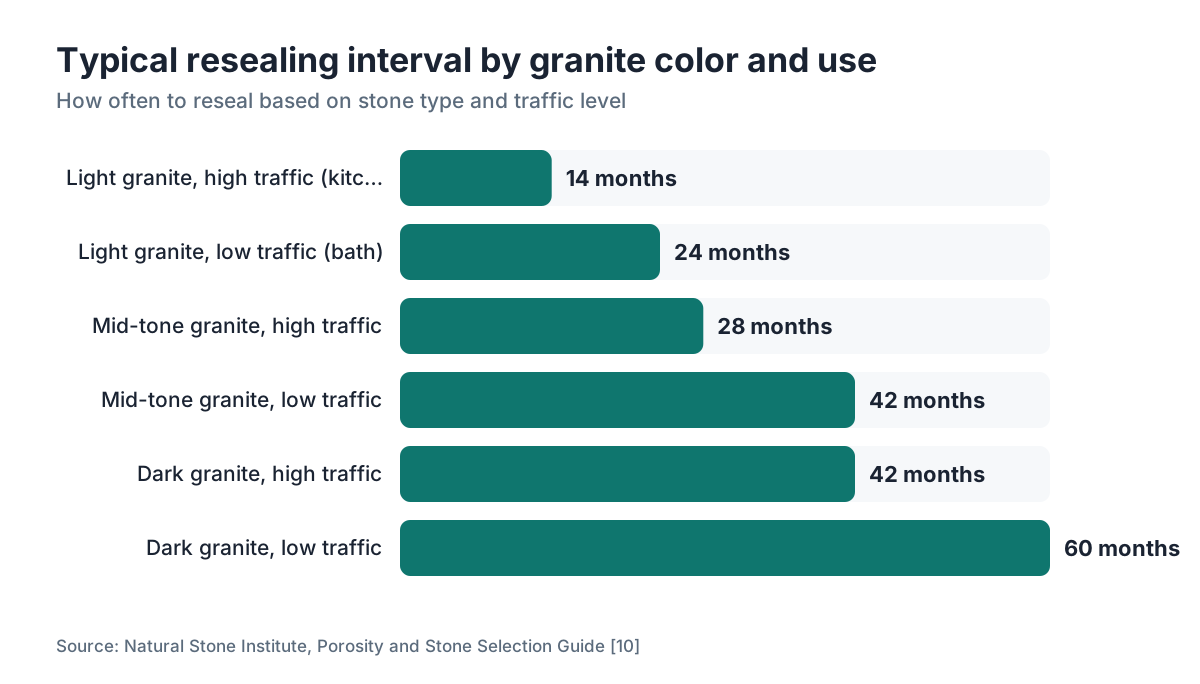
The honest range is once a year to once every five years, with most kitchen counters landing around every two to three years under normal cooking. Three things drive the number: how porous the stone is, how much traffic the surface takes, and which sealer went on last time.
Here's a rough guide by color and use:
| Granite type | Typical resealing interval |
|---|---|
| Light-colored (white, cream, beige) | 12 to 18 months |
| Mid-tone (gray, gold, brown) | 2 to 3 years |
| Dark (black, blue-gray) | 3 to 5 years |
| Bathroom vanity (low traffic) | Add 1 to 2 years to above |
These assume a standard impregnating sealer. Some fluoropolymer sealers claim 10-year protection, and a few genuinely hold close to that in low-traffic spots. But the water test beats any label claim. Run it once a year and let the stone tell you what it needs.
Acid breaks sealer down faster than almost anything. Lemon juice, vinegar, wine, and tomato sauce left sitting will degrade the seal and etch the stone. If you cook hard and don't wipe spills right away, lean toward the shorter intervals in that table.
What supplies do you need to reseal granite countertops?
The list is short. An impregnating stone sealer rated for granite, a few clean lint-free or microfiber cloths, a pH-neutral stone cleaner, and about 30 minutes where nobody needs the kitchen.
The sealer choice matters more than most guides admit. There are two real categories.
Solvent-based sealers penetrate deeper and usually last longer, but they have strong fumes and need ventilation. Lawrence Berkeley National Laboratory's work on indoor chemistry is a good reminder that solvent-based coatings release VOCs during application while water-based versions emit far less [7]. Solvent works better on dense stones that need real penetrating power.
Water-based sealers are easier to apply, dry faster, and are safer around people and finishes. They've gotten a lot better in the last decade and are the right pick for most homeowners doing their own upkeep.
Skip topical sealers, sometimes sold as granite polish or surface coating. They sit on top of the stone instead of soaking in, and they cloud, peel, and trap moisture underneath. The Natural Stone Institute draws a hard line between impregnating sealers and topical coatings for exactly that reason [1].
Brands at the home improvement store work fine. You don't need a specialty stone supplier. Budget $15 to $30 for a bottle that covers 100 to 200 square feet, enough for several applications on a typical kitchen [2].
One hard no: don't touch vinegar, bleach, or ammonia cleaners anywhere in this process. They attack the sealer and, over time, the stone surface itself [3].
How do you reseal granite countertops step by step?
Here's the whole process. It's simple, but the order and the timing decide whether it works.
Step 1: Clear and clean the surface Take everything off the counter. Clean the granite with a pH-neutral stone cleaner, not a general kitchen spray. Let it dry completely. This part is non-negotiable. Sealer applied over moisture or cleaner residue won't bond and leaves hazy patches. Give it an hour, or run a fan over it to speed things up.
Step 2: Test for porosity (optional but smart) Do the water drop test from above. Darkens in under four minutes? Proceed. Not absorbing at all? You may not need to seal, and sealer on a non-porous surface just leaves a sticky residue.
Step 3: Apply the sealer Shake or stir per the label. Put a thin, even coat straight onto the stone with a lint-free cloth or the product's applicator. Work in sections, maybe two to three square feet at a time, so it doesn't dry before you've spread it. You want a wet coat that isn't pooling.
Step 4: Let it penetrate, then wipe off the excess This is the step people blow. Every sealer lists a dwell time, usually 5 to 20 minutes. Let it sit that long, then wipe off ALL the excess with a clean dry cloth before it dries down. Excess that dries on granite leaves a streaky, tacky film that's a real pain to lift. Buff with a second clean cloth until the surface looks dry and even.
Some sealers want a second coat right after the first, before the first cures. Check your label. If it does, repeat steps 3 and 4 immediately.
Step 5: Allow cure time before use Most impregnating sealers hit working strength in 24 hours and full cure in about a week [2]. Keep the counter dry and don't park anything wet on it overnight. Light use is usually fine after 24 hours, but keep cooking spills and standing water off it for the full cure window.
How do you know if the reseal worked?
Wait 24 hours, then run the water test again. A tablespoon of water should bead and stay beaded for 15 to 20 minutes with no darkening underneath. If it does, the sealer soaked in and cured right.
Still absorbing fast? One of three things went wrong: you applied it too thin, the stone was damp, or you waited too long to wipe and the sealer skimmed over the top instead of penetrating. Let the surface cure out, then do a second pass with more care on dwell time and prep.
Hazy or streaky after drying means you left excess sealer sitting on top. Mineral spirits on a cloth usually clears it without hurting the stone, but test a hidden spot first. Commercial sealer haze removers exist for exactly this, and they're worth having on hand for a big or awkward surface.
What's the difference between sealing and resealing granite?
Functionally, nothing. The process is identical. "Resealing" just admits the counter was sealed before, either at the factory or by the fabricator after setting the stone.
Most fabricators seal before handoff. That first seal is often a pro-grade product applied with more thorough prep than a homeowner tends to do, so it usually outlasts the DIY version. After that, upkeep is on you.
Bought a house and don't know the counter's history? Run the water test. The stone tells you where it stands no matter what any previous owner did.
Shopping for new stone? Some engineered products like quartz (including Cambria countertops) never need sealing because they're non-porous by design. That's one honest maintenance edge quartz has over natural granite. Still deciding on a material? Kitchen countertops runs the full comparison.
Can you use DIY sealers or do you need a professional?
DIY is fine for routine resealing. The sealers at home improvement stores use the same chemistry (impregnating fluoropolymer or silane/siloxane compounds) that pros use. The gap is technique: pros have better applicators, more reps reading how a stone behaves, and access to commercial products with longer dwell times.
Hire a pro in three cases: the counter has active stains or etching you want fixed before resealing, the stone is a specialty material you're unsure about, or you have a large surface where consistent technique matters a lot.
For a standard kitchen granite in decent shape, a homeowner who follows the steps above gets results you can't tell apart from a pro job. The difference between careful DIY and a pro application is real, but small.
If you're a fabricator tracking jobs and helping customers stay on a maintenance schedule, software like SlabWise lets you attach care instructions to finished jobs and follow up at the right intervals, so the resealing talk happens before the stone gets damaged.
What happens if you never reseal granite countertops?
The stone doesn't crumble or fail. Worth saying plainly. What happens is slower: liquids soak deeper into the pores, stains get more likely, and cleaning gets harder as oils and food residue embed in the stone.
Cooking oil is the usual villain. An oil stain on granite that's lost its seal often needs a poultice to pull out, which means a paste of baking soda or diatomaceous earth mixed with acetone or hydrogen peroxide, covered in plastic wrap, left for 24 to 48 hours. It works. It's also a lot more work than the 30-minute reseal you skipped.
Acid like lemon juice and vinegar causes a different problem: etching. That's a chemical reaction that dulls the surface, and sealer doesn't fully stop it. Etches get re-polished, not resealed. A sealer only slows how fast staining liquids penetrate. It's not armor.
For related stone that wants similar care, see how to clean stone countertops. Working with quartzite or soapstone? The sealing logic is close but the specifics shift. How to clean quartzite countertops and how to clean soapstone countertops cover those.
Are there granite sealers to avoid?
Yes. Three categories to skip.
Topical coatings sold as "granite polish" or "granite shine." These are not sealers. They coat the surface and look nice for a while, but they don't stop staining, they trap moisture, and they flake off. Put them over a properly sealed surface and they can interfere with the sealer underneath.
Bleach or ammonia cleaners used in the sealing prep. Common, cheap, and wrong for the job. They degrade the sealer chemistry before you even apply it. Use a pH-neutral stone cleaner for prep. The Natural Stone Institute's care guidelines flag acid-based and ammonia-based cleaners as damaging to both the stone surface and the sealer [3].
Cheap "all-surface" sealers not rated for stone. Some general tile sealers aren't built for granite's porosity. They may not penetrate, or they leave a residue that reacts with the stone over time. Look for a product labeled for granite or natural stone, with an impregnating formula. If you want a safety screen, the EPA Safer Choice program certifies some stone maintenance products for lower human and environmental impact [9].
How does resealing granite compare to caring for other countertop materials?
Granite sits in the middle of the maintenance range. It needs periodic sealing, but it's far more forgiving than marble (which etches easily and wants more frequent attention) and far less needy than butcher block countertops, which want oiling every one to three months and take water damage in ways granite never does.
On the easy end, engineered materials like quartz, Corian, and laminate need no sealing at all. Corian countertops are solid-surface and non-porous. Laminate countertops and Formica countertops come sealed by manufacture. If sealing feels like too much upkeep, those are real alternatives worth pricing out.
For granite, the trade is simple. The stone lasts essentially forever if you maintain it, and the maintenance is light: 30 minutes once every two to three years. That's a fair deal for a surface that, cared for, will still look good after the rest of the kitchen has been renovated twice.
Getting ready to install granite? Countertop installation covers what to expect and what to ask your fabricator. Want a fast price? SlabWise's instant quote tool gives you a real number without a sales call.
Frequently asked questions
How do you reseal a granite countertop yourself?
Clean the surface with a pH-neutral stone cleaner and let it dry completely. Apply a thin, even coat of impregnating granite sealer with a lint-free cloth. Let it sit for the dwell time on the label (usually 5 to 20 minutes), then wipe off all excess before it dries. Buff with a clean cloth and cure for 24 hours before regular use. The whole job runs about 30 minutes.
Do you need to reseal granite countertops?
Most granite benefits from periodic resealing, but not all of it. Dense, dark granites may need little to no maintenance, while lighter, porous stones want sealing every 12 to 18 months. The water drop test settles it fast: if a tablespoon of water darkens the stone within four to five minutes, seal it. If it beads for 30 minutes, the current seal is holding.
Do you need to seal granite countertops when they're new?
Almost always, yes. Most fabricators apply a sealer before delivery, but quality and product vary. Run the water absorption test a few weeks after installation. If the stone absorbs water quickly, apply a good impregnating sealer yourself. Even if the factory seal holds, test it once a year so you catch the moment it starts to break down.
How long does it take for granite sealer to dry?
Wipe the excess off within 5 to 20 minutes of application (check your label). The surface reaches a working cure in 24 hours. Full chemical cure takes 48 to 72 hours, and some products reach maximum protection after a week. Don't let anything wet sit on the stone overnight after sealing.
How much does it cost to reseal granite countertops?
DIY materials cost $15 to $30 for a bottle of impregnating sealer that covers a typical kitchen. Professional resealing, where a stone care company cleans and seals the surface, usually runs $100 to $250 for a standard kitchen depending on square footage and region. The DIY version is perfectly effective for routine maintenance.
What is the best sealer for granite countertops?
Impregnating sealers with a silane, siloxane, or fluoropolymer base are the right chemistry for granite. Water-based versions are easiest for homeowners. Solvent-based versions penetrate deeper and last longer but need ventilation. Skip anything sold as a topical coating, polish, or shine. Brands at major home improvement stores are adequate. A 15-year warranty claim is marketing. Run the water test to know when to reapply.
Can you over-seal granite?
You can't really over-penetrate the stone, but you can leave too much sealer on the surface. Excess that dries on granite leaves a hazy, streaky film. The fix is wiping thoroughly during application. If haze shows up after curing, mineral spirits or a commercial haze remover clears it. When in doubt, apply thin coats and wipe hard.
How do you remove old sealer from granite before resealing?
Impregnating sealers don't build up on the surface the way topical coatings do, so removal usually isn't needed before a fresh coat. If you've been using a topical polish or coating, clean the surface thoroughly with a stone-safe cleaner and let it dry. Stubborn residue may need a commercial stone stripper. Never use a razor blade, which can scratch polished granite.
Does sealing granite make it shiny?
No. A proper impregnating sealer is invisible when applied correctly. It protects from inside the stone and doesn't change the surface look. The shine on polished granite comes from fabrication (grinding and buffing to a high polish), not from sealing. If your granite looks dull after sealing, you probably left residue on the surface.
Is it safe to use granite countertops for food prep after resealing?
Yes, once the sealer has cured for 24 hours. Modern impregnating sealers are formulated to be food-safe when dry. Skip direct food contact in the first 24 hours and wipe the surface before use after the cure. The California Air Resources Board publishes VOC limits for stone sealers that most name-brand products now meet, a reasonable safety benchmark [4].
What happens if you use vinegar to clean granite?
Vinegar is acidic (pH around 2 to 3) and degrades the sealer over time with repeated use. On polished granite it can also cause mild surface etching. If you've been cleaning with vinegar regularly, your sealer is probably compromised sooner than the typical interval suggests. Switch to a pH-neutral stone cleaner and run the water absorption test to see where you stand.
How do you reseal granite around the sink?
The area around the sink is the most exposed part of any granite counter because it takes constant water and cleaning products. Clean and dry it thoroughly before sealing, and pay extra attention to the undermount joint. Apply sealer the same way as the rest of the counter. Seal this zone more often than the rest of the surface, especially if you notice water darkening the stone near the sink edge.
Does all granite need to be sealed?
No. Dense, dark granites (like Absolute Black or some Brazilian blacks) are so low in porosity that sealers barely penetrate. Applying sealer to them just leaves surface residue. The water absorption test is the definitive answer for any specific slab. If water still beads after 30 minutes with no darkening, sealing is unnecessary no matter what anyone recommends.
Sources
- Marble Institute of America (now Natural Stone Institute), Dimension Stone Design Manual: The water absorption test (observing darkening under a water drop) is the standard field test for evaluating dimension stone sealer performance and determining whether sealing is needed.
- Natural Stone Institute, Care and Maintenance of Natural Stone: Impregnating stone sealers typically reach working cure within 24 hours and full cure within 48 to 72 hours; consumer products cost approximately $15 to $30 per bottle covering 100 to 200 square feet.
- Natural Stone Institute, Cleaning and Restoration Guidelines: Acid-based cleaners (including vinegar) and ammonia-based cleaners damage both the stone surface and sealer chemistry and should not be used on sealed granite.
- California Air Resources Board, Architectural Coatings VOC Limits: The California Air Resources Board publishes VOC content limits for stone sealers and architectural coatings, which major stone sealer brands reference as a safety and compliance benchmark.
- Lawrence Berkeley National Laboratory, Indoor Chemistry and Health: Solvent-based stone sealers release VOCs during application and require ventilation; water-based formulations have significantly lower emission profiles.
- ASTM International, Standard C97 Test Methods for Absorption and Bulk Specific Gravity of Dimension Stone: ASTM C97 defines standardized water absorption testing for dimension stone; values above 0.40% by weight indicate elevated porosity warranting protective sealing.
- U.S. Environmental Protection Agency, Safer Choice Program: The EPA Safer Choice program evaluates cleaning and maintenance products for human and environmental safety; some stone sealers carry Safer Choice certification.
- Natural Stone Institute, Porosity and Stone Selection Guide: Light-colored granites generally have higher porosity and require sealing every 12 to 18 months; darker, denser granites may require sealing only every 3 to 5 years or not at all.
Last updated 2026-07-09