TL;DR
- Home Depot sells butcher block countertops in maple, walnut, acacia, and oak starting around $35 per square foot for unfinished maple and climbing past $200 for end-grain walnut.
- Slabs come in standard widths of 25 to 50 inches and lengths up to 12 feet.
- Most homeowners pay $400 to $900 for a single straight run before installation.
- It's real wood.
- It needs sealing, and it lasts decades if you keep up with it.
What butcher block countertops does Home Depot actually sell?
Home Depot sells butcher block under a handful of brands, and Hardwood Reflections is the one you'll see most on their shelves and website. The lineup covers edge-grain and end-grain construction in hard maple, walnut, acacia, beech, and oak, depending on the year and your region. Stock moves. Not every store carries every species, and the online catalog runs deeper than a typical physical store.
Standard widths are 25 inches (built for 24-inch-deep cabinets with a 1-inch overhang), 36 inches, and 50 inches. Lengths run 4 feet up to 12 feet in some configurations. Thickness is almost always 1.5 inches on the pre-made pieces, though some unfinished slabs come in at 1 inch.
You can buy unfinished or pre-oiled. The pre-oiled versions get a light food-safe mineral oil treatment at the factory. That is not a finish. It's a first coat. Either way, you seal or oil the surface yourself before the counter goes into service. More on that below.
Home Depot also sells butcher block as a material inside its countertop installation service, where a measuring tech comes to your home and the shop cuts to a custom width. That program uses the same Hardwood Reflections material in most markets. Want something unusual, like a live-edge slab or a species outside the catalog? Call a local fabricator instead. [1]
How much do Home Depot butcher block countertops cost per square foot?
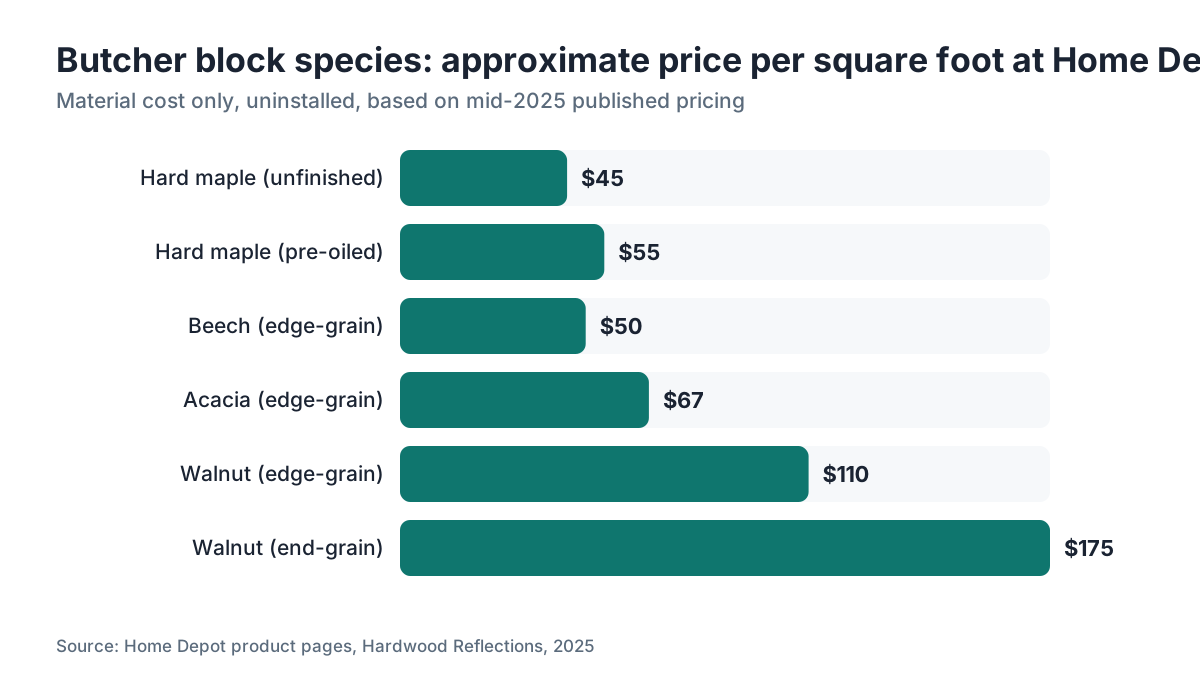
Butcher block from Home Depot runs roughly $35 to $200 per square foot for material, from unfinished maple at the low end to end-grain walnut at the top. Prices track lumber markets, so any specific number can be stale within six months. Here's a realistic snapshot based on published pricing as of mid-2025.
| Species | Style | Approx. price per sq ft |
|---|---|---|
| Hard maple (unfinished) | Edge-grain | $35 to $55 |
| Hard maple (pre-oiled) | Edge-grain | $45 to $65 |
| Acacia | Edge-grain | $55 to $80 |
| Walnut | Edge-grain | $90 to $130 |
| Walnut | End-grain | $150 to $200+ |
| Beech | Edge-grain | $40 to $60 |
A typical kitchen island of 25 x 60 inches is about 10.4 square feet. At maple pricing, that is $365 to $570 for material alone. A full run of 8 feet at 25 inches wide (16.7 sq ft) in walnut lands at $1,500 to $2,200 before any cutting or installation.
For comparison, laminate countertops from the same store run $15 to $40 per square foot installed, so butcher block sits well above laminate but under most granite countertops or marble countertops, which fabricated and installed often land between $75 and $150 per square foot or higher.
Home Depot runs promotions around Memorial Day, Labor Day, and Black Friday. If your timeline is flexible, waiting for a 10 to 20 percent discount on butcher block is a fair play. They also offer financing through their credit card that, depending on the purchase size, may include a zero-interest window. [2]
What wood species are available and which one should you choose?
Species matters more than most people think. The wood sets hardness, grain pattern, color tone, and how much the slab moves as humidity swings.
Hard maple is the workhorse. It scores 1,450 on the Janka hardness scale, so it shrugs off dents and scratches. [3] It's light, tight-grained, and takes finish evenly. If you want a counter that looks clean, cleans up easy, and doesn't demand attention, maple is the call. Most professional kitchens run it for exactly those reasons.
Walnut is the splurge. It scores around 1,010 Janka, softer than maple, which surprises people because it looks so substantial. The deep brown is genuinely beautiful and every slab reads differently. The trade-off is cost and a higher odds of visible dents over the years. If your kitchen skews dark or you want the wood to be the focal point, walnut earns it. But be honest with yourself. If you're going to beat on the counter, maple forgives more.
Acacia is the wild card. Swirling grain, color that runs from golden to dark brown, Janka somewhere around 1,700 to 2,200 depending on the exact species sold under that name. Hard and distinctive. The catch is inconsistency between boards. Two pieces of acacia from the same shipment can look like strangers, which matters if you're joining sections.
Beech shows up in a lot of European kitchens. It reads like maple with a slightly pinkish tone and more visible medullary rays (those small flecks in the grain). Good hardness, good price. Underrated.
Oak turns up in the catalog now and then. Open-grain wood, so the pores show. Some people love the character. Others find it harder to clean fully. Janka around 1,290.
End-grain blocks (you're looking at the cross-section of the wood, like a cutting board scaled up) come in walnut and sometimes maple. They're beautiful, and they're self-healing in the sense that knife marks tend to close slightly as the wood moves. They also cost a lot more, weigh more, and are more sensitive to moisture at the joints. Perfect for an island where you actually cut food. Overkill for perimeter counters. [3]
How do you install a Home Depot butcher block countertop?
Installing butcher block yourself is genuinely doable if you're comfortable with basic woodworking. The material cuts with a circular saw and a fine-tooth blade. No diamond tooling like stone needs. That's a real advantage.
The process: measure your base cabinets, mark and cut the slab to length with a circular saw (score the cut line with masking tape first to cut down tearout on the finished face), dry-fit it, cut sink or cooktop openings with a jigsaw, then attach from below through the cabinet corner brackets with screws. Attachment method is the part people botch. Butcher block expands and contracts with humidity, sometimes a quarter inch or more across a 25-inch width across the seasons. [4] Use slotted holes or figure-8 fasteners that let the wood move instead of pinning it rigid. Rigid attachment cracks the slab and opens the joints.
For sink cutouts, a jigsaw works. Mark the cutout, drill a starter hole inside the waste area, and cut. Installing an undermount sink? Seal the underside of the cutout edge aggressively, because that edge lives in water.
Home Depot offers professional installation through its in-home services program. Pricing shifts by market, but countertop installation generally runs $150 to $400 for a basic kitchen, plus material. Their measuring tech handles the template and the shop handles cutting. If your layout has inside corners or multiple pieces, it's worth a look.
Fabricators reading this: if a customer brings in a Home Depot slab for custom cutting, some of their laminated slabs carry a slight bow. Check with winding sticks before you cut. Wood quality is generally consistent, but it isn't furniture-grade lumber, so small defects live in there. [5]
For a wider look at what installation involves and where it goes sideways, the countertop installation guide covers it across materials. [5]
What finish or sealer do butcher block countertops need?
This is where people go wrong, so I'll be blunt: the finish you pick decides whether this is a food-prep surface or a decorative one. There's no undoing that choice cheaply.
Mineral oil is the classic pick for counters you plan to cut on. Food-safe, cheap (about $8 at any pharmacy), and easy to reapply. The downside is it never fully cures, so you reapply every month or two, especially the first year. Bare or lightly oiled wood soaks up water stains, darkens around the sink, and rings under wet glasses. The pre-oiled slabs from Home Depot get one or two coats of mineral oil at the factory. A start, not a finish.
Waterlox is the pick among woodworkers who want durability without losing the natural look. It's a tung-oil-based resin that soaks in and hardens. Waterlox Original Sealer/Finish is food-safe once fully cured (72 hours minimum, longer in cool conditions). It gives real water resistance, skips the frequent reapplication, and holds up around sinks far better than straight oil. The trade-off is cost (around $50 to $80 per quart) and patience: three to four coats with 24-hour dry times between. Note that tung-oil finishes emit VOCs while curing, so ventilate the space during application. [6]
Polyurethane gives you the hardest, most water-resistant surface, but it makes the counter look like furniture instead of wood. A lot of people find the plastic sheen wrong in a kitchen. If the counter is purely decorative and you'll never cut on it, poly is fine. Use a formulation that's food-safe once cured, which most oil-based polys are.
Beeswax and carnauba wax work as topcoats over an oil base. Extra water beading, food-safe, and they wear off with use, so plan to reapply every few months.
Around the sink, whatever your main finish, seal the underside, the cutout edges, and the backsplash edge with silicone or a dedicated wood sealer before install. That's the most water-vulnerable spot on the whole counter, and it's where butcher block almost always fails first. [6]
How durable is butcher block from Home Depot compared to other countertop options?
Straight talk on durability: butcher block is tough in some ways and soft in others. It doesn't crack from a point impact the way stone can, and a dropped cast iron pan is survivable. Knives mark the surface, but light sanding and re-oiling erase most of it. A hot pan set directly on the wood leaves a burn that stays until you sand it out. Never set a hot pan on butcher block.
Water is the enemy. Standing moisture around a sink raises grain, swells the wood, cracks it along glue lines, and eventually grows mold under the surface. That's not a Home Depot flaw. It's a property of wood. Any butcher block install needs a good finish and smart habits at the sink.
Against other kitchen countertops: quartz and granite are harder and more water-resistant. They won't dent or scratch under knives, and they handle heat better. But they cost more to fabricate, can't be DIY-cut, and a crack is a hard repair. Butcher block sands and refinishes over and over. That repairability is a genuine long-term edge if you're willing to do the work.
Laminate countertops are cheaper and water-resistant at the surface, but once moisture creeps under the laminate at a seam or edge, the substrate swells and no amount of sanding brings it back.
A well-kept butcher block counter lasts 20 to 30 years. The USDA Forest Service notes that properly dried and finished hardwood indoors keeps its structural integrity for many decades when it's protected from moisture. [7] The operative word is kept. If you want a surface you never think about, this isn't your material.
Can you use butcher block around a sink?
Yes, but it takes more care than the rest of the counter. A butcher block sink surround looks beautiful and works fine if you do the prep right.
Three things matter: finish the underside of the cutout edges thoroughly before install, use silicone to seal the gap between the sink rim and the wood, and dry the area after use. That last one is a habit change for some households.
Undermount sinks are harder with wood than with stone, because the exposed edge sits in the splash zone all day. Farmhouse (apron-front) sinks, where the sink face sits in front of the counter, dodge the problem entirely and look great with wood. Stainless undermount sinks work, but they demand more diligent sealing and upkeep than a drop-in.
If your household won't wipe down the sink area after use, admit that up front. A composite sink with a quartz or solid-surface surround in the wet zone, and butcher block only on the dry prep areas, is a practical compromise a lot of designers reach for.
For sealing principles that carry across natural materials, the how to clean stone countertops guide transfers well to wood care. [6]
How does Home Depot butcher block compare to buying from a local fabricator?
The comparison comes down to what you're buying and what you need. Home Depot wins on simplicity. A fabricator wins on everything else.
Home Depot's edge is convenience. Walk out same-day with a slab, or order online for delivery. Pricing is predictable. Catalog species selection is reasonably broad. For a standard-width island or a laundry room counter with no custom cuts, it's hard to beat.
A local fabricator's edge is control. Custom sizing to any width or length, edge profiles, integrated drainboards, bookmatched grain, and species beyond the mainstream are all on the table through a fabricator with a hardwood supplier. The shop can also do the finishing if you'd rather not. Lead times run longer, usually two to four weeks, and pricing is higher because skilled labor is baked in.
For a simple rectangular run or an island, the Home Depot route makes sense. For any kitchen with inside corners, radius curves, or an odd footprint, get it fabricated. The gap between a good fabricator job and a mediocre DIY cut on a Home Depot slab narrows fast once you count the waste from cutting mistakes.
Fabricators who run wood jobs alongside stone should know that quoting mixed-material kitchens (stone perimeter, wood island) means tracking materials with different cost structures. SlabWise handles that in one project if you're quoting stone and wood components together.
Comparing butcher block to engineered stone? Cambria countertops and Corian countertops are worth reading before you decide. [8]
How do you care for and maintain butcher block countertops long-term?
Maintenance isn't hard. It has to be consistent, which is a different problem. Here's what actually matters.
Oil-finished surfaces: reapply food-grade mineral oil every one to two months the first year, then every three to six months after, or whenever the wood looks dry. Wipe it on with a cloth, let it soak 20 minutes, wipe off the excess. Done.
Waterlox or polyurethane surfaces: no regular oiling. Instead, watch for finish wear, especially around the sink and where plates slide. When the finish thins or the wood feels rough, sand lightly with 220-grit and lay a fresh coat. Don't let it wear down to bare wood before refinishing.
Sanitation is simple and needs nothing exotic. The USDA National Institute of Food and Agriculture notes that cleaning wood cutting surfaces with hot soapy water followed by a diluted vinegar rinse effectively reduces bacterial contamination. [9] Don't soak the counter or dump a bucket of water on it. A damp cloth is fine. Skip regular bleach cleaners, because they dry out and discolor the wood.
Scratches and light dents: hand-sand with 120 to 180 grit, then 220, then refinish. This is the real advantage of wood over stone. You can sand your way back to a fresh surface. A refinishing job runs $150 to $350 if you hire it out, or $20 to $50 in materials if you do it yourself.
Don't cut acidic food directly on an oiled surface for long stretches. Lemon juice and vinegar do nothing catastrophic, but long contact can lighten the wood a little around the spot. Use a cutting board for anything prolonged. [9]
What are the common problems with Home Depot butcher block and how do you fix them?
No product is perfect. Home Depot butcher block draws a few specific complaints that repeat.
Joint gaps and delamination are the worst of them. The slabs are glued up from multiple strips of lumber. If the wood wasn't fully dried before gluing, or if it gets wet and dries repeatedly, the glue joints open. Home Depot's warranty on Hardwood Reflections products covers manufacturing defects only and excludes damage from bad finishing or installation. Acclimate the slab in your home for 72 hours before install so it adjusts to your humidity before you cut and attach it. [10]
Bowing or cupping is the second complaint. A slightly bowed slab can often be coaxed flat by laying it face-down on a flat surface with weight on top for a day or two. If it won't flatten, call the store before you install it. They'll sometimes exchange it.
Darkening and discoloration around the sink usually means the finish never made it onto the underside of the cutout, or the silicone bead between sink and wood got skipped or failed. The only fix is to pull the sink, dry the wood completely, sand back the dark area, and redo the finish. Prevention is a lot easier.
Color variation between sections is not a defect. It's wood. Buy two sections of acacia expecting a perfect match and you'll be let down. For matched appearance across pieces, hand-select boards at a lumber yard or hardwood supplier.
Fabricators: if a customer's Home Depot slab shows up at your shop with a twist or bow, photograph it before you touch it. You don't want to cut a twisted slab and eat the blame for a fit problem. [10]
What does Home Depot's installation service include for butcher block?
Home Depot sells countertop installation as a service through third-party contractors it credentials and manages. For butcher block, the flow usually goes: buy the material, schedule a measurement appointment, the installer templates your space (sometimes digital, sometimes physical), the slab gets cut to your dimensions, and they come back to install.
Scope is where things get fuzzy, so ask. Does the quote include removal and haul-away of your old countertop? Sink disconnect and reconnect? What happens if the slab needs a seam? Seams in butcher block are visible but manageable when aligned well, and they read more than stone seams because the grain gets interrupted. For runs over 12 feet, a seam is unavoidable given Home Depot's slab lengths.
Installation pricing through Home Depot has historically started around $150 to $250 for a basic run, with add-ons for cutouts, seams, and old-counter removal. Those figures come from Home Depot's published program descriptions, and they swing by contractor and region. Get an itemized written quote before you sign anything.
One practical note: the third-party installers range from excellent to mediocre. Spend 15 minutes reading local reviews of the specific installation contractor, more than Home Depot's overall rating. Ask who's actually doing the work before you commit. [11]
For a wider look at what to expect across material types, read the countertop installation article before your measurement appointment. [11]
Is butcher block worth it compared to other affordable countertop options?
Here's the honest recommendation: Home Depot butcher block is one of the better values in countertop materials, for the right kitchen and the right homeowner. That last clause carries a lot of weight.
For a rental or a budget flip that needs to look better than laminate without stone money, it works. For a serious cook who wants a surface they cut on and will maintain, it works. For someone who wants a low-maintenance counter and hates the thought of regular oiling, it doesn't.
Material cost sits below granite, quartz, and most solid-surface options, and DIY installation can drop total installed cost well below stone. A 20-square-foot island in maple from Home Depot, self-installed with a $50 sealer job, might total $1,000. The same island in fabricated quartz runs $2,000 to $3,500 in most markets.
Stack that against formica countertops or laminate countertops, which cost less and need zero maintenance, and the math only favors butcher block if you value the warmth and character of real wood enough to earn it with upkeep.
Fabricators weighing whether to carry wood: the margin on custom wood countertops runs comparable to stone, but the service burden is higher because clients need more education on maintenance. Use a platform like SlabWise to generate detailed client quotes that fold material care instructions into the price breakdown, and that education moves into the documentation instead of your sales calls.
The bottom line is simple. Butcher block is real wood with real advantages and real demands. Home Depot makes it accessible and affordable. Whether it fits your kitchen rides on your maintenance commitment more than anything else. [12]
Frequently asked questions
How much does a Home Depot butcher block countertop cost for a typical kitchen?
For a kitchen with roughly 30 square feet of counter, budget $1,050 to $1,650 for maple or beech from Home Depot, or $2,700 to $3,900 for walnut. That's material only. Professional installation adds $150 to $400 depending on complexity and your market. DIY installation cuts that out but wants a saw, patience, and basic woodworking comfort.
Does Home Depot cut butcher block to size?
Home Depot stores can make basic straight cuts at their in-store cutting station, though availability and precision vary by location. Their installation service includes custom cutting as part of the countertop install. For precise sink cutouts or complex shapes, a jigsaw at home or a local fabricator produces cleaner results than most store-level cut stations.
What brands of butcher block does Home Depot sell?
Hardwood Reflections is the primary brand Home Depot has carried for butcher block countertops. They make edge-grain and end-grain slabs in maple, walnut, acacia, and beech. Brand availability shifts with supply agreements. Shopping online through Home Depot's site, the brand name sits in the product specifications tab on each item page.
How long does Home Depot butcher block last?
With proper finishing and regular maintenance, 20 to 30 years is realistic. The USDA notes that hardwood protected from sustained moisture holds up for many decades indoors. The realistic failure mode is water damage around the sink from thin sealing, not the wood wearing out. A well-kept maple counter can be sanded and refinished several times over its life.
Is Home Depot butcher block food-safe?
The raw wood is not a hazard, but the finish decides it. Unfinished or mineral-oil-finished butcher block is food-safe. Waterlox Original is food-safe once fully cured at 72 hours. Oil-based polyurethane is generally food-safe once cured, but check the label. Skip finishes with added biocides or fungicides where food gets prepped. The pre-oiled slabs Home Depot ships are mineral oil treated and food-safe from day one.
Can you put a sink in a Home Depot butcher block countertop?
Yes. Drop-in and undermount sinks both work, but undermount wants more diligent sealing of the exposed cutout edges. Seal the underside of any cutout thoroughly with Waterlox or polyurethane before install. Caulk the sink rim with silicone, and dry the surround after use. Farmhouse apron sinks avoid the exposed edge problem and look especially good with wood.
What oil do you use on Home Depot butcher block countertops?
Food-grade mineral oil is the standard. It's cheap (around $8 at any pharmacy), safe for food contact, and easy to reapply. Wipe it on generously with a cloth, let it sit 20 to 30 minutes, wipe off any excess. For better long-term water resistance, follow mineral oil with a beeswax or carnauba wax topcoat. Waterlox is the step-up option for durability without frequent reapplication.
How do you join two pieces of Home Depot butcher block?
Butt joints work, but the seam shows. For a cleaner join, rout a flat, square mating surface on each piece, apply wood glue rated for water exposure (Titebond III is a common pick), clamp firmly, and let it cure 24 hours before handling. The joint stays visible in the grain. For a color match, choose both sections from the same species lot and the same store visit.
Does Home Depot butcher block warp?
It can, especially if stored flat in a humid or temperature-swinging space, or if moisture hits only one face. Acclimate the slab at least 72 hours in your home before cutting or installing. Finish all six faces (top, bottom, and all four edges) with oil or sealer to balance moisture exchange. Leaving the bottom bare while you seal the top is a common cause of cupping.
Can you put hot pans on butcher block?
No. Heat above about 150 degrees Fahrenheit scorches and discolors the wood and can make the glue joints in laminated slabs fail locally. Always use trivets or cooling racks. This is one real functional difference from quartz or granite, which take brief heat contact without damage. If you routinely set hot cookware on counters, that habit has to change with wood.
How does Home Depot butcher block compare to IKEA butcher block?
IKEA's BADELUNDA and older Numerar lines use solid beech and birch in similar edge-grain construction, usually priced a touch under Home Depot's equivalent maple. IKEA's slabs run thinner (1.25 inches versus the 1.5 inches you'll commonly see at Home Depot). Home Depot carries broader species (walnut, acacia) and tends to stock wider slabs. Both need the same finishing and maintenance.
Is butcher block harder to maintain than granite or quartz?
Yes, and by a real margin. Granite wants sealing once every one to three years. Quartz wants almost nothing. Butcher block wants oiling every one to three months the first year, plus periodic refinishing over its life, and vigilant drying at the sink. If low maintenance is your priority, granite countertops or quartz forgive more. Butcher block rewards people who like caring for their materials.
Can Home Depot butcher block be used as an actual cutting board?
Yes, that's what it was designed for originally. End-grain butcher block is the best choice for heavy cutting because the knife enters between the fibers instead of across them, which is gentler on both the blade and the surface. Edge-grain works too, but it shows knife marks more. Oil it properly, keep it out of standing water, and it functions as a large cutting surface.
What is the return policy for Home Depot butcher block countertops?
Home Depot's standard policy allows returns within 90 days with a receipt. Cut or finished materials are typically non-returnable once modified. For large slabs, confirm the return window and condition requirements before you buy. If a slab arrives damaged or defective, photograph it immediately and contact the store before any cutting or installation, since that's usually required to process an exchange.
Sources
- Home Depot, Hardwood Reflections product pages: Home Depot carries Hardwood Reflections butcher block in maple, walnut, acacia, and beech in widths from 25 to 50 inches and lengths up to 12 feet
- Home Depot, Credit Services and Financing Programs: Home Depot offers promotional financing through its credit card program for qualifying purchases
- USDA Forest Service, Wood Handbook: Wood as an Engineering Material (General Technical Report FPL-GTR-282): Janka hardness values for hard maple (1,450 lbf), walnut (1,010 lbf), oak (1,290 lbf), and acacia species range cited in the Wood Handbook comparative hardness tables
- USDA Forest Service, Wood Handbook: Chapter on Moisture Relations and Physical Properties of Wood: Hardwood boards expand and contract seasonally with humidity changes, with tangential movement that can amount to a quarter inch across a 25-inch-wide slab
- National Association of the Remodeling Industry (NARI): Proper attachment of wood countertops requires slotted fasteners or figure-8 clips to allow seasonal wood movement and prevent cracking
- US Environmental Protection Agency, Indoor Air Quality guidance: Tung-oil-based finishes like Waterlox emit VOCs during application and cure; EPA guidance on low-VOC finishes and safe indoor application applies
- USDA Forest Service, Forest Products Laboratory: Properly dried and finished hardwood used indoors can maintain structural integrity for many decades when protected from sustained moisture
- National Kitchen and Bath Association (NKBA): Quartz countertops fabricated and installed typically range from $75 to $150 per square foot or higher in most US markets, per NKBA cost benchmarks
- Hardwood Reflections product care and warranty documentation via Home Depot: Hardwood Reflections warranty on butcher block products covers manufacturing defects only and excludes damage from improper finishing, installation, or moisture; 72-hour acclimation is recommended
- Home Depot, In-Home Services: Countertop Installation Program: Home Depot countertop installation uses third-party credentialed contractors and includes measurement, custom cutting, and installation; starting prices around $150 to $250 vary by market and complexity
- Consumer Reports, Kitchen Countertops Ratings and Buying Guide: Butcher block countertops score well on repairability and initial cost but require more maintenance than quartz or granite in Consumer Reports countertop assessments
Last updated 2026-07-09