TL;DR
- Granite countertops run $40 to $200 per square foot installed, and most kitchens land between $2,000 and $6,000 total.
- Price rides on stone grade, edge profile, cutouts, and your region.
- Budget-tier granite starts near $40 per square foot.
- Rare slabs with heavy fabrication push past $200.
- Get at least three quotes from local fabricators before you sign anything.
How much do granite countertops cost per square foot?
The honest range is $40 to $200 per square foot, fully installed. That spread is huge for a good reason. A basic Level 1 granite with an eased edge and no cutouts is a different animal from a rare Blue Bahia slab with waterfall edges and a farm sink cutout.
Most homeowners land somewhere between $50 and $100 per square foot for mid-grade granite with standard fabrication. Contractor cost aggregators like Angi and HomeAdvisor put the average installed kitchen at $2,000 to $6,000, and that assumes a typical footprint of roughly 30 to 50 square feet of counter [1][2].
Fabrication and installation together usually eat $15 to $40 of that per-square-foot price, depending on edge complexity and how many holes get cut for sinks and cooktops. The stone is the other variable. A Level 1 slab might cost the fabricator $5 to $10 per square foot at wholesale. A premium Level 5 exotic can run $60 to $100 per square foot just for the raw material. Every one of those costs gets marked up before it reaches your quote.
Want a fast estimate before calling anyone? Measure your countertop run in linear feet, multiply by 2 (a standard 25-inch-deep counter converts to roughly that much square footage), then multiply by $60 to $80 for a realistic mid-market installed price. That number gets you close enough to know your budget.
What factors drive the price up or down?
Stone grade is the biggest single lever. Most fabricators sort stone into tiers, often labeled Level 1 through Level 5, though nobody standardized those labels across the industry. Level 1 stones are usually solid colors with consistent movement, quarried in high volume from Brazil or India. Level 5 stones are rarer, carry dramatic veining or unusual mineral content, and come from smaller quarries.
Edge profiles cost more than most homeowners expect. An eased or beveled edge (the two most common picks) adds little to nothing. A full bullnose adds a modest charge, usually $10 to $20 per linear foot above base. A waterfall edge, an ogee, or a laminated double edge can add $20 to $50 per linear foot, and that adds up fast on a big island.
Cutouts get priced one at a time. A standard undermount sink cutout runs $150 to $350 depending on the sink shape. A cooktop cutout is similar. Faucet holes usually run $30 to $60 each. Put in a prep sink plus a primary sink plus a five-burner range with its own cutout, and you might add $600 to $900 in cutout costs before you've even looked at a slab.
Thickness moves the price too. Standard granite is 3 cm (about 1.25 inches) thick, which is what most shops quote by default. Some older kitchens used 2 cm stone, but that needs a plywood sublayer and is harder to find today. A custom 4 cm or 5 cm edge build-up is an aesthetic call that costs extra.
Region swings both material and labor. Granite fabrication in the Southeast and much of Texas runs cheaper than in the Northeast or the Pacific Northwest, partly because of shop density and competition, a pattern that tracks with regional labor cost differences the Bureau of Labor Statistics documents in its Consumer Price Index [6]. A $60 per square foot job in Charlotte might cost $90 in Boston for the same stone.
Layout matters last. A simple galley kitchen with one long straight run is the cheapest to cut and install. An L-shape or U-shape with an island and multiple seams costs more to template, cut, and set. Seams themselves sometimes carry a small charge ($50 to $150 each), and where they land is worth talking through with your fabricator.
How much does white granite cost compared to other colors?
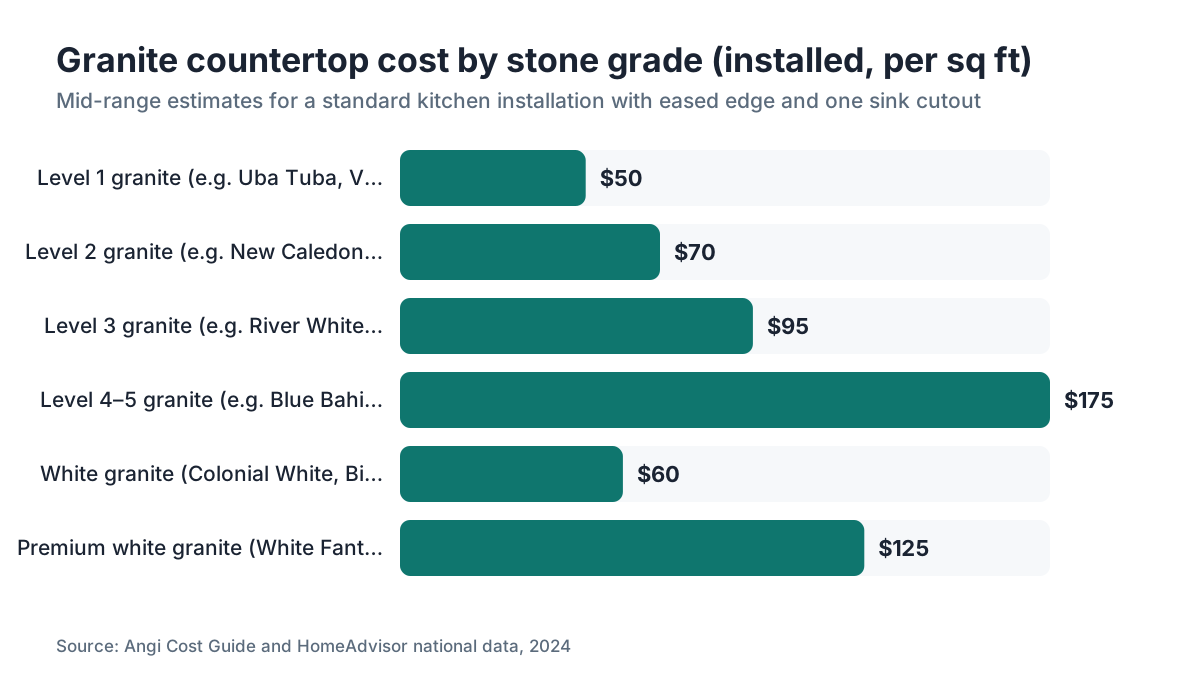
White granite runs $45 to $150 per square foot installed, and the range is wider than most people expect. A classic white like Colonial White or Bianco Romano usually falls in the Level 1 or Level 2 tier, which puts installed prices at $45 to $75 per square foot. Those are among the cheapest granite options you can buy.
Step up to a true white with dramatic gray or gold veining, something like White Ice or Thunder White, and you're generally at $65 to $100 per square foot installed. Arctic White and similar stones with bright, clean backgrounds and little movement land in the same zone.
At the top, stones like White Macaubas or White Fantasy carry enough visual drama to compete with quartzite, and they're priced for it, often $100 to $150 per square foot installed. If those pull you in, price out actual quartzite next to them. The look overlaps, and quartzite runs competitively in some markets.
For context, black and gray granites cluster in the same mid-range as the whites. Deep blues, vivid greens, and burgundy-reds are where prices spike. Blue Bahia granite from Brazil regularly runs $150 to $250 per square foot installed because the supply is genuinely thin.
One practical note. Lighter stones like white granite show fabrication flaws (uneven polish, hairline cracks) more than dark stones do. Ask to see the finished edge on a sample before you sign off on a selection.
How do granite costs compare to quartz, marble, and other countertop materials?
Here's where granite sits against the other popular surfaces. These are installed price ranges pulled from broad national data [1][2].
| Material | Installed cost per sq ft | Notes |
|---|---|---|
| Laminate | $15 to $40 | Lowest cost, least durable finish |
| Butcher block | $35 to $85 | Needs sealing; varies by wood species |
| Granite (Level 1 to 2) | $40 to $75 | Cheapest natural stone |
| Granite (Level 3 to 5) | $75 to $200+ | Exotic colors and rare origins |
| Quartz (engineered) | $55 to $150 | Consistent pattern; no sealing needed |
| Marble | $75 to $250 | Etches and stains; mainly aesthetic |
| Quartzite | $80 to $200 | Harder than marble; confused with quartz |
| Cambria (premium quartz) | $90 to $200 | Brand warranty; proprietary patterns |
Granite's edge over engineered stone like quartz or Cambria is that it's natural. Every slab is one of a kind. Its downside is that it wants sealing every one to three years and can chip on a sharp corner if something hits it hard. Marble is softer and etches with acidic foods, which makes it high-maintenance for a busy kitchen. Laminate and Formica cost far less but won't hold resale value the way granite does.
Tight budget, but you want real stone? Level 1 or Level 2 granite is almost always the right call. It's harder than marble, needs sealing less often than quartzite, and often costs less than engineered quartz at the entry level.
How do you estimate square footage for a granite countertop job?
Fabricators price by the square foot of finished stone, not by linear foot of countertop run. That difference matters when you're estimating.
Measure it yourself like this. Take the length of each countertop section in inches, multiply by the depth (usually 25 to 26 inches for a kitchen counter, 12 inches for a bathroom vanity), then divide by 144 to get square feet. Add the sections together. Then add 10 percent for waste and seam optimization.
Take an L-shaped kitchen with an 8-foot run and a 6-foot run, both 25 inches deep:
- Section 1: 96 inches x 25 inches = 2,400 sq in / 144 = 16.7 sq ft
- Section 2: 72 inches x 25 inches = 1,800 sq in / 144 = 12.5 sq ft
- Subtotal: 29.2 sq ft
- Plus 10% waste: about 32 sq ft
At $70 per square foot installed, that's roughly $2,240 for just the countertop surface. Add an edge upgrade, a sink cutout ($200), and a seam charge ($100), and you're looking at $2,540 to $2,600.
Fabricators measure the island separately. Islands often carry a minimum square footage charge because even a small one needs its own slab cut, sometimes a whole separate slab.
One thing homeowners keep forgetting: the backsplash. A granite backsplash (that 4-inch strip between counter and upper cabinets) adds square footage and cost. A full granite slab backsplash adds a lot more. Most fabricators quote these separately if you ask.
Want to skip the math and get a fast number before calling a shop? The SlabWise instant quote tool takes your measurements and returns a ballpark based on current regional pricing. Worth doing before you walk into any showroom.
What does granite countertop installation actually cost separately from the stone?
Labor and installation usually run $10 to $35 per square foot on top of material, though plenty of fabricators bundle everything and won't break it out. Ask for an itemized quote anyway.
Here's what installation usually covers: template creation (physical or digital with a laser measure), CNC cutting and edge profiling, transport to your home, setting the stone, silicone seaming, and basic cleanup. Here's what it usually leaves out: plumbing reconnection after a sink cutout (expect $100 to $250 for a plumber to hook your drain and supply lines back up), removing existing countertops (often $150 to $400 if the fabricator does it), and permits (rarely required for a countertop swap, but check your local building department).
Templating is the step most homeowners never hear about. Before any stone gets cut, a templater visits your home and maps the exact dimensions of your cabinets. This matters because cabinets are almost never perfectly square. The template, digital or physical, is what the CNC router follows. It's usually folded into the fabricator's quote, but it's a real cost, and some shops bill it separately if you cancel after the template is done.
For the full walk-through, see our guide to countertop installation.
What are granite countertop grades, and how do they affect price?
Granite grades are not a formal standard from any government body or trade group. Every fabricator and importer invents its own tier names. Even so, the general framework holds together well enough to use.
Level 1 (sometimes called Commercial or Builder Grade). High-volume, consistent-looking stones. Venetian Gold, Uba Tuba, and Santa Cecilia are the classics. Widely available, quarried in bulk, and cheap at $40 to $60 per square foot installed. Nothing wrong with them. They're just not unusual.
Level 2 (Mid-Grade). Stones with more movement, more color variation, or a less common origin. Think New Caledonia or Blue Pearl. Expect $55 to $85 per square foot installed.
Level 3 and up (Premium / Exotic). Stones with strong visual character, limited supply, or long transport chains. River White, Titanium, and Calacatta-look granites live here. Prices run $75 to $150+ per square foot installed, and truly exotic slabs (Van Gogh, Blue Bahia) blow past that. The U.S. Geological Survey tracks dimension stone supply, and the gap between common and rare varieties is exactly what shows up in these prices [5].
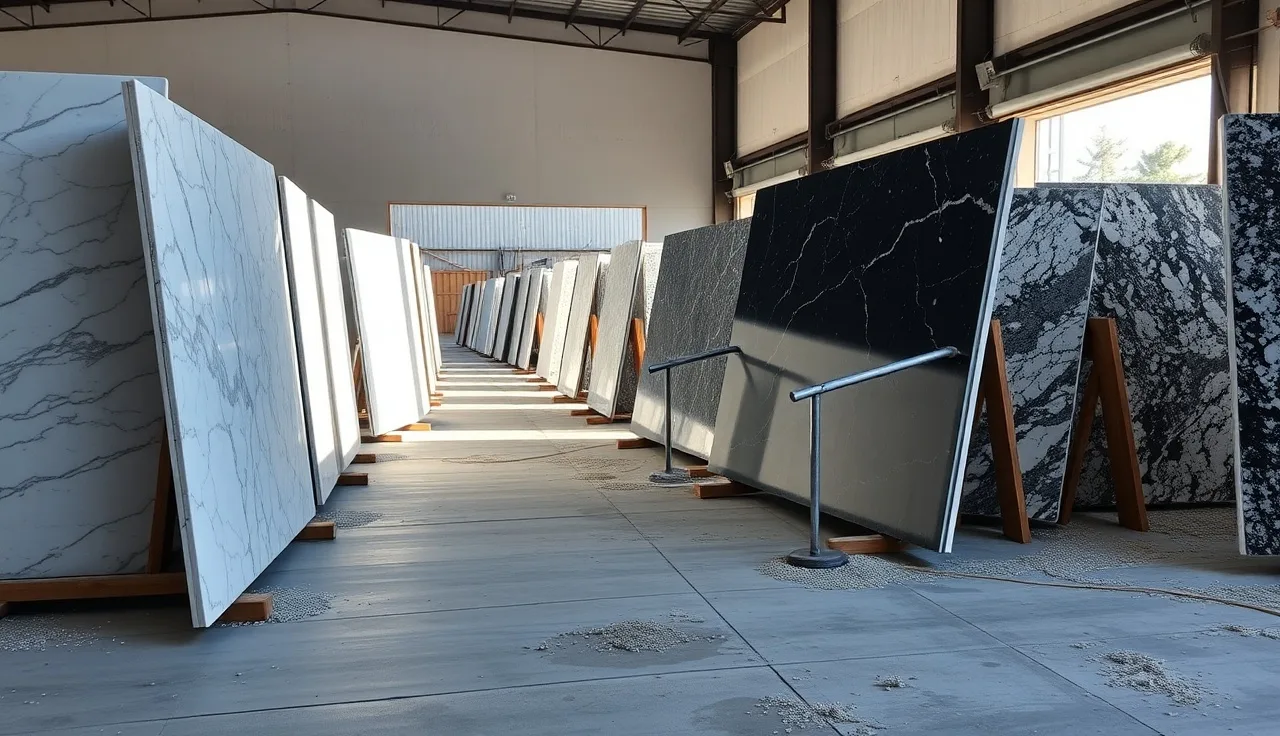
Because the tier system is loose, always look at slabs in person at a stone yard or a fabricator's warehouse, never just a catalog or a screen. Two stones sold under the same name can look wildly different if they came from different parts of the same quarry, or from different quarries using the same trade name. Ask to see the exact slab your countertop gets cut from, and photograph it.
Does granite add value to a home, and is it worth the cost?
Granite has been a standard real estate selling point for over two decades, though its specific value-add has softened as quartz became just as common and just as expected. Remodeling Magazine's annual Cost vs. Value report shows minor kitchen remodels recover roughly 77 to 85 percent of their cost at resale, while major kitchen remodels recover less, around 50 to 60 percent [3]. Countertops aren't tracked on their own, but they're a big line item in any kitchen job.
The honest answer: granite is table stakes in most mid-to-upper markets. Buyers expect it. Its absence probably hurts you more than its presence helps. Renovating to sell soon? Mid-grade granite (Level 2, clean veining, neutral color) is the smart spend. Going Level 5 exotic to wow buyers is usually a bad return.
Staying in the home 10 years or more? The math flips. Granite is genuinely durable. Sealed properly, it shrugs off heat, scratches, and stains. Maintenance is light: seal it once a year with a $15 bottle of penetrating sealer, clean it with mild dish soap. A well-installed granite counter should last 30 to 50 years, and the National Association of Realtors' Remodeling Impact Report consistently lists kitchen upgrades among the features that draw buyers [8].
For kitchens where budget is tight and resale is the whole point, laminate countertops and butcher block have both gotten much better and may make more sense at your price point.
How do you get an accurate granite countertop quote?
The one thing to understand up front: you cannot get an accurate quote from a website or a national home improvement chain without a template. Any number you see before someone measures your actual cabinets is an estimate. That's fine for budgeting. Just know what it is.
For a useful quote, walk into at least two or three local fabricator shops, or have them come to you. Bring your measurements, even rough ones. Know which sink you're keeping or buying, because the mount type (undermount vs. drop-in) changes fabrication. Know your edge preference, even if it's just "simple" or "something decorative."
Ask each shop for an itemized quote that separates stone cost, fabrication, edge upcharge, cutouts, delivery and installation, and old-countertop removal if you need it. Some shops bundle all this. Ask them to unbundle it. That's how you avoid surprises.
Running the quoting side of a shop? Software like SlabWise builds this breakdown straight from the job specs, which cuts turnaround time and quote errors. It earns its keep fastest in high-volume shops where manual quotes pile up into a bottleneck.
Compare quotes on a per-square-foot basis after every line item is in, not on the headline number. A shop quoting $55 per square foot with $400 in cutout charges and $200 for removal can cost more than one quoting $70 per square foot all-in.
Pull references or read Google and Yelp reviews for installation quality, not selection. A gorgeous slab set badly, with uneven seams or chips near the sink cutout, is a worse outcome than a modest stone set perfectly.
What hidden costs do homeowners miss when budgeting for granite?
A handful of costs keep blindsiding homeowners who thought their budget was locked.
Plumbing reconnection. Replace a sink as part of the job and you'll need a plumber to reconnect the drain, supply lines, and garbage disposal. Fabricators don't touch this. Budget $150 to $350, and schedule the plumber for the day of or day after install.
Old countertop removal. Some fabricators include it, many don't. Ask outright. Ripping out tile countertops set in a mortar bed gets messy and pricey, because removal can chew up the walls and cabinet tops underneath.
The backsplash gap. When old counters come out, especially tile-on-drywall, the wall behind them often has a gap or damaged paint up to the bottom of the upper cabinets. You may need to patch and repaint, or tile a backsplash, before or after the granite goes in. That's its own project.
Sealing the new granite. Most fabricators lay down one coat of sealer at install. Put a second coat on yourself within a few weeks, then reseal annually. A good penetrating sealer (Tenax, StoneTech, Miracle Sealants) runs $15 to $40 and takes 30 minutes. Skipping it isn't a disaster, but it isn't smart either. University of Florida IFAS Extension says granite "should be sealed periodically" and recommends a water-absorption test to time it [7]. For the full care routine, see how to clean stone countertops.
Filler and caulk at the wall. The joint between granite and the wall (or backsplash) gets caulked, not grouted. Caulk needs a touch-up every few years. Cheap, but it's ongoing maintenance nobody plans for.
Slab remnants. If your job leaves a big piece of slab unused, some fabricators keep it and some sell it back at a discount. A remnant is handy for a bathroom vanity, a laundry room, or a small outdoor project. Ask about it before your install appointment.
What are typical granite countertop costs by kitchen size?
These estimates assume mid-grade Level 2 granite at $65 to $80 per square foot installed, with one undermount sink cutout, an eased edge, and standard delivery. They're ballpark. Your actual quote shifts with layout complexity, seam count, and regional labor rates [1][4].
| Kitchen size | Estimated sq ft of counter | Estimated total installed cost |
|---|---|---|
| Small galley (under 150 sq ft kitchen) | 20 to 28 sq ft | $1,300 to $2,240 |
| Medium kitchen (150 to 250 sq ft) | 30 to 45 sq ft | $1,950 to $3,600 |
| Large kitchen with island (250 to 400 sq ft) | 50 to 75 sq ft | $3,250 to $6,000 |
| Large kitchen, premium stone, complex edges | 60 to 90 sq ft | $6,000 to $18,000+ |
Bathroom vanities are smaller and sometimes easier to estimate. A standard double-vanity top (60 inches wide) runs about 12 to 15 square feet and typically costs $500 to $1,500 installed, sink cutouts included. Single vanities cost less. Many shops set a minimum job charge ($500 to $800 is common), so a tiny bathroom job may not save as much as the square footage math suggests. The American Housing Survey from the Census Bureau tracks how often homeowners take on kitchen remodels, and countertop replacement is a common piece of them [9].
Doing the kitchen and master bath at the same time? Ask about combining the jobs. Many fabricators cut you a better rate when they can template both spaces in one visit and pull both jobs from the same or adjacent slabs.
Frequently asked questions
How much does it cost to replace kitchen countertops with granite?
Replacing kitchen countertops with granite typically costs $2,000 to $6,000 for a mid-sized kitchen, including stone, fabrication, and installation. Small kitchens can come in under $1,500 with Level 1 stone. Large kitchens with islands and premium stone can top $12,000. Get itemized quotes from at least three local fabricators, and confirm whether old-countertop removal and plumbing reconnection are included.
Is granite cheaper than quartz countertops?
At the entry level, yes. Level 1 granite runs $40 to $60 per square foot installed, while entry-level engineered quartz starts around $55 to $65 per square foot. In the mid-range they overlap heavily. At the premium end, exotic granite and brands like Cambria both push past $150 per square foot. The fabricator's labor rate in your area often matters more than the material cost difference.
How much does white granite cost per square foot?
White granite runs $45 to $150 per square foot installed, depending on the stone. Common whites like Colonial White or Bianco Romano are Level 1 or Level 2 and install for $45 to $75 per square foot. Dramatic-veined stones like White Fantasy or White Macaubas are Level 3 or higher and often cost $90 to $150 per square foot installed. Lighter stones show fabrication flaws easily, so inspect edges closely.
How do I calculate square footage for a granite countertop estimate?
Measure each countertop section's length and depth in inches. Multiply length by depth, then divide by 144 to convert to square feet. Add all sections together, then add 10 percent for waste and layout. A standard kitchen counter is 25 inches deep; bathroom vanities are typically 22 inches deep. Your fabricator will template precisely before cutting, but your own measurement gets you close enough to budget.
What is the cheapest type of granite countertop?
Level 1 granites like Uba Tuba, Venetian Gold, and Santa Cecilia are the most affordable, typically $40 to $60 per square foot installed. They're quarried in bulk from Brazil and India, which keeps supply steady and prices low. They're not less durable, just more common-looking. Pair a Level 1 stone with a simple eased edge and a drop-in sink instead of undermount to keep the total job as low as possible.
How long does granite countertop installation take?
The process takes two visits over roughly one to two weeks. The first is templating, one to two hours in your home. Fabrication happens at the shop over five to ten business days depending on workload. Installation day usually runs two to four hours. You'll be without a working sink for those install hours plus the time a plumber needs to reconnect it, typically the same day or the next morning.
Does granite countertop thickness affect cost?
Yes. Standard 3 cm (about 1.25 inch) granite is the default for kitchens and the most cost-effective. Some older homes used 2 cm stone, which needs a plywood buildup and is harder to source today. A decorative laminated edge (stacking two layers to look thicker) adds fabrication cost, typically $20 to $50 per linear foot above a standard edge. Thickness has no meaningful effect on durability at these standard sizes.
What edge profiles cost extra on granite countertops?
Eased and beveled edges are usually included in the base price. A full bullnose adds roughly $10 to $20 per linear foot. An ogee, dupont, or waterfall edge adds $20 to $50 per linear foot. On a kitchen with 40 linear feet of edge, choosing a waterfall over a bevel can add $800 to $2,000 to the total. Tight budget? Stick with an eased or beveled edge and put the savings into a better stone.
How much does a granite countertop for a bathroom vanity cost?
A standard granite vanity top for a 60-inch double-sink vanity runs about $500 to $1,500 installed, including two sink cutouts. Smaller single-sink guest-bath vanities can come in under $400 at some shops, though many fabricators have minimum job charges of $500 to $800. Combining a vanity job with a kitchen job at the same fabricator often gets you a better rate per square foot on the smaller piece.
How often does granite need to be sealed, and what does that cost?
Most granite should be sealed once a year, though dense stones like Absolute Black may only need it every two to three years. A water test tells you when: drip water on the surface. If it beads, you're fine. If it soaks in within a few minutes, seal it. A bottle of quality penetrating sealer (StoneTech, Tenax, or similar) costs $15 to $40 and covers an average kitchen. It's a DIY job that takes under an hour.
Will granite countertops increase my home's resale value?
Granite is expected in most mid-to-upper market homes, so its absence can hurt more than its presence helps. Remodeling Magazine's Cost vs. Value report shows minor kitchen remodels (which include countertops) recover roughly 77 to 85 percent of cost at resale, though countertops aren't tracked separately. Mid-grade neutral granite is the best choice for resale. Exotic high-cost stone rarely returns its full cost unless you're in a luxury market.
What questions should I ask a granite fabricator before getting a quote?
Ask for an itemized quote that separates stone, fabrication, edge profile, cutouts, delivery, installation, and old-countertop removal. Ask to see the actual slab your job gets cut from, more than a sample. Ask who does the templating and installation (some shops subcontract). Ask the lead time from template to install. Ask whether sealing is included. And ask what happens if the slab has a crack or flaw found during fabrication.
Can I get granite countertops installed for under $1,000?
Rarely for a full kitchen. For a small bathroom vanity or a laundry section cut from a remnant, yes, under $1,000 is doable. Some fabricators sell remnant slabs from larger jobs at steep discounts, and if your footprint fits a remnant, you can save a lot. A galley kitchen with minimal square footage and Level 1 stone might approach $1,200 to $1,500 at the low end, but true sub-$1,000 full kitchens are rare outside builder-grade bulk contracts.
Is it cheaper to buy granite slabs and have them fabricated separately?
Sometimes, but it adds risk and logistics. Buying a slab from a stone yard and hiring a separate fabricator to cut and install can save 10 to 20 percent in some markets. But you're on the hook for coordinating delivery, making sure the slab arrives undamaged, and managing two contractors. If anything goes wrong, each one points at the other. Unless you manage renovations professionally, bundling slab and fabrication with one shop is safer and simpler.
Sources
- Angi (formerly Angie's List), Granite Countertop Installation Cost Guide: Average installed granite countertop cost ranges from $2,000 to $6,000 for a typical kitchen, with per-square-foot prices of $40 to $200 depending on stone grade and complexity.
- HomeAdvisor, How Much Do Granite Countertops Cost?: Granite countertop costs by material and installation nationally, including comparison data for quartz, marble, and laminate surfaces.
- Remodeling Magazine, Cost vs. Value Report 2024: Minor kitchen remodels recover approximately 77 to 85 percent of their cost at resale on average across U.S. markets.
- National Kitchen and Bath Association (NKBA), Kitchen and Bath Market Index: Industry cost data and project size benchmarks for kitchen and bath countertop projects, including average square footage ranges.
- U.S. Geological Survey (USGS), Dimension Stone Statistics and Information: Granite is among the most widely quarried dimension stone materials in the U.S. and globally; supply data informs pricing for common vs. exotic varieties.
- U.S. Bureau of Labor Statistics, Consumer Price Index: Regional labor cost variation affecting countertop installation labor rates across U.S. metro areas.
- University of Florida IFAS Extension, Natural Stone Countertop Care and Maintenance: Granite should be sealed periodically with a penetrating sealer; a water absorption test indicates when resealing is needed.
- National Association of Realtors, Remodeling Impact Report: Kitchen: Kitchen countertop upgrades including granite contribute to buyer appeal and are among top-cited features in home sale descriptions.
- U.S. Census Bureau, American Housing Survey: Data on frequency and cost ranges for kitchen remodeling projects including countertop replacement among U.S. homeowners.
- Natural Stone Institute (formerly Marble Institute of America), Natural Stone Countertop Specification Guide: Industry specifications for granite slab thickness standards (2 cm and 3 cm), edge profile classifications, and installation best practices.
Last updated 2026-07-09