TL;DR
- Sealing granite yourself costs about $0.15 to $0.55 per square foot in product.
- A pro charges $1 to $3 per square foot, or $65 to $200 for a typical kitchen.
- Most granite needs resealing every one to five years, and some dense stones never do.
- The water bead test tells you when.
What does it cost to seal granite countertops?
The answer splits two ways: do it yourself, or pay someone.
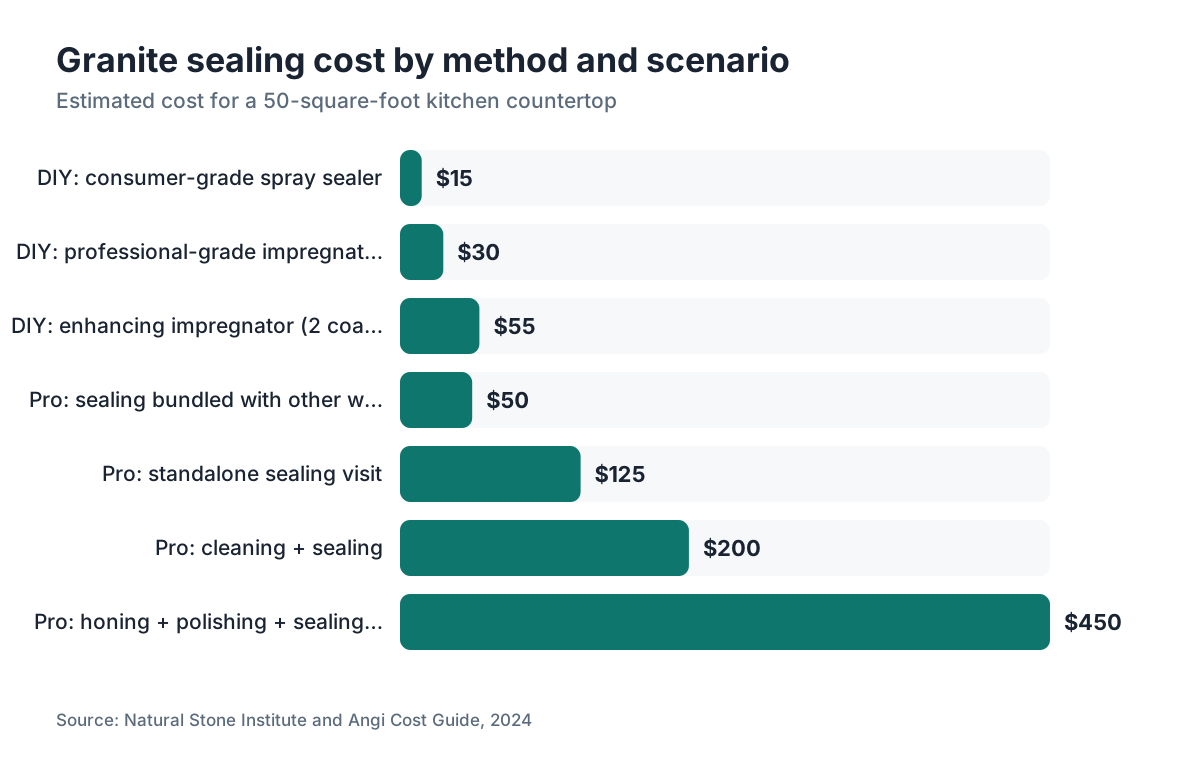
DIY sealing costs almost nothing in labor. The product runs $10 to $35 for a penetrating impregnator like Tenax Hydrex or Miracle Sealants 511, and one bottle covers 100 to 200 square feet [1]. A typical kitchen with 40 to 60 square feet of granite eats $10 to $25 of that bottle. Call it $0.15 to $0.55 per square foot.
A pro adds labor. Most stone restoration companies charge $1 to $3 per square foot for a standalone sealing visit, so a 50-square-foot kitchen lands at $50 to $150. Bundle the sealing into a larger honing, polishing, or cleaning job and the extra cost drops close to zero, because the tech is already standing at your counter. Watch the minimums, though. Many shops have a service call floor of $75 to $125 no matter how small the job, so a tiny bathroom doesn't save you much by going pro [2].
The national average for professional sealing of a full kitchen sits around $100 to $200, with wide swings by region. Coastal metro labor runs 30 to 50 percent higher than the Midwest or rural markets.
What factors change the price?
Five things move the number more than the rest.
Porosity matters most. Dense, dark granites like Absolute Black or Black Galaxy absorb almost nothing and may never need sealing [3]. Lighter, more open stones like Alaska White or Colonial White drink it in and often want two coats, which doubles your product cost. You can check porosity in about 15 minutes. Drop a little water on a dry, clean spot and watch. Beads for 30 minutes? You're fine. Darkens the stone within 10 minutes? Seal soon.
Finish changes absorption. Polished granite has a tight, compressed surface that shrugs off water. Honed, leathered, and brushed finishes are more open, so a honed island reseals more often and drinks more product per coat.
Condition adds cost. A surface with old, failing sealer or mineral scale needs cleaning first. Professional prep (stripping and cleaning) can tack on $0.50 to $1.50 per square foot before sealing even starts. This is where the phrase "granite countertop refinishing cost" usually shows up, because real refinishing means honing or polishing the stone before resealing, which is a bigger job than wiping on sealer.
Number of coats. Most quality impregnators want one coat on polished granite and two on honed or very porous stone. Two coats roughly doubles product cost but rides the same labor trip.
Access and cutouts. Undermount sinks, tight corners, and cooktop openings slow application down and are easy to miss. Pros charge the same square footage rate, but the minimum quietly covers the extra fiddling.
DIY vs. professional sealing: which one should you choose?
DIY sealing is one of the easiest jobs in the house. If you can wipe down a counter, you can seal granite. The whole thing runs 20 to 45 minutes for most kitchens: clean the surface, let it dry, wipe on sealer with a lint-free cloth or foam applicator, wait 15 to 20 minutes per the label, then buff off the excess [1]. No special tools.
Hire a pro in three situations. First, if the countertops already have staining, etching, or physical damage, a tech can assess and fix those in the same visit. Second, if you have a tricky stone like quartzite or a very porous granite, a pro can match the right sealer chemistry (silicone, fluorocarbon, or a silane/siloxane blend) to your slab. Third, if you're bundling sealing with a post-install clean or a full polish, the labor is basically free at that point.
For standard polished granite in decent shape, DIY wins on cost every time. Fifteen dollars of 511 Impregnator and half an hour of a Saturday beats a $150 service call. If you want an accurate number for the whole project, the SlabWise instant quote tool shows what fabricators near you charge for installation and sealing together.
Fabricators, one note: if you sell sealing as an add-on, build it into your quote template as its own line so it stops falling through the cracks. Software like SlabWise makes it easy to drop a service line item next to material and labor.
How often does granite need to be resealed?
The range is wide. Once a year to once every five years, and some granites essentially never [3].
Run the water bead test once a year. Pour a tablespoon of water on the stone, set a timer for 30 minutes, and check. Still beading? The seal holds. Dark ring or full soak-in within 10 minutes? Time to reseal. The test costs nothing but a few minutes.
High-traffic zones near the sink and stove wear faster than a bathroom vanity nobody touches. Cooking oils, acidic food, and daily cleaning break down sealer quicker than light use does.
Light, coarse-grained granites (giallo ornamental, alaska white, colonial cream) usually want yearly sealing. Mid-range stones like Uba Tuba stretch to two or three years. Dense, tight granites like Black Galaxy or Verde Butterfly can pass the water test for five years or more with no help at all [3].
Brand matters too. Big-box consumer sealers may last 12 to 18 months. Professional-grade penetrating impregnators rated for natural stone (look for ANSI/TCNA compliance) often run two to five years per application [4].
What types of granite sealer are there, and does the type change the cost?
Yes, chemistry moves the price.
Penetrating impregnators are the standard for countertops. They soak below the surface and protect from within without changing how the stone looks. This is what pros use. Good ones cost $15 to $40 a bottle at retail [1].
Topical sealers sit on top and form a film. They're cheaper, sometimes $8 to $15 a bottle, but they wear fast, peel or cloud over time, and can trap moisture underneath. Most fabricators and stone industry groups tell you to keep them off kitchen counters.
Enhancing sealers are impregnators that also deepen the color, giving a permanently wet look. They run $20 to $50 a bottle and they're a one-way door. Once you enhance, the stone stays darker. Some people love it. Others regret it. Test on a scrap or a hidden corner before you commit.
The Marble Institute of America (now part of the Natural Stone Institute) recommends penetrating impregnating sealers for granite in food-prep areas, precisely because they leave no surface layer for food to touch [5].
Here's how the common types stack up:
| Sealer type | Cost per bottle | Lifespan | Changes look? | Recommended for countertops? |
|---|---|---|---|---|
| Penetrating impregnator | $15, $40 | 2 to 5 years | No | Yes |
| Topical sealer | $8, $15 | 6 to 18 months | Sometimes | No |
| Enhancing impregnator | $20, $50 | 2 to 5 years | Yes, darkens | Only if desired |
| Spray-on consumer grade | $10, $20 | 12 to 18 months | No | Acceptable for low-use surfaces |
What does granite countertop refinishing cost, and is it the same as sealing?
No. Refinishing and sealing are different jobs with very different price tags.
Sealing is a surface treatment. You wipe on a chemical impregnator and buff it off. It takes under an hour and costs $10 to $35 in materials.
Refinishing physically changes the stone. A tech runs diamond-impregnated pads over the surface to grind out scratches, etch marks, or dull patches, then re-polishes back to the original sheen. Sealing is the last step after refinishing, not a replacement for it.
Professional honing and polishing runs $3 to $10 per square foot depending on damage and local labor [2]. A full kitchen refinish can hit $300 to $800 or more. That's a different budget than a $20 bottle.
The confusion comes from marketing. Some products get sold as "refinishers" or "restorers" when they're really just enhancing sealers or high-gloss topical coats. They won't touch actual scratches or etch marks. Physical damage needs abrasive work, not chemistry.
Comparing granite to other surfaces on total cost? Marble countertops have similar refinishing costs but etch far more easily from acids, so they need professional attention more often than granite does.
Can granite go without being sealed at all?
Some granite absolutely can, and plenty of slabs out in the wild never get sealed with no visible fallout.
Dense, dark granites with very low porosity pass the water bead test year after year with zero product. The Natural Stone Institute notes that not all granite needs sealer, and that sealing a stone that doesn't need it can backfire, trapping moisture or leaving a hazy film [5].
The risk of skipping sealer on porous granite is staining from oils, wine, and acidic food. Granite doesn't etch like marble (it's not calcite-based), but it can soak up oil stains that are a pain to pull out later. A poultice of baking soda and acetone, or a commercial stone poultice, can draw the oil back out, but it takes time and patience.
Here's the practical line: run the water bead test before you spend a dime. Beads for 30 minutes? Skip the sealer this cycle. Soaks in fast? Spend the $15 and do it yourself.
How do you seal granite countertops yourself, step by step?
The process is simple. Here's what actually works.
Clean first. Use a pH-neutral stone cleaner or a little dish soap in warm water. Rinse well and let the stone dry all the way. Sealer on a wet or dirty surface won't penetrate right. Give it at least an hour to dry, two if your air is humid.
Apply the sealer. Pour a small amount onto a lint-free cloth or foam applicator and spread it in sections, following the grain. Keep the coat thin and even. You're not painting. You're just wetting the stone.
Wait the dwell time. Every product names one, usually 15 to 30 minutes. Don't let it dry to a haze or it fights you on buff-off. Some products want a second coat before the first fully dries, so read the label.
Buff off the excess. Grab a clean, dry lint-free cloth and buff firmly in circles until the surface is clean and streak-free. Sealer left sitting on top dries cloudy.
Let it cure. Most impregnators reach full cure in 24 to 72 hours. Keep the surface dry through that window. After cure, the stone should pass the water bead test right away.
For a full guide on keeping stone clean and protected, see how to clean stone countertops.
Are there hidden costs people forget to budget for?
A few that come up all the time.
Cleaning products. If your granite carries cooking oil, soap scum, or hard water deposits, you have to clean and degrease before sealing. A good stone cleaner costs $10 to $20. The wrong product (vinegar, bleach, ammonia cleaners) can dull the finish or react with old sealer [6].
Service minimums. Plenty of restoration companies won't roll a truck for less than $75 to $125, no matter how small the job. If you've got 20 square feet in a bathroom, the minimum matters more than the per-foot rate.
Second coats on porous stone. If the first coat vanishes in under 10 minutes, you need a second. Budget the extra product. On very thirsty stone, a third coat is sometimes needed before the surface finally beads.
Access for a pro. Lots of cutouts, ornate edges, or tight spots near appliances can trigger a small surcharge.
Cost over time. A $15 product used yearly is $150 across 10 years. A pro at $150 every three years lands at the same total. Neither is obviously better. It comes down to your time and how confident you feel doing it.
If you're stacking granite against other options, laminate countertops and Corian countertops need no sealing at all, one real cost edge they hold over natural stone.
How does sealing granite compare to sealing other natural stones?
Granite is generally the easiest natural stone to keep sealed.
Marble seals the same way but wants it more often, and it also etches from acids, which sealer won't stop. A marble bathroom vanity might need resealing every six to twelve months, versus every one to three years for granite in the same spot.
Quartzite (real quartzite, not marble sold under the name) is often denser than granite and can go longer between coats, but it varies wildly by slab. Test-first matters even more here. See how to clean quartzite countertops for more.
Soapstone doesn't get sealed at all. You treat it with mineral oil to darken and protect it, a different routine entirely. See how to clean soapstone countertops for the full picture.
Engineered quartz like Cambria countertops never needs sealing. The resin binder makes it basically non-porous. That's a big reason some homeowners pick it over granite.
For a wider look at what surfaces cost and demand over time, the kitchen countertops guide covers the full comparison.
Is granite sealing worth the cost?
At $15 to $35 for a DIY job, almost certainly yes if your granite is even a little porous.
A fresh oil stain on unsealed granite can sink deep enough that it takes several poultice treatments to remove, and even then a faint shadow can linger. One professional stain-removal treatment often runs past $100, more than a decade of DIY sealer applications [2].
The better case for skipping sealer is on very dense, dark granites that genuinely don't need it. Sealing a stone that won't absorb it wastes money and can leave residue. Test first. If it passes, keep your $15.
On the fence? Test and respond. Spend nothing until the water bead test says it's time, then spend $15 and half an hour. That beats both the obsessive annual ritual and leaving a thirsty countertop naked.
Frequently asked questions
How much does it cost to have granite countertops professionally sealed?
Expect $1 to $3 per square foot, or $50 to $200 for a typical kitchen, depending on square footage and local labor rates. Most companies have a minimum service fee of $75 to $125, so small jobs in bathrooms or laundry rooms often end up at the minimum regardless of actual square footage. Bundling sealing into a larger cleaning or polishing visit cuts the incremental cost significantly.
How long does granite sealer last?
Quality penetrating impregnating sealers last two to five years on polished granite in normal use. Consumer-grade spray sealers from big-box stores typically hold for 12 to 18 months. High-traffic areas near sinks or stoves wear through sealer faster than low-use surfaces. The water bead test (let drops sit 30 minutes and watch for absorption) tells you exactly when the seal has failed, more reliably than any calendar schedule.
Can I seal granite myself, or do I need a professional?
You can absolutely do it yourself. DIY sealing takes 20 to 45 minutes and needs only a $15 to $35 bottle of penetrating impregnator and a lint-free cloth. The steps: clean, dry, apply, wait the dwell time, then buff off the excess. You need a professional only if the granite has physical damage like scratches, etching, or deep stains that require abrasive work before resealing.
What is the best granite sealer to buy?
Fabricators most often recommend penetrating silicone-based impregnators like Miracle Sealants 511, Tenax Hydrex, or Dry Treat Stain-Proof. Avoid topical sealers that sit on the surface and can cloud or peel over time. For honed granite or especially porous stone, a fluorocarbon-based impregnator gives better oil and water protection. Match the product to your stone's porosity and finish rather than buying by brand alone.
Does sealing granite prevent all stains?
No. A good impregnating sealer slows liquid absorption and buys you time to wipe up spills, but it is not a permanent stain barrier. Highly pigmented liquids like red wine or beet juice left sitting for hours can still penetrate. Sealer also does nothing against etching (acid damage to the mineral surface), which granite resists naturally but isn't completely immune to in extreme cases. Prompt cleanup matters more than sealer alone.
How do I know if my granite needs sealing?
Use the water bead test. Put a tablespoon of water on a dry spot of granite and leave it for 30 minutes. If the water still beads into a round droplet, the seal is intact. If the water soaks in and darkens the stone within 10 to 15 minutes, it needs sealer soon. To test oil resistance too, put a few drops of cooking oil in a different spot and watch for the same darkening.
Does dark granite need to be sealed?
Often not, or only rarely. Dense, dark granites like Absolute Black, Black Galaxy, and Verde Butterfly have extremely low porosity. Many pass the water bead test for five or more years with no sealer. Test before buying product. If the water beads, skip sealing entirely until the next test cycle. Applying sealer to stone that doesn't need it can leave a surface residue that looks hazy when it dries.
What is the difference between sealing and refinishing granite?
Sealing applies a chemical impregnator to the surface to resist stains. It takes 30 to 45 minutes and costs $15 to $35 DIY. Refinishing uses diamond abrasive pads to physically remove scratches, dull spots, or etch marks, then re-polishes the surface to its original sheen. Refinishing costs $3 to $10 per square foot professionally and is a completely different, more involved process. Sealing is the final step of a refinishing job, not a substitute.
How long after installation should I seal new granite?
Most fabricators recommend waiting 24 to 72 hours after installation before sealing, so any adhesive or caulk used during the job can fully cure. Some fabricators seal the stone in the shop before delivery, so ask yours whether it was pre-sealed. If it was, skip the first application and run the water test about a year later to decide if resealing is needed.
Does sealing granite change how it looks?
A standard penetrating impregnator leaves the stone looking identical after application. No color change, no gloss change, nothing visible. Enhancing sealers are the exception: they deepen color and create a permanently wet look, which some people love and others find too dark or artificial. If you use an enhancing sealer, test it on an inconspicuous corner first, because the effect is permanent and can't easily be reversed.
Is it safe to use sealed granite for food prep?
Yes. Penetrating impregnating sealers soak into the stone and fully cure within 24 to 72 hours, leaving no surface residue that would contact food. The Natural Stone Institute recommends impregnating sealers over topical sealers specifically for food-prep surfaces for this reason. Avoid preparing food on freshly sealed granite for the first 24 hours while the product cures, then the surface is safe for normal use.
Can I seal granite countertops with a rented steamer or special tool?
No specialized tools are needed or recommended. A lint-free cloth and a foam applicator are all you need. Steam cleaners are sometimes used to clean granite before sealing, but steam itself doesn't seal anything. Some installers use a heat gun to slightly warm the stone in cold environments to improve penetration, but this isn't necessary for most home applications at normal room temperature.
Does homeowner's insurance cover granite staining or damage?
Standard homeowner's insurance policies do not cover cosmetic damage like staining or etching to countertops. Accidental damage riders (sometimes called equipment breakdown or home systems coverage) occasionally include built-in appliances but rarely countertop surfaces. If you're concerned about long-term protection, extended home warranties sometimes cover granite refinishing under certain plans, but terms vary widely and you'd need to read the specific policy language carefully.
Sources
- Miracle Sealants 511 Impregnator product page, Miracle Sealants Company: Penetrating impregnating sealers for granite cost $15 to $40 per bottle at retail and cover 100 to 200 square feet per application
- HomeAdvisor (Angi) Cost Guide: Granite Countertop Sealing and Repair: Professional granite sealing costs $1 to $3 per square foot; refinishing and honing costs $3 to $10 per square foot; service minimums commonly run $75 to $125
- Natural Stone Institute, Technical Bulletin on Sealing Natural Stone: Not all granite needs sealer; dense granites like Absolute Black can go five or more years passing the water bead test without sealing; porosity and finish type determine frequency
- ANSI/TCNA Handbook for Ceramic, Glass, and Stone Tile Installation, Tile Council of North America: Professional-grade penetrating impregnators meeting ANSI/TCNA standards for natural stone typically last two to five years per application
- Natural Stone Institute, Care and Maintenance Guidelines for Natural Stone Surfaces: The Natural Stone Institute recommends penetrating impregnating sealers for granite in food-preparation areas and notes that applying sealer to stone that doesn't need it can trap moisture or cause a hazy film
- University of Minnesota Extension, Caring for Natural Stone Surfaces in the Home: Vinegar, bleach, and ammonia-based cleaners can dull granite finishes and react with sealer residue; pH-neutral cleaners are recommended before sealing
- U.S. Geological Survey, Granite and Related Rocks: Properties and Uses: Granite density and mineral composition vary significantly by quarry origin, which directly affects porosity and water absorption rate
- Natural Stone Institute, Architectural and Decorative Use of Natural Stone: Honed and leathered granite finishes have higher surface porosity than polished finishes of the same stone, requiring more frequent sealer application
- Building Research Information Knowledgebase (BRIK), U.S. Department of Housing and Urban Development: Natural stone countertop maintenance costs including sealing are a recognized line item in residential renovation cost estimation guidance
- Occupational Safety and Health Administration (OSHA), Hazard Communication Standard for Consumer Products: Consumer-grade stone sealers sold in retail quantities under the hazard communication exemption for consumer products do not require OSHA SDS sheets for home use, but professional-grade products applied commercially do
Last updated 2026-07-09