TL;DR
- Granite countertop installation costs roughly $40 to $100 per square foot fully installed, covering material, fabrication, and labor.
- A basic 40-square-foot kitchen runs $1,600 to $4,000.
- Complex layouts, premium stone, or multiple sink cuts push it higher.
- Most homeowners hire a fabricator.
- Sink cutouts get done on a CNC router or by hand with an angle grinder and diamond blade, always cut wet.
What does granite countertop installation actually cost?
The honest answer is a range: $40 to $100 per square foot, all in, for a typical residential job. That covers the slab, fabrication (cutting, edging, polishing), and the install. It does not usually include plumbing reconnection, which runs $150 to $400 extra depending on your area. [1]
Break it down and the range makes sense. Basic black or colonial white granite, 3 cm thick, standard eased edge, no waterfall: you're probably at $40 to $60 per square foot installed. A distinctive slab like Blue Bahia or a Calacatta-look granite with an ogee edge and a full-height backsplash: $80 to $100 is realistic, sometimes higher. The stone itself runs from roughly $5 to $15 per square foot raw at the yard to $50 and up for rare material. [2]
Fabrication labor alone, separate from material, runs about $10 to $30 per square foot depending on the shop's overhead and region. Install labor on top adds roughly $200 to $500 for a standard kitchen. Some shops bundle everything into one price per square foot, which is the cleaner way to quote. If a shop breaks out fabrication and install separately and the numbers look low, ask whether templating and seam placement are included.
Complexity drives the number up. Every interior corner, every radius, every cooktop hole is more time. A single sink cutout typically adds $100 to $250. Two cutouts, a cooktop hole, and a farmhouse sink reveal can add $500 or more in cutting alone. [1]
How is granite fabricated before it reaches your kitchen?
Fabrication starts with the template. A technician comes to your kitchen (or measures the existing cabinets on a remodel) and captures every dimension, outlet, and cabinet run, either with a laser templating system or the older backer-board method. That template is the blueprint for everything after it. An error here cascades into an expensive remake.
From the template, the shop lays out cuts on the slab, a step called nesting. The goal is to get the most usable stone out of the slab while matching grain and veining across seams. A CNC shop sends the nesting file straight to the machine. Smaller shops without CNC use a wet saw and angle grinder. Both produce excellent work. CNC is faster and more consistent on complex shapes.
Machinery drives the cost math. A shop running a CNC bridge saw and a CNC router has high capital costs and lower labor per piece. A manual shop has lower overhead and slower throughput. Neither is automatically better for you. What matters is the finished edge and the accuracy of the cutouts.
After cutting, edges get profiled and polished. An eased edge (slightly broken corners) is the least work. An ogee or dupont edge takes multiple passes and a lot more polishing time. The slab then rides to the job site in an A-frame rack in a specialized truck. [2]
For fabricators juggling several jobs, tools like SlabWise track quoting and nesting so material waste and labor time are pinned down before the slab gets cut. That upfront math matters when raw granite runs $15 to $50 per square foot.
How do you cut a granite countertop for a sink?
This is the step that makes homeowners nervous, and fairly so. Granite is hard (Mohs hardness around 6 to 7) and unforgiving. A bad sink cut means a cracked piece or a cutout that's off by a quarter inch so the sink won't drop in. [3]
Pros do sink cutouts one of two ways. A CNC router with a diamond core bit is the cleaner method: the file specifies exact X-Y coordinates, the machine cuts, done. The manual process goes like this: mark the cutout line from the sink's template (it comes in the sink box), drill a plunge hole inside the line with a diamond core drill bit, then follow the line with a 4-inch angle grinder fitted with a continuous-rim diamond blade. Cut slow. Keep water on the blade to cool it and hold the dust down.
A DIY homeowner can cut a sink hole in already-installed granite. It's hard, not impossible. You need a 4-inch or 4.5-inch angle grinder with a granite-rated diamond blade, a drill with a diamond hole saw (typically 1.25 inch) for the plunge hole, a squirt bottle of water, and patience. Tape the surface heavily so the grinder foot doesn't scratch the finish. Score the line first instead of cutting full depth in one pass. Support the cutout piece with tape or a helper so it doesn't drop and crack the slab as the last cut finishes.
The single biggest DIY mistake is letting the cutout fall free. On the last inch of the cut, the piece drops and a stress crack runs toward the nearest edge. Support it every time. Many pros drill two corner holes and run a threaded rod, or use suction cups to control the piece.
Silica dust is a serious hazard. OSHA's construction silica standard (29 CFR 1926.1153) requires wet cutting or local exhaust ventilation plus respiratory protection when cutting stone. [4] For a one-time cut, at minimum wear an N95 respirator, cut wet, and work outdoors or with strong ventilation. Crystalline silica exposure is linked to silicosis and lung disease, which is why the wet method matters. [11]
Undermount sinks show the cutout edge from below, so it needs polishing. A shop polishes it with a hand polisher and diamond pads, working from 50-grit up to 1500 or 3000. A DIY homeowner can do this but should budget two to three hours for one sink edge.
For the full picture on countertop installation, including what a pro crew does on install day, that guide runs the sequence from delivery to plumbing reconnect.
What happens on installation day?
Install day is faster than most homeowners expect. A two-person crew can set a standard kitchen in two to four hours if the fabrication was accurate and the cabinets are level. Pieces arrive pre-cut and polished. The crew carries them in (3 cm stone runs about 18 to 20 pounds per square foot, so a 40 sq ft kitchen is 720 to 800 lbs of stone to move) [3], sets them on the cabinets, checks fit, then joins seams with two-part epoxy color-matched to the stone.
Seam placement matters a lot. Fabricators try to hide seams at sinks or cooktops where they show least, or in corners. On a slab with strong veining, matching the vein across a seam is a craft skill. Ask to see the slab in person before fabrication so you can mark your preferred orientation.
Cabinets need to be level within about 1/8 inch end to end. The crew shims under the stone as needed. Granite doesn't flex, so if the cabinet run has a high spot in the middle, the slab bridges it unsupported, which is a long-term cracking risk. A good installer checks with a level and fixes it.
Silicone caulk, not grout, fills the joint between the countertop and the backsplash tile or wall. Silicone allows the slight movement that happens as cabinets settle and temperatures swing. Grout there will crack. [5]
After the stone is set, the crew usually applies a penetrating sealer if the shop didn't seal it at the factory. Most granites benefit from sealing. Some dense black granites (Absolute Black, for one) don't absorb sealer and don't need it. The sealer soaks in, the excess gets wiped off, and the counter is usable in about 24 to 48 hours. Wait at least 24 hours before reconnecting plumbing and putting weight on the stone. [6]
What's the difference between 2 cm and 3 cm granite, and does it affect cost?
Yes, meaningfully. Three-centimeter (roughly 1.25 inch) granite is the residential standard in North America. It's thick enough to sit directly on cabinets without a plywood substrate and looks substantial at the edge. Two-centimeter (roughly 3/4 inch) granite needs a plywood or MDF buildup underneath for support, which adds material and labor. Once you add the substrate, the price gap between 2 cm and 3 cm often shrinks to nothing. [2]
For islands or thick waterfall edges, some designers spec 6 cm mitered pieces (two 3 cm pieces glued and mitered to look like one thick slab). It's a premium detail that adds fabrication time and cost, typically $50 to $150 per linear foot of mitered edge.
Weight also affects logistics. Thicker stone is heavier and harder to maneuver, which can nudge labor cost up on tight jobs with narrow hallways or no direct access.
How do seams work, and can you eliminate them?
Most granite slabs come off the quarry in jumbo format (around 9 to 10 feet long by 5 to 6 feet wide) or in smaller sizes. A long run of counter or a big island needs a seam if it exceeds the slab's usable length after overhang and waste. [7]
You can't always eliminate seams. You can choose where they land. Seams in low-visibility spots (near the sink, at an inside corner) read less than seams in the middle of an open run. A skilled fabricator polishes the seam edges to match the surface sheen and uses pigmented epoxy to match the stone. On a uniform stone like Black Galaxy, the seam nearly disappears. On a stone with bold movement like a Calacatta-look granite, a seam across the veining stands out no matter how clean the work is.
If a seam-free run matters to you, buy a slab big enough with enough yield to cover your longest run. Go to the yard, measure the slab, and have the fabricator confirm coverage before you buy. Don't rely on approximations. Buying and installing granite often costs more when a customer wants a seam-free run, because you pay for yield from a larger slab even if you don't use all of it.
Should you DIY the installation or hire a fabricator?
Full DIY granite installation, from template through install, is possible, but the failure modes are expensive. A slab cracked in transport or a seam that won't close cleanly wastes hundreds of dollars in material and pushes the project back weeks. The heavy lifting alone needs two to four people for most kitchens.
What homeowners can realistically DIY: sealing (follow the product directions), caulking the backsplash joint after the stone is set, and minor sink-hole polishing if they already own the tools. Some experienced DIYers pull off a full install after doing the homework, and it works out. I'd still call it intermediate-to-advanced territory.
Here's the better calculus. Get multiple quotes from local fabricators, understand exactly what's included, and hire out the fabrication and install. Do your own demo of the old countertop to save $100 to $300. The risk-adjusted math favors hiring the stone work.
If you're a fabricator or shop owner reading this, the biggest margin leak usually isn't labor. It's sloppy quoting and poor nesting that wastes slab. Shops that tighten those two variables often find meaningfully better gross margin per job. [8]
What are the most common granite installation mistakes?
Unlevel cabinets are the leading cause of cracked countertops in the first year. Granite has essentially no flex. If the substrate isn't flat and supported, stress concentrates at seams and cutouts and the stone cracks, often months later when something shifts. Check cabinet level before the installer arrives, not after the stone is set.
Seam placement is the second most common regret. Once the epoxy cures, the seam is permanent. Review the seam drawing before cutting begins. Ask exactly where the seam falls relative to your cooktop, your sink, and your line of sight from the dining room.
Over-wetting during a sink cut is a DIY error that sounds harmless. If water works under the polished surface through micro-cracks, the finish can look hazy. Cut wet, but don't soak. Let the stone dry before polishing.
Wrong sealer for a dense stone. Absolute Black, Ubatuba, and similar dense granites absorb almost no sealer. An oil-based sealer on them can leave a residue that's hard to remove and messes with the finish. Test the sealer in a hidden spot, or check absorption with water. If a few drops sit on the surface without soaking in after two minutes, the stone doesn't need sealer. [6]
Not ordering enough material. A standard waste factor for granite is 15 to 20 percent depending on layout complexity. Order exactly what you measure and you'll come up short. Since granite is a natural material, getting more from the same batch months later is often impossible. [7]
How long does granite countertop installation take?
From signed contract to installed stone, two to four weeks is typical for a residential kitchen, though some shops run shorter. The timeline breaks down like this: templating happens after cabinets are set (one day, scheduling dependent), fabrication takes three to seven business days for a standard job, and install day takes two to four hours.
In granite-heavy markets (Texas, Florida, the Southeast), lead times tend to run shorter because shops have more throughput and tighter supplier relationships. Where granite is less common, lead times can stretch to three to five weeks.
Rush jobs exist. Fabricators offer them at a premium. Jumping the queue in a busy shop might add 10 to 20 percent to the total. Budget at least a month from contract to install if you're on a kitchen renovation timeline.
How does granite compare to other countertop materials on cost and install complexity?
Granite sits in the middle of the stone market. Quartzite runs comparable or a touch higher (a common follow-up: see how to clean quartzite countertops for how that material behaves). Marble is priced similarly but softer, more prone to etching, and has a fussier care story. [9] For the full breakdown, marble countertops walks the tradeoffs.
Engineered quartz (Cambria, for example) is priced like mid-range granite but comes warrantied, stays consistent across sheets, and needs no sealing. Cambria countertops covers that. The install process for quartz is nearly identical to granite. The cutting and seam work is the same.
Laminate and Formica are far cheaper, $10 to $40 per square foot installed, and a competent DIYer can template and install them without heavy equipment. See laminate countertops or formica countertops. Butcher block and Corian sit in different niches with different care needs. Still comparing materials? Kitchen countertops gives the full overview.
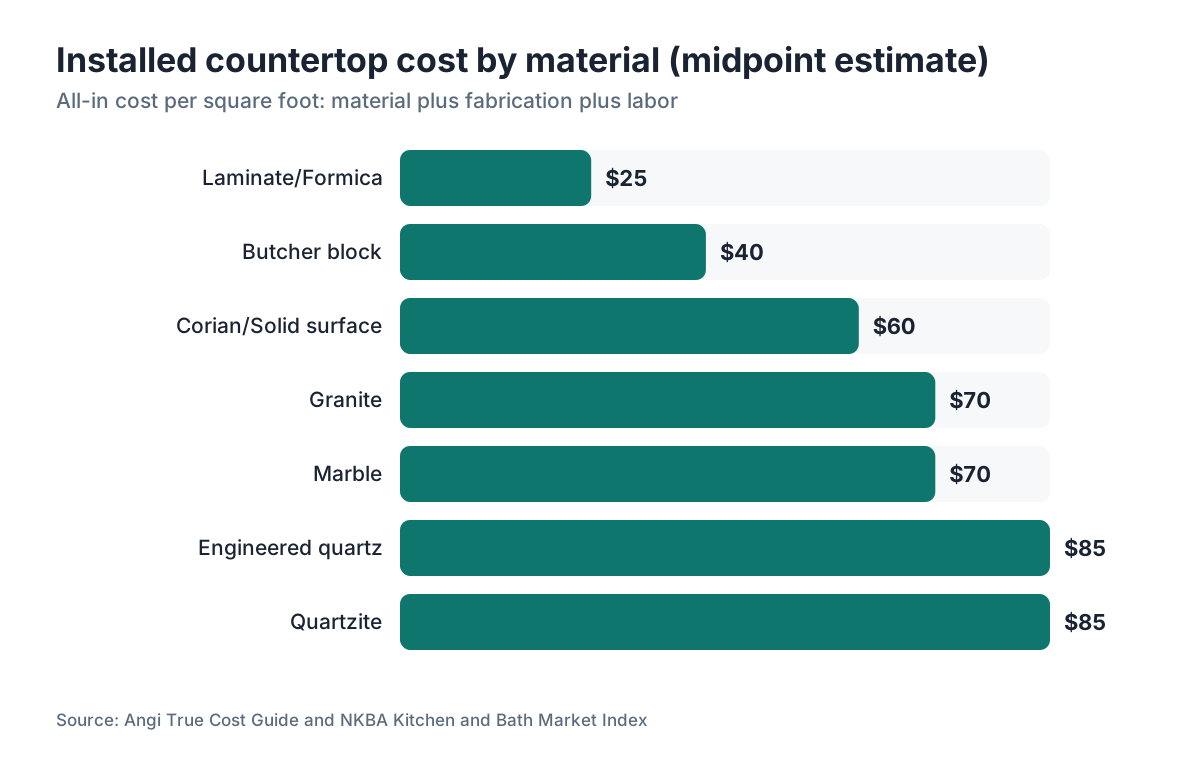
The table below shows approximate installed cost ranges for common materials, drawn from the National Kitchen and Bath Association market data and Remodeling Magazine's Cost vs. Value report. [1][10]
| Material | Low ($/sq ft installed) | High ($/sq ft installed) | Sealing needed? | DIY-friendly? |
|---|---|---|---|---|
| Granite | $40 | $100 | Usually yes | Difficult |
| Quartzite | $50 | $120 | Yes | Difficult |
| Marble | $40 | $100 | Yes | Difficult |
| Engineered quartz | $50 | $120 | No | Difficult |
| Butcher block | $20 | $60 | Yes (oil) | Moderate |
| Laminate/Formica | $10 | $40 | No | Yes |
| Corian/Solid surface | $35 | $85 | No | Moderate |
How do you maintain granite after it's installed?
Granite is durable but not indestructible. Acidic liquids (lemon juice, vinegar, tomato sauce) left on the surface long enough will etch some granites, especially lighter ones with more calcite. The fix is re-sealing and sometimes light polishing. Clean up spills fast.
Reseal frequency depends on the stone's porosity and the sealer. Run a water test: put a few drops on the granite and wait 10 to 15 minutes. If the water absorbs and darkens the stone, reseal. If it beads, you're fine. Most residential granite needs resealing every one to three years. [6]
For daily cleaning, mild dish soap and water works. Skip ammonia-based cleaners and anything abrasive. Stone-specific cleaners exist and work well, but they aren't necessary for routine wiping. Our how to clean stone countertops guide covers cleaning protocols in detail.
Chips at edges and corners happen, especially on a sharp detail like an ogee. Small chips fill with color-matched epoxy. Larger cracks or breaks need a stone restoration pro. Granite can be repaired, but it takes skill and the repair usually shows on close inspection.
For fabricators: leaving a one-page care card with the job is an underrated retention move. It cuts callbacks from customers who etched their stone with lemon juice and think you installed bad granite.
What should you ask a granite fabricator before signing the contract?
These questions save headaches.
What does the price per square foot include? Get a written breakdown: material, fabrication, edge profile, sink cutout, install, sealing, and tearout of the old countertop. Some shops include templating, others charge separately.
Where will the seams go? Ask for a seam drawing before fabrication begins. Good shops do this as a matter of course. Resistance is a red flag.
Can I see my slab before it's cut? Any reputable yard lets you. You're buying a natural material, and the slab you get may not match the display piece. Mark your preferred orientation and best face with chalk.
What warranty do you offer? Most fabricators warranty workmanship for one year. Material defects in natural stone are harder to warranty because you're buying a geological product.
How do you handle overages and shortages? If the job eats more stone than estimated, what's the process? Get it in writing.
Is silica exposure mitigation part of your process? OSHA's construction silica standard [4] requires it. A shop that never mentions it may be cutting corners on safety elsewhere too.
Fabricators quoting jobs can use SlabWise's quoting tools to produce itemized quotes fast, which gets the shop and the customer aligned on scope before any stone gets cut.
Frequently asked questions
How much does it cost to install granite countertops in a kitchen?
A typical kitchen with 40 square feet of counter runs $1,600 to $4,000 fully installed, based on the $40 to $100 per square foot range for material, fabrication, and labor. A simple layout with common stone lands at the low end. Premium stone, decorative edges, multiple cutouts, or complex shapes push toward the high end. Plumbing reconnection adds $150 to $400 on top.
How do you cut a granite countertop for a sink?
Mark the cutout from the sink's manufacturer template. Drill a plunge hole inside the line with a diamond hole saw. Cut the opening with a 4-inch angle grinder fitted with a continuous-rim diamond blade, keeping water flowing on the blade to control heat and silica dust. Support the cutout piece so it doesn't fall and crack the slab on the last inch. For undermount sinks, polish the exposed edge with diamond hand pads.
Can I install granite countertops myself?
Technically yes, but the failure modes are costly. Granite is heavy (18 to 20 lbs per square foot at 3 cm), inflexible, and unforgiving of measurement errors. A slab cracked in transport or a seam that won't close means expensive material loss. Most DIYers who've done it call it advanced difficulty. Hiring fabrication and install while doing your own demo and sealing is the better risk-adjusted approach for most homeowners.
How long does granite countertop installation take?
From signed contract to installed stone, two to four weeks is typical. Templating happens after cabinets are set, fabrication takes three to seven business days, and installation day takes two to four hours for a standard kitchen. Rush fabrication is available at some shops but usually adds 10 to 20 percent to the total. Plan for at least a month if you're coordinating a full kitchen remodel.
Do granite countertops need to be sealed after installation?
Most granite benefits from a penetrating sealer applied at installation and reapplied every one to three years, depending on porosity and use. Dense dark granites like Absolute Black absorb almost nothing and often skip sealer. Test by putting a few drops of water on the surface: if it absorbs and darkens the stone in 10 to 15 minutes, the stone needs sealing. If it beads up, you're fine.
How thick should granite countertops be?
Three centimeters (about 1.25 inches) is the residential standard in North America. It sits directly on cabinets without a substrate and has a substantial edge. Two-centimeter granite needs a plywood buildup layer, which often erases the price difference. For waterfall islands or thick mitered edges, fabricators laminate two 3 cm pieces into a 6 cm profile, a premium detail that adds roughly $50 to $150 per linear foot of mitered edge.
How do you remove old countertops before granite installation?
Turn off the water supply and disconnect the plumbing under the sink. Cut through any caulk or adhesive along the backsplash with a utility knife. Laminate tops are usually screwed up from inside the cabinet, so remove the screws and lift. Existing stone typically needs a pry bar and two people. Budget one to three hours for a typical kitchen demo. Hire it out for $100 to $300 or do it yourself to save the labor.
How many seams will my granite countertop have?
That depends on your layout and slab size. Most slabs are 9 to 10 feet long by 5 to 6 feet wide. Any run longer than the slab's usable length needs a seam. A typical L-shaped kitchen might have one or two seams. Your fabricator should provide a seam drawing before cutting begins. If eliminating seams matters, choose a stone with enough slab area to cover your longest run without joining.
Is granite cheaper than quartz countertops?
They're priced similarly in most markets. Granite typically runs $40 to $100 per square foot installed; engineered quartz is roughly $50 to $120. Entry-level granite can beat entry-level quartz on price. At the high end, exotic granite and premium quartz brands like Cambria are comparable. Granite needs sealing and is unique per slab. Quartz is uniform, warrantied, and sealer-free. The better choice depends on your priorities more than price.
What causes granite countertops to crack after installation?
The most common cause is unlevel cabinets. Granite doesn't flex, so a high spot in the cabinet run creates a bridge where the stone is unsupported, concentrating stress at seams and cutouts. Thermal shock from a very hot pan set directly on the surface can also crack stone, though that's less common than structural causes. Chips at sharp edge profiles are the most frequent visible damage and can often be repaired with color-matched epoxy.
How do you clean granite countertops daily?
Mild dish soap and warm water is all you need. Wipe with a soft cloth, rinse, and dry. Skip vinegar, lemon juice, and ammonia-based cleaners, since acids can etch some granites over time. Stone-specific pH-neutral cleaners work well but aren't necessary. Clean up spills from acidic foods (tomatoes, citrus, wine) promptly. See our guide on how to clean stone countertops for a full protocol.
Do cabinets need to be level before granite installation?
Yes, within about 1/8 inch end to end. The installer shims under the stone for minor variation, but a cabinet run with big high or low spots creates unsupported spans in the granite. Granite has no flex, so those unsupported areas concentrate stress and can crack the stone weeks or months after install, often at seams or near sink cutouts. Check level before the crew arrives, not after the epoxy cures.
What edge profile should I choose for granite countertops?
Eased (a slightly softened square) is the most popular and least expensive because it needs minimal polishing passes. Beveled and bullnose are mid-range in cost and effort. Ogee and dupont are the most labor-intensive and add $5 to $20 per linear foot depending on the shop. For kitchens with kids, avoid sharp square edges on islands. For a contemporary look, eased or mitered waterfall edges are the current favorite. Edge profile barely affects durability.
How do I choose a good granite fabricator?
Ask to see their shop or recent work in person. A tightly run shop with clean equipment and organized slab storage signals attention to detail. Get at least three quotes and compare what's included line by line, more than the total. Ask specifically about seam placement, whether you can view your slab before cutting, and how they handle silica dust. Check reviews for complaints about seam quality or cracked stone. A referral from a trusted contractor carries weight.
Sources
- Remodeling Magazine, Cost vs. Value Report 2024: Midrange kitchen remodel costs and countertop installation cost ranges cited in project cost benchmarks
- National Kitchen and Bath Association (NKBA), Kitchen and Bath Market Index: Material and fabrication cost ranges for stone countertops including granite by thickness and edge profile
- U.S. Geological Survey, National Minerals Information Center: Physical properties of granite including Mohs hardness (6 to 7) and density contributing to weight estimates
- U.S. Department of Labor, OSHA, 29 CFR 1926.1153 Respirable Crystalline Silica in Construction: OSHA construction silica standard requiring wet cutting methods or local exhaust ventilation and respiratory protection when cutting stone
- U.S. Department of Housing and Urban Development, Healthy Homes Program: Recommendation to use silicone caulk rather than grout at countertop-to-wall joints to accommodate movement and prevent cracking
- Natural Stone Institute, Care and Cleaning for Natural Stone Surfaces: Guidelines for sealing granite including water absorption test to determine sealing need and recommended resealing frequency of one to three years
- Natural Stone Institute, Dimension Stone Design Manual: Standard slab sizes (approximately 9 to 10 feet by 5 to 6 feet) and recommended waste factor of 15 to 20 percent for natural stone layouts
- Natural Stone Institute (formerly Marble Institute of America), fabrication business resources: Industry guidance on margin improvement opportunities through accurate quoting and nesting optimization in stone fabrication shops
- Natural Stone Institute, Care and Cleaning for Natural Stone Surfaces: Comparative care characteristics of marble versus granite, including marble's higher susceptibility to etching from acids
- Angi, True Cost Guide: Countertop Installation: Installed cost ranges for multiple countertop materials including laminate, butcher block, solid surface, and engineered quartz
- Centers for Disease Control and Prevention, NIOSH, Silica: Health risks from crystalline silica dust exposure during stone cutting, including silicosis, and the value of wet cutting methods
Last updated 2026-07-09