
TL;DR
- Countertop installation services cover templating, fabrication, delivery, and fitting of your new surface.
- Labor alone usually runs $300 to $1,700, driven by material, edge profile, cutouts, and region.
- Granite and quartz almost always need a pro.
- Laminate and butcher block can be DIY.
- Get at least three itemized quotes and confirm the installer carries current liability insurance.
What does countertop installation service actually include?
A full installation is four phases: template, fabrication, delivery, and set. Most people picture only the last one, the hour a crew spends setting a slab. The real work starts weeks earlier and mistakes made early cost the most.
During the template visit, a technician measures your cabinets, either with a digital laser tool or physical template strips. Those measurements drive the cut files. An error here shows up later as a gap at the wall or a slab that hits an appliance, and fixing it means recutting stone you already paid for.
Fabrication happens at the shop. The fabricator cuts the slab to your layout, profiles the edges, cuts the sink and cooktop openings, and polishes the exposed faces. Stone slabs sit in the shop one to three days, sometimes longer if the shop is backed up or the material is unusually hard.
Delivery and set is install day. The crew brings the finished pieces, sets them on the cabinets, checks level, runs silicone or epoxy at the seams and back wall, and drops in the sink if that's in scope. Here's the part people miss: most installers won't reconnect your plumbing. They'll pull the old sink and set the new basin, but you likely need a licensed plumber for the supply lines and drain.
Some shops price all four phases as one number. Others quote material and fabrication separately from install labor. Figure out which you're looking at before you compare bids, because the two structures aren't comparable on their face.
How much does countertop installation cost in 2025?
Labor for countertop installation runs $10 to $30 per square foot, but that number tells you almost nothing on its own. Total job cost swings hard on material, kitchen size, and where you live [1].
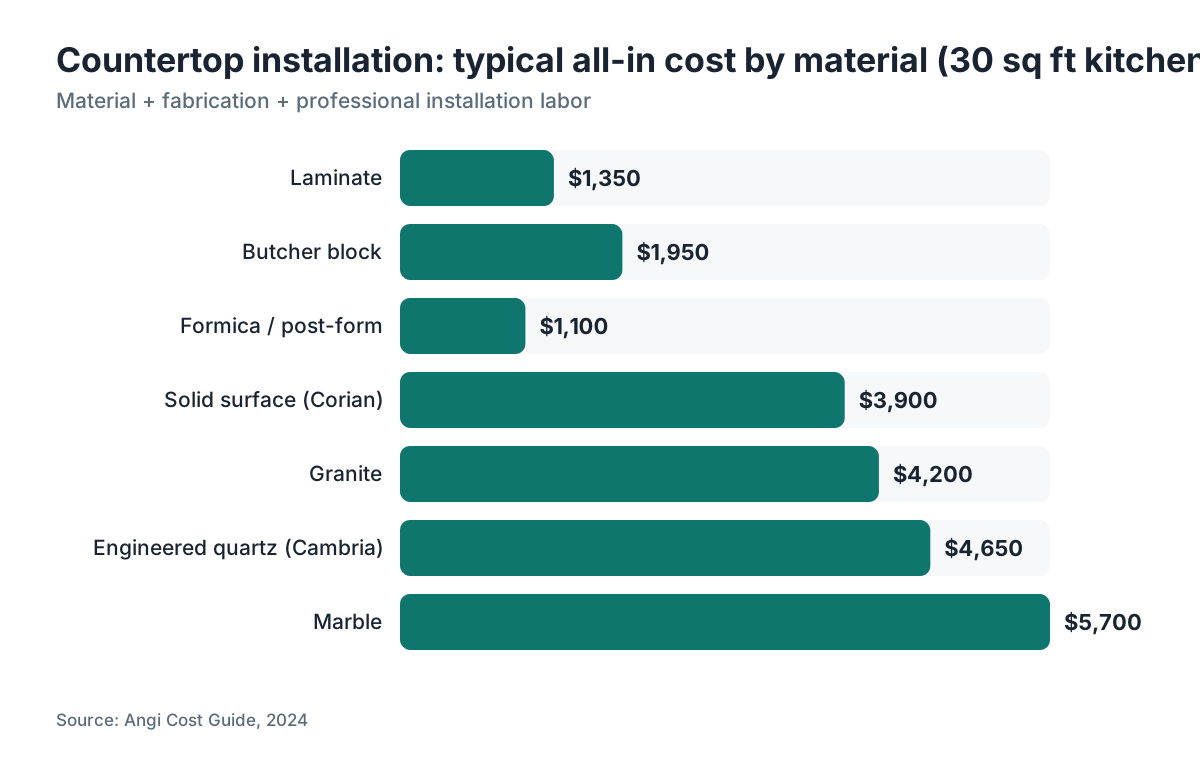
Here's a realistic all-in breakdown by material (material plus fabrication plus install) for a midsize kitchen of about 30 square feet:
| Material | Typical all-in range (30 sq ft) | Notes |
|---|---|---|
| Laminate (professional install) | $900, $1,800 | Lower material cost, fast shop time |
| Butcher block | $1,200, $2,700 | Can DIY; pro install saves seam/fit headaches |
| Formica / post-form | $700, $1,500 | Usually a box store package deal |
| Corian / solid surface | $2,400, $5,400 | Seams are heat-fused; requires certified installer |
| Granite | $2,400, $6,000 | Weight and seam placement matter a lot |
| Engineered quartz (Cambria, etc.) | $2,700, $6,600 | Manufacturer warranty often requires certified installer |
| Marble | $3,000, $8,400 | Fragile in transport; seam visibility is premium skill |
Those ranges come from national cost aggregators and Angi/HomeAdvisor surveys, which put average total project cost (more than labor) at roughly $2,000 to $4,500 for a standard kitchen [1][2]. Angi's cost guide pegs the 2024 national median for a full kitchen stone countertop project at about $3,200 [2].
Edge profiles add cost. A standard eased or beveled edge is usually included. Ogee, waterfall, mitered, or triple pencil edges add $10 to $30 per linear foot. Cutouts cost too: a basic undermount sink opening runs $100 to $200, and a cooktop cutout is similar [1].
Tearout is often not in the base quote. Ask outright. Expect $100 to $300 to remove and haul away old counters on a typical kitchen, more if the old surface is tile-on-drywall or an oversized island [12].
What factors drive the price up or down?
Weight is the biggest mechanical cost driver for stone. A 3 cm granite slab weighs about 13 pounds per square foot [3]. Moving, lifting, and setting that safely takes a crew of at least two, plus suction cups and slab carts. That crew time is real money.
Seams add labor and skill. An L-shaped kitchen with a return, or a big island, almost always needs at least one seam. The fabricator has to match the veining or grain, cut a clean butt joint, and fill it with color-matched epoxy. Bad seam work is the single most common complaint homeowners report after install, so this is not where you hire the cheapest bidder.
Access costs more than people expect. A second-floor kitchen with tight stair angles, a narrow doorway, or a heavy island piece can push labor up 20 to 40 percent because the crew needs more time and sometimes specialty rigging.
Region matters. Construction labor in San Francisco or New York runs roughly 30 to 50 percent higher than mid-size Midwest or Southern markets, based on Bureau of Labor Statistics wage data [4]. Rural areas can swing the other way: lower rates, but travel fees baked in.
Turnaround affects price indirectly. A shop booked four weeks out won't rush for standard money. Need a fast turn? Expect a premium, usually 10 to 20 percent over the standard quote.
Do you need a professional, or is DIY realistic?
The honest answer depends entirely on the material.
Laminate sheet goods and post-form laminate (the bullnose strips from a home center) are genuinely DIY-friendly. You need a circular saw with a fine-tooth blade, a level, a scribing tool, and some patience. The stakes are low because mistakes are cheap to redo.
Butcher block is another realistic DIY job. It's heavy but forgiving. You cut it with standard woodworking tools, sand down mistakes, and fasten it with construction adhesive and screws from below. The tricky parts are keeping it level and sealing the end grain right.
Natural stone and engineered quartz are a different animal. A full slab of 3 cm quartz for an average kitchen weighs 400 to 600 pounds. You can't maneuver that safely without proper equipment, and if you crack it, you've destroyed a $1,500 to $3,000 piece of material. Seam work in stone needs diamond tooling and polishing gear no homeowner owns. Most quartz makers, Cambria and Silestone included, require professional installation to keep the warranty valid [8].
Tile is the one stone-related surface that's genuinely DIY-accessible, if you have patience and a solid substrate. But tile counters have fallen out of fashion in most markets, so it's a footnote for most readers.
On the fence? Run one test: what does the replacement cost if this goes wrong? For laminate, it's low, so DIY makes sense. For a stone slab, the downside is big enough that hiring a pro is almost always the smarter money.
How do you find and vet countertop installation services?
There's no federal licensing requirement for countertop work. Some states require a contractor's license above a dollar threshold; others don't [5]. Credentials vary a lot, and a business card tells you nothing about skill.
Here's what to actually check.
Insurance first. Ask for a certificate of liability insurance and a workers' comp certificate. A slab that wrecks your cabinet, or a worker hurt in your kitchen, becomes your financial problem if the installer isn't covered. Call the insurer to confirm the policy is current.
References from recent, similar jobs. A shop that mostly does commercial work may not have the patience for a residential kitchen with odd angles. Ask for three references from residential installs in the last twelve months. Then call them.
Shop visit. Seeing how a shop handles slabs tells you a lot. Are slabs stored upright in proper A-frames? Is the place reasonably organized? A chaotic shop usually produces chaotic work. For a $4,000 project, that's a visit worth making.
Written quote with line items. A reputable shop itemizes material, fabrication, edge profile, cutout count, delivery, and installation. A number scrawled on a card is not a quote.
Scheduling clarity. Ask flat out: when is template, how long is shop time, when is install day? Vague answers usually mean an overbooked shop.
Fabricators tightening up their own quoting can use tools like SlabWise to generate accurate, itemized quotes fast, which also gives homeowners apples-to-apples comparisons across bids.
Google and Houzz reviews help but aren't enough alone. Pattern-match. If several reviewers mention seam problems or no-shows, that's signal. One bad review in fifty is noise.
What questions should you ask before signing a contract?
Ask these before you hand over a deposit.
Is the price fixed or an estimate? Some shops quote against a standard layout and charge more if template turns up complications. Know it upfront.
Who does the actual work? Some shops sub the install to independent crews. That's not automatically bad, but you should know, and the shop should stand behind the sub's work.
What's the seam placement policy? For a complex kitchen, ask to see the proposed layout showing seam locations before fabrication starts. Seams on an island shouldn't run perpendicular to the edge in a spot you stare at daily. NKBA guidelines call for placing seams over cabinet stiles whenever possible for support [10].
How are damages handled? Get it in writing. If they crack a slab in transport, who pays for the replacement material and eats the delay?
What does cleanup look like? Stone fabrication throws off silica dust. A good crew masks and vacuums thoroughly. This is about your health more than tidiness. OSHA has issued specific guidance on silica exposure from countertop fabrication [6].
What's the payment schedule? A fair structure is roughly 50 percent at contract, 40 percent at delivery, and 10 percent held until the punch list is done. Anyone demanding 100 percent upfront is a red flag.
How long does countertop installation take from start to finish?
From the day you sign, plan on two to four weeks before your counters go in, sometimes longer. The timeline surprises most homeowners.
Template day usually lands within a week of signing, once the cabinets are confirmed level and set. Template itself takes one to two hours for an average kitchen.
Shop fabrication is typically three to seven business days for standard materials. Custom stone with unusual edges or tricky seam work can run ten to fourteen days. This is where most delays hide, especially in spring renovation season when shops are fully booked.
Delivery and install takes half a day to a full day for an average kitchen. Big or complex layouts with an island plus a buffet or bar can spill into a second day.
Need a working kitchen fast? Laminate or a prefab granite slab from a big-box store can cut the whole timeline to under a week. Custom slab work can't be rushed without paying for it.
The practical takeaway: don't schedule a kitchen install right before a major life event, because a kitchen down for two weeks can wreck your plans.
What permits or inspections are required for countertop installation?
In most places, replacing countertops needs no building permit. It's cosmetic work that doesn't touch structural, electrical, or plumbing systems [5].
There are exceptions. Adding a new sink location that needs fresh plumbing rough-in almost certainly requires a permit. Moving a gas cooktop, same story. The countertop itself isn't the trigger; the work around it is.
A few municipalities with aggressive building departments require permits for any work over a dollar threshold, sometimes as low as $1,000. Call your local building department if you're unsure. These rules are set at the city or county level, not by any national standard [5].
HOA rules are a separate question from permits. Some HOAs restrict material or color, especially in condos with shared structural elements. Read your CC&Rs before you order.
Silica dust is where real regulatory requirements hit the fabricator side. OSHA's silica rule (29 CFR 1926.1153) requires construction employers to limit worker exposure to respirable crystalline silica to "50 micrograms per cubic meter of air as an 8-hour time-weighted average" [6]. This matters to you because any shop cutting in your home (rare, usually just trimming) should be using wet cutting or a HEPA vacuum system.
How do countertop installation services differ by material?
Each material installs differently, and knowing the basics helps you ask smarter questions.
Natural stone (granite, marble, quartzite, soapstone) goes in as fabricated pieces, bonded to the cabinet with silicone and seamed with color-matched epoxy. Heavy pieces sometimes get mechanically fastened too. Most natural stones need sealing after install, so read up on care for your specific material: how to clean quartzite countertops, soapstone, and stone surfaces generally, so you're ready for day-one maintenance.
Engineered quartz installs the same way as natural stone. The difference: quartz is nonporous and never needs sealing, but it's sensitive to heat and to some adhesives that can stain or discolor it.
Solid surface (Corian and competitors) is seam-welded with a proprietary adhesive so the joint is nearly invisible. This takes a certified installer trained by the manufacturer [9]. You can't fake this skill with general stone experience.
Laminate countertops come as post-form (one piece with an integrated backsplash, cut to length) or flat sheet applied over a particleboard substrate. Professional install gets you tight end-cap miter joints and a correct scribe fit at the wall.
For kitchen countertops broadly, let the material drive the installer choice, not the reverse. Don't hire a stone shop and ask them to also do your laminate peninsula. Get the right specialist for each surface.
What are the most common installation mistakes and how do you avoid them?
Read enough fabricator forums, contractor complaint boards, and homeowner reviews and the same problems keep surfacing.
Cabinets not level before template. Countertops can only be shimmed so far. If cabinets are more than 1/8 inch out of level across a run, the counter will rock or leave visible gaps at the wall. Get a carpenter to confirm and adjust cabinet level before the template appointment, not after.
Poor seam placement. Seams should fall on cabinet stiles when possible, not over open spans or in the middle of a run you look at every day [10]. A good fabricator proposes the layout. A great one explains the tradeoffs.
Not enough overhang support. A standard 1.5 inch overhang off the cabinet face is self-supporting. Stone island overhangs past 6 to 8 inches usually need corbels or steel rod supports underneath [7]. An installer who skips this is leaving a crack risk on your floor.
Rushed seam cure. Epoxy seam filler needs time to cure before you load the counter. Crews that are behind sometimes rush it. If a seam looks or feels soft at the end of install day, push back.
No talk of sealing. Stone leaves the shop sealed, but that seal wears. An installer who hands over the keys without a word about maintenance hasn't finished the job. At minimum, ask what sealer they used and when to reapply.
All of this is avoidable with a good fabricator and an informed homeowner. Many problems start at the quote. Fabricators using modern quoting software (like SlabWise) can produce detailed, itemized proposals that surface scope gaps before the job starts, which protects both sides.
How do you compare quotes from different countertop installers?
Three quotes is the standard advice, and it's right, but only if the scopes match.
Start by confirming every quote covers the same square footage, the same edge profile, the same number and type of cutouts, and whether tearout and haul-away are included. A $500 gap between two quotes often vanishes once you realize one includes removal and the other doesn't.
Material grade matters for stone. Granite and marble are graded (levels 1 through 4 or higher, depending on the supplier) by rarity, origin, and visual complexity [11]. A Level 1 granite quote isn't comparable to a Level 3 quote even if the edge and install terms are identical.
Fabrication quality is hard to read in a quote but obvious in finished work. Ask each bidder for photos of recent installs or, better, a visit to a completed kitchen. Look at seam quality, edge consistency, and how tightly the back edge meets the wall.
Warranty terms differ. Some shops give a one-year labor warranty. Others put nothing in writing. Ask.
The lowest bid isn't always wrong, but it deserves the most scrutiny. Shops that win on price are usually cutting something: thinner material, fewer crew on install day, faster shop time, or lower-grade stone. Find out which.
For a countertop installation project, the single most useful number to compare is all-in price per installed square foot. It normalizes kitchen size and lets you compare bids even when the kitchens differ.
Frequently asked questions
How much does it cost to install a kitchen countertop per square foot?
Labor alone runs $10 to $30 per square foot for most materials. All-in cost including material and fabrication ranges from about $25 per square foot for laminate to $100 or more for premium marble. For a typical 30-square-foot kitchen, total project cost usually lands between $2,000 and $4,500, with the national median around $3,200 in 2024.
How long does countertop installation take?
From contract signing to install day, expect two to four weeks for custom stone work. Template takes one to two hours. Shop fabrication is typically three to seven business days. Install day itself runs four to eight hours for an average kitchen. Laminate or prefab granite can be installed in under a week if the product is in stock.
Do I need a permit to replace my kitchen countertops?
In most jurisdictions, replacing countertops is cosmetic work and needs no permit. Exceptions arise if the project involves new plumbing lines, gas rough-in, or electrical work. Some municipalities trigger permits at a dollar threshold. Always check with your local building department if you're unsure, since rules are set at the city or county level.
Can I install stone countertops myself?
It's strongly inadvisable. A full stone slab for an average kitchen weighs 400 to 600 pounds and requires specialized lifting equipment. Seam work needs diamond tooling and polishing equipment. Most quartz makers like Cambria also require professional installation to keep the warranty valid. The replacement cost if a slab cracks far exceeds any labor savings.
What is included in a countertop installation quote?
A complete quote itemizes material cost, fabrication (edge profiling, sink and cooktop cutouts), delivery, and installation labor. Ask specifically whether removal and haul-away of old countertops is included, and whether plumbing disconnection and reconnection are in scope or need a separate licensed plumber.
How do I find a reputable countertop installer near me?
Start with Google and Houzz reviews, looking for pattern issues across multiple reviews. Ask for a certificate of liability insurance and workers' comp before any work starts. Visit the shop if you can. Get at least three written, itemized quotes. Ask for references from recent residential kitchen installs and actually call them.
What edge profiles are available and how much do they cost extra?
Standard eased, beveled, or bullnose edges are usually included in the base quote. Decorative profiles like ogee, waterfall, mitered, or triple pencil typically add $10 to $30 per linear foot. A standard kitchen has 20 to 30 linear feet of exposed edge, so profile upgrades can add $200 to $900 to the total project cost.
How many seams will my countertop have?
Seam count depends on layout and slab size. Most residential slabs are 9 to 10 feet long. An L-shaped kitchen almost always needs at least one seam. Islands over 10 feet typically need a seam. Ask to see the proposed seam layout diagram before fabrication starts. Good placement puts seams over cabinet stiles, not over open spans or in high-visibility spots.
Does countertop installation include sink reconnection?
Most fabricators disconnect the old sink before removal and set the new basin in place, but they don't reconnect supply lines or the drain. You'll need a licensed plumber unless you're comfortable doing it yourself. Clarify this scope explicitly before signing, since plumbing reconnect adds $150 to $400 to the overall project cost.
What is a template visit and why does it matter?
A template visit is when the fabricator measures your cabinet layout precisely, either with a digital laser system or physical template strips. These measurements drive the cut files used in the shop. Errors at the template stage cause gaps, misaligned cutouts, or pieces that don't fit around appliances. Never let a fabricator skip template and quote off rough measurements.
How do I prepare my kitchen before the countertop installers arrive?
Clear everything off existing counters and empty upper cabinets near the work area, since vibration and dust travel. Confirm your cabinets are level; anything more than 1/8 inch out across a run needs correcting before install day. Clear the path the crew uses to carry slabs through the house of furniture and floor rugs.
What warranty should I expect from a countertop installation service?
Labor warranties vary widely. Reputable shops offer one year on workmanship. Material warranties depend on the product: engineered quartz brands like Cambria carry lifetime residential warranties on the material itself, contingent on professional installation. Natural stone has no material warranty since it's a natural product. Get any labor warranty commitment in writing before the project starts.
Is there a health risk from countertop installation in my home?
Silica dust from cutting stone is a real respiratory hazard. OSHA's silica standard (29 CFR 1926.1153) limits worker exposure to 50 micrograms per cubic meter as an eight-hour time-weighted average. Shops do the vast majority of cutting off-site, which minimizes household exposure. If any in-home cutting is needed, make sure the crew uses wet cutting or a HEPA vacuum, and stay out of the room.
How do countertop costs differ between a kitchen and a bathroom?
Bathroom vanity tops are smaller, typically 5 to 15 square feet, which lowers material cost but can raise cost per square foot because minimum charges apply. Many shops have a minimum fabrication fee of $300 to $500 regardless of size. Prefab vanity tops with integrated sinks are often the most economical bathroom option, while custom kitchen counters justify the full fabrication investment.
Sources
- HomeAdvisor / Angi, Countertop Installation Cost Guide: Labor for countertop installation typically runs $10 to $30 per square foot; cutout fees of $100 to $200 each; edge upgrades $10 to $30 per linear foot.
- Angi, Cost to Install Countertops (2024 national median): National median total project cost for a full kitchen stone countertop project was around $3,200 in 2024.
- Natural Stone Institute (formerly MIA+BSI), Dimension Stone Design Manual: 3 cm granite slab weighs approximately 13 pounds per square foot.
- U.S. Bureau of Labor Statistics, Occupational Employment and Wage Statistics, Construction trades: Construction labor wages vary 30 to 50 percent between high-cost metro areas (San Francisco, New York) and mid-size Midwest or Southern markets.
- National Conference of State Legislatures, Contractor Licensing by State: Countertop installation licensing requirements are set at the state and local level with no federal standard; most jurisdictions do not require a permit for cosmetic countertop replacement.
- OSHA, Respirable Crystalline Silica Standard for Construction (29 CFR 1926.1153): OSHA requires employers in construction to limit worker exposure to respirable crystalline silica to 50 micrograms per cubic meter as an eight-hour time-weighted average.
- Natural Stone Institute, Countertop Overhang Support Guidelines: Stone countertop overhangs beyond 6 to 8 inches typically require corbels or embedded steel rod support to prevent cracking.
- Cambria, Warranty and Professional Installation Requirements: Cambria's residential warranty requires professional installation; DIY installation voids the warranty.
- Corian Design, Fabricator Certification Program: Solid surface seam-welding requires certified installer training; unskilled adhesive application produces visible and structurally weak joints.
- National Kitchen and Bath Association (NKBA), Kitchen Design Guidelines: NKBA design guidelines specify that countertop seams should be positioned over cabinet stiles whenever possible to maximize structural support.
- U.S. Geological Survey, National Minerals Information Center, Dimension Stone: Dimension stone (granite, marble, limestone) grades and classification are based on geological origin and physical properties; price grades used by suppliers reflect rarity and visual complexity.
- HomeAdvisor / Angi, Countertop Removal Cost Guide: Countertop removal and haul-away typically costs $100 to $300 for a standard kitchen.
Last updated 2026-07-09