TL;DR
- Countertop installation in Chicago runs $40 to $200+ per square foot fully installed, depending on material.
- Granite and quartz dominate the mid-range at $60, $130 installed.
- The full process, from template to installation day, takes 1 to 3 weeks.
- Chicago labor rates, condo elevator rules, and the age of your cabinets add small but real costs most homeowners miss.
What does countertop installation cost in Chicago?
The honest range is wide: $40 to $220 per square foot, fully installed, depending on material, edge profile, cutouts, and which shop you hire. That range is not a dodge. A laminate kitchen runs closer to $40, $55 installed. A basic prefab granite from a big-box store might land at $60, $80. A custom slab of quartzite or exotic marble, cut and installed by a small Chicago fabricator, can clear $150, $200 before you add a waterfall edge or an apron-front cutout.
Most Chicago kitchens fall in a narrow band by house type. Older bungalows carry 40 to 60 square feet of counter. Gut-renovated open-plan kitchens in Lincoln Park or Wicker Park often run 80 to 120 square feet. Do the math on those ranges and you see why countertop budgets swing from $2,400 to $24,000+ in the same size room.
Material is the biggest lever. After that, the real cost drivers are specialty edge profiles (ogee, waterfall, or full bullnose runs $15, $40 per linear foot over a standard eased edge), cutouts for farmhouse sinks ($50, $150 each depending on difficulty), seam placement, and whether your existing cabinets are plumb and level. Out-of-level cabinets mean extra shimming and sometimes scribe work. Chicago's older housing stock, mostly pre-1960 construction, has a lot of cabinets that are close but not perfect.
Labor in the Chicago metro trades at a premium over national averages. The Bureau of Labor Statistics tracks wages for tile and stone installers nationally at a mean of around $24, $28 per hour, but Chicago union and prevailing-wage jobs in commercial settings run higher [1]. Residential shops bundle labor into their square-foot price rather than billing it separately, so you won't see a line item labeled "labor" unless you're doing a commercial project under a general contractor.
The next section breaks the numbers down material by material.
How do Chicago countertop prices compare by material?
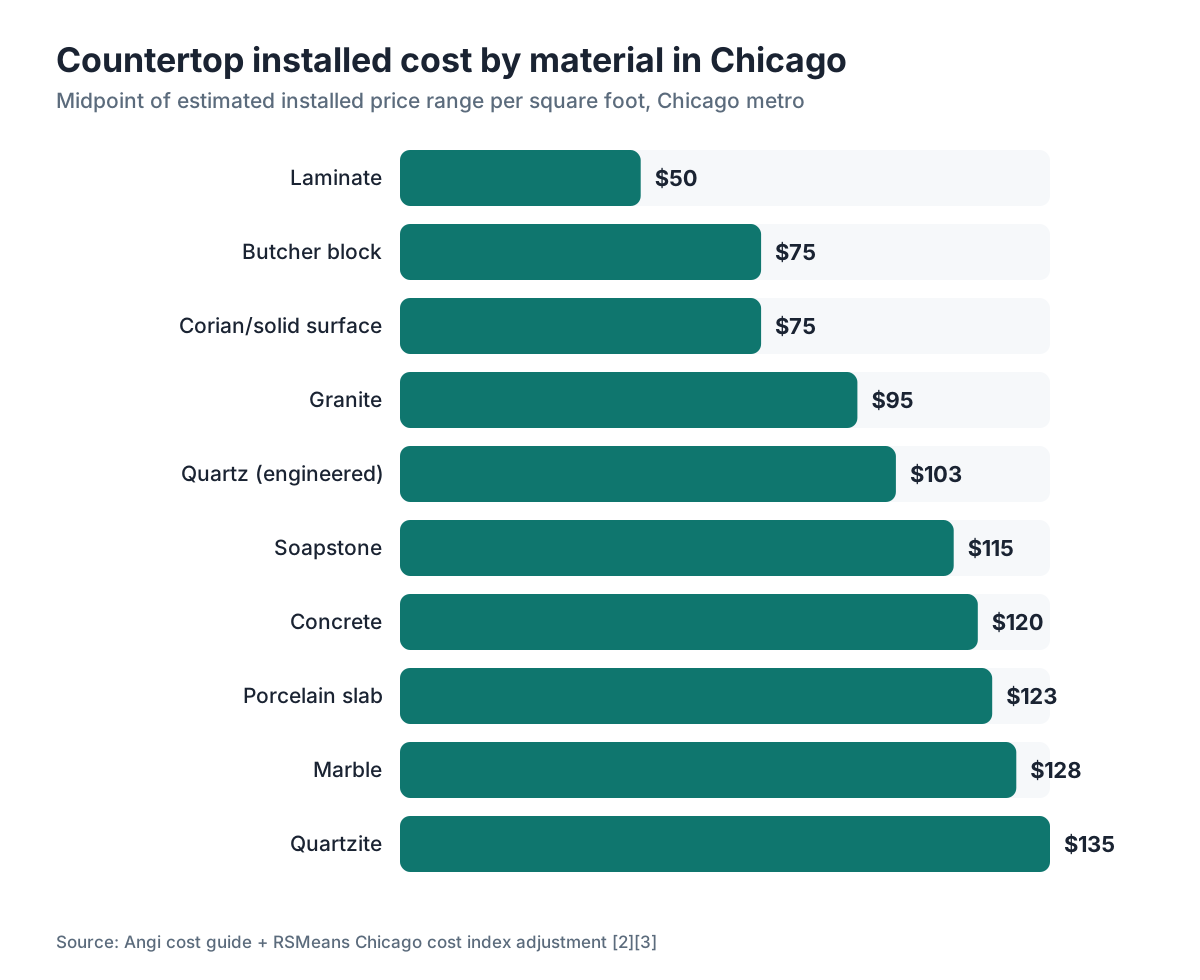
Here is a realistic installed-cost table for the Chicago market. These ranges cross-reference publicly available national averages from HomeAdvisor/Angi and RSMeans data with the local cost adjustment. Chicago's construction cost index runs roughly 10 to 15% above the national baseline [2][3].
| Material | Installed cost per sq ft (Chicago est.) | Typical durability notes |
|---|---|---|
| Laminate (Formica, etc.) | $40, $60 | Scratches, but fast and budget-friendly |
| Butcher block | $50, $100 | Needs oiling; looks great in bungalow kitchens |
| Quartz (engineered) | $75, $130 | No sealing needed; consistent pattern |
| Granite | $65, $125 | Natural variation; annual sealing recommended |
| Marble | $80, $175 | Etches with acid; better for baths than kitchens |
| Quartzite | $90, $180 | Harder than marble; often confused with it |
| Soapstone | $80, $150 | Develops patina; popular in historic Chicago homes |
| Porcelain slab | $85, $160 | Very hard; tricky to cut and edge |
| Concrete | $90, $150 | Custom color and form; needs sealing |
| Corian/solid surface | $55, $95 | Repairable; smooth look for complex shapes |
Quartz and granite together account for most countertop installations in the US. The Natural Stone Institute reported in 2023 that engineered quartz held the largest share of the countertop fabrication market [4]. In Chicago, granite stays popular because the city has a long history of stone importation through its port and rail connections, so local fabricators have competitive slab access.
For budget projects, laminate countertops and Formica countertops still get installed in large volumes across Chicago's rental rehab market. For luxury renovations, marble countertops and Cambria countertops are the common upgrades in higher-end North Shore and Gold Coast kitchens.
What is the countertop installation process in Chicago?
The process has four stages: measure, template, fabricate, install. Knowing what happens at each stage keeps you from being surprised by delays or extra charges.
Measure and template. After you sign a contract and pay a deposit (typically 50%), the shop schedules a template visit. Most Chicago shops use digital templating now, with a Proliner or similar laser device. The technician maps every wall, window, and appliance opening precisely. The visit takes 30 to 90 minutes for a kitchen. That template data goes straight into the shop's CAD software for cutting. Old-school shops still use the wood strip or cardboard method, which works fine but takes longer and leaves more room for error on irregular walls.
Fabrication. After templating, the shop runs the slab through a CNC bridge saw and waterjet cutter for quartz and most granite, then edges on a separate machine. This takes 3 to 7 business days for most jobs. Busy seasons in Chicago (spring and fall remodel surges) can push that to 10 to 14 days. Exotic slabs or complex layouts add time.
Delivery and installation. Installation day is usually a two- or three-person crew. They carry the slabs up to your kitchen, set them on the cabinets, make final cuts for fit, apply adhesive or silicone to the cabinet rails, and drop the slabs into place. Seams get joined with color-matched epoxy. Sink cutouts get polished. A standard kitchen takes 2 to 5 hours. Larger kitchens with islands, butler's pantries, and bathroom vanities can take a full day.
Post-installation. Most shops do a final polish and cleanup before they leave. For natural stone, they often apply a factory sealant. You'll be told not to use the sink for a few hours while caulk and adhesive cure. The caulk line along the backsplash is the fabricator's work, so make sure it's clean before you sign off. If a tile backsplash goes in afterward, let the countertop cure at least 24 hours first.
For how this compares to the national process, see countertop installation for the baseline. The Chicago-specific differences are timeline (seasonal backlogs), parking logistics for the delivery truck, and the age of your cabinets.
How long does countertop installation take in Chicago?
From contract signing to installation day, plan on 2 to 4 weeks for most Chicago shops during normal periods. Here is how that breaks down.
Template scheduling: 3 to 7 days after contract signing. Some shops template within 48 hours if they're not busy.
Fabrication after template: 5 to 10 business days is standard. Quartz sometimes ships pre-cut from a regional distribution center (Cambria, MSI, and Silestone all have Midwest distribution), which shortens this. Custom granite or unusual stone takes longer because the shop is doing more of the cutting itself.
Installation scheduling: usually within 3 to 5 days after fabrication is complete.
A realistic minimum, if everything moves fast, is about 10 to 14 calendar days. Realistic average is 3 weeks. If you're in the spring remodel rush (March through June in Chicago) or racing a holiday deadline, add a week or two. The shops booked the longest are often the best ones. A two-week lead time in April is a sign of a good shop, not a problem.
Chicago homeowners underestimate one thing above all: the cabinet-readiness requirement. Most fabricators will not template until your cabinets are fully installed and level. If cabinet installation runs late, your countertop timeline slides with it. The countertop schedule is a dependency, not a parallel track.
Do you need a permit for countertop installation in Chicago?
In most cases, no. Countertop replacement alone, even inside a full kitchen remodel, typically does not require a building permit in Chicago if you're replacing like-for-like and not moving plumbing or gas lines. The City of Chicago Department of Buildings publishes a list of work that requires permits, and straightforward countertop replacement falls under ordinary repair and maintenance [5].
The wrinkle comes when the countertop is part of a bigger remodel. Relocating a sink drain, adding a gas line for a range, or structurally altering cabinets or walls all trigger permits. The countertop itself doesn't require one, but the associated work might. Chicago manages permits through the Department of Buildings' online system, and fees for a standard kitchen remodel run $50, $200 depending on declared project value [5].
Condo owners have an extra layer to think about. Many HOAs and condo associations require board approval before any renovation, and some buildings set allowable working hours for contractors. If you're in a high-rise in Streeterville or a vintage building in Andersonville, read your condo docs before you book the installation crew. Elevator reservations and loading dock scheduling are real logistics that can add a day to your timeline.
How do you find and vet a countertop fabricator in Chicago?
Chicago has dozens of countertop fabricators, from large operations in the western suburbs to small custom shops in Pilsen and Bridgeport. Vetting them takes more than scanning Google reviews.
Look for shops that do their own fabrication, more than installation. A shop with its own CNC saw and polishing equipment controls quality and timeline. A company that outsources cutting to another shop controls neither. Ask directly: do you fabricate in-house?
Check the Illinois Department of Financial and Professional Regulation's license lookup to confirm the contractor is registered and has no active disciplinary actions [6]. Illinois doesn't require a specialty license for stone installation itself, but any plumbing work (reconnecting your sink) requires a licensed plumber. Many shops include plumbing reconnection in their installation package. Ask whether the person doing it is licensed.
Get at least three quotes on the same scope: same material, same edge, same number of cutouts. If one quote is 40% lower than the others, ask what's different. Sometimes it's a thinner slab (2cm vs 3cm), sometimes it's a cheaper material grade, sometimes it's a shop cutting corners on waste and hoping the slab lays out perfectly. It usually doesn't.
Ask to see the slab yard or a current project. Reputable Chicago shops will let you visit. You can see how they store stone, how their cuts look, and whether the shop is organized. A chaotic shop produces chaotic results.
For fabricators sharpening their own quoting and nesting process, tools like SlabWise help shops calculate material yield and generate accurate quotes before they touch a slab. Fewer surprises for the customer, fewer wasted dollars for the shop.
Read the contract carefully. Look for what happens if the slab cracks during installation, who is responsible for damage to cabinets, and what the warranty covers. A quality shop stands behind installation defects for at least one year.
What questions should you ask a Chicago countertop installer before signing?
These are the questions that actually separate good shops from bad ones.
Do you fabricate in-house? (As above, this matters.)
What thickness slab do you use? 3cm is standard for kitchens and doesn't need a plywood substrate. 2cm can work but needs support. Some shops switch to 2cm without telling you because it's cheaper.
How do you handle seams? Ask where the seams fall on your specific layout. A good fabricator plans seams away from the most visible areas and at natural breaks like corners. Ask to see a drawing of the layout before you sign.
What's included in the price? Specifically: templating, haul-away of old countertops, sink disconnection and reconnection, faucet reconnection, and silicone caulking at the backsplash. These are sometimes included, sometimes not. Get it in writing.
What's your schedule right now? If a shop promises installation in four days and everyone else says three weeks, something is off. Either they're not busy for a reason, or they're overpromising.
What happens if my slab has a vein or movement I don't like? For natural stone, go to the shop and approve the specific slab before it's cut. Some shops do this automatically. Others skip it. Make it a condition of the contract.
Do you carry liability insurance? Ask for a certificate. This protects you if a crew member drops a slab on your hardwood floor or cracks a tile.
What are common problems with countertop installation in Chicago homes?
Chicago's housing stock creates specific challenges that newer-construction markets don't have.
Out-of-square and out-of-level kitchens. The bungalow belt and two-flats that make up huge swaths of the North Side and South Side went up mostly between 1900 and 1950. These buildings settle. Walls are not plumb, floors are not level, and cabinet runs can deviate a quarter inch or more over 10 feet. A good fabricator accounts for this in the template. A lazy one doesn't, and you get a counter that won't sit flat or a gap at the wall that needs a thick bead of caulk to hide.
Plumbing clearance. In older Chicago kitchens, supply lines and drain pipes often sit in positions that conflict with modern sink sizes. If you're switching from a top-mount to an undermount sink as part of the project, factor in a plumbing adjustment.
Building access. Chicago high-rises and courtyard apartments have freight elevator rules, loading dock hours, and sometimes restrictions on when subs can work. A slab delivery crew that shows up without a freight elevator reservation gets sent home, and you pay a rescheduling fee.
Seam visibility. Open-plan kitchens with long island runs almost always need at least one seam. In a light-colored quartz or marble, seams can be very visible. Ask your fabricator to show you the seam location on paper before fabrication, and for natural stone, see the two slab sections bookmatched so you know what you're getting.
Slab damage during transport. Chicago winters are real. Stone transport in freezing temperatures, especially across pothole-laden streets, can stress slabs. Reputable shops use padded A-frames and climate-managed trucks. Ask about it.
For granite countertops, the most common post-installation issue in Chicago is deferred sealing. Granite should be sealed every 1 to 3 years depending on porosity. Many homeowners skip it because no one reminded them.
What materials are most popular for Chicago kitchen countertops?
Quartz and granite dominate Chicago kitchens, with quartz gaining share steadily over the last decade. The reasons are practical. Engineered quartz doesn't need sealing, holds up to Chicago's hard water without the etching you get with marble, and comes in consistent colors that match the gray and white cabinet palettes running through current renovation taste.
Granite is still heavily installed, especially in mid-range renovations and in neighborhoods where sellers want a durable, well-understood material for resale appeal. The variety is enormous. Some of the steadiest sellers in Chicago fabricator yards are Santa Cecilia, Ubatuba, and Bianco Romano, all of which have moved for 15+ years.
Butcher block has a niche following, especially in Pilsen, Logan Square, and other neighborhoods with a craft-food culture. Butcher block countertops look right in Chicago's older kitchens, but they need oiling and are a bad idea next to a sink unless you're committed to the maintenance.
Soapstone is genuinely popular in Chicago's historic preservation community. Its dark color and soapy feel fit pre-war kitchens better than most modern materials, and it develops a patina that people either love or hate. If you're interested, see how to clean soapstone countertops before committing, because the maintenance differs from other stone.
Concrete has a smaller but loyal following in Chicago's design-forward market. The best concrete fabricators in the city do beautiful work, but the material asks for more care than most people expect, and concrete cracks more easily in Chicago's freeze-thaw climate if the substrate or support isn't perfect.
For kitchen countertops broadly, the material choice should start with how you actually use the kitchen, not with what's trending in showrooms.
How do you prepare your kitchen for countertop installation day?
Good prep on your end makes installation faster and cuts the chance of damage to your home.
Clear the counters completely. All appliances, dishes, small appliances, everything. The crew needs to set down tools, move slabs, and work without obstacles.
Empty the cabinets directly under the countertop run. Crews sometimes shim from underneath, and a cabinet full of pots creates a problem. The top one or two shelves matter most.
Handle the appliances or confirm who is doing it. Your dishwasher connection, garbage disposal, and faucet should be disconnected before the crew arrives, or confirm the fabricator's crew includes this. Same with the water shutoff under the sink.
Mark or protect your floors. Slabs are heavy, and crews sometimes lay corner protectors or moving blankets on hardwood. Ask in advance whether they bring floor protection or whether you should put something down.
Plan for dust. Cutting or trimming stone in the field creates silica dust, and that's a real health hazard. The Occupational Safety and Health Administration sets a permissible exposure limit of 50 micrograms per cubic meter as an 8-hour time-weighted average for respirable crystalline silica [7]. Good shops use wet-cutting methods to suppress dust. If your fabricator is doing any field cuts, ask that windows be open and keep kids and pets out of the room.
Arrange parking. Tell the crew where a large cargo van or flatbed truck can park. In Chicago neighborhoods with permit parking and narrow streets, this matters. If they can't park close, expect the job to take longer.
How do you maintain stone or engineered countertops after Chicago installation?
The most common mistake after a new countertop installation is doing nothing until a problem appears. A few simple habits extend the life of almost any surface.
For natural stone (granite, marble, quartzite, soapstone), sealing is the main task. Granite should be sealed with a penetrating impregnator sealer every 1 to 3 years depending on porosity. The water test tells you when. Pour a tablespoon of water on the surface. If it beads, the sealer is working. If it soaks in and darkens the stone within a few minutes, reseal. The Natural Stone Institute (which absorbed the former Marble Institute of America) recommends testing annually [4].
For daily cleaning, mild dish soap and water works for granite and quartz. Skip harsh cleaners, bleach, and anything with high acid or alkali content on natural stone. For specifics, see how to clean stone countertops.
Quartzite gets confused with engineered quartz, but it's natural stone and needs sealing like granite. See how to clean quartzite countertops for the details, because the cleaning approach differs from granite.
Chicago's hard water leaves calcium deposits on stone over time, especially around the sink. A diluted solution of water and a few drops of dish soap handles most daily residue. For stubborn hard water stains, a stone-safe hard water remover (not vinegar, which etches marble and limestone) works well.
Engineered quartz and solid surfaces like Corian countertops ask for less. No sealing. Keep hot pans off the surface (heat straight from the stove can damage the resin binders in quartz) and use a trivet.
For shops quoting large multi-surface projects, software that tracks material specs and maintenance notes per job, like SlabWise's job tracking, keeps your crew from handing customers the wrong care instructions for the wrong surface.
What should your countertop installation contract include?
A signed contract protects you if anything goes wrong. At minimum, it should spell out the following.
Exact material: manufacturer, product name, color, thickness, and finish (polished, honed, leathered). Vague descriptions like "white quartz" let a shop substitute cheaper material.
Measured square footage: the templated square footage, not an estimate. After templating, your shop knows the exact number. If the contract still shows an estimate after the template visit, ask why.
Edge profile: named specifically. "Eased" and "beveled" are different. "Ogee" and "triple pencil" are different. Write it down.
Cutouts: number and type. Sink cutout (undermount or top-mount), faucet holes, soap dispenser, stove cutout if applicable.
Lead time and installation date: a specific date, or at minimum a committed week, not "we'll call you."
Payment schedule: most reputable Chicago shops ask for 50% deposit on signing and the balance on installation day, not before. Be wary of anyone asking for 100% upfront.
Warranty: what's covered and for how long. Workmanship defects, seam separation, and cracking from improper support should all be covered for at least one year.
Damage clause: what happens if the slab cracks during fabrication or installation. A good shop replaces it at no charge. A bad contract leaves this ambiguous.
Scope of adjacent work: haul-away of old countertops, sink reconnection, caulking. If it isn't written in the contract, assume it isn't included.
Frequently asked questions
How much does countertop installation cost in Chicago?
Installed countertop costs in Chicago run $40, $60 per square foot for laminate, $65, $130 for granite or quartz, and $90, $200+ for quartzite, marble, or exotic stone. A typical 50-square-foot Chicago kitchen installed in quartz runs $3,750, $6,500. Labor, edge profiles, sink cutouts, and haul-away of old material all move the final number.
How long does the whole countertop process take from contract to installation?
Plan on 2 to 4 weeks from signing to installation day in Chicago under normal conditions. Template scheduling takes 3 to 7 days, fabrication takes 5 to 10 business days, and installation is usually booked within a few days of fabrication. During spring remodel season (March through June), add another 1 to 2 weeks. Minimum realistic turnaround is about 10 to 14 calendar days.
Do I need a permit to replace countertops in Chicago?
No permit is required for straight countertop replacement in Chicago. The City of Chicago Department of Buildings classifies like-for-like countertop work as ordinary maintenance. If the project involves relocating plumbing or gas, those components need permits separately. Condo owners should also check HOA rules, which sometimes add an approval requirement on top of city rules.
What is the best countertop material for a Chicago kitchen?
Quartz is the most practical choice for most Chicago kitchens. It doesn't need sealing, resists the hard water common across the Chicago metro, and comes in consistent colors. Granite is a close second for durability and resale appeal. Marble looks great but etches with acidic foods and drinks, making it a poor pick for heavy-use kitchens. Butcher block works if you're committed to regular oiling.
How do I find a reputable countertop fabricator in Chicago?
Get three quotes from shops that fabricate in-house, more than install. Check the Illinois contractor registration database. Ask to visit the shop. Confirm they carry liability insurance. The contract should spell out slab thickness, edge profile, cutouts, and what happens if the slab cracks during installation. Shops booked 2 to 4 weeks out are often the best ones; unusually fast availability warrants a question.
What is the difference between a countertop fabricator and an installer?
A fabricator cuts, edges, and finishes stone or other slab material. An installer delivers and sets the finished pieces. The best shops do both with the same crew, which gives them full control over quality. Some companies install only and outsource the cutting to another shop. That isn't always bad, but it adds a hand-off where errors creep in and makes problem resolution slower when something goes wrong.
Does quartz need to be sealed after installation in Chicago?
No. Engineered quartz is non-porous and doesn't need a penetrating sealer. Natural stone that looks like quartz, specifically quartzite, does need sealing because it's a different material entirely. If your shop or salesperson tells you to seal your quartz countertop, they're either confused about the material or overselling a service. The care rule for quartz is simple: no bleach, no strong alkali cleaners, no direct hot pans.
How many square feet is a typical Chicago kitchen countertop?
Older Chicago bungalows typically have 35 to 55 square feet of countertop. Larger gut-renovated kitchens with islands in neighborhoods like Lincoln Park or Bucktown often run 80 to 120 square feet. When getting quotes, confirm the shop is measuring your actual kitchen, not estimating. After templating, the square footage should be exact, and your contract should reflect the templated number.
Can countertop installers work in Chicago condos and high-rises?
Yes, but logistics matter. Many Chicago high-rise buildings require contractors to use freight elevators, reserve elevator time in advance, and work within specific hours (often 8am to 5pm weekdays only). Loading dock reservations may be required. Tell your fabricator about building restrictions before you book the installation date. Failing to plan for this can result in an aborted delivery and rescheduling fees.
What edge profiles are available and how much do they cost in Chicago?
Standard eased or straight edges are usually included in the base price. Upgraded profiles, including beveled, bullnose, ogee, dupont, and waterfall, typically cost $15, $40 per linear foot extra. A kitchen with 25 linear feet of exposed edge and an ogee profile can add $375, $1,000 to the total. Waterfall edges on islands (vertical slab run to the floor) are priced by the linear foot of the fall, often $200, $500 per side.
How do I prepare my kitchen before the countertop installation crew arrives?
Clear everything off the countertops. Empty the cabinets directly below the countertop run. Confirm who is disconnecting the sink, dishwasher, and garbage disposal. Arrange parking for the delivery truck, which matters a lot on Chicago's narrower residential streets. Keep kids and pets out of the work area, especially if any field cuts are needed. Ask whether the crew brings floor protection or whether you should put down blankets on hardwood.
What warranty should I expect from a Chicago countertop shop?
Reputable Chicago fabricators warrant their workmanship for at least one year. That covers seam failure, installation defects, and cracking due to improper support. Material defects from the manufacturer are separate and covered by the manufacturer's warranty, which for major quartz brands like Cambria or Silestone can run 10 to 15 years or lifetime. Get the warranty terms in writing in your contract, more than verbally.
Is silica dust a hazard during countertop installation?
Yes. Cutting stone, especially engineered quartz (which is 90%+ silica by content), generates respirable silica dust. OSHA's permissible exposure limit for respirable silica is 50 micrograms per cubic meter as an 8-hour time-weighted average. Reputable shops use wet-cutting methods to suppress dust. During installation day, open windows and keep children and pets away from the work area, particularly if any field cuts are made inside your home.
What happens if the slab cracks during delivery or installation?
It's rare, but it happens, especially on longer runs or thinner slabs hauled over Chicago's rough streets. A quality shop's contract specifies they replace the slab at no cost to you if damage occurs during delivery or installation. Ask about this before signing. If the contract is silent on this point, add language before you sign. Most good shops handle it without argument; the contract language is there for the rare bad actor.
Sources
- U.S. Bureau of Labor Statistics, Occupational Employment and Wage Statistics: National mean wages for tile and stone installers; basis for Chicago labor rate comparison
- Angi (HomeAdvisor), Countertop Installation Cost Guide: National installed countertop cost ranges by material used as baseline for Chicago estimates
- RSMeans Data, City Cost Index: Chicago construction cost index runs approximately 10-15% above national baseline
- Natural Stone Institute, Stone Industry Education: Engineered quartz held the largest share of the countertop fabrication market per 2023 reporting; stone sealing maintenance guidance
- City of Chicago Department of Buildings, Permit Requirements: Countertop replacement classified as ordinary maintenance not requiring a building permit; permit fees for kitchen remodels
- Illinois Department of Financial and Professional Regulation, License Lookup: Illinois contractor registration and disciplinary action lookup available for vetting fabricators
- U.S. Occupational Safety and Health Administration, Silica Rule: OSHA permissible exposure limit for respirable crystalline silica is 50 micrograms per cubic meter as an 8-hour TWA
- U.S. Geological Survey, National Minerals Information Center: National production and import data for dimension stone used in countertop context
- National Kitchen and Bath Association: Countertop and kitchen renovation cost and value benchmarks for US markets including Midwest
- OSHA, Construction eTool: Wet-cutting methods recommended for stone to suppress respirable silica dust during field cuts
Last updated 2026-07-09