TL;DR
- Countertop edge profiles run from flat eased cuts (usually free) to decorative ogee or waterfall edges (add $10 to $30 per linear foot).
- The right profile depends on your material, your cabinet style, and how much daily abuse the edge takes.
- This guide covers every common profile with visual descriptions, cost tiers, and fabricator advice on what actually holds up.
What is a countertop edge profile and why does it matter?
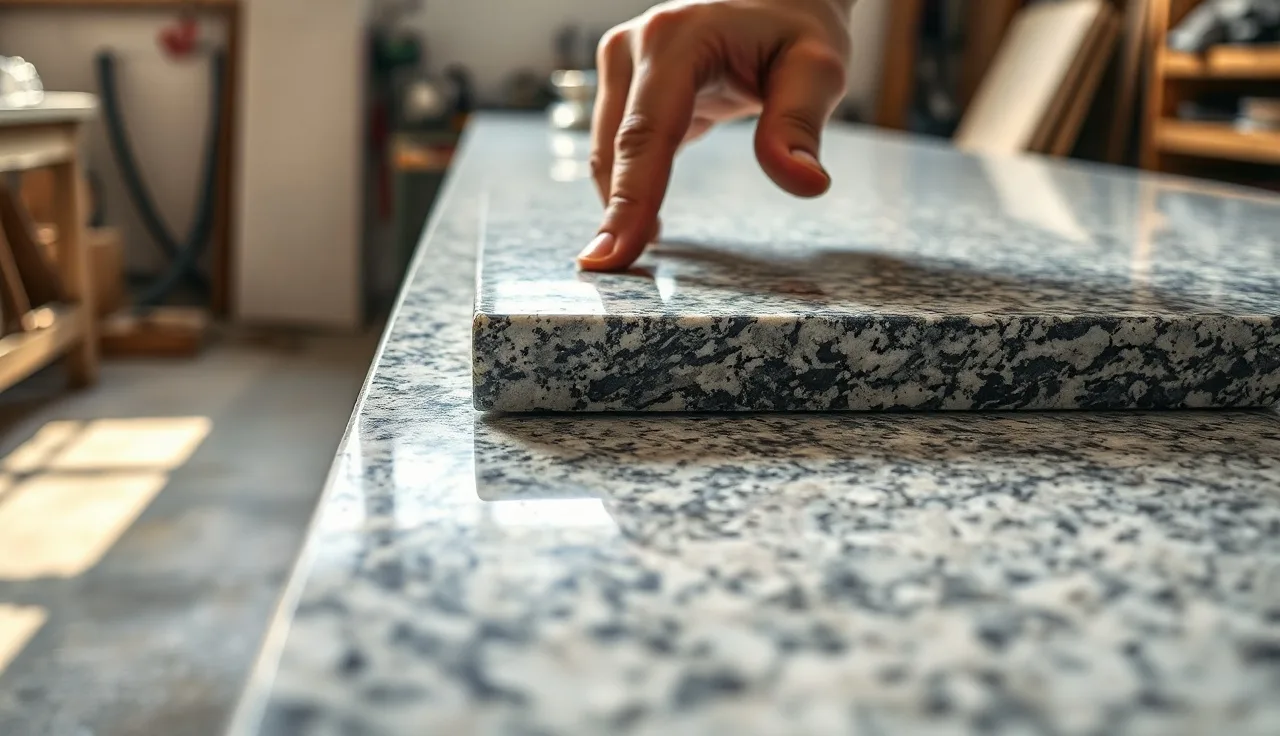
An edge profile is the shape a fabricator cuts and polishes on the exposed edges of your countertop. A slab leaves the warehouse with a raw, square-cut edge. That edge has to be finished before it goes in your kitchen. The profile you pick changes how the counter looks, how it feels when you brush against it, how easy it is to wipe down, and in some cases whether the edge chips.
Profiles change price because they take different amounts of machine time and hand-polishing. A flat polish takes minutes. A double ogee on thick mitered stone can take a fabricator 30 to 45 minutes per linear foot of edge. That labor stacks up fast across a full kitchen.
Material matters too. Quartzite and natural marble chip more easily on thin, sharp profiles than quartz or granite do. Fabricators will steer you away from a sharp arris or pencil edge on brittle stone, not because they can't cut it, but because it will notch the first time a cast-iron pan clips it. On laminate countertops, the profile options are narrower because laminate is post-formed or glued, not machined the way stone is.
What do the most common edge profiles actually look like?
Here's a plain-language description of each profile. If you're looking at a countertop edge profiles PDF from a fabricator, these descriptions map directly to the standard profile names you'll see there.
Eased (also called flat polish or straight): The top corner is knocked off at roughly a 1/8-inch bevel, and the face is flat. Clean, modern, invisible from the side. This is the default on almost every quote.
Beveled: A 45-degree angled cut replaces the top corner. Bevel width varies, typically 1/8 inch to 1/2 inch. Gives a contemporary look and removes a vulnerable sharp corner.
Bullnose (full bullnose): The entire edge rolls over into a half-circle. Soft, classic, very safe around kids. Common in homes built in the 1990s and 2000s. Many designers call it dated now, though it still works fine in casual kitchens.
Half bullnose (demi bullnose or eased bullnose): Only the top corner is rounded; the bottom stays square. It splits the difference between the severe look of a square edge and the full softness of a bullnose.
Ogee (single ogee): An S-shaped profile. Concave curve on top, convex curve below. Traditional, ornate, very 2000s formal kitchen. Still sells in some markets. Takes noticeably more fabrication time than a flat or bullnose edge [1].
Double ogee: Two S-curves stacked. More decorative. Used almost only on thick slabs (3/4 inch with a built-up edge or genuine 1.25-inch/3cm stone). Rare now in new construction.
Cove (or coved): A concave scoop cut into the face. Less common; usually shows up on laminate or solid-surface tops rather than stone.
Chiseled (or broken/rough edge): The edge is deliberately fractured to look natural and rough. Popular on granite and quartzite for rustic or live-edge looks. High labor cost, done entirely by hand or with a chisel wheel.
Waterfall (mitered): Not strictly a profile, but often listed alongside them. The stone runs vertically down the cabinet side to the floor, mitered at the corner. Reads like a piece of furniture. Needs extra material and very precise cutting [2].
Laminated or mitered edge (for thickness): Two or three pieces are glued face-to-face to make the edge look thicker than the slab really is. Often paired with another profile like eased or bullnose on the face.
Dupont (or DuPont): A flat top with a small quarter-round at the top corner and a small bevel at the bottom. Common on thinner slabs. Looks clean from above and gives the edge a finished quality.
Pencil: A very small, tight round at the top corner only. Minimal. Suits modern kitchens where a full eased profile still reads a little casual.
Stacked (compound) profiles: Fabricators can combine profiles on laminated edges for custom looks, like an ogee top with a cove bottom. These cost the most because each pass needs setup and repositioning on the CNC.
How much does each edge profile add to the total countertop cost?
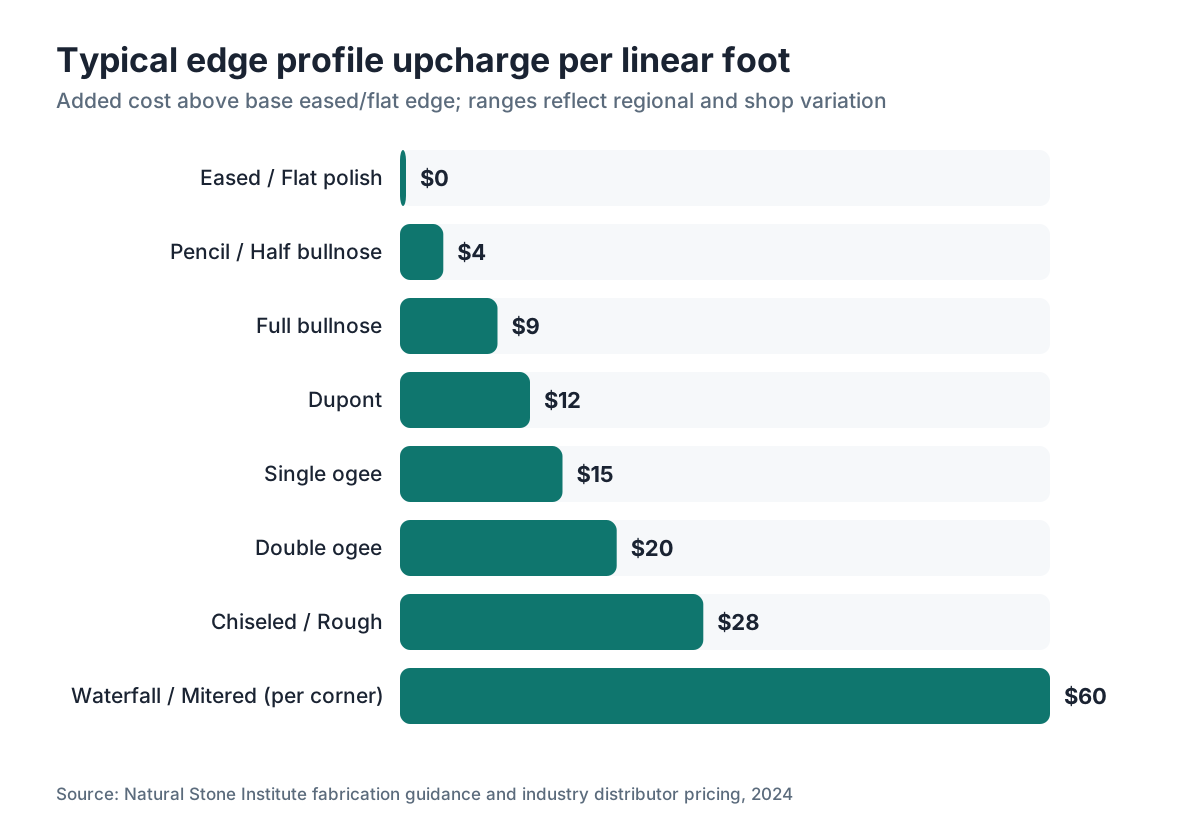
Pricing varies by shop and region, but the structure is fairly consistent. Most fabricators use one of three tiers [1].
| Profile | Typical Upcharge (per linear foot) | Notes |
|---|---|---|
| Eased / Flat polish | $0 (included) | Standard on almost all quotes |
| Beveled | $0, $5 | Often included or small add |
| Pencil / Half bullnose | $0, $5 | Minimal machining |
| Full bullnose | $5, $12 | More passes required |
| Demi bullnose | $5, $10 | Similar to bullnose |
| Single ogee | $10, $18 | S-curve requires multiple bits |
| Dupont | $8, $15 | Popular mid-range add |
| Double ogee | $15, $25 | High labor, thick slabs only |
| Chiseled / Rough | $20, $35 | Fully hand-finished |
| Waterfall / Mitered | $30, $80+ per corner | Material + labor, highly variable |
A typical kitchen has somewhere between 20 and 30 linear feet of exposed edge. Upgrade from a free eased profile to a single ogee at $15/LF and you've added $300 to $450 to your quote before tax. Waterfall edges add $500 to $1,200 per corner once you count extra slab, precise mitering, and seam polishing.
On granite countertops, edge upgrades feel worth it because the stone already has character. On plain white quartz or Cambria countertops, a more interesting edge can do real design work without changing the slab.
Fabricators who use estimating software price edge profiles per linear foot straight off the job template, which is how you avoid the surprise line-item on the final invoice. If your quote doesn't itemize edges separately, ask.
Which edge profiles work best for each countertop material?
Stone materials vary a lot in how they take edge machining. Here's what fabricators deal with day to day.
Granite: Holds almost any profile well. The crystalline structure resists chipping better than softer stones. Aggressive profiles like chiseled or double ogee are common on granite because the material cooperates. Granite countertops with tight grain patterns show ogee profiles especially cleanly.
Quartz (engineered): Very consistent material. Takes precise profiles well, including sharp bevels. Tends to show scratches on polished profiles over time. Silestone and Caesarstone publish their own edge compatibility guidance, and most lines carry 5 to 8 standard profiles [9][10].
Marble and quartzite: Prone to chipping on thin, sharp edges. Most fabricators add a small radius to the arris even when the profile is supposed to be square. Insist on a sharp pencil or full square on marble and you should expect callbacks. Marble countertops look elegant with a simple eased or half-bullnose because the stone itself carries the visual weight.
Soapstone: Same concerns as marble. A tight bullnose is safer than a sharp bevel. If you want these surfaces looking good for years, also read how to clean soapstone countertops and how to clean quartzite countertops, since edge shape changes where grime collects.
Laminate: Post-formed laminate comes pre-radiused at the edge. Sheet laminate over a substrate can be routed into an eased or small-radius bullnose but not a true ogee. If you're comparing laminate countertops or Formica countertops, this is one genuine limitation versus stone.
Butcher block: Routed wood edges work well with classic profiles like bullnose, eased, or roundover. Skip tight internal coves on wood because moisture collects there and the joint eventually fails. See butcher block countertops for full care context.
Corian and solid surface: Thermoformable materials bond invisibly, so edge build-ups and waterfall edges are actually easier on solid surface than on stone. Corian countertops can hit profiles in a single piece that would need lamination on stone.
How do edge profiles affect safety, especially for kids and high-traffic kitchens?
Sharp or thin profiles create two real risks. One is impact chipping: the edge breaks when it takes a hard knock. The other is contact injury: a sharp square or beveled arris can cut or bruise someone who stumbles into it.
The Consumer Product Safety Commission tracks kitchen-related injuries, but no published dataset isolates countertop edge shape as a cause [3]. What we have instead is shop experience. Fabricators in high-volume residential markets say sharp profiles generate more callbacks and crack repairs than radiused ones. That isn't a study, but it fits basic material science: a rounded edge spreads impact force, and a point concentrates it.
For households with young children, a full bullnose or demi bullnose is the practical choice. The rounded profile spreads impact energy rather than concentrating it at a point. For aging-in-place kitchens, the NKBA design guidelines flag edge safety for the same reason [6]. A sharp 45-degree bevel at hip height is a minor injury risk in a busy kitchen.
Islands get more edge exposure than perimeter counters. If you're choosing a decorative edge to save money, put the upgrade profile only on the island (which is what guests actually see) and a plain eased edge on the perimeter runs, where the edge mostly sits against a wall or appliance anyway. Fabricators can run different profiles on different sections of the same job.
What edge profiles are trending right now, and which are fading?
Countertop edge trends move slowly, roughly on 10 to 15 year cycles. As of the mid-2020s, here's where things stand based on fabricator order patterns and kitchen design coverage.
Trending up: thick mitered edges (the illusion of a 4-to-6-inch slab built by laminating an extra strip under the perimeter), waterfall islands, and sharp modern bevels. Flat-faced contemporary kitchens with simple eased profiles are strong in new construction because they're cheap to fabricate and read as intentionally minimal.
Fading: the full bullnose, especially on thin 2cm stone where it looks almost cartoonishly round. Double ogee has slid out of the premium tier into dated formal. Single ogee hangs on in traditional markets, particularly in the South and Midwest.
Stable: the demi bullnose and eased profiles are still the majority of all residential work by volume. They're functional, safe, and cheap. Design publications oversample dramatic waterfall kitchens; the average remodel still ships with an eased or demi-bullnose edge, which tracks with the volume of kitchen countertop replacement reported in national remodeling data [8].
Planning to sell in the next few years? A clean eased or demi-bullnose edge is very unlikely to turn a buyer off. A double ogee might read as dated to buyers under 40. A waterfall edge adds real visual appeal, but only if the rest of the kitchen supports it. On a basic kitchen with stock cabinets, a waterfall island just looks odd.
How do fabricators price and template edge profiles in their shops?
Edge profiles feed straight into shop quoting. Every shop keeps a price list that assigns an upcharge per linear foot by profile tier. When a template is drawn and linear footage is calculated, the edge upcharge multiplies across those feet. If the profile isn't locked in before the template appointment, the shop has to re-quote, which slows the job.
CNC bridge saws and edge polishers run specific tooling for each profile. A single ogee needs multiple diamond wheel passes and bit changes. A flat eased profile is one pass. Shops that track machine time accurately build profiles into their per-foot prices based on real cycle time, not guesswork. Edge profiling also throws respirable silica, which is why OSHA issued specific guidance for stone fabrication shops on wet cutting and dust control [11].
Fabrication quoting software like SlabWise lets shops attach edge profile upcharges to a job at the quoting stage, so the number a customer sees matches what gets billed and the estimator doesn't have to remember to add the line by hand. That's exactly where missed charges happen: manual entry, a profile added after the original quote, or the wrong profile applied to only part of the footage.
For homeowners, the takeaway is simple. Confirm your edge profile in writing before the template appointment. If you change the profile after templating, ask whether it affects price. Going simpler usually won't cost more, but an upgrade after the quote is locked sometimes gets applied unevenly.
When reviewing a quote, check three things: the edge upcharge appears as its own line item, the linear footage matches your layout, and any islands or peninsulas with two exposed edges are counted at double the footage they add to the perimeter. That last one catches misquotes regularly.
Where can I find edge profile images or a PDF from a fabricator?
Most fabricators keep a printed or PDF sheet of their available edge profiles to hand out at showrooms. National stone distributors, including MSI Surfaces and Architectural Surfaces, publish downloadable edge profile guides on their own websites, and these often cover more profiles than an individual shop prints [4].
The Marble Institute of America (now part of the Natural Stone Institute) has published technical guidance on stone fabrication that includes edge profile standards [5]. Those documents are useful if you want to understand the engineering behind chip resistance by profile type.
For visual references, two approaches beat the rest. Ask your fabricator to show you an actual edge sample (physical stone cut with the profile), or look at fabricator portfolio pages and Houzz project photos where the edge type is often tagged in the caption. Physical samples win every time because you feel the radius with your hand.
If your fabricator has no PDF sheet, that's a yellow flag about how organized the shop is. A well-run shop keeps a standard profile menu, consistent pricing per tier, and printed or digital references for each one. Shops doing real volume often stock 10 to 20 standard profiles with a few custom options on request.
For how edge profiles fit into the rest of the job, see countertop installation for what to expect at the template and install appointments.
How does edge profile choice affect seams and joints?
Seams are where two pieces of stone meet, and the profile at a seam has to match exactly or it reads as a visible step. On a simple eased or flat profile, seam alignment is forgiving. The flat faces register well against each other.
On an ogee or complex profile, a mismatch of even 1/32 inch is obvious because the S-curve throws visual contrast. This is where CNC machinery earns its keep on decorative profiles: the machine cuts the same arc every time. Hand-profiled stone varies slightly, and at seams that variation shows.
Waterfall edges make the hardest seam demand. The horizontal top surface and the vertical side piece have to miter at exactly 45 degrees and match grain if the stone is patterned. Book-matched slabs (two sequential slabs opened like a book) make this look continuous and dramatic. Non-matched slabs mitered at a waterfall just look like a corner. It works, but it lacks the wow the design is usually chasing.
For kitchen countertops with L-shapes or U-shapes, seam location and profile choice interact. A seam at an inside corner with an ogee profile needs careful coping of the two profile faces. Most experienced fabricators handle this without trouble, but it's a question worth asking before the template is drawn.
What questions should I ask my fabricator before choosing an edge profile?
The questions that save money and prevent regret are fairly specific.
First: what's included in the base price? Many shops include eased or beveled at no charge and treat everything else as an upgrade. Get it in writing.
Second: do you have a physical sample of that profile cut in my material or something close? A sample in the same or a visually similar stone beats a line drawing on a PDF by a mile.
Third: does the profile I want require laminating the edge, and if so, does the seam in the lamination show? Some profiles need a second strip of stone built up. On patterned material, the glue line can be visible. Not a deal-breaker, but worth seeing in person.
Fourth: does the profile need special tooling or lead time? Most standard profiles are stocked at any CNC shop. Unusual custom profiles may need a specific wheel ordered, which adds a week and often a setup fee.
Fifth: how does this profile hold up to chipping in this material? If your fabricator has opinions about chip risk on a given profile, listen. They see the callbacks. They know which profiles cause problems in granite versus quartzite versus engineered quartz.
The whole conversation should take 10 minutes at the showroom. If a fabricator can't answer these, that's useful information about how the rest of the job will go.
Frequently asked questions
What is the most popular countertop edge profile?
The eased edge (a slight bevel at the top corner with a flat face) is the most common profile in residential work by volume. Most fabricators include it at no extra charge. It looks clean in modern and transitional kitchens and holds up well in nearly every stone. The demi bullnose is a close second, especially in family kitchens where a softer edge is preferred.
What is a bullnose edge and is it outdated?
A full bullnose edge rounds the entire thickness of the countertop into a half-circle. It was very popular from roughly 1990 through the early 2010s, and many designers now call it dated, particularly on thin stone. It's still functional and safe and fine in casual or traditional kitchens. If you're selling soon, a flat eased or demi bullnose is a safer bet with buyers under 40.
How much does an ogee edge add to countertop cost?
A single ogee profile typically adds $10 to $18 per linear foot over the base price, depending on shop and region. On a kitchen with 25 linear feet of exposed edge, that's $250 to $450. A double ogee runs higher, around $15 to $25 per linear foot, and is only practical on thicker slabs or laminated edges. Always ask if these upcharges apply to all edges or only exposed ones.
What is a waterfall edge on a countertop?
A waterfall edge runs the countertop material vertically down the side of the cabinet to the floor, mitered at a 45-degree corner. It looks like furniture and is most dramatic on islands with patterned stone. Cost varies a lot: plan for $500 to $1,200+ per corner including extra material, precise mitering, and seam polishing. Book-matched slabs make it look continuous; non-matched slabs look like a plain corner.
Which edge profiles are safest for homes with children?
Full bullnose and demi bullnose are the safest options because the rounded edge spreads impact force instead of concentrating it at a sharp corner. An eased edge with its slight chamfer is also low-risk. Avoid sharp 45-degree bevels and square/arris edges in child-heavy kitchens; they can cut skin on contact and chip more easily when a hard object hits them at height.
Can I get different edge profiles on different sections of the same countertop?
Yes. Fabricators can run one profile on the island and a different one on the perimeter with no technical problem. It's a practical way to save money: put the decorative (pricier) profile on the visible island face and a plain eased edge on the perimeter against the backsplash. Just confirm each section's footage and profile in writing on the quote so pricing is clear.
What edge profile works best for marble countertops?
A demi bullnose, soft eased, or full bullnose are the safest choices for marble. Marble chips more easily than granite or engineered quartz, especially at thin, sharp edges like pencil or a 45-degree bevel. Most experienced fabricators add a small radius to the arris even on nominally square profiles in marble. If you want a sharper look, ask to see how thin the edge actually gets before committing.
Do edge profiles affect how easy the countertop is to clean?
Yes, modestly. Flat eased and square profiles are easiest to wipe because a cloth runs cleanly across the face. Profiles with concave curves, like ogee or cove, collect grime in the recess and need a stiffer brush or detail cloth. Textured chiseled edges trap food and moisture and are harder to sanitize. For kitchens where hygiene comes first, stick to profiles with no inward curves.
What is a dupont edge on a countertop?
A dupont (or DuPont) edge has a flat top surface, a small quarter-round at the top corner, and a small beveled step near the bottom. It's a clean, slightly formal look popular on 3/4-inch to 1.25-inch stone. It reads as more finished than a plain eased edge without the ornate quality of an ogee. Typical upcharge is $8 to $15 per linear foot depending on the shop.
What is a chiseled or rough edge profile?
A chiseled edge is hand-fractured or carved to look like natural broken stone. It's popular in rustic, farmhouse, and live-edge designs and looks best on thick, heavily veined granite or quartzite. Because it's finished entirely by hand, it's one of the most labor-heavy profiles: expect $20 to $35 per linear foot upcharge. It's also the hardest to keep clean and not recommended for households with young children.
How do I find edge profile images or a PDF before visiting a fabricator?
MSI Surfaces and other major stone distributors publish downloadable edge profile reference sheets on their websites. The Natural Stone Institute also offers fabrication guidance documents. For visual reference before your showroom visit, Houzz project photos often tag edge profile type in the caption. Even so, physical samples at the shop are worth far more than any printed image because you can feel the radius and see how light hits the actual material.
Does the countertop edge profile affect resale value?
There's no rigorous study isolating edge profiles as a resale variable. The practical consensus among designers and agents is that an outdated edge (like a prominent full bullnose on thin stone) can subtly date a kitchen to buyers who know what to look for, while a neutral modern edge like eased or demi bullnose is invisible in a good way. Dramatic profiles like waterfall add appeal in high-end markets but can look out of place in modest homes.
What edge profiles are available for laminate countertops?
Post-formed laminate comes with a pre-radiused integrated edge, a gentle curve that can't easily be changed after the fact. Sheet laminate over a substrate can be routed to an eased, small bullnose, or roundover profile. Complex profiles like ogee or waterfall aren't practical on laminate. If edge variety matters to you, stone or solid surface will always offer more options than sheet laminate.
Sources
- Marble Institute of America / Natural Stone Institute, Stone Fabrication Technical Manual: Edge profile fabrication labor tiers and relative machining complexity for standard stone profiles
- MSI Surfaces, Edge Profile Reference Guide: Waterfall and mitered edge descriptions and standard options in the stone countertop industry
- U.S. Consumer Product Safety Commission, Home Safety Resources: Kitchen-related injury tracking; no dataset specifically isolates countertop edge shape as injury cause
- Architectural Surfaces, Edge Profile Resources: Stone distributor publishes downloadable edge profile reference guides for consumers and fabricators
- Natural Stone Institute, Technical Resources: Published technical guidance on stone fabrication standards including edge profile chip resistance by stone type
- National Kitchen and Bath Association (NKBA), Kitchen Design Guidelines: Design guideline references for countertop edge safety in residential kitchens, including aging-in-place recommendations
- U.S. Department of Housing and Urban Development, Housing Resources: Kitchen countertop replacement is among the most common residential remodeling expenditures in the U.S.
- Harvard Joint Center for Housing Studies, Improving America's Housing: Kitchen remodeling spending trends and typical cost ranges for residential countertop projects in the U.S.
- Caesarstone, Edge Profile Technical Specification Sheet: Engineered quartz manufacturer publishes 5-8 standard edge profiles with compatibility notes by product line
- Silestone by Cosentino, Technical Product Documentation: Quartz brand documents available edge profiles and notes on profile suitability by slab thickness
- OSHA, Silica in Stone Countertop Fabrication: Edge profiling and CNC machining of stone countertops generates respirable silica; OSHA issued guidance for fabrication shops
- National Association of the Remodeling Industry (NARI): Kitchen countertop upgrades including edge profile selection cited as a component of mid-range kitchen remodel value return
Last updated 2026-07-09