TL;DR
- Butcher block island countertops run $40 to $200 per square foot installed, driven by species, construction, and finish.
- Maple and walnut own the market.
- End grain looks incredible but costs 30 to 50 percent more and needs oiling every few months.
- Oil and hardwax finishes let you prep food on the surface.
- Polyurethane seals it off but makes damage nearly impossible to spot-repair.
What does a butcher block island countertop actually cost?
Material alone for a standard edge-grain maple butcher block runs roughly $20 to $60 per square foot, depending on thickness and supplier. Add installation, cutouts for sinks or cooktops, and edge profiles and you land somewhere between $40 and $120 per square foot all-in for a typical island. Walnut costs more, often $80 to $200 per square foot installed, because walnut lumber commands a premium over hard maple or beech [1].
End-grain butcher block, the style that looks like a mosaic of wood cross-sections, costs 30 to 50 percent more than edge grain at the same species and thickness. The construction takes more labor, and end grain drinks oil at a faster rate, which pushes long-term maintenance costs up too.
Islands run larger than perimeter counters, and that changes the math. A 4-by-6-foot island top is 24 square feet. At the low end (edge-grain maple, oil finish, simple eased edge), you might spend $1,400 to $2,000 installed. A 4-by-6 walnut island with a live edge and waterfall side can easily hit $6,000 or more.
For fabricators quoting these jobs, the wood costs less than granite or quartz, but the labor side is comparable. You're still templating, cutting, doing edge work, and installing. Software like SlabWise tracks material and labor separately on wood jobs the same way it does for stone, which keeps you from under-quoting cutouts and edge profiles [2].
| Wood species | Typical material cost (per sq ft) | Hardness (Janka, lbf) | Common grain orientation |
|---|---|---|---|
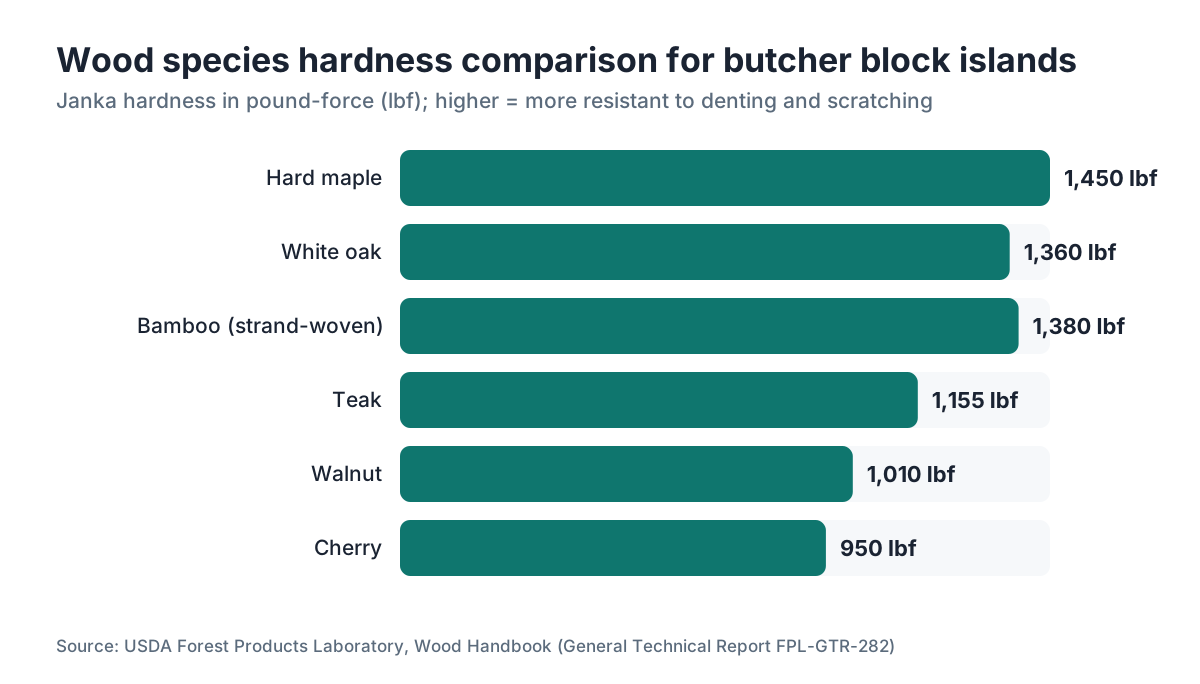
| Hard maple | $20, $45 | 1,450 | Edge or end grain |
| Walnut | $45, $90 | 1,010 | Edge or end grain |
| Cherry | $35, $70 | 950 | Edge grain |
| White oak | $30, $65 | 1,360 | Edge grain |
| Teak | $60, $120 | 1,155 | Edge grain |
| Bamboo (engineered) | $15, $30 | 1,380+ | Edge or flat |
Prices above reflect unfinished material at typical wholesale and retail in 2024 and 2025. Regional lumber market swings, walnut especially, can move these numbers 15 to 20 percent in either direction [3].
Which wood species is best for a kitchen island countertop?
Hard maple is the traditional choice, and it earns the spot. It scores 1,450 on the Janka hardness scale [3], resists scratching better than most domestic species, and has a tight, consistent grain that hides knife marks. It's also the cheapest option per square foot.
Walnut is the premium pick that took over. The chocolate-brown color with occasional lighter streaks reads high-end in photos and in person. Walnut is softer than maple at 1,010 Janka, so it shows dings and knife marks faster. Flaw or feature? Depends who you ask. Plenty of homeowners prefer a surface that earns character over one that stays perfect.
White oak picked up serious momentum in the last few years thanks to its neutral gray-brown tone and open grain, which sits well next to modern cabinetry. It takes stain unevenly because of its large pores, so most fabricators steer you toward a natural oil finish instead of a tinted one.
Teak deserves a mention for island tops near sinks or in humid kitchens. Its natural silica and high oil content make it genuinely water-resistant in a way maple and walnut are not [4]. The catch is cost and sourcing. FSC-certified teak is available but expensive, and mislabeling in the tropical hardwood supply chain is a documented problem [11].
Cherry darkens hard under UV. A cherry island will look completely different after two years of sunlight than it did on install day. Some people love the patina. Others get blindsided by it.
Bamboo is a grass, not a wood, but it performs well as a countertop. Strand-woven bamboo reaches 3,000+ Janka, harder than nearly any wood species, and costs less than walnut. The environmental story is messier than the marketing suggests: some bamboo products use adhesives containing formaldehyde, so check for CARB Phase 2 compliance if indoor air quality matters to you [5].
Edge grain vs. end grain vs. face grain: which construction is right for an island?
These three terms describe how the wood strips point relative to the working surface. Pick wrong and you'll fight the material for years.
Edge grain shows the long side of the wood strips, like looking at a board from the side. It's the most common and most practical choice for kitchen islands. Water and food particles don't sink as deep into edge grain as they do into end grain, the surface sands flat easily if it gets dinged, and it costs less to build.
End grain shows the cross-section of the wood, so you see the rings. This is the classic butcher block look from commercial prep tables. End grain is self-healing to a real degree. When you cut on it, the fibers separate and close back up rather than getting sliced. The trade: end grain is highly absorbent, needs oiling every 3 to 6 months instead of annually, and stays flat less willingly because it reacts more to moisture. For an island that sees heavy prep and real cooking, end grain earns its keep. For an island that's mostly for looks, edge grain is easier to live with.
Face grain (also called flat grain) shows the wide face of the board and gives you the most visible figure, especially in walnut or cherry. It's the most likely to cup and warp, so fabricators usually skip it for full island tops. You'll see face grain on smaller cutting boards and accent pieces instead.
For most homeowners buying a butcher block countertop island, edge grain in maple or walnut hits the sweet spot of durability, looks, and price.
What thickness should a butcher block island countertop be?
Standard butcher block thickness is 1.5 inches. It matches standard stone countertop profiles and looks proportional on most island bases. This is what you'll find at home centers and what most fabricators stock.
Thicker slabs (2, 3, or even 4 inches) look more substantial and read as premium. A 4-inch walnut island is a genuine statement piece. Thick slabs also stay flatter because they resist cupping better. The weight climbs fast: a 1.5-inch maple panel weighs roughly 6 to 7 pounds per square foot, and a 4-inch panel is proportionally heavier, which matters for the base structure and any waterfall edges [6].
For an island with a built-in sink or cooktop, stay between 1.5 and 2 inches. Thicker panels around cutouts are harder to support and can stress the wood at the edges of the opening.
Some fabricators build a laminated buildup at the perimeter to fake extra thickness while keeping the core at 1.5 inches, the same trick used with granite countertops to add visual mass without the weight. With wood it works fine, as long as the seam is clean and the grain matches.
How do you finish a butcher block island countertop?
The finish decides how the surface looks, how you're allowed to use it, and how much maintenance you sign up for. Three categories cover the field.
Oil finishes (food-safe mineral oil, tung oil, linseed oil, or commercial blends like Boos Mystery Oil) soak into the wood and protect it from the inside. The surface looks natural, almost matte. You can cut directly on it. When it dulls or dries, you wipe on another coat. No sanding for routine upkeep. The downside: oil doesn't form a barrier, so water sitting long enough still gets in. Wipe spills promptly. Reapply roughly every 3 to 12 months depending on how hard the surface works [7]. The USDA Forest Products Laboratory describes it plainly: oil finishes penetrate into wood and protect from within, while film-forming finishes sit on top [12].
Hardwax oils (Osmo Polyx, Rubio Monocoat) blend oil and wax and cure to a hard film while still penetrating. More water-resistant than straight oil, food-safe once cured, and spot-repairable without refinishing the whole top. This is probably the best all-around finish for an island that gets real use.
Polyurethane and waterbased finishes form a film on top of the wood and give you a hard, washable surface. Easier to clean day to day, more stain-resistant than oil. The trade: you can't cut directly on it without wrecking the coating, and when the film eventually chips or scratches, spot repair is nearly impossible. You sand the whole thing and start over. For an island used mostly as a bar, serving area, or display surface, polyurethane makes sense.
Don't condition butcher block with cooking oils like olive or canola. They go rancid inside the wood and the smell never leaves. Food-grade mineral oil is cheap, odorless, and stays stable [7].
Can you put a sink in a butcher block island countertop?
Yes, but it takes more care than a stone cutout. Wood and standing water are a bad pairing, and a sink opening is the wettest spot in any countertop.
The whole game is sealing the cutout edges. When a fabricator cuts the sink opening, it exposes raw end grain on all four sides, and that end grain drinks water fast if it isn't sealed. Multiple coats of penetrating oil or hardwax, plus extra sealing at the joint between sink rim and counter, give you the best shot at a long-lasting install. Some fabricators run epoxy at the rim, others use marine-grade sealant.
Undermount sinks are much harder to pull off in wood than in stone. With stone, the cutout edge sits exposed below the rim and looks clean. With wood, that exposed edge gets wet constantly and eventually fails. Most fabricators push hard for drop-in (overmount) sinks in wood, because the rim covers and protects the cutout edge.
Teak is the best species near a sink because of its natural water resistance [4]. If your heart is set on a walnut island with an undermount sink, be honest with yourself about the maintenance. The area around the sink may need refinishing every year or two.
For how sink cutouts get handled across materials, the countertop installation guide covers stone-specific approaches that share some logic with wood.
How do you maintain and clean a butcher block island countertop?
Daily care is simple. Wipe spills promptly, leave no standing water, and dry the surface after cleaning. Mild dish soap and water handles routine cleaning on oil-finished surfaces [7]. Skip bleach and harsh chemical cleaners. They strip oil finishes and raise the grain.
To sanitize, especially if you prep raw meat on the surface, a 3 percent hydrogen peroxide solution from any drugstore works and is wood-safe. Let it sit a few minutes, then wipe clean. White vinegar works too but smells stronger and shouldn't be a daily habit, since its acidity dries the wood over time.
Refinishing is not a production. If an oil-finished top looks dry, dull, or lightly scratched, sand with 120-grit, follow with 180-grit, clean off the dust, and wipe on fresh mineral oil or hardwax. Let it soak overnight, wipe the excess, done. This is the single biggest edge wood has over stone: real repairability.
Deep gouges or burns come out by sanding down to bare wood in the spot, feathering a few inches on all sides to blend the level, then refinishing. An experienced woodworker or fabricator can make most damage disappear.
Heat is a real risk. Don't set hot pans directly on butcher block. The finish burns and the wood scorches permanently. Use trivets.
For cleaning other natural surfaces elsewhere in your kitchen, how to clean soapstone countertops and how to clean stone countertops follow the same protect-and-maintain logic.
How long does a butcher block island countertop last?
A well-maintained butcher block island lasts decades. Commercial prep tables in restaurant kitchens routinely run 20 to 30 years with regular care. Home use is lighter, so longevity isn't the worry as long as you keep the surface fed.
The threats are consistent: standing water left too long, heat damage, and a neglected finish. A top that dries out and cracks because nobody oiled it is much harder to bring back than one that just got scratched up.
Wood is the only common countertop material a homeowner can fully restore to like-new at home. Stone can be polished, but only by a pro. Laminate and engineered quartz can't be refinished at all. Butcher block takes actual abuse and comes back with 30 minutes of sanding and a fresh oil coat.
Compare that to marble countertops, which etch from acidic foods and need professional honing to fix, or laminate countertops, which can't be repaired once the surface layer breaks. Wood runs a different durability model: lower upfront resistance to damage, higher long-term repairability.
Is a butcher block countertop on an island a good idea for resale value?
Honestly, the data here is thin. I've found no large-scale peer-reviewed real estate studies on butcher block countertops and home sale prices specifically.
Here's what does exist. The National Association of Realtors 2022 Remodeling Impact Report [8] found that kitchen countertop replacements recoup roughly 62 percent of their cost at resale on average across all materials. That figure doesn't split wood from stone. Anecdotally, butcher block reads as a premium choice to buyers who cook and as a liability to buyers who don't. It splits opinion in a way quartz and granite generally don't.
Walnut photographs beautifully, which matters more than people admit when homes sell partly on listing photos. A well-executed walnut island anchors kitchen photography.
The counterargument: buyers see wood as higher-maintenance than stone, accurate or not, and that perception creates negotiation pressure. In higher-end markets where wood tops are expected and buyers know the material, the concern mostly evaporates.
If resale drives your decision, a combination approach (stone perimeter, butcher block island) is the safest hedge. You get the warmth and utility of wood at the island, stone durability everywhere else, and both materials appeal to different buyer profiles. For the bigger picture, kitchen countertops covers how materials stack up in broader resale contexts.
How is a butcher block island countertop installed?
Installation is faster and lighter than stone, but it comes with its own rule. Wood expands and contracts with humidity, and an install that fights that movement will crack.
The rule: don't rigidly fasten butcher block to the cabinet base at every point. Fabricators use slotted screw holes or figure-8 fasteners that let the panel move seasonally without splitting. Rigid fastening is the most common DIY mistake and the primary cause of wood countertop cracking [9]. In dry climates or heated homes, a 4-foot-wide panel can move 1/8 to 1/4 inch seasonally. That movement needs somewhere to go.
For an island with a waterfall side (where the block continues down one or two sides of the base), the miter joint at the corner has to be cut precisely and the grain should be bookmatched or at least run consistently. Waterfall butcher block in walnut, done well, is one of the cleanest looks in kitchen design right now. It's also brutal about poor miter alignment.
Backsplashes behind an island are optional, since islands don't always have a wall behind them, but a small raised back edge helps contain spills.
Installing a butcher block countertop on island as a DIY project? Budget a full day for templating, a second for cutting and finishing, and a third for install. For paid work, most shops quote 4 to 6 hours of labor for a standard island top without a sink. Add an hour or two for a sink cutout.
Fabricators can run the same square footage and cutout logic they use on stone, though edge profiles are simpler (eased, bevel, or roundover rather than ogee or dupont). Quoting and nesting software like SlabWise handles the material calculation, though finishing and installation stay wood-specific.
What are the alternatives to butcher block for a kitchen island?
Want the warmth of wood with less maintenance? A few options are worth knowing.
Engineered wood and wood-look laminate give a similar aesthetic at much lower cost. High-quality laminate countertops have improved a lot, and some products credibly mimic end-grain wood. You can't cut on them and can't refinish them, but the upfront cost is a fraction of real wood.
Quartz in wood-tone patterns (a few Cambria countertops and other brands do this) offers zero-maintenance wood looks. The veining and color matching aren't quite there for discerning buyers yet, but they're getting closer.
Concrete suits people who want a custom, warm, somewhat rustic feel. It's high-maintenance in its own way, prone to cracking and staining, but heat-resistant and genuinely customizable.
Honed black granite or soapstone brings warmth and depth without the wood-specific worries. Soapstone in particular has a soft, organic feel that lands well in kitchens where butcher block appeals. See granite countertops for the stone-side comparison.
The mix-and-match play works best of all. Many of the strongest kitchen islands use stone or Corian countertops for most of the surface and reserve a section of butcher block as a dedicated prep zone or bar. That concentrates the wood maintenance to the part of the island where you actually want it and shields the rest from the sink-and-heat concerns wood raises.
Frequently asked questions
How much does a walnut butcher block island countertop cost?
Walnut material runs $45 to $90 per square foot before installation. Installed on a typical 4-by-6-foot island, expect $2,500 to $5,000 or more depending on edge profile, thickness, and whether there's a sink cutout. Live-edge slabs and waterfall designs push higher, sometimes $6,000 to $10,000 for a showpiece island.
Can you use a butcher block countertop on an island as a cutting surface?
Yes, if the finish is oil or hardwax oil rather than polyurethane. Oil-finished butcher block is food-safe and works as a cutting surface. End grain is the most cutting-board-like option, with fibers that partially close after knife contact. Don't cut on a polyurethane-finished surface. It damages the coating and forces a full refinish.
How often do you need to oil a butcher block island countertop?
A new butcher block should be oiled heavily before use: five to seven coats of food-grade mineral oil over the first week, each coat soaking in fully. After that, oil when the surface looks dry or pale, roughly every 1 to 3 months for actively used islands. End grain needs oiling more often than edge grain.
Is butcher block good for a kitchen island with a sink?
It works, but takes more care than stone. The cutout edges must be sealed thoroughly before the sink goes in. Drop-in sinks are much safer than undermount because the rim covers the exposed end grain at the cutout. Teak is the best species near a sink for its natural water resistance. Plan to inspect and re-seal the sink perimeter annually.
What is the best wood for a butcher block island countertop?
Hard maple is the best all-around choice: hardest common domestic species at 1,450 Janka, affordable, tight grain, widely available. Walnut is the best premium pick for looks. Teak is best near sinks or in humid environments. White oak is strong if you want a modern gray-brown tone. Skip softwoods like pine for islands. They dent too easily.
Does butcher block add value to a home?
The data is limited. The National Association of Realtors 2022 Remodeling Impact Report found kitchen countertop replacements recoup about 62 percent of their cost on average, but that covers all materials. Walnut butcher block reads premium in listing photos and appeals strongly to buyers who cook. It can turn off buyers who don't want to maintain wood, so it's not the universally safe choice quartz tends to be.
How thick should a butcher block island countertop be?
1.5 inches is the standard and works for most islands. It matches the visual profile of standard stone countertops and is what most fabricators stock. Thicker panels (2 to 4 inches) look more substantial and resist warping better, but add real weight and cost. For islands with sink or cooktop cutouts, 1.5 to 2 inches keeps the structure manageable.
What is the difference between edge grain and end grain butcher block?
Edge grain shows the long side of wood strips and resists water infiltration better, stays flatter, and costs less. End grain shows the cross-section and has a mosaic look. End grain is more self-healing under knife cuts but absorbs moisture faster, needs oiling every 3 to 6 months, and costs 30 to 50 percent more than edge grain at the same species and thickness.
Can butcher block island countertops be repaired if scratched or burned?
Yes. This is wood's biggest advantage over stone, quartz, and laminate. Minor scratches and stains sand out with 120-grit followed by 180-grit, then refinish with oil. Burns take more aggressive sanding but usually come out fully. A deep repair might take an experienced person 30 to 60 minutes. Most homeowners can handle minor touch-ups themselves.
Is butcher block sanitary for food prep?
Yes. An oil-finished wood surface is considered food-safe. A UC Davis study by Ak and Cliver found that bacteria contaminating wood surfaces were not recoverable and died, while plastic surfaces harbored bacteria in knife scars and were hard to disinfect [10]. The step that matters most is prompt cleanup of raw meat juices and periodic sanitizing with diluted hydrogen peroxide.
How do you prevent a butcher block island countertop from warping?
Seal all six sides of the panel before installation, including the underside and edges. Many warping problems start on the bottom because fabricators only finish the top. Use slotted or figure-8 fasteners, never rigid screws, so the wood moves with humidity. Keep the kitchen at stable humidity year-round. A 4-inch panel warps far less than a 1.5-inch panel under the same conditions.
Can you mix butcher block and stone on the same island?
Absolutely, and it's a popular move. A common layout puts stone or engineered quartz on the sink side, which stays cleaner and handles water better, and butcher block on the prep or bar side. The two materials meet at a seam, ideally hidden at a cabinet edge or apron break. The hedge gives you wood warmth and utility where you want it without the water concerns.
What edge profile works best on a butcher block island countertop?
Simple profiles work better on wood than on stone. An eased edge (slightly softened 90-degree corner), a 1/8-inch roundover, or a full roundover are the most common and look most natural with wood grain. Elaborate profiles like ogee or dupont are possible but rare and can look strange on wood. A live edge, where one or both sides keep the natural tree profile, is the premium option for walnut islands.
How does butcher block compare to quartz for a kitchen island?
Quartz wins on low maintenance: no oiling, more heat-resistant, stain-resistant, easier to clean. Butcher block wins on repairability, warmth, and cutting-board function. Quartz runs $50 to $150 per square foot installed; butcher block overlaps that range. Quartz doesn't polarize buyers the way wood does. For a purely practical island, quartz makes more sense. For an island you cook on daily and want to feel good using, butcher block earns the extra care.
Sources
- USDA Forest Service, Wood as an Engineering Material (General Technical Report FPL-GTR-282): Species-level wood properties including hardness, density, and working characteristics for maple, walnut, cherry, oak, and teak
- SlabWise, countertop fabrication quoting and nesting software: Software tracks material and labor costs for countertop jobs including wood island tops
- USDA Forest Products Laboratory, Janka Hardness Values for Selected Wood Species: Janka hardness ratings: hard maple 1,450 lbf; walnut 1,010 lbf; white oak 1,360 lbf; teak 1,155 lbf
- USDA Forest Service, Teak (Tectona grandis) properties and characteristics: Teak's natural silica and oil content give it exceptional water and decay resistance compared to other hardwoods
- California Air Resources Board (CARB), Airborne Toxic Control Measure for Composite Wood Products: CARB Phase 2 standards limit formaldehyde emissions from composite wood products including bamboo panel products
- USDA Forest Products Laboratory, Wood Handbook Chapter 4: Moisture Relations and Physical Properties of Wood: Weight per cubic foot and dimensional movement properties of hard maple and walnut; basis for per-square-foot weight estimates at given thicknesses
- USDA Food Safety and Inspection Service, Safe Food Handling: Cutting Boards: Food-grade mineral oil is safe for conditioning wood food-contact surfaces; cooking oils such as olive oil are not recommended because they can become rancid
- National Association of Realtors, 2022 Remodeling Impact Report: Kitchen countertop replacements recoup approximately 62 percent of their cost at resale on average across all material types
- USDA Forest Products Laboratory, Wood Movement and Furniture Construction (Technical Note FPL-0243): Wood panels must be fastened with movement-allowing hardware (slotted holes or figure-8 clips) to prevent cracking from seasonal humidity changes; rigid fastening is the primary cause of wood countertop cracking
- UC Davis, Department of Food Science and Technology, Fate of Bacteria on Wood and Plastic Cutting Board Surfaces (Ak and Cliver, 1994): "Bacteria that contaminated wood surfaces were not recoverable and were killed, while plastic surfaces harbored bacteria in knife scars and were difficult to disinfect" -- study conclusion on wood vs. plastic cutting surfaces
- Forest Stewardship Council (FSC), Chain-of-Custody Certification for Tropical Hardwoods: FSC certification provides third-party verification of sustainable sourcing for teak and other tropical hardwoods; mislabeling in the supply chain is a documented concern
- USDA Forest Products Laboratory, Finishing of Wood (Wood Handbook Chapter 16): Oil finishes penetrate into wood and protect from within; film-forming finishes (polyurethane) form a surface barrier that is difficult to spot-repair once damaged
Last updated 2026-07-10