TL;DR
- Butcher block countertops need oiling every one to three months with food-safe mineral oil or a hardening oil finish, prompt drying after water exposure, and periodic light sanding to remove scratches and stains.
- Done right, they last 20-plus years.
- Skip the maintenance and you get warping, cracking, and bacteria hiding in deep gouges within a year or two.
What does butcher block countertop maintenance actually involve?
Butcher block maintenance breaks into four recurring tasks: oiling or sealing the surface, cleaning spills fast, sanding out damage, and keeping standing water off the wood. That's the whole job. None of it is hard. What trips people up is inconsistency, especially skipping the first six months of oiling when the wood is thirstiest.
New butcher block ships kiln-dried to around 6-8% moisture content [1]. Drop it into a humid kitchen and it wants to absorb whatever it can. If that happens unevenly, the top swells faster than the bottom and you get cupping. Your job in the first few months is to oil all six faces evenly, underside included, until the wood stops drinking product. After that, a light pass every one to three months keeps it stable.
The finish you pick shapes everything else. A penetrating oil like food-grade mineral oil stays flexible inside the wood and reapplies in minutes. A hardening finish like pure tung oil or varnish sits on the surface, repels water better, but has to be sanded off if it peels. Most fabricators and woodworkers settle on one of three routes: repeated mineral oil, a mineral oil and beeswax blend, or a hardening Danish oil or tung oil finish. Each has real trade-offs, covered below.
How often should you oil butcher block countertops?
For new installs, oil once a day for a week, once a week for a month, then once a month for a year. After year one, four times a year covers a lightly used surface. Heavy use (daily prep, kids, lots of water near the sink) means monthly.
The honest test beats any schedule. Drop a few water beads on the surface. If they bead up, you're fine. If they soak in within 30 seconds and darken the wood, oil it now. That test takes five seconds and it never lies.
Mineral oil is cheap, everywhere, and safe. A quart costs around $8-12 at a pharmacy or hardware store, and it's the same USP-grade product a food-grade supply catalog sells [2]. Warm it (set the bottle in hot tap water for a few minutes), work it in with a cloth going with the grain, let it sit 20-30 minutes, then wipe off any excess before it turns gummy. Never leave pooled oil sitting.
If you cut raw meat directly on the surface, the USDA tells you to keep cutting surfaces clean and sanitized, and warns that wood can hold bacteria in knife grooves when it isn't maintained [3]. Oiling doesn't sanitize. Cleaning does. What the oil buys you is a surface that doesn't crack open into deeper grooves that are hard to clean in the first place.
What's the difference between oiling and sealing butcher block?
Oiling penetrates. Sealing coats. That distinction drives every long-term decision you'll make.
Mineral oil, raw linseed oil, and walnut oil soak into the fibers and keep the wood flexible without building a hard film on top. They won't stop a glass of water from sitting too long, but they leave the wood easy to repair. You sand and re-oil without stripping anything.
Hardening finishes cure into a film: pure tung oil (not the mineral-spirits-heavy "tung oil finish" products at the big-box store), Danish oil, and polyurethane. Polyurethane on a food-prep surface is a bad idea. Once it chips or scratches, the peeled film traps bacteria and looks awful, and you have to sand it all off before you can switch to oil.
For a surface you only look at (a waterfall island edge, say, or a decorative piece), a hardening finish gives better water resistance. For a working prep surface, penetrating oil wins on repairability alone.
Most people land on the compromise: an oil-and-wax blend. Howard Butcher Block Conditioner, or a homemade mix of mineral oil and beeswax, gives you the penetrating protection of oil plus a light wax layer that adds some water resistance without the film-finish headaches. Buy it or make it. Melt roughly 4 parts mineral oil to 1 part beeswax, let it cool, and apply the paste.
How do you clean butcher block countertops without damaging them?
Warm water and a little dish soap is the right daily cleaner. That's it. The old "never use soap on wood" advice comes from an era when soaps ran strongly alkaline and stripped oil finishes. Modern dish soap at normal dilution is fine, and it's the recommended cleaner for food-contact surfaces [3].
What wrecks butcher block is standing water, high-concentration bleach, and ammonia cleaners. A wet rag left for hours raises the grain locally and eventually cracks it. Bleach weakens wood fibers and pulls out the natural color. Ammonia strips oil finishes fast.
To sanitize after raw meat, a diluted white vinegar solution (one part vinegar to four parts water) or a 3% hydrogen peroxide spray (the brown-bottle stuff) both work and won't harm the wood [4]. Apply, wait a minute or two, wipe dry. Don't reach for full-strength vinegar over and over. The acid slowly breaks down wood fibers.
Stubborn organic stains like wine, berries, or mustard respond to salt and lemon. Sprinkle coarse salt on the wet stain, rub with half a lemon, wait five minutes, rinse. The mild abrasion plus citric acid lifts most of it. Anything already dried in comes out faster with a light sand than with any chemical.
How do you remove scratches and stains from butcher block?
Scratches sand out. That's the single biggest edge butcher block has over stone or quartz: deep damage is repairable at home, no pro required.
Light scratches start with 120-grit paper or a sanding block. Always sand with the grain, never across it. Hit the scratched area first, then feather out a few inches in every direction so you don't leave a visible dish. Move to 150-grit to smooth, then 220-grit to finish. Wipe off all dust with a tack cloth and oil immediately. Freshly sanded wood is wide open and drinks oil fast.
Deeper gouges or knife marks that have gone dark start at 80-grit. For a full refresh where the whole top has gone dull and uneven, rent a random-orbit sander and run 80, 120, and 220 across the surface. That's a half-day job that makes old butcher block look new. Almost no other countertop material lets a homeowner fully restore the surface alone.
Black stains near the sink are almost always mold or mildew in a gouge. Sand until you hit clean wood. If the stain runs deep, dab a 50/50 solution of household bleach and water on the dark spot with a cotton swab, rinse and dry right away, then take the last sanding pass. Oil heavily after.
Compare butcher block countertops to stone like granite countertops or marble countertops and the gap is stark. Stone chips need epoxy fill and professional honing. Wood scratches sand out in twenty minutes.
What happens if butcher block countertops get water damage?
Water damage is the number one killer of butcher block. It shows up as cupping (edges curl up), splitting (a crack opens, usually along a glue line), blackening (mold in a water-logged spot), and warping (the whole slab goes wavy).
Minor cupping caught early is reversible. Wet the concave side lightly with a damp cloth, weight the slab flat overnight, then oil both faces evenly and watch it. Cupping caught within the first few weeks often comes back flat. Cupping that's set in over months means the fibers have locked, and you're looking at replacement.
A split along a glue line sometimes takes a repair. Waterproof wood glue (Titebond III or similar), clamped tight for 24 hours, works if the split is clean and the two halves still line up. A split that's been open long enough to collect debris, or one that's gone black with mold, is much harder to save.
The prevention is dull and effective: never let water sit. Wipe the counter dry after dishes. Don't park wet pots on it. Put a silicone mat or trivet under the dish rack. Those habits stop about 90% of water damage. The sink zone is always the highest risk, and plenty of homeowners now split the difference: butcher block away from the sink, quartz or stone near the sink where water never stops.
How do you maintain butcher block near the sink?
The sink area gets wet many times a day. With a farmhouse or undermount sink set into butcher block, the exposed end grain at the cutout is the weak point, because end grain wicks water like a straw.
Fabrication decides a lot here. Whoever handles your countertop installation should seal every cut edge, the sink cutout most of all, with multiple coats of a hardening oil or an exterior-grade spar varnish before the sink drops in. Once the sink is installed, you can't reach those edges again. Skip that step or do it half-heartedly and the end grain wicks water, then blackens within a year.
For an existing install that's staining near the sink, pull the sink if you can, sand the cutout edges back to clean wood, and lay down four to six coats of pure tung oil or spar urethane on those edges specifically. Let each coat dry fully before the next. Then reinstall.
Day to day, keep a dry cloth near the sink and make wiping the counter a reflex after every dish session. A silicone sink mat or a drying rack that lifts dishes off the wood helps a lot. Some people wax the sink-adjacent strip monthly and oil the rest of the counter quarterly.
Is butcher block safe for food prep and cutting?
Yes, with maintenance. The FDA Food Code permits wood for certain food-contact uses, hard maple cutting boards among them [8], and the research on wood versus plastic has turned out more nuanced than the old "wood is bacteria-laden" story [5].
A 1993 study by Dean O. Cliver at UC Davis found that bacteria rubbed into a wooden board's surface couldn't be recovered after the wood dried, while bacteria on plastic boards survived. The UC Davis Food Safety Laboratory kept at this work, and the general conclusion holds: well-maintained, uncracked wood is not inherently more hazardous than plastic [5].
The operative phrase is "well-maintained and uncracked." Deep knife grooves left unsanded harbor bacteria no matter the material. A heavily scored butcher block that hasn't seen sandpaper in years is a legitimate food safety problem. The fix is sanding, not replacement.
Use your countertop as an actual cutting surface (rather than just prep and plating) and you'll sand it more often, roughly every six months under heavy use. Some people keep a separate portable board for raw meat and reserve the butcher block for produce and finished food. That's reasonable, and it stretches the refinishing interval a long way.
How much do butcher block countertops cost compared to other options?
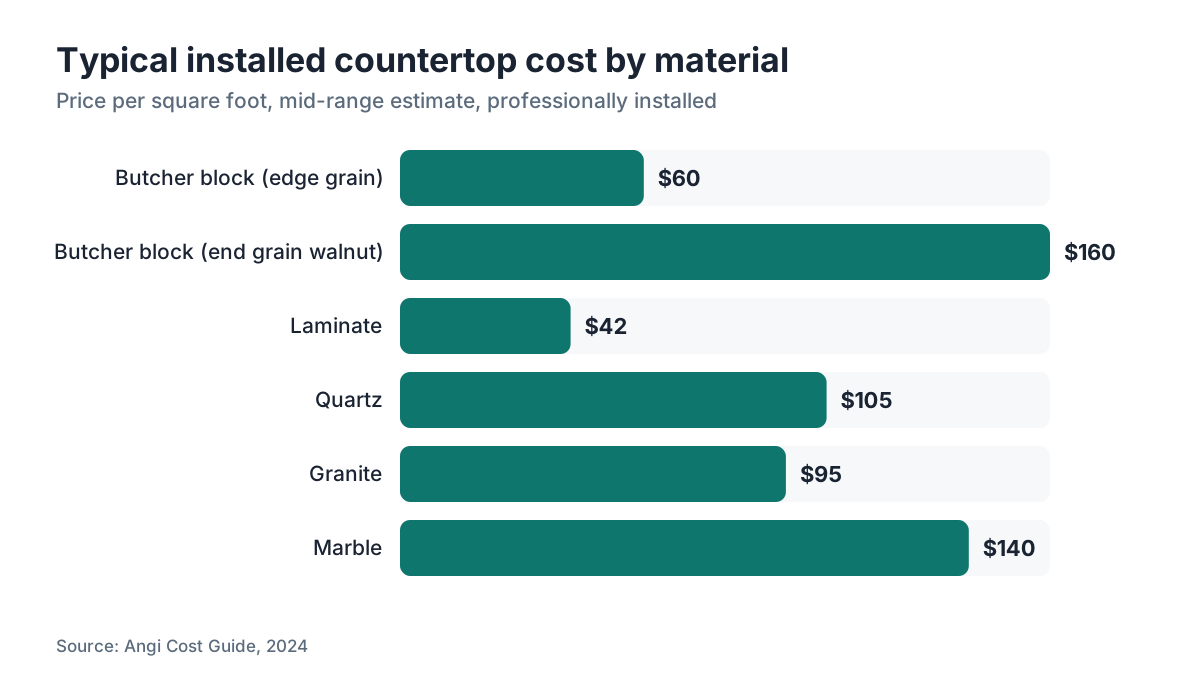
Butcher block runs about $40 to $200 per square foot installed, depending on species, edge profile, and fabrication complexity [6]. Edge-grain maple from a big-box store runs around $40-60 per linear foot for a 25-inch deep slab, which makes it one of the cheapest real-wood options going. Custom end-grain walnut from a specialty fabricator can hit $150-200 per square foot.
Here's how it lines up against other countertop materials on typical installed cost:
| Material | Typical installed cost (per sq ft) |
|---|---|
| Butcher block (edge grain maple) | $40-$80 |
| Butcher block (end grain walnut) | $120-$200 |
| Laminate | $25-$60 |
| Quartz | $70-$140 |
| Granite | $60-$130 |
| Marble | $80-$200 |
The ongoing cost is small: a quart of mineral oil every year or two ($8-12), sandpaper for the occasional refresh ($5-15), maybe a tin of wax conditioner ($12-20). Over ten years, do the work yourself and you spend maybe $150 total on consumables [2].
Want a rough number for your own project? Tools like the SlabWise instant quote tool estimate material and installation cost for various countertop types from your kitchen dimensions.
For lower-maintenance material comparisons, see laminate countertops and Corian countertops, which both shrug off water better and ask for less routine care.
What are the most common butcher block maintenance mistakes?
Oiling only the top face. The underside and side edges matter just as much. Wood moves with moisture, and if one face is sealed while the other breathes humid air, the slab cups. Oil every exposed surface.
Using the wrong oil. Cooking oils (olive, vegetable, canola) go rancid inside the wood, and you'll smell it in weeks. Stick to food-grade mineral oil, pure tung oil, or a commercial butcher block oil that says it won't go rancid [2].
Waiting too long on a stain. A wine stain sitting for a week is a multi-pass sanding job. The same stain caught within an hour is a salt-and-lemon fix.
Installing without sealing the underside and sink cutout edges first. Once the counter is set, the bottom is out of reach and the sink edges are buried. Seal before install.
Wiping daily with a dishwasher-soaked sponge. Prolonged moisture plus heat degrades the oil finish faster than almost anything else. Wring the sponge out completely, or use a dry cloth for the wipe-down.
Refusing to sand. Some homeowners treat butcher block like stone and try to clean their way out of damage. Sanding is the tool this material was built around. Avoid it and damage piles up until it crosses into irreparable.
For a sense of how the low-maintenance alternatives compare, Cambria countertops and other engineered stones need almost nothing beyond soap and water.
When should you refinish vs. replace butcher block countertops?
Refinish when the damage is surface-level: scratches, stains, dullness, minor cupping, uneven finish buildup. A full sand and re-oil brings back most butcher block that's had reasonable care, even after years of neglect.
Replace when the failure is structural: deep splits along glue lines that won't clamp closed, severe warping that leaves gaps between the counter and the cabinet below, or black rot that runs more than a quarter-inch into the wood after you've sanded away the visible damage.
Here's the honest number. Well-maintained butcher block clears 20 years easily. Poorly maintained butcher block near a sink can be a wreck in five. The maintenance sets the lifespan far more than the wood species or the original fabrication quality.
If you're a fabricator tracking how jobs come back to you, SlabWise's shop operations tools can log material specs, finish types, and customer notes, so you have a clear record when a client calls years later with a refinishing question.
How does butcher block maintenance compare to caring for stone countertops?
Stone, natural or engineered, fails differently. Granite and quartzite need sealing every one to three years to fight staining, but they won't warp, split, or need sanding. How to clean quartzite countertops and how to clean stone countertops both run a simpler routine than wood.
Marble is like butcher block in one respect. It scratches and etches, and those marks show in a way that drives some homeowners up the wall. But marble etches from acid rather than from tools, so the prevention plan is completely different.
Soapstone is the closest stone to butcher block in philosophy. You apply mineral oil to soapstone to even out its natural darkening, same product, same basic schedule. See how to clean soapstone countertops for a side-by-side.
The honest summary for anyone deciding: butcher block asks for more consistent attention and pays you back with repairability and a warmth stone can't match. Stone asks for attention less often, but when it chips or stains deep, the repair is harder and usually needs a pro.
Frequently asked questions
Can you use olive oil or coconut oil to condition butcher block countertops?
No. Cooking oils including olive, vegetable, canola, and coconut oil go rancid inside wood, and you'll notice the smell within weeks. Stick to food-grade mineral oil (USP grade, sold at pharmacies), pure tung oil, or a commercial butcher block conditioner that explicitly says it won't go rancid. Mineral oil is the safest, cheapest, and most widely recommended choice.
How do you get black stains out of butcher block?
Black stains near sinks or under appliances are almost always mold or mildew. Sand the area starting at 80-grit until you reach clean wood. For stubborn deep discoloration, dab a diluted bleach solution (50/50 with water) onto just the stained spot with a cotton swab, let it sit two minutes, rinse right away, and dry. Then take a final light sanding pass and oil the surface thoroughly.
How long after oiling butcher block can you use the surface?
With mineral oil, let it soak in for 20-30 minutes, then wipe off excess. The counter is safe to use immediately for dry tasks. For food prep involving moisture, waiting two to four hours gives the oil time to set. With hardening oils like pure tung oil, cure time is 24-48 hours per coat, and you should wait the full cure before putting the surface into service.
What's the best oil for butcher block countertops?
Food-grade mineral oil is the best all-around choice for most homeowners. It's cheap (around $8-12 per quart), safe for food contact, doesn't go rancid, and reapplies in minutes. For more water resistance, a mineral oil and beeswax blend (or a commercial product like Howard Butcher Block Conditioner) adds a light protective layer. Pure tung oil gives better water resistance but takes longer to cure.
Can butcher block countertops be refinished without professional help?
Yes, and it's one of the main reasons people pick the material. A random-orbit sander, 80/120/220-grit paper, and mineral oil are all you need for a full surface restoration. Sand with the grain, wipe off dust, and oil immediately on every surface including the underside. The whole job on an average kitchen island takes three to five hours plus cure time.
How do you seal butcher block around the sink?
The sink cutout edges, especially end grain, need four to six coats of a hardening finish like pure tung oil or spar urethane applied before installation, each coat dried fully before the next. Once the counter is set, those edges are hard to reach. For an already-installed counter staining near the sink, pull the sink if you can, sand back to clean wood, and apply multiple finish coats to the exposed edges before reinstalling.
Does butcher block need to be sealed before use?
Yes. New butcher block should be oiled before its first use. The standard protocol: apply food-grade mineral oil generously to all six faces, let it soak in, wipe off excess, and repeat daily for a week. This initial conditioning saturates the wood fibers and prevents the rapid moisture uptake that causes cupping or cracking in the first few weeks after installation.
Is it safe to cut directly on butcher block countertops?
Yes, with regular maintenance. Research from UC Davis found that bacteria introduced into wood surfaces couldn't be recovered after the wood dried, unlike plastic boards. The condition is that the surface stays free of deep, unaddressed knife grooves. Sand the surface every six months if you use it for cutting, and sanitize with diluted vinegar or 3% hydrogen peroxide after handling raw meat.
How do you fix a warped butcher block countertop?
Minor cupping caught early can sometimes reverse: wet the concave face, weight the slab flat, and oil both faces evenly. This works within the first few weeks of the warp appearing. If the wood has been cupped for months, the fibers have set and reversal is unlikely. Severe warping with gaps at the cabinet line usually means replacement, especially if the counter is also splitting at glue lines.
How often should you sand butcher block countertops?
Most well-maintained surfaces used for general kitchen tasks need a light sand every two to three years to clear accumulated scratches and finish buildup. Surfaces used as active cutting boards, or near sinks with heavy water exposure, do better sanded every six to twelve months. The practical signal is simple: when you can no longer get the surface to bead water even right after oiling, it's time to sand and start over.
Can you put hot pots on butcher block countertops?
No. Heat is one of the fastest ways to damage butcher block. A hot pot dries the oils out of the fibers on contact, can leave a white or dark burn mark, and opens the grain to moisture. Always use a trivet or silicone mat. Unlike the scratch-and-sand fix for surface damage, a serious burn often requires sanding down past the scorched fibers, which can run surprisingly deep.
What's the difference between edge grain and end grain butcher block for maintenance purposes?
End grain butcher block (the checkerboard pattern) absorbs oil faster, is gentler on knife edges, and self-heals minor cuts somewhat as fibers compress and spring back. But it absorbs water faster too and needs more frequent oiling. Edge grain is more stable, handles moisture better, and needs less frequent conditioning. For sink-adjacent areas, edge grain is the safer choice.
How do you clean butcher block countertops daily?
Warm water with a little dish soap is the correct daily cleaner. Wipe the surface, rinse with a clean damp cloth, and dry immediately with a dry cloth. Never leave standing water. Avoid full-strength bleach, ammonia-based cleaners, and abrasive scrubbers. To sanitize after raw meat, diluted white vinegar or 3% hydrogen peroxide spray is effective and won't harm the wood finish.
How does butcher block countertop cost compare to stone over a 10-year period?
Butcher block edge-grain maple runs $40-80 per square foot installed, versus $60-130 for granite or $70-140 for quartz. Ongoing maintenance for butcher block over ten years costs roughly $150 in mineral oil, sandpaper, and conditioner if you do it yourself. Stone may need professional sealing ($100-300 every few years) but no sanding. Ten-year totals end up comparable, with butcher block sometimes coming out ahead on initial installation.
Sources
- USDA Forest Products Laboratory, Wood Handbook Chapter 4: Moisture Relations and Physical Properties of Wood: Kiln-dried hardwoods are typically dried to 6-8% moisture content for interior applications
- US Pharmacopeia, USP-NF Mineral Oil Monograph: Food-grade (USP-grade) mineral oil is safe for food-contact surfaces and widely available at pharmacies and hardware stores
- USDA Food Safety and Inspection Service, Cutting Boards and Food Safety: USDA recommends keeping cutting surfaces clean and sanitized; modern dish soap at normal dilutions is appropriate for food-contact wood surfaces
- USDA Agricultural Research Service, Microbiological Safety of Cleaning and Sanitizing Agents on Wood Surfaces: Diluted hydrogen peroxide (3%) and diluted vinegar are effective sanitizing agents for wood food-contact surfaces
- UC Davis Food Safety Laboratory (Dean O. Cliver research on wood vs. plastic cutting boards, 1993): Bacteria rubbed into wood cutting surfaces were not recoverable after the wood dried, while bacteria on plastic boards survived; well-maintained uncracked wood is not inherently more hazardous than plastic
- HomeAdvisor (Angi), Butcher Block Countertops Cost Guide: Butcher block countertop prices range from approximately $40 to $200 per square foot installed depending on species and fabrication
- USDA Forest Products Laboratory, Wood as a Building Material: Durability and Maintenance: Wood surfaces maintained with penetrating oils resist moisture uptake and surface checking when all faces are treated evenly
- FDA, Food Code 2022, Section 4-101.17 Wood, Use Limitation: The FDA Food Code permits wood surfaces for certain food contact applications including hard maple cutting boards
- NSF International, NSF/ANSI 51 Food Equipment Materials: Food-grade mineral oil meets NSF/ANSI 51 standards for incidental food contact use on equipment including wood surfaces
- USDA Forest Products Laboratory, Wood Finishing: Oils, Waxes, and Penetrating Finishes: Penetrating oil finishes including mineral oil and tung oil provide moisture resistance by filling wood cell lumens without forming a surface film
- EPA, Safer Choice Program, Ingredient Safety for Food Contact Surfaces: Hydrogen peroxide at 3% concentration is recognized as an effective and lower-risk sanitizer for food contact surfaces
Last updated 2026-07-09