TL;DR
- Butcher block countertops last 20 to 50 years when sealed and maintained, and they can be sanded and refinished many times over that life.
- Durability comes down to wood species, grain orientation, finish type, and how much water the surface sees.
- Standing water near a sink is the number one cause of early failure.
What is the actual lifespan of a butcher block countertop?
Most butcher block countertops last 20 years with average care, and plenty are still working after 40 or 50 in kitchens that stayed dry and got refinished now and then. That range tells the real story. The gap between a 10-year top and a 50-year top comes down to water management, not wood quality.
Refinishing is the reason wood lasts. Unlike stone or laminate, butcher block sands back to bare wood and takes fresh oil or sealer every few years. Each cycle resets the surface clock. A good hardwood top can outlast the cabinets under it if you're willing to do occasional work.
The weak spot on almost every install is the same: the six inches around the sink cutout. Water pools there, wicks into the grain, and causes swelling, darkening, and eventually rot. Homeowners who skip a waterproof finish at the sink and go oil-only often replace that one section within five to eight years while the rest of the counter looks fine.
For how butcher block ranks against harder surfaces, see our overview of kitchen countertops, which covers lifespans across material categories.
Which wood species hold up best as countertops?
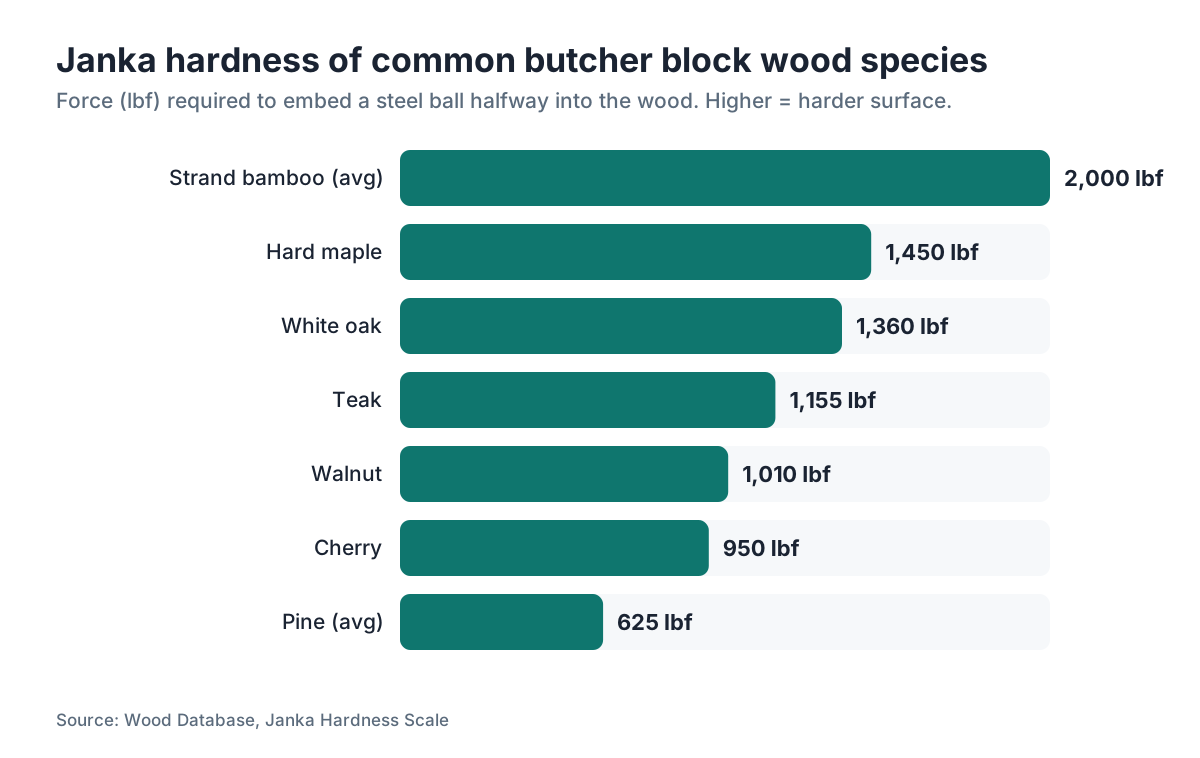
Hard maple is the traditional choice, and it earns it. The Janka hardness scale gives you a real number to compare species by. Janka rating measures the force in pounds needed to embed a steel ball halfway into the wood [1]. Higher numbers mean more resistance to dents and scratches.
| Wood Species | Janka Hardness (lbf) | Notes |
|---|---|---|
| Hard maple | 1,450 | Industry standard; tight grain resists bacteria |
| Walnut | 1,010 | Softer but stable; shows less water staining |
| Teak | 1,155 | Naturally oily; strong moisture resistance |
| White oak | 1,360 | Good hardness; open grain needs filling |
| Cherry | 950 | Attractive; moderate durability, softens with age |
| Bamboo (strand) | 1,380 to 3,000 | Not wood but a common substitute; very hard |
| Pine | 380 to 870 | Poor choice for countertops; dents easily |
Hard maple is dense, takes a finish well, and its closed grain is less friendly to bacteria than open-grained species [2]. The USDA Forest Products Laboratory describes maple's fine, uniform texture as a practical advantage for surfaces that touch food [2].
Teak deserves more credit than it gets. The natural silica and oils in teak make it genuinely water-resistant without aggressive sealing, which is why boat builders have used it for centuries. The catch is money. Teak runs well above maple per board foot.
Walnut is a designer favorite right now. It's softer than maple, so it shows more knife marks over time, but a lot of homeowners want that worn-in look. It's also more dimensionally stable than some harder species, which matters in humid kitchens.
Skip pine and fir. They look fine on day one and fail fast. A pine countertop will show dings within a year of real cooking.
Does grain orientation affect how durable butcher block is?
Yes, a lot. Butcher block comes in three grain orientations, and they behave very differently under a knife and under water.
Edge grain is the most common type in home kitchens. The boards turn so the long edge of the wood faces up. You get a clean, linear look and good durability. Edge grain hides knife marks reasonably well because cuts tend to run along the fibers instead of across them.
End grain shows the cross-section of the wood, the growth rings you see when you cut a log. This is the traditional block used in meatpacking and pro kitchens. When a knife hits end grain, the fibers separate and spring back instead of getting sliced through. End grain is famously self-healing and easy on knife edges. It's also the most expensive to build and the most vulnerable to moisture, because end grain drinks water far faster than face or edge grain. Sealing end grain near a sink is non-negotiable.
Face grain shows the wide, flat face of the plank. It looks beautiful, especially in figured wood, but it's the least durable orientation for a countertop. It shows scratches and dents more readily and can cup or warp with humidity more than the other two.
For a general-purpose kitchen where durability comes first, edge grain hard maple is the sensible answer. End grain is worth it if you do serious prep work and commit to real maintenance. Face grain belongs on a low-traffic island or a decorative piece.
What finish lasts longest on butcher block: oil, varnish, or polyurethane?
The finish decides your whole maintenance life, more than the look does. This is where a lot of homeowners get steered wrong.
Mineral oil and oil-wax blends (a beeswax and mineral oil mix, for example) soak into the wood and feed it from within. They don't build a hard film. The wood keeps its character and still feels like wood. The trade-off: water can still get in if the surface dries out, and you reapply every one to three months in heavy-use zones. Oil finishes are the easiest to fix locally. Sand the damaged spot, re-oil, done. They're food-safe once cured.
Hard wax oils (Rubio Monocoat, Osmo Polyx) are a step up. They penetrate like oil, but the wax builds a very thin hardened layer that sheds water better than straight mineral oil. Maintenance stays easy, and spot repairs stay simple.
Polyurethane and varnish build a hard film on top of the wood. That film repels water and stains well as long as it stays intact. The problem shows up when it doesn't. Once the film scratches or chips, water gets under the coating and causes lifting and dark staining that's much harder to fix. A real repair means sanding all the way back to bare wood. Most fabricators and woodworkers tell you to keep film finishes away from the sink for exactly this reason.
Waterlox is a tung-oil resin finish that sits between a penetrating oil and a film. It soaks in but cures hard, giving good water resistance without polyurethane's brittleness. It's a solid pick for sink areas specifically.
My call: use Waterlox or a hard wax oil at the sink and a penetrating oil everywhere else. If you're fine with the reapplication schedule, plain mineral oil works. Polyurethane on a dry cutting-surface island is fine. Polyurethane on a sink surround is asking for trouble.
How does butcher block hold up against water, heat, and stains?
Water is the enemy. Full stop. Wood swells when wet, shrinks when dry, and repeated cycles cause checking (small cracks) and warping. Standing water at a sink rim or around a faucet base shows visible damage in months on an unfinished or poorly finished surface. A well-sealed edge grain maple counter with Waterlox shrugs off casual splashing, but no wood countertop is waterproof.
Heat resistance beats most expectations. Wood is a decent insulator, so a hot pan set down briefly won't scorch instantly the way a film-coated surface might. Push it, though, and it burns. Cast iron off the burner or a pan straight from a 450-degree oven scorches the surface. The rule most professional woodworkers use: trivets for anything over 300 degrees F. The upside is that scorches usually sand out, which stone can't match when it chips and synthetics can't match when they melt.
Stains from food and oil are manageable. Coffee, wine, and berry juice will stain bare or oil-finished wood if they sit. A light sanding and re-oiling usually clears them. Turmeric is the worst offender. It stains wood bright yellow and fights removal. Bleach-based cleaners can lighten it but may lift your finish and raise the grain.
Against other surfaces: granite countertops are harder and more heat-resistant but can't be refinished when they chip. Laminate countertops are waterproof at the surface but swell badly at the substrate once water reaches the seams or edges. Butcher block sits in an interesting middle. It can be damaged, and it can be fixed.
Can butcher block countertops be repaired and refinished?
This is the real durability edge wood holds over almost every other countertop material. A scratched granite slab needs professional epoxy fill or stays scratched. A burned butcher block top sands back to new in an afternoon.
Sanding is the core repair. For light scratches and surface stains, 120-grit then 180-grit followed by re-oiling restores the surface. For deeper gouges or burns, start at 80-grit. Always sand with the grain, never across it.
The practical limit on refinishing is thickness. Most residential butcher block starts at 1.5 inches thick. Each cycle removes a little wood. Over the life of a heavily used counter you might sand out 1/8 inch total, which leaves many refinishing cycles before you'd reach the glue lines near the bottom.
The sink area is a special case. If water damage has caused blackening and soft spots, those sections can often be cut out and patched. Look closely and you'll see it, but it's structurally sound and far cheaper than replacing the whole top.
Professional refinishing runs $300 to $600 for an average kitchen, depending on shop rate and whether the top stays in place or comes off. Doing it yourself costs the sandpaper and finish, usually under $80.
One note for fabricators pricing repair work: if you quote butcher block refinishing alongside new installs, clean estimating keeps the math honest. SlabWise's quoting tools handle wood surface work next to stone, which helps on mixed-material kitchens.
How does butcher block compare to stone, quartz, and laminate for long-term durability?
Durability isn't one number. It depends on which kind of damage you actually care about.
| Material | Scratch Resistance | Heat Resistance | Water Resistance | Repairability | Typical Lifespan |
|---|---|---|---|---|---|
| Butcher block | Moderate | Good (with care) | Poor-to-good (finish-dependent) | Excellent | 20-50 years |
| Granite | Excellent | Excellent | Very good (sealed) | Poor (chips, cracks) | 50+ years |
| Quartz (engineered) | Very good | Moderate (no direct heat) | Excellent | Poor | 20-25 years |
| Laminate | Poor (surface chips) | Poor (melts) | Good (surface only) | Poor | 10-20 years |
| Marble | Poor (etches) | Excellent | Poor (etches, stains) | Moderate (honing) | 50+ years |
Quartz and Cambria countertops beat wood on scratches and heat, but once a quartz surface chips or burns, professional repair is expensive and rarely invisible. Butcher block's refinishability is a genuine edge in a busy cooking kitchen. Consumer Reports testing puts butcher block below engineered quartz and granite for scratch and heat resistance while noting its repair advantage [10].
Marble countertops etch with acid (lemon juice, vinegar) in a way that bothers a lot of people. Butcher block stains under the same exposure, but the stain sands out. Which one is better depends on how much maintenance you're willing to do.
For a homeowner who really cooks and wants a surface that can take a beating and be made right again, butcher block is honestly one of the stronger picks. For someone who wants zero maintenance and hates the look of wear, engineered quartz fits better.
For synthetic surfaces that also offer some repairability, read about corian countertops and formica countertops.
What are the most common causes of butcher block failure?
Knowing what kills butcher block early is more useful than any single durability number.
Moisture at the sink leads the list by a wide margin. That means water pooling around the faucet base, wet sponges sitting on the surface, and a slow drip from under the sink. The fix is a waterproof finish at the sink area, and that means reapplying before it fails, not after.
Drying out in low-humidity homes comes second. Wood needs some moisture to stay stable. Kitchens with forced-air heat in dry climates can drop a butcher block from 8 percent to 4 percent moisture content over a single winter, which brings cracking and checking. A light oil coating slows the loss. USDA Forest Products Laboratory guidance says wood in service should stay at a moisture content matched to its environment to hold dimensional change to a minimum [7].
Over-cleaning with harsh products is an underrated killer. Bleach cleaners, ammonia products, and dishwasher detergent residue all strip oil finishes and raise the grain. Mild soap and water for daily cleaning is enough.
Weak support cracks long spans. Butcher block is wood, not stone, and it moves with humidity. Glue or screw it down too rigidly across a wide span with no room to expand and it cracks. Most installation guidelines call for figure-8 fasteners or slotted screws that let the top move, not a rigid silicone bead across the whole underside.
Using it as a cutting board everywhere is tempting given the marketing, but cutting straight on an oil-finished surface works bacteria into the grain more readily than a sealed surface does. The answer most woodworkers give: keep a separate cutting board for raw protein and use the countertop for everything else.
Is butcher block sanitary and safe for food prep?
This question draws a lot of conflicting internet advice, so let's be specific about what the research shows. Short version: a well-maintained wood surface is safe for most prep, and cracks are the real risk.
A widely cited 1994 study by Dean O. Cliver at UC Davis found that bacteria drawn into wood grain died there and did not multiply, while bacteria on plastic cutting boards survived in knife scars and could be dislodged onto food [3]. The study reported that hardwood surfaces had natural bactericidal properties not understood at the time. Food science literature has discussed and revisited the work since.
The USDA's Food Safety and Inspection Service still recommends that any surface used for raw meat and poultry be thoroughly washable and sanitizable [4]. Their practical steer is to use non-porous surfaces for raw protein and treat wood as a secondary prep area.
The middle ground is simple. A sealed or oiled butcher block surface is fine for bread, vegetables, fruit, and most prep. Keep a separate plastic or glass board for raw chicken and pork, and you get both benefits.
The bactericidal-wood research is real and interesting, but it doesn't excuse an unmaintained, cracked, or water-damaged surface. Cracks and open checks can harbor bacteria in ways that closed, healthy grain does not, a point University of Georgia Extension makes about damaged cutting surfaces [6]. One more reason maintaining the surface matters beyond looks.
How much does it cost to install or replace butcher block countertops?
Butcher block costs less than most natural stone and more than standard laminate. Prices vary by species, thickness, and supplier, but here's a realistic range as of mid-2025.
Unfinished hard maple edge grain butcher block runs roughly $10 to $30 per square foot for the slab alone, depending on thickness (1.5 inches is standard) and supplier. Walnut and teak run $25 to $60 per square foot. Pre-finished or custom pieces from specialty woodworkers cost more.
Installation adds $200 to $500 or more depending on the job's complexity, local labor rates, and whether a sink cutout is involved. Total installed cost for an average kitchen (around 40 square feet of counter) runs roughly $600 to $2,500 for standard species, and climbs well past that for premium wood [5].
Refinishing later costs $300 to $600 professionally, or under $100 in materials for a motivated DIYer.
For comparison, installed granite typically runs $50 to $130 per square foot, and engineered quartz $55 to $155 per square foot [5]. Factor in refinishing every 5 to 7 years and butcher block's 20-year cost of ownership still lands near most midrange stone.
If you're a fabricator running butcher block quotes and want to line them up against stone jobs you already price, countertop installation covers the broader cost breakdown across materials.
What maintenance schedule keeps butcher block countertops in good shape?
A realistic schedule matters more than any single product or finish. Here's what actually keeps a top healthy for decades.
Oil-finished surfaces: apply food-grade mineral oil or a hard wax oil monthly for the first three months after installation, then every three to six months depending on how dry the wood looks. Drag your hand across it. Rough and thirsty means it needs oil. Water beading lightly means it's fine.
Waterlox or varnish surfaces: inspect for scratches and worn spots once a year. Spot-apply finish where it's worn. Do a full recoat every three to five years, or whenever water stops beading.
Daily cleaning: wipe with a damp cloth or mild dish soap and water. Dry the surface afterward. Don't leave water pooled.
Annually: give the sink area a real look. Check for darkening, soft spots, or lifting finish. Handle those before they spread.
Every five to ten years: a full light sanding and refinish. This is the reset that keeps a top looking new for decades.
Hard no's: never run butcher block through a dishwasher, never use it as a trivet for very hot cookware without checking the finish first, and never let produce or meat drippings sit overnight.
For cleaning practices across other materials, see how to clean stone countertops for the contrast with wood-specific care.
Is butcher block a good choice near a sink?
It can be, with the right setup. Plenty of kitchens run butcher block to and around the sink for decades with no trouble. It just takes more thought than dropping stone or quartz in the same spot.
What a sink-adjacent install needs to survive: a waterproof finish (Waterlox, multiple coats of a good penetrating finish, or at minimum a hard wax oil refreshed on schedule), a quality undermount sink with a tight, well-sealed cutout edge, and a faucet base sealed against water intrusion. The sink rim and faucet base are where water works in most often.
If you want butcher block but you're nervous about the sink, here's one fix: use stone or quartz for a six-inch strip right around the sink and butcher block everywhere else. It's an uncommon design choice, but it solves the problem head-on.
End grain near a sink carries more risk than edge grain because it absorbs water so much faster. If you want end grain for prep, keep it away from the water.
The honest answer: if you'll re-oil or refresh the finish at the sink every year, butcher block there is fine. If you want a set-it-and-forget-it surface, put stone at the sink and butcher block on a dry island instead.
Frequently asked questions
How often do you need to oil butcher block countertops?
For the first three months after installation, oil once a month. After that, every three to six months is typical for a well-used kitchen. The test: if the wood looks dry or feels rough, it needs oil. Use food-grade mineral oil or a beeswax-mineral oil blend. Waterlox or hard wax oil finishes need less attention, usually a spot recoat annually and a full recoat every three to five years.
Can butcher block countertops be sanded and refinished multiple times?
Yes. Most residential butcher block starts at 1.5 inches thick, and each refinishing cycle removes very little material. Over a lifetime of heavy use you might lose 1/8 inch total, which leaves dozens of cycles realistic. Sand with the grain starting at 80 or 120 grit, finish at 180 grit, and reapply your chosen finish. The surface is essentially new after each cycle.
What is the hardest wood for butcher block countertops?
Strand-woven bamboo tests at 1,380 to over 3,000 lbf on the Janka scale, making it the hardest common option. Among true hardwoods, hard maple at 1,450 lbf is the standard for food surfaces. White oak at 1,360 lbf and teak at 1,155 lbf sit close behind. Hard maple stays the top pick for its combination of hardness, closed grain, and food safety track record.
Does butcher block hold up in a busy kitchen?
Yes, with maintenance. Professional kitchens have used thick maple work surfaces for over a century. The difference in a busy home kitchen is that high-traffic areas need re-oiling more often and benefit from a waterproof finish at the sink. A well-maintained edge grain hard maple counter handles heavy daily prep, knife marks, and normal moisture without trouble. The surface shows wear, but it always sands clean.
Is butcher block cheaper than granite or quartz?
Generally yes, especially for standard species. Installed hard maple butcher block typically runs $15 to $45 per square foot all-in, versus $50 to $130 for granite and $55 to $155 for engineered quartz. Premium species like teak or walnut close the gap with stone. Over 20 years, add $300 to $600 for one or two professional refinishings; butcher block's total cost of ownership still usually lands below natural stone.
Can you put hot pans directly on butcher block?
Brief contact with warm pans is fine, but very hot cookware straight from the oven can scorch the surface. Wood is a decent insulator, so light heat does less damage than on some synthetics, and light scorch marks usually sand out. The rule: use a trivet for anything hotter than around 300 degrees F. Never set a cast iron pan straight from a 500-degree oven onto any wood surface.
How do you prevent butcher block from warping?
Keep moisture content stable. Seal all six sides during installation, including the underside and edges. Use fasteners that let the wood expand and contract (figure-8 clips or slotted screws) instead of rigid adhesive across the full underside. Avoid placing butcher block directly over a dishwasher without a moisture barrier. In dry climates, keep oil on the surface to slow moisture loss through winter.
What kind of butcher block is best near a sink?
Edge grain hard maple with a Waterlox or hard wax oil finish is the most practical choice near a sink. Avoid end grain in wet zones because it drinks water much faster. Teak is a strong alternative thanks to its natural oils and moisture resistance. Whatever species you pick, the finish matters more than the wood: a properly applied penetrating waterproof finish plus regular maintenance keeps sink-area wood from failing early.
Is butcher block countertop safe for food prep?
Yes for most food prep. A 1994 UC Davis study found that hardwood surfaces actually kill bacteria drawn into the grain, unlike plastic where bacteria survive in knife scars. USDA guidance recommends keeping raw meat on separate, easily sanitized surfaces as extra precaution. For vegetables, bread, pastry, and most prep, a well-maintained butcher block surface is safe and practical. Keep a dedicated cutting board for raw protein as a simple added step.
How do you find butcher block countertop installation near me?
Start with local cabinet shops and kitchen remodelers, many of whom source and install butcher block alongside cabinetry. Lumber dealers and woodworking suppliers often have installer referrals. Big-box home improvement stores sell pre-made slabs and can sometimes arrange installation. For custom species, thicknesses, or edge profiles, specialty countertop fabricators and small millwork shops usually do better work than big-box installers, even at a higher price.
How do you remove dark stains or mold from butcher block?
Light darkening from water or tannins comes out by sanding to fresh wood and re-oiling. For mold or deep black staining, sand the area starting at 80 grit, then move to 120 and 180. If the blackness persists past 1/8 inch of sanding, the rot may go deeper and that section may need cutting out and patching. Hydrogen peroxide (3%) applied before sanding can lighten surface mold before you remove material.
Does butcher block need to be sealed before installation?
All surfaces, including the underside and edges, should be finished before or during installation. Many fabricators apply a first coat of oil or Waterlox before the top goes in, then do final coats in place. The underside is critical: an unsealed bottom face lets moisture in from below and causes warping. The cutout edges at the sink are the other critical spot. Missing either one is the most common install mistake behind early failure.
How does butcher block compare to Corian or solid surface for durability?
Both Corian and butcher block sand and repair, which puts them ahead of stone and laminate for repairability. Corian is more water-resistant and needs no oiling. Butcher block is warmer to the touch, handles knife marks differently (wood fibers compress; Corian scratches more visibly), and brings a natural look no synthetic matches. Corian wins on zero-maintenance appeal; butcher block wins on character and the ability to refinish to genuinely new condition.
What thickness of butcher block is best for countertops?
The standard residential thickness is 1.5 inches. That's thick enough for a solid feel, allows multiple refinishings over the life of the top, and spans typical cabinet widths without flex. Thicker slabs (2 to 3 inches) show up in commercial settings and look substantial as islands. Thinner panels (3/4 inch) exist as overlays for existing counters but offer fewer refinishing cycles and feel less solid.
Sources
- Wood Database, Janka Hardness Scale explanation: Janka hardness measures the force in pounds required to embed a 0.444-inch steel ball halfway into wood; hard maple rates 1,450 lbf
- USDA Forest Products Laboratory, Wood Handbook: Wood as an Engineering Material (General Technical Report FPL-GTR-282): Hard maple has fine, uniform texture suitable for food-contact surfaces; wood in service should be maintained at moisture content appropriate to its environment
- Cliver DO, UC Davis, 'Cutting boards with bacteria' (1994 study reported in Journal of Food Protection): Bacteria drawn into wood grain died and did not multiply, while bacteria on plastic cutting boards survived in knife scars and could contaminate food
- USDA Food Safety and Inspection Service, Kitchen Practices Food Safety: USDA recommends that surfaces used for raw meat and poultry be thoroughly washable and sanitizable
- Angi, Countertop Installation Cost Guide: Butcher block installed runs roughly $15-$45 per sq ft; granite $50-$130 installed; engineered quartz $55-$155 installed
- University of Georgia Extension, Food Safety in the Home Kitchen: Wood cutting surfaces can harbor bacteria in cracks and damaged areas; maintenance of surface integrity is recommended for food safety
- Forest Products Laboratory, USDA, Drying Hardwood Lumber (General Technical Report FPL-GTR-118): Dimensional change in wood is directly related to moisture content variation; end grain absorbs and releases moisture faster than edge or face grain
- EPA, Indoor Air Quality and Wood Finishes: Oil and wax finishes used on food-contact wood surfaces should be food-safe; mineral oil is commonly recommended as a non-toxic penetrating finish
- National Kitchen and Bath Association (NKBA), Kitchen Design Guidelines: NKBA design guidelines address countertop surface selection and durability considerations for residential kitchen applications
- Consumer Reports, Kitchen Countertop Ratings and Reviews: Consumer Reports testing places butcher block below engineered quartz and granite for scratch and heat resistance but notes its repairability advantage
Last updated 2026-07-09