TL;DR
- Brown quartz countertops typically cost $50 to $120 per square foot installed, depending on brand, edge profile, and slab thickness.
- They come in dozens of shades from warm caramel to near-black espresso, resist stains and scratches well, and never need sealing.
- This guide covers every color family, brand comparison, care tips, and the questions fabricators hear most.
What exactly is brown quartz, and how is it made?
Quartz countertops are engineered stone, not a quarried slab. Manufacturers bind roughly 90 to 94 percent crushed quartz aggregate with a polymer resin binder, then press and cure the mixture into slabs [1]. Pigments and sometimes small amounts of recycled glass or mirror chips go in during mixing, which is exactly how fabricators get a consistent brown that runs all the way through the slab rather than just sitting on the surface.
Natural stone like granite or quartzite produces brown tones because of iron-oxide mineral content in the original rock. Engineered quartz gets there through controlled pigmentation, so two slabs from the same production run will match closely. That predictability matters a lot when you're doing a large kitchen with multiple slabs and you need the veining to flow.
The resin binder is what makes quartz non-porous by nature [1]. There are no microfissures for oil, wine, or coffee to seep into the way there are in granite countertops or marble countertops. The tradeoff: quartz is not heat-proof the way some homeowners assume. Thermal shock from a hot pan can damage the resin, which is why every manufacturer recommends trivets.
What shades of brown quartz are available?
The brown quartz spectrum is wider than most people realize when they first start shopping. Here is a practical breakdown of the main color families and where they tend to work best.
Warm caramel and honey tones. These read as light brown with a golden undertone. They pair well with white or cream shaker cabinets and lighter wood floors. Cambria's Brittanicca Warm and Silestone's Desert Silver sit in this zone.
Taupe and greige. True taupe sits between brown and gray, which makes it forgiving across many cabinet colors. This is probably the single most popular brown-adjacent category right now because it reads as neutral in almost any light. Caesarstone's Flannel Grey slides into this family depending on your lighting.
Chocolate and walnut. Mid-range browns with low to moderate veining. These can anchor a kitchen visually without going as dramatic as espresso. They tend to show dust and water spots more than lighter shades, so wipe habits matter.
Espresso and dark mocha. Near-black browns. Very dramatic on an island or perimeter with light upper cabinets. Water spots are highly visible; a quick wipe after every use is not optional if you want it to look good.
Brown with white veining. This is the category that has exploded in the past five years. Brands like Cambria (see our Cambria countertops guide) and Caesarstone offer brown-ground slabs with dramatic white veining that mimics quartzite or certain marbles. The veining is screenprinted or applied during manufacturing and locked under the resin layer, so it does not fade.
The color you see on a screen is almost never accurate enough to make a final decision. Get a physical sample, set it on your actual cabinet box in your actual lighting, and look at it at different times of day before you commit.
How much do brown quartz countertops cost?
Installed cost for quartz countertops in the United States runs $50 to $120 per square foot as a realistic range across most markets, with outliers on both ends [2]. A basic brown quartz from a builder-grade line at a home center might hit $45 to $55 installed in a competitive market. A premium brand like Cambria in a complex edge profile with a waterfall island can push past $130 in high-labor metro areas.
The table below shows typical price ranges by tier.
| Tier | Examples | Material only ($/sq ft) | Installed ($/sq ft) |
|---|---|---|---|
| Builder / entry | MSI Quartz, Viatera base lines | $25, $40 | $45, $65 |
| Mid-range | Caesarstone, Silestone, Q Premium | $40, $65 | $65, $95 |
| Premium | Cambria, Calacatta by brand | $60, $90 | $90, $120+ |
A typical kitchen with 40 square feet of countertop runs $2,000 to $4,800 installed at mid-range pricing. An island adds 15 to 25 square feet typically, which adds $975 to $2,375 at the same rate.
Edge profiles add cost. A basic eased or beveled edge is usually included. Mitered waterfall edges can add $300 to $600 per linear foot depending on the shop. Cutouts for sinks and cooktops run $100 to $350 each.
Here's the fastest way to sanity-check a bid. Ask for a line-item breakdown: material per square foot, fabrication per square foot, edge per linear foot, and install labor separately. Fabricators who use quoting software like SlabWise produce itemized quotes by default, which makes comparison much easier than staring at a single lump-sum number.
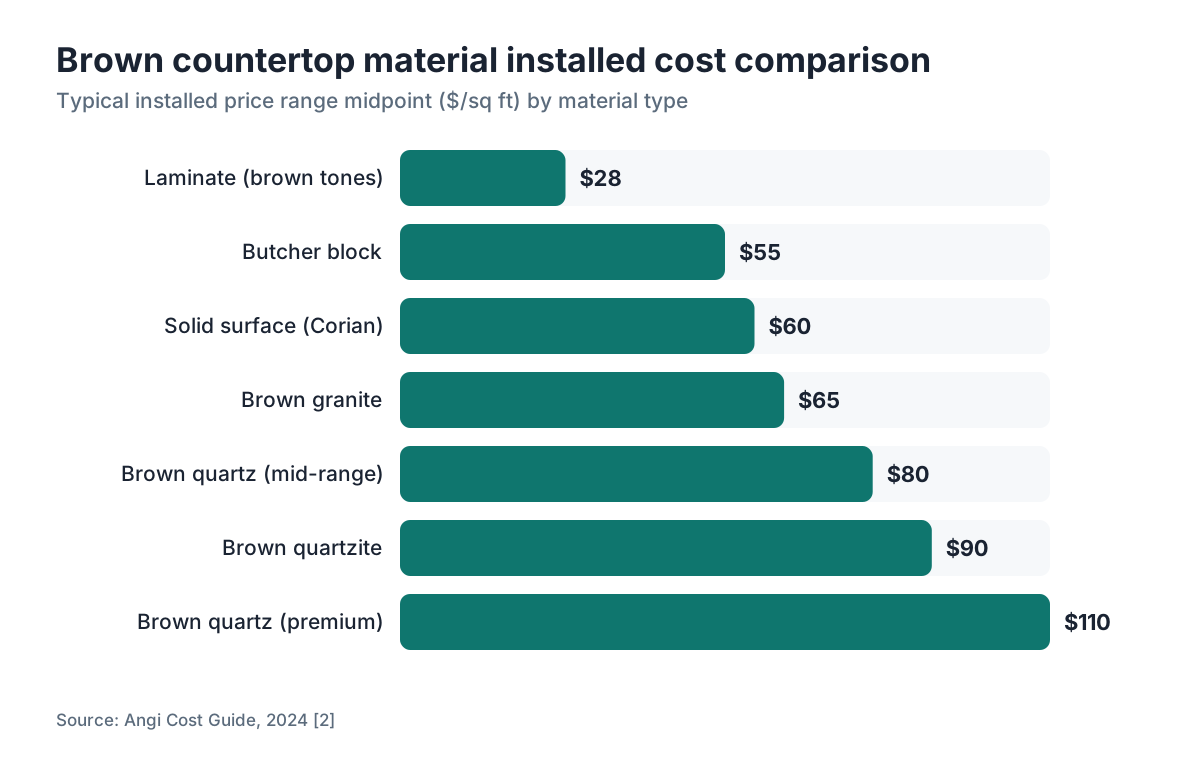
For context, laminate countertops installed run $15 to $40 per square foot, and butcher block countertops run $30 to $80, so quartz sits in the upper-middle of the material range.
How does brown quartz compare to granite and other brown stone options?
Quartz and granite solve slightly different problems. The right choice depends on what you actually prioritize.
Maintenance. Quartz is non-porous and never needs sealing [1]. Granite is porous and should be sealed annually in most residential applications (some granites more often). If you hate maintenance tasks, quartz wins.
Heat resistance. Granite handles heat better. You can briefly set a warm (not screaming hot) pan on granite without damage in most cases. Quartz resin can discolor or crack under thermal shock. The National Kitchen and Bath Association recommends trivets for any engineered stone surface [3].
Look. Quarried granite has movement and variation that engineered quartz still cannot fully replicate, especially in veined or dramatic slabs. If you want each slab to look slightly different and alive, natural stone has an edge. If you want predictability across a large surface, quartz wins.
Brown quartzite vs. brown quartz. This causes real confusion. Quartzite is a natural metamorphic rock, not the same as engineered quartz. Some quartzite slabs are stunning in brown tones (think Fantasy Brown, which is actually a marble-quartzite hybrid). Quartzite is generally harder than marble but is still porous and needs sealing. See our cleaning guide for how to clean quartzite countertops if you're considering natural stone.
Soapstone. Dark soapstone reads brownish-black and is another natural alternative. It's non-porous naturally like quartz, but it scratches and dents, and it needs periodic oiling to hold its color. Our guide on how to clean soapstone countertops covers the care routine in detail.
Short version: if you want brown tones, low maintenance, and consistent appearance, engineered quartz is the right call for most busy households.
Which brands make the best brown quartz countertops?
The quartz market has consolidated around a handful of major manufacturers, most of them operating globally. Here is an honest assessment of the main players in the brown quartz space.
Cambria. Made in the USA (Eden Prairie, Minnesota). They make their own slabs rather than white-labeling, and their quality control is consistently high. Their warranty is lifetime for residential use [4]. Brown offerings like Brittanicca Warm, Wentworth, and Sutherland cover good ground from warm honey to deeper espresso-adjacent tones. Price is at the top of the market. Worth it if the color is right for you.
Caesarstone. Israeli manufacturer with US fabrication partners. Strong mid-to-premium pricing. Their Shitake, Excava, and Cocoa tones are real-world popular for kitchens. Warranty is lifetime for residential [5]. Widely available through fabricators and some big-box retailers.
Silestone (Cosentino). Spanish manufacturer. Deep brown selection, and they've pushed sustainability hard with their HybriQ technology, which uses recycled content [6]. Good fabricator network. Warranty is 25 years for residential.
MSI Quartz. Budget-to-mid range, solid quality for the price. Widely stocked at home centers. Color selection in brown is more limited than premium brands but serviceable.
Viatera (LG Hausys). Consistent quality, mid-range price, less brand recognition. Good option if a local fabricator carries it and the color works.
One thing worth knowing: the fabricator matters as much as the brand. A mediocre fabricator working with Cambria will produce worse results than a skilled shop working with MSI. Before you fixate on brand, ask to see finished jobs from the fabricator you're considering.
How do you care for and clean brown quartz countertops?
Quartz is one of the easier surfaces to maintain, but a few specific things will damage it that many homeowners don't know going in.
Daily cleaning. Warm water and a few drops of dish soap on a soft cloth is genuinely all you need for everyday messes. Wipe, rinse, dry. Coffee, wine, and cooking oils clean up easily if you get to them within a few minutes.
Avoid. Bleach, ammonia-based cleaners (including many glass cleaners), and abrasive scrubbing pads will degrade the resin surface over time. Caesarstone's official care guidance specifically lists bleach and high-pH cleaners as harmful [5]. On dark brown surfaces, any etching from harsh chemicals shows more dramatically than on lighter colors.
Stubborn stains. A paste of baking soda and water left for 5 to 10 minutes, then wiped with a plastic scraper and soft cloth, handles most dried-on food. For adhesive residue, a plastic scraper (not metal) plus a small amount of isopropyl alcohol works without damaging the surface.
Heat. Set a hot pan on quartz and you risk thermally shocking the resin. That produces a hazy discoloration or, in bad cases, a crack. Trivets cost $15. Use them every time.
Sealing. Don't. Quartz does not need sealer, and applying one can actually cause streaking or leave a film on the surface.
For more detail on keeping stone surfaces looking good long-term, our guide on how to clean stone countertops covers the full routine.
Dark brown quartz specifically: water spots are more visible than on light surfaces. A microfiber cloth after every use near the sink keeps it looking polished without much effort.
Is brown quartz a good choice for bathrooms and other rooms?
Yes, with some caveats. Brown quartz works in bathrooms, laundry rooms, bars, and home offices. The non-porous surface is genuinely ideal for bathrooms because moisture, hair products, and cosmetics don't absorb into it.
In bathrooms, darker brown tones tend to be popular for vanities paired with vessel sinks or undermount rectangular sinks. The warmth of brown reads better than cold gray in a space that often has warmer lighting.
One practical consideration in bathrooms: quartz is heavy. A typical 3-centimeter (about 1.25-inch) slab weighs roughly 18 to 19 pounds per square foot [7]. Vanity cabinets need to be structurally sound to support it. A 24-inch by 60-inch bathroom vanity top is about 10 square feet, which means roughly 180 to 190 pounds sitting on the cabinet. Most modern vanity cabinets handle this fine, but verify with older or furniture-style vanities.
Outdoor kitchens are where quartz does not work well. UV exposure from direct sunlight fades the resin pigments and degrades the surface over time. For outdoor applications, quartzite or granite are better choices.
What thickness of brown quartz should you choose?
Quartz slabs come in two standard thicknesses: 2 centimeter (roughly 3/4 inch) and 3 centimeter (roughly 1.25 inches). A third option, 1.2 centimeter, exists but is rare in the US residential market and mostly used for vertical applications.
3 cm is the standard for kitchen countertops in the US today. It's thicker, more rigid, and does not require a plywood substrate to look right. It also handles larger unsupported spans (like an island overhang) more safely.
2 cm can work for kitchens but typically needs a substrate layer underneath, which adds labor cost. It's more common in bathroom vanities and lower-load applications.
For a brown quartz with significant veining, 3 cm shows off the pattern better at the edge, especially on a mitered or waterfall edge detail where you see the full thickness. That visual payoff is a real reason fabricators push 3 cm to most residential clients.
Price difference: 3 cm material typically costs $5 to $15 more per square foot than equivalent 2 cm from the same brand.
How do you pick a brown quartz that works with your cabinets and flooring?
This is where most homeowners second-guess themselves the most. It's also the one decision that's hard to undo cheaply once you've signed a fabrication contract.
A few principles that actually hold up:
Contrast matters more than matching. A medium brown quartz on medium brown cabinets produces a muddy, low-contrast look that flattens the room. Generally you want your countertop noticeably lighter or noticeably darker than your cabinets, or carrying a strong veining pattern that creates its own visual break.
Warm with warm, cool with cool. Brown has warm undertones. It pairs naturally with warm white cabinets (cream, off-white), warm wood tones, and warm metal hardware (brass, brushed gold, oil-rubbed bronze). Put a warm brown quartz next to blue-gray cabinets and you'll likely feel something is off even if you can't name it.
Flooring undertone check. Lay your quartz sample on your actual floor material. If both are warm brown, make sure there's enough contrast in value (light vs. dark) that they don't blur together.
Lighting test. Natural daylight, incandescent, and LED all shift color differently. A caramel quartz can look gold in afternoon sun and almost taupe under cool LED. Look at your sample in the kitchen at 8 AM, noon, and 8 PM before deciding.
The 60-30-10 rule for interiors (rough guide). About 60 percent of the visual space is the dominant color (often walls and cabinets), 30 percent is secondary (countertop, large furnishings), and 10 percent is accent (hardware, fixtures). Your brown quartz is the 30-percent zone. It should anchor the room without competing with the dominant color.
If you're still unsure, most fabricators will let you borrow a larger sample (12x12 or 18x18) for a few days. Take advantage of that.
What questions should you ask a fabricator before buying?
The countertop purchase process has more friction than it should for most homeowners. These are the questions that actually separate a smooth project from a stressful one.
Do you have this slab in stock, or is it a special order? Stock slabs can be fabricated in 1 to 3 weeks. Special orders add 4 to 10 weeks depending on the brand and your region.
Can I see the actual slab I'm buying? For natural stone, this is essential. For quartz, it matters less because consistency is the whole point, but you should still confirm the lot number matches what you approved in the showroom.
What's included in the installed price? Confirm tearout of existing countertops, sink cutout, faucet hole drilling, and haul-away. These are common add-ons that inflate the final bill if nobody discusses them upfront.
What edge profile is included, and what do upgrades cost? Eased, beveled, and bullnose are typically standard or low-cost. Ogee, mitered, and waterfall are upgrade territory.
How do you handle seams, and where will they fall? Seams are unavoidable on most kitchens longer than a slab (typically 55 to 65 inches). Ask the fabricator to show you the planned layout on a drawing before fabrication begins. Seam placement affects both looks and structural integrity.
What is your warranty, and is it on the material, the labor, or both? Manufacturer warranties cover material defects. Fabricator warranties (typically 1 to 2 years from a reputable shop) cover installation quality. You want both.
Fabricators using shop management software like SlabWise generate templated quotes that break out all these line items by default, which makes the conversation easier and cuts surprises at final invoice time.
The full countertop installation process from template to install typically runs 5 to 14 days for in-stock material.
How does brown quartz compare to other brown countertop materials?
Here's the honest comparison across the main alternatives someone shopping for a brown countertop will actually consider.
Brown granite. Baltic Brown, Tan Brown, Giallo Ornamental in warmer light. Harder than quartz (7 on Mohs vs. 5 to 6 for quartz resin composite), handles heat better, genuinely unique slab-to-slab. Needs annual sealing. See our full granite countertops guide for details.
Brown marble. Emperor Brown, certain veined Turkish marbles. Beautiful but etches from acids (citrus, vinegar, wine) and scratches more easily than either granite or quartz. Not a great call for a working kitchen. Our marble countertops guide lays out the maintenance reality.
Brown Corian / solid surface. Warm pebble and sandalwood tones exist in solid-surface lines. Seams are invisible because the material can be heat-welded. Scratches can be sanded out. But it's softer than quartz and does not look like stone. See our Corian countertops explainer.
Brown laminate. Laminate countertops in brown wood-grain or stone-print are by far the cheapest option ($15 to $40 installed). Modern high-definition laminate looks far better than it did 15 years ago. The edge is the giveaway. Not for everyone, but a real budget option.
Brown Formica. Formica is a brand of laminate. Same category as above. The Formica countertops guide has specifics on current patterns and pricing.
For most homeowners who want a brown countertop that looks good for 15-plus years with minimal care, engineered quartz is the lowest-regret choice across the widest set of kitchens.
Frequently asked questions
Does brown quartz show stains or scratches?
Brown quartz resists stains well because the surface is non-porous; liquids can't soak in. Scratches are possible but unlikely in normal kitchen use since quartz rates about 7 on the Mohs hardness scale. Dark brown shades show water spots and dried minerals more visibly than lighter tones, so wiping near the sink regularly matters more with dark colors.
Does brown quartz go out of style quickly?
Neutral and warm earth tones have been a consistent seller in kitchen design for decades. Brown quartz specifically saw a surge starting around 2020 alongside the broader warm-neutral trend in interiors. Whether that peak has passed is genuinely hard to call, but warm browns are not as trend-specific as, say, stark gray. If the color works with your home, don't let trend anxiety drive the decision.
Can you use brown quartz for an outdoor kitchen?
No. Quartz manufacturers explicitly exclude outdoor applications from their warranties. Prolonged UV exposure breaks down the polymer resin binder, causing fading, cracking, and structural degradation. For outdoor kitchens, granite, quartzite, or porcelain are better choices. Every major brand, including Caesarstone and Cambria, states this in their installation guidelines.
How long does brown quartz last?
With normal residential use and basic maintenance, quartz countertops regularly last 20 to 30 years or more. The non-porous surface means there's no sealer to break down over time. The main failure modes are thermal shock (hot pan damage), impact chipping at edges, and rare resin yellowing from prolonged direct sunlight. Most premium brands back residential installations with a lifetime warranty.
Is brown quartz more expensive than brown granite?
Often yes, but it depends on the specific slab. Mid-range brown granite (Baltic Brown, Tan Brown) typically installs for $45 to $85 per square foot. Mid-range brown quartz runs $65 to $95 installed. Exotic or rare granite slabs can easily exceed premium quartz pricing. The bigger cost variable is usually the fabricator's labor rate and your edge profile choices, not the material alone.
What cabinet colors go best with brown quartz?
White, cream, and off-white cabinets with warm undertones are the most reliable pairing. Natural wood tones (oak, walnut, maple) in light or medium shades work well too. Two-tone kitchens with white uppers and a dark base cabinet let a medium brown quartz act as a bridge between both tones. Avoid cool gray-blue cabinets unless your brown quartz has enough gray in it to bridge the gap.
Can brown quartz be repaired if it chips?
Small chips at edges can often be repaired with a color-matched epoxy filler by a professional fabricator. The repair is usually visible up close but blends from normal standing distance. Large cracks or deep damage typically mean section replacement. For this reason, edge profiles with thick, straight faces (mitered, eased) chip more obviously than profiles with rounded or beveled edges that distribute impact.
Does quartz need to be sealed?
No. Engineered quartz is non-porous by manufacture, so sealer has no benefit and can cause problems. Applying a stone sealer to quartz often leaves a streaky film or alters the sheen. This is one of the main maintenance advantages over granite or quartzite. If a salesperson or installer recommends sealing your quartz, that's a red flag about their familiarity with the product.
What is the difference between brown quartz and brown quartzite?
Brown quartz is engineered: crushed quartz aggregate bound with resin. Brown quartzite is a natural metamorphic rock quarried from the earth. Quartzite is generally harder, has natural veining that varies slab to slab, and is porous, so it needs sealing. Quartz is consistent, non-porous, and never needs sealing. Quartzite typically costs $60 to $120 installed; quartz overlaps heavily in the same range at mid-to-premium tiers.
How heavy is a brown quartz countertop?
A 3-centimeter quartz slab weighs approximately 18 to 19 pounds per square foot. A standard 40-square-foot kitchen countertop installation weighs roughly 720 to 760 pounds total across multiple pieces. Cabinets must be structurally sound and level before installation. Most modern kitchen base cabinets are built to handle this load, but older or furniture-style vanities should be checked before a bathroom install.
What are the most popular brown quartz colors in 2024 and 2025?
Brown quartz with white veining has dominated recent sales, mimicking the look of Fantasy Brown quartzite or certain Turkish marbles. Warm taupe tones (brown-gray hybrids) are consistently strong sellers. Deep espresso tones are popular for islands specifically. Honey and caramel shades have stayed steady. Brands like Cambria, Caesarstone, and Silestone all report warm neutrals as among their top-moving residential colors in recent years.
Is a quartz countertop a good investment for resale value?
Remodeling Magazine's Cost vs. Value report consistently shows minor kitchen remodels recouping roughly 70 to 80 percent of their cost at resale, and countertop upgrades are among the top cited features buyers notice. Quartz specifically tests well in buyer surveys because of its low-maintenance reputation. Brown, being a warm neutral, is less polarizing than trendy colors. No countertop investment guarantees dollar-for-dollar return, but quartz rarely hurts resale.
Sources
- Marble Institute of America (now Natural Stone Institute), Quartz Surfacing Products technical overview: Engineered quartz is approximately 90-94% crushed quartz aggregate bound with polymer resin, producing a non-porous surface.
- HomeAdvisor (Angi), Quartz Countertops Cost Guide: Installed quartz countertop cost ranges from $50 to $120 per square foot in the US residential market.
- National Kitchen and Bath Association (NKBA), Design Guidelines: NKBA recommends trivets and hot pads for all engineered stone surfaces due to potential resin damage from thermal shock.
- Cambria Quartz, Residential Warranty Documentation: Cambria offers a lifetime warranty for residential quartz countertop installations.
- Caesarstone, Care and Maintenance Guide: Caesarstone's official guidance lists bleach and high-pH alkaline cleaners as harmful to engineered quartz surfaces; residential warranty is lifetime.
- Cosentino (Silestone), HybriQ Technology Product Information: Silestone's HybriQ technology uses recycled content in manufacturing; residential warranty is 25 years.
- MSI Surfaces, Quartz Slab Specifications Sheet: 3-centimeter quartz slabs weigh approximately 18 to 19 pounds per square foot.
- Remodeling Magazine, Cost vs. Value Report 2024: Minor kitchen remodels recoup roughly 70 to 80 percent of their cost at resale, with countertops among the top features buyers notice.
- U.S. Geological Survey, Mineral Commodity Summaries: Industrial Minerals: Quartz (silicon dioxide) is one of the most abundant minerals; crushed quartz aggregate is the primary feedstock for engineered stone manufacturing.
- Occupational Safety and Health Administration (OSHA), Crystalline Silica in Construction: OSHA regulates silica dust exposure during fabrication of engineered stone; permissible exposure limit is 50 micrograms per cubic meter as an 8-hour TWA.
Last updated 2026-07-09