TL;DR
- Unfinished butcher block countertops are raw wood slabs sold without any sealant or oil applied.
- They cost $20, $60 per square foot for the material alone, require you to apply a food-safe finish before use, and reward buyers who want full control over the final look.
- Skip the finish and you'll have warped, stained wood within weeks.
What is an unfinished butcher block countertop exactly?
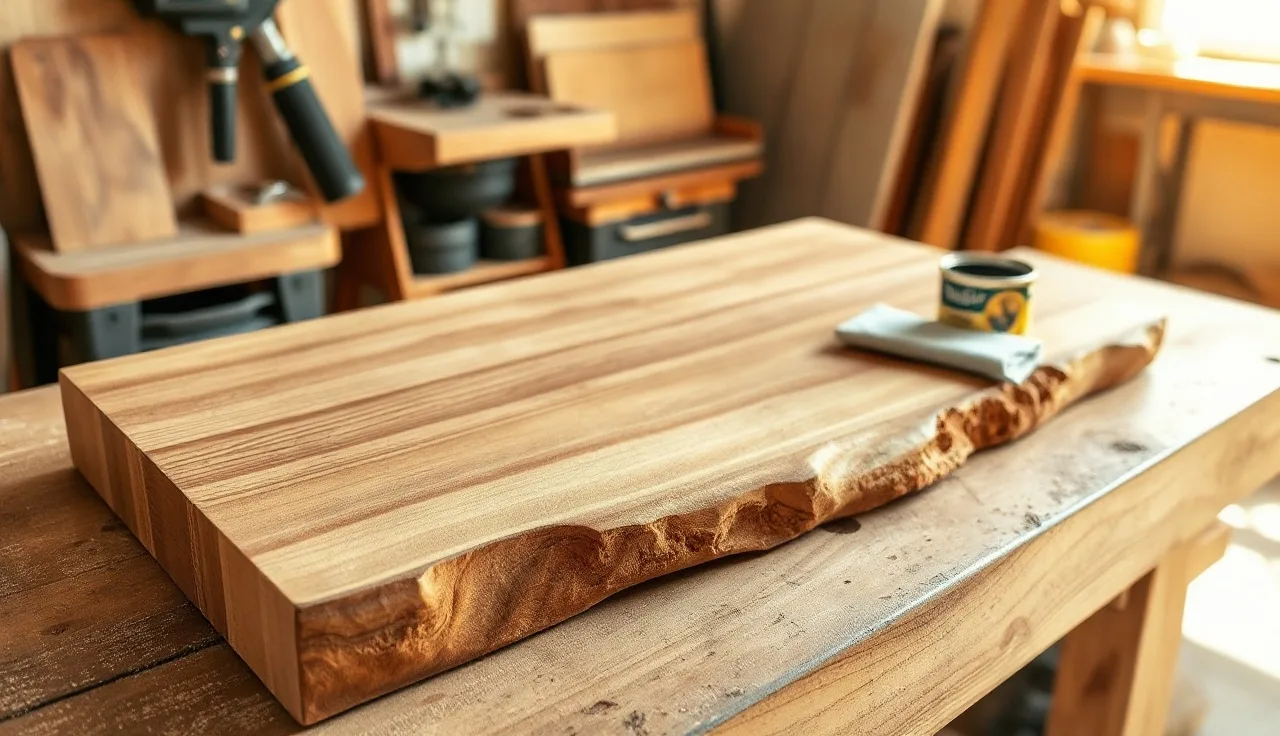
An unfinished butcher block countertop is a wood slab that ships straight from the mill with no protective coating, no oil, no wax, and no varnish. The wood has been glued, pressed, and sanded to a workable surface, but nothing seals the pores. What you receive is raw wood.
That sounds obvious, but the distinction matters more than most buyers realize. "Finished" butcher block from a big-box store typically arrives with a light coat of food-grade mineral oil already applied. The oil protects the wood during shipping and lets you use the counter almost immediately. Unfinished butcher block has none of that. Expose it to water, grease, or humidity for more than a few days and you will see raised grain, small cracks, or gray water marks before you ever cook a meal.
So why would anyone buy unfinished? Control, mostly. You pick the finish that matches your household's actual use. A serious baker who wants a true cutting surface can oil it for a soft, natural feel. A homeowner who wants a hard, waterproof, wipe-clean surface can apply a polyurethane topcoat. You also get to sand out any shipping dings and start perfectly fresh.
Unfinished butcher block is sold by most major wood countertop suppliers, lumber yards, and home improvement stores. It comes in several construction types: face grain (the wide, flat face of the board), edge grain (the long edge of boards glued side by side), and end grain (the cut end of short pieces arranged like a checkerboard). End grain is the traditional butcher block pattern and the most expensive. Edge grain is the most common unfinished option in the $20, $60 per square foot range [1].
How much do unfinished butcher block countertops cost?
Material prices for unfinished butcher block run roughly $20, $60 per square foot depending on wood species, construction type, and thickness. That range is wide on purpose because the spread between a basic birch edge-grain panel and a walnut end-grain island top is enormous.
Here is a realistic breakdown by type:
| Construction type | Common species | Typical price per sq ft |
|---|---|---|
| Face grain | Maple, pine | $20, $35 |
| Edge grain | Maple, oak, cherry | $25, $45 |
| End grain | Maple, walnut, teak | $40, $80+ |
| Specialty/exotic | Teak, acacia, bamboo | $50, $100+ |
Thickness matters too. A 1.5-inch panel costs more than a 1.25-inch panel from the same supplier, and 4-inch butcher block (commonly used for islands) can push the per-foot price higher still.
Beyond material, budget for:
- Finishing supplies: $30, $80 for food-grade mineral oil, beeswax, or a polyurethane kit for an average kitchen run.
- Installation: $200, $500 labor depending on your region and complexity, or $0 if you DIY. Butcher block is one of the few countertop materials a competent DIYer can actually cut and install at home with a circular saw and basic carpentry skills.
- Sink cutout and edge profiles: Some suppliers charge per cutout; expect $50, $150 if a fabricator does it.
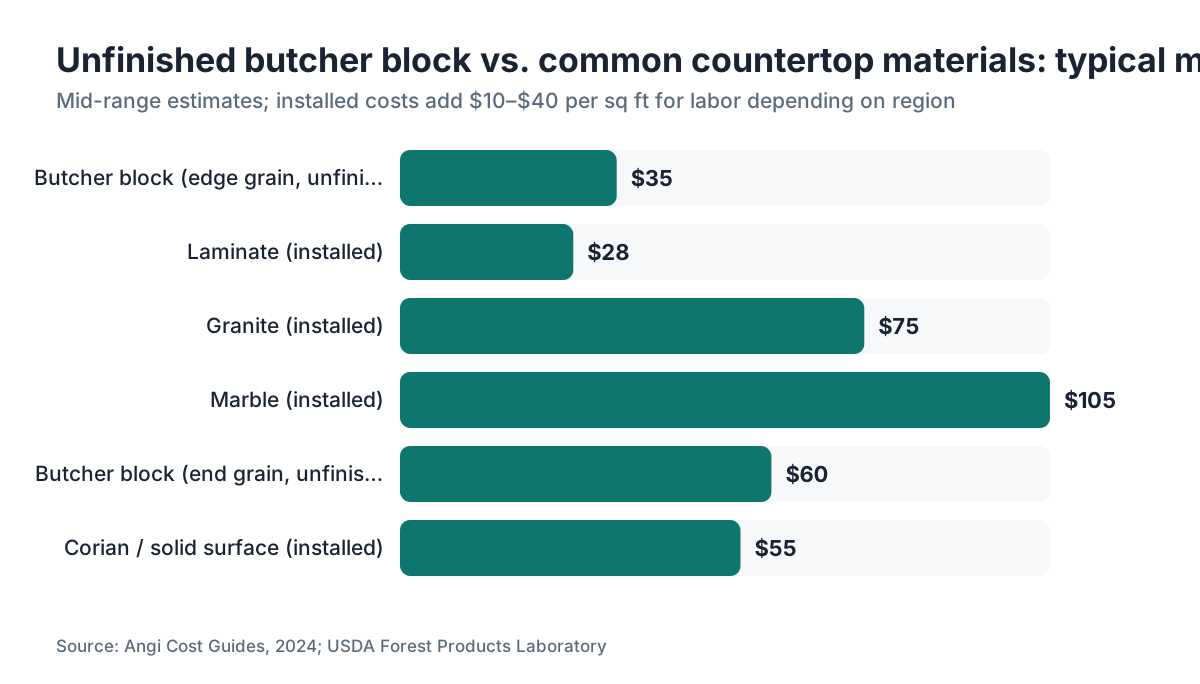
Total installed cost for an average 30-square-foot kitchen in unfinished butcher block lands around $800, $1,800 for mid-range edge grain, which is why affordable butcher block countertops consistently appear in budget renovation conversations. Compare that to granite at $50, $100 per square foot installed [2], and the appeal is clear.
For a cleaner apples-to-apples comparison with other surfaces, see our guide to kitchen countertops and laminate countertops, which are the two materials most often cross-shopped against wood at this price point.
What finish should you put on unfinished butcher block?
This is the question that trips up most buyers. The answer depends on how you use your kitchen.
The FDA regulates indirect food contact surfaces under 21 CFR Part 175 [3]. For a food-contact countertop, you want a finish that is either explicitly food-safe when cured or one that stays wet (like oil) and never fully cures into a film. The two main camps:
Oil and wax finishes (penetrating finishes)
Food-grade mineral oil is the cheapest and most forgiving option. It soaks into the wood, never forms a hard film, and won't crack or peel. Apply a heavy coat, let it soak for 20 minutes, wipe off the excess, and repeat three to four times over 48 hours. The downside is maintenance: you need to re-oil every one to three months depending on use. Beeswax or a mineral oil and beeswax blend (sold by several brands) adds a bit more water resistance and a softer sheen.
Tung oil, boiled linseed oil, and danish oil are sometimes recommended online. Be careful here. Pure tung oil is food-safe when fully cured. Boiled linseed oil contains metallic driers that are not food-safe. "Danish oil" is a marketing term with no standard formulation. Read the actual label and confirm what solvents are in the product before using it on any surface that will contact food.
Film-forming finishes (surface finishes)
Water-based polyurethane or hard-wax oil creates a durable surface coat that seals the wood completely. Water and stains bead off. Cleanup is easy. The trade-off: if the film scratches or chips, moisture gets under it and the damage can spread invisibly. Film finishes also mean you cannot use the surface as a true cutting board without scoring the finish.
For kitchens with a farmhouse sink, heavy daily use, or kids, I'd lean toward a good water-based polyurethane on the perimeter counters and keep a separate oiled section on the island if you want a cut-friendly surface. Three coats of water-based poly, sanded lightly between coats with 220-grit, is hard to beat for longevity.
Avoid: solvent-based finishes not rated for food contact, paint, and anything with heavy metallic driers until you confirm the cured film is inert.
How do you prepare and apply the finish on raw butcher block?
Sand first. Even if the slab arrives flat and smooth, open the grain with 120-grit paper followed by 180-grit before applying any finish. Sand with the grain. A random-orbit sander makes this fast on flat runs; hand-sand the edges and corners.
Vacuum thoroughly, then wipe with a tack cloth. Any dust left in the pores will lock in under the first coat of oil or poly and show as tiny bumps.
For oil finishes: Warm the mineral oil slightly (set the bottle in warm water for a few minutes) to help it penetrate. Pour a generous amount on the surface, spread it with a lint-free cloth or cheap brush, and work it into the grain. Let it sit 20 to 30 minutes. Wipe off everything that hasn't absorbed. Repeat at least three times. For end-grain surfaces, which absorb dramatically more oil, expect to apply four to six coats over two or three days before the wood looks saturated.
For poly finishes: Thin the first coat 10% with water (for water-based) to help it penetrate and bond. Apply with a foam roller on flat sections, brush into edges. Let dry fully per the manufacturer's time, then scuff with 220-grit or a gray scotch-brite pad. Wipe clean. Apply a second full-strength coat. For a kitchen counter that sees real use, three coats is a minimum; four is better.
Pay special attention to the underside and the ends of the slab. Wood absorbs and releases moisture through every surface. If you seal the top but leave the underside raw, the slab will cup or warp as the top and bottom move at different rates. Apply at least two coats of oil or one coat of poly to the underside and all cut edges before installation.
Can you install unfinished butcher block yourself?
Yes, and it's one of the more DIY-friendly countertop options available. Butcher block is wood. It cuts with tools most homeowners already own.
A circular saw with a fine-tooth blade handles straight cuts. A jigsaw handles sink cutouts. A router with a roundover bit gives you a finished edge profile. You don't need a wet saw, a diamond blade, or specialized stone-cutting equipment.
The main cautions:
Let the wood acclimate first. Bring the slab into your house and let it sit flat in the kitchen for 48 to 72 hours before doing anything. Wood moves with humidity. If you install a slab that acclimated in a dry warehouse and your kitchen runs humid, it will expand after installation and could crack if it's too tightly constrained.
Don't glue butcher block to the cabinet like stone. Stone is dimensionally stable and can be silicone-glued to cabinet tops. Butcher block needs to float. Use figure-8 fasteners or tabletop clips that allow the wood to expand and contract across the grain. Over-constraining a butcher block top is how it splits.
Undermount sinks are possible but risky. End grain around a sink cutout will swell if water sits on the joint. Edge grain handles it better. If you go undermount, seal every cut surface inside the sink cutout with three to four coats of poly before installation, and keep the sink perimeter well caulked.
For a detailed walkthrough of the full installation process from templating to fastening, see our article on countertop installation.
If you're a fabricator quoting a butcher block job, note that material waste on wood tends to run 15 to 20% for seamed runs, higher for figured or wide-plank stock. Accurate takeoffs matter here just as they do on stone jobs. Tools like SlabWise can handle wood slab nesting the same way they handle stone sheets, which saves time on the quote.
What wood species are available and which should you pick?
Hard maple is the default. It's dense, tight-grained, resists scratches and dents better than softer woods, and takes finishes evenly. Most of the unfinished butcher block countertops you'll see at Lumber Liquidators, IKEA (their BADELUNDA and NUMERAR lines), and Home Depot are hard maple edge grain. It's affordable and performs well for most kitchens.
Other common species and their trade-offs:
Walnut: Gorgeous dark grain, softer than maple (Janka hardness around 1,010 lbf vs. maple's 1,450 lbf [4]). Shows scratches faster but is easier to sand out. Costs significantly more. Worth it for a statement island, probably not for a high-traffic prep surface.
White oak: Medium hardness, open grain (which means it soaks up more finish and can show grain texture more), attractive figure. Growing in popularity. Prices are mid-range.
Cherry: Starts light pink and darkens to deep red-brown over months. Soft enough that it dings, but many buyers love the patina. Not ideal for someone who wants a pristine surface long-term.
Teak: Naturally oily, extremely water-resistant, used traditionally in marine settings. That natural oil makes finish adhesion trickier; some film finishes won't bond well. Usually priced at $60, $100+ per square foot.
Bamboo: Technically a grass, not hardwood. Very hard (processed strand bamboo can hit 3,000+ lbf on Janka tests), but reacts strongly to humidity swings. More prone to finish adhesion problems. Check the formaldehyde content of the adhesive used in manufacturing; look for CARB Phase 2 compliant products [5].
For most buyers doing a first butcher block countertop: hard maple edge grain, finished with mineral oil if you want easy maintenance, or water-based poly if you want durability. That combination has decades of track record.
How do you maintain an oiled butcher block countertop?
Oiled butcher block is not high maintenance, but it needs consistent attention. Ignore it and you'll see gray water marks and dry cracking within a few months of heavy use.
The routine is simple: oil it every one to three months, or whenever the wood starts to look dry and lighter in color. Pour on food-grade mineral oil, spread it, let it soak 20 minutes, wipe off the excess. That's it. Cost is under $10 per application.
Day-to-day, wipe up water and food spills promptly. Don't let standing water sit near the sink area. Avoid soaking the surface with wet rags. Use a cutting board for anything acidic (citrus juice and vinegar can leave gray marks on unfinished or lightly oiled wood).
Sanding is your reset button. If you get a bad stain, a ring from a plant pot, or light mold from moisture, sand the area with 120-grit, feather the edges, re-oil the whole section. Wood is forgiving that way. A granite countertop that chips stays chipped; a butcher block with a bad spot can be fully restored in an afternoon.
For poly-finished surfaces, maintenance is even easier day-to-day: wipe clean, done. But if the poly scratches through to raw wood, you need to sand back the affected area and recoat, which is more involved than touching up an oiled surface.
Avoiding the most common mistake: many people apply too much oil and don't wipe off the excess. That leaves a sticky, gummy surface that collects dust. Always wipe off everything the wood doesn't absorb.
How does unfinished butcher block compare to other countertop options?
Butcher block occupies a specific niche: warm underhand, workable, renewable, and genuinely affordable. Here is how it stacks up against the most common alternatives.
Vs. granite: Granite runs $50, $100 per square foot installed [2] and is essentially indestructible from heat, scratches, and most stains if sealed. Butcher block costs less and feels warmer underfoot and underhand, but can't handle heat directly (hot pans will scorch it) and needs ongoing maintenance. For a full comparison with stone surfaces, see our guide to granite countertops.
Vs. laminate: Laminate is cheaper, $15, $40 per square foot installed [6], and nearly zero maintenance. It can't be sanded and renewed the way wood can, and it looks like laminate. Butcher block looks and feels like real wood because it is. See laminate countertops for the full picture.
Vs. marble: Marble is porous, prone to etching from acids, and priced at $60, $150+ per square foot installed [7]. Butcher block is easier to maintain and costs far less. For buyers who want that warm, natural material feel, butcher block is often the smarter choice. See marble countertops.
Vs. Corian or solid surface: Solid surface runs $45, $65 per square foot installed, is non-porous, and can be sanded and renewed similarly to butcher block. It's cold to the touch and doesn't have the warmth of wood. See Corian countertops.
The honest summary: if your budget is under $50 per square foot for material, you want a natural surface, and you're willing to spend 15 minutes every couple of months oiling it, unfinished butcher block countertops are hard to beat. If you want zero maintenance, look at quartz or laminate. If you want a cutting surface you can use directly, oil your butcher block and skip the poly.
What are the most common problems with butcher block countertops?
These problems are all preventable, but they're common enough to be worth calling out directly.
Warping and cupping: Almost always caused by uneven moisture exposure, sealing the top but leaving the underside and edges raw, or not letting the slab acclimate before installation. The fix during installation is to seal all six surfaces. The fix after the fact is painful: you may need to pull the slab, flatten it with a belt sander, and reinstall.
Gray water stains near the sink: The sink area gets wet repeatedly, and if the finish has worn off or was never adequate there, the wood turns gray from iron in the water reacting with tannins in the wood. Sand back past the gray, bleach lightly with dilute oxalic acid (wood bleach), rinse, dry, then refinish heavily in that area.
Sticky surface after oiling: Too much oil applied, not enough wiped off. Let it cure a few days; if still sticky, wipe with a cloth dampened with mineral spirits to remove the excess, then buff dry.
Gaps between pieces after installation: Butcher block expands across the grain. If pieces were jointed tightly and then swelled, gaps can open when humidity drops. This is a wood movement issue that proper installation (float the slab, don't glue it tight) prevents.
Mold or mildew under the sink area: Chronic moisture exposure with inadequate sealing. Sand, treat with a dilute bleach solution, let dry completely, and refinish with three to four coats of poly in that zone specifically.
None of these are catastrophic. Wood countertops have a built-in reset button. The material is renewable in a way that stone and laminate simply are not.
Where can you buy unfinished butcher block countertops?
The main retail channels for unfinished butcher block countertops in the U.S.:
Home Depot and Lowe's: Both carry maple edge-grain panels in standard widths (25-inch and 38-inch are common) and sell by the linear foot. Prices are typically in the $20, $40 per linear foot range for 1.5-inch thick panels, which works out to roughly $9, $16 per square foot at 25-inch width. These are affordable butcher block countertops in the most accessible sense: you can load them in a truck today.
IKEA: The BADELUNDA and NUMERAR solid wood countertops are edge-grain birch or oak, unfinished, and priced aggressively. IKEA sells them by the piece in specific dimensions rather than cut-to-size. Their prices are often $15, $25 per linear foot, making them among the cheapest options available, but you work around their fixed sizes or cut them yourself.
Lumber Liquidators / LL Flooring: Carries butcher block panels in a wider species selection than the big-box stores. Worth checking if you want cherry, walnut, or acacia.
Specialty wood countertop suppliers: Companies like Hardwood Reflections, Craft Art, and John Boos sell direct-to-consumer online with custom sizing. John Boos, which has manufactured butcher blocks since 1887, offers unfinished maple in custom dimensions and is widely considered the reference standard for professional-grade wood countertops [8].
Local lumber yards: For large projects or unusual species, a local hardwood dealer can sometimes supply wide slabs that you get laminated or use as live-edge tops. Not as turnkey as a panel product, but the material quality is often higher.
When comparing prices across channels, confirm what thickness you're comparing, whether the price includes any cutout or edging work, and what the lead time is for your specific dimensions.
Is unfinished butcher block right for your kitchen?
Here is the honest decision framework.
Buy unfinished butcher block if: your budget is tight and you're willing to put in the prep work, you want a food-safe cutting surface, you like the idea of a countertop you can sand and renew rather than replace, and you're reasonably comfortable with occasional maintenance.
Look elsewhere if: you want zero maintenance, you have a household that leaves water sitting on surfaces for hours, you're putting a countertop next to a farmhouse sink that constantly drips, or you're flipping a house and need a surface that looks identical in five years without any upkeep.
For fabricators and shop owners quoting butcher block jobs, a few notes: waste factors run higher on wood than stone (15 to 20% for standard runs vs. 10 to 15% for granite), custom sink cutouts need extra sealing time built into the schedule, and delivery logistics are similar to engineered stone panels. Accurate quoting on wood jobs is as important as on stone. If your current quoting workflow doesn't handle wood panel takeoffs as cleanly as stone slabs, it's worth testing a tool built for both. SlabWise handles wood panel nesting alongside stone, which matters when you're quoting a mixed-material kitchen.
For homeowners, the main reassurance is this: unfinished butcher block is forgiving. You don't have to get the finish perfect on the first try. Sand it back. Reapply. The wood will take it. That's a quality almost no other countertop material shares with you.
For related reading on how wood surfaces compare to stone maintenance requirements, the guides on how to clean stone countertops and butcher block countertops are good next stops.
Frequently asked questions
Can you use unfinished butcher block right away, or do you have to finish it first?
You should always apply a finish before regular use. Raw wood will absorb water, food oils, and bacteria into open pores within days. At minimum, apply three coats of food-grade mineral oil before putting the countertop into service. The whole process takes about 48 hours and costs under $20 in materials. Using it unfinished risks warping, staining, and mold growth that can be hard to reverse.
Is unfinished butcher block food safe?
The raw wood itself is not a problem for food contact. The finish you apply determines food safety. Food-grade mineral oil, pure tung oil (fully cured), and water-based polyurethane (fully cured) are all accepted for food contact surfaces. The FDA regulates indirect food-contact surface coatings under 21 CFR Part 175. Avoid boiled linseed oil and any finish with metallic driers on surfaces that will directly contact food.
How long does it take to finish unfinished butcher block before installation?
For an oil finish, plan two to three days: three to four coats applied over 48 hours with drying time between coats. For polyurethane, allow three to four days: three coats with full dry time and light sanding between coats. Sand the slab before you start. Rushing the process and installing before the finish cures fully is one of the most common mistakes that leads to adhesion failure and water damage.
What is the cheapest unfinished butcher block countertop option?
IKEA's wood countertop panels (BADELUNDA, NUMERAR) are consistently among the cheapest available, often $15, $25 per linear foot for birch or oak in 1.5-inch thickness. Home Depot and Lowe's maple edge-grain panels come in second at $20, $40 per linear foot. The trade-off at the lowest price point is fixed dimensions at IKEA and limited species selection at the big-box stores.
Can unfinished butcher block be used in a bathroom?
Yes, with heavy sealing. Bathroom counters see less food-prep abuse but more standing water and high humidity swings. Apply four coats of water-based polyurethane to all surfaces including the underside and edges. Caulk the sink joint carefully and check it every few months. A bathroom butcher block that's well sealed and kept dry around the drain can last decades. One that's under-sealed will gray and swell within a year.
Can you put hot pans on butcher block countertops?
No. Hot pans will scorch and discolor wood regardless of what finish is on it. Always use a trivet or hot pad. This is the most significant functional limitation of butcher block compared to stone or quartz surfaces. A scorch mark can be sanded out if it's shallow, but deep burns go into the glue lines of the laminated panel and may require replacing the affected section.
How thick should unfinished butcher block countertops be?
The most common thickness for residential countertops is 1.5 inches. That's thick enough to feel substantial, handle a standard undermount sink cutout, and provide a flat, stable surface over a typical 24-inch cabinet depth. For island tops and statement pieces, 2-inch and 4-inch thick panels are available. Anything thinner than 1.25 inches is risky for a full countertop run because of flex and cupping.
Does unfinished butcher block need to be sanded before finishing?
Yes. Even panels that arrive smooth from the mill benefit from a light sanding to open the grain and remove any raised fibers from shipping or handling. Start with 120-grit, finish at 180-grit, always sanding with the grain. Vacuum and tack-cloth the surface before applying any finish. Skipping this step leaves dust and closed pores that block finish penetration and cause adhesion failure.
How do you cut unfinished butcher block to size?
A circular saw with a fine-tooth carbide blade (60-tooth or higher) gives a clean cut. Tape the cut line with painter's tape to reduce tearout on the show face, and cut with the show face down if using a standard circular saw (the blade cuts upward, so tearout happens on the top of the cut). A track saw or table saw gives the cleanest results for long straight cuts. Use a jigsaw for sink cutouts, following a penciled template.
How do you remove water stains from unfinished butcher block?
Gray water stains on raw or lightly oiled wood come from iron in the water reacting with wood tannins. Sand the affected area with 80-grit to get below the stain, then work up to 120 and 180. For deep gray staining, apply oxalic acid (sold as wood bleach) mixed per the product instructions, let it sit, neutralize with baking soda and water, let dry fully, then refinish. This restores most stains completely.
How often do you need to refinish or re-oil butcher block countertops?
For oiled surfaces, re-oil every one to three months depending on use. A heavily used prep surface needs more frequent attention; a lightly used bar top might only need oiling twice a year. The signal is the wood looking lighter and dry. For polyurethane-finished surfaces, you may go five to ten years before needing to sand and recoat, assuming no major scratches or chips break through the film.
Is face grain, edge grain, or end grain butcher block best?
Edge grain is the best all-around choice for most kitchens: harder wearing than face grain, significantly cheaper than end grain, and widely available unfinished. End grain is the traditional cutting-board pattern and self-heals knife marks better, but it costs $40, $80+ per square foot and absorbs finish voraciously. Face grain is cheapest but softest and most prone to cupping. Match the type to your budget and use.
Can you stain unfinished butcher block to change the color?
Yes, but it requires a food-safe topcoat over the stain, because most wood stains are not food safe on their own. Apply the stain, let it cure fully per the manufacturer's time, then seal with water-based polyurethane. Test the stain on a scrap piece first: maple takes stain unevenly due to its tight grain and can look blotchy without a pre-conditioner. Walnut and oak take stain more evenly.
What is the difference between butcher block and a solid wood countertop?
Butcher block is technically a subset of solid wood countertops. Traditionally, "butcher block" refers specifically to thick end-grain or edge-grain panels made by gluing many small strips together, designed for heavy cutting use. "Solid wood countertop" can also mean wide-plank single-board tops or face-glued panels. Today the terms are often used interchangeably in retail contexts, so check the actual construction when comparing products.
Sources
- National Wood Flooring Association, Wood Countertops Overview: Edge grain is the most common construction type for unfinished butcher block countertop panels in the $20, $60 per square foot range
- HomeAdvisor (Angi), Granite Countertops Cost Guide: Granite countertops cost $50, $100 per square foot installed on average
- U.S. Food and Drug Administration, 21 CFR Part 175, Indirect Food Additives: Adhesives and Components of Coatings: FDA regulates indirect food contact surface coatings under 21 CFR Part 175
- USDA Forest Service, Forest Products Laboratory, Wood Handbook Chapter 5: Mechanical Properties of Wood: Hard maple Janka hardness is approximately 1,450 lbf; black walnut is approximately 1,010 lbf
- California Air Resources Board, Composite Wood Products Regulation (CARB Phase 2): CARB Phase 2 compliant products meet formaldehyde emission standards for composite wood including bamboo countertops
- HomeAdvisor (Angi), Laminate Countertops Cost Guide: Laminate countertops cost $15, $40 per square foot installed on average
- HomeAdvisor (Angi), Marble Countertops Cost Guide: Marble countertops cost $60, $150+ per square foot installed
- John Boos & Co., Company History: John Boos has manufactured butcher block products since 1887 and is widely considered the reference standard for professional-grade wood countertops
- USDA Forest Service, Forest Products Laboratory, Finishing of Wood: Penetrating oil finishes for wood require reapplication periodically as the oil depletes through surface wear and cleaning
- University of Wisconsin-Madison Extension, Food Safety and Wood Cutting Surfaces: Hardwood surfaces including maple have been studied for bacterial retention and found comparable to plastic cutting surfaces when properly cleaned
Last updated 2026-07-09