TL;DR
- White granite countertops cost roughly $40 to $100 per square foot installed, depending on the variety and your region.
- They're harder and less porous than marble, but they still need sealing once a year.
- Colors range from nearly solid white to heavily veined slabs with gray, gold, or blue tones.
- Alaska White, Colonial White, and White Ice are the most common options at slab yards.
What exactly is white granite, and is it actually granite?
Most slabs sold as 'white granite' at stone yards are true igneous granite, meaning they formed from slowly cooled magma and are composed primarily of quartz, feldspar, and mica. The white and light-gray base color comes from high feldspar content. A slab like Alaska White or Colonial White is geologically granite in the strict sense.
That said, the stone industry uses 'granite' loosely. Quartzite, gneiss, and even some dolomitic marbles get labeled 'granite' in showrooms because they pass the scratch test and look similar. If a white slab scratches easily with a knife, it is not granite. If it fizzes slightly with a drop of vinegar, it has calcite content and will etch like marble. Always ask for the actual mineralogy or run those two tests before you buy.
For the purposes of this guide, 'white granite' means light-colored igneous stone that rates 6 to 7 on the Mohs hardness scale. That puts it well above marble (3 to 5) and comfortably above everyday kitchen wear. [1]
What are the most popular white granite countertop colors and varieties?
Walk into most fabrication shops in the US and you will find a handful of white granite colors showing up repeatedly. Here are the ones you will actually see in stock:
Alaska White is probably the most widely stocked white granite in North America. It has a white-to-light-gray base with fine black and occasional rust-brown mineral flecks. The pattern is tight and relatively consistent slab to slab, which makes it easy to match across multiple slabs in a large kitchen. It is quarried primarily in Brazil.
Colonial White runs a bit warmer. The base is creamy white with gray veining and gold or rust mineral deposits. It photographs beautifully in kitchens with warm wood tones or brass hardware.
White Ice (sometimes called White Spring) has a brighter, cooler white base with fine gray veining that reads almost like quartz at first glance. It is one of the lighter options if you want something close to pure white.
Bianco Romano is a Brazilian granite with a white-gray base and medium-scale gray and black patterning. It bridges the gap between a white background and a strong visual statement.
Valley White and Salinas White are regional names you may encounter in the Southeast and Mid-Atlantic. They are similar to Colonial White but sourced from different Brazilian quarries.
Moon White tends toward a silvery gray-white with smaller, more scattered crystal patterning. It is a good choice when you want white but worry about a slab being too busy.
Colors of granite countertops in the white family vary enormously in person versus on a screen. The only reliable way to choose is to see the actual slab you will buy. Bundle or lot numbers matter: two slabs labeled 'Alaska White' from different quarry lots can look noticeably different under your kitchen lighting. [2]
How much do white granite countertops cost?
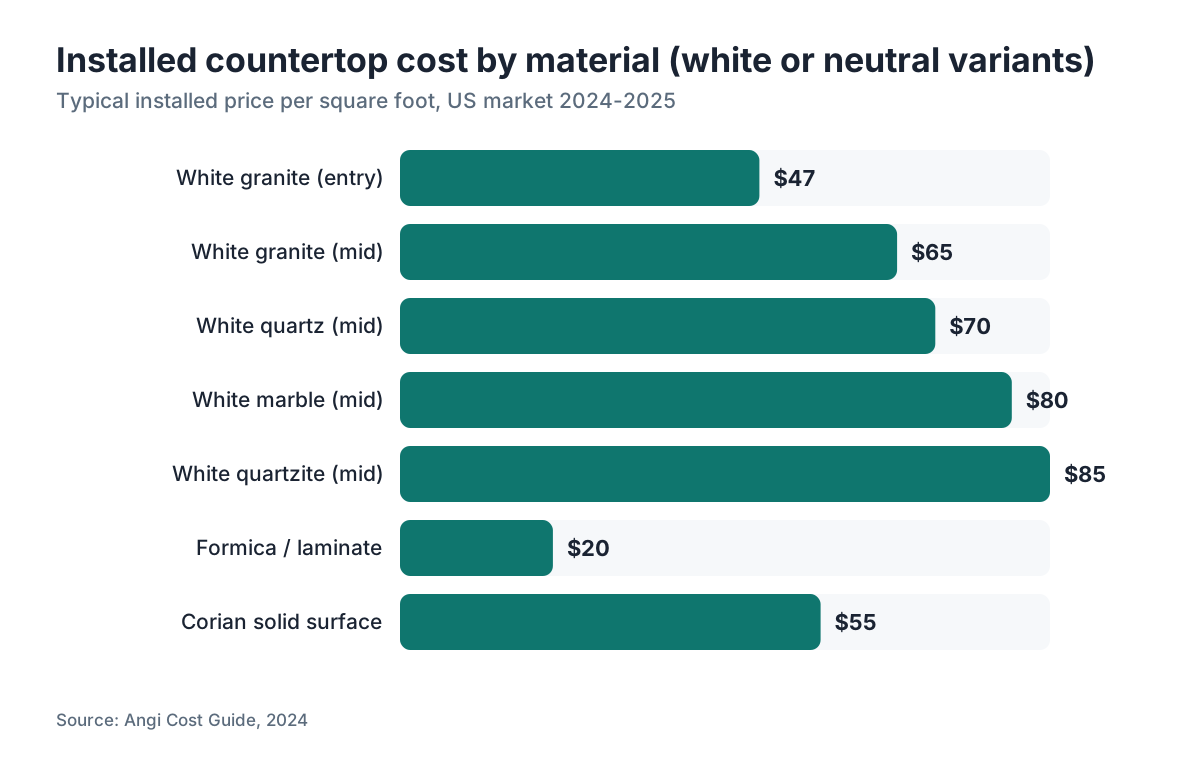
Installed cost for white granite countertops runs from about $40 to $100 per square foot in most US markets as of 2024 to 2025. That range covers material, fabrication (cutting, edge profiling, and polishing), and installation. It does not include demo of your old countertops, plumbing disconnect and reconnect, or backsplash work.
Here is where the spread comes from:
| Tier | Typical variety | Installed cost/sq ft |
|---|---|---|
| Builder / entry | Alaska White, Colonial White | $40, $55 |
| Mid-range | White Ice, Bianco Romano | $55, $75 |
| Premium / exotic | Taj Mahal (quartzite), rare white granites | $75, $100+ |
A typical kitchen has 30 to 40 square feet of countertop. At $55 installed, that is $1,650 to $2,200. At $75, you are at $2,250 to $3,000. Large kitchens with islands can push well past 60 square feet, so the math adds up fast.
Edge profiles add cost. A standard eased or beveled edge is usually included. Ogee, waterfall, or mitered edges can add $15 to $30 per linear foot. Cutouts for sinks and cooktops typically run $100 to $200 each depending on complexity.
Fabricators and homeowners pricing countertops often find that digital quoting tools help avoid surprises before they set foot in a showroom. The SlabWise instant quote tool is one option for getting a ballpark based on your square footage and region.
For broader context on how granite pricing fits against other materials, the granite countertops guide has a full material comparison. [3]
How does white granite compare to quartz, marble, and quartzite?
This is the question that should drive your decision, because each material behaves differently in a working kitchen.
White granite vs. white quartz: Engineered quartz countertops are non-porous by design, so they never need sealing. White granite needs sealing once a year (or more if you use the countertop hard). Quartz colors are consistent slab to slab; granite is natural and varies. Quartz resists staining better. Granite handles heat better than resin-bonded quartz, which can discolor from a hot pan left directly on the surface. Cost is roughly comparable at the mid-tier.
White granite vs. marble: Marble countertops are stunning but calcite-based, meaning acids etch them. Lemon juice, wine, tomato sauce, and vinegar all dull a polished marble surface. White granite does not etch. If you cook heavily and do not want to baby your surface, granite is the smarter call.
White granite vs. quartzite: True quartzite (not to be confused with quartz) is metamorphic and extremely hard, often 7 on the Mohs scale. It is also frequently mislabeled. Some slabs sold as 'white quartzite' are actually marble and will etch. If you confirm it is true quartzite, durability is excellent. For care tips on true quartzite, the how to clean quartzite countertops guide is worth reading before you decide.
White granite vs. solid surface and laminates: Options like Corian countertops or laminate countertops cost less and resist staining well, but they scratch more easily and cannot be repolished. They also have a different visual weight that is apparent in person.
For most people who want a natural stone look with reasonable durability and do not want to obsess over sealing, white granite is the pragmatic choice over marble. [4]
Does white granite show stains, and how porous is it really?
Yes, white granite can stain, and the lighter the background color, the more visible a stain will be. That is the honest answer.
Granite is a porous stone, but porosity varies by slab. The USGS notes that granite typically has a porosity of 0.1% to 2%, which is low compared to sandstone but not zero. [1] A cream or white background will reveal an oil stain from a greasy hand or a coffee ring more quickly than a dark granite would. This is not a dealbreaker, but you should go in with clear expectations.
Sealing closes those pores temporarily. A good penetrating sealer (silicone-based impregnators, sold by brands like StoneTech or Miracle Sealants) soaks into the surface and makes liquids bead rather than absorb. Most fabricators apply a sealer before installation. You should reseal every 12 months if you cook regularly, or test annually using the water droplet test: pour a tablespoon of water on the surface and wait 15 minutes. If it beads, you are fine. If it soaks in and darkens the stone, reseal.
Oil stains on granite can often be drawn out with a poultice made from baking soda and hydrogen peroxide, mixed to a paste, spread over the stain, covered with plastic wrap, and left 24 hours. This is a standard stone care technique, not a guarantee. Deep or old stains may not come fully clean.
For a complete routine, the how to clean stone countertops guide covers the right cleaners and what to avoid. [5]
How do you seal white granite countertops, and how often?
Sealing is straightforward. You need a penetrating impregnator sealer rated for granite (not a topical coating, which sits on the surface and peels). Clean the countertop thoroughly and let it dry completely, at least an hour. Apply the sealer in thin, even sections with a soft cloth, let it dwell for the time the manufacturer specifies (usually 5 to 15 minutes), then buff off the excess before it dries on the surface. One coat is usually enough for granite. Marble or more porous stones sometimes need two.
Do not flood the surface. More sealer does not mean more protection. Excess sealer left to cure on the surface creates a milky haze that is a pain to remove.
Frequency depends on use and the specific stone. A light-colored granite in a busy kitchen should be checked every six months and resealed annually. A granite in a bathroom with minimal traffic might go two years between sealings. The water test described above tells you when it is time.
Most quality penetrating sealers cost $20 to $40 for a bottle that will do your kitchen multiple times. This is not a job that requires a professional unless the stone was improperly treated or stained during installation.
Is white granite good for kitchens, or will it be a maintenance headache?
White granite is a reasonable choice for most kitchens. It holds up to heat, resists scratches under normal use, and will not etch from acidic foods the way marble does. The main maintenance task is annual sealing, which takes about 30 minutes and costs almost nothing.
Where people run into trouble is expecting white granite to look brand new forever without any care. It will not. A heavy cooking household that fries frequently, leaves cutting boards saturated with oil, or lets red wine sit on the counter will see staining over time even with sealing. White surfaces amplify anything dark.
The pattern of a slab matters here too. Alaska White's tight mineral fleck pattern does a better job of visually camouflaging minor staining than a nearly solid white slab would. If low visual maintenance is the priority, choose a white granite with some movement in the pattern rather than one that is close to pure white.
For context on how kitchens get designed around countertop choices, the kitchen countertops guide covers the full material decision from a design angle.
How do you choose the right white granite slab in person at the yard?
Never choose granite from a photo online or a small sample chip. The sample shows you the color range and texture, but slabs have natural variation across their full 9-to-10-foot length. You need to see the specific slab that will go in your kitchen.
Ask the yard to pull your candidate slabs and stand them upright in natural light or under the type of lighting closest to your kitchen. Bring a cabinet door or a paint chip if you can. Squint at the slab from across the room first before getting close.
Check for: fissures (natural hairline cracks in the stone, which are normal), pits (small surface depressions), and any existing staining from the yard storage. Minor fissures are cosmetic and not structural. Large open cracks that run the depth of the slab are a concern. Ask the fabricator to show you where those areas fall relative to your templated layout.
If you need more than one slab, look at consecutive bundle numbers from the same quarry lot. The closer the bundle numbers, the more closely the slabs will match.
The fabricator's nesting plan determines how much of each slab is actually used, so ask to see the cut layout before you commit. Good fabrication software shows the homeowner or shop owner exactly how the slab gets cut and used, which also matters for cost since you pay for the full slab regardless of how much is left over.
What edge profiles work best with white granite countertops?
Edge profile is mostly an aesthetic choice, but it has practical implications. Here is a quick guide:
Eased or straight edge is the simplest cut: a 90-degree edge with a barely-rounded top corner. It looks modern, is the cheapest option, and is easy to clean. Chips at the corner are slightly more visible than on a beveled edge.
Beveled edge removes a 45-degree strip along the top corner. It catches less debris than a sharp 90-degree edge and softens the look without getting ornate.
Bullnose rounds the entire top edge to a half-circle profile. It is forgiving if someone bumps the counter with a hip, and it has been a residential standard for decades.
Ogee is a traditional S-curve profile with more visual detail. It photographs well in traditional or transitional kitchens but collects grime in the crevice.
Waterfall / mitered runs the countertop material down the side of the cabinet to the floor. It is a design statement, uses significantly more stone (and labor), and works best on slabs with low pattern variation or strong linear movement.
For white granite, a simple eased or slightly beveled edge often lets the stone's natural color be the feature rather than competing with an elaborate profile. That said, a bullnose on a Colonial White island looks great in a traditional kitchen. Choose what fits your cabinets, not what the showroom pushes.
What are the most common problems with white granite countertops?
Staining from oil and pigmented liquids is the most common complaint, particularly near the stovetop and sink. As described above, this is manageable with sealing and prompt cleanup but never fully eliminated.
Etching is the second complaint, and this is where buyer confusion with marble creates problems. True granite does not etch. If your 'white granite' shows dull spots where lemon juice or wine contacted the surface, it is not granite. It may be quartzite with calcite veining, a dolomitic marble, or a stone that was mislabeled at the yard. The fix is getting the slab correctly identified before purchase.
Fissures are a common concern but usually not a real problem. Natural stone has fissures. A fissure is not a crack: it does not go through the slab and does not affect structural integrity. A true crack, especially near a cutout (sink or cooktop), needs attention. Quality fabricators reinforce the stone with fiberglass mesh or epoxy rods under cutouts for this reason.
Color variation between slabs ordered at different times is a real issue for renovations done in phases. If you plan to expand your kitchen or replace a damaged section later, note the quarry, lot, and bundle number from your original installation. Finding an exact match two years later is often impossible.
Finally, some homeowners are surprised by the visual weight of heavily patterned slabs once installed. A slab that looks subtle in the yard can feel busy across 40 square feet of counter. Take your time with the slab selection and look at the full slab, more than one corner.
How does white granite affect kitchen resale value?
Natural stone countertops consistently appear on real estate upgrade lists, but the data on specific return on investment is murkier than the home renovation industry tends to admit. The National Association of Realtors' 2022 Remodeling Impact Report found that a complete kitchen renovation recoups roughly 75% of its cost at resale, but that figure covers everything from appliances to layout, more than countertops alone. [6]
White granite specifically reads as neutral and appealing to most buyers. It does not polarize the way dramatic dark granite or bold colors can. In competitive markets, a kitchen with clean white granite countertops against white or gray cabinets photographs well for online listings, which matters when most buyers first see a home on a screen.
The honest caveat: if the rest of the kitchen is dated (old appliances, worn cabinets, poor lighting), white granite countertops alone will not dramatically change buyer perception. Countertops are part of the whole picture.
For fabricators running shops, this is worth communicating to clients who debate whether to upgrade from builder-grade laminate or Formica countertops. The visual difference is significant, the cost gap is real, and the resale math is imprecise. Give clients the honest range and let them decide.
How should fabricators price and quote white granite jobs accurately?
Quoting white granite is straightforward in principle but has several places where shops leave money on the table or overcommunicate price before seeing the template.
Material cost varies by slab tier. First-choice Alaska White slabs from a tier-one distributor run roughly $12 to $18 per square foot at wholesale in most US regions. Second-choice or yard closeouts can drop below $10. Exotic white granites (including some Brazilian whites and Indian whites with strong movement) can hit $25 to $35 wholesale.
Fabrication adds labor and tooling time. A straight countertop section with one sink cutout and a standard eased edge is fast. An island with a waterfall edge on two sides, an undermount farm sink cutout, and three different edge profiles is a half-day job per installer. Shops that quote by square footage only, without accounting for edge linear footage and cutout count, consistently underprice complex jobs.
Waste matters. White granite slabs typically come in roughly 50 to 65 square foot usable surfaces after accounting for bundle size and natural defects. If your job requires 55 square feet, you may be buying two slabs. Nesting software that shows slab utilization helps shops quote waste honestly and avoid eating the cost of a second slab they underquoted.
For shops looking to tighten quoting accuracy on granite jobs, SlabWise is purpose-built for slab nesting and fabrication quoting. It handles the material-to-job fit math that manual quoting often gets wrong.
Frequently asked questions
Is white granite hard to keep clean?
No harder than any other natural stone, but harder than quartz or solid surface. Daily cleanup with mild soap and water is all it needs. The extra task is annual sealing, which takes 30 minutes and a $25 bottle of penetrating impregnator. The bigger challenge is that light backgrounds show oil and dark liquid stains faster than dark granite. If you cook heavily, plan to wipe spills promptly and do not let oily residue sit overnight.
What is the difference between white granite and white quartz countertops?
White granite is natural igneous stone, porous, and requires periodic sealing. White quartz is engineered from ground stone and resin, making it non-porous and seal-free. Granite handles heat better (no resin to discolor). Quartz offers consistent color since it is manufactured. Both cost roughly the same at the mid-tier. Granite looks more natural with unique veining; quartz looks more uniform. Neither is the clear winner for every kitchen.
What is Alaska White granite, and is it a good choice?
Alaska White is one of the most widely available white granites in the US, quarried primarily in Brazil. It has a white-to-light-gray base with fine black and rust mineral flecks and a relatively tight, consistent pattern. It is priced in the entry-to-mid tier, usually $40 to $55 installed per square foot. The tight pattern camouflages minor staining better than solid white slabs. It is a solid, practical choice for most kitchens.
Does white granite stain easily?
More than dark granite, less than marble. The paler the background, the more visible any oil, coffee, or wine stain will be. Granite's porosity (typically 0.1% to 2%) means liquids can absorb if left sitting. A good penetrating sealer applied annually dramatically reduces staining risk. Immediate cleanup of spills is the other half of the equation. Light-patterned varieties like Alaska White hide minor staining better than nearly-solid-white slabs.
How often does white granite need to be sealed?
For a busy kitchen, plan on sealing once a year. Test the existing seal with the water droplet test: pour a tablespoon of water on the surface and wait 15 minutes. If it beads, you are still protected. If it soaks in and darkens the stone, it is time to reseal. Bathrooms and low-traffic surfaces may go two years. A bottle of penetrating granite sealer costs $20 to $40 and covers your kitchen several times.
What colors go with white granite countertops in a kitchen?
White granite pairs well with almost any cabinet color because its background is neutral. White or off-white cabinets create a bright, airy look. Medium wood tones (maple, oak, walnut) contrast well against white granite and bring warmth. Navy or dark gray cabinets with white granite have been a popular combination for several years. For Colonial White granite with gold tones in the stone, brass or matte gold hardware reads better than chrome.
Is white granite more expensive than other granite colors?
Not necessarily. Common white varieties like Alaska White and Colonial White are among the most affordable granites because they are widely quarried and well-distributed. Exotic or rare white granites with dramatic veining can be expensive. The price driver is rarity and veining complexity, not color itself. A heavily veined white granite can cost more than a solid mid-tone gray granite. Check your local slab yard for current pricing, which shifts with supply.
Can white granite countertops crack?
Natural fissures (hairline lines in the mineral structure) are normal and not cracks. Structural cracks can happen if a countertop is improperly supported, subjected to heavy impact, or stressed near a cutout. Quality fabricators reinforce areas around sink and cooktop cutouts with mesh or epoxy. Inspect any slab for significant open fissures before purchase. Properly installed granite on solid cabinet support is durable enough to last decades without cracking.
What is the difference between white granite and quartzite?
White granite is igneous (formed from cooled magma). True white quartzite is metamorphic sandstone that was compressed and recrystallized under heat and pressure. Quartzite is generally harder and can look more like marble with dramatic veining. The confusion: many slabs sold as quartzite are actually marble or dolomite and will etch. True quartzite does not etch. Both need sealing. When you buy either, run the vinegar test to check for calcite content before committing.
How thick should white granite countertops be?
Most residential granite countertops are 3 centimeters (roughly 1.25 inches) thick. This has become the standard because it is strong enough without additional lamination, handles edge profiling well, and is what most fabrication equipment is set up for. Two-centimeter slabs exist but need a plywood substrate and additional support. Thicker custom slabs (4 or 5 cm) are uncommon and very heavy. For almost all residential kitchens, 3 cm is the right call.
Is white granite good for bathroom vanities?
Yes, and in many ways it is better suited to bathrooms than kitchens. Traffic is lower, exposure to cooking oils and heavy spills is minimal, and the light color makes small bathrooms feel larger. Sealing is still needed but less frequently given lighter use. Alaska White and Colonial White both work beautifully in bathroom vanities. The main consideration is matching the white tone to your tile and fixtures, which you should do in person with samples.
What should I ask a fabricator before buying white granite?
Ask to see the specific slab you are buying, not a representative sample. Ask for the quarry name and bundle number so you can match it later. Confirm the stone has been identified as true granite, not marble or quartzite. Ask what edge profiles are included in the quote and what cutouts cost. Get a written layout or nesting plan showing how the slab maps to your countertop template. Confirm the fabricator will seal the stone before installation.
How do I compare white granite prices fairly across fabricators?
Get quotes that itemize material, fabrication, edge linear footage, cutout count, and installation separately. A low square-foot price that bundles nothing is often misleading. Ask each shop what slab tier their quote is based on, because Alaska White and an exotic Brazilian white both called 'white granite' have very different material costs. Make sure each quote covers the same scope: same edge profile, same sink cutout, same delivery and install terms.
Sources
- USGS, Minerals Information: Stone, Crushed and Stone, Dimension: Granite rates 6 to 7 on the Mohs hardness scale and has porosity typically ranging from 0.1% to 2%.
- USGS, Mineral Resources Online Spatial Data: Rock Classifications: Granite is an igneous rock composed primarily of quartz, feldspar, and mica, formed from slowly cooled magma.
- HomeAdvisor (Angi), Granite Countertops Cost Guide: Installed granite countertop cost ranges from approximately $40 to $100 per square foot depending on variety and region.
- Marble Institute of America (now Natural Stone Institute), Stone Comparison Data: Marble rates 3 to 5 on the Mohs scale and is calcite-based, making it susceptible to etching from acidic substances unlike granite.
- Natural Stone Institute, Care and Maintenance of Natural Stone: Penetrating sealers (impregnators) are recommended for granite and should be reapplied when the water absorption test shows the stone is no longer beading.
- National Association of Realtors, 2022 Remodeling Impact Report: A complete kitchen renovation recoups roughly 75% of its cost at resale according to the 2022 NAR Remodeling Impact Report.
- EPA, Granite Countertops and Radon: The EPA states that while granite contains naturally occurring radioactive materials, the radiation levels measured in studies of granite countertops are well below levels of concern for health.
- Natural Stone Institute, Fabrication Standard ANSI/NSI B48.1: The industry standard for residential countertop stone thickness is 3 centimeters, accommodating edge profiling and unsupported spans without substrate.
- Marble Institute of America (Natural Stone Institute), Quartzite Identification and Etching: Stones sold as quartzite are sometimes misidentified and may be calcite-based; the vinegar test can identify calcite content by fizzing reaction.
- USGS Mineral Commodities Summaries, Stone (Dimension) 2024: Brazil is the leading source of imported dimension stone granite to the United States, including common varieties like Alaska White.
- National Kitchen and Bath Association, Consumer Design and Specification Trends: Natural stone countertops including granite remain among the top materials specified in US kitchen renovations annually.
Last updated 2026-07-09