TL;DR
- Finish butcher block with food-grade mineral oil, a film-forming varnish or polyurethane, or oil topped with poly.
- Oil needs reapplying every one to three months.
- Varnish and polyurethane last one to three years before a recoat.
- Only put a solvent-based finish on a cutting surface if the label says it is food-safe once cured.
What are the real differences between oiling and sealing butcher block?
Oiling soaks in. Sealing sits on top. That one difference drives almost every decision you make about a wood counter.
Oiling is a penetrating finish. The oil soaks into the wood fibers, conditions them, and keeps the surface from drying out and cracking. It does not form a film, so it gives you almost no protection from water pooling on the surface. Set a wet glass on an oiled counter for an hour and the water works its way in. You get rings. The wood is still porous.
Sealing, in the strict sense, means a film-forming finish: varnish, polyurethane, lacquer, or similar. These products dry on top of the wood and build a hard barrier. Water beads and sits there instead of soaking in. You wipe it off, no damage. The surface looks more finished, close to glossy, and you lose the raw-wood feel under your hands.
Both are legitimate. The choice comes down to how the counter gets used and how much maintenance you want to do. Cooks who actually chop on their counters almost always use oil, because they can spot-treat a damaged patch without stripping and refinishing the whole slab. People who want a low-maintenance surface that shrugs off spilled wine usually go with a film finish.
There is a hybrid. Apply several coats of penetrating oil, let the last coat cure fully, then topcoat with a water-based polyurethane. You get the moisture conditioning of the oil plus the film protection above it. Many fabricators recommend exactly this for counters nobody chops on.
Which butcher block sealers are actually food-safe?
A finish is food-safe once it is fully cured if its ingredients sit on the FDA's approved lists. The FDA regulates coatings that contact food under 21 CFR Part 175 [1]. Plenty of water-based polyurethanes and varnishes qualify once dry, but the manufacturer has to confirm it. Read the technical data sheet, not the marketing copy.
Pure white mineral oil (sold as food-grade mineral oil) is approved under 21 CFR 172.878 for incidental food contact [2]. It is inert, odorless, and never goes rancid. This is the default for any surface where you cut or prep food directly. Beeswax and carnauba wax are food-safe too, and they get blended with mineral oil into paste conditioners that hang around on the surface a little longer.
Linseed oil and tung oil come up constantly in woodworking forums. Raw linseed oil takes weeks to cure and can go rancid on a kitchen surface. Boiled linseed oil (BLO) has metallic driers in it that are not food-safe. Polymerized and pure tung oil cure harder than mineral oil and are generally treated as food-safe once fully cured, but cure times swing hard by brand and temperature, so verify with the maker.
Walnut oil gets pitched as a natural option. It can also trigger reactions in people with tree nut allergies, which makes it a bad call for any shared or commercial kitchen.
The simplest safe answer for a cutting surface is NSF-certified or FDA-compliant food-grade mineral oil. NSF/ANSI 51 sets the food-equipment materials standard, and an NSF mark confirms a coating meets it [9]. Mineral oil runs roughly $6 to $10 a quart at a pharmacy, sells everywhere, and is nearly impossible to mess up.
How do you actually seal a butcher block countertop, step by step?
The process splits two ways: the initial seal on fresh wood, and resealing a counter that already has something on it. Here are both.
Initial seal on new or newly sanded butcher block
Start dry and clean. Sand with 120-grit, then 150, then 180 if you want it glass-smooth. Wipe off all the dust with a tack cloth or a damp rag wrung nearly dry. Let it dry all the way before any finish touches it.
Mineral oil: warm the bottle in hot water, then pour a generous puddle onto the surface. Rub it in with a lint-free cloth along the grain. Let it soak 20 to 30 minutes, then wipe off the excess. No pooling, no sticky residue. Repeat at least three times, ideally five or six over the first week. Dry new wood drinks a lot.
Polyurethane or varnish: brush or wipe on a thin first coat. Thin it 10 to 15 percent with the matching solvent (water for water-based, mineral spirits for oil-based) so it penetrates and bonds. Let it dry fully per the label, then sand lightly with 220-grit to knock down raised grain. Wipe clean. Apply two or three more full coats, sanding between each. Four coats total is the common standard for good protection.
Resealing an existing countertop
It depends on what is already there. Oiled surface: clean it well, dry it, apply fresh oil exactly as above. Varnished surface that is just worn or dull: scuff with 220-grit, clean, add one or two fresh topcoats. Peeling, chipping, or deeply scratched finish: strip it to bare wood with a belt or orbital sander and start over.
Never put a film finish over an oil-saturated surface without sanding the oil out first. The film will not bond. It peels within weeks. That is the single most common DIY mistake on wood counters.
How many coats of sealer does butcher block need?
Oil finishes take as many coats as the wood will drink. Film finishes want three to four. Those are the two answers, and everything else is detail.
New butcher block cut end-to-end grain is much thirstier than face-grain or edge-grain. A reasonable minimum with oil is four coats over two to four days. Some fabricators do the initial conditioning in the shop before butcher block countertop installation, then send the slab out with two more coats to lay on after install [3].
For film finishes, three to four coats is the practical target. The first coat (thinned) acts as a sealer coat. The second and third build the protective layer. A fourth, sanded back and buffed, gives you a smooth, professional surface. Past four coats you rarely gain real protection, and every extra coat raises the odds of bubbles or runs.
Here is a fabricator rule of thumb. If the wood still looks dry or blotchy after a coat of oil, keep going. Once the surface looks uniformly saturated and the oil stops absorbing within 20 minutes, the wood has enough.
End grain drinks finish fastest because the cells are open at the surface. A true end-grain butcher block can need double the coats of an edge-grain top. The Forest Products Laboratory Wood Handbook documents this: end-grain surfaces absorb far more finish than edge or face grain [6].
How often do you need to reseal or re-oil butcher block countertops?
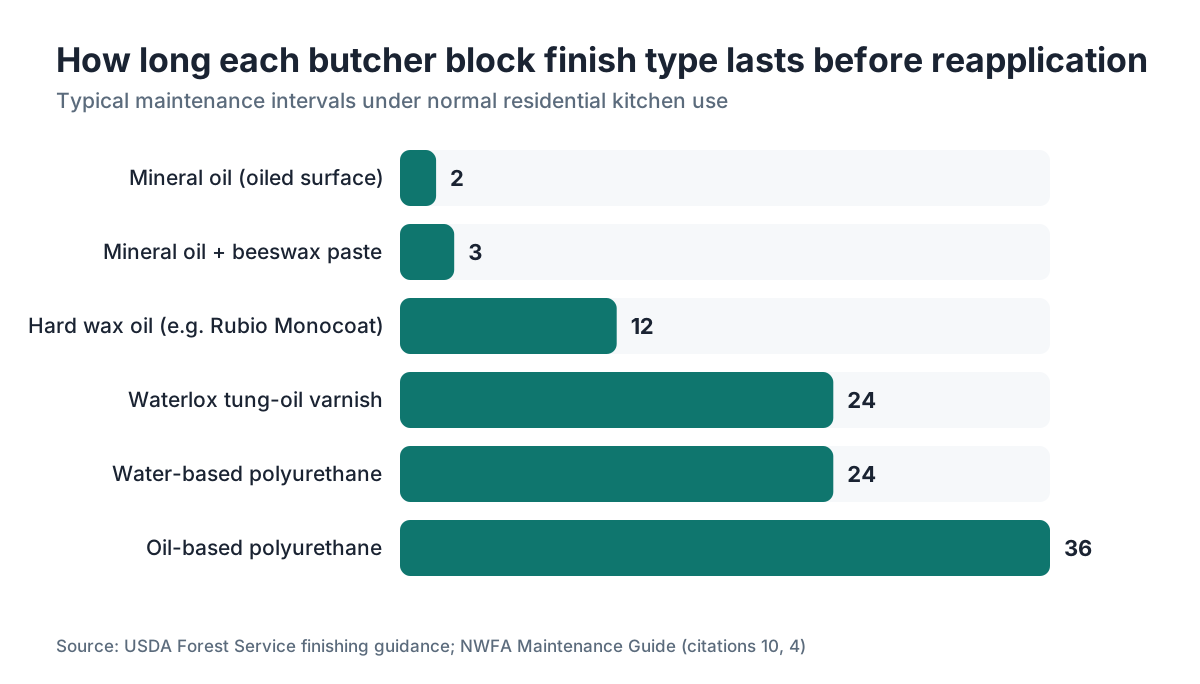
Re-oil every one to three months on a counter that gets daily kitchen use. Recoat a film finish every one to three years. Those intervals cover most kitchens, and a 30-second water test tells you when you are due.
A surface used only for prep, not constantly wet, stretches longer on oil. The test: drop a few beads of water on the surface. Bead up, you are fine. Soak in within a minute or two, add oil.
Film finishes: a properly applied polyurethane or varnish on a kitchen counter usually wants a fresh topcoat every one to three years. Heavy use (daily cutting, lots of moisture, harsh cleaners) pulls that sooner. Light wear might stretch to four or five years before you notice the dullness.
USDA Forest Service guidance puts penetrating oils at reapplication every one to three months on heavily used surfaces, with film finishes lasting one to several years [10]. The water-drop test works for both. Run it every few months and stay ahead of moisture instead of waiting for a warp or a crack.
For scale: polyurethane hardwood floors get recoated every three to five years under normal residential use [4]. Counters take more abuse than floors, so leaning toward the short end of that range is smart.
What happens if you don't seal butcher block countertops?
Unsealed wood on a kitchen counter absorbs water, food acids, and cooking oils from daily use. That plays out in a few predictable ways, and none of them are cheap to undo.
Staining shows up first. Coffee, wine, beet juice, and turmeric all penetrate and discolor bare wood. On a sealed surface you wipe and move on. On an unsealed one the color stays until you sand it out.
Moisture is the bigger structural threat. Wood swells wet and shrinks dry. Repeat that cycle enough and you get checking (small cracks along the grain) and eventual warping. A counter next to a sink that never sees oil usually starts cracking and cupping inside a year or two in most climates.
Bacteria is the question people ask about most, and the research is less tidy than the folk wisdom. A 1994 UC Davis study found that under certain conditions bacteria survive better on plastic cutting surfaces than on wooden ones, and that wood carries some inherent antimicrobial properties [5]. That does not make unsealed wood fine for food prep. It does mean the risk is not the simple "sealed equals safe, unsealed equals dangerous" you hear repeated.
Seal it. The cost is small, the work is easy, and the alternative is a counter that looks rough and probably needs replacing inside a decade.
Can you use polyurethane on butcher block countertops?
Yes, and it is a good pick for any butcher block you will not cut on directly: a serving island, a bar top, a decorative run of counter. Oil-based polyurethane gives a warm amber tone and takes 8 to 24 hours between coats but wears like iron. Water-based polyurethane dries in 2 to 4 hours, stays clearer and more neutral, and cleans up with water.
For a surface you actually chop on, the catch with poly is that cuts and scratches eventually break through the film, opening crevices that are hard to clean and can hold bacteria. With oil, a scratch is just a scratch in the wood. There is no broken film to worry about. For a chopping surface, oil or another penetrating finish is the better match.
Once cured, usually 30 days for full hardness, most water-based polyurethanes are food-safe in the sense that they are inert. If you plan to cut on the surface, though, the film-integrity problem stands regardless of food safety.
Solvent-based polys need ventilation while you work. The CPSC flags oil-based finishes and boiled linseed oil for VOC content and flammability during application [7], and the EPA lists wood finishes and varnishes as a real source of indoor VOCs, recommending ventilation during and after the work [8]. Open windows, run a fan, and give it time.
For non-cutting surfaces, poly is hard to beat. It stays clean with almost no upkeep, wipes down fast, and never asks for monthly oiling.
What's the best oil for butcher block countertops?
Pure food-grade mineral oil is the right call for most people. It is cheap, stable, everywhere, and approved for incidental food contact under FDA rules [2]. It never cures into a film, so the wood stays natural under your hands and scratches sand out easily. The tradeoff is that you reapply it often.
Beef tallow and coconut oil get pitched in DIY circles as natural options. They moisturize wood, but they can go rancid, especially in a warm kitchen. Coconut oil resists it a bit longer thanks to its saturated fat, but it still turns eventually. Skip both except for occasional touch-ups.
Hard wax oils like Rubio Monocoat, popular in flooring, penetrate and then harden inside the wood fibers. They protect better than mineral oil without building a film on top. Rubio lists its product as food-safe after curing, though you should confirm on the current technical data sheet. These cost a lot more than mineral oil, but on a high-end butcher block countertop in a busy kitchen, the longer maintenance interval can pay for itself.
Waterlox is a tung-oil varnish that many fabricators and woodworkers treat as the standard for butcher block. It penetrates like an oil, then polymerizes into a harder, more water-resistant film. Waterlox states its finish is food-safe after full cure and is meant for countertops and cutting boards [11]. It takes longer to cure and needs ventilation while you apply it, but the result is tougher than pure oil and more forgiving than a straight polyurethane film.
Does the type of wood affect how you seal butcher block?
Yes, a lot. Denser hardwoods take oil more slowly than softer species. Maple, the most common butcher block wood, is dense and finishes well but does not drink oil as fast as something like ash. Walnut carries natural oils that can slow the adhesion of a film finish, so a light sand before each coat helps.
End-grain construction, where the cut ends face up, is the most absorbent build there is. It also moves the most with humidity. End-grain boards need more oil, applied more often, and they should never air-dry in direct sun or next to a heating vent. Edge-grain and face-grain hold their shape better and are easier to keep up.
Exotic species like teak or ipe carry high levels of natural silica and oils that actively fight finish adhesion. Standard oil and polyurethane often will not bond to them without special prep, such as wiping teak with acetone between coats, which is a common shop trick. If your butcher block is an exotic, read the finish maker's technical data sheet for compatibility before you buy anything.
For how butcher block stacks up against other kitchen countertops on maintenance, the linked guide has the full comparison.
How do you prep butcher block for sealing during or after installation?
Prep is the difference between a finish that lasts and one that peels or goes blotchy in six months. That is true whether you are doing a fresh butcher block countertops installation or resealing an old surface.
New wood: start with a thorough sanding. Most butcher block ships sanded to about 120-grit, but resand to 150 or 180 before finishing. That removes mill glaze (a slightly burnished layer that fights finish absorption) and opens the grain. Sand with the grain, never across it.
Existing counters: find out what is on the surface before you do anything. Rub a small spot with a white cloth dampened with mineral spirits. Color comes off means wax or oil. Surface softens slightly means a solvent-based finish. No softening means a water-based finish. Once you know, you can decide between a scuff-and-recoat or a full strip.
Both cases: the counter has to be fully dry and clean before any finish. Oil over a damp surface will not penetrate right. A film finish over damp wood blisters or refuses to stick. If you just installed the counter and the kitchen had plumbing work or ran humid, give it 24 to 48 hours before you finish it.
If you are planning a kitchen project and want a fast estimate on butcher block versus other materials, SlabWise has a quote tool that generates countertop pricing by square foot without a sales call.
One more prep note. Finish the sink cutout before it ever gets wet. The end grain around a cutout is the spot most exposed to moisture. Some fabricators add three or four extra coats of oil, or a thick bead of varnish, to the inside edges of the cutout before install. That is exactly the right move.
How do you repair and reseal butcher block that is already damaged?
Water rings, dark stains, and light scratches all fix cleanly on an oiled surface. Sand the damaged area with 120-grit, feathering out a few inches past the mark, then work up to 180. Wipe clean and apply oil the same way you would on bare wood. The repair blends in on oiled wood because there is no film to color-match.
On varnish or polyurethane, spot repair is harder. If the finish is scratched but the wood under it is fine, you can sometimes sand that spot back to bare wood, add fresh coats, and feather the edges. Be honest with yourself, though: spot repairs on film finishes almost always read a little different from the surrounding original. On heavily used counters, a full strip-and-refinish every few years beats chasing patches.
Black stains (the dark blotch where moisture sat under something too long) come from tannin reacting with iron, or from mold. Oxalic acid wood bleach, sold as deck brightener, lifts many of them. Follow the product directions, neutralize with water, let it dry fully, then refinish.
Deep cuts that reach through the finish into the wood are part of the charm on a working butcher block. Plenty of people just leave them. If you want them gone, you have to sand the whole surface flat, which means stripping any existing finish first.
For how upkeep compares across stone surfaces, the guide on how to clean stone countertops is a good reference.
Is sealing butcher block around a sink different from the rest of the counter?
Yes. The 6 inches around a sink is the highest-risk zone on any wood counter, and it earns extra coats and more frequent attention than the rest of the slab. This is where water splashes all day, soap residue builds, and moisture can creep up from below if the cabinet is not ventilated.
Oil near the sink: reapply more often here, maybe monthly, even when the rest of the counter only wants it quarterly. A lot of homeowners keep a small bottle of mineral oil under the sink and wipe the area down after dishes.
Film finishes near the sink: add an extra coat just to the sink perimeter during the original finishing. Let each coat cure fully first. The edges of the cutout, where end grain sits exposed, are where most butcher block sink failures start.
If long-term water damage near the sink worries you, one option is to skip butcher block around the sink entirely. Some designers spec granite countertops or marble countertops in the sink zone and put butcher block on the prep or island runs. It is not cheap, but it removes the moisture problem for good.
The underside matters too. People finish the top and ignore the bottom, but if only the top is sealed, moisture vapor still enters from below and cups the counter upward at the edges. Put at least one coat of oil or finish on the underside before installation.
Frequently asked questions
What is the best sealer for butcher block countertops?
For cutting surfaces, food-grade mineral oil or a mineral-oil-and-beeswax paste is the safest and most practical choice. For non-cutting surfaces like bar tops or islands, Waterlox (tung-oil varnish) or a water-based polyurethane give better long-term water resistance with less frequent maintenance. The best sealer depends entirely on how you will actually use the surface.
How long do you have to wait before using butcher block after sealing?
After oiling, the counter handles light use once you wipe off the excess, usually 30 to 60 minutes. After polyurethane or varnish, wait at least 24 to 72 hours before setting anything on it, and 30 days for full cure before heavy or hot items. Put something on a freshly varnished counter too early and it leaves marks that do not buff out.
Can you seal butcher block with beeswax?
Yes. Beeswax is food-safe and works well as a topcoat over an already-oiled surface. It adds a slight sheen and repels water better than oil alone. Rub a small amount in with a cloth, then buff. It does not last as long as polyurethane, but it reapplies easily and smells good. Most commercial butcher block conditioners combine mineral oil with beeswax or carnauba wax.
How do you seal butcher block around a sink to prevent water damage?
Apply one or two extra coats of finish to the 4 to 6 inches around the sink cutout, and coat all exposed end grain on the inside edges of the cutout thoroughly. With oil, reapply this zone monthly. Consider a thin bead of food-safe silicone where the sink meets the counter so standing water cannot sit in the seam. Seal the underside of the counter before installation too.
Does sealing butcher block prevent bacteria?
Sealing does not sterilize a surface. It limits moisture absorption, which cuts the environment bacteria need to survive. A UC Davis study found wood carries some inherent antimicrobial properties that plastic does not. Regular cleaning with hot soapy water matters more for hygiene than the finish type. No finish removes the need for proper cleaning after handling raw meat or fish.
Can you use olive oil or vegetable oil on butcher block?
No. Olive oil, vegetable oil, and other cooking oils go rancid inside the wood and give the counter an off smell. They also never cure, so they stay tacky and grab dust and debris. Use only non-drying food-grade mineral oil, or a product made for wood countertop maintenance. The price gap between mineral oil and olive oil is tiny, so use the right one.
How do you know when butcher block needs resealing?
Do the water-drop test. Put a few drops of water on the surface and watch. Bead up and sit on top means the finish is intact. Absorb within a minute or two means it is time to reapply. For oil finishes, that usually lands every one to three months. For polyurethane, you might go one to three years between recoats depending on use.
Can you put hot pots on sealed butcher block?
No, no matter the finish. Heat from a hot pan scorches wood and softens or blisters any film finish. Even a well-oiled surface shows heat marks. Always use trivets or a silicone mat. This is not unique to butcher block; most stone countertop makers also warn against direct heat contact, though the reasons differ from wood.
What is the difference between edge-grain and end-grain butcher block for sealing?
End-grain butcher block, where the cut ends of the boards face up, is much more absorbent than edge-grain. It needs more coats of oil and more frequent reapplication. It also moves more with seasonal humidity changes. Edge-grain is more dimensionally stable and easier to maintain. Both take the same products, but end-grain demands more attention during the initial conditioning.
Is tung oil food-safe for butcher block?
Pure tung oil and polymerized tung oil are generally treated as food-safe once fully cured, but cure times vary by product and temperature. Raw tung oil can take weeks to cure. Boiled tung oil (sometimes sold as tung oil finish) often has added driers or petroleum solvents that are not food-safe. Read the product label and confirm with the manufacturer before using any tung oil on a food-contact surface.
How do you seal butcher block countertops without sanding?
You can apply mineral oil directly to a clean, dry surface without sanding if the wood is in good shape and you are just doing routine maintenance. For an initial seal, or for a surface with an existing finish, skipping the sanding means the new finish may not bond or absorb properly. There is no reliable shortcut for the first finishing of new butcher block. Prep is what makes the finish last.
Can you use Waterlox on butcher block countertops?
Yes. Waterlox is a tung-oil-based varnish that penetrates like an oil but polymerizes to a harder, more water-resistant film. It is widely used on butcher block and wood floors. The manufacturer states it is food-safe after full cure. Application needs good ventilation (it is solvent-based) and patience, since you want three to four coats with dry time between each. It is more durable than mineral oil alone.
How long does it take to seal butcher block for the first time?
With mineral oil, the initial conditioning runs about one week: apply a coat, wait 20 to 30 minutes, wipe off the excess, and repeat five to six times over seven days. With polyurethane or varnish, you want three to four coats with 4 to 24 hours of dry time between each depending on whether it is water- or oil-based, so the full job takes two to four days before the counter is ready.
Should you seal butcher block before or after installation?
Ideally both. Apply the first two or three coats in the shop or on sawhorses so you can reach all sides, including the underside and edges. Then do the final one or two coats after install and after the sink cutout is made, so you can coat the fresh exposed end grain around the cutout. Sealing only the top after installation leaves the bottom and edges open to moisture from below.
Sources
- U.S. Food and Drug Administration, 21 CFR Part 175 (Indirect Food Additives: Adhesives and Components of Coatings): FDA regulations at 21 CFR Part 175 govern coatings that may contact food surfaces, establishing approved substance lists for food-safe finishes.
- U.S. Food and Drug Administration, 21 CFR 172.878 (White mineral oil): Pure white mineral oil is approved under 21 CFR 172.878 as a food additive for incidental food contact uses including use as a release agent, binder, or surface sealer on food equipment.
- University of Missouri Extension, Wood Selection and Finishing for Cutting Boards and Butcher Block: Extension guidance recommends applying multiple coats of food-safe oil to butcher block before and after installation, with initial conditioning in the shop before final coats on-site.
- National Wood Flooring Association (NWFA), Hardwood Floor Care and Maintenance Guide: Hardwood floors finished with polyurethane typically require recoating every three to five years under normal residential use; kitchen surfaces with heavier use should be recoated more frequently.
- Cliver et al., University of California, Davis, research on bacterial survival on wood versus plastic cutting surfaces (published in Journal of Food Protection, 1994): A 1994 UC Davis study found that under certain conditions bacteria survive better on plastic cutting surfaces than on wooden ones, and that wood exhibits some inherent antimicrobial properties.
- U.S. Forest Products Laboratory, Wood Handbook: Wood as an Engineering Material (General Technical Report FPL-GTR-190): End-grain wood surfaces are significantly more absorbent than edge-grain or face-grain surfaces due to open cell structure, requiring more finish coats and more frequent reapplication.
- U.S. Consumer Product Safety Commission, guidance on chemical hazards in household wood finishes: Solvent-based wood finishes including oil-based polyurethane and boiled linseed oil require adequate ventilation during application due to VOC content and flammability risk.
- U.S. EPA, Volatile Organic Compounds' Impact on Indoor Air Quality: The EPA identifies wood finishes and varnishes as significant sources of indoor VOC emissions and recommends ventilation during and after application.
- NSF International, NSF/ANSI 51: Food Equipment Materials: NSF/ANSI 51 sets requirements for materials including coatings used on food equipment surfaces; NSF certification confirms a product meets food-contact safety requirements.
- USDA Forest Service, guidance on finishing wood surfaces for homeowners: USDA guidance notes that penetrating oil finishes require reapplication every one to three months on heavily used surfaces, while film-forming finishes can last one to several years before recoating is needed.
- Waterlox Coatings, Technical Data Sheet: Waterlox Original Tung Oil Finish: Waterlox states that its tung-oil-based finish is food-safe after full cure and suitable for use on countertops, cutting boards, and other food-contact wood surfaces.
Last updated 2026-07-09