TL;DR
- Sealing butcher block with a film-forming finish like polyurethane or hardwax oil blocks moisture and stains while keeping the wood's warmth.
- Most sealers need a recoat every 1 to 3 years, depending on use.
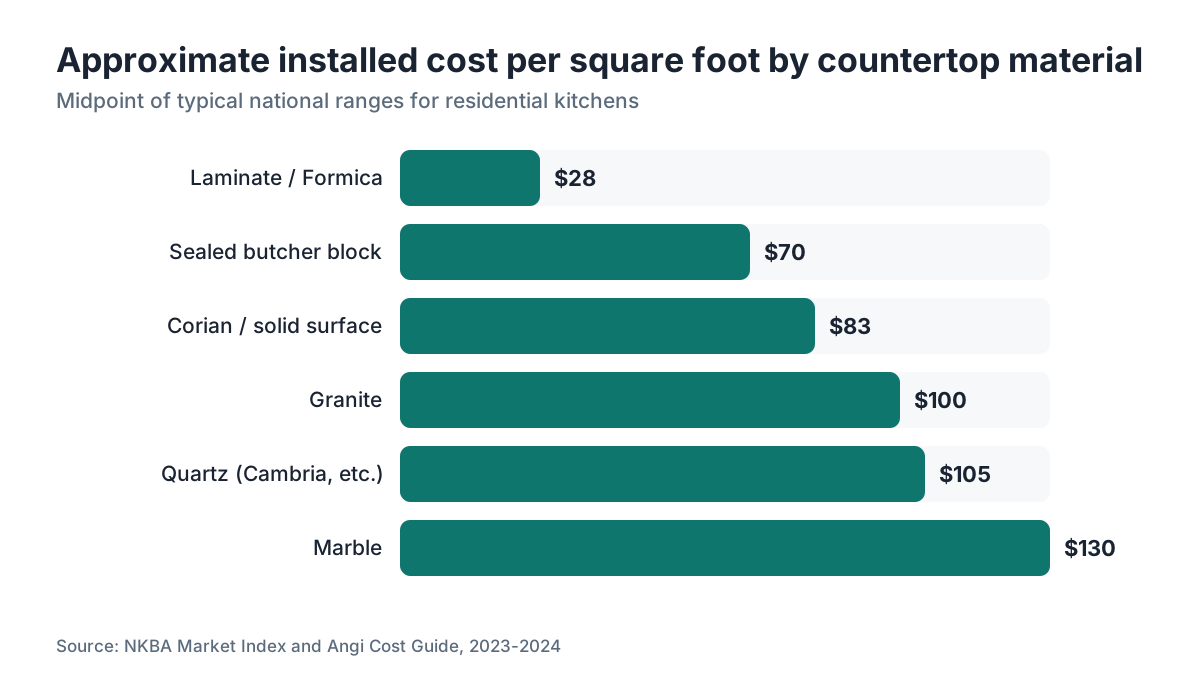
- Sealed butcher block runs $40 to $100 per square foot installed.
- Great countertop if you commit to maintenance.
- Skip the commitment and you'll regret it.
What does 'sealed' mean for butcher block countertops?
Sealing a butcher block countertop means putting a coating on top of the wood grain that blocks moisture, bacteria, and stains from soaking in. That's different from oiling. Oil penetrates the wood and conditions it instead of forming a hard surface barrier. The distinction matters because a sealed surface behaves like a painted finish, while an oiled surface stays porous and needs more frequent reapplication.
You'll see two broad families of sealers on every product shelf. Film-forming finishes: polyurethane, lacquer, hardwax oil with a resin carrier, and conversion varnish. Penetrating treatments: pure mineral oil, tung oil, linseed oil, and Danish oil. Only the film-forming finishes count as true seals. Penetrating oils condition the wood and slow absorption, but they never build an impermeable barrier.
For most homeowners the practical difference shows up at dinner. A properly film-sealed surface can take a spilled glass of red wine for a few minutes with no stain. An oiled surface drinks that wine right up. Planning to cut on the surface changes everything: film finishes scratch and chip, and once the film cracks, moisture slips underneath and does more damage than an oiled surface ever would.
For a broader look at how butcher block fits into the countertop landscape, see our guide on butcher block countertops.
What are the best sealers for butcher block countertops?
Polyurethane is the most popular film-forming sealer for butcher block, and it earns the spot. Oil-based polyurethane builds a thick, hard film, shrugs off water, and cures to an amber tone that warms up lighter woods like maple. Water-based polyurethane dries nearly clear, runs lower in VOCs, and cures harder but slightly more brittle. Both want three or more coats, a light sanding between coats, and a full 30-day cure before you subject the surface to heavy use [1].
Hardwax oil is a hybrid. It penetrates the top layer of wood, then hardens in place. Not quite as waterproof as a thick polyurethane film, but far easier to repair, because you can spot-treat scratched or worn areas without stripping the whole top. Rubio Monocoat and Osmo Polyx built strong reputations in cabinetry and flooring, and fabricators are specifying them for countertop work more and more.
Conversion varnish is a two-part catalyzed finish that cabinet shops spray in controlled rooms. It's the toughest film finish available, beating off-the-shelf polyurethane on heat, chemicals, and abrasion. You can't buy it at the hardware store, and field repair is genuinely hard. If your fabricator has a spray booth, ask about it.
Lacquer cures fast and looks gorgeous. It's a bad choice for a working counter. A hot coffee mug rings it, and water eventually clouds it. Skip it unless the countertop is purely decorative.
| Sealer type | Waterproofing | Repairability | DIY-friendly | Heat resistance |
|---|---|---|---|---|
| Oil-based polyurethane | High | Low | Yes | Moderate |
| Water-based polyurethane | High | Low | Yes | Moderate |
| Hardwax oil | Moderate | High | Yes | Moderate |
| Conversion varnish | Very high | Very low | No | High |
| Pure mineral oil | Low | Very high | Yes | High |
One honest note. USDA guidance holds that food-contact surfaces with a coating must use an approved finish that is non-toxic, non-absorbent, and corrosion-resistant [2]. Fully cured polyurethane clears that bar. Lacquer and some solvent-based finishes may not until they've fully off-gassed, which takes weeks.
How much do sealed butcher block countertops cost?
Material alone runs roughly $10 to $40 per square foot before any install or finishing, driven by species, construction style (edge-grain vs. end-grain vs. face-grain), and whether the board arrives pre-finished [3]. Edge-grain maple sits at the bottom. End-grain walnut lives at the top.
Installed, with professional sealing, most residential kitchens land at $40 to $100 per square foot. The range is wide because labor markets swing hard: a butcher block installer in San Francisco or New York charges 30 to 50% more than one in a smaller market.
Going DIY? Budget $50 to $150 in sealing supplies for a typical 30-square-foot kitchen. Polyurethane runs about $25 to $35 a quart, and you'll burn 1 to 2 quarts across three coats on a standard kitchen. Sandpaper, brushes, and tack cloths tack on another $20 to $30.
Stack that against granite countertops at $50 to $150 per square foot installed, or laminate countertops at $15 to $40. Butcher block sits comfortably mid-range with warmth that stone can't fake. Stone wins on one thing: it lasts decades while you ignore it.
For shops quoting butcher block, the swing variable is the sealer spec. A job calling for shop-applied conversion varnish versus field-applied polyurethane can differ $3 to $8 per square foot in materials and labor alone.
How often do you need to reseal butcher block countertops?
Homeowners almost always ask this too late, after the finish already looks dull or has started peeling near the sink.
Film-forming finishes like polyurethane usually want a full recoat every 1 to 3 years, depending on use [4]. Heavy daily cooking, wet dishes left to sit, and aggressive cleaning show wear in 12 to 18 months. A counter in a low-traffic laundry room or butler's pantry can coast 3 to 5 years with no obvious decline.
Hardwax oil finishes need reapplication more often, roughly every 6 to 12 months, but the job is easy. Clean the surface, scuff any worn spots, brush a thin coat onto those areas only. No stripping, no sanding the whole top.
The clearest signal that a film finish needs help: water stops beading. Drip water on the surface, and if it soaks in fast instead of sitting as a droplet, the sealer is compromised right there. Don't wait for darkening or a stain.
Around sinks and faucets, wear moves faster than anywhere else. Some installers now steer customers toward a different material at the sink run (quartz or stainless) and keep butcher block for the island or prep zones away from water. If you don't want to think about maintenance, that's a smart call.
Can you use sealed butcher block as a cutting surface?
Technically yes, but you'll gut the life of the finish if you cut straight onto polyurethane or any hard film-forming sealer. Knife marks slice through the film, and each cut becomes an entry point for water and bacteria.
Here's the honest answer. Most people who want to cut on their butcher block should choose a penetrating oil finish, not a hard sealer. Oil-finished surfaces are easier to renew, because you can scrape and sand them periodically to refresh the wood. With a film finish, sanding out knife marks usually means stripping and refinishing the entire top.
Set on a sealed finish but still want a cutting zone? Keep a removable end-grain cutting board on top of the sealed counter. You get the visual warmth of the wood plus the protection of the seal. Plenty of people run it this way and stay happy.
The FDA Food Code, which most states adopt as the basis for food service rules, requires food contact surfaces to be smooth, easily cleanable, and non-absorbent [5]. A fully cured, intact film finish meets that. A scratched or peeling one doesn't, which is exactly why restaurant kitchens that use butcher block usually stick to oiled surfaces they can scrape and resurface on a schedule.
How do you apply sealer to butcher block countertops, step by step?
The steps below cover oil-based or water-based polyurethane on bare or stripped wood. For hardwax oil, follow the manufacturer's directions, since application methods vary by product.
Sand the whole surface to 120-grit, then 150, then finish at 180. Wipe down with a tack cloth. If the wood carries any previous oil treatment, let it dry at least two weeks before you apply a film finish, because oil residue keeps polyurethane from bonding. This is one of the most common mistakes people make switching from oiled to sealed.
Lay the first coat with a quality brush or foam applicator in long, even strokes with the grain. Don't overwork it. Polyurethane bubbles if you brush back over areas that have started to tack up. Let coat one dry per the label, usually 8 to 24 hours for oil-based, 2 to 4 hours for water-based.
Sand lightly with 220-grit after the first coat. This is called denibbing. It knocks down dust nibs and gives the next coat something to grip. Wipe with a tack cloth, apply coat two, repeat. Three coats minimum. Four near the sink.
Full cure runs 30 days for oil-based polyurethane. You can use the surface gently after 72 hours, but keep heavy objects, standing water, and hard scrubbing off it until it's fully cured [1]. Water-based formulas cure faster, about 21 days to full hardness.
For fabricators pricing this: budget 45 to 90 minutes of labor per countertop section for a full three-coat application in-shop, plus dry time between coats. Field application eats more time because you're working around cabinets and other trades.
How do you clean and maintain sealed butcher block countertops?
Daily cleaning is nothing: wipe with a damp cloth and mild dish soap, rinse the soap off, dry the surface. That really is the whole routine.
What you avoid is anything that attacks the finish. Bleach cleaners, ammonia, abrasive pads, and high-alcohol "antibacterial" sprays dull and break down a polyurethane film faster than normal use ever will. NSF standards for food equipment note that sanitizers must be compatible with the surface material and used per label directions [6].
For stubborn stains, a paste of baking soda and water on a soft cloth lifts the mark without scratching. Don't let it sit more than a few minutes.
Heat is a real risk. Polyurethane holds up to moderate heat, but a hot pan set straight on the surface softens the finish and leaves a ring. Use trivets, always. The wood itself can also expand and split at joints if it takes repeated high heat.
For more on keeping natural surfaces clean, our guide on how to clean stone countertops overlaps with sealed wood care more than you'd guess.
Comparing butcher block to lower-effort options? Cambria countertops and Corian countertops are worth a look. Both ask far less of you than any wood surface.
What are the pros and cons of sealed vs. oiled butcher block?
This one comes up constantly, and the answer rides almost entirely on how you actually use your kitchen.
Sealed butcher block is more water-resistant day to day, stretches longer between maintenance sessions (counting annual or twice-yearly recoating), and stays looking clean if you don't cook heavily. It handles wine, juice, and coffee far better than oiled wood in the short term. The downsides: the finish eventually chips or peels, repairs mean real work, knife marks are destructive instead of cosmetic, and the surface carries a slightly plastic look and feel next to oiled wood.
Oiled butcher block feels and looks like actual wood, because that's all it is. The oil brings out the grain without building a film. Maintenance comes more often (monthly oiling the first year, quarterly after) but takes little effort. Scratches blend in over time. You can cut on it. The trade: it stains more easily and demands a quick response to spills.
For most households with a sink beside the counter, I'd lean toward a hardwax oil hybrid or a sealed finish applied professionally, not a straight penetrating oil. Water exposure near a sink runs too high for casual oil upkeep. For an island that never meets a sink, oiling is fine and probably better.
Shops buying from hardwood distributors: end-grain blocks usually ship pre-oiled, so confirm with the homeowner whether they want a true film seal, because that requires the oil to fully dry out first.
Does sealing butcher block make it food-safe?
A properly cured film finish is food-safe. The worry comes down to two things: the finish off-gassing something harmful, and whether the sealed surface can harbor bacteria.
On the first, fully cured polyurethane is considered inert and non-toxic. The FDA regulates food-contact coatings under 21 CFR Part 175, which covers resinous and polymeric coatings [7]. Standard polyurethane formulas comply once fully cured. The operative phrase is "fully cured," which, as noted, can take 30 days for oil-based products.
On the second, a smooth, intact sealed surface is easy to sanitize because bacteria have nowhere to hide. The risk shows up when the finish scratches or peels. Those micro-channels trap food and moisture. A widely cited cutting board study from the University of California, Davis reported that bacteria left on wood surfaces largely died off, while plastic boards held bacteria in knife grooves, but that work looked at unfinished and oiled wood, not film-sealed wood [8]. The food safety picture for film-sealed surfaces is thinner, but the logic holds: an intact smooth surface is sanitary, a damaged one isn't.
Bottom line for homeowners: seal with a product that meets FDA 21 CFR Part 175, wait the full cure, and don't cut directly on the surface. You'll have a food-safe countertop.
What does professional installation of sealed butcher block look like?
A professional butcher block installer typically handles sourcing, templating, cutting, fitting, sealing (in-shop or in the field), and final install. The workflow shifts depending on where the shop seals.
In-shop sealing is cleaner, faster, and produces a better finish, because the controlled room means fewer dust nibs and proper ventilation for cure time. The catch: final seam caulking and any field cuts (outlets, sink cutouts) need touch-up sealing after install.
Field sealing is messier but lets the crew fit everything perfectly before any finish goes on. Some installers prefer it, because they can scribe the countertop to an out-of-level wall, then seal in place, leaving no bare wood exposed at the edges.
Expect a professional job to include, at minimum: a template or measurement, fabrication of the slab to size, three coats of sealer or more, sanding between coats, install with construction adhesive and mechanical fasteners from below, and a final check of the seal at every seam and cutout.
For shops running multiple butcher block jobs, quoting time and material accurately gets easier with purpose-built software. SlabWise, for one, lets fabricators price hardwood countertop jobs alongside stone in a single quoting workflow, which matters when a kitchen has both a quartz perimeter and a butcher block island.
For more on how professional install works across materials, see our guide on countertop installation.
How does sealed butcher block compare to other countertop materials?
Short version: butcher block runs warmer and cheaper than most stone, looks and wears better than laminate, and asks for more attention than almost everything except marble.
Marble countertops and butcher block are the two materials homeowners fall for despite knowing the maintenance story cold. Both etch, stain, or scratch under real kitchen conditions. Both age in ways some people find beautiful and others find maddening.
Laminate countertops and Formica countertops beat butcher block on price and no-maintenance living, but they don't look or feel like wood, and you can't refinish them once they're damaged.
Quartz surfaces, including Cambria countertops, are non-porous and need basically no sealing or upkeep. For a household that never wants to think about the countertop, quartz is the right answer. Want something that looks and feels alive under your hands? Butcher block is hard to beat when it's maintained.
| Material | Approx. installed cost/sq ft | Maintenance level | Repairable |
|---|---|---|---|
| Sealed butcher block | $40-$100 | Medium-high | Yes |
| Granite | $50-$150 | Low-medium | Partially |
| Quartz (Cambria, etc.) | $70-$140 | Low | No |
| Laminate/Formica | $15-$40 | Low | No |
| Marble | $60-$200 | High | Partially |
| Corian/solid surface | $45-$120 | Low-medium | Yes |
Cost ranges drawn from National Kitchen and Bath Association market data and Angi national figures [3][9].
What should homeowners know before buying sealed butcher block?
A few things surface again and again in the field that no product brochure mentions.
Wood moves. Butcher block expands and contracts with humidity, and a sealed finish that can't flex will crack at the seams or around the sink cutout in climates with big seasonal humidity swings. Good installers run silicone caulk instead of rigid caulk at the seams for this reason. If you live somewhere with dry winters and humid summers, ask your installer flat out how they handle seasonal movement.
The sink area is always the problem zone. Water that creeps under the finish at the sink lip causes black staining and rot over time. Some homeowners do exactly what installers sometimes suggest: run an undermount sink with sealed butcher block only if the counter extends well past the sink and the under-sink area is sealed carefully.
Refinishing isn't optional. It's part of owning this countertop. Budget the time and money. If that sounds unappealing, pick a different material. No shame in it.
For homeowners comparing materials and pulling early pricing, the instant quote tool at SlabWise gives you a ballpark for butcher block versus stone in your area before you talk to a fabricator.
Buy from a reputable supplier. Butcher block quality swings wildly. Look for kiln-dried hardwood, tight grain, and no visible filler in knots on food-contact surfaces. Edge-grain maple from a hardwood specialty supplier will outlast a big-box end-grain block in most cases, because the material is drier and more dimensionally stable before it ever reaches your kitchen [11].
Frequently asked questions
Can you use polyurethane on butcher block countertops?
Yes. Polyurethane is one of the best film-forming sealers for butcher block. Oil-based versions build a thick, hard, amber-tinted film; water-based versions dry clear with a harder but slightly more brittle finish. Either way, apply at least three coats with light sanding between each one, and wait 30 days for oil-based poly to fully cure before heavy use.
Is sealed butcher block actually waterproof?
Not permanently. An intact film-sealed surface resists water very well, and spills can sit for several minutes without soaking in. Over time the finish wears, especially around the sink, and those worn areas absorb water readily. 'Water-resistant with regular maintenance' is more accurate than 'waterproof.' Check annually and recoat when water stops beading.
How long does sealer last on butcher block countertops?
Polyurethane film finishes typically last 1 to 3 years on a kitchen countertop before they need recoating. High-traffic surfaces near the sink may show wear in 12 to 18 months. Hardwax oil finishes need attention every 6 to 12 months but require only spot treatment of worn areas rather than full-strip refinishing.
Can you cut on sealed butcher block?
Technically yes, but cutting on a film-sealed surface will eventually break through the finish, creating entry points for water and bacteria. If cutting on the countertop matters to you, use a penetrating oil finish instead of a hard film sealer, or keep a removable end-grain cutting board on top of the sealed surface for prep work.
What happens if you don't seal butcher block countertops?
Unsealed butcher block absorbs water, oil, food stains, and bacteria. In a kitchen, an unsealed surface stains and can eventually develop mold or rot, especially around the sink. The wood also dries out, cracks, and splinters without any protective treatment. At minimum, an unsealed surface needs a penetrating oil applied regularly.
How do you fix peeling sealer on butcher block?
Strip the finish with a chemical stripper or orbital sander, sand down to bare wood starting at 80-grit and finishing at 180-grit, then reapply fresh polyurethane or hardwax oil from scratch. Spot-patching peeling film is a short-term fix that usually fails within months. A full strip and refinish is the only lasting repair.
Is sealed or oiled butcher block better for kitchens?
It depends on use. Sealed butcher block handles spills better day to day and needs less frequent attention. Oiled butcher block is easier to repair, can be cut on, and feels more like natural wood. For countertops next to a sink, a sealed or hardwax-oil finish is generally more durable. For islands away from water, oil works well.
What is the best food-safe sealer for butcher block countertops?
Fully cured polyurethane is food-safe under FDA 21 CFR Part 175. Hardwax oil products like Rubio Monocoat and Osmo Polyx are also food-safe once cured. For any finish, 'food-safe' means fully cured, not freshly applied. Pure mineral oil (USP grade) is the safest option if food contact is the priority, though it offers less water resistance.
How much does it cost to have butcher block countertops professionally sealed?
Professional sealing as part of a full installation typically costs $40 to $100 per square foot all-in for butcher block countertops. If you're having an existing countertop refinished and resealed only (not replaced), expect to pay $150 to $400 for a typical kitchen depending on your market, the condition of the surface, and the number of coats applied.
Can you put hot pans on sealed butcher block countertops?
You should not. Polyurethane and most film finishes soften under direct heat above roughly 140 to 150 degrees Fahrenheit, and a hot pan can leave a permanent ring or bubble the finish. Always use trivets or hot pads. Repeated heat exposure also dries out the underlying wood and can cause joint cracking over time.
How do you seal butcher block countertops around the sink?
The sink area needs extra attention. Apply four coats of polyurethane instead of three around any sink cutout, and let each coat cure completely. After installation, run a bead of 100% silicone caulk around the sink perimeter and at any seams near the sink. Check that caulk annually and replace it if it cracks or lifts, before water can get under the wood.
Does sealing butcher block prevent bacteria?
An intact sealed surface resists bacterial growth because it's smooth and non-porous. Once the finish is scratched or chipped, bacteria can colonize the grooves. The FDA Food Code requires food contact surfaces to be smooth and easily cleanable. A pristine film seal meets that standard; a damaged one doesn't. Regular inspection and timely recoating matter more than the sealer brand.
What is hardwax oil and is it better than polyurethane for butcher block?
Hardwax oil penetrates the top layer of wood and hardens in place, forming a semi-film finish. It's easier to maintain than polyurethane because you can spot-treat worn areas without stripping the whole surface. It offers slightly less waterproofing than a thick polyurethane film but is more forgiving to repair. For busy kitchens where spot maintenance is realistic, hardwax oil is a strong choice.
Can you seal butcher block yourself or do you need a professional?
DIY sealing is absolutely doable with polyurethane or hardwax oil. The main requirements are patience, good ventilation, proper surface prep (sanding to 180-grit), and following dry times. Where pros add value is spray-applied conversion varnish, perfect seam sealing, and experience spotting problem areas before they fail. A $40 to $100 per square foot professional job includes that expertise.
Sources
- Minwax, Polyurethane Application Guide: Polyurethane requires 30 days full cure time before heavy use; apply 3 or more coats with sanding between each
- USDA Food Safety and Inspection Service, Food Safety Requirements: Surfaces intended for food contact must use an approved finish that is non-toxic, non-absorbent, and corrosion-resistant
- National Kitchen and Bath Association, Kitchen and Bath Market Index: Butcher block material costs run $10-$40 per square foot; installed costs across countertop materials range from $15 to $200 per square foot
- University of Minnesota Extension, Wood Finishing and Maintenance: Film-forming finishes on wood surfaces typically require recoating every 1-3 years under normal use conditions
- FDA Food Code 2022, Section 4-101.11 Characteristics: Food contact surfaces must be smooth, easily cleanable, and non-absorbent per FDA Food Code Section 4-101.11
- NSF International, Food Equipment Standards: Food contact surface sanitizers must be compatible with the surface material and applied per label directions
- FDA, 21 CFR Part 175 - Indirect Food Additives: Adhesives and Components of Coatings: FDA regulates coatings that contact food under 21 CFR Part 175; standard polyurethane formulations are compliant once fully cured
- University of California, Davis, Cutting board bacteria research (Cliver et al.): Bacteria left on wood cutting surfaces largely died off, while plastic boards retained bacteria in knife grooves; study covered unfinished and oiled wood, not film-sealed wood
- Angi (formerly HomeAdvisor), Countertop Installation Cost Guide: National average installed countertop costs: laminate $15-$40, quartz $70-$140, granite $50-$150, marble $60-$200 per square foot
- EPA, Indoor Air Quality - Volatile Organic Compounds: Oil-based polyurethane is higher in VOCs than water-based formulations; adequate ventilation is required during application and cure
- Forest Products Laboratory, USDA, Wood Handbook: Wood expands and contracts with changes in moisture content; kiln-dried hardwood is more dimensionally stable for countertop use
Last updated 2026-07-10